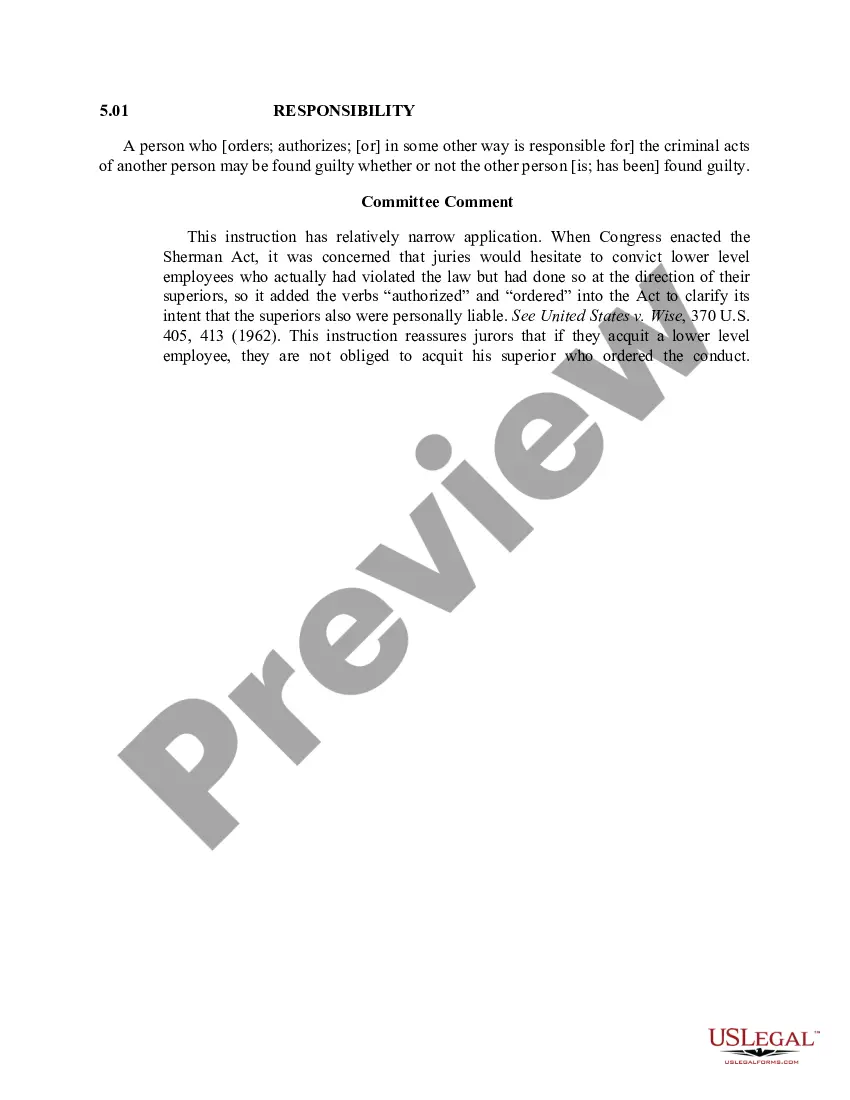
Vermont Unsecured Installment Payment Promissory Note for Fixed Rate
What is this form?
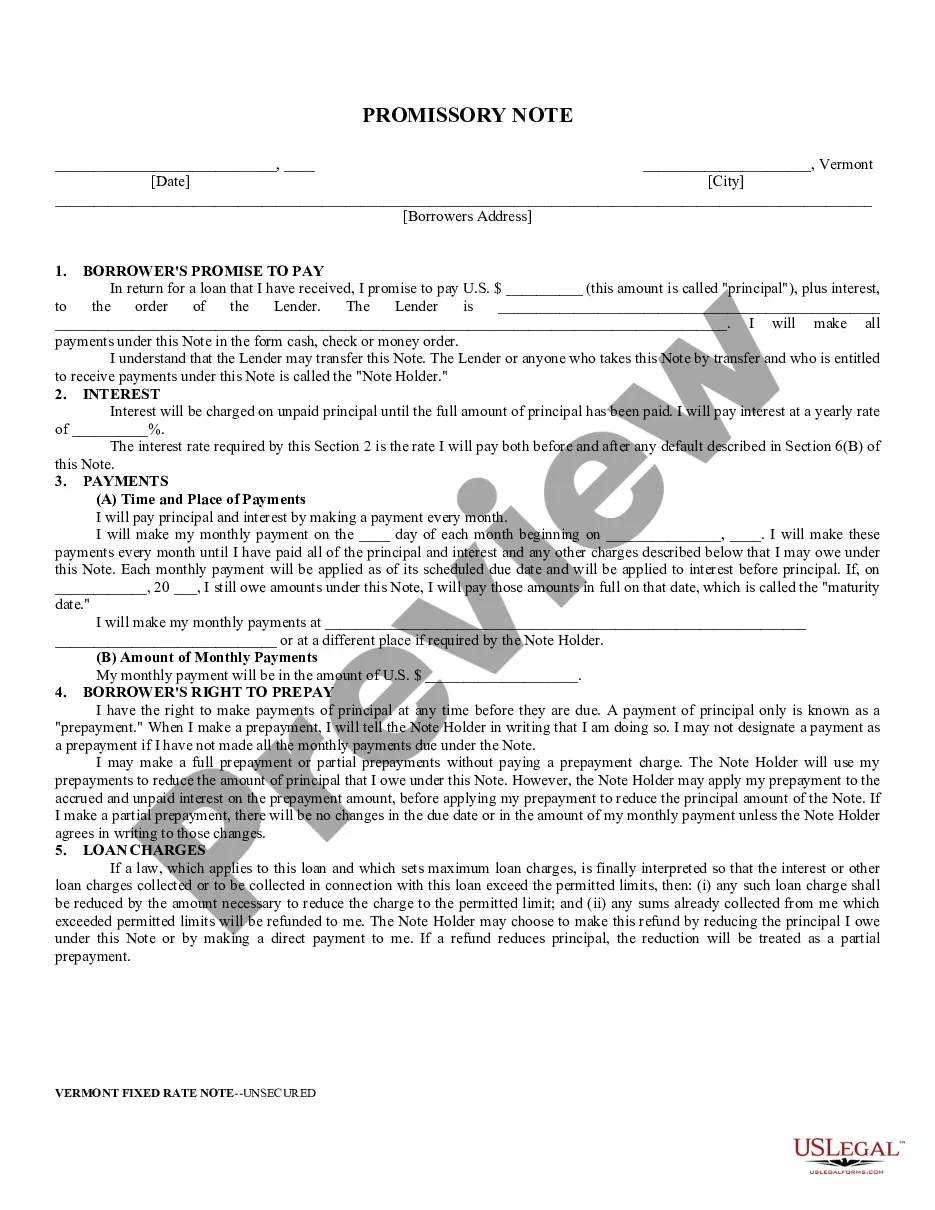
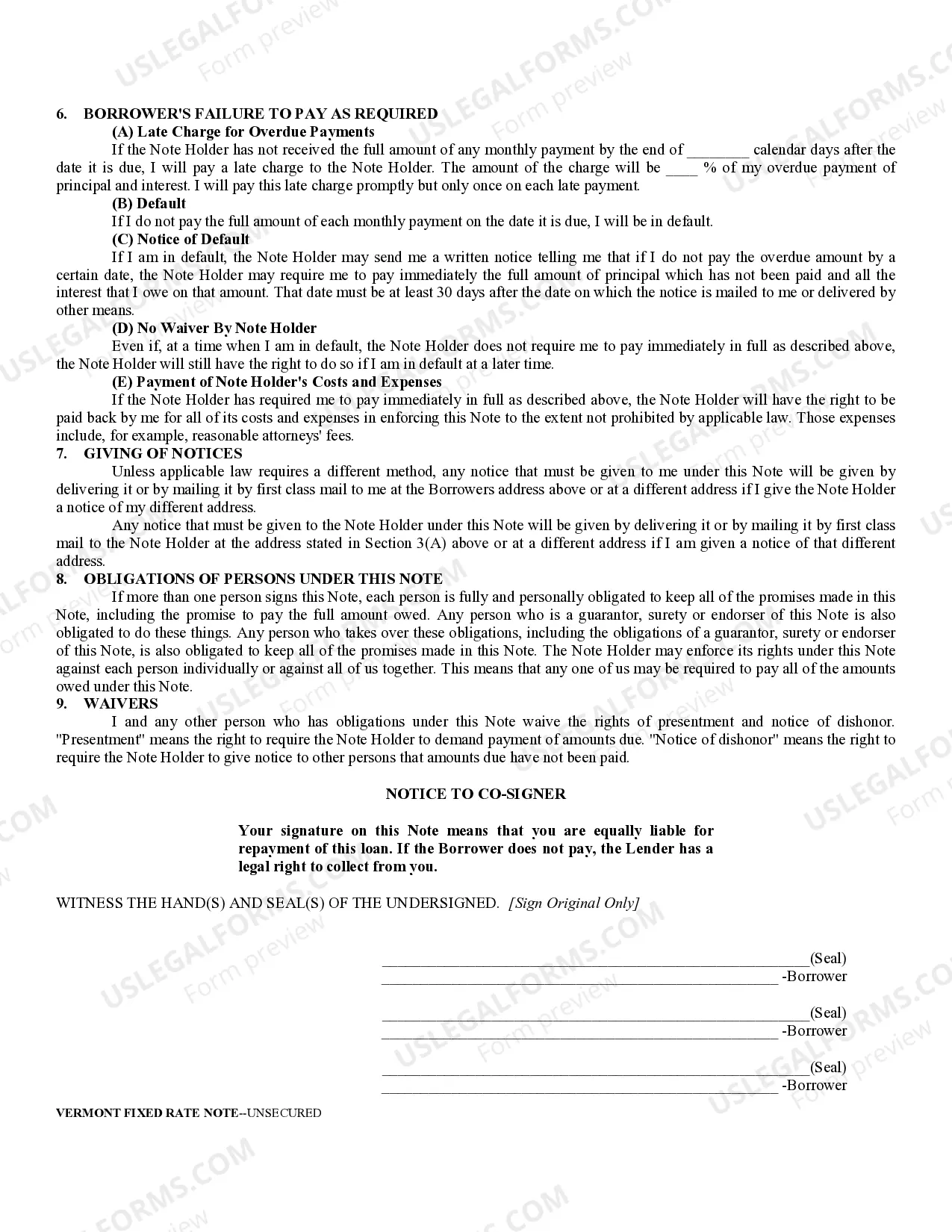
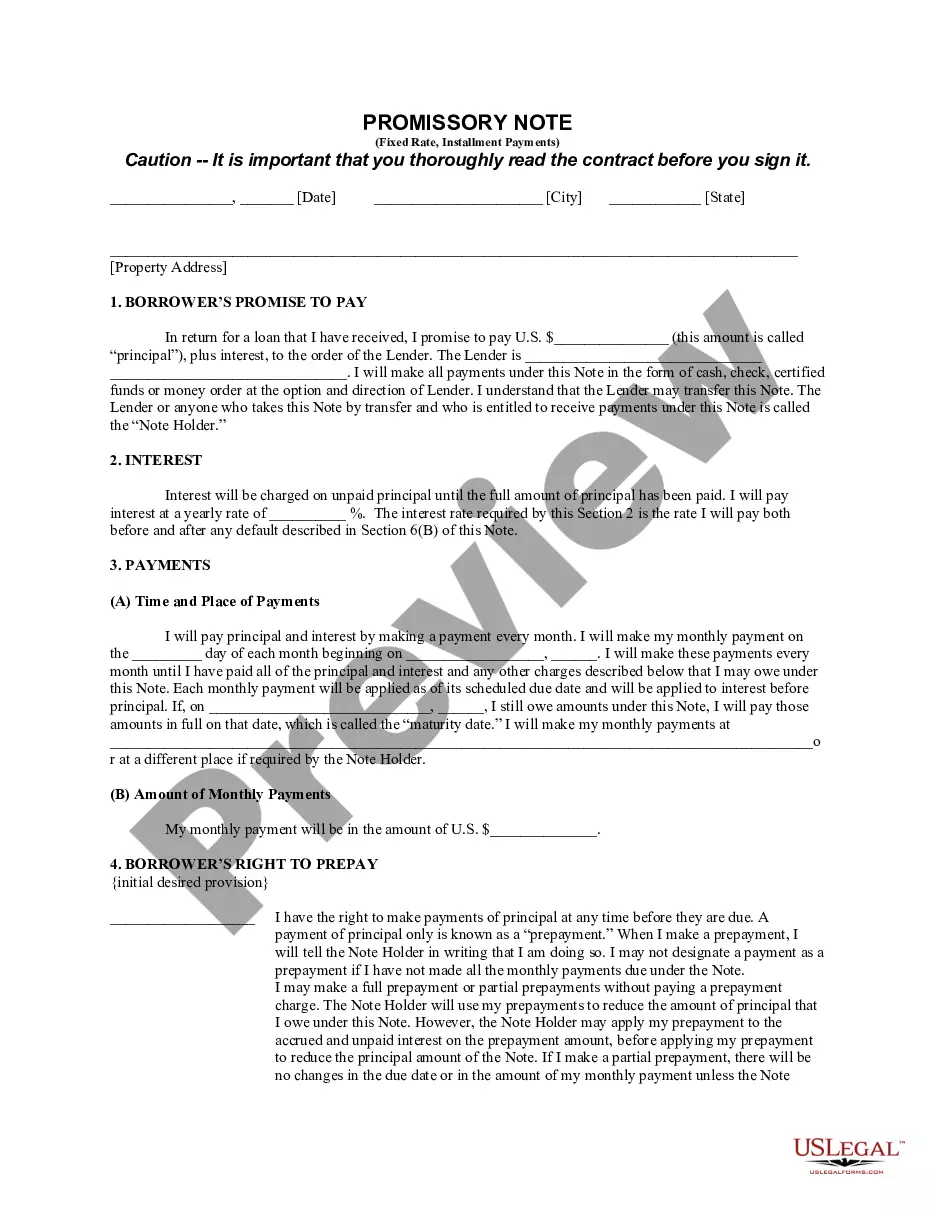
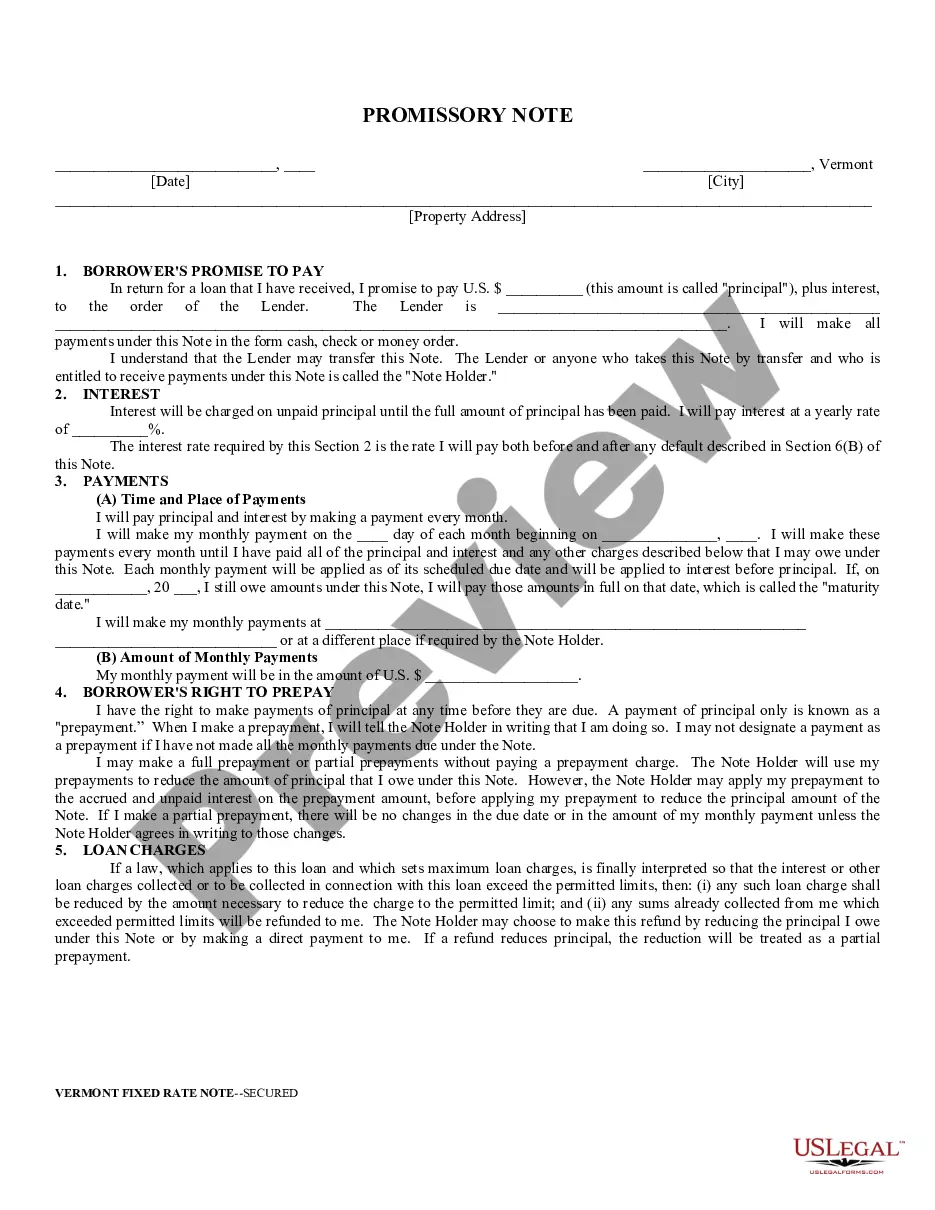
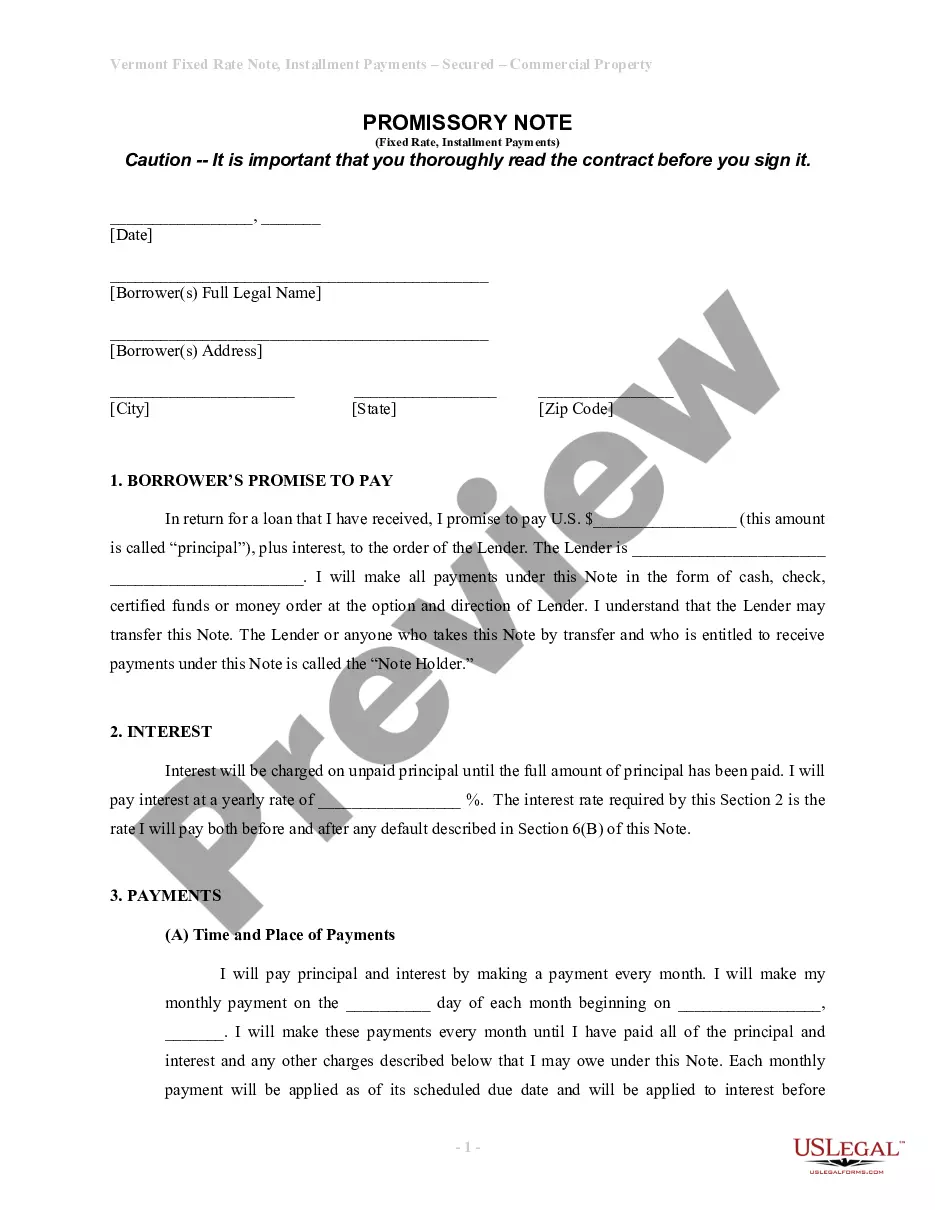
The Vermont Unsecured Installment Payment Promissory Note for Fixed Rate is a legal document that records a borrowerâs promise to repay a loan to a lender in fixed monthly installments. This form is unsecured, meaning there is no collateral backing the loan. Unlike other promissory notes, this document specifies terms such as interest rates, repayment schedules, and the consequences of default.
Key components of this form
- Borrower's promise to pay: Outlines the borrower's obligation to repay the principal and interest to the lender.
- Interest terms: Specifies the fixed interest rate charged on the unpaid principal.
- Payment schedule: Details the frequency and amount of monthly payments due.
- Prepayment rights: Describes the borrowerâs ability to make early payments without penalty.
- Default conditions: Provides information on what constitutes a default and potential late fees.
- Notice requirements: Outlines how notices regarding the loan should be communicated between the borrower and lender.
When this form is needed
This form is ideal for individuals or businesses seeking to formalize a personal loan agreement that does not require collateral. It is especially useful when the borrower and lender wish to establish clear terms for repayment and protect their interests in case of default.
Who should use this form
- Borrowers looking for a simple way to document their loan repayment terms.
- Lenders who want to ensure their rights are protected when providing unsecured loans.
- Individuals or organizations involved in personal loans, small business loans, or private financing where formal documentation is necessary.
Instructions for completing this form
- Identify the parties: Fill in the borrower's and lender's names and addresses.
- Specify the loan details: Enter the principal amount being borrowed and the fixed interest rate.
- Set the payment schedule: Indicate the monthly payment amount and the starting date for payments.
- Outline prepayment rights: Review and acknowledge the borrower's right to make prepayments.
- Sign and date the agreement: Ensure all parties sign and date the document to make it legally binding.
Notarization guidance
This form does not typically require notarization unless specified by local law. However, it's advisable to consult with a legal professional to confirm any state-specific requirements.
Get your form ready online
Our built-in tools help you complete, sign, share, and store your documents in one place.
Make edits, fill in missing information, and update formatting in US Legal Forms—just like you would in MS Word.
Download a copy, print it, send it by email, or mail it via USPS—whatever works best for your next step.
Sign and collect signatures with our SignNow integration. Send to multiple recipients, set reminders, and more. Go Premium to unlock E-Sign.
If this form requires notarization, complete it online through a secure video call—no need to meet a notary in person or wait for an appointment.
We protect your documents and personal data by following strict security and privacy standards.

Make edits, fill in missing information, and update formatting in US Legal Forms—just like you would in MS Word.

Download a copy, print it, send it by email, or mail it via USPS—whatever works best for your next step.

Sign and collect signatures with our SignNow integration. Send to multiple recipients, set reminders, and more. Go Premium to unlock E-Sign.

If this form requires notarization, complete it online through a secure video call—no need to meet a notary in person or wait for an appointment.

We protect your documents and personal data by following strict security and privacy standards.
Mistakes to watch out for
- Failing to specify the interest rate clearly, leading to misunderstandings.
- Not including the borrower's complete address or lender's information.
- Omitting signatures or dates, making the note unenforceable.
Benefits of completing this form online
- Convenient access: Download and complete the form at your own pace.
- Editability: Easily modify any section before printing and signing.
- Reliability: Use legally vetted templates created by licensed attorneys to ensure compliance.
- The promissory note is legally binding once signed by both parties.
- It is enforceable in court, meaning that lenders can seek legal recourse if repayment terms are not met.
- The absence of collateral may affect the lender's ability to recover the loan amount in case of default.
Quick recap
- This form provides a clear structure for repayment, ensuring both lender and borrower understand their responsibilities.
- It is ideal for unsecured loans, protecting the lender while giving the borrower necessary flexibility.
- Completing this document correctly helps avoid common legal issues surrounding unpaid debts.
Looking for another form?
Form popularity
FAQ
In order for a promissory note to be valid, both the lender and the borrower must sign the documentation. If you are a co-signer for the loan, you are required to sign the promissory note. Being a co-signer requires you to repay the loan amount in the instance that the borrower defaults on payment.
A simple promissory note might be for a lump sum repayment on a certain date. For example, you lend your friend $1,000 and he agrees to repay you by December 1. The full amount is due on that date, and there is no payment schedule involved.
Promissory notes are legally binding whether the note is secured by collateral or based only on the promise of repayment. If you lend money to someone who defaults on a promissory note and does not repay, you can legally possess any property that individual promised as collateral.
A promissory note is a contract, a binding agreement that someone will pay your business a sum of money. However under some circumstances if the note has been altered, it wasn't correctly written, or if you don't have the right to claim the debt then, the contract becomes null and void.
Date. The promissory note should include the date it was created at the top of the page. Amount. Loan terms. Interest rate. Collateral. Lender and borrower information. Signatures.
A simple promissory note might be for a lump sum repayment on a certain date. For example, you lend your friend $1,000 and he agrees to repay you by December 1. The full amount is due on that date, and there is no payment schedule involved.
Navigate to the website: www.studentloans.gov. Click "Log In." Enter your FSA ID and Password. Click "Complete Master Promissory Note." Select the appropriate loan type. Enter Your Personal Information.
Writing the Promissory Note Terms You don't have to write a promissory note from scratch. You can use a template or create a promissory note online.
Write the date of the writing of the promissory note at the top of the page. Write the amount of the note. Describe the note terms. Write the interest rate. State if the note is secured or unsecured. Include the names of both the lender and the borrower on the note, indicating which person is which.