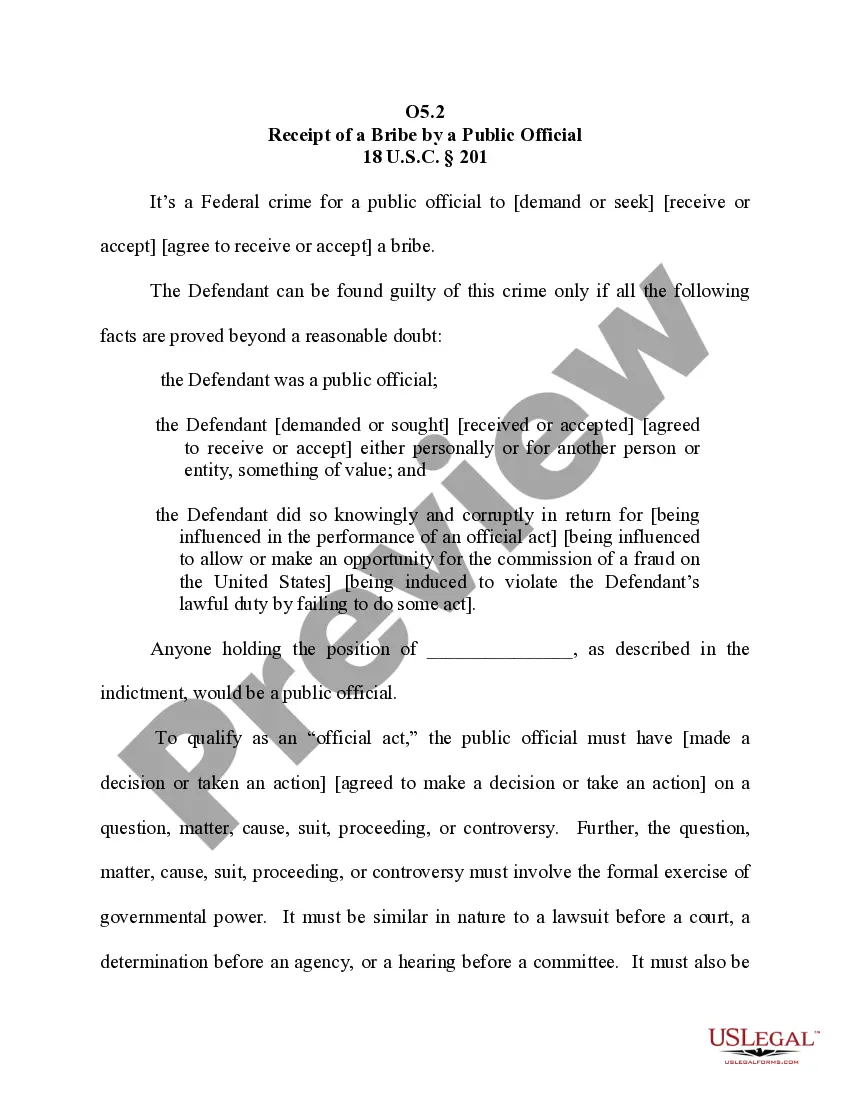
Bribery of a Public Official is a term used to describe the corrupt practice of offering money, goods, or services to induce a public official to perform an illegal, unethical, or improper act. It is a crime in most jurisdictions. Bribery is considered to be a form of corruption and is punishable by fines and/or imprisonment. There are three main types of bribery of a public official: passive bribery, active bribery, and transactional bribery. Passive bribery is where a public official is offered something in exchange for a favor or to influence a decision. Active bribery is the act of offering money, goods, or services to induce a public official to perform a certain action. Transactional bribery involves an agreement between the briber and the public official where the briber pays for special favors or a decision. Bribery of a public official is a serious crime and is punishable in many countries by fines, imprisonment, and/or disqualification from public office. It is an illegal act that undermines the public trust and undermines the rule of law. It is important to be aware of laws and regulations surrounding bribery of public officials and to be aware of potential risks associated with this practice.
Bribery of a Public Official
Description
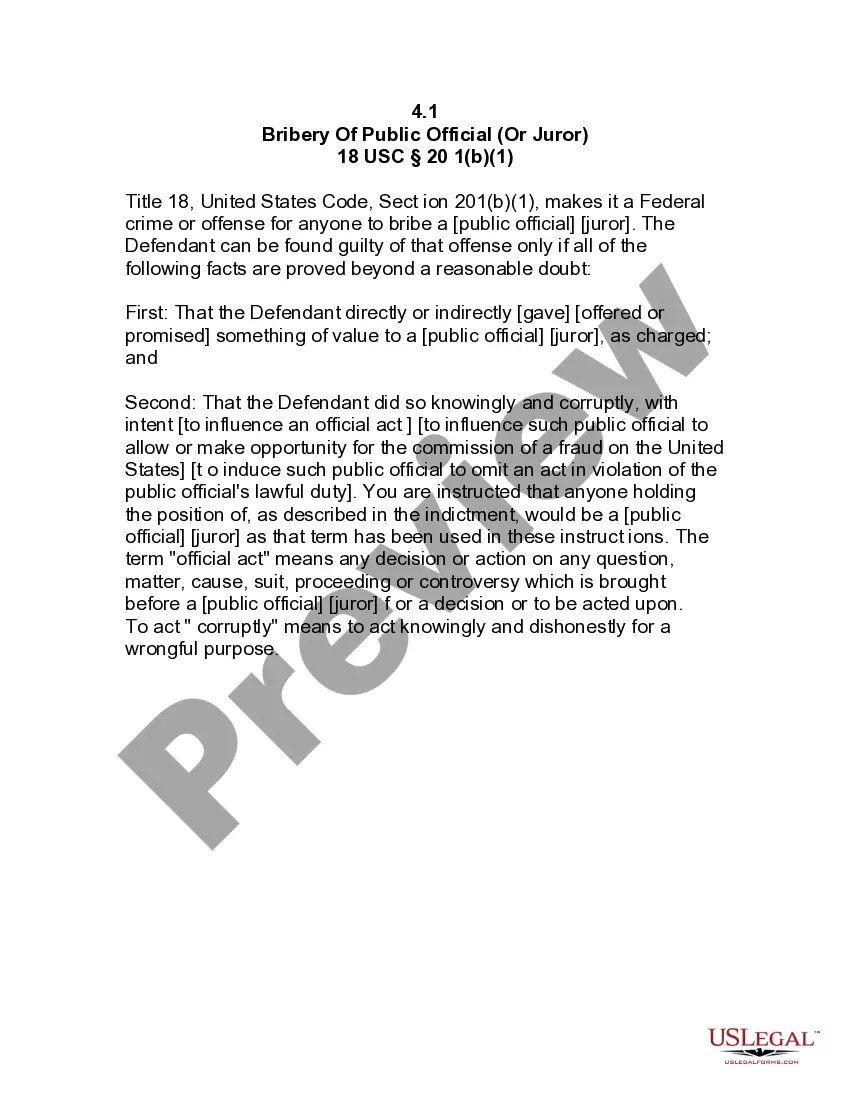
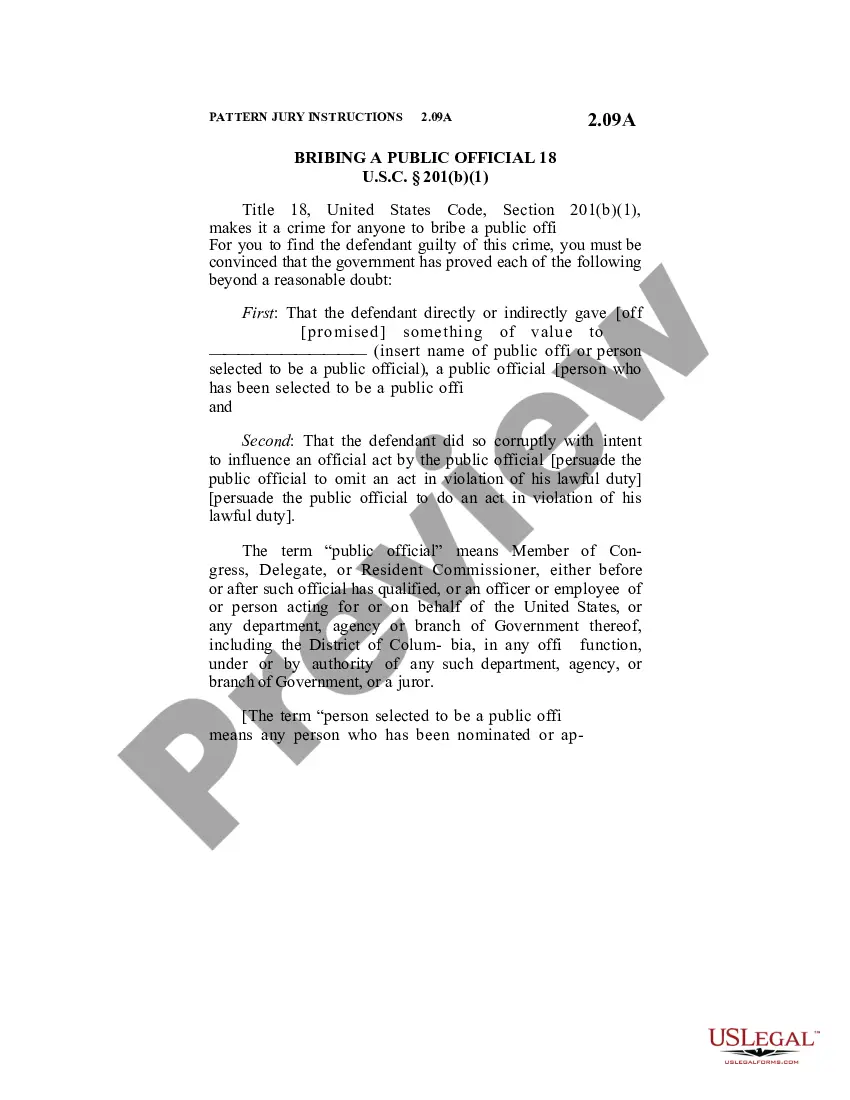
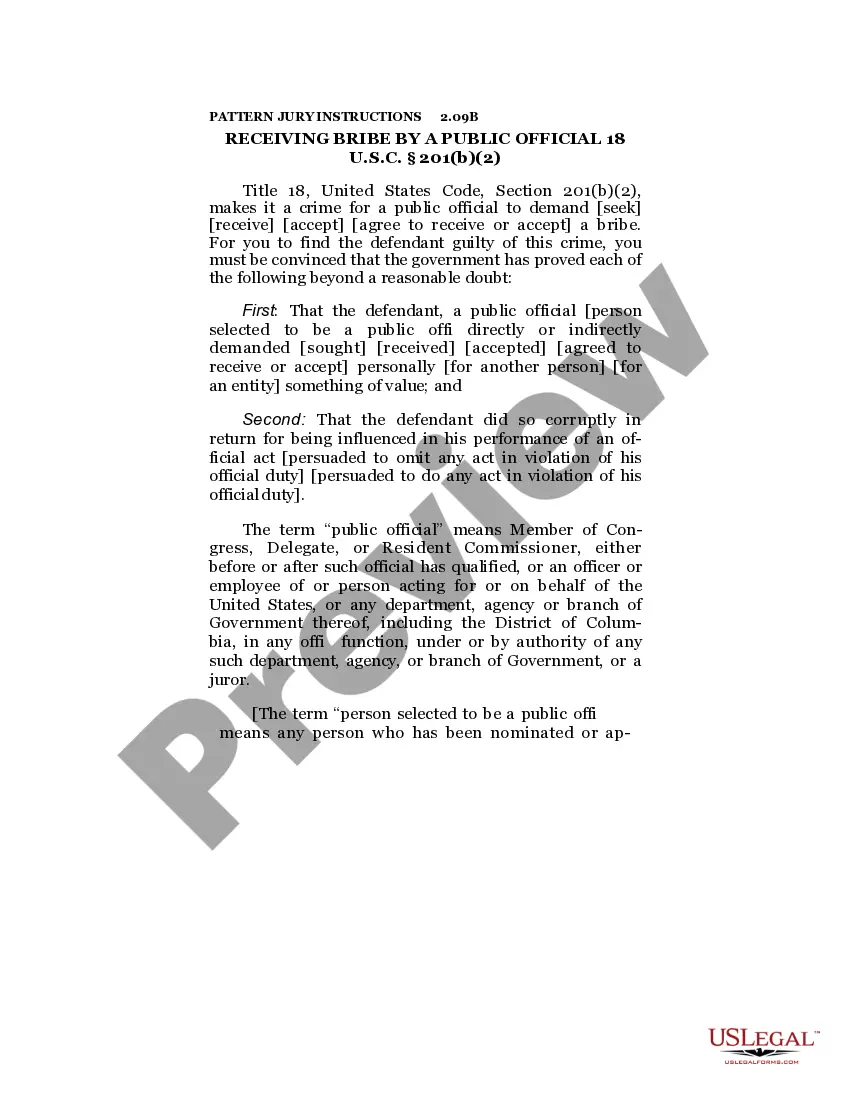
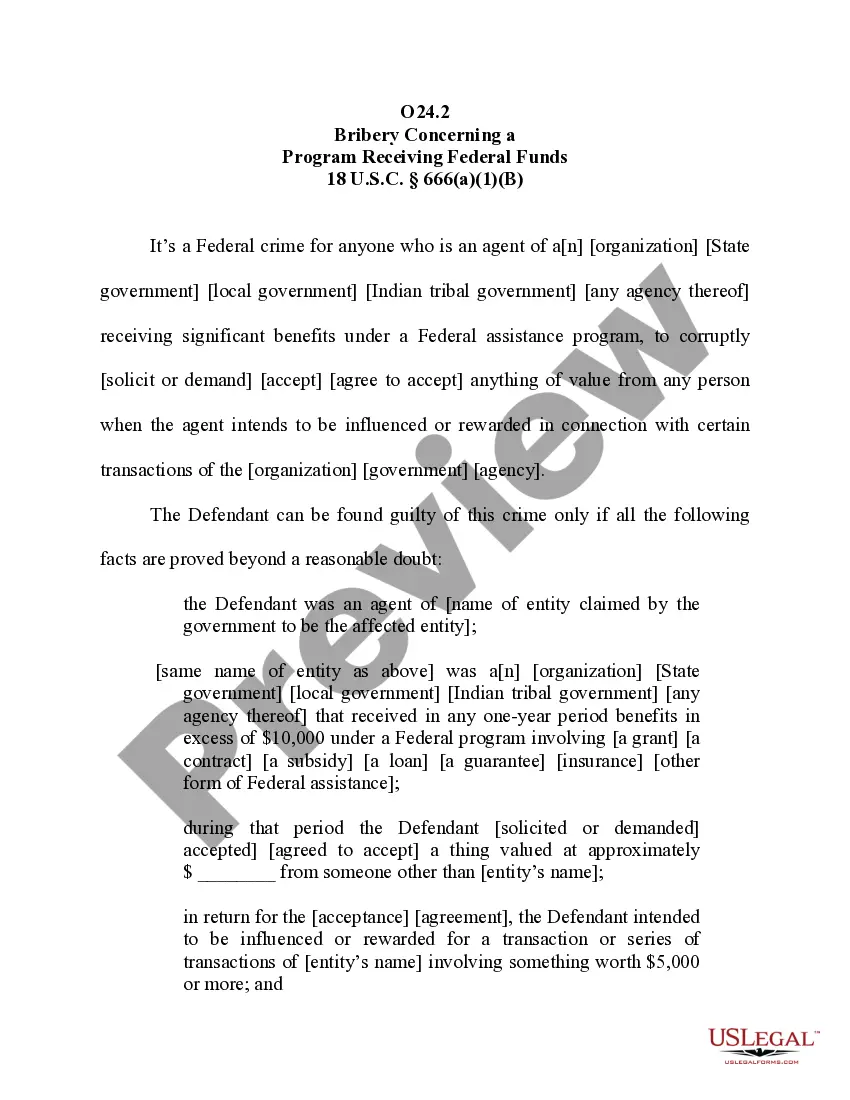
How to fill out Bribery Of A Public Official?
How much time and resources do you typically spend on composing formal paperwork? There’s a greater way to get such forms than hiring legal experts or wasting hours browsing the web for an appropriate template. US Legal Forms is the leading online library that provides professionally designed and verified state-specific legal documents for any purpose, like the Bribery of a Public Official.
To obtain and complete a suitable Bribery of a Public Official template, adhere to these simple steps:
- Examine the form content to make sure it complies with your state regulations. To do so, read the form description or take advantage of the Preview option.
- In case your legal template doesn’t satisfy your needs, find a different one using the search bar at the top of the page.
- If you are already registered with our service, log in and download the Bribery of a Public Official. If not, proceed to the next steps.
- Click Buy now once you find the right blank. Select the subscription plan that suits you best to access our library’s full service.
- Sign up for an account and pay for your subscription. You can make a payment with your credit card or through PayPal - our service is absolutely secure for that.
- Download your Bribery of a Public Official on your device and complete it on a printed-out hard copy or electronically.
Another benefit of our library is that you can access previously downloaded documents that you securely keep in your profile in the My Forms tab. Get them at any moment and re-complete your paperwork as frequently as you need.
Save time and effort completing formal paperwork with US Legal Forms, one of the most reliable web services. Join us now!
Form popularity
FAQ
(1) ?Bribery? means to knowingly and intentionally give, offer, or promise to any public servant, or, if a public servant, to knowingly and intentionally request, solicit, accept, or agree to accept for himself or herself or another, any pecuniary or other benefit not authorized by law with an intent or purpose to
Section 838.022 - Official misconduct (1) It is unlawful for a public servant or public contractor, to knowingly and intentionally obtain a benefit for any person or to cause unlawful harm to another, by: (a) Falsifying, or causing another person to falsify, any official record or official document; (b) Concealing,
(1) ?Bribery? means to knowingly and intentionally give, offer, or promise to any public servant, or, if a public servant, to knowingly and intentionally request, solicit, accept, or agree to accept for himself or herself or another, any pecuniary or other benefit not authorized by law with an intent or purpose to
The criminal offense of bribery involves offering or giving something of value to another person, usually a public official. The purpose of the conduct usually must be: To influence that person in their official capacity; To induce them to do something illegal or allow something illegal to occur; or.
However, in the United State, bribery of public officials is a criminal act, for both the person offering the bribe, and for the individual who solicits or accepts a bribe. Bribery generally involves giving some item of value, such as a gift or money, in order to gain influence with the recipient.
Bribery is defined generally as corrupt solicitation, acceptance, or transfer of value in exchange for official action.
We brought groceries with us on the plane but the airport officials told us that we couldn't take the groceries off the plane; Bahamian law required that we buy our food locally. After a few minutes, my uncle figured out what the officials really wanted and he slipped the officials $200 in cash.
Yes, bribery is illegal. Bribery can be a crime under federal or state law, depending on who and what is involved. Most states have several types of bribery charges, such as bribery of public officials, witnesses, jurors, corporations, and sports officials.