Oregon Life Estate Deed from an individual to an individual.
What is this form?
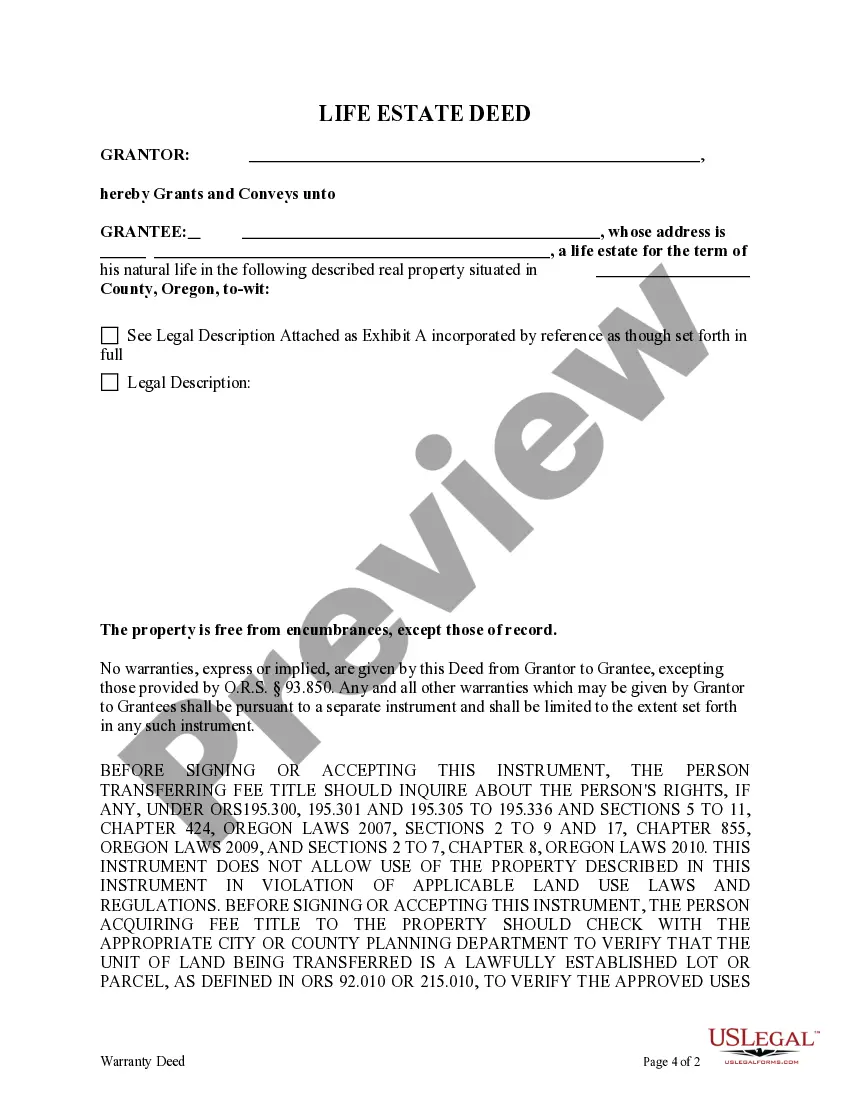
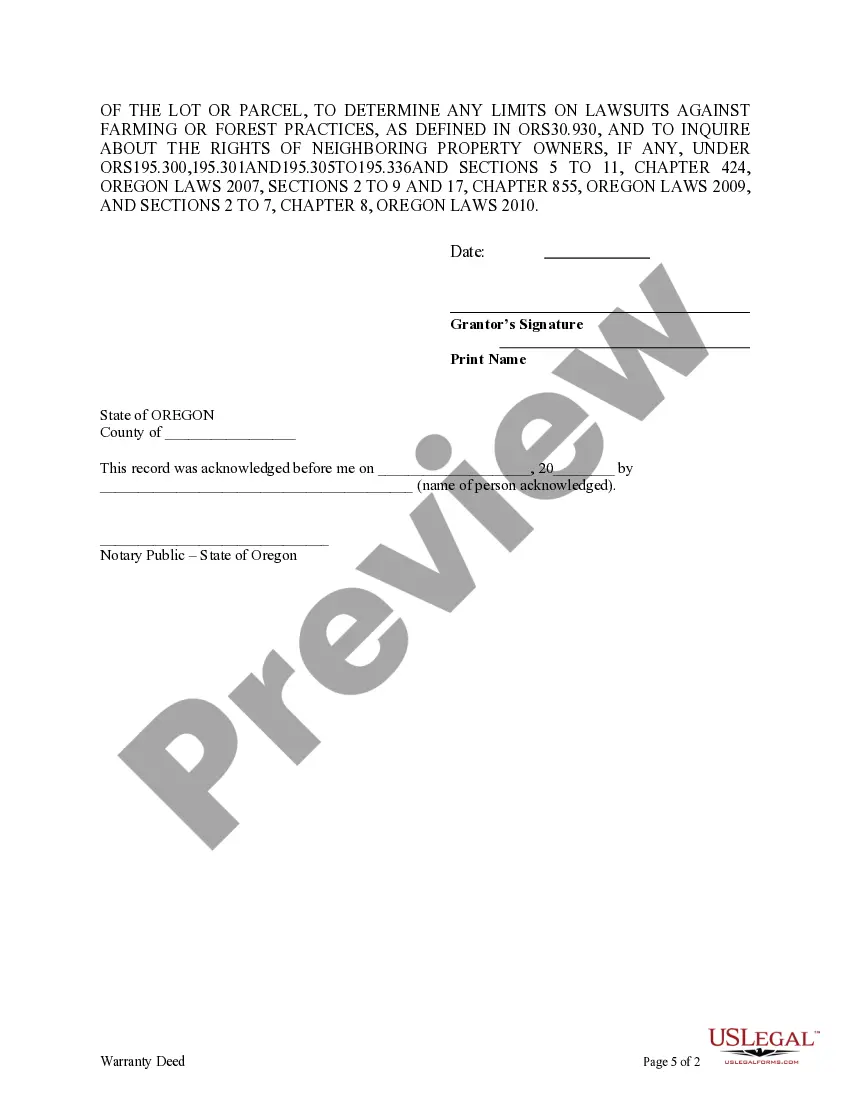
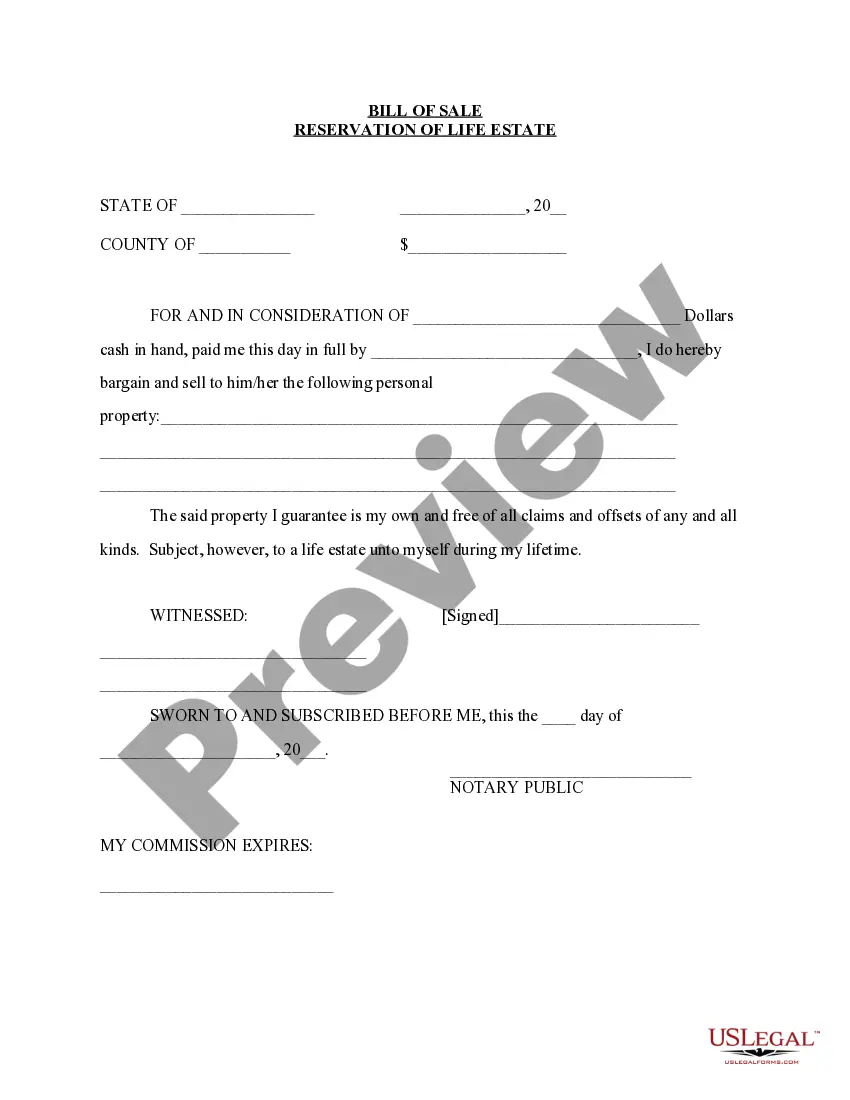
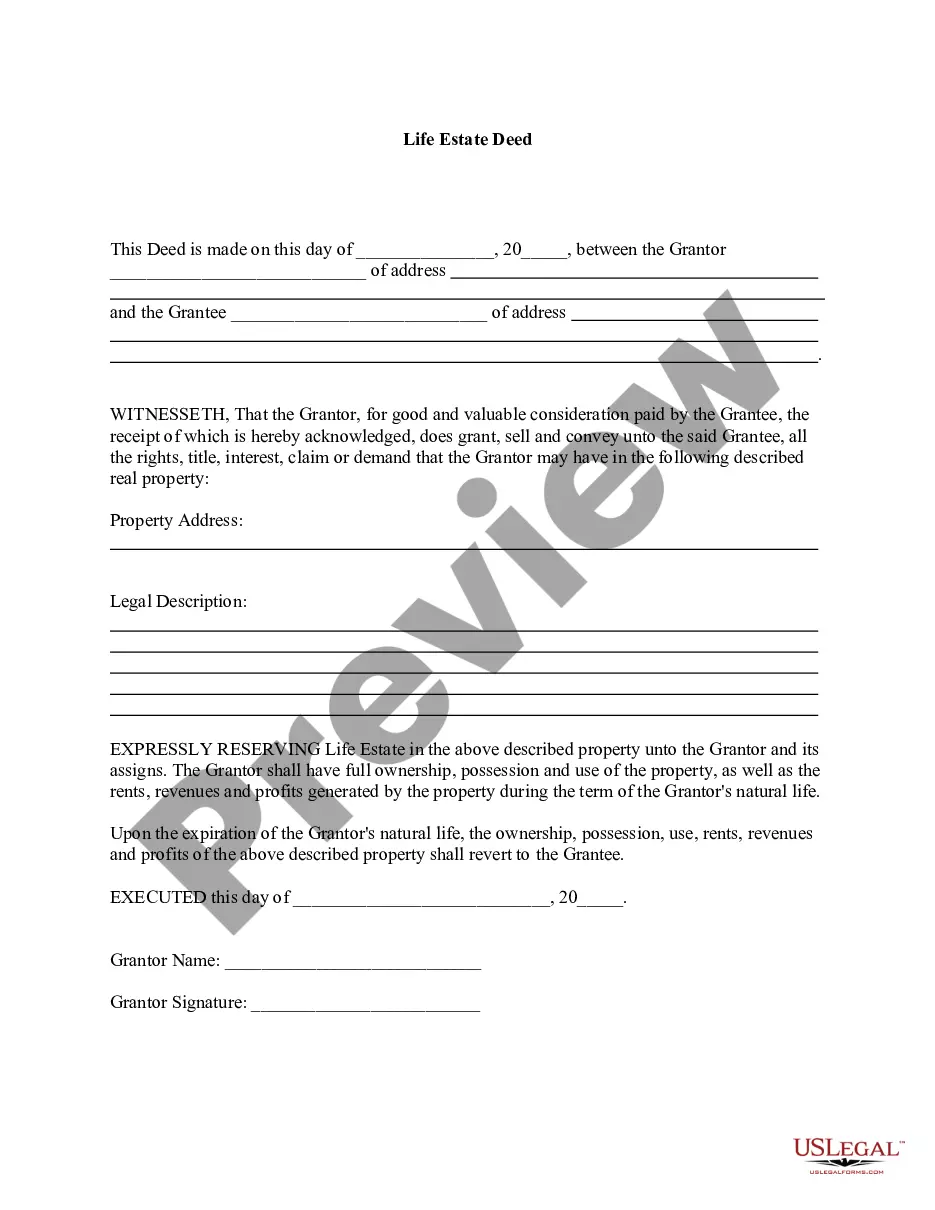
The Life Estate Deed from an individual to an individual is a legal document that allows one person (the Grantor) to convey a life estate in their property to another person (the Grantee). This type of deed grants the Grantee rights to use and benefit from the property during their lifetime, while ownership reverts back to the Grantor or the Grantor's heirs upon the Grantee's death. This form is distinct from other property transfer forms, as it specifically pertains to life estates, establishing clear rights for both parties involved.
Main sections of this form
- Identification of the Grantor and Grantee
- Description of the property to be conveyed
- Terms outlining the rights of the Grantee during their lifetime
- Statement on the reversion of property rights after the Grantee's death
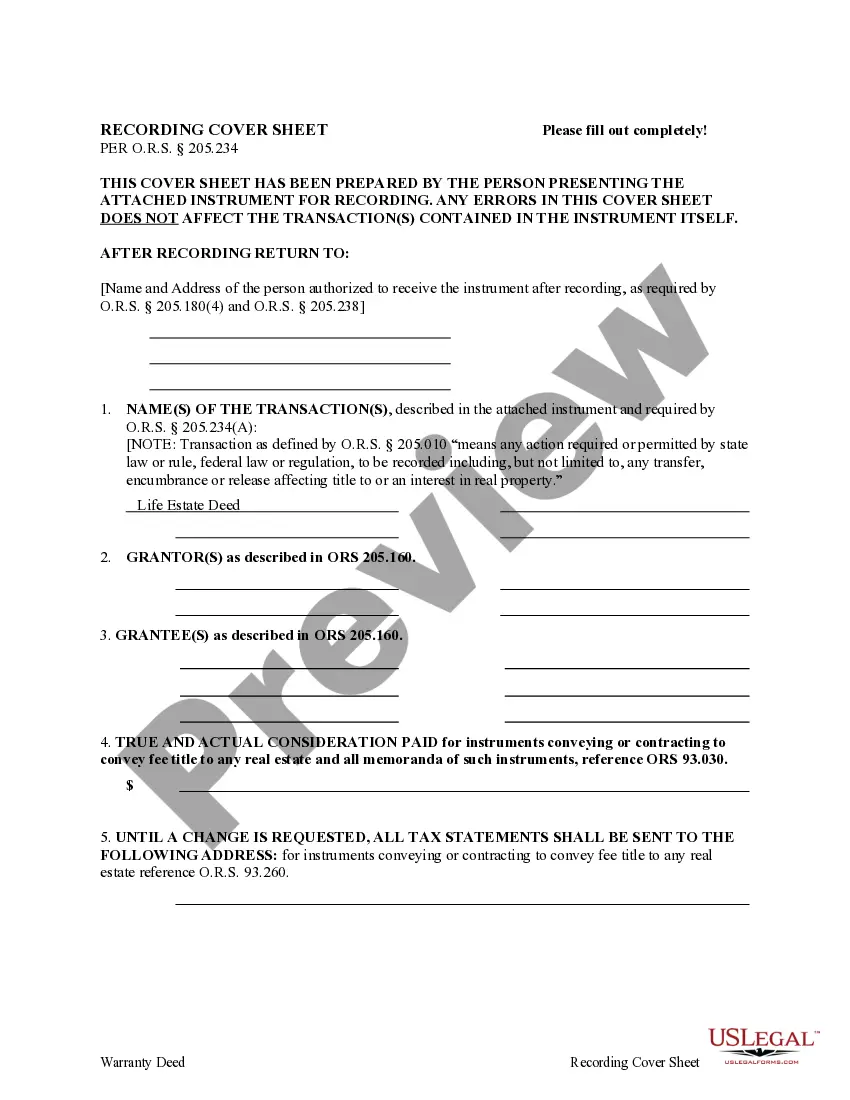
- Signature lines for both parties




When to use this document
This form is commonly used in scenarios where an individual wishes to transfer property rights to another individual, allowing them to use the property for their lifetime. It is particularly useful in estate planning to manage how property is passed on after the Grantor's death, ensuring that the Grantor's intentions are honored and providing clarity in property ownership.
Who can use this document
This form is suitable for:
- Individuals who own property and wish to create a life estate for another person
- Those engaged in estate planning to specify property use after their death
- Family members looking to transfer property among themselves while maintaining control during a lifetime
Steps to complete this form
- Identify all parties involved, including the full names and addresses of the Grantor and Grantee.
- Clearly describe the property being conveyed, including its address and legal description.
- Outline the terms of the life estate, specifying any conditions or rights granted to the Grantee.
- Ensure both parties sign the form in the designated areas to validate the deed.
- Consider having the deed notarized for additional legal protection, depending on state requirements.
Notarization requirements for this form
This form does not typically require notarization unless specified by local law. However, having the deed notarized can add an extra layer of legal validity, so consider this option based on your specific circumstances.
Get your form ready online
Our built-in tools help you complete, sign, share, and store your documents in one place.
Make edits, fill in missing information, and update formatting in US Legal Forms—just like you would in MS Word.
Download a copy, print it, send it by email, or mail it via USPS—whatever works best for your next step.
Sign and collect signatures with our SignNow integration. Send to multiple recipients, set reminders, and more. Go Premium to unlock E-Sign.
If this form requires notarization, complete it online through a secure video call—no need to meet a notary in person or wait for an appointment.
We protect your documents and personal data by following strict security and privacy standards.

Make edits, fill in missing information, and update formatting in US Legal Forms—just like you would in MS Word.

Download a copy, print it, send it by email, or mail it via USPS—whatever works best for your next step.

Sign and collect signatures with our SignNow integration. Send to multiple recipients, set reminders, and more. Go Premium to unlock E-Sign.

If this form requires notarization, complete it online through a secure video call—no need to meet a notary in person or wait for an appointment.

We protect your documents and personal data by following strict security and privacy standards.
Mistakes to watch out for
- Failing to accurately describe the property, leading to potential disputes.
- Not including all necessary parties' names or signatures.
- Misunderstanding the terms of the life estate and their implications.
- Neglecting to check state-specific requirements related to property transfers.
Why complete this form online
- Convenience of accessing and completing the form from home.
- Editability, allowing for easy corrections and customizations.
- Reliability, as the forms are drafted by licensed attorneys to ensure legal compliance.
Legal use & context
This Life Estate Deed clearly outlines the rights and obligations of both the Grantor and the Grantee, making it a legally enforceable document. It is essential to ensure that the property described in the deed adheres to local zoning and land use laws to avoid any legal issues in the future.
What to keep in mind
- The Life Estate Deed facilitates the transfer of property rights while allowing use throughout the Grantee's lifetime.
- Always ensure accurate descriptions and signatures to uphold legal integrity.
- Check for state-specific requirements to ensure compliance and avoid issues.
Looking for another form?

Form popularity
FAQ
With a life estate deed, the remainderman's ownership interest vests when the deed is signed and delivered (or recorded in the public record). Accordingly, the children's ownership interest in the property vested upon their father signing the deed and recording it in the public records, or the year 2000.
A life estate deed permits the property owner to have full use of their property until their death, at which point the ownership of the property is automatically transferred to the beneficiary.
Can a life estate deed be changed? It is challenging to modify or change a life estate deed. The grantor cannot change the life estate as he or she has no power to do so after creating the life estate deed unless all of the future tenants agree. It requires the permission or consent of every one of the beneficiaries.
Effective January 1, 2012, Oregon law provides for a new form of deed known as a transfer on death (TOD) deed. These deeds allow an owner of real property to designate a beneficiary who will obtain title to that real property when the owner dies, without having to go through probate (subject to some exceptions).
The date the deed was made; The name of the party granting the life estate and their address; The name of the grantee and their address; The address and a legal description of the property that is subject to the life estate;
A person owns property in a life estate only throughout their lifetime. Beneficiaries cannot sell property in a life estate before the beneficiary's death. One benefit of a life estate is that property can pass when the life tenant dies without being part of the tenant's estate.
Example of creation of a life estate: I grant to my mother, Molly McCree, the right to live in and/or receive rents from my real property, until her death, or I give my daughter, Sadie Hawkins, my real property, subject to a life estate to my mother, Molly McCree. This means a woman's mother, Molly, gets to live in
A life estate deed permits the property owner to have full use of their property until their death, at which point the ownership of the property is automatically transferred to the beneficiary.In the right situations, it can be a streamlined and easy way to transfer ownership.