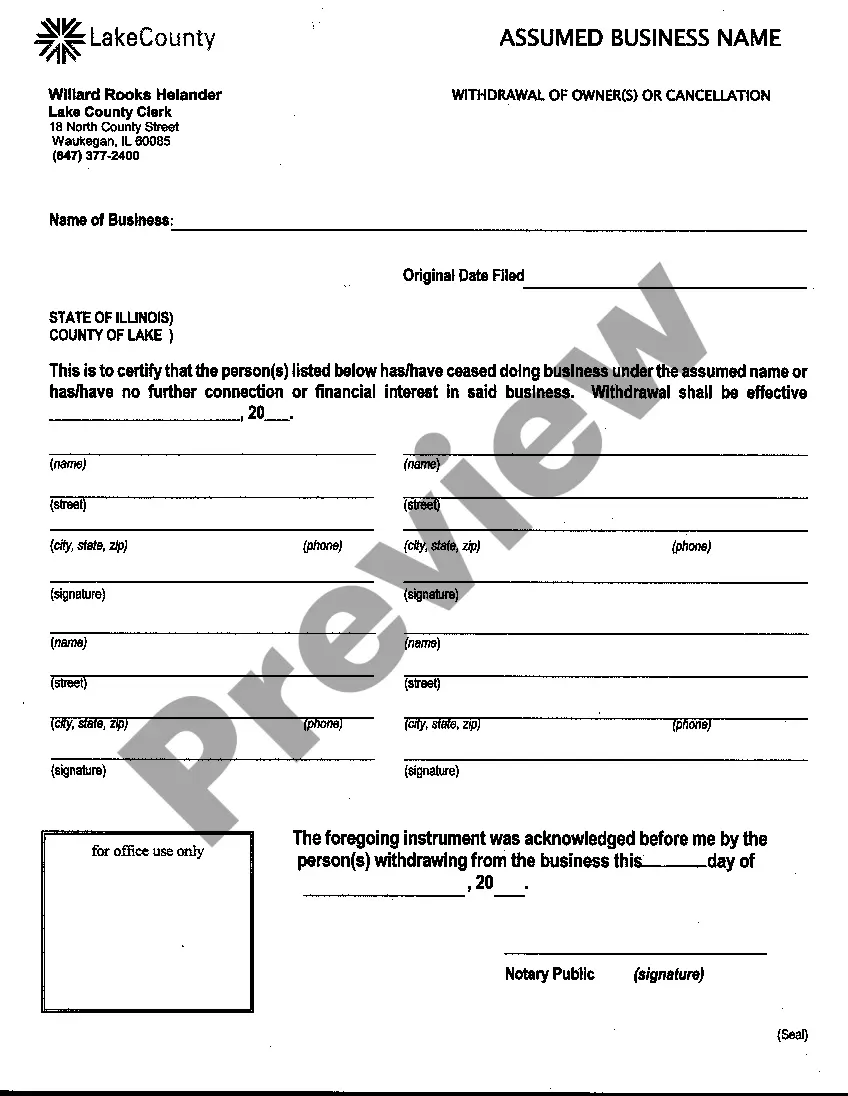
West Virginia Letter from Landlord to Tenant for Failure to keep all plumbing fixtures in the dwelling unit as clean as their condition permits - Remedy or lease terminates
Understanding this form
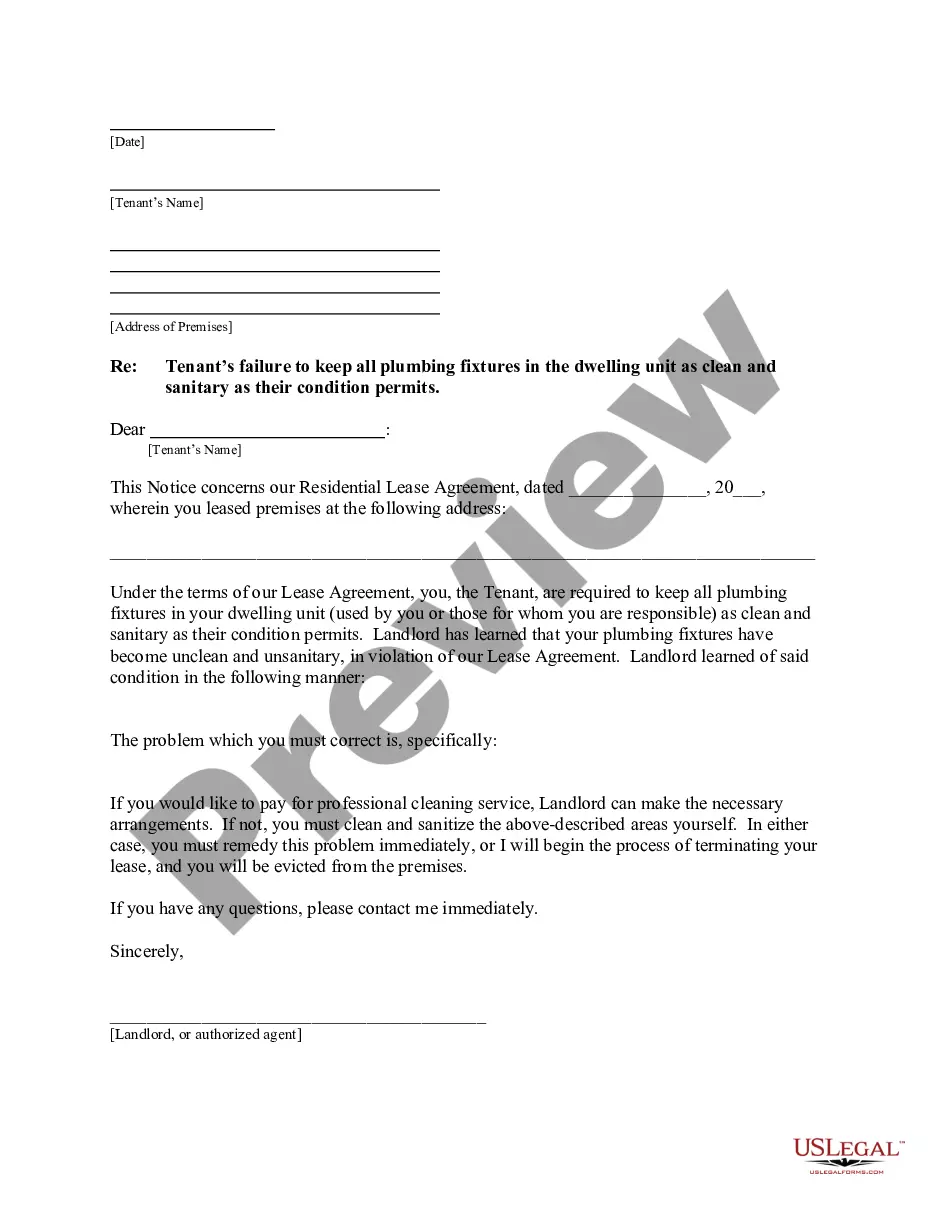
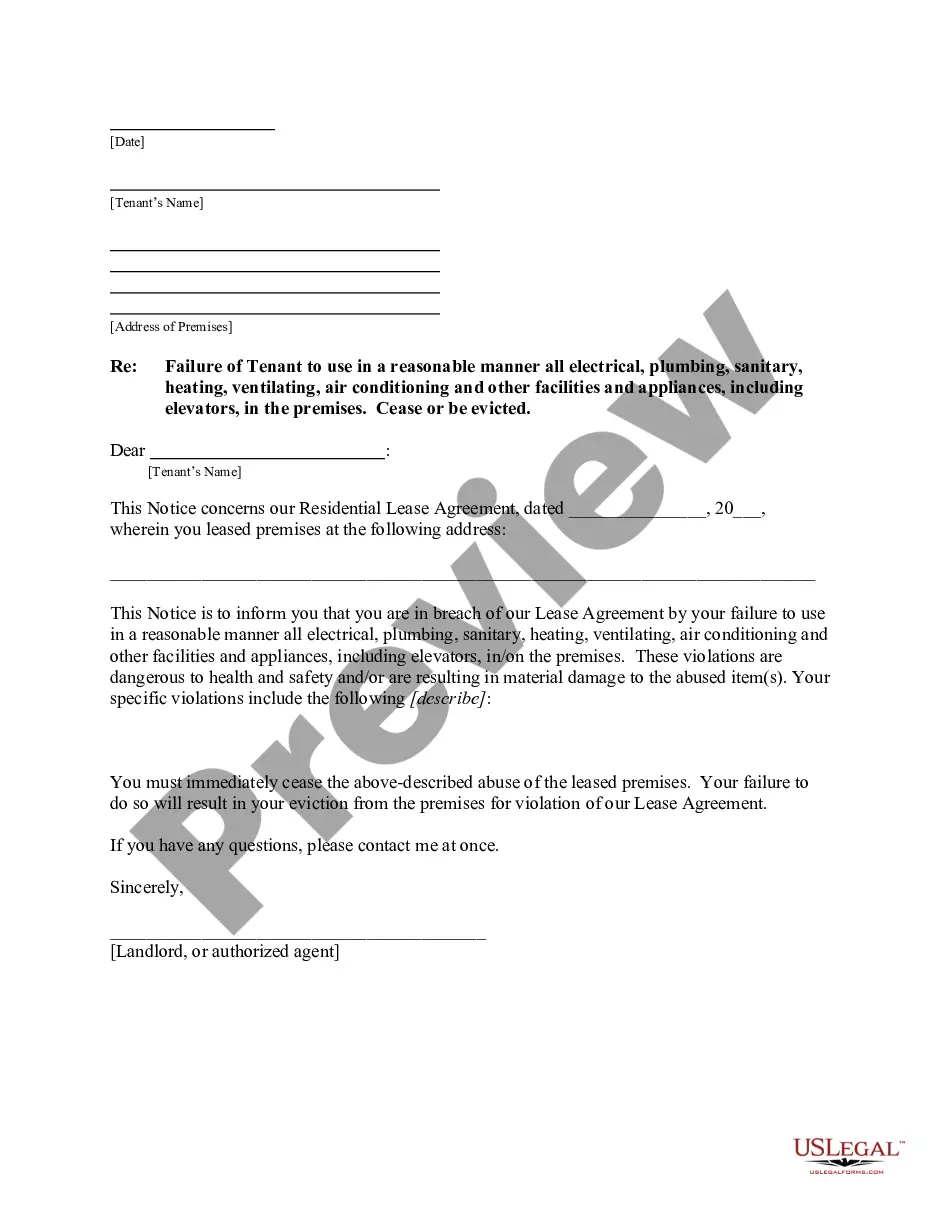
This form is a notice from a landlord to a tenant regarding the maintenance of plumbing fixtures within a rental unit. The Letter from Landlord to Tenant for Failure to Keep All Plumbing Fixtures in the Dwelling Unit as Clean as Their Condition Permits advises the tenant of their obligation to maintain plumbing in satisfactory condition, as outlined in the lease. If the tenant fails to remedy the situation, the notice warns that the lease may terminate automatically. This form is vital for landlords to formally communicate issues and set expectations for maintenance, helping to protect their rights and property.
What’s included in this form
- Identification of the landlord and tenant
- Description of the plumbing maintenance issue
- Notice of the consequences of continued neglect
- Instructions for remedying the situation
- Signature line for the landlord or authorized agent
When to use this form
This form should be used when a landlord identifies that a tenant is not keeping plumbing fixtures clean and well-maintained, as required by the lease agreement. It serves as a formal notification to the tenant about their responsibilities and the consequences of non-compliance, which is essential before considering lease termination. If tenants are neglecting plumbing maintenance, this notice provides them with an opportunity to address the issue and avoid further action.
Who this form is for
This form is intended for:
- Landlords seeking to remind tenants about their maintenance responsibilities
- Property management companies managing rental properties
- Tenants who may need to understand their obligations regarding plumbing maintenance
How to complete this form
- Identify the landlord and tenant by filling in their names and contact information.
- Describe the plumbing issues the tenant has failed to address, including any specific examples.
- Clearly state the actions required from the tenant to remedy the situation.
- Include a warning about the potential consequences if the tenant fails to comply.
- Sign and date the notice, and retain a copy for your records.
Is notarization required?
This form does not typically require notarization unless specified by local law. Always check local regulations to confirm the requirements for official documentation.
Get your form ready online
Our built-in tools help you complete, sign, share, and store your documents in one place.
Make edits, fill in missing information, and update formatting in US Legal Forms—just like you would in MS Word.
Download a copy, print it, send it by email, or mail it via USPS—whatever works best for your next step.
Sign and collect signatures with our SignNow integration. Send to multiple recipients, set reminders, and more. Go Premium to unlock E-Sign.
If this form requires notarization, complete it online through a secure video call—no need to meet a notary in person or wait for an appointment.
We protect your documents and personal data by following strict security and privacy standards.

Make edits, fill in missing information, and update formatting in US Legal Forms—just like you would in MS Word.

Download a copy, print it, send it by email, or mail it via USPS—whatever works best for your next step.

Sign and collect signatures with our SignNow integration. Send to multiple recipients, set reminders, and more. Go Premium to unlock E-Sign.

If this form requires notarization, complete it online through a secure video call—no need to meet a notary in person or wait for an appointment.

We protect your documents and personal data by following strict security and privacy standards.
Avoid these common issues
- Failing to provide clear and specific details about the maintenance issues.
- Not allowing sufficient time for the tenant to respond before taking further action.
- Neglecting to keep a copy of the notice for your records.
Why use this form online
- Convenient access to the form and the ability to download it instantly.
- Editability allows landlords to tailor the notice to their specific situation.
- Reliability comes from using a template drafted by licensed attorneys, ensuring legal compliance.
Looking for another form?
Form popularity
FAQ
State law prohibits landlords from entering rental housing without either the consent of the tenant or providing reasonable notice in advance, unless circumstances require the landlord to perform emergency repairs.
NOTE: Under Virginia law, if you do not have a lease, and you do not pay rent, you are considered a tenant at sufferance. This means you can be evicted for any reason at all, at any time, and no notice needs to be given to you.If the rent is paid by the week, only a 7-day written notice is required.
If the problem is an emergency, (such as no heat in winter, or no water), your landlord must fix it immediately. This means within hours, or at most a day or two. For other repairs, you should give a reasonable time, such as 10-15 days, to make the repairs needed.
When you rent, your landlord is responsible for maintaining the functional aspects of your home such as plumbing, electricity, and heating. Landlords must also generally take action when flooding, a clogged pipe, pest infestation, or other problems occur.
If there is a problem, such as a burst pipe resulting from the landlord's failure to maintain the property, the tenant cannot be held responsible. If a tenant has detected a problem and reported it to the landlord, it is the owner's responsibility to fix them.
As stated in the Landlord and Tennant Act 1985, it is the landlord's responsibility to maintain their drainage, pipes and other areas of plumbing. If a drain becomes blocked through tenant misuse however, then the tenant is liable for the cost of repairs.
Injury at Rental Property: You could have a case for a lawsuit against your landlord if you are injured at the rental property due to a landlord's neglect. Filing an Illegal Eviction: You can countersue your landlord if you feel your landlord is trying to evict you illegally.
Tenants may also file a complaint with the Attorney General's Consumer Protection Division if landlords fail to return damage deposits. Complaint forms may be obtained by calling the consumer protection hotline, toll-free, at 1-800-368-8808.
Tenants may be able to file their complaints with their city or county rent control board, local tenant association, rental housing association, district attorney's office and consumer protection agency. California residents can find the appropriate agencies based on the nature of their complaint by contacting the