Request for Waiver for COVID-19 Vaccine Religious Exemption Form for an Employee
Overview of this form
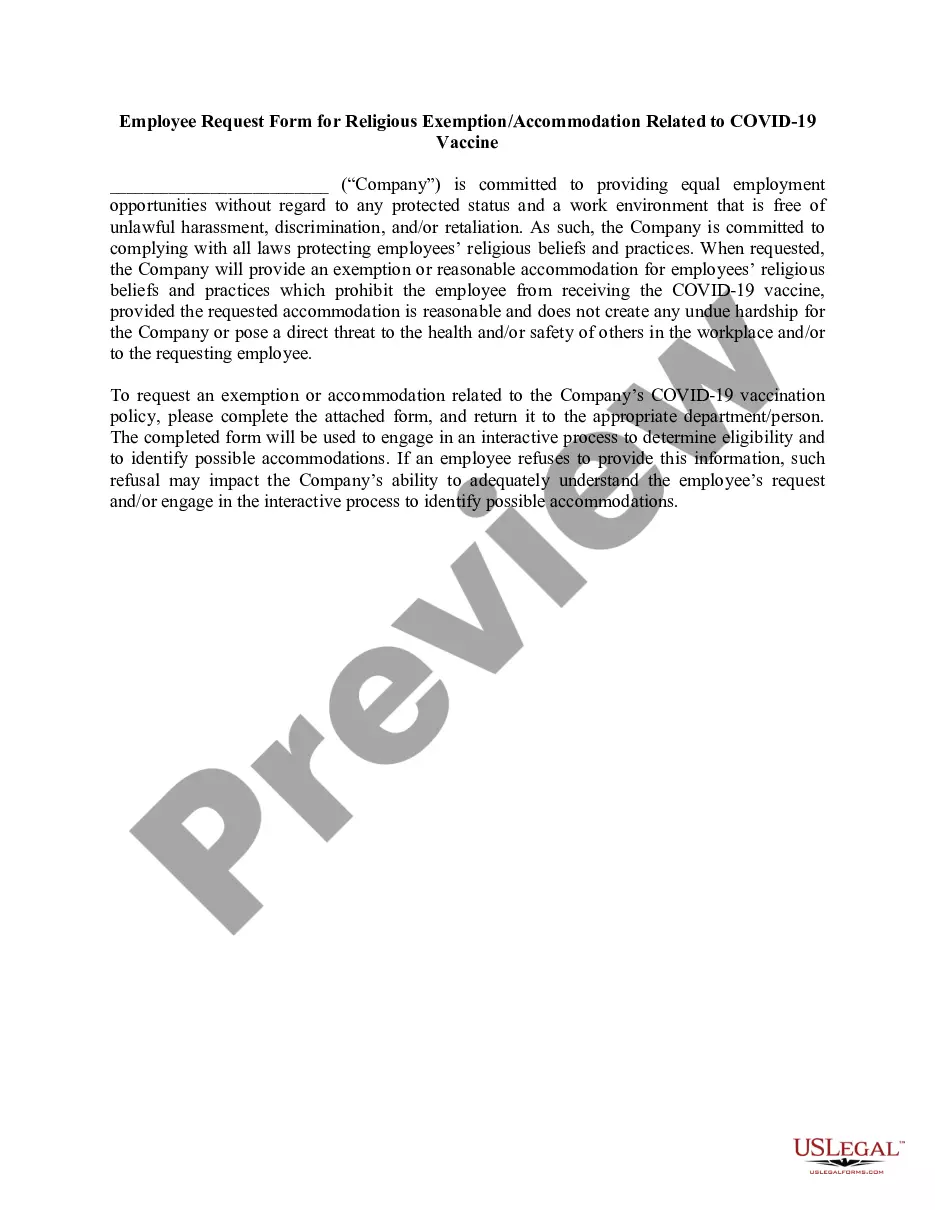
The Request for Waiver for COVID-19 Vaccine Religious Exemption Form for an Employee allows employees to formally request an exemption or accommodation from their employer's COVID-19 vaccination policy based on their religious beliefs. This form is essential for maintaining workplace rights while addressing public health mandates, ensuring that those with religious objections can still participate in the workforce without compromising their beliefs.
Key parts of this document
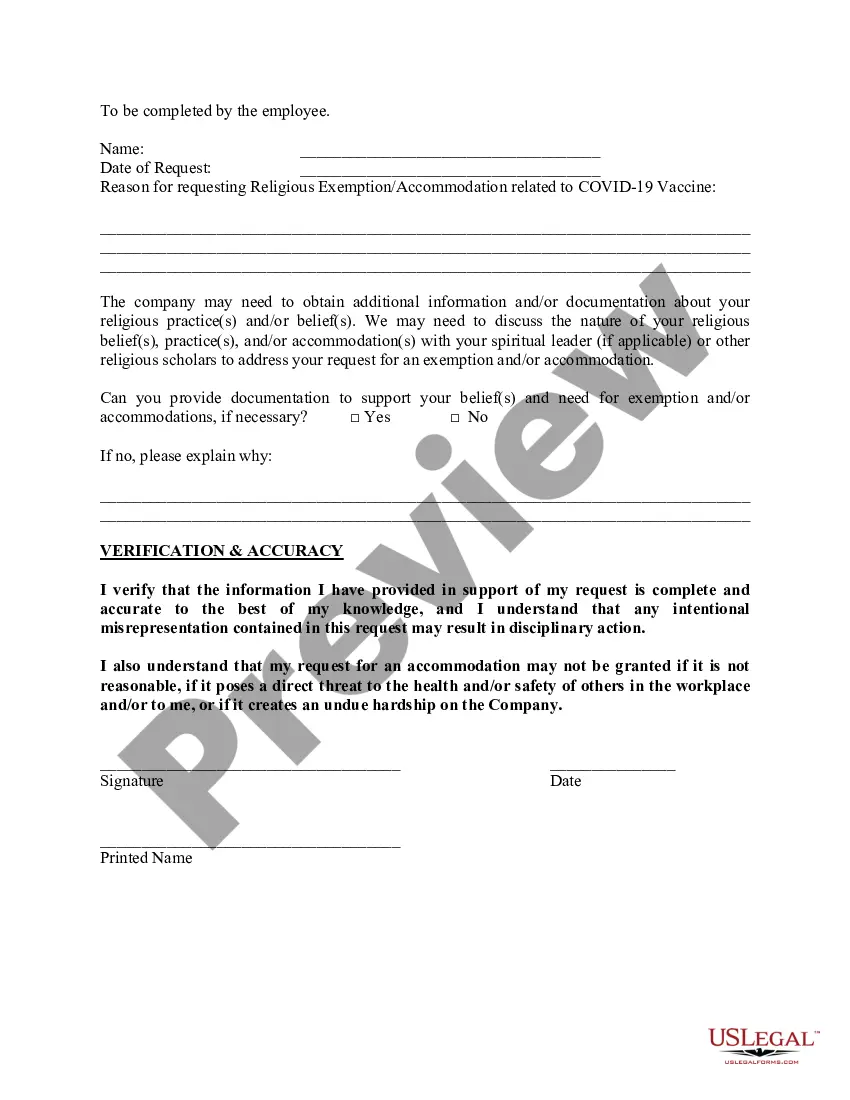
- Employee's name and date of request for tracking.
- Reason for requesting a religious exemption or accommodation.
- Questions concerning the ability to provide supporting documentation.
- Verification statement confirming the accuracy of provided information.
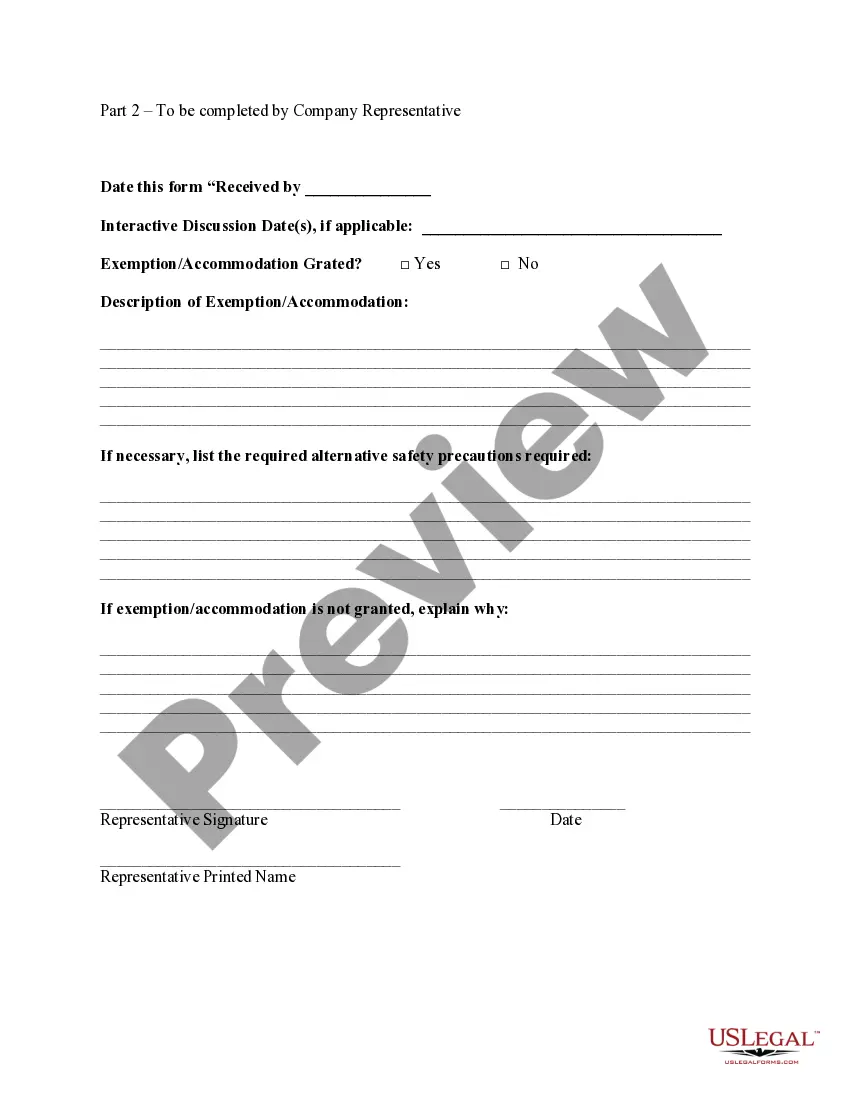
- Section for company representative to document discussions and decisions.
Situations where this form applies
This form should be used when an employee wishes to request a religious exemption from receiving the COVID-19 vaccine due to personal beliefs or practices. It is applicable in situations where vaccination is mandated by the employer, and the employee believes that receiving the vaccine would violate their religious convictions.
Who this form is for
- Employees who have a genuine religious belief preventing them from receiving the COVID-19 vaccine.
- Individuals seeking reasonable accommodation in relation to their employer's vaccination policy.
- Workers looking for a formal process to engage their employer regarding their rights and beliefs.
How to prepare this document
- Enter your full name and the date of the request at the top of the form.
- Clearly state your reason for requesting the religious exemption or accommodation in the designated section.
- Indicate whether you can provide supporting documentation and justify any reasons for not doing so.
- Sign and date the verification section to confirm the accuracy of your request.
- Submit the completed form to the appropriate company representative or department as instructed.
Notarization requirements for this form
This form does not typically require notarization unless specified by local law.
Get your form ready online
Our built-in tools help you complete, sign, share, and store your documents in one place.
Make edits, fill in missing information, and update formatting in US Legal Forms—just like you would in MS Word.
Download a copy, print it, send it by email, or mail it via USPS—whatever works best for your next step.
Sign and collect signatures with our SignNow integration. Send to multiple recipients, set reminders, and more. Go Premium to unlock E-Sign.
If this form requires notarization, complete it online through a secure video call—no need to meet a notary in person or wait for an appointment.
We protect your documents and personal data by following strict security and privacy standards.

Make edits, fill in missing information, and update formatting in US Legal Forms—just like you would in MS Word.

Download a copy, print it, send it by email, or mail it via USPS—whatever works best for your next step.

Sign and collect signatures with our SignNow integration. Send to multiple recipients, set reminders, and more. Go Premium to unlock E-Sign.

If this form requires notarization, complete it online through a secure video call—no need to meet a notary in person or wait for an appointment.

We protect your documents and personal data by following strict security and privacy standards.
Typical mistakes to avoid
- Failing to provide a clear and detailed reason for the exemption request.
- Not signing and dating the form, which invalidates the request.
- Submitting incomplete or vague documentation, making it difficult for the company to consider the request.
- Ignoring company deadlines for submission, which could lead to automatic denial of the request.
Advantages of online completion
- Convenience of downloading and completing the form at your own pace.
- Editable templates provide flexibility to personalize your exemption request.
- Access to forms drafted by licensed attorneys, ensuring legal compliance.
Legal use & context
- Religious exemptions for vaccinations are recognized under Title VII of the Civil Rights Act.
- Employers must engage in an interactive process to assess requests for accommodations.
- Exemptions may not be granted if they pose a direct threat to health and safety.
Looking for another form?
Form popularity
FAQ
Tennessee Public Chapter 644 requires Tennessee employers with mandatory COVID-19 vaccination policies to grant an exemption to a staff member who has a medical exemption supported by a healthcare provider's signed statement or a sincerely held religious belief supported by a written attestation from the staff member
It is morally wrong to receive a vaccine that used fetal cells in the development stage?the most commonly cited religious objection to the vaccines; The body is a temple that should not receive foreign or unnatural substances, and God will protect the body from sickness; and.
Here are examples of religious beliefs: the belief of some Christians that you should wear a cross as a symbol of your faith. the belief within Islam that a woman should cover her head or her whole body. the belief in creationism or intelligent design.
Use this form to request a religious exemption from the Clinical Facilities COVID-19 vaccination requirement. This exemption request is for those individuals with a sincerely held religious belief that prevents them from getting vaccinated.
The law is clear that a sincere religious believer doesn't forfeit his religious rights merely because he is not scrupulous in his observance or had never openly demonstrated those beliefs in the past. Sincerely Held Religious Beliefs Do Not Need to Be Express Tenets of a Religion in Order to Require Accommodation.
The research from Vanderbilt University found theological opposition to vaccination only within the Dutch Reformed Church, Christian Scientists, and a handful of faith-healing denominations (Faith Assembly, Faith Tabernacle, the Church of the First Born, and the Endtime Ministries).
Specifically, Missouri's rules require that those seeking a vaccination waiver use Form 11 to record their religious objection in obtaining a vaccination waiver for their child.
It examined these California decisions, and others, and concluded that: A belief in a supreme being is not required to be a religious belief. Something more than a philosophy or way of life is required for a belief to be considered a ?religious? belief or creed.