South Carolina Declaration of Covenants, Conditions and Restrictions
What is this form?
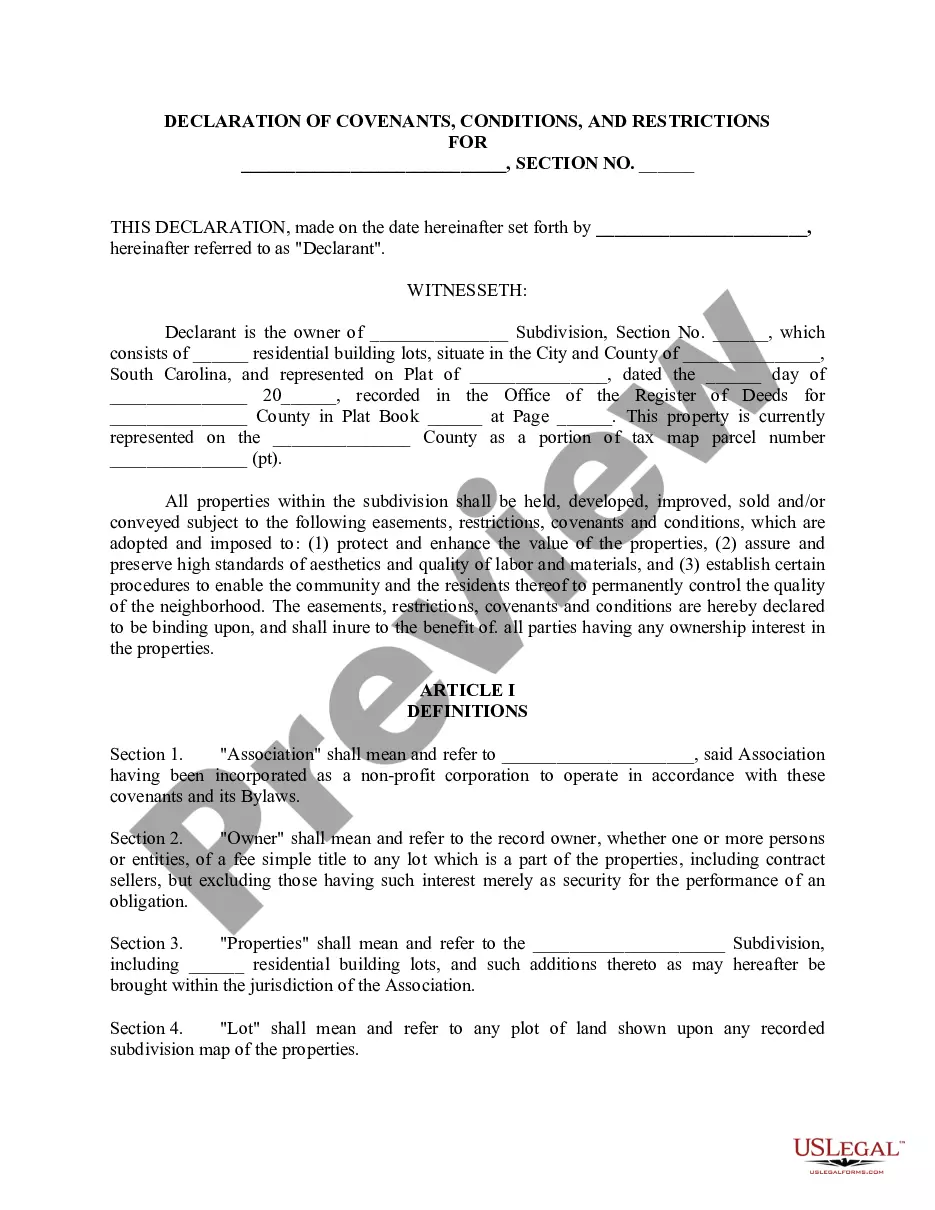
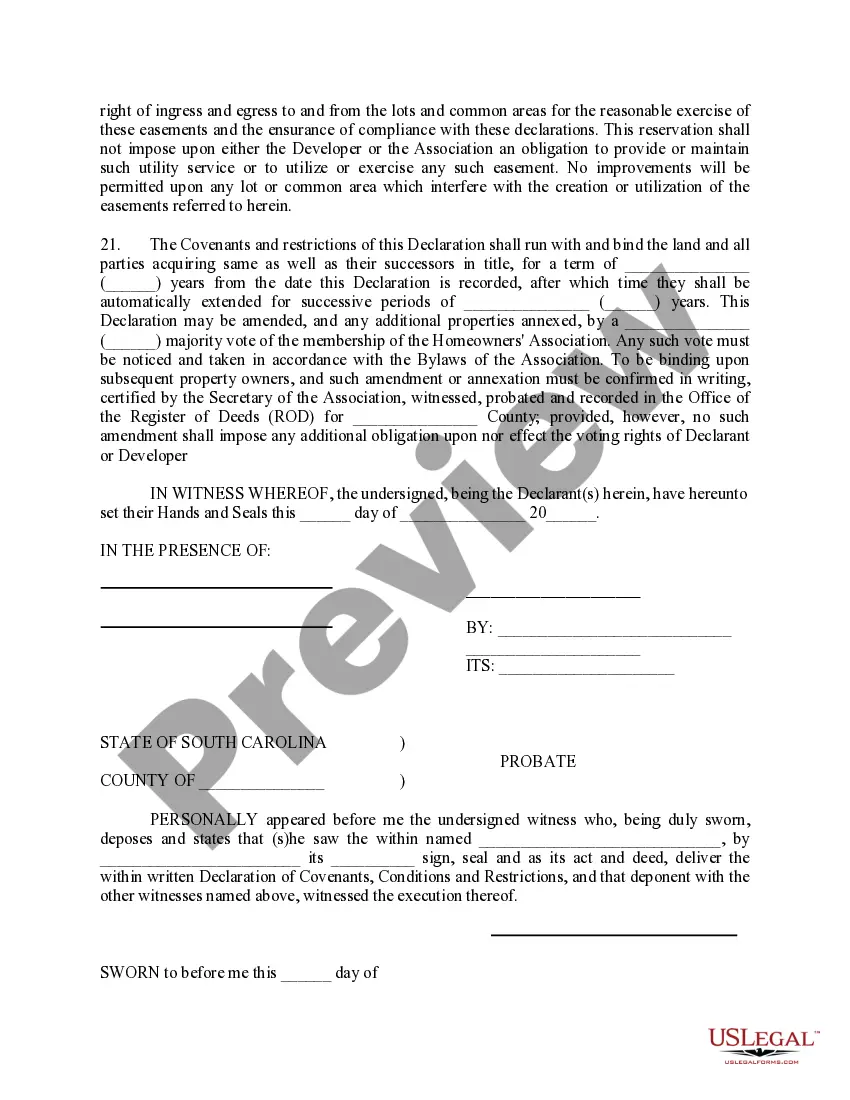
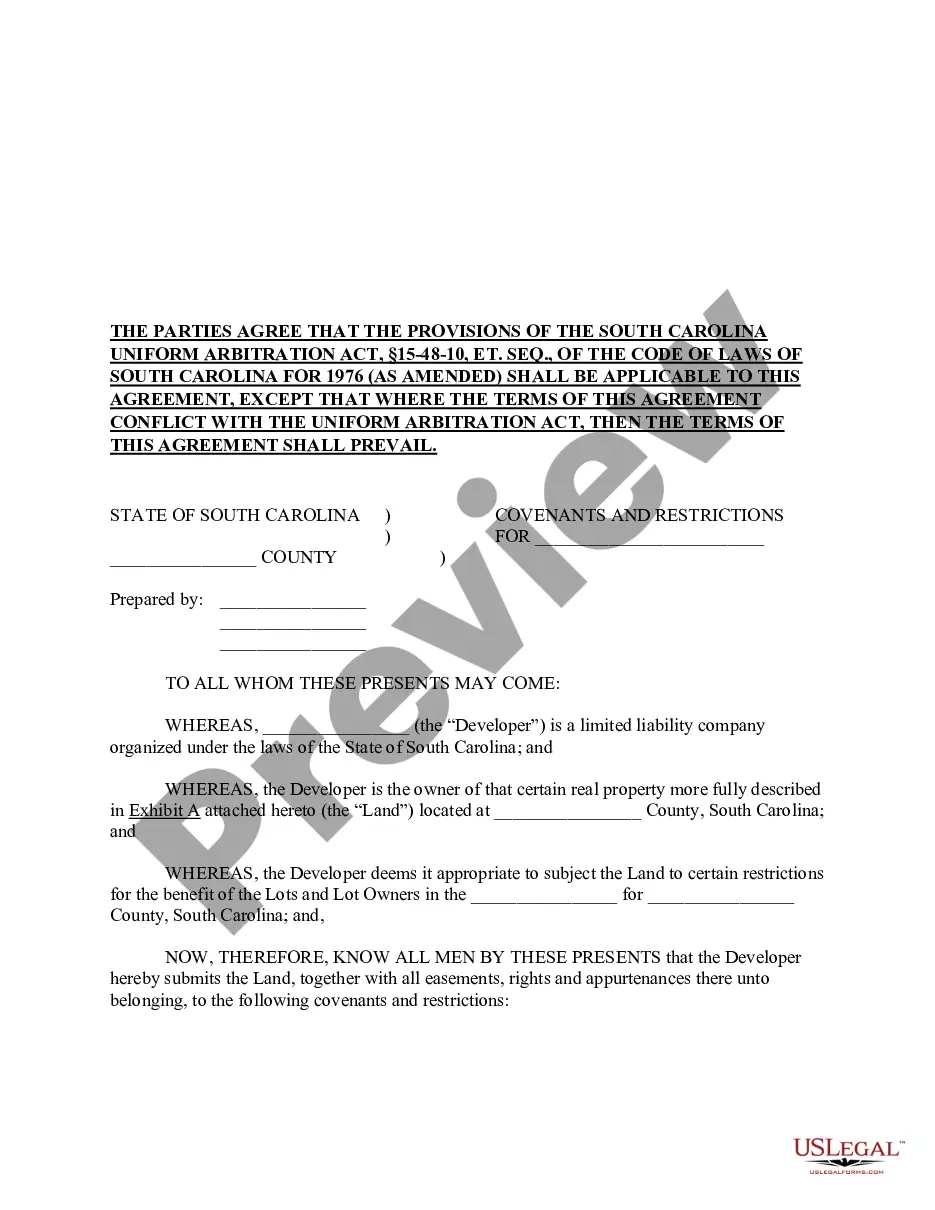
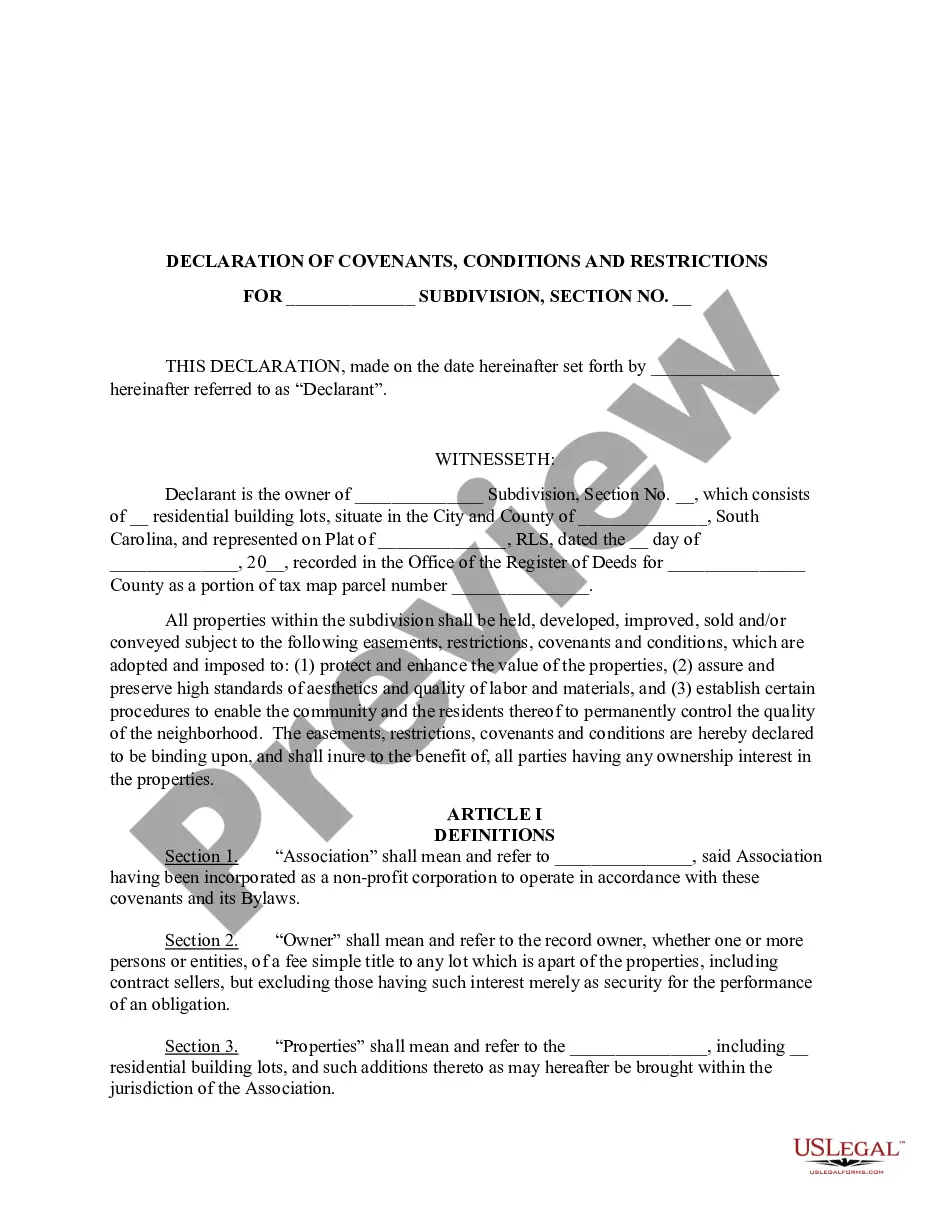
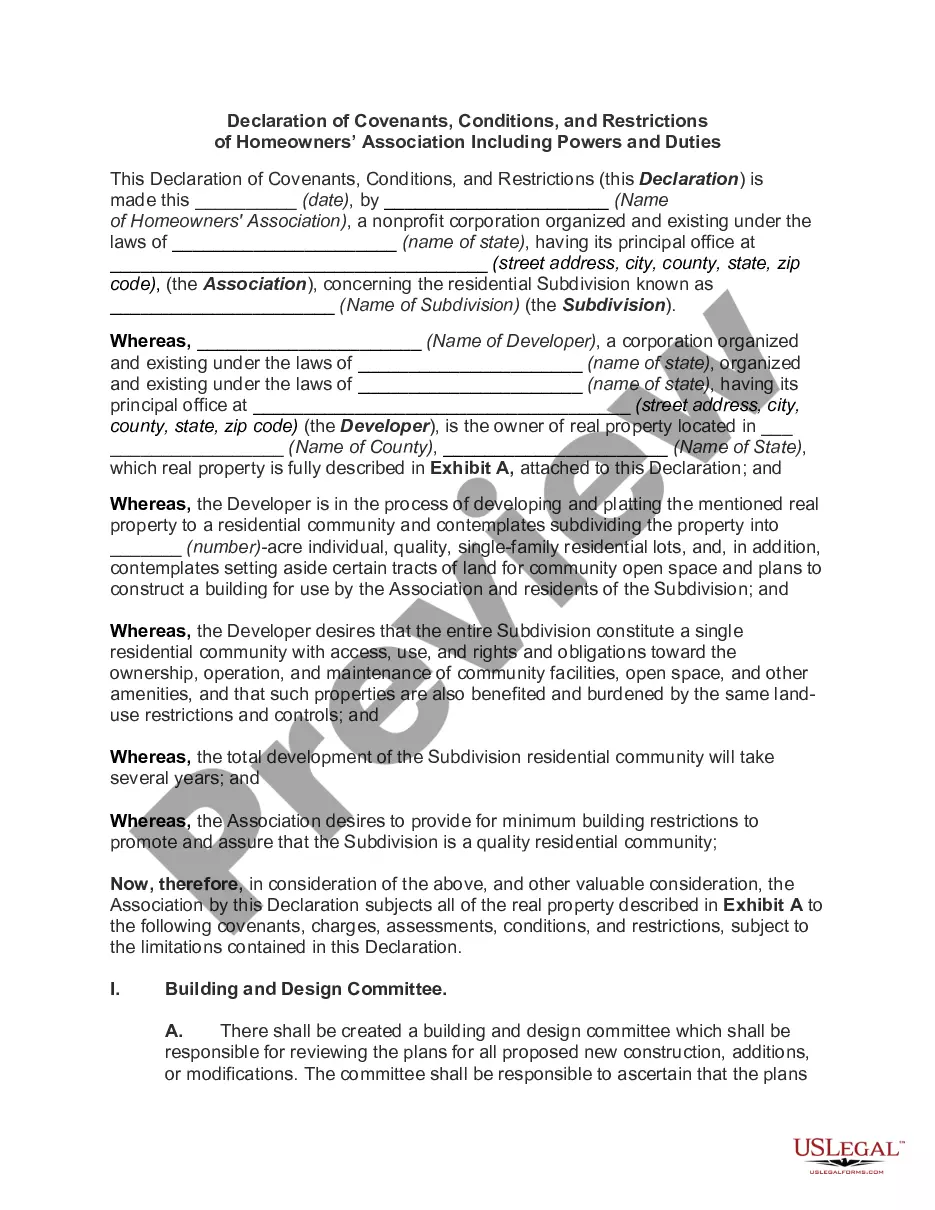
The Declaration of Covenants, Conditions and Restrictions is a legal document that establishes rules and guidelines governing the use and improvement of properties within a community. This form outlines what property owners can or cannot do with their land, ensuring uniformity and preserving community aesthetics. Unlike standard real estate deeds, this declaration specifically focuses on restrictions and obligations imposed on property owners to maintain a certain quality and appearance within the neighborhood.
What’s included in this form
- Declarant Information: Identifies the individual or entity creating the declaration.
- Definitions: Clarifies key terms used throughout the document, including "Owner", "Association", and "Properties".
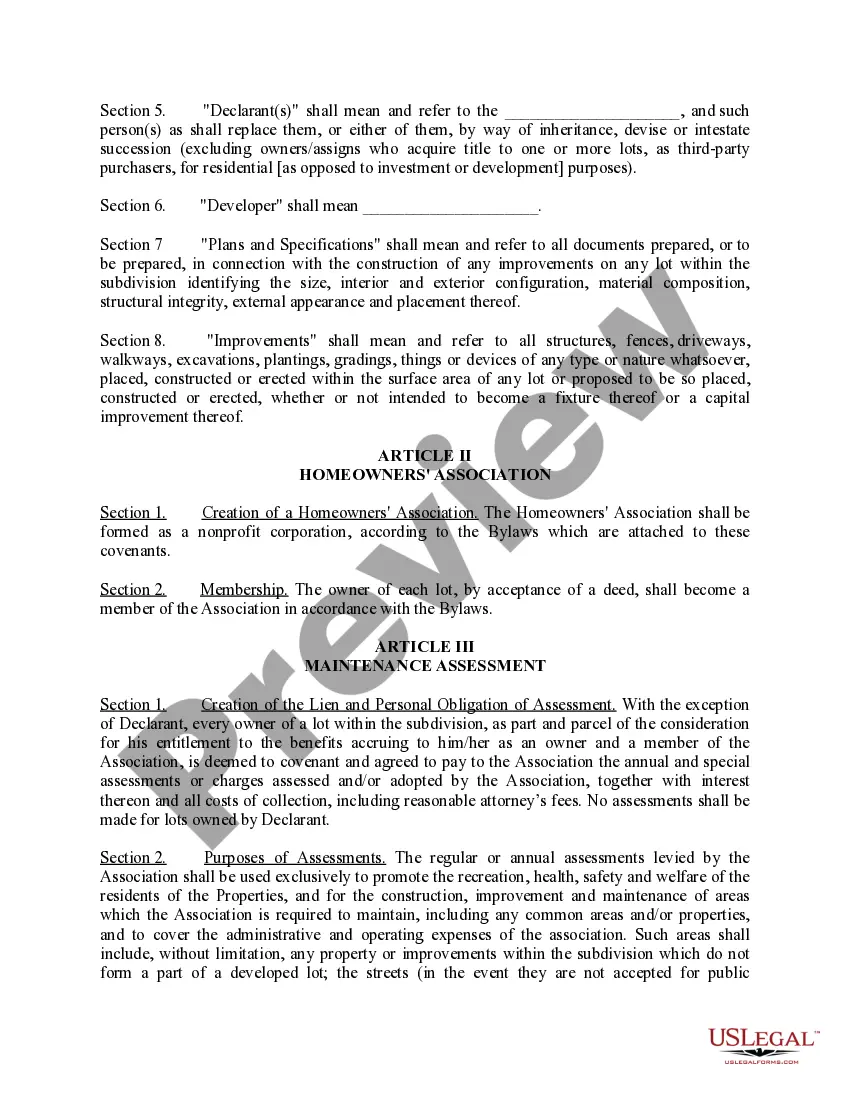
- Homeowners' Association: Details regarding the formation, membership, and governance of the association.
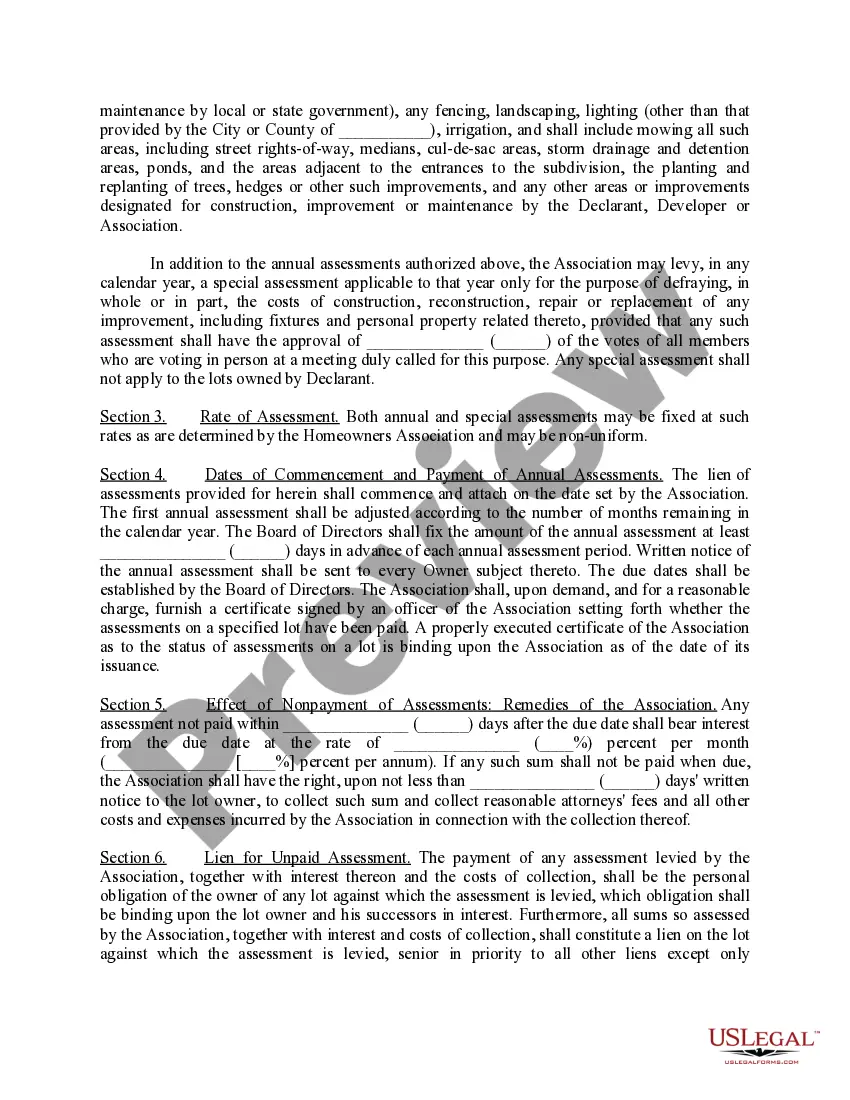
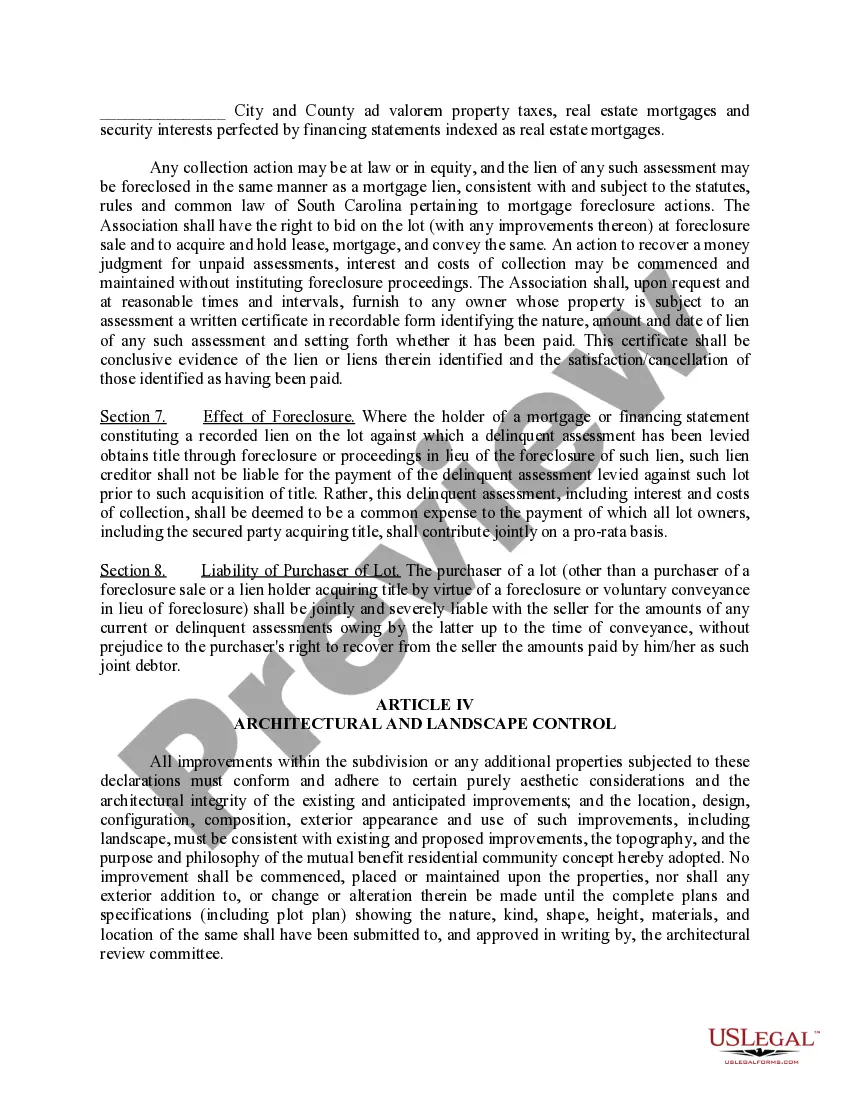
- Assessments: Outlines maintenance assessments, lien creation, and payment obligations for property owners.
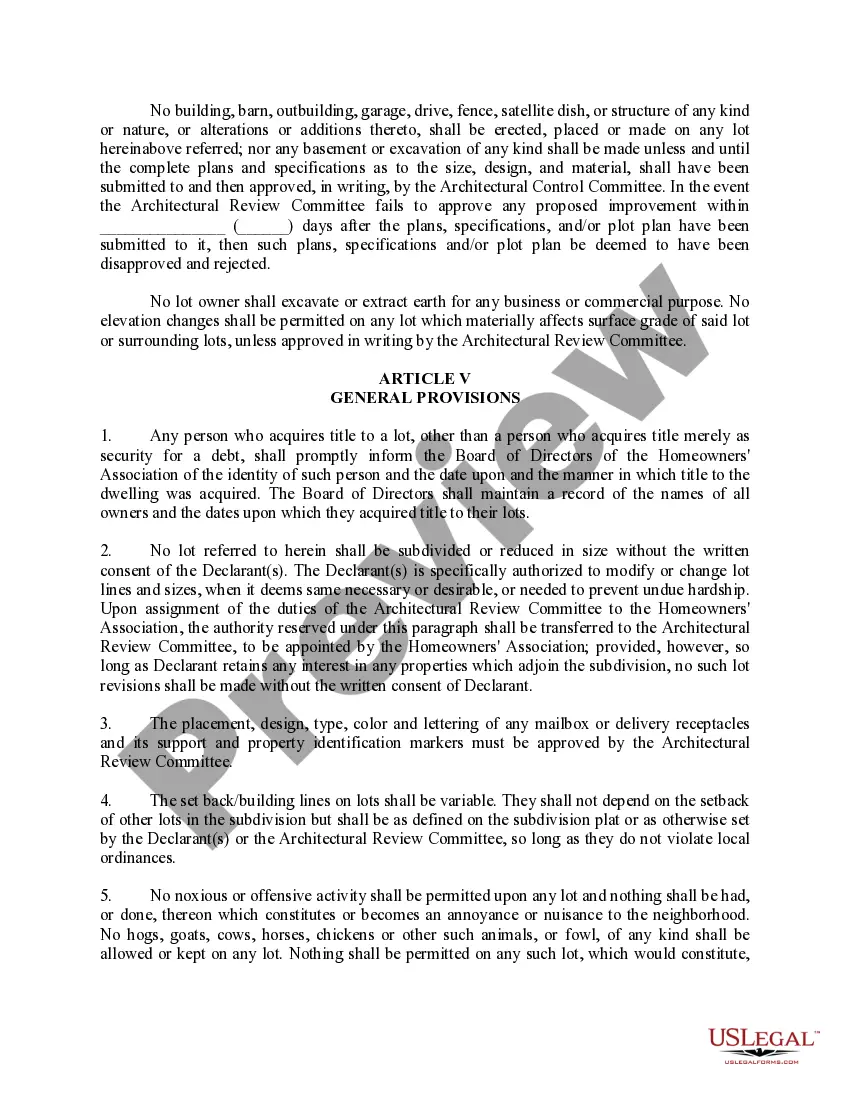
- Architectural Control: Establishes requirements for approval of improvements, ensuring adherence to aesthetic standards.
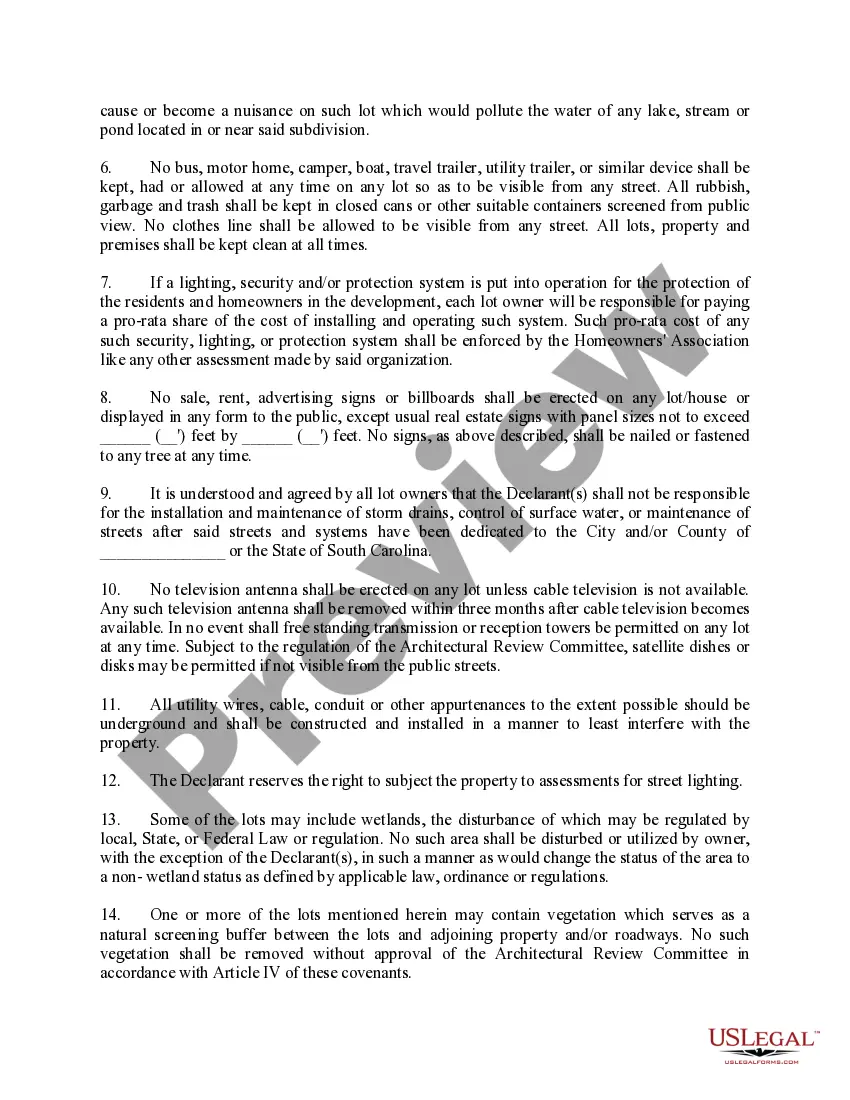
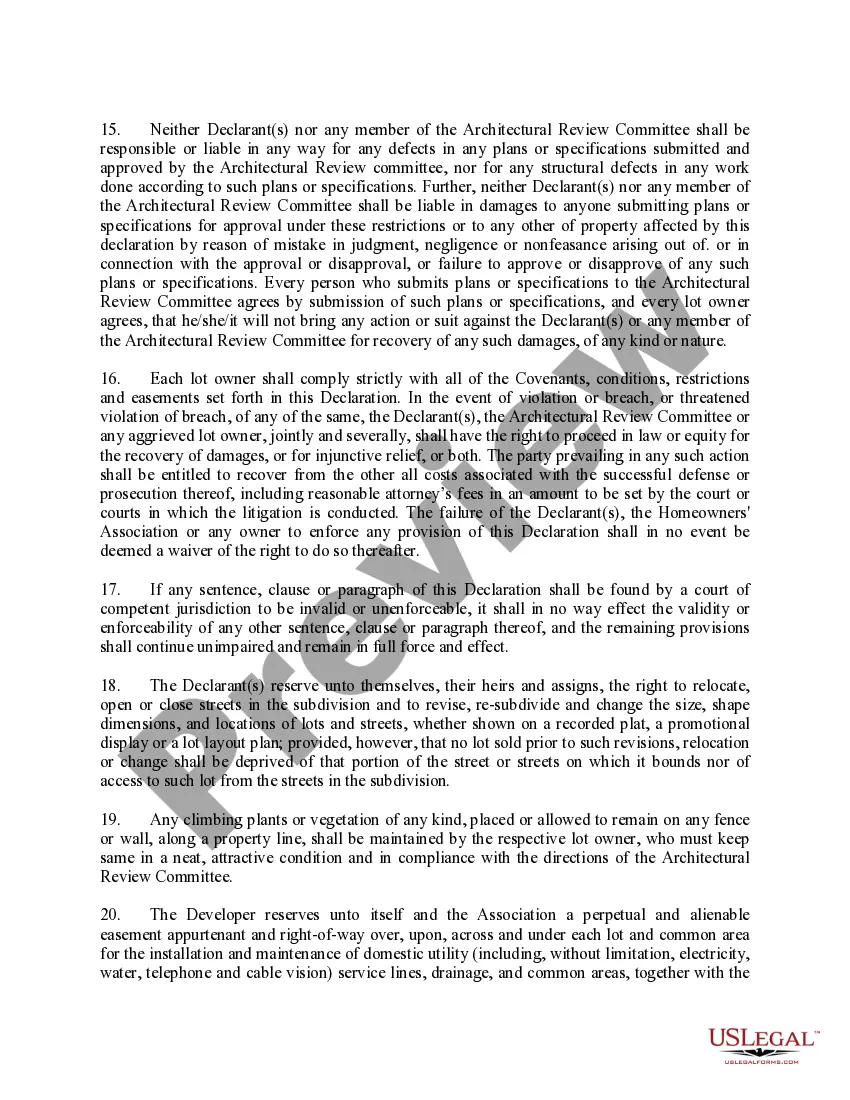
- General Provisions: Includes various rules regarding property usage, maintenance responsibilities, and enforcement mechanisms.
When this form is needed
This form is essential when establishing a new residential community or subdivision where multiple properties require uniform regulations. It is commonly used by developers or property owners who wish to manage property values and aesthetic standards effectively. Property owners should also utilize this form when buying into a community governed by such covenants to understand their rights and obligations.
Who can use this document
- Developers establishing residential subdivisions.
- Homeowners' associations creating or updating community rules.
- Property owners looking to understand their obligations within a planned community.
- Real estate professionals assisting clients in community governance and property management.
Instructions for completing this form
- Identify the Declarant: Provide the name of the individual or entity creating the declaration.
- Specify the Properties: Clearly define the subdivision and include relevant lot numbers and descriptions from the plat.
- Detail the Covenants: Outline the specific restrictions, conditions, and obligations applicable to the homeowners.
- Establish the Association: Incorporate necessary information regarding the homeowners' association, including its name and governance structure.
- Obtain Signatures: Ensure that the relevant parties sign the document, including verification by a notary public if required.
Is notarization required?
Yes, this form must be notarized to be legally valid in South Carolina, ensuring that the signatories are properly identified and that the document can be recorded with the county. US Legal Forms offers integrated online notarization services for your convenience, allowing for secure video calls with a notary at any time.
Get your form ready online
Our built-in tools help you complete, sign, share, and store your documents in one place.
Make edits, fill in missing information, and update formatting in US Legal Forms—just like you would in MS Word.
Download a copy, print it, send it by email, or mail it via USPS—whatever works best for your next step.
Sign and collect signatures with our SignNow integration. Send to multiple recipients, set reminders, and more. Go Premium to unlock E-Sign.
If this form requires notarization, complete it online through a secure video call—no need to meet a notary in person or wait for an appointment.
We protect your documents and personal data by following strict security and privacy standards.

Make edits, fill in missing information, and update formatting in US Legal Forms—just like you would in MS Word.

Download a copy, print it, send it by email, or mail it via USPS—whatever works best for your next step.

Sign and collect signatures with our SignNow integration. Send to multiple recipients, set reminders, and more. Go Premium to unlock E-Sign.

If this form requires notarization, complete it online through a secure video call—no need to meet a notary in person or wait for an appointment.

We protect your documents and personal data by following strict security and privacy standards.
Common mistakes to avoid
- Failing to clearly define all terms, leading to ambiguity in interpretations.
- Neglecting to specify the correct properties or lots involved in the declaration.
- Not obtaining necessary approvals from the homeowners' association regarding design changes.
- Overlooking the requirement for notarization, if applicable, which may invalidate the document.
Why complete this form online
- Convenient access to professionally drafted templates ensures accuracy and compliance with legal standards.
- Easy to customize the form to fit specific community needs and requirements.
- Fast download options allow immediate use without waiting for physical copies.
- Integrated online support helps users navigate through completing the form effectively.
Looking for another form?
Form popularity
FAQ
While bylaws are generally mutually agreed upon governing rules for an organization or business, covenants are usually long-term promises to do something or refrain from action that may last for several generations.
What Happens When Covenants Expire. Once the HOA covenants expire, the board effectively becomes powerless. This means that the HOA cannot enforce the collection of assessments, cannot enforce architectural standards, and cannot regulate the use of common areas and common facilities.
Covenants, Conditions & Restrictions (CC&Rs) This is a legally binding document that is officially recorded and filed with your state. Your CC&Rs cover the rights and obligations of the homeowners association to its members and vice versa.
The rules of an HOA are legally binding for association members, but they generally aren't enforceable by the police. Violations of HOA guidelines are considered a civil matter between the HOA and non-complying members. The exception to this is if HOA's rules overlap with other laws.
Without an association there is no mechanism for a vote; amendment of the CC&R's would have to be done collecting signatures on a document to terminate them. The CC&R's are where the deed restrictions are found. If the owners choose to terminate the CC&R's then the deed restrictions would also be removed.