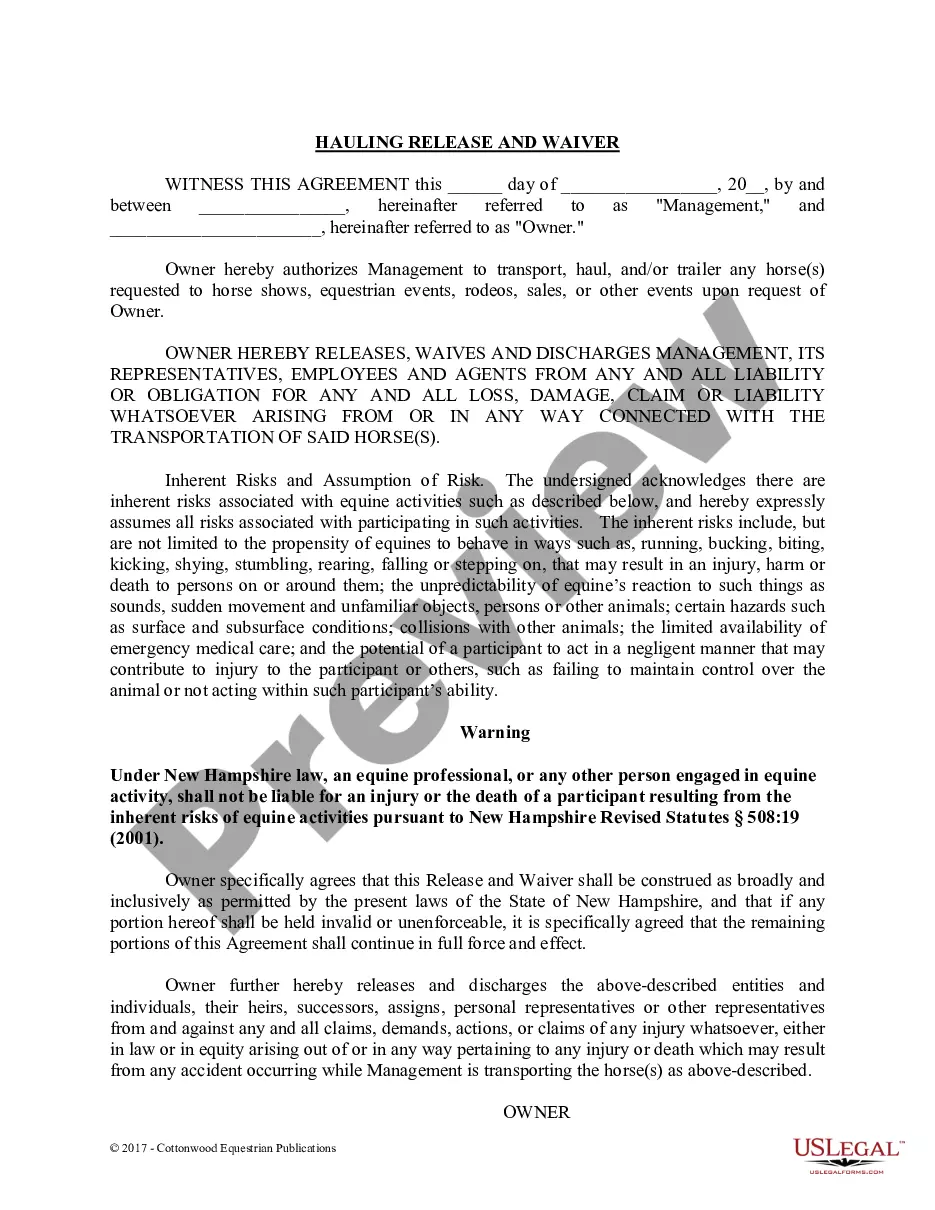
South Carolina Declaration of Covenants, Conditions and Restrictions
Understanding this form
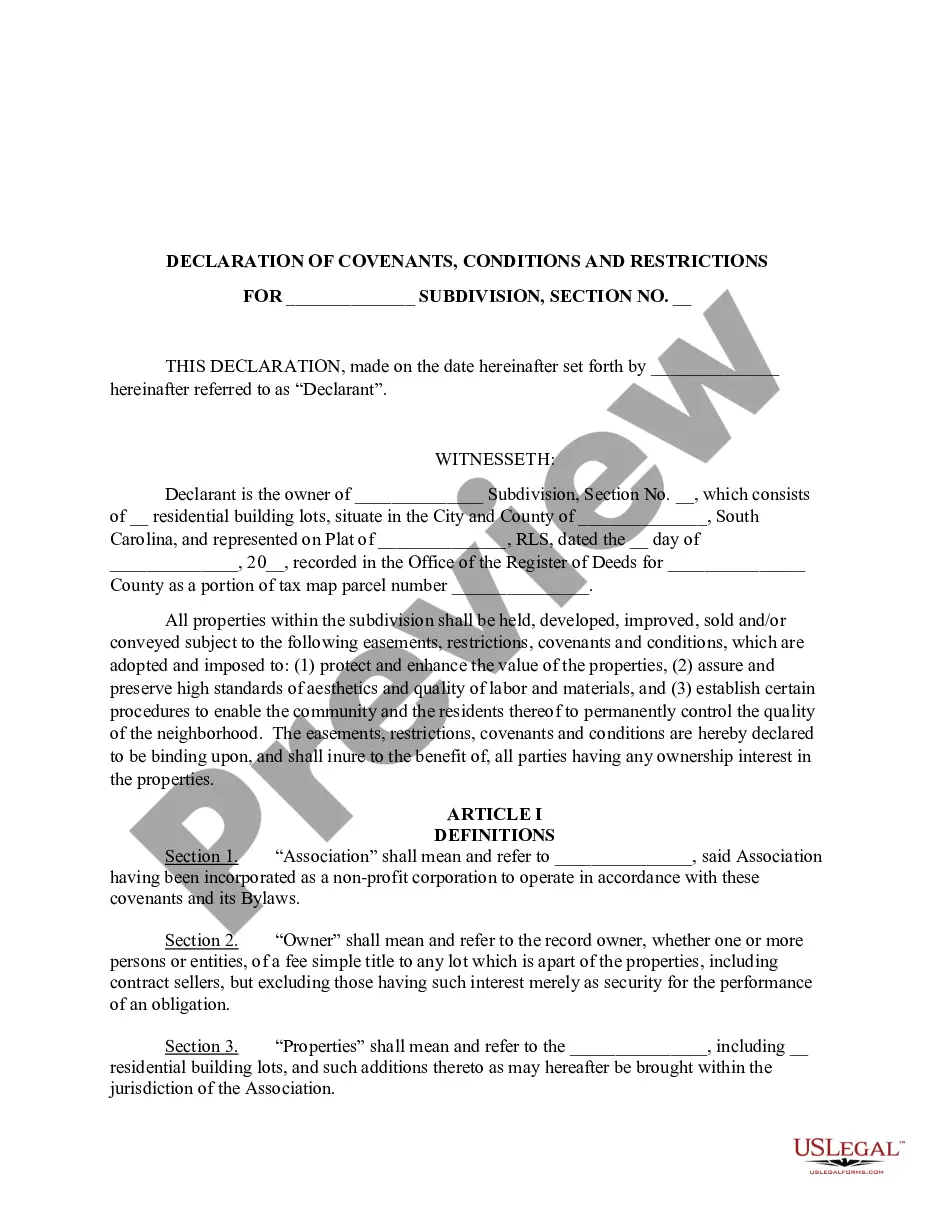
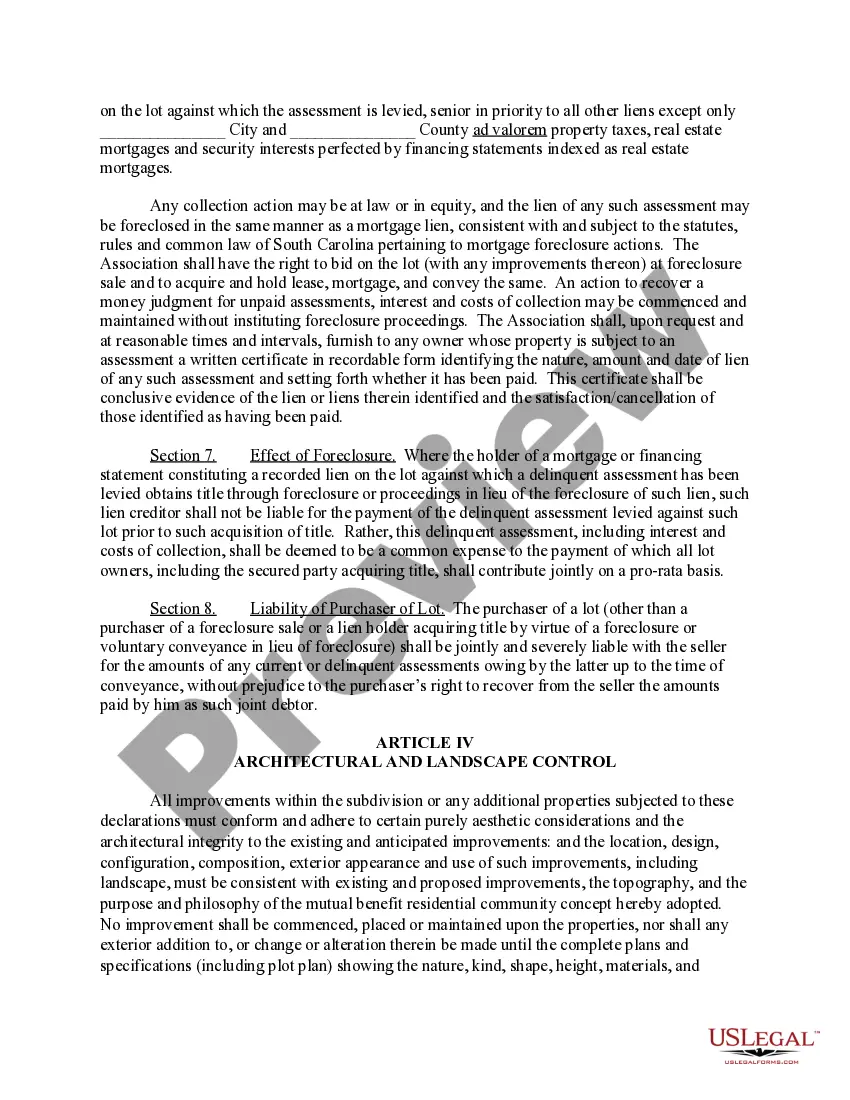
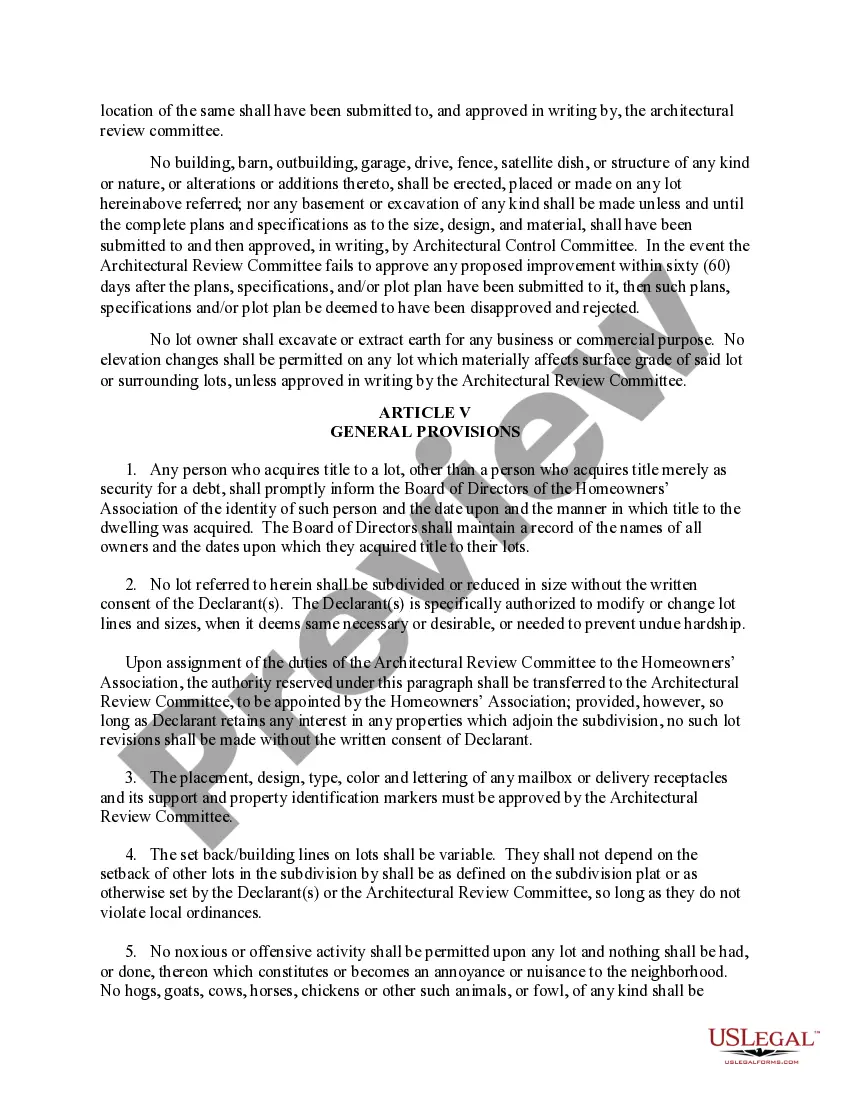
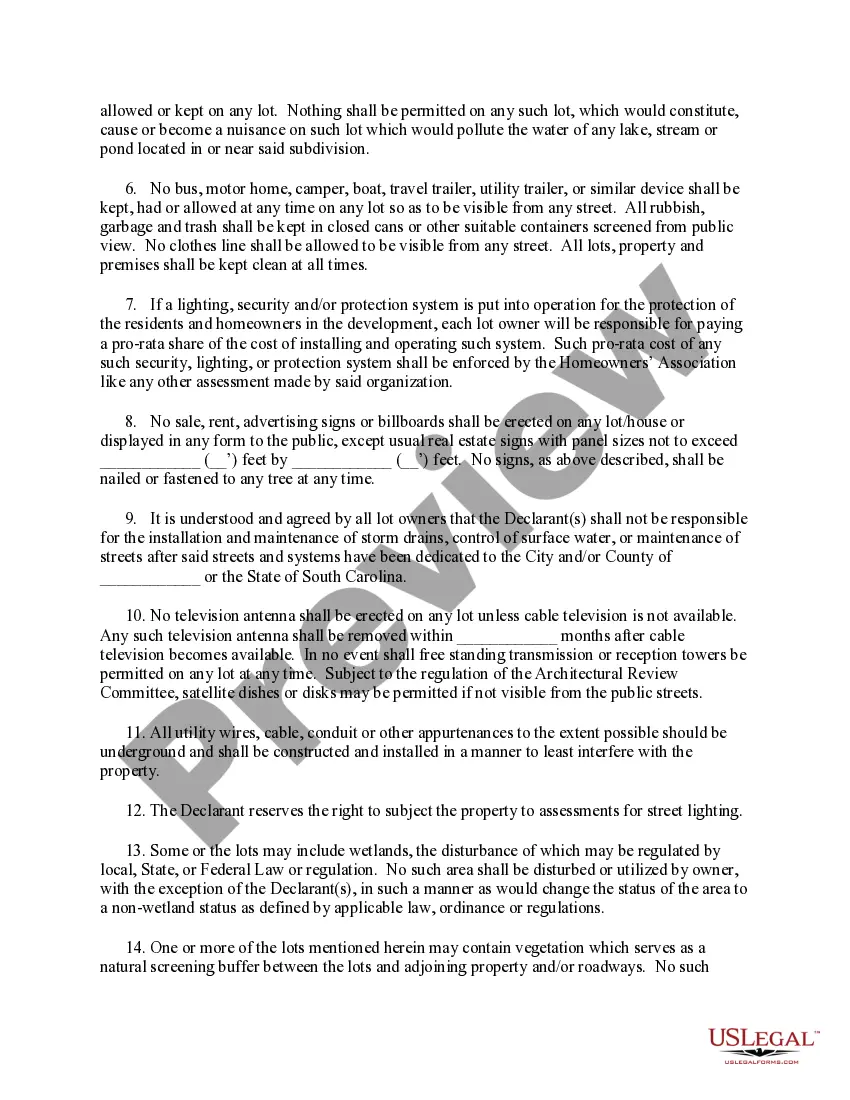
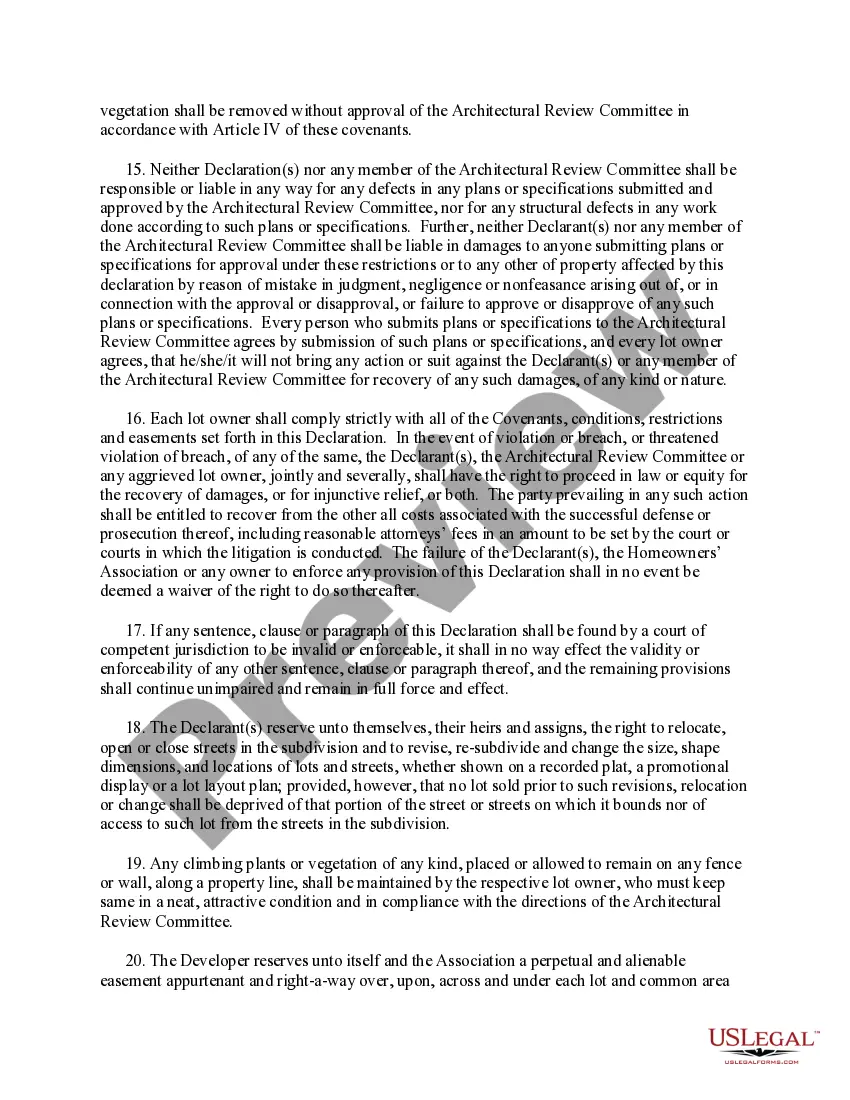
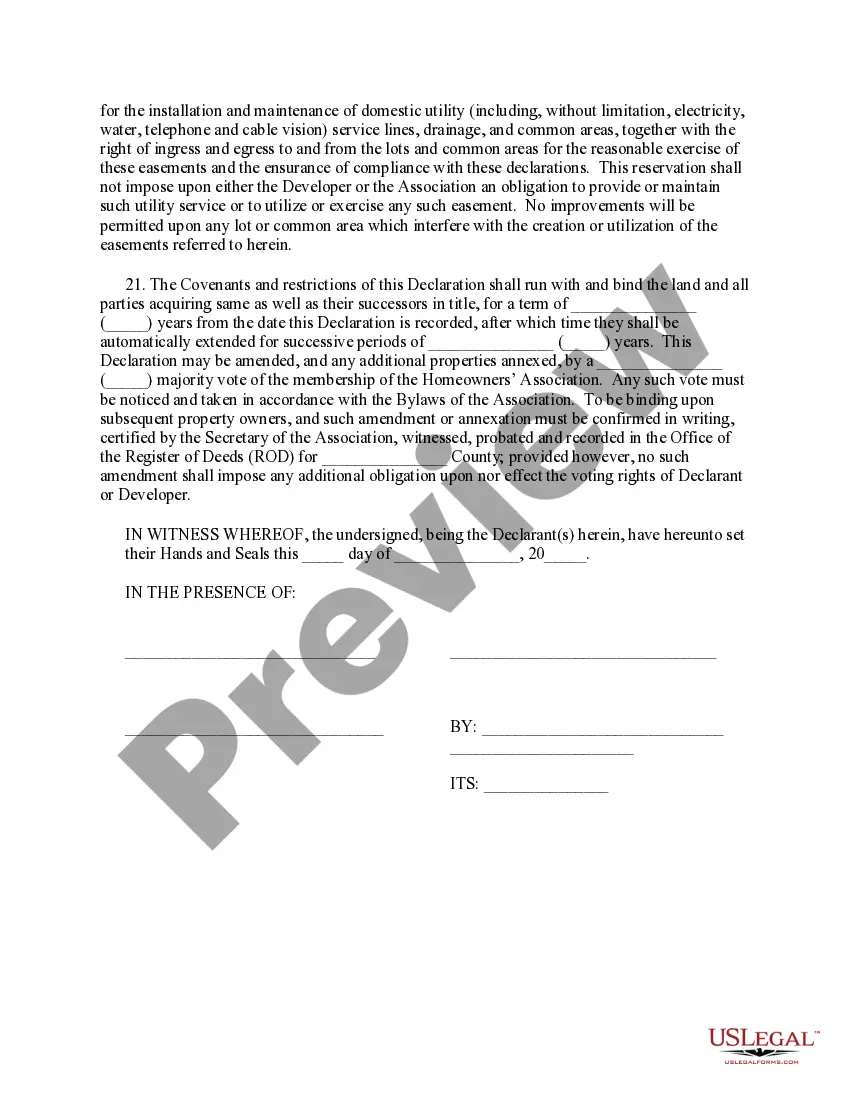
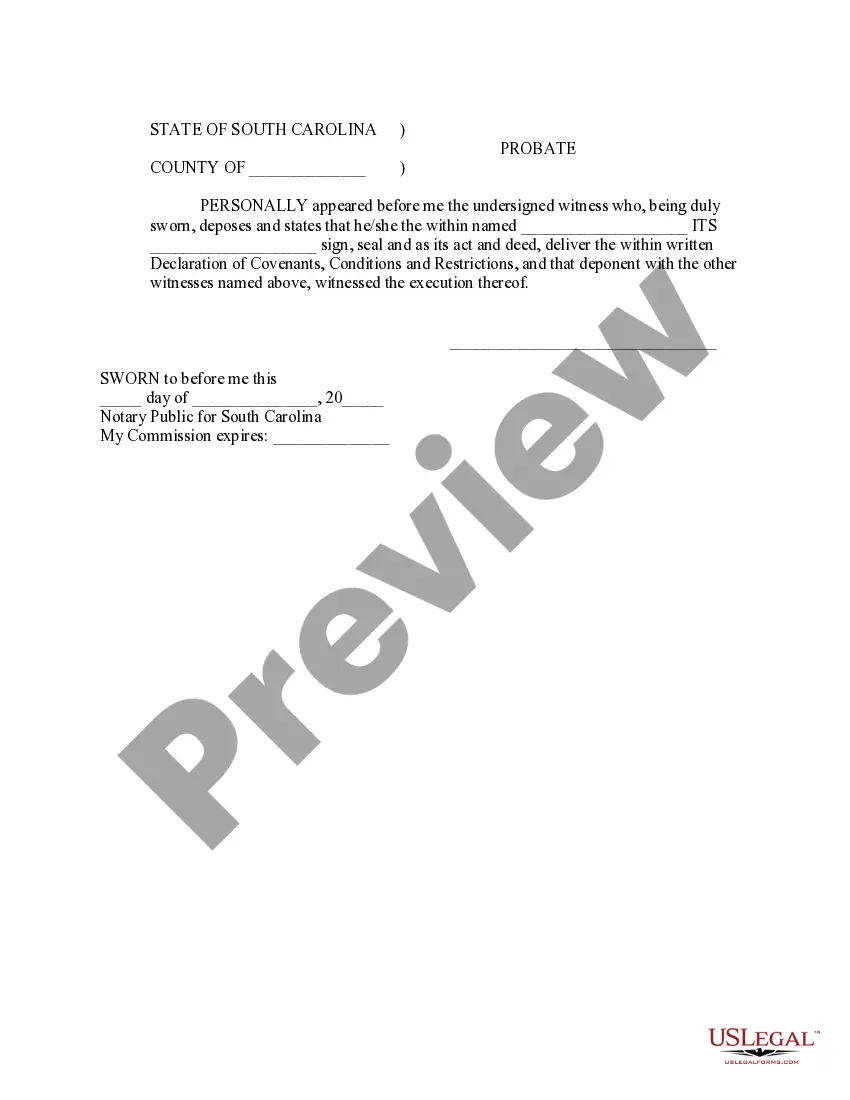
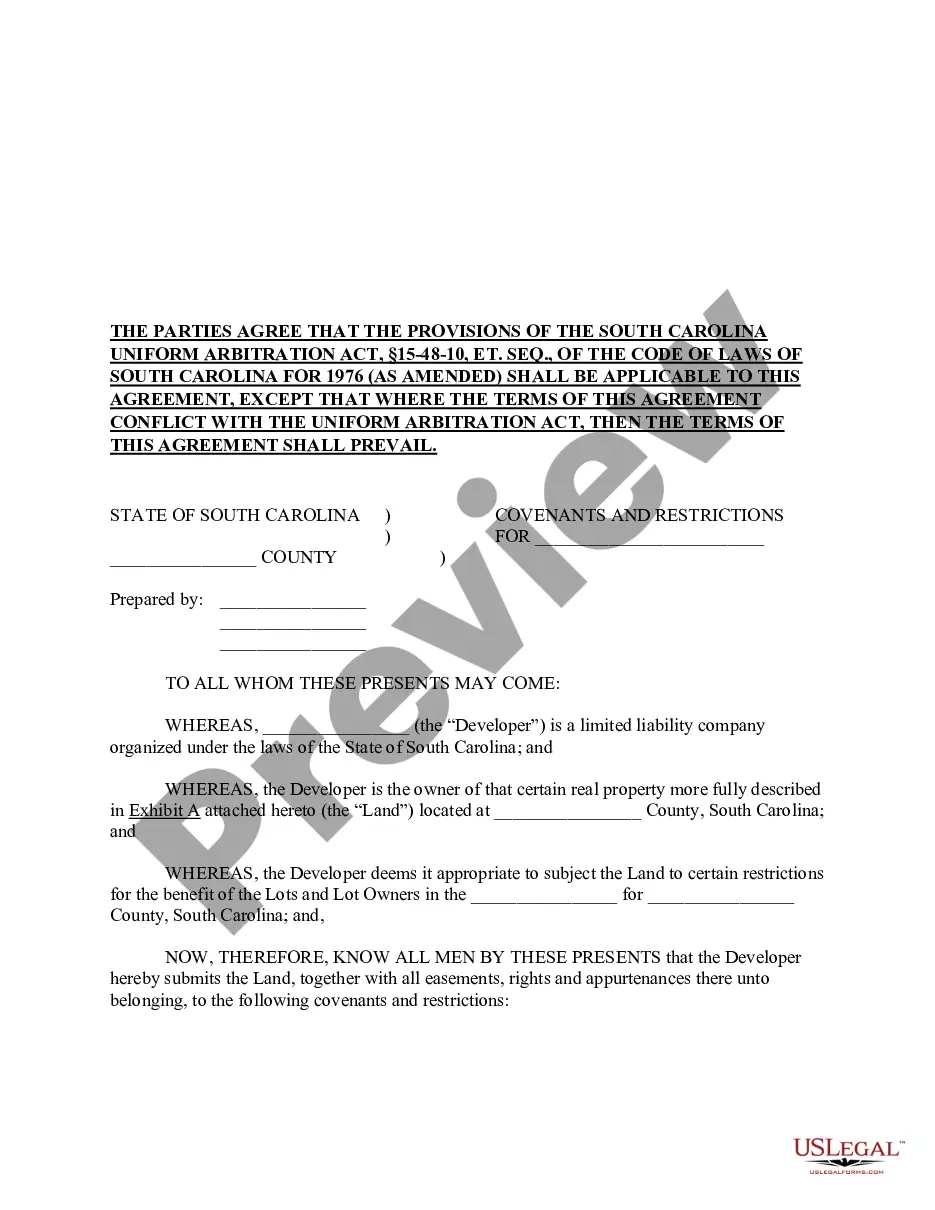
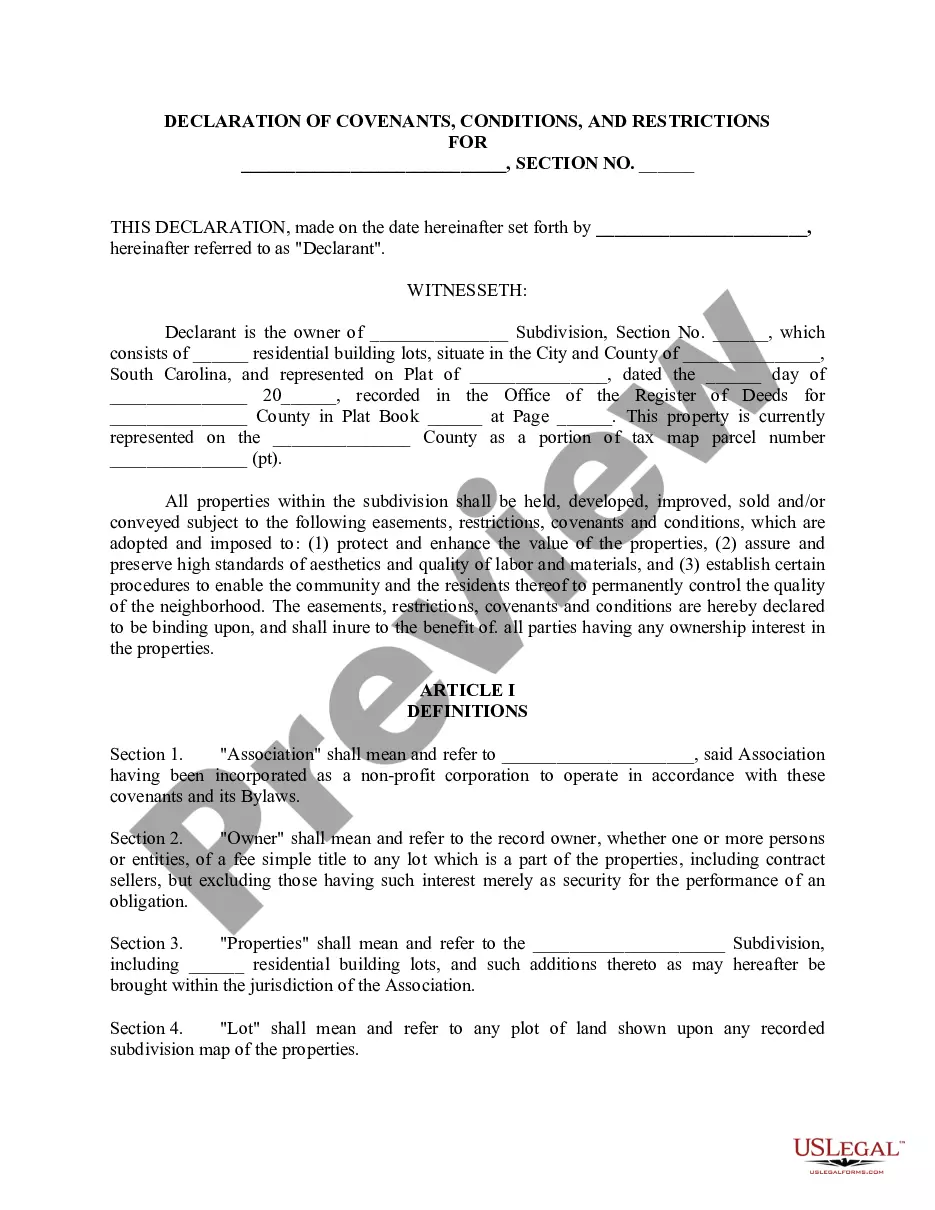
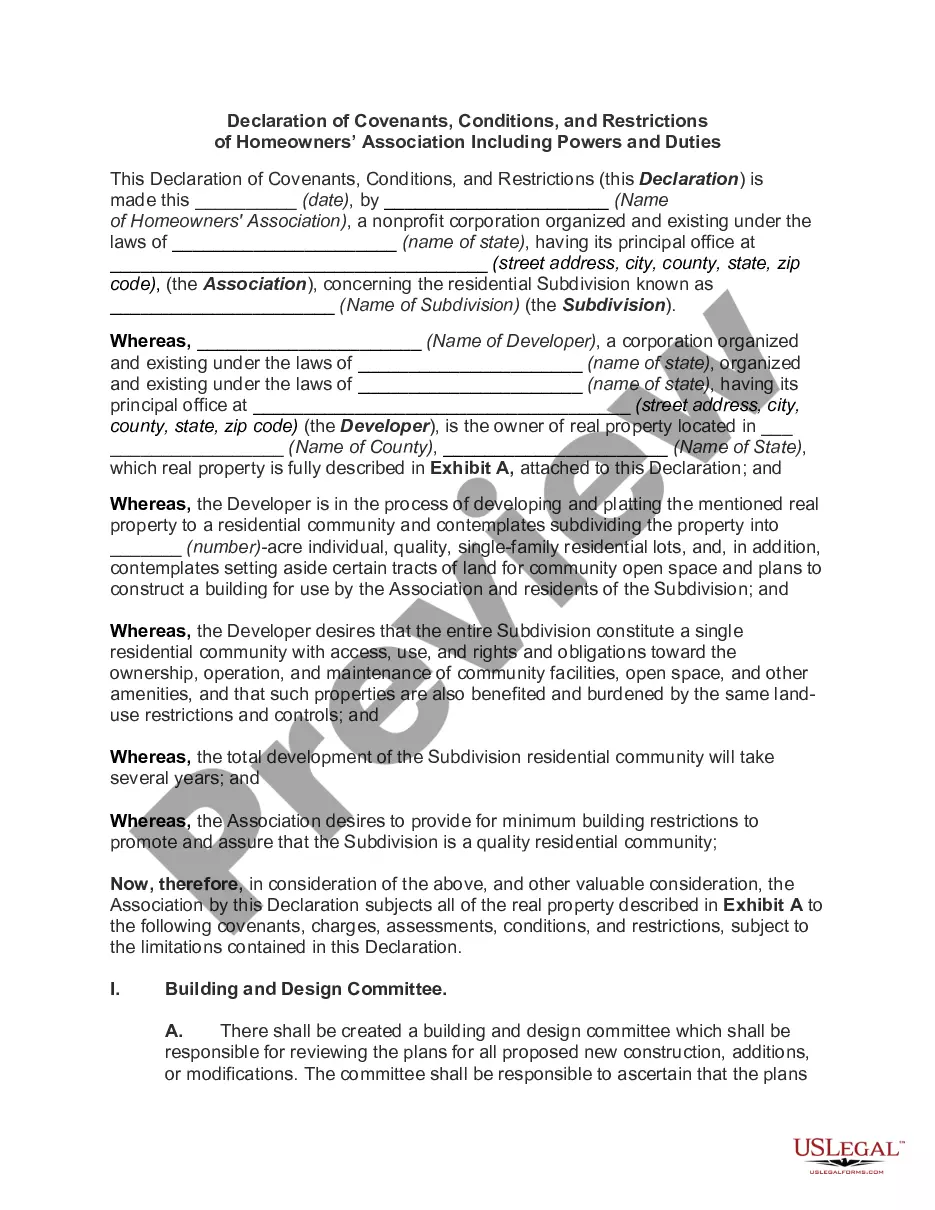
The Declaration of Covenants, Conditions and Restrictions is a legal document that governs the use and development of properties within a designated community or subdivision. This form is recorded with the county recorder's office as part of the official real estate records. It establishes rules that property owners must follow to maintain property values and aesthetic standards. Unlike other real estate forms, this declaration is binding on all owners and runs with the land, meaning it applies to current and future property owners within that community.
Form components explained
- Declarant details: Information about the individual or entity creating the declaration.
- Definitions section: Clarifies terms used in the declaration, such as "Owner," "Properties," and "Association."
- Homeowners' Association: Establishes the formation and membership of the local homeowners' association.
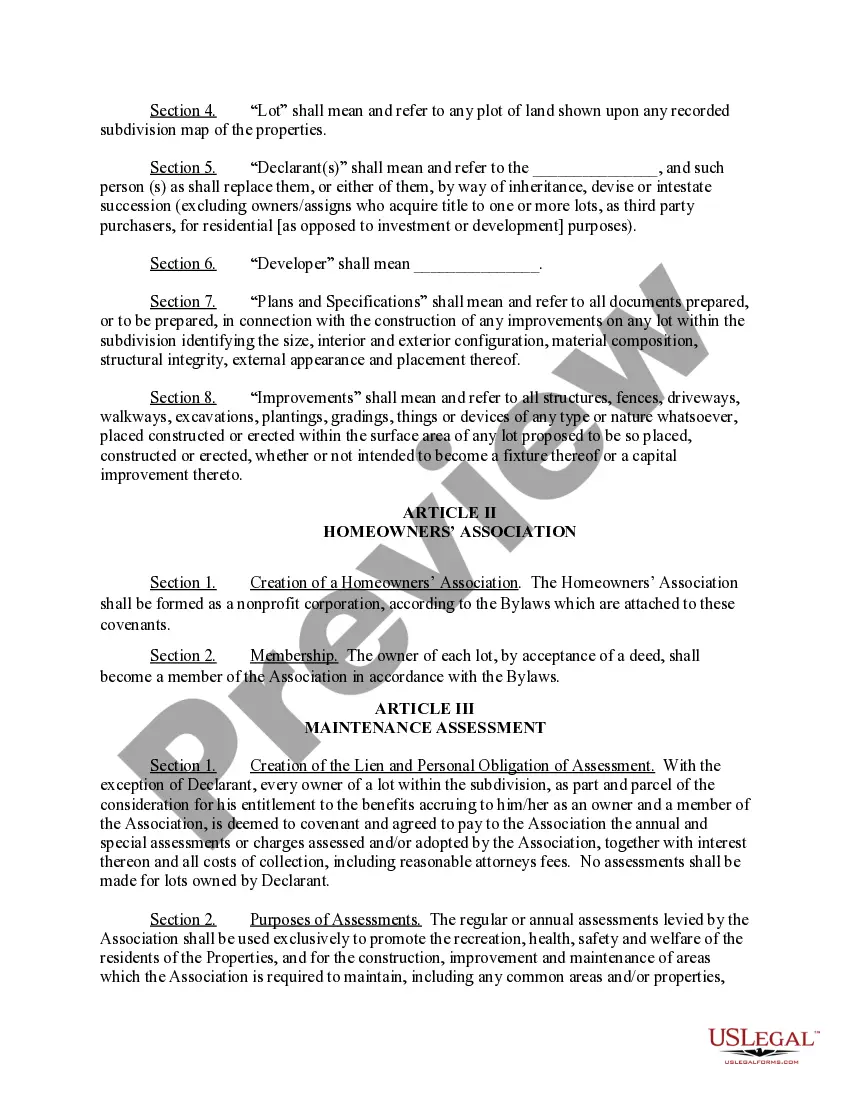
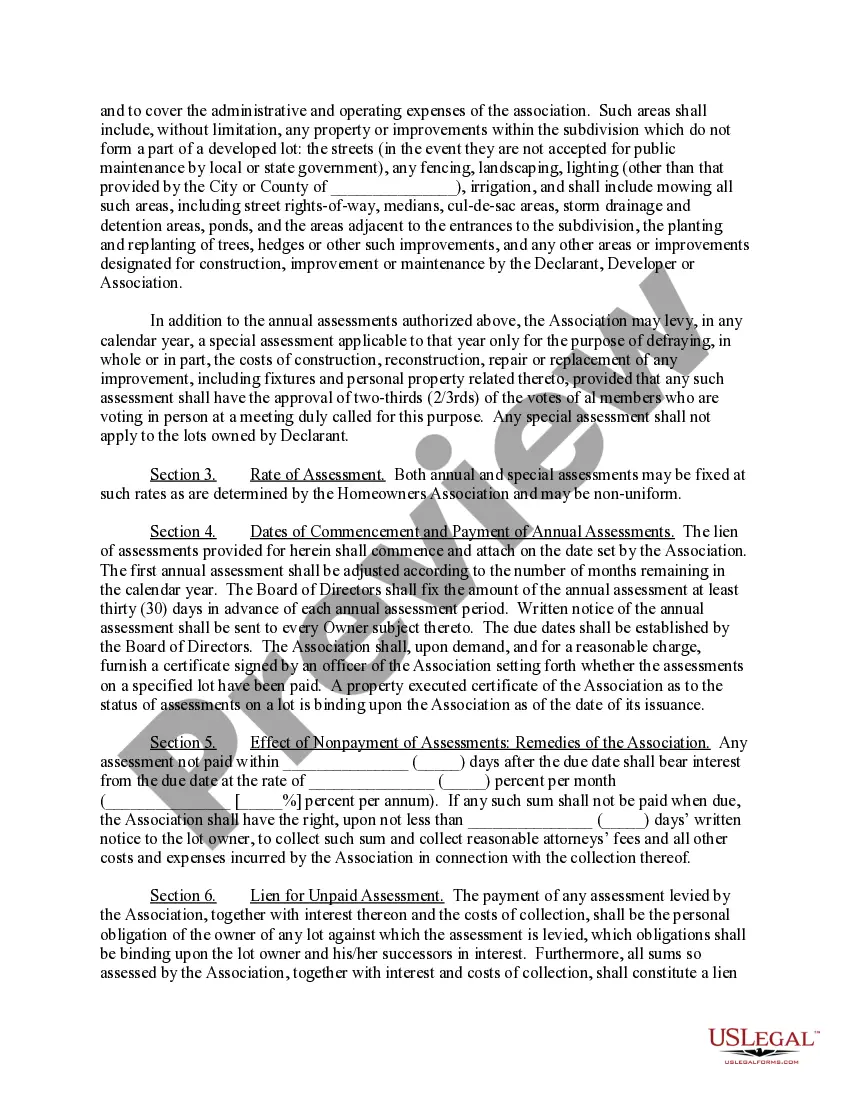
- Maintenance assessments: Outlines the obligation of lot owners to pay assessments for the upkeep of common areas.
- Architectural control provisions: Sets guidelines for construction and modification of structures within the subdivision.
- General provisions: Covers various rules regarding ownership, property use, and responsibilities of the owners.
Common use cases
This form is typically used when a subdivision is being developed and there is a need to establish and record standardized rules for property use and development. It is essential when multiple properties are involved to ensure consistent compliance with aesthetic and operational standards of the community. Use this form if you are a property developer or homeowner wishing to formalize community rules that govern property values and rights.
Who should use this form
- Property developers creating a new residential community.
- Existing homeowners who wish to establish community standards.
- Real estate attorneys assisting in local real estate transactions.
- Homeowners' associations looking to formalize existing agreements.
How to prepare this document
- Identify the declarant: Fill in the name of the individual or entity creating the declaration.
- Define the properties: Specify details about the subdivision, including the number of lots and relevant location information.
- Outlining the association: Include information on the formation and structure of the homeowners' association.
- Detail maintenance assessments: Indicate how and when owners will be assessed for maintenance of common areas.
- Include architectural guidelines: Specify rules regarding construction, renovations, and aesthetic standards for the subdivision.
Is notarization required?
This form usually doesn’t need to be notarized. However, local laws or specific transactions may require it. Our online notarization service, powered by Notarize, lets you complete it remotely through a secure video session, available 24/7.
Get your form ready online
Our built-in tools help you complete, sign, share, and store your documents in one place.
Make edits, fill in missing information, and update formatting in US Legal Forms—just like you would in MS Word.
Download a copy, print it, send it by email, or mail it via USPS—whatever works best for your next step.
Sign and collect signatures with our SignNow integration. Send to multiple recipients, set reminders, and more. Go Premium to unlock E-Sign.
If this form requires notarization, complete it online through a secure video call—no need to meet a notary in person or wait for an appointment.
We protect your documents and personal data by following strict security and privacy standards.

Make edits, fill in missing information, and update formatting in US Legal Forms—just like you would in MS Word.

Download a copy, print it, send it by email, or mail it via USPS—whatever works best for your next step.

Sign and collect signatures with our SignNow integration. Send to multiple recipients, set reminders, and more. Go Premium to unlock E-Sign.

If this form requires notarization, complete it online through a secure video call—no need to meet a notary in person or wait for an appointment.

We protect your documents and personal data by following strict security and privacy standards.
Avoid these common issues
- Failing to record the declaration with the county office, which can render it unenforceable.
- Not clearly defining the roles of the homeowners' association and the declarant, leading to confusion.
- Neglecting to outline clear procedures for assessments and enforcement actions.
- Overlooking the necessity of obtaining approval from the architectural control committee for alterations.
Benefits of using this form online
- Convenience of downloading and filling out from home, saving time and effort.
- Access to attorney-drafted templates ensuring legal accuracy and relevance.
- Editability that allows for customization according to specific community needs.
Legal use & context
- The declaration is legally binding on all property owners within the subdivision.
- Failure to comply with the covenants can result in legal action by the homeowners' association.
- Enforcement of the covenants can take various forms, including assessments and restrictions on property use.
Looking for another form?
Form popularity
FAQ
While bylaws are generally mutually agreed upon governing rules for an organization or business, covenants are usually long-term promises to do something or refrain from action that may last for several generations.
What Happens When Covenants Expire. Once the HOA covenants expire, the board effectively becomes powerless. This means that the HOA cannot enforce the collection of assessments, cannot enforce architectural standards, and cannot regulate the use of common areas and common facilities.
Covenants, Conditions & Restrictions (CC&Rs) This is a legally binding document that is officially recorded and filed with your state. Your CC&Rs cover the rights and obligations of the homeowners association to its members and vice versa.
The rules of an HOA are legally binding for association members, but they generally aren't enforceable by the police. Violations of HOA guidelines are considered a civil matter between the HOA and non-complying members. The exception to this is if HOA's rules overlap with other laws.
Without an association there is no mechanism for a vote; amendment of the CC&R's would have to be done collecting signatures on a document to terminate them. The CC&R's are where the deed restrictions are found. If the owners choose to terminate the CC&R's then the deed restrictions would also be removed.