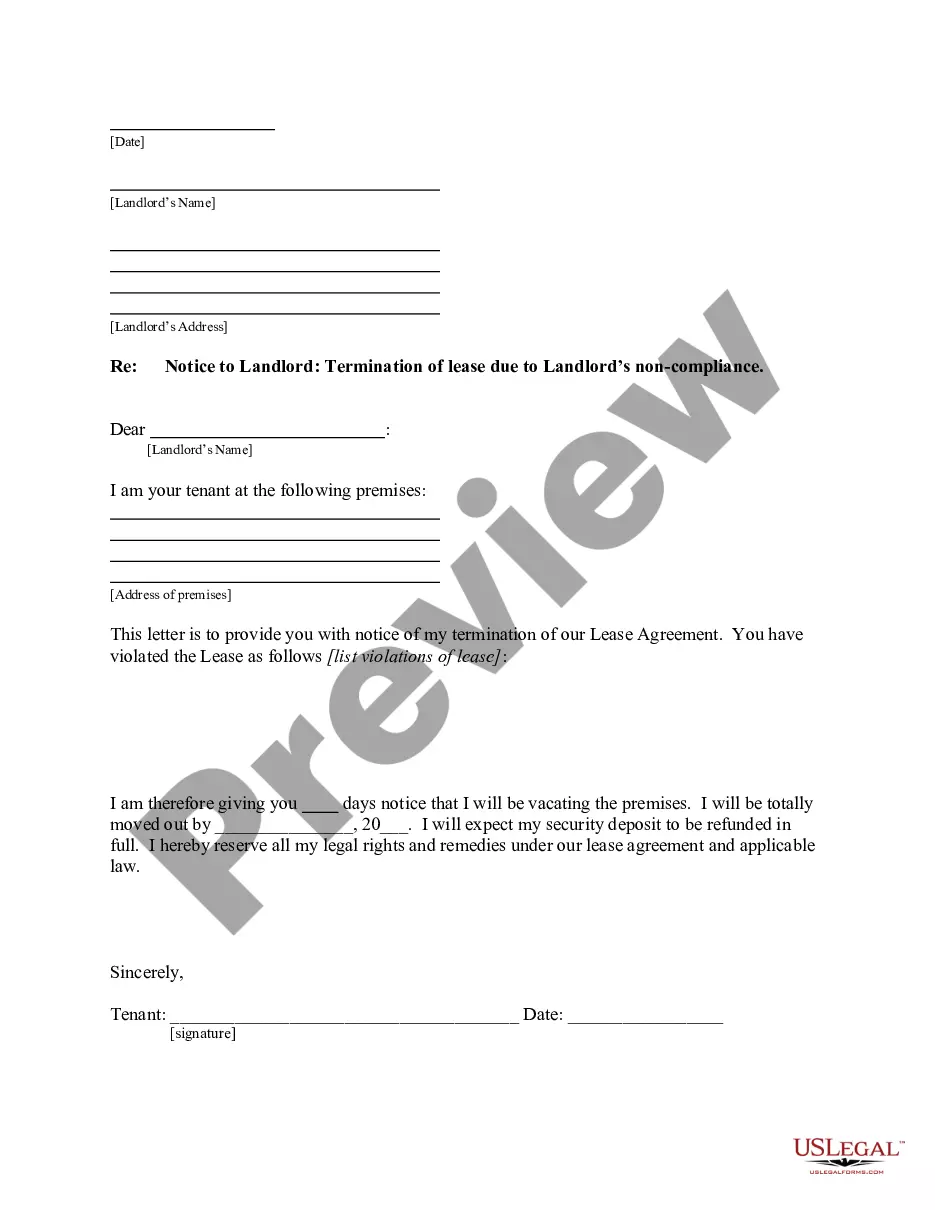
Motion to Compel Plaintiffs to Produce Documents at Trial - Photographs
Understanding this form
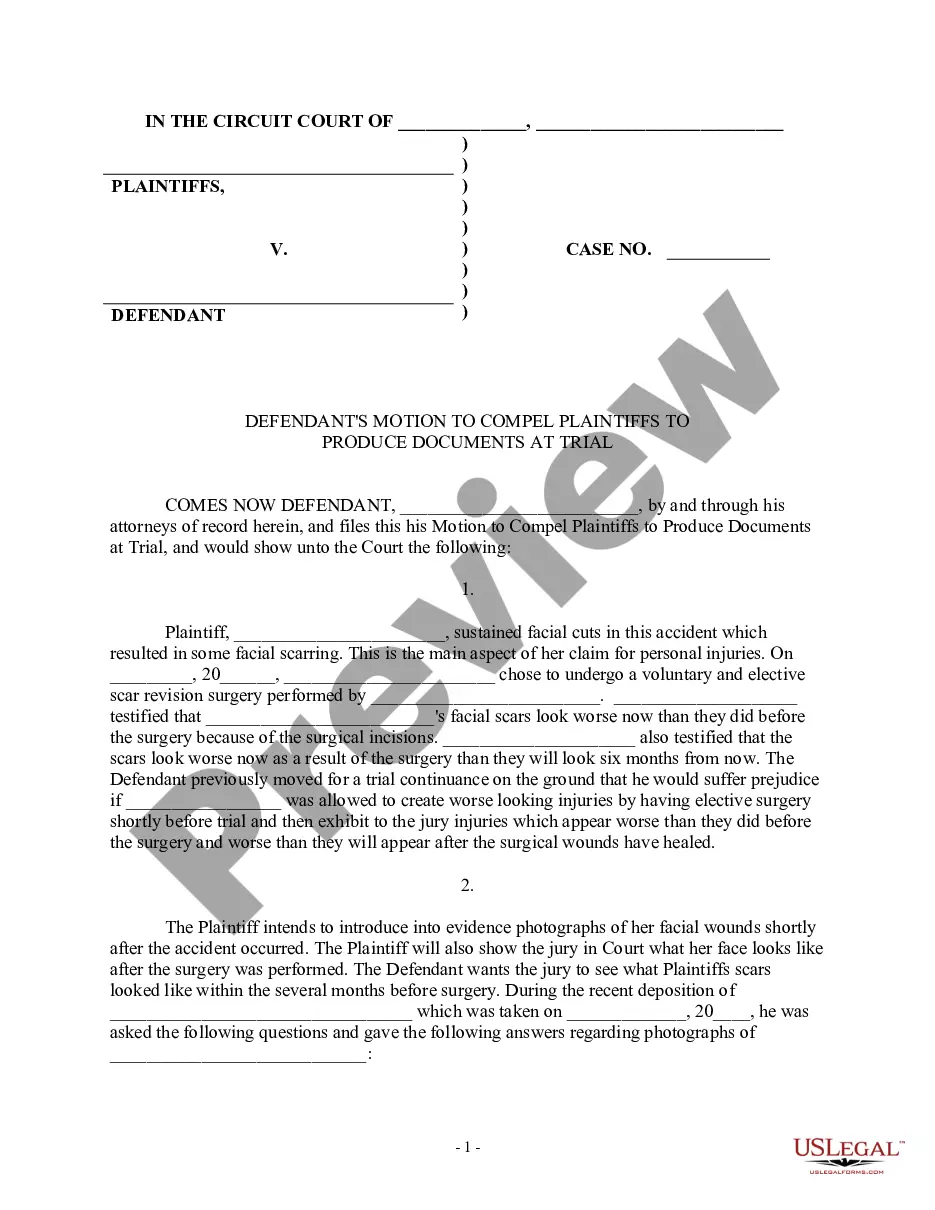
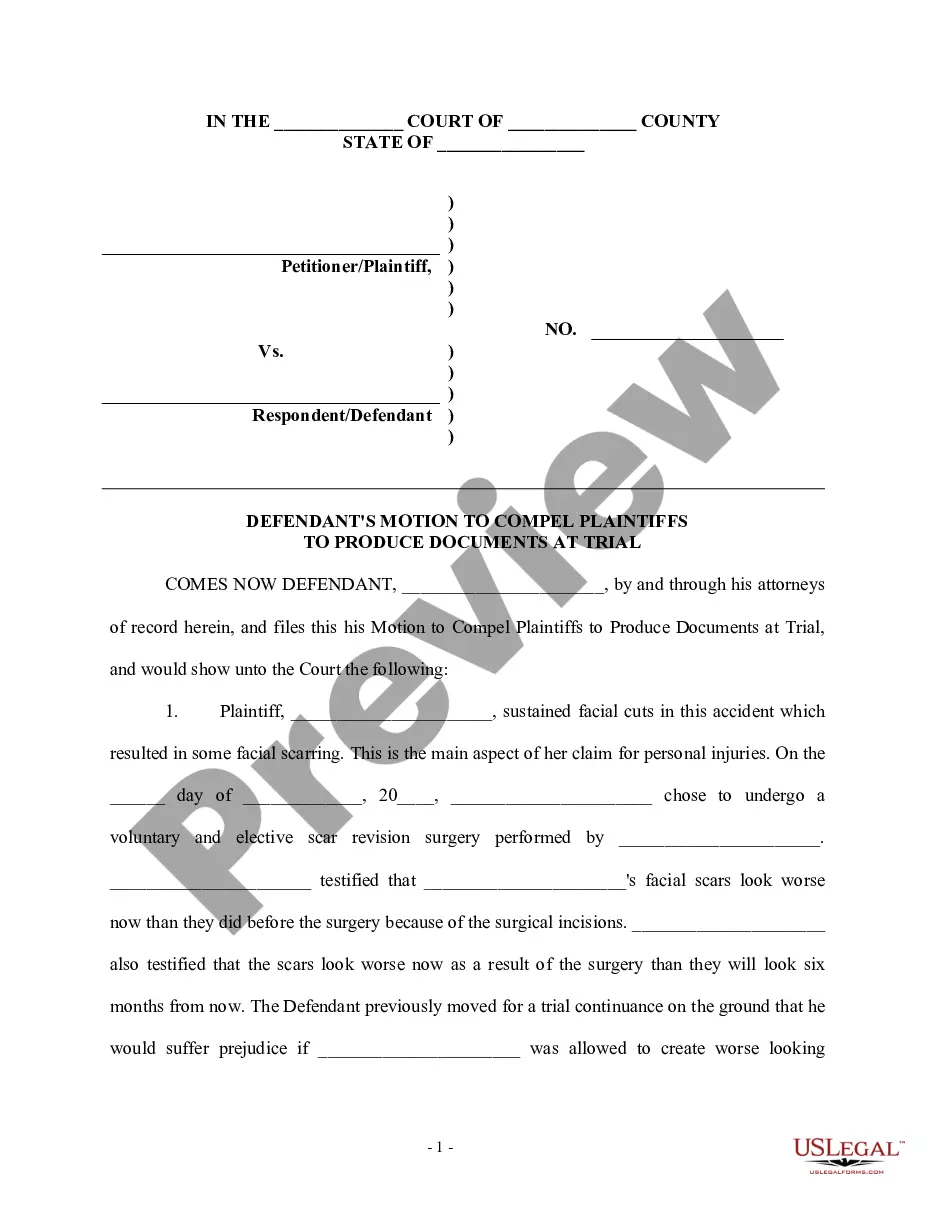
The Motion to Compel Plaintiffs to Produce Documents at Trial - Photographs is a legal document used to request the court to order the production of certain documents, specifically photographs, that are critical to a case during trial. This form is particularly relevant when one party believes that the opposing party has documentation necessary to support claims or defenses, and these documents have not been disclosed. It serves to bolster the evidence presented in personal injury cases, especially those involving changes to a plaintiff's appearance due to surgery or other interventions.
Form components explained
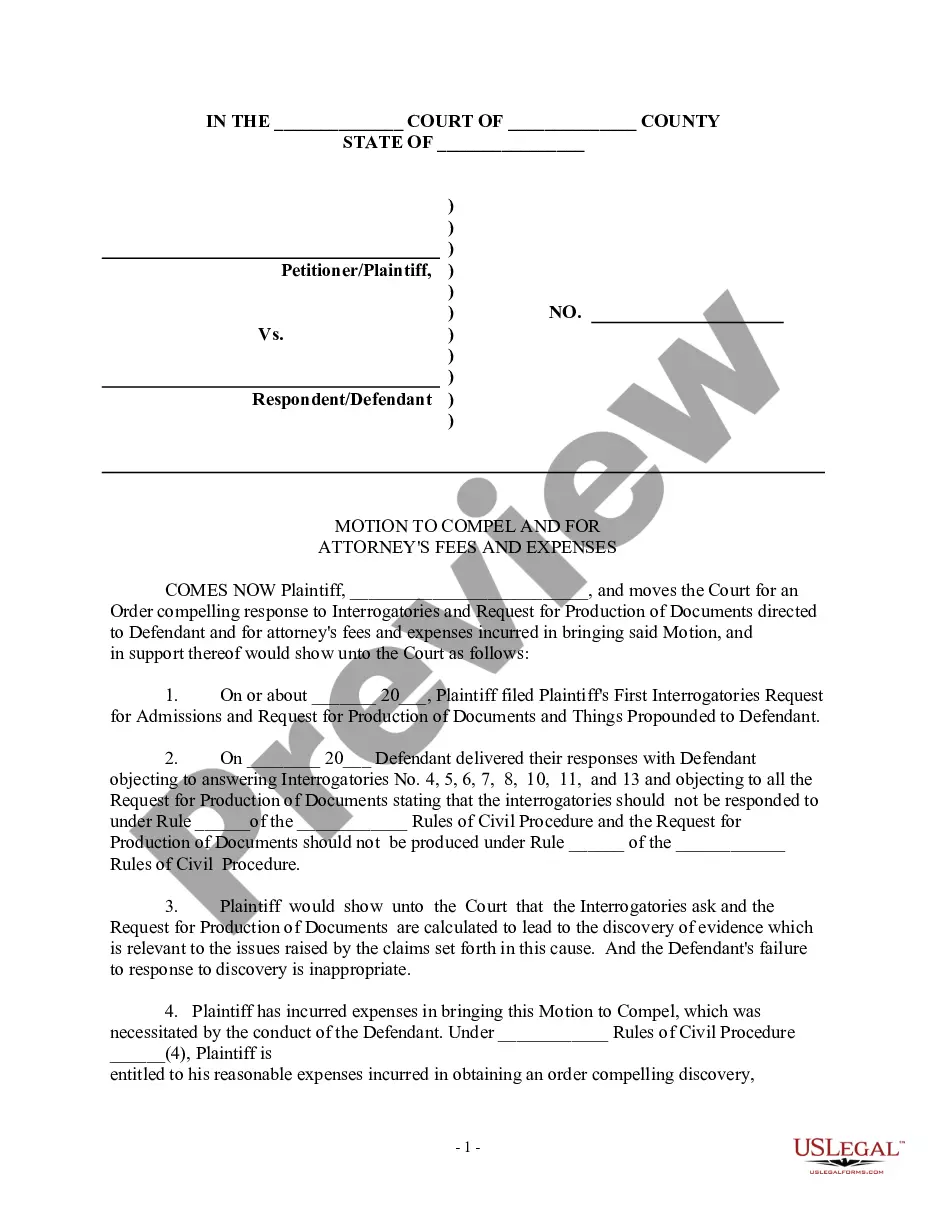
- Introduction of the parties involved in the case.
- Statement of the plaintiff's injury and relevant medical treatment.
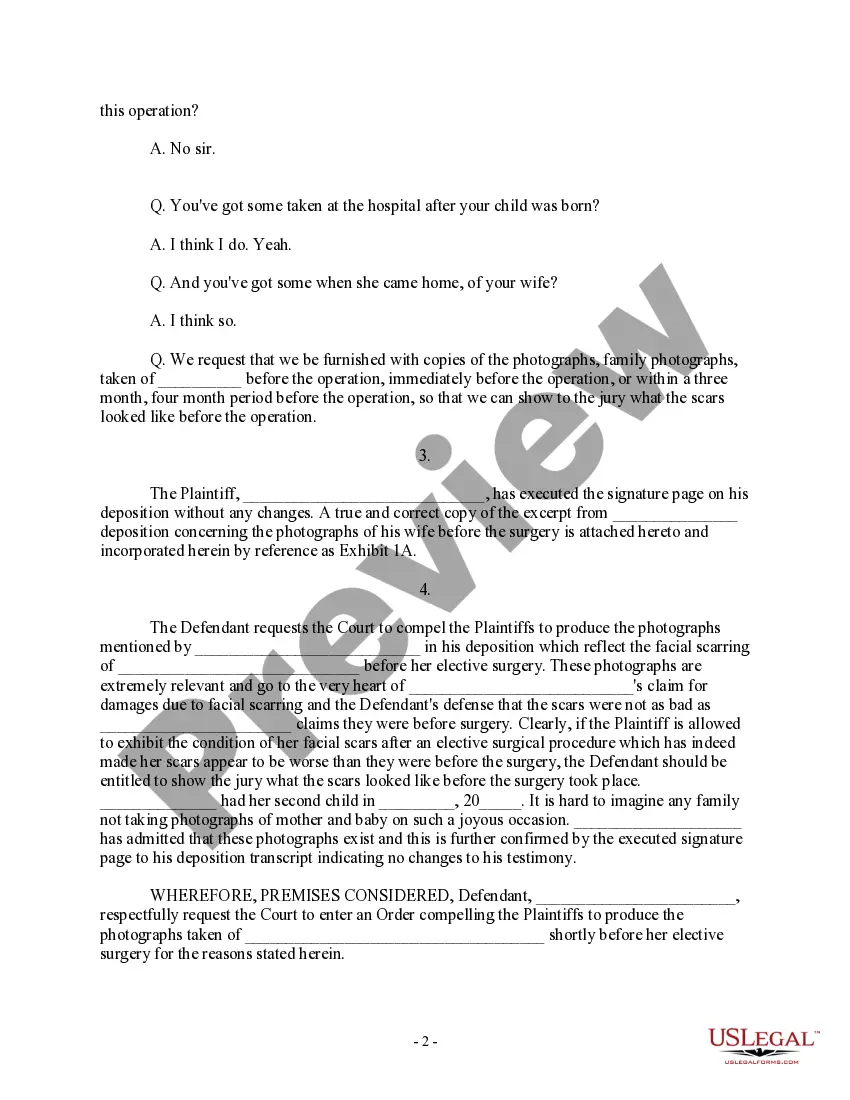
- Description of the photographs requested for trial.
- Arguments supporting the request for production of the photographs.
- Request for the court to compel compliance by the opposing party.
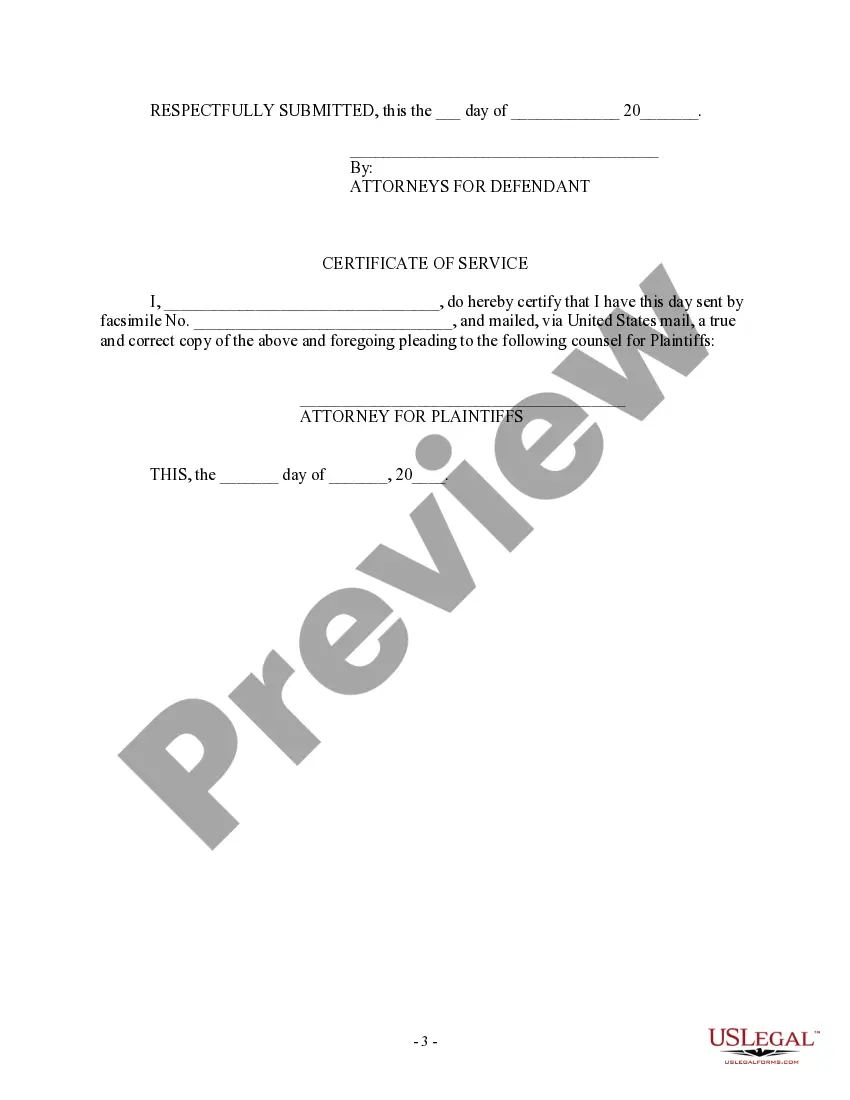
- Certification of service to notify the opposing counsel of the motion.
Situations where this form applies
This form should be used when a defendant seeks to obtain relevant photographs from the plaintiffs to present evidence regarding facial injuries or scars that are part of the case. For instance, if a plaintiff had cosmetic surgery after an accident and intends to show the outcomes in court, the defendant may request older photos to demonstrate the difference and argue the severity of the claims. This motion is essential in personal injury cases where visual evidence affects the jury's perception of damages.
Intended users of this form
- Defendants in personal injury lawsuits who need evidence to contest the severity of the plaintiff's claims.
- Legal representatives of defendants looking to formally request the court's intervention in obtaining crucial documentation.
- Attorneys who represent clients in cases where visual evidence significantly impacts the outcome.
How to complete this form
- Identify and list the parties involved, including the defendant and the plaintiff.
- Detail the nature of the plaintiff's injuries and explain the relevance of the requested photographs.
- Cite specific questions and answers from depositions that support the request for the photographs.
- Formulate the request to compel production clearly and concisely.
- Sign and date the motion and include the certification of service to notify all parties involved.
Does this form need to be notarized?
In most cases, this form does not require notarization. However, some jurisdictions or signing circumstances might. US Legal Forms offers online notarization powered by Notarize, accessible 24/7 for a quick, remote process.
Get your form ready online
Our built-in tools help you complete, sign, share, and store your documents in one place.
Make edits, fill in missing information, and update formatting in US Legal Forms—just like you would in MS Word.
Download a copy, print it, send it by email, or mail it via USPS—whatever works best for your next step.
Sign and collect signatures with our SignNow integration. Send to multiple recipients, set reminders, and more. Go Premium to unlock E-Sign.
If this form requires notarization, complete it online through a secure video call—no need to meet a notary in person or wait for an appointment.
We protect your documents and personal data by following strict security and privacy standards.

Make edits, fill in missing information, and update formatting in US Legal Forms—just like you would in MS Word.

Download a copy, print it, send it by email, or mail it via USPS—whatever works best for your next step.

Sign and collect signatures with our SignNow integration. Send to multiple recipients, set reminders, and more. Go Premium to unlock E-Sign.

If this form requires notarization, complete it online through a secure video call—no need to meet a notary in person or wait for an appointment.

We protect your documents and personal data by following strict security and privacy standards.
Common mistakes to avoid
- Failing to include specific details about the photographs requested.
- Not properly citing relevant deposition material that supports the request.
- Neglecting to serve the motion to all involved parties correctly.
- Using ambiguous language that may confuse the court about the request's intentions.
Why use this form online
- Convenience of accessing and filling out the form from anywhere at any time.
- Ability to quickly edit and customize the form according to specific case needs.
- Reliability of using professionally drafted forms to ensure compliance with legal standards.
Legal use & context
- This form serves as a formal request to a court for evidence that may be essential for defending against personal injury claims.
- The adequacy of the submitted motion may affect its enforceability in court, thus it should be completed meticulously.
Summary of main points
- The Motion to Compel is crucial for defendants needing to obtain specific evidence for trial.
- Clear documentation and strong justification for the request enhance the chances of approval.
- Consult local legal standards to ensure proper completion and submission of the form.
Looking for another form?





Form popularity
FAQ
If a motion to compel is disobeyed, it can lead to consequences such as: another, more serious court order; fines or fees; other different procedural rulings that may affect the outcome of a case.
A motion to compel asks the court to enforce a request for information relevant to a case.The requesting party files a motion to compel discovery responses if the opposing party continues to deny the discovery request.
A party may move for an order compelling the deponent's attendance and testimony, and the production for inspection of any document, if after service of a deposition notice, a party to the action, without having served a valid objection, fails to appear for examination, or proceed with it, or to produce for inspection
You need to give the court a reason to deny the other side's motion to compel. There are many different reasons you could give. Take out your Response to the discovery request. You should have identified reasons in your Response for why you weren't turning over certain information.
The motion to compel is used to ask the court to order the non-complying party to produce the documentation or information requested, and/or to sanction the non-complying party for their failure to comply with the discovery requests.
Consequences of Refusing to Provide Evidence Requested in a Motion to Compel. If the court issues an order that compels your spouse to produce the discovery you are seeking but your spouse still refuses to provide evidence, the judge may impose further sanctions such as: A verdict in your favor.
Consequences of Refusing to Provide Evidence Requested in a Motion to Compel. If the court issues an order that compels your spouse to produce the discovery you are seeking but your spouse still refuses to provide evidence, the judge may impose further sanctions such as: A verdict in your favor.
The motion to compel further responses has to be brought within 45 days of service of the response. (C.C.P.
A request for production is a legal request for documents, electronically stored information, or other tangible items made in the course of litigation.However, the requestor then may file a Motion to Compel discovery to ask the court to order the responding party to produce documents.