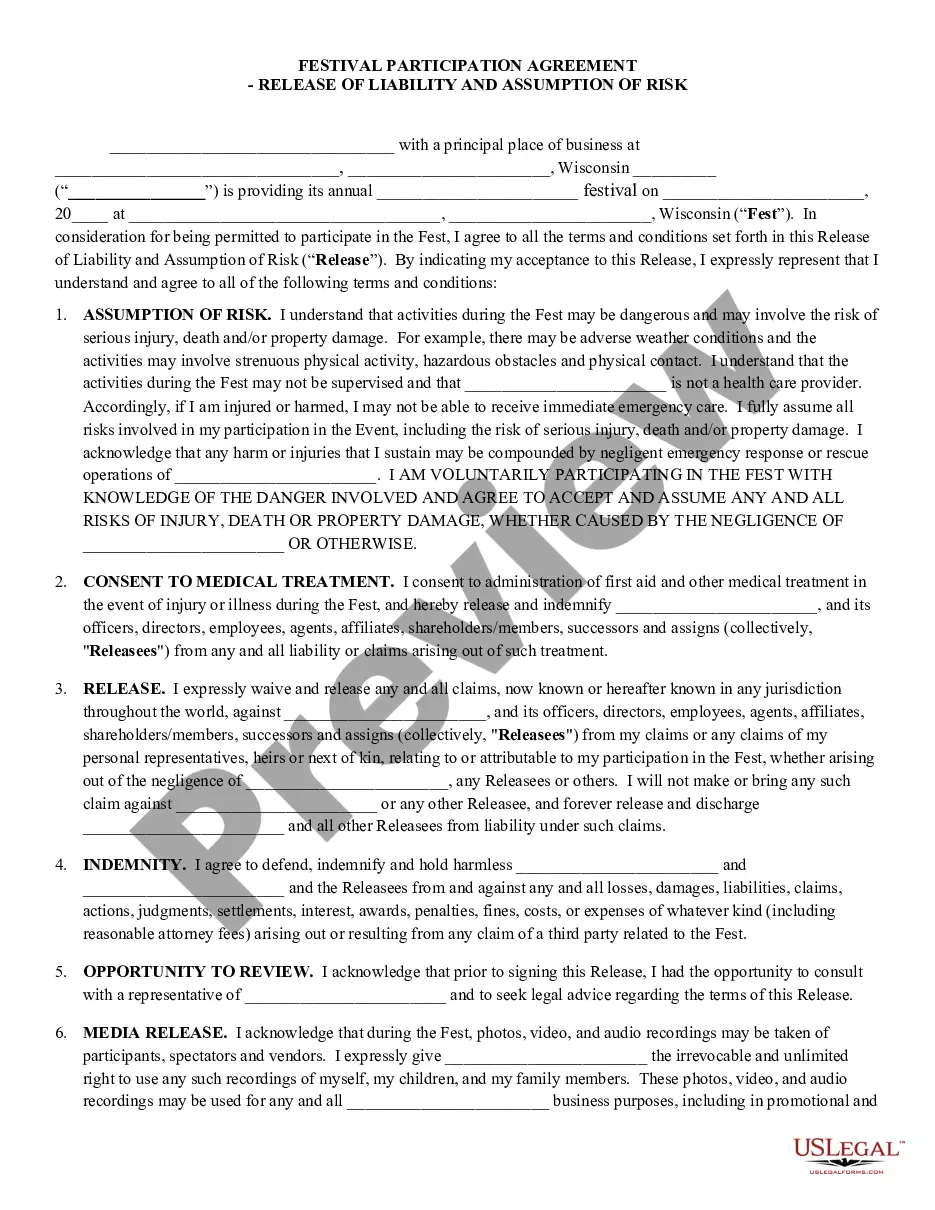
Letter to debt collector seeking verification of a debt in response to their validation letter
About this form
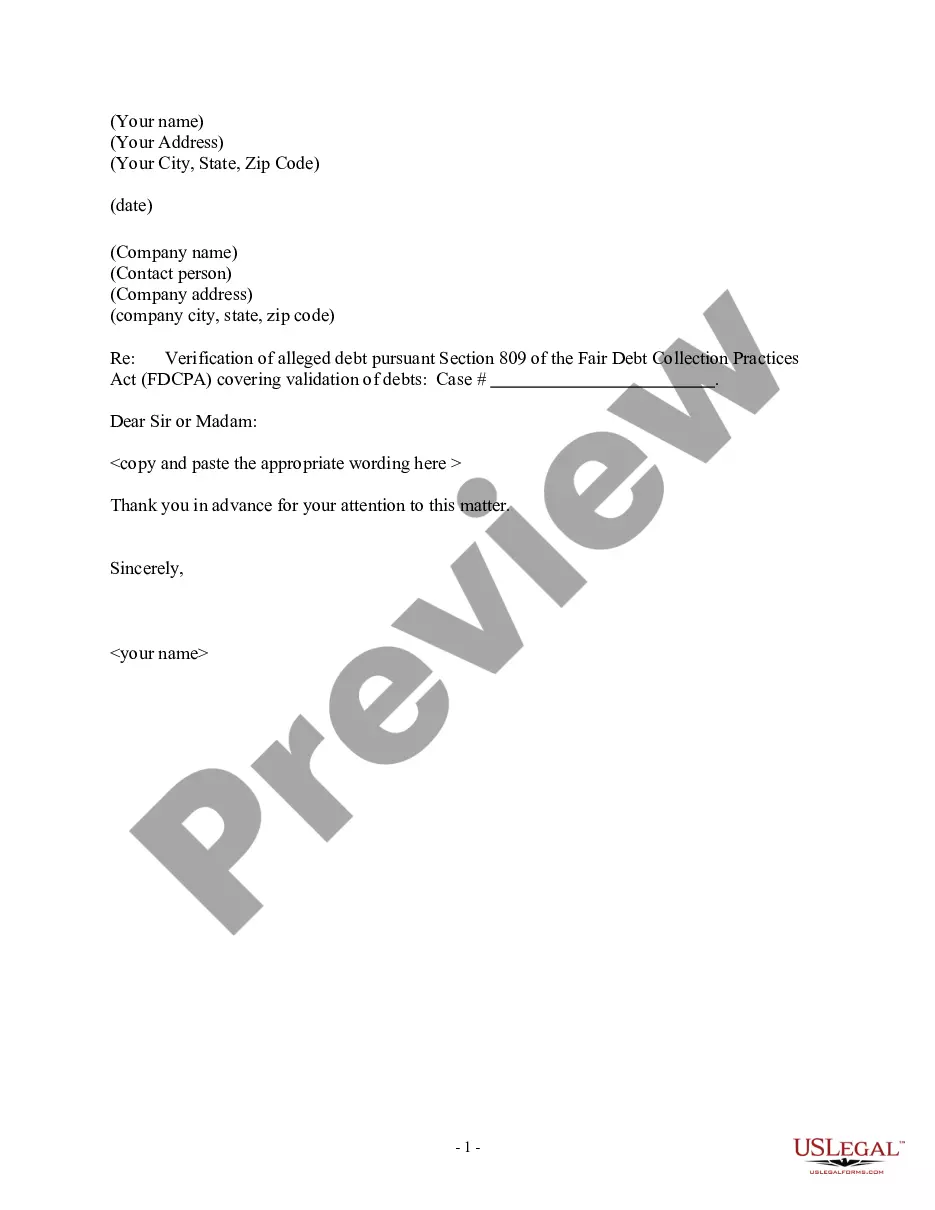
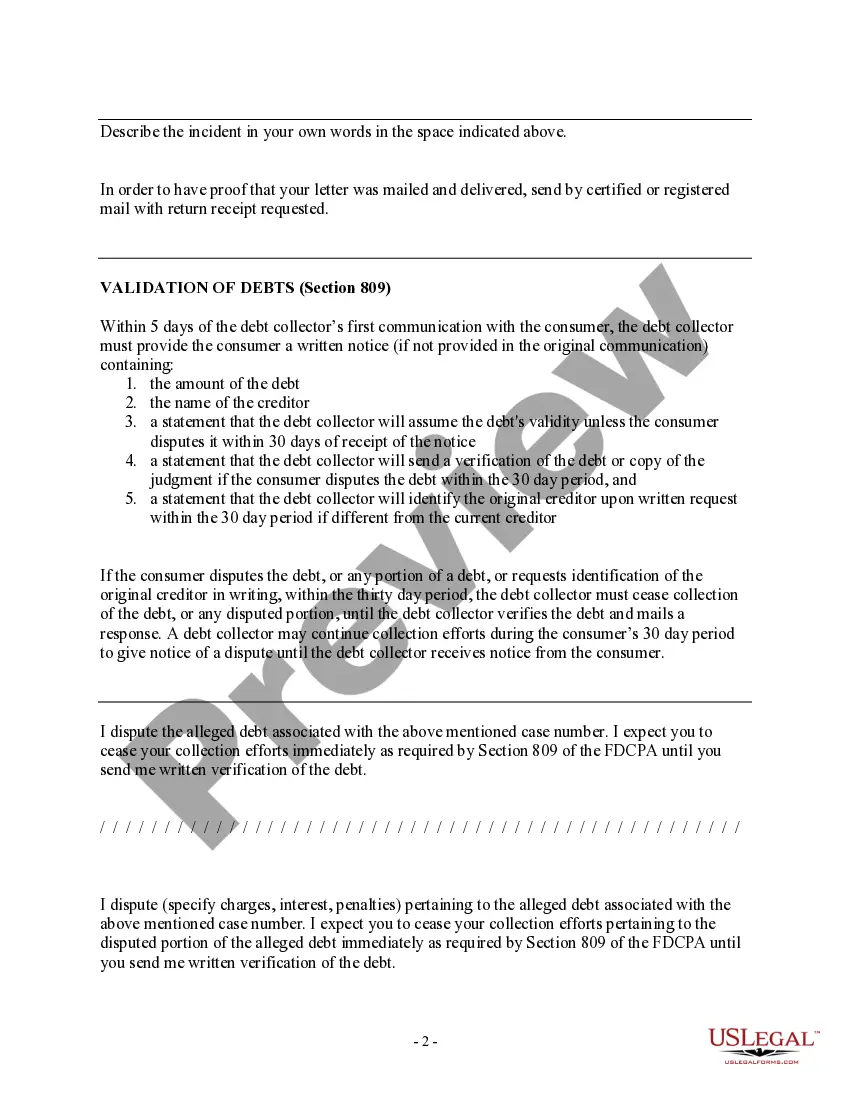
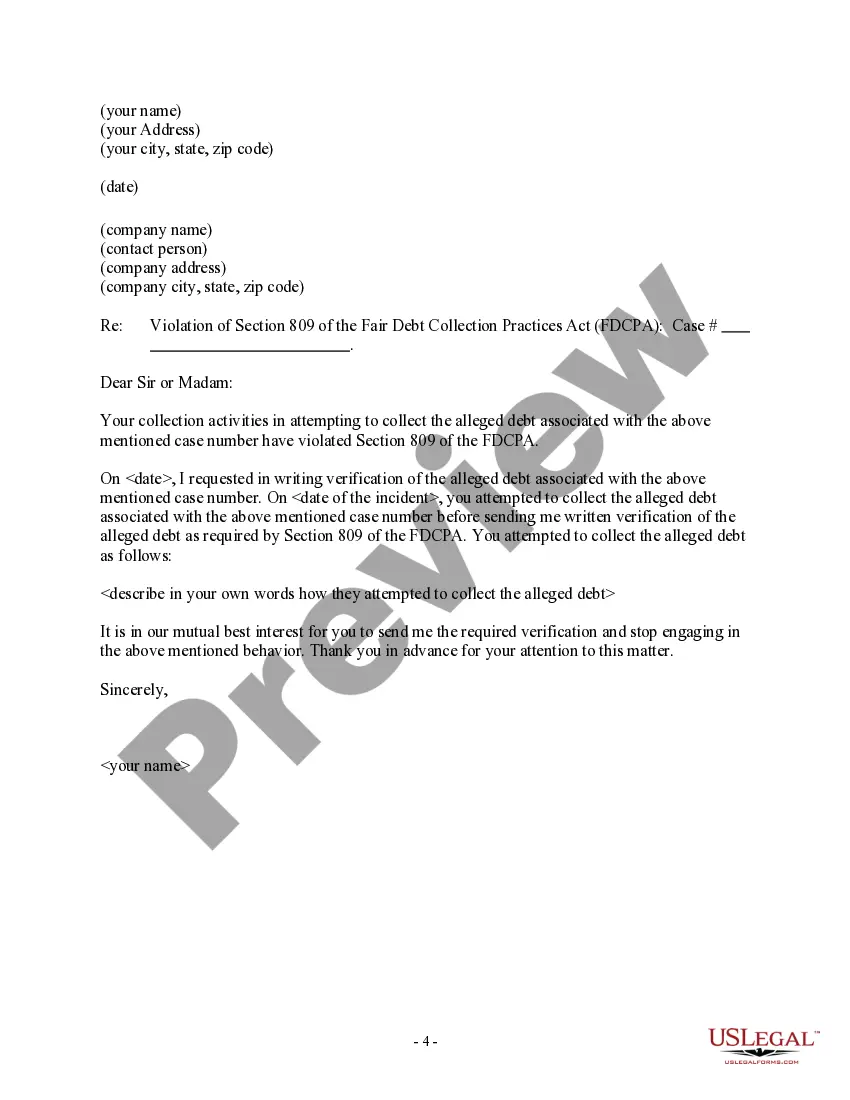
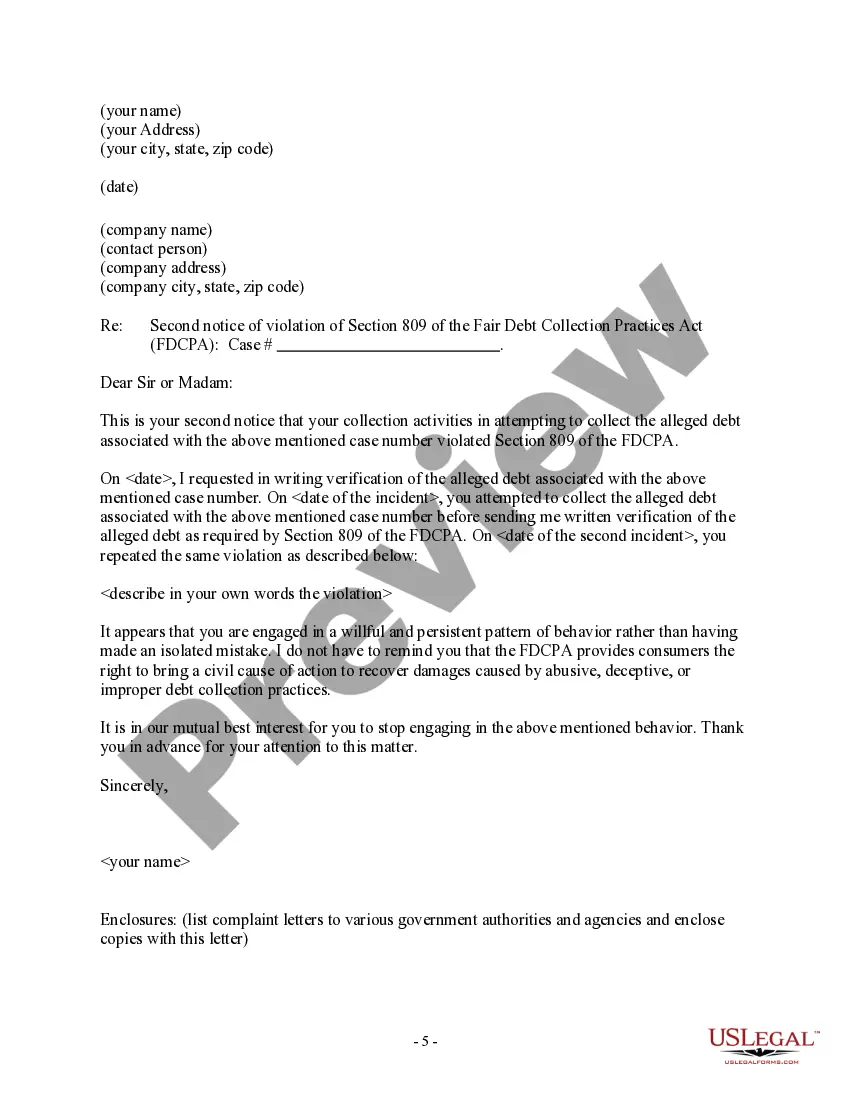
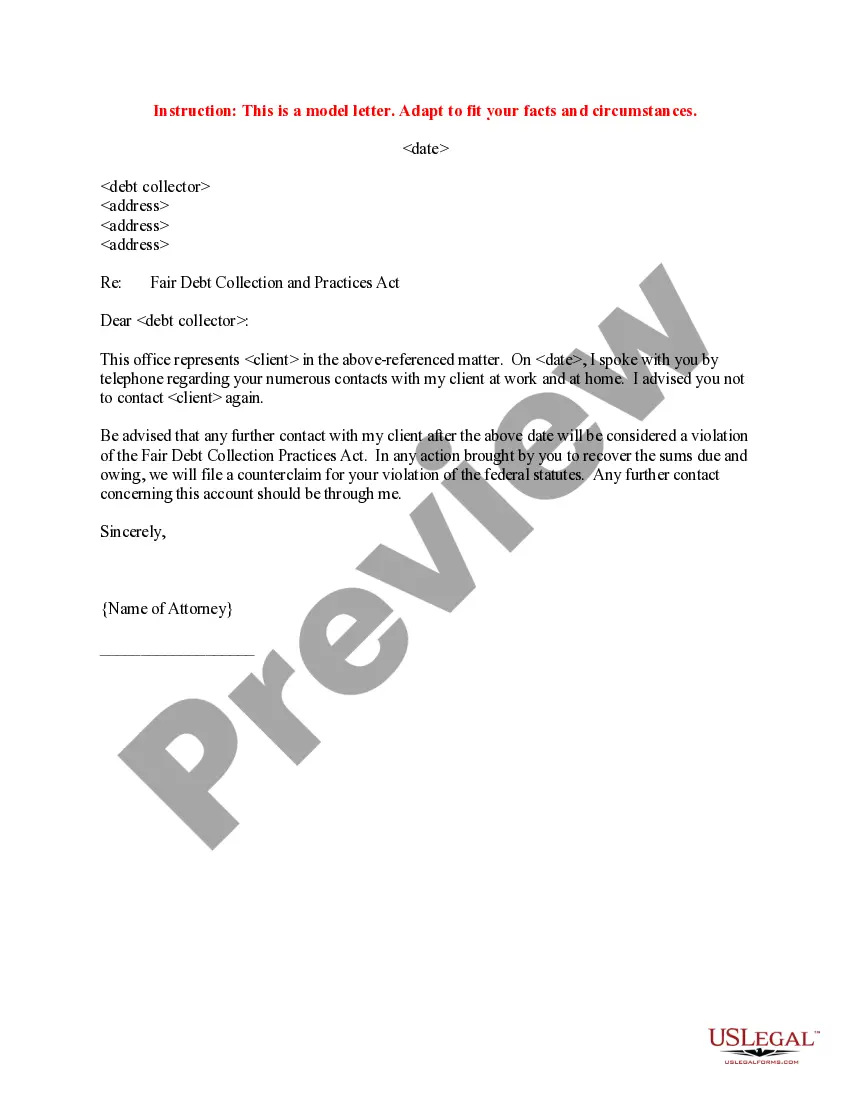
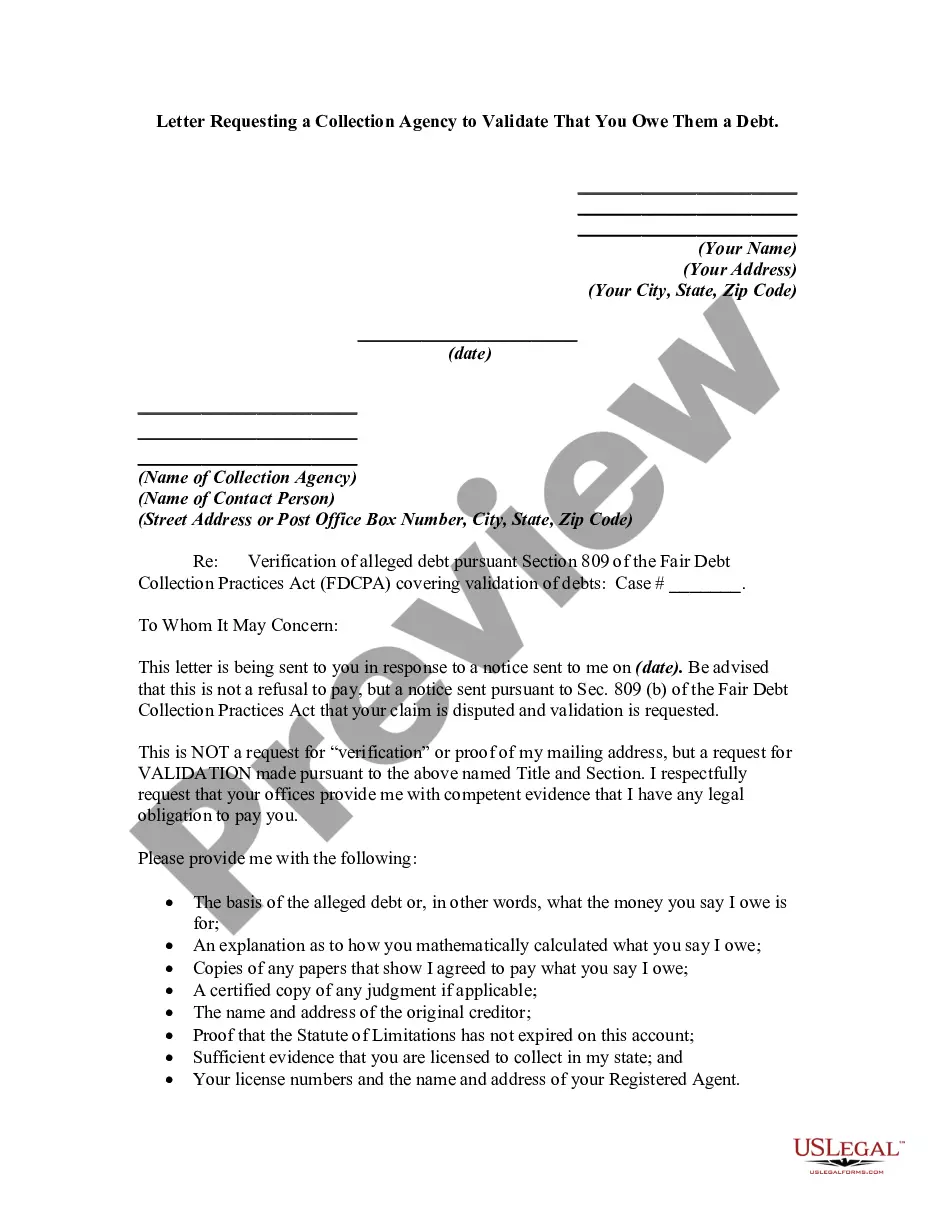
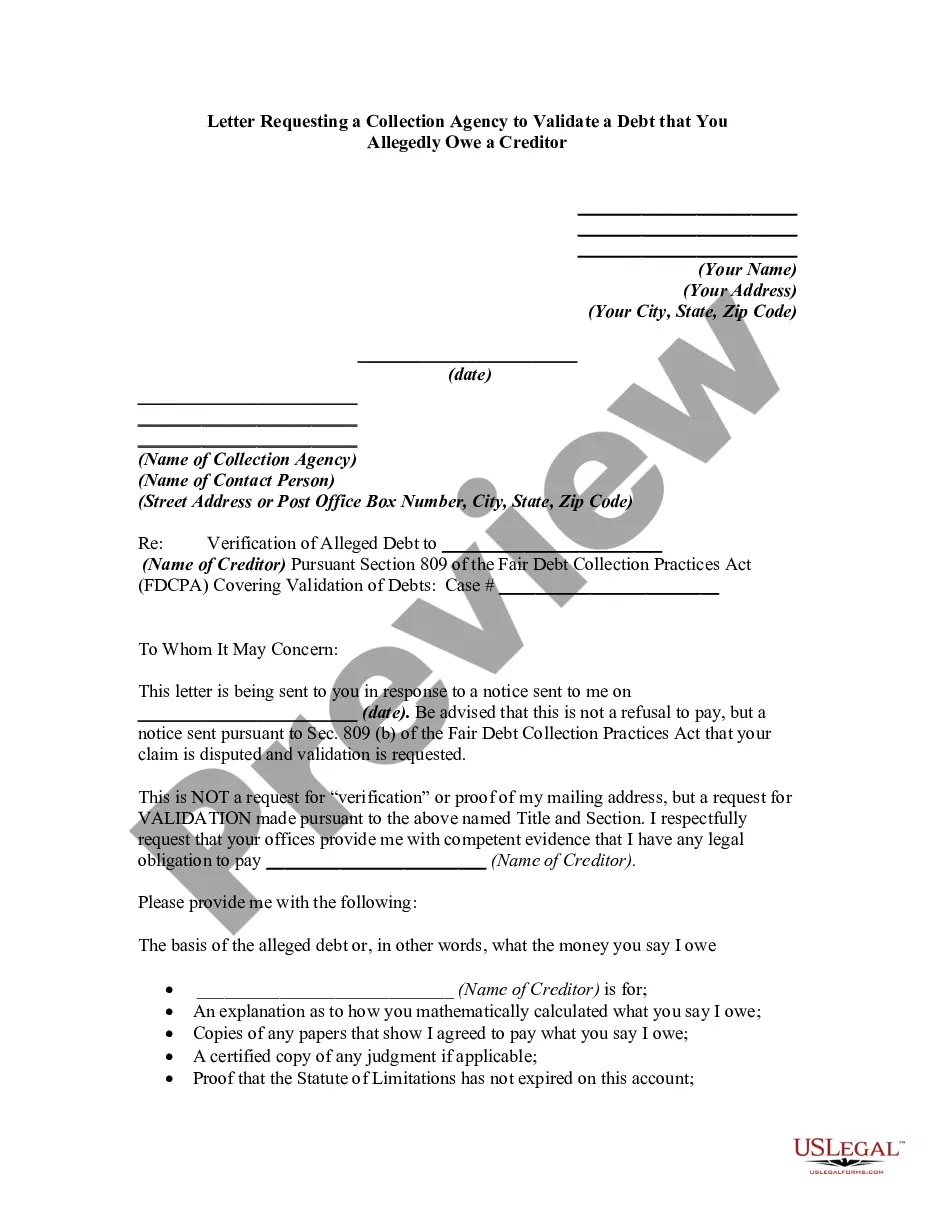
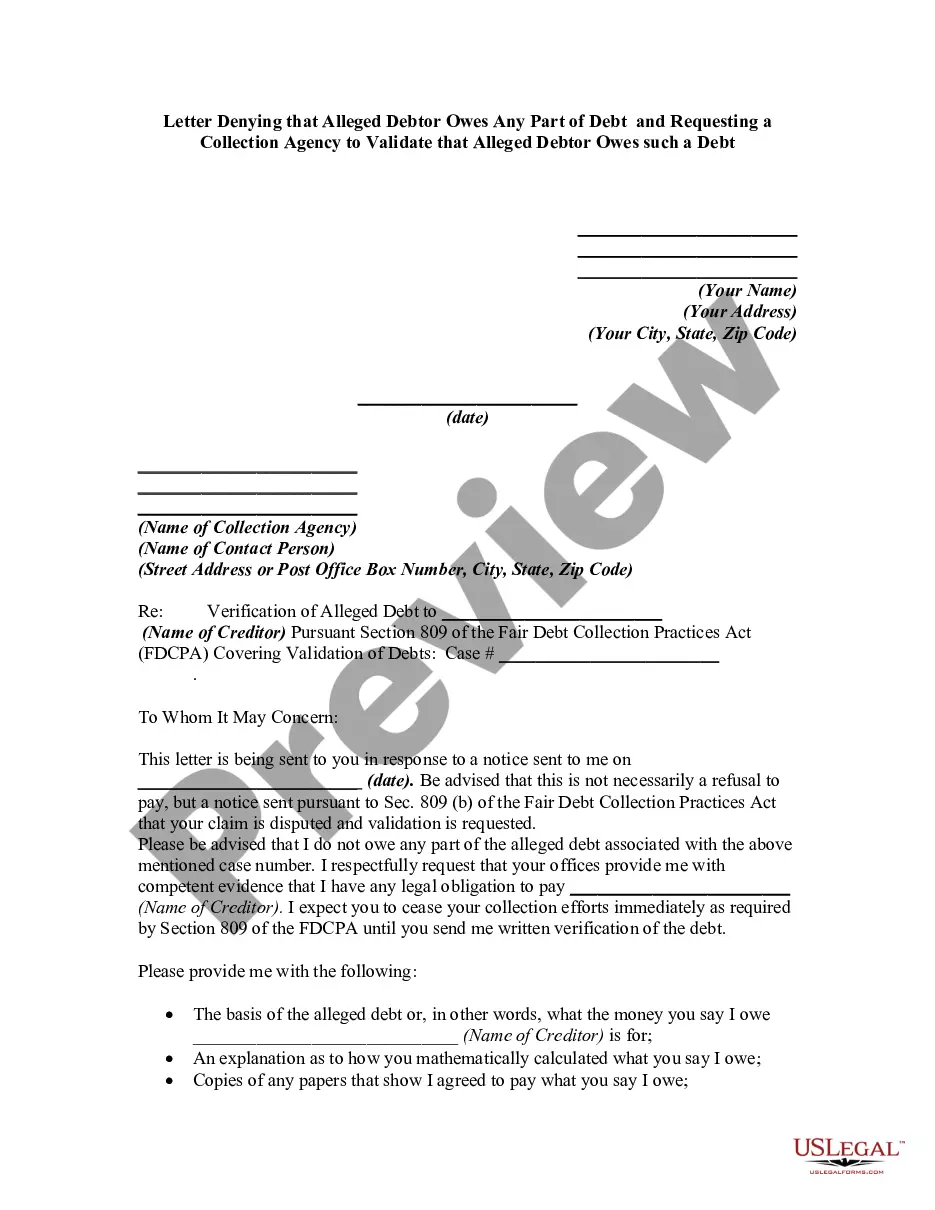
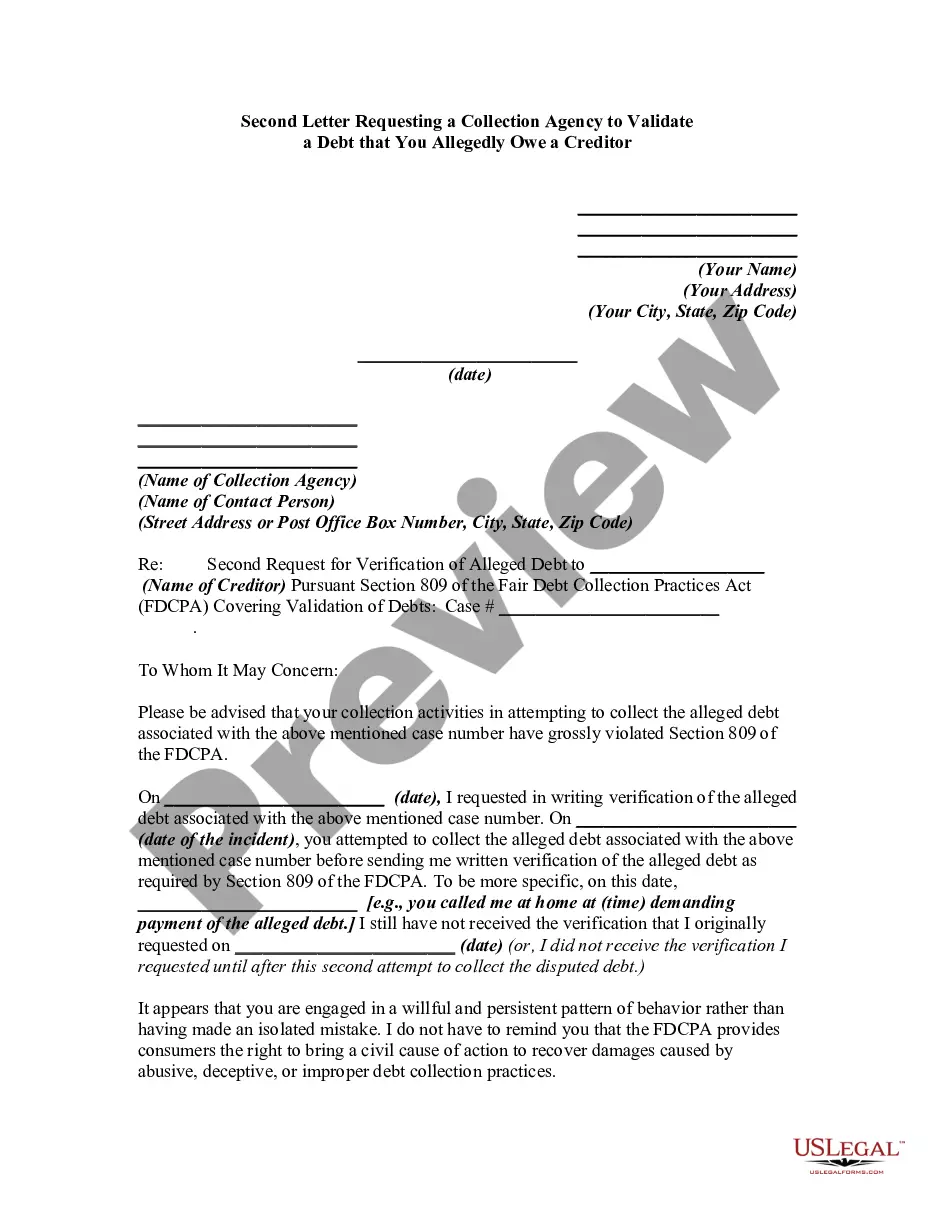
This form is a Letter to debt collector seeking verification of a debt in response to their validation letter. It is used to formally challenge the validity of a debt claimed by a collector. Within five days of contacting you, a debt collector must send a validation letter that includes specific information. This letter allows you to respond appropriately, asserting your rights under the Fair Debt Collection Practices Act (FDCPA) and requesting verification of the debt in question.
Key parts of this document
- Your identification details, including your name and address.
- The collection agency's name and address.
- A clear statement disputing the validity of the debt.
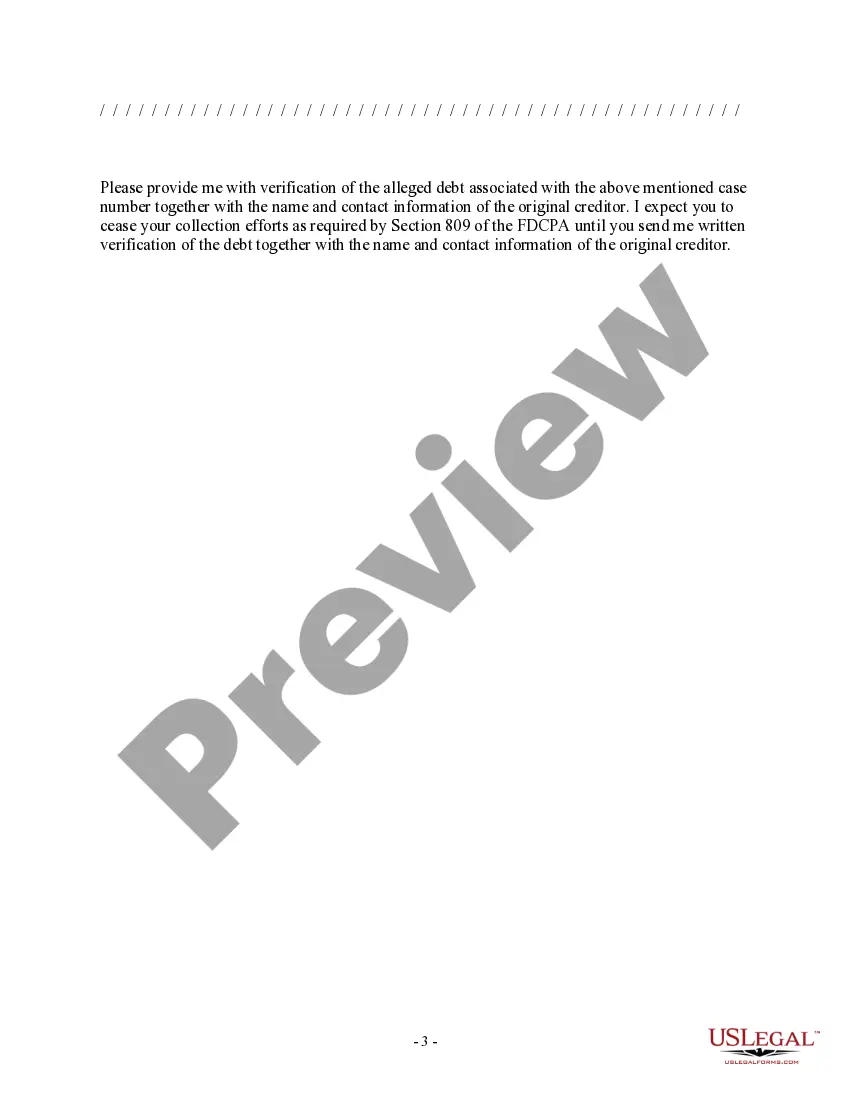
- A list of specific information and documents you are requesting from the debt collector.
- Instructions for the collector regarding communications and verification timelines.
When to use this form
You should use this form if you have recently received a validation letter from a debt collector and wish to dispute the debt or seek further information. It is particularly important to respond within thirty days if you believe the debt is not valid or if you require additional documentation related to the debt you are being asked to pay.
Intended users of this form
- Individuals who have received a debt validation letter from a collection agency.
- Consumers disputing a debt they believe is incorrect or being collected improperly.
- Anyone wanting to assert their rights under the FDCPA while dealing with debt collectors.
How to complete this form
- Enter your name and address at the top of the letter.
- Add the date you are sending the letter.
- Provide the collection agency's name and address.
- Clearly state that you are disputing the debt and request verification.
- List the specific information you want from the debt collector.
- Sign the letter and include copies for your records.
Is notarization required?
Notarization is generally not required for this form. However, certain states or situations might demand it. You can complete notarization online through US Legal Forms, powered by Notarize, using a verified video call available anytime.
Get your form ready online
Our built-in tools help you complete, sign, share, and store your documents in one place.
Make edits, fill in missing information, and update formatting in US Legal Forms—just like you would in MS Word.
Download a copy, print it, send it by email, or mail it via USPS—whatever works best for your next step.
Sign and collect signatures with our SignNow integration. Send to multiple recipients, set reminders, and more. Go Premium to unlock E-Sign.
If this form requires notarization, complete it online through a secure video call—no need to meet a notary in person or wait for an appointment.
We protect your documents and personal data by following strict security and privacy standards.

Make edits, fill in missing information, and update formatting in US Legal Forms—just like you would in MS Word.

Download a copy, print it, send it by email, or mail it via USPS—whatever works best for your next step.

Sign and collect signatures with our SignNow integration. Send to multiple recipients, set reminders, and more. Go Premium to unlock E-Sign.

If this form requires notarization, complete it online through a secure video call—no need to meet a notary in person or wait for an appointment.

We protect your documents and personal data by following strict security and privacy standards.
Avoid these common issues
- Failing to send the letter within the 30-day window.
- Not including all requested information in your letter.
- Neglecting to keep a copy of the sent letter for your records.
- Using informal language instead of a professional tone.
Why complete this form online
- Convenient access to professionally drafted legal documents.
- Immediate availability for download and use.
- Easy customization to fit your specific situation.
- Reliable templates created by licensed attorneys.
Main things to remember
- This form is crucial for disputing a debt and requesting verification from a debt collector.
- Use it within the 30-day period for effective legal protection.
- Includes important legal rights under the Fair Debt Collection Practices Act.
- Ensures that all future communication must be in writing, protecting you from harassment.
Looking for another form?








Form popularity
FAQ
An employment verification letter confirms the current or former employee's employment status. The employment verification letter is a response to a request for information from a potential employer, government agency, or bank, for example.The potential employer may verify dates of employment and salary.
1for the name and contact information of the original creditor.2why the collector believes you own the debt in the first place.3for a record of all owners of the debt.4the amount and age of the debt (including an account number if you're able).5under what authority the collector has to collect.
"Thus" can be used both at the very beginning of the sentence, or between the subject and the verb: At high altitude, the boiling point of water is lower than at sea-level. Thus, pasta takes a longer time to cook.
: in this manner : thus.
According to Wiktionary, humorists invented the word thusly as a joke. It was an unnecessary alternative for thus in sentences.Thusly has gained popular usage, so maybe the joke's on the humorists now. But many dictionaries still don't accept it as a standard word, so it's best not to use it.
Follow business letter format. Use standard business letter format when writing your letter. Keep it concise. Include all requested information. Provide your contact information. Edit and proofread before you send.
Zamon phrased it thusly . Until you move you will appear thusly in your location: Kiania (in floods of tears) You stop wielding triple bullwhip. It represents the North Star which always points toward home and thusly served as a reminder that home was never too far away.
Write the company's information. Include a statement verifying that the employee does indeed work at this place of employment, as well as the date he or she began working. Sign the document. Current Employee. Past Employee. Best Practices.
1 Your full name and address.2 The collections agency's name and address.3 A request for the amount of the debt claimed to be owed.4 A request for the name of the original creditor.5 A request for the judgment information (if applicable)6 A request for proof of the company's license.