Vendor-Oriented Web Site Development Agreement
About this form
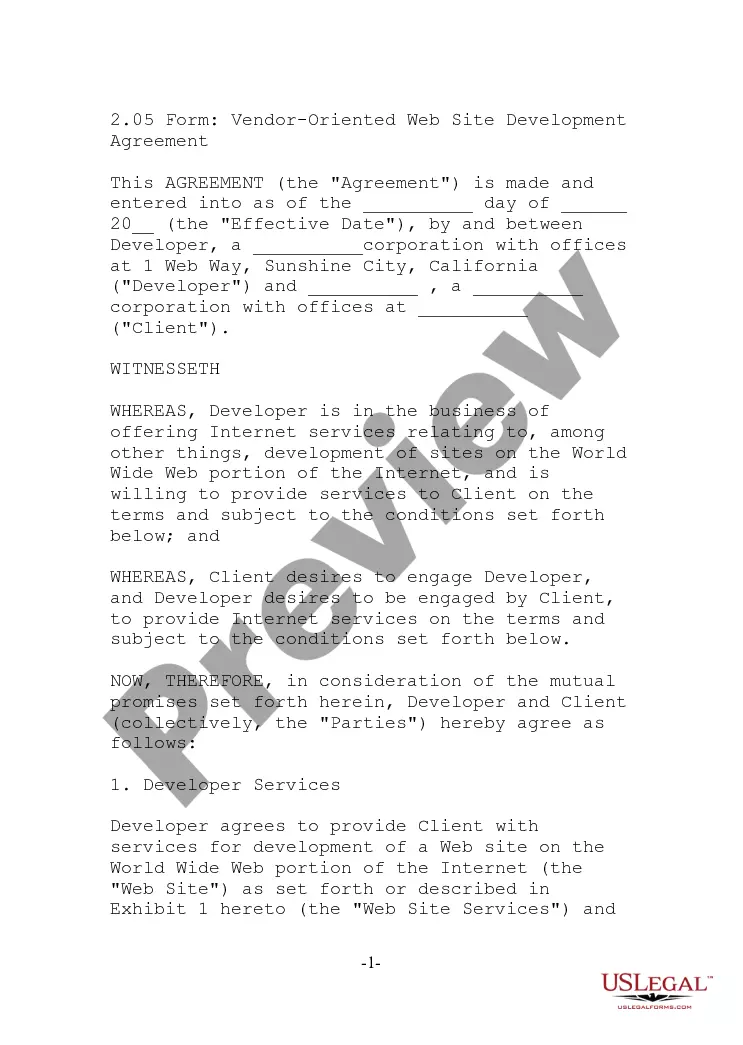
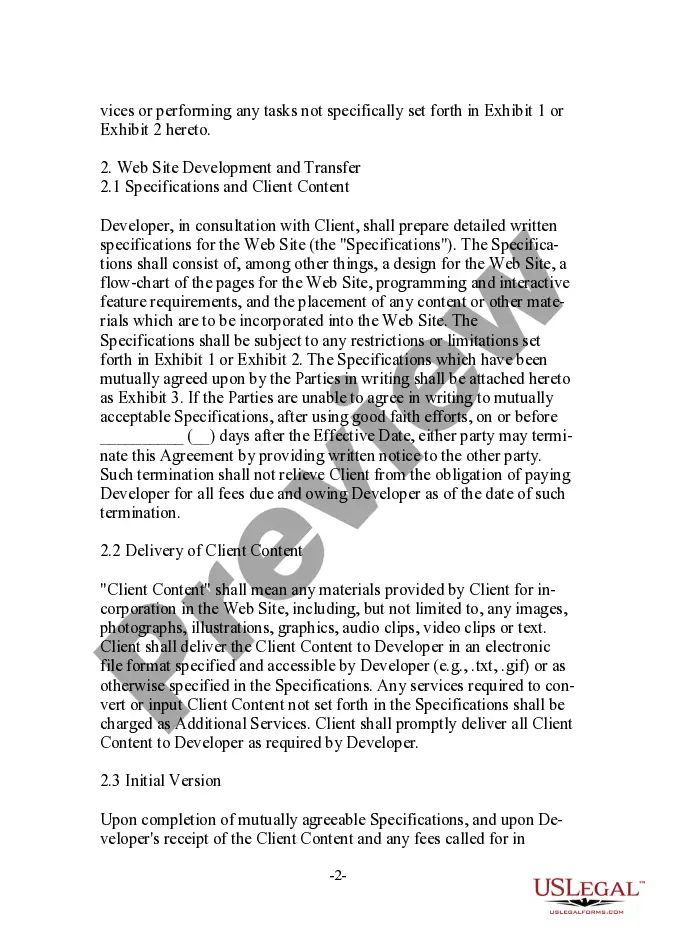
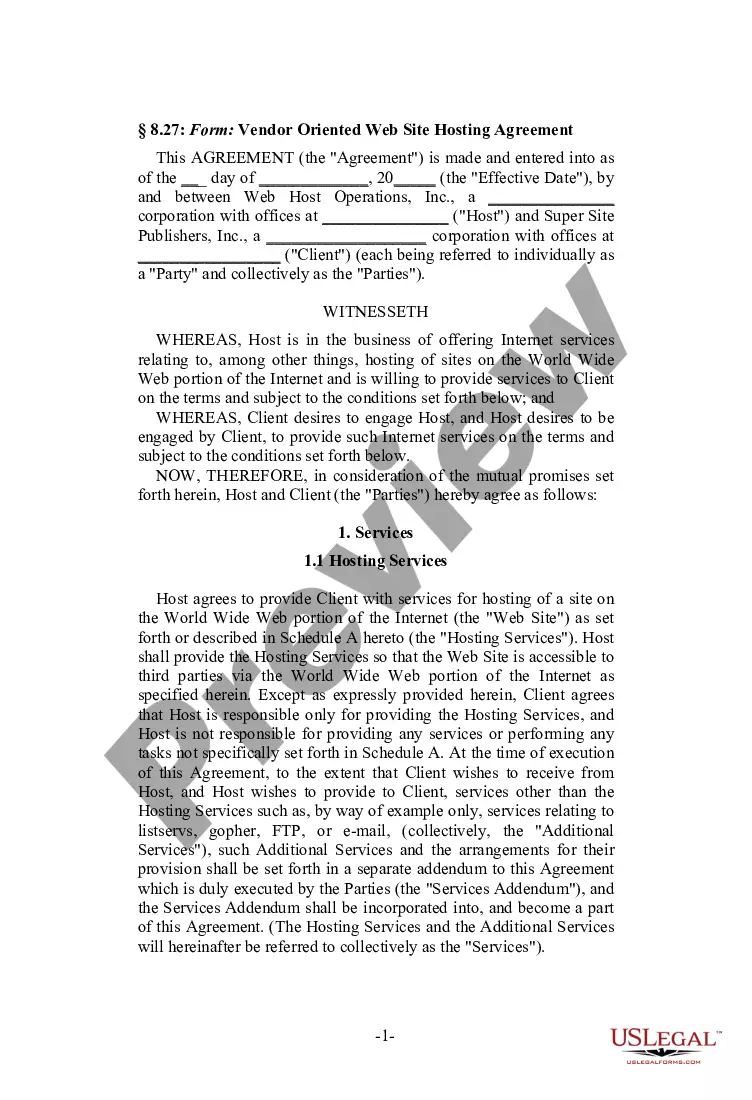
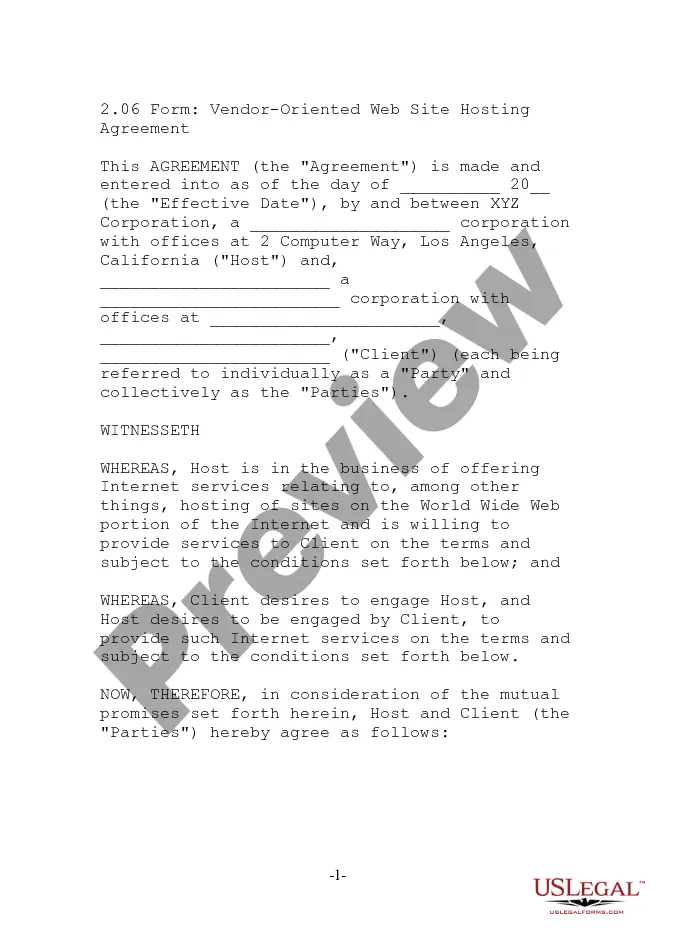
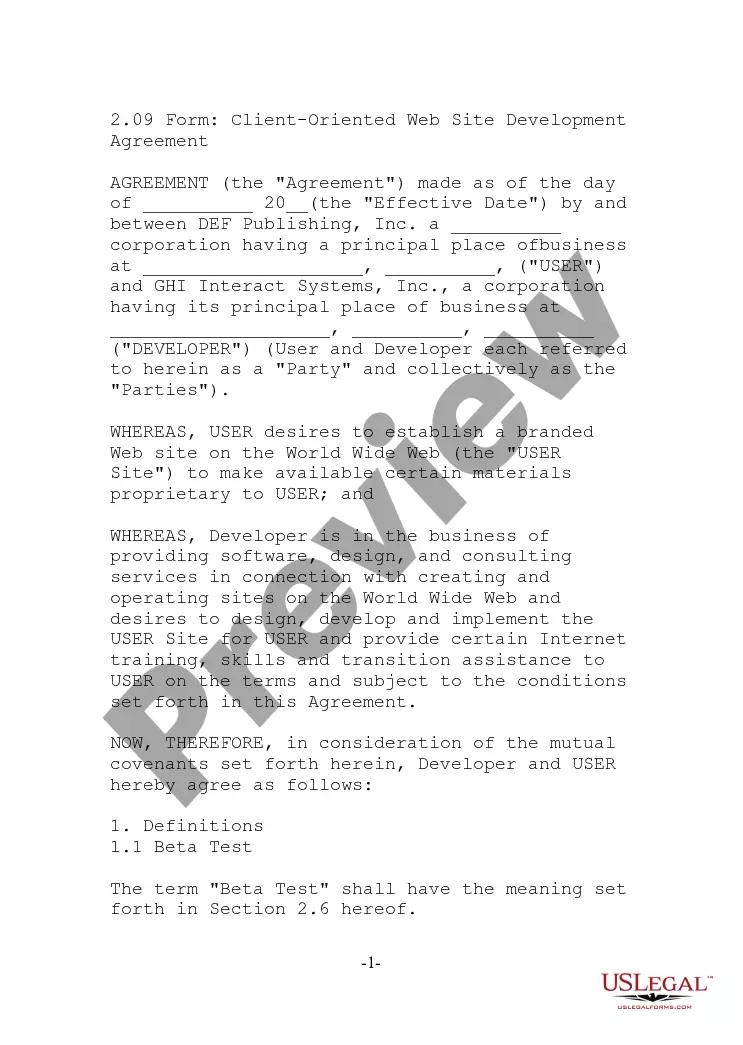
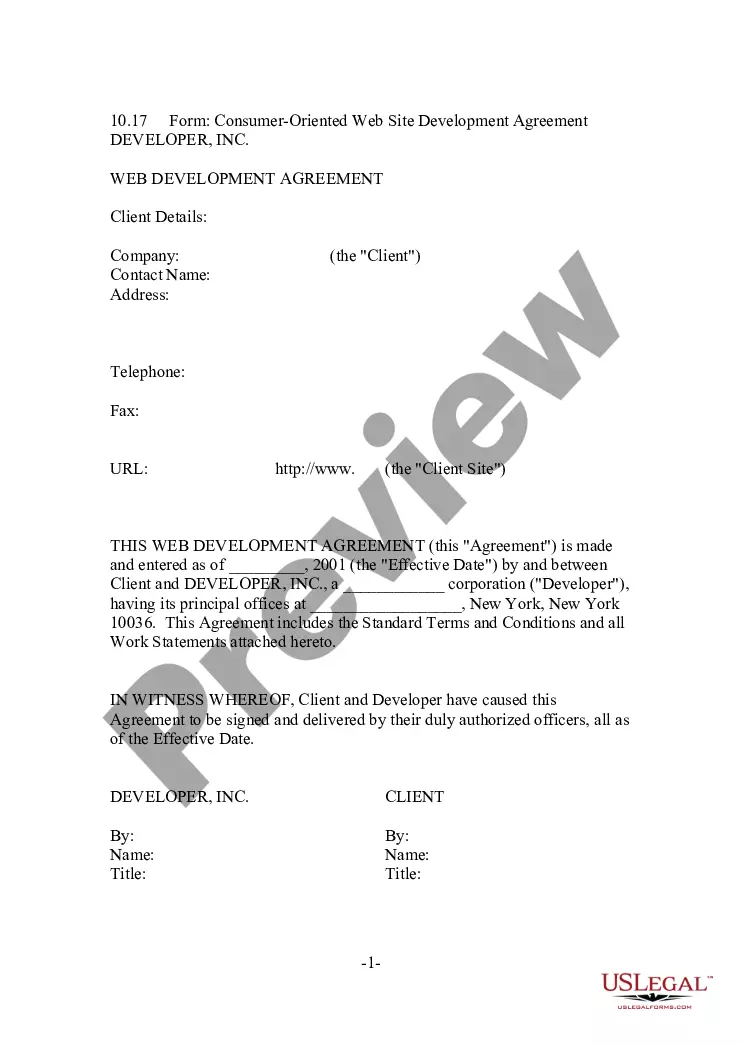
The Vendor-Oriented Web Site Development Agreement is a legal contract that outlines the relationship between a web developer and a client regarding the creation and maintenance of a website. This agreement includes details about the services provided, payment structures, and the rights of both parties. It is specifically designed for businesses in the internet industry, distinguishing it from other agreements that may cater to non-digital services.
Main sections of this form
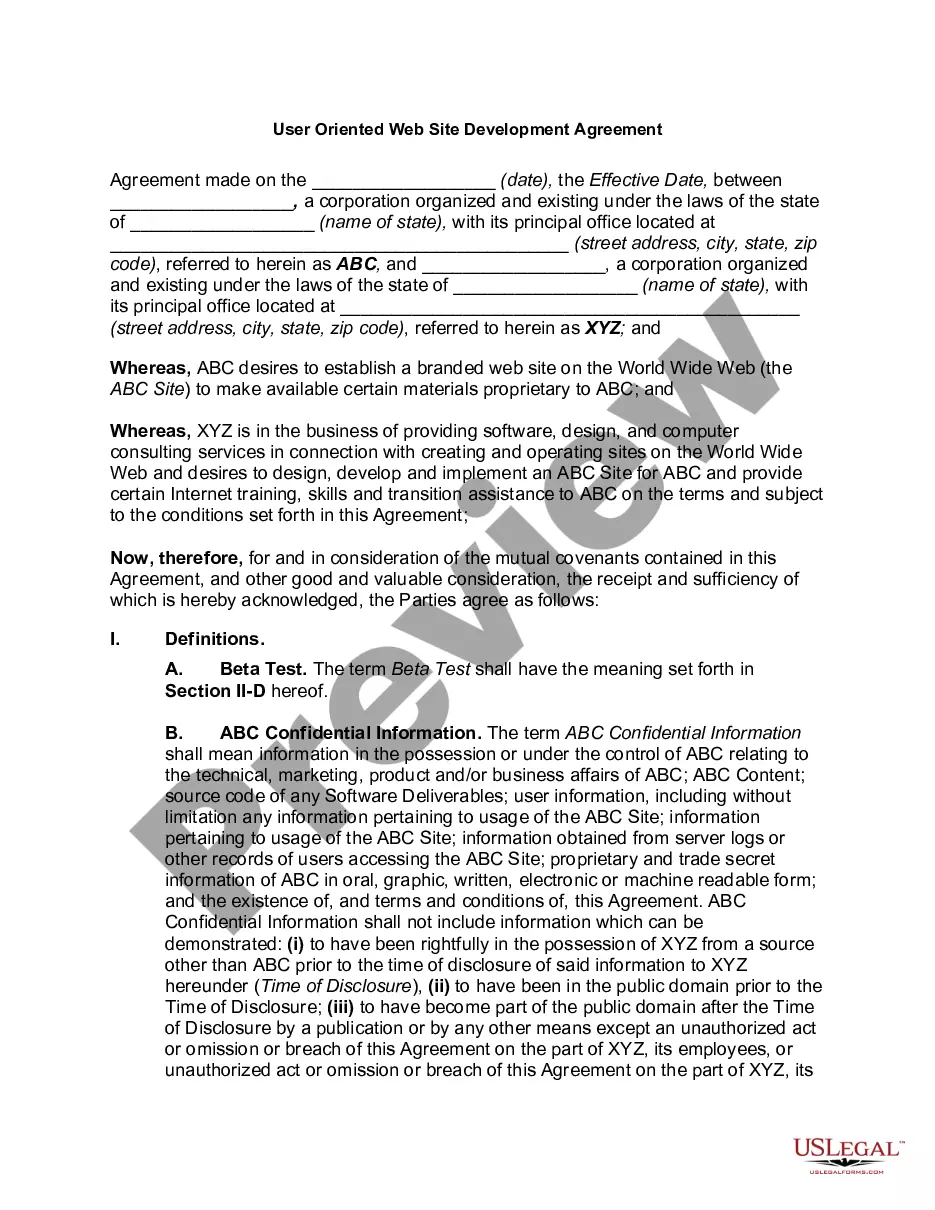
- Details of parties involved, including their roles as Developer and Client.
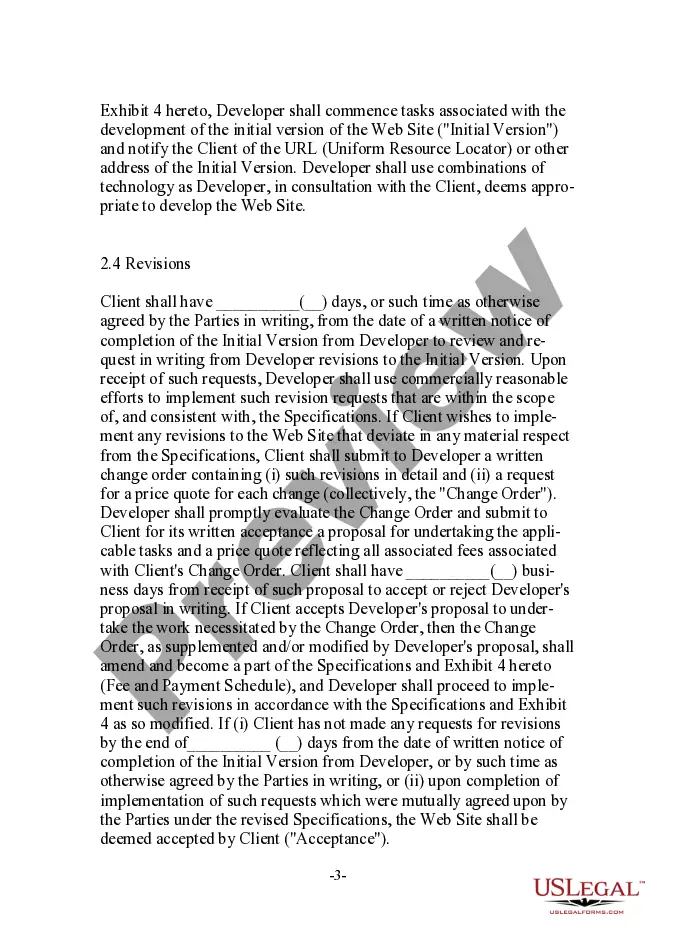
- Specifications for the website to be developed, including design and feature requirements.
- Provisions regarding additional services and ongoing maintenance tasks.
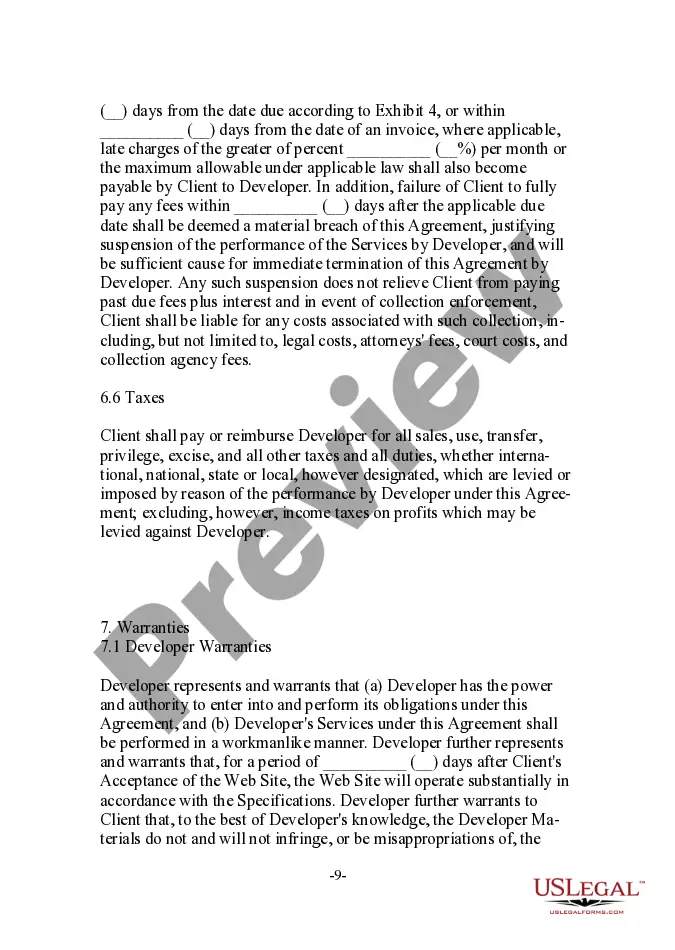
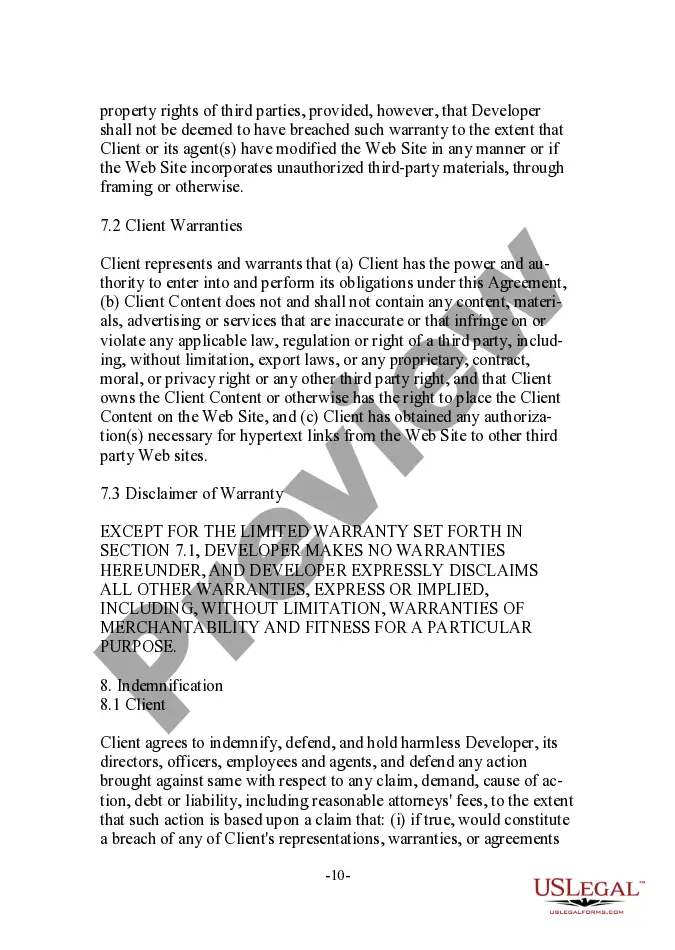
- Ownership rights, clarifying proprietary rights of both the Developer and the Client.
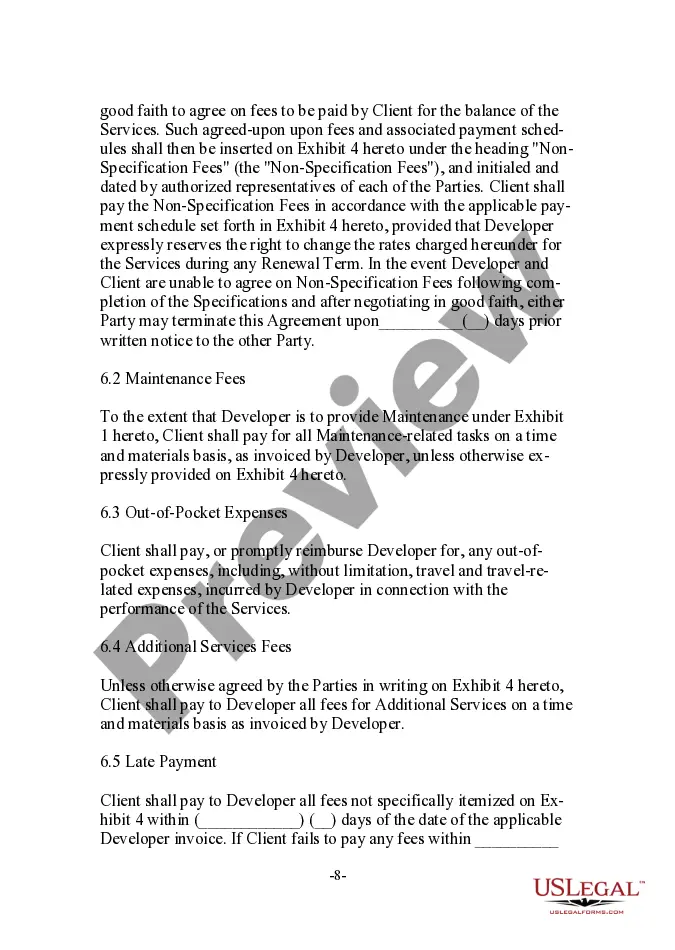
- Payment terms, including fees for services, maintenance, and additional expenses.
- Termination conditions outlining the rights of both parties if the agreement is to be ended.

When to use this form
This Vendor-Oriented Web Site Development Agreement is essential when a business seeks to hire a developer to create or update its website. It is useful in scenarios such as starting a new business that requires an online presence, redesigning an existing website, or when seeking maintenance services for an established site.
Who should use this form
- Businesses looking to develop a new website and need a formal agreement with a web developer.
- Entrepreneurs and startups aiming to establish their online presence.
- Companies requiring revisions or updates to an existing website.
- Marketing and advertising agencies that outsource web development tasks.
How to prepare this document
- Identify the parties involved by entering the Developer's and Client's names and contact information.
- Detail the website specifications, including design, features, and interactive elements.
- Outline the payment terms, including fees for development, maintenance, and any additional services.
- Add confidentiality and proprietary rights clauses as needed to protect sensitive information.
- Ensure both parties sign and date the agreement to validate it.
Does this document require notarization?
This form does not typically require notarization unless specified by local law. However, verifying signatures can enhance the legal strength of the agreement.
Get your form ready online
Our built-in tools help you complete, sign, share, and store your documents in one place.
Make edits, fill in missing information, and update formatting in US Legal Forms—just like you would in MS Word.
Download a copy, print it, send it by email, or mail it via USPS—whatever works best for your next step.
Sign and collect signatures with our SignNow integration. Send to multiple recipients, set reminders, and more. Go Premium to unlock E-Sign.
If this form requires notarization, complete it online through a secure video call—no need to meet a notary in person or wait for an appointment.
We protect your documents and personal data by following strict security and privacy standards.

Make edits, fill in missing information, and update formatting in US Legal Forms—just like you would in MS Word.

Download a copy, print it, send it by email, or mail it via USPS—whatever works best for your next step.

Sign and collect signatures with our SignNow integration. Send to multiple recipients, set reminders, and more. Go Premium to unlock E-Sign.

If this form requires notarization, complete it online through a secure video call—no need to meet a notary in person or wait for an appointment.

We protect your documents and personal data by following strict security and privacy standards.
Common mistakes
- Failing to specify clear deadlines for project milestones.
- Omitting details about ongoing maintenance and support post-launch.
- Neglecting to include a detailed payment schedule, leading to payment disputes.
- Not clarifying ownership rights of content and materials provided by both parties.
Advantages of online completion
- Convenient access to fill out and customize the agreement from any location.
- Editable format allows for quick adjustments based on specific project requirements.
- Reliable templates drafted by licensed attorneys ensure legal compliance.
Legal use & context
- This agreement is legally enforceable in California, provided that all parties sign and adhere to the terms outlined.
- Ensures that both developer and client are protected under defined obligations, reducing legal risks.
What to keep in mind
- The Vendor-Oriented Web Site Development Agreement is essential for delineating roles and responsibilities in web development projects.
- Defining payment terms and intellectual property rights is crucial for avoiding conflicts.
- Utilizing this agreement helps protect both the developer and the client, facilitating clearer communication and expectations.
- Reviewing local laws ensures compliance and relevance of the agreement in your jurisdiction.
Looking for another form?
Form popularity
FAQ
If you're a sole proprietor or a partner with the authority to sign contracts for the partnership, you sign using your own name. Then, UpCounsel says, you add the "doing business as" name. DBA examples are "Bert Smith, DBA Steel IT Security" or "Helen Marker, DBA The Best Vintage Jewelry."
Insert "doing business as" or the acronym "dba" after the company's legal name followed by the dba. If Mike's Widgets, LLC uses the tradename "Awesome Widgets," then the contract would identify the business as "Mike's Widgets, LLC, an Arizona limited liability company dba Awesome Widgets."
In the U.S., a DBA lets the public know who the real owner of a business is. The DBA is also called a fictitious business name or assumed business name. It got its origins as a form of consumer protection, so dishonest business owners couldn't try to avoid legal trouble by operating under a different name.
The biggest difference between a DBA and an LLC is liability protection. Under a DBA, there is no distinction between the business owner and the business.On the other hand, an LLC provides limited liability protection. The business owners' personal property remains completely separate from the business.
A DBA, also known as a fictitious business name or trade name, is any name other than your legal name that you use in your business.Unlike LLC formation, filing a DBA doesn't create a new legal entity or a new legal name. A DBA does not give you any additional liability protection, nor does give you name protection.
For example, business owner John Smith might file the Doing Business As name "Smith Roofing." Corporations and limited liability companies (LLCs) may register DBA names for specific lines of business. For example, Helen's Food Service Inc. might register the DBA "Helen's Catering."
The biggest difference between a DBA and an LLC is liability protection. Under a DBA, there is no distinction between the business owner and the business.On the other hand, an LLC provides limited liability protection. The business owners' personal property remains completely separate from the business.
Registering your DBA name doesn't provide legal protection by itself, but most states require you to register your DBA if you use one. Some business structures require you to use a DBA.
The purpose of registering a DBA name is to notify the public that a particular person or business entity is conducting business under a name other than its legal name. Assumed name (DBA) laws are consumer protection laws.