Sample Letter for Withdrawal of Counsel
What is this form?
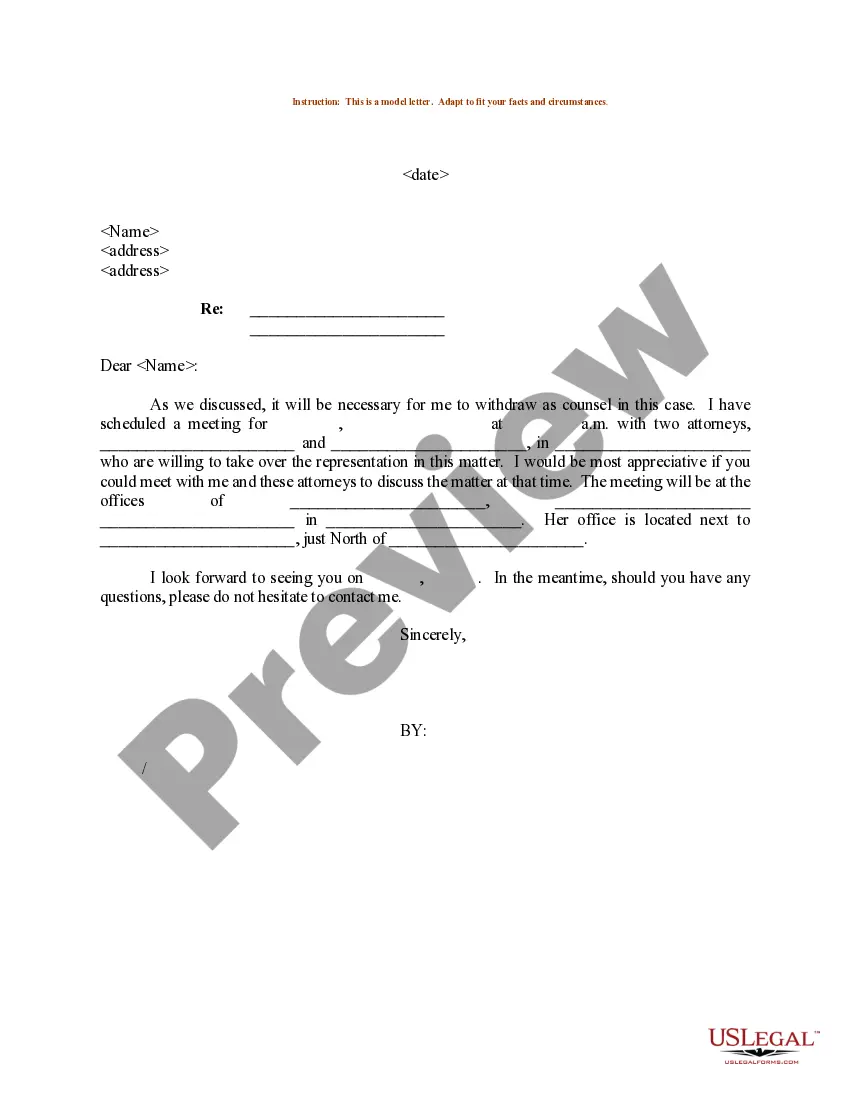
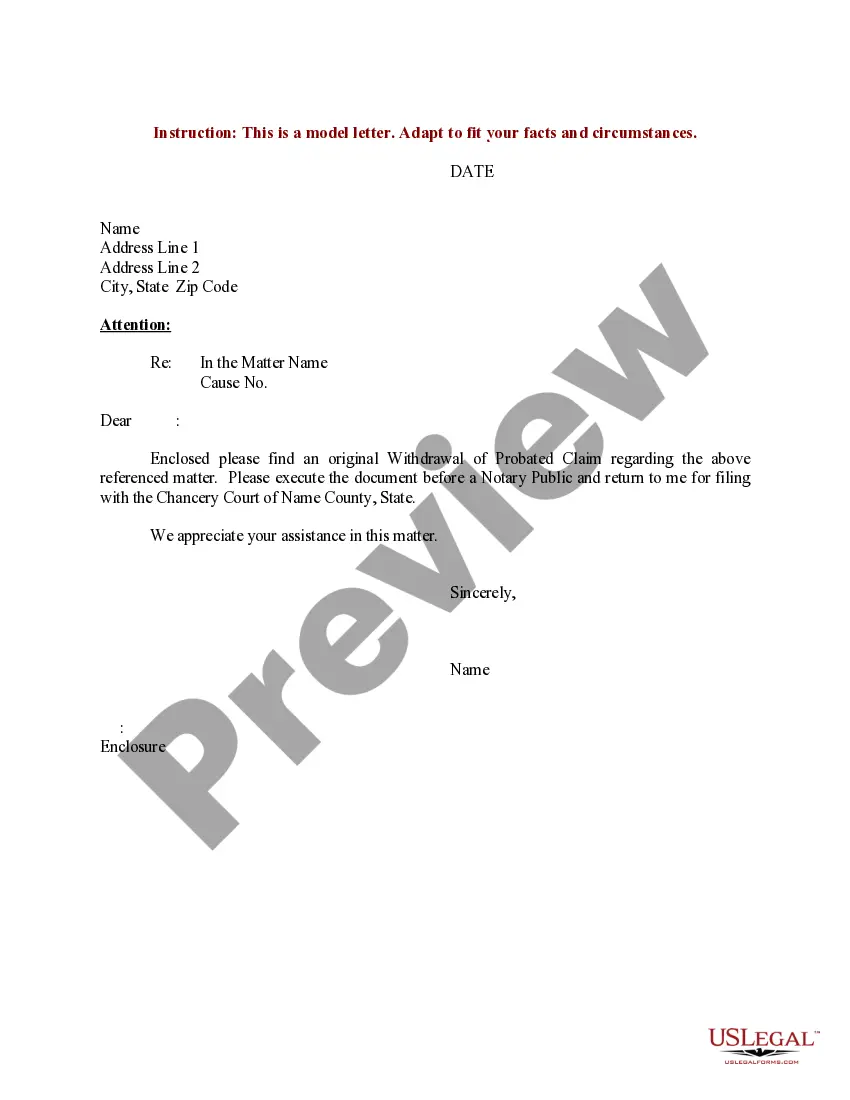
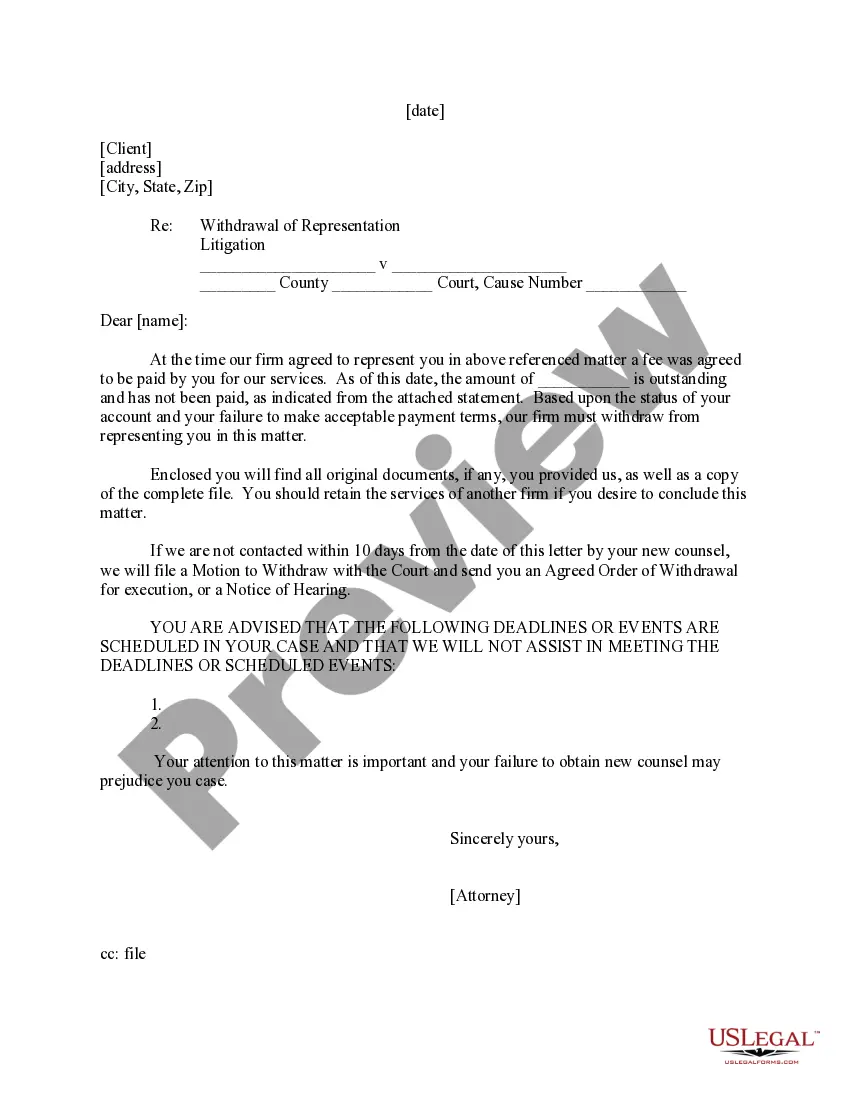
The Sample Letter for Withdrawal of Counsel is a template that allows an attorney to formally notify a client or court of their decision to withdraw from representation. This letter is a crucial part of the legal process, as it ensures that all parties are aware of the change in legal representation, which is important for maintaining proper legal protocol. Unlike other types of correspondence, this letter specifically addresses the withdrawal of counsel, making it a vital tool for attorneys and clients alike.
Key parts of this document
- Date of the letter
- Recipient's name and address
- Subject line indicating the purpose of the letter
- Body of the letter, explaining the withdrawal
- Signature line for the withdrawing attorney

When to use this document
This form should be used when an attorney is withdrawing from a client's case or representation. It is essential in scenarios such as when the attorney-client relationship has been severed, the attorney is unable to continue due to personal reasons, or the client has requested a change in legal representation. Using this letter ensures that there is a formal record of the withdrawal and helps to avoid potential misunderstandings later on.
Who should use this form
- Attorneys looking to withdraw from client representation
- Clients who need to confirm their attorney's withdrawal
- Law firms managing changes in legal counsel
- Trainees or junior attorneys seeking templates for official letters
How to complete this form
- Enter the date at the top of the letter.
- Fill in the recipient's name and address.
- Clearly state the subject of the letter.
- Compose the body, indicating the reason for the withdrawal and any relevant details.
- Sign the letter with your name and title.
Is notarization required?
This form does not typically require notarization unless specified by local law. However, ensuring compliance with any local regulations is always advisable.
Get your form ready online
Our built-in tools help you complete, sign, share, and store your documents in one place.
Make edits, fill in missing information, and update formatting in US Legal Forms—just like you would in MS Word.
Download a copy, print it, send it by email, or mail it via USPS—whatever works best for your next step.
Sign and collect signatures with our SignNow integration. Send to multiple recipients, set reminders, and more. Go Premium to unlock E-Sign.
If this form requires notarization, complete it online through a secure video call—no need to meet a notary in person or wait for an appointment.
We protect your documents and personal data by following strict security and privacy standards.

Make edits, fill in missing information, and update formatting in US Legal Forms—just like you would in MS Word.

Download a copy, print it, send it by email, or mail it via USPS—whatever works best for your next step.

Sign and collect signatures with our SignNow integration. Send to multiple recipients, set reminders, and more. Go Premium to unlock E-Sign.

If this form requires notarization, complete it online through a secure video call—no need to meet a notary in person or wait for an appointment.

We protect your documents and personal data by following strict security and privacy standards.
Common mistakes to avoid
- Failing to specify the reason for withdrawal.
- Not providing sufficient contact information for follow-up.
- Omitting the date, which could affect the timeline of withdrawal.
- Using informal language that may not reflect the seriousness of the situation.
Benefits of completing this form online
- Easy access to a professionally drafted template.
- Customizable to fit individual circumstances and details.
- Reduces the risk of errors by following a clear format.
- Downloadable and printable for immediate use.
Legal use & context
- This letter serves as an official record of the attorney's withdrawal.
- It ensures that clients are aware of their representation status.
- Using this form helps attorneys stay within ethical guidelines regarding client communication.
Main things to remember
- The Sample Letter for Withdrawal of Counsel is crucial for formalizing an attorney's decision to withdraw.
- Completion of the letter must be done carefully to avoid misunderstandings.
- This form is adaptable for use across multiple states but should comply with specific state regulations.
Looking for another form?
Form popularity
FAQ
The Sample Letter for Withdrawal of Counsel is a standard template that lets an attorney formally notify a client or the court of a decision to stop representing them. It provides the basic structure—date, recipient, subject, body explaining the withdrawal, and a signature line—to create a clear, official record when the attorney-client relationship ends. It is suitable for multi-state use and can be adapted to reflect case details as needed.
A disengagement letter using this form should include the date, the recipient's name and address, a subject line indicating withdrawal, the body explaining the withdrawal, and the signature line of the withdrawing attorney. These elements create a formal, traceable record of the change in representation and communicate the withdrawal to all parties involved.
To write a letter to terminate an attorney using this form, include the date, the recipient's name and address, a clear subject, and a body that explains the withdrawal from representation. The letter should also include a signature line from the withdrawing attorney. This structure helps ensure proper notice to the client or court.
Use this form to craft a disengagement letter by following its sections: date, recipient name and address, subject line, body, and the withdrawing attorney’s signature. Keeping to the template ensures a professional tone and a formal, documented record of withdrawal for the client and any court or opposing party.
A letter of disengagement is a formal notice by an attorney that they will no longer represent the client. This Sample Letter for Withdrawal of Counsel serves that purpose by providing the required elements—date, recipient, subject, body, and signature—so the withdrawal is clearly communicated and properly recorded. It is used when the attorney-client relationship ends and a new representation is needed.
What sets this form apart is its explicit focus on withdrawal of counsel, with a defined template that includes date, recipient, subject, body, and signature. It is designed to notify both the client and the court of withdrawal and to provide a clear, official record, unlike a generic disengagement letter that may lack these formal elements.