Idaho Codicil to Will Form for Amending Your Will - Testamentary Pet Trust
Overview of this form
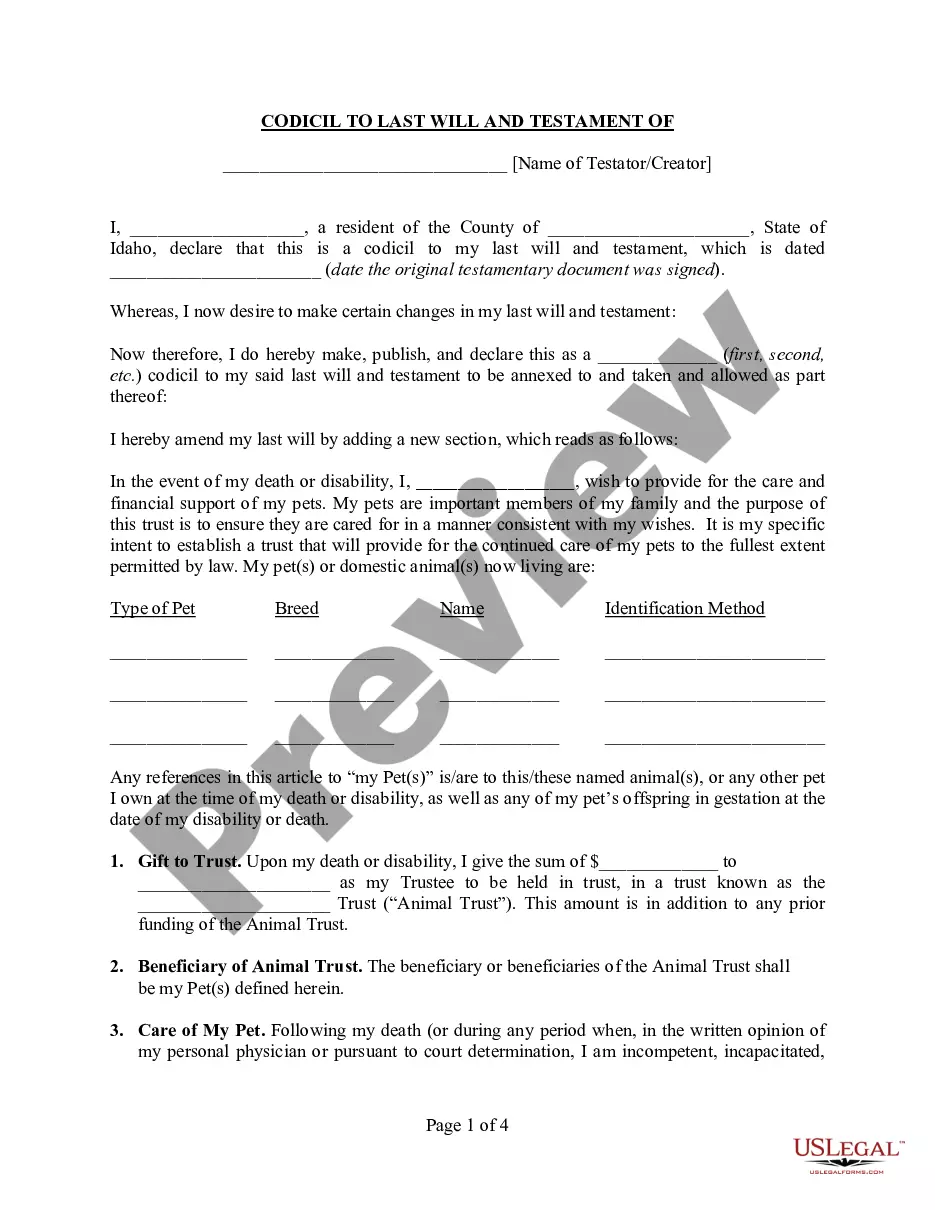
The Codicil to Will Form for Amending Your Will - Testamentary Pet Trust is a legal document that allows you to modify your existing last will and testament. This form specifically adds a testamentary trust to ensure the care and support of your pets after your passing. Unlike a standard will, this codicil focuses on your pet's well-being and outlines how financial resources should be allocated for their care, thereby distinguishing it from general will amendments.
What’s included in this form
- Introduction specifying the testator's name and residency.
- Modification statement to indicate the codicil's purpose.
- Details on pets, including types, breeds, and identification.
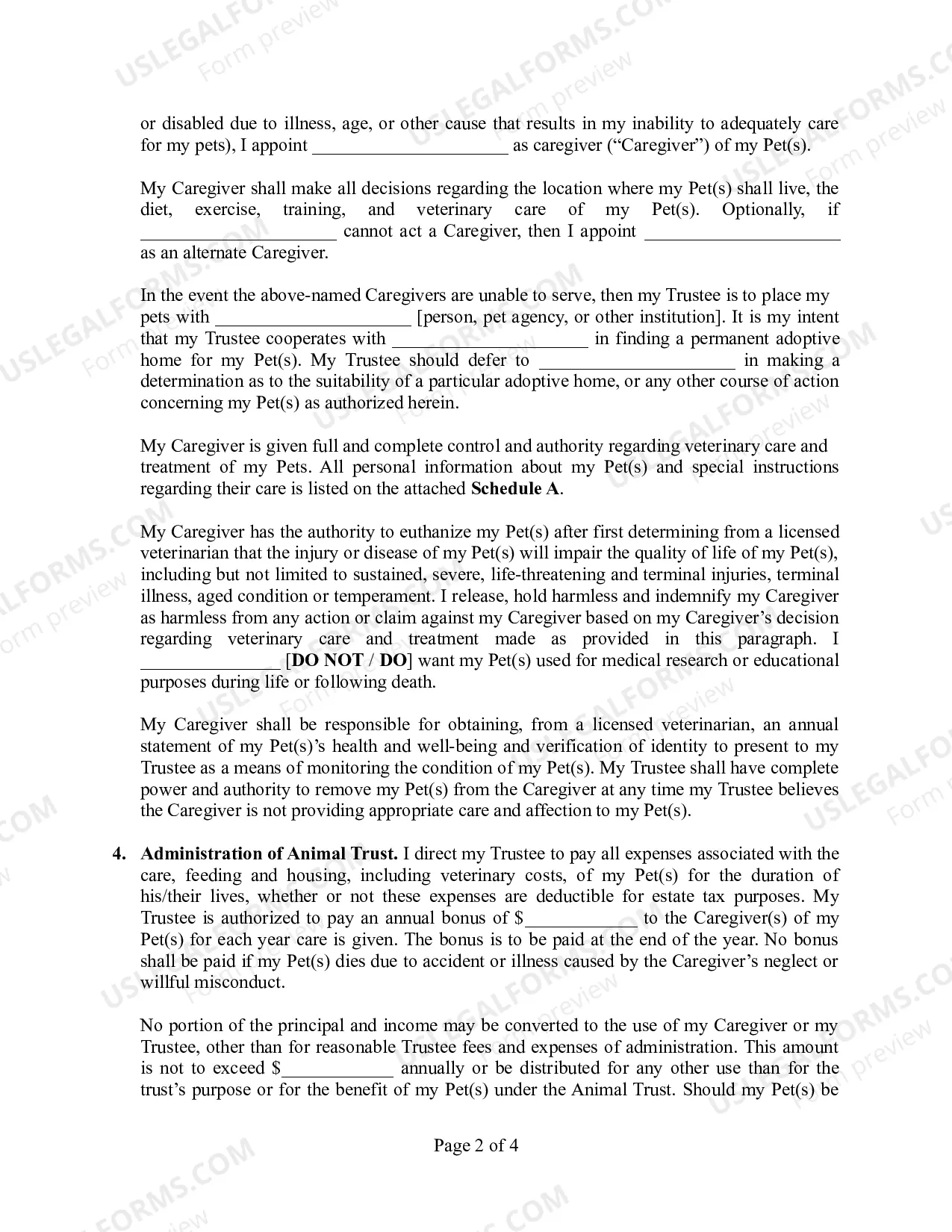
- Trustee information, specifying financial management for pet care.
- Caretaker appointment and their duties regarding pet care.
- Financial provisions for veterinary care, housing, and caregiver bonuses.
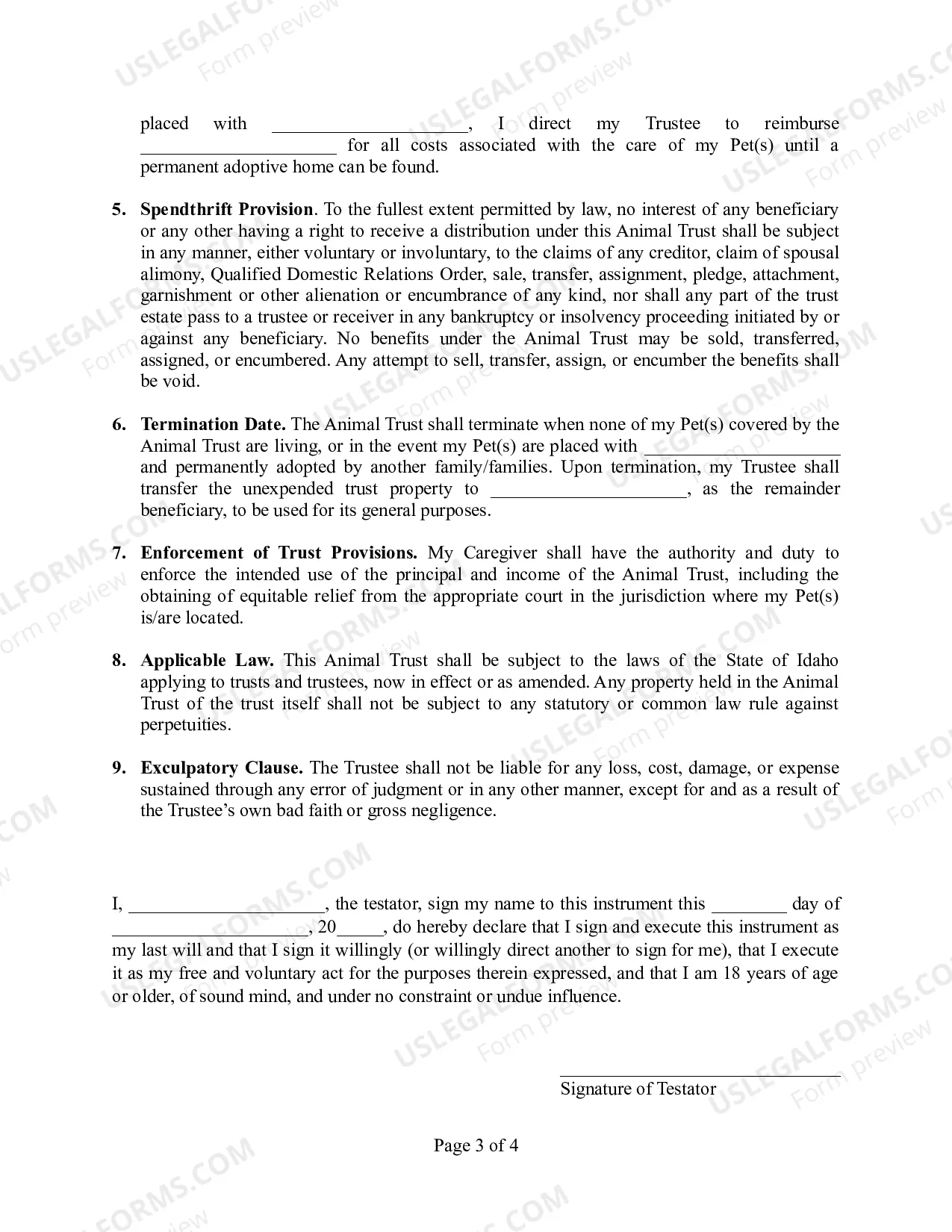
- Termination clauses explaining when the trust ends.
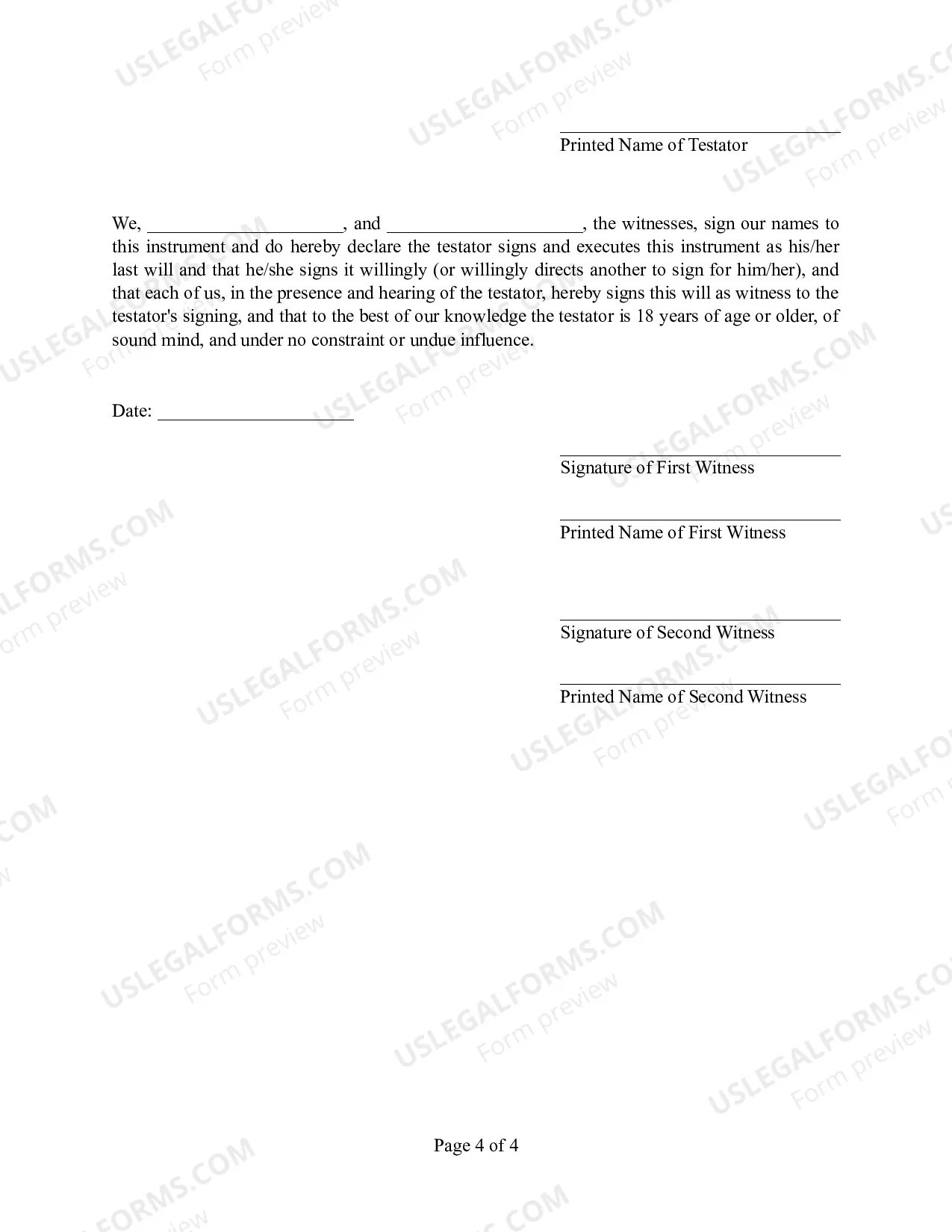

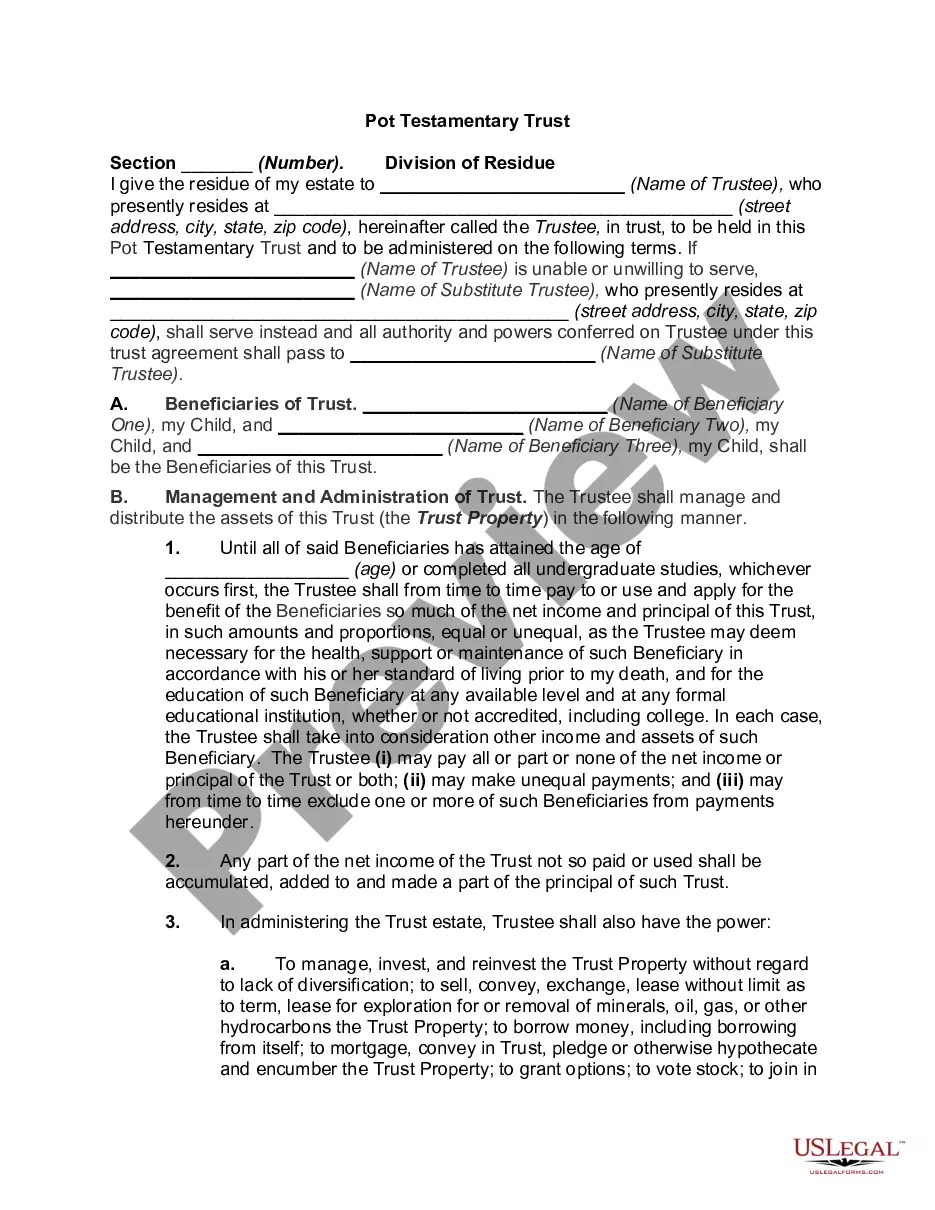

Situations where this form applies
This form is useful when you wish to ensure the ongoing care of your pets after your death or incapacitation. If you currently have a will but want to make specific arrangements for your pets or modify existing provisions, this codicil can serve as an efficient method to accomplish that without rewriting the entire will.
Who this form is for
- Pet owners who want to provide clear instructions for the care of their pets after their death.
- Individuals making changes to their existing wills to include provisions for their pets.
- Anyone who wishes to establish a trust specifically for pet care, ensuring financial resources are allocated appropriately.
How to prepare this document
- Enter the name and address of the testator at the top of the document.
- State the date of the original last will and testament for clarity.
- Fill in details about your pets, including their type, breed, name, and identification.
- Designate a trustee and specify the funds allocated for the pet trust.
- Appoint a caregiver who will be responsible for the petâs daily care and well-being.
- Sign the document in the presence of witnesses to validate the codicil.
Does this form need to be notarized?
This form does not typically require notarization unless specified by local law. However, having it notarized can add an extra layer of validity and clarity regarding the testator's signature.
Get your form ready online
Our built-in tools help you complete, sign, share, and store your documents in one place.
Make edits, fill in missing information, and update formatting in US Legal Forms—just like you would in MS Word.
Download a copy, print it, send it by email, or mail it via USPS—whatever works best for your next step.
Sign and collect signatures with our SignNow integration. Send to multiple recipients, set reminders, and more. Go Premium to unlock E-Sign.
If this form requires notarization, complete it online through a secure video call—no need to meet a notary in person or wait for an appointment.
We protect your documents and personal data by following strict security and privacy standards.

Make edits, fill in missing information, and update formatting in US Legal Forms—just like you would in MS Word.

Download a copy, print it, send it by email, or mail it via USPS—whatever works best for your next step.

Sign and collect signatures with our SignNow integration. Send to multiple recipients, set reminders, and more. Go Premium to unlock E-Sign.

If this form requires notarization, complete it online through a secure video call—no need to meet a notary in person or wait for an appointment.

We protect your documents and personal data by following strict security and privacy standards.
Avoid these common issues
- Failing to update the original will after adding a codicil.
- Not specifying enough details about the pets or their care.
- Overlooking the need for witnesses, which can invalidate the codicil.
- Inaccurately stating the trustee's responsibilities and financial allocations.
Advantages of online completion
- Convenience of accessing legal forms from anywhere at any time.
- Editability allows users to customize the document according to their needs.
- Secures peace of mind by ensuring that your pets' future care is legally documented.
- Access to attorney-drafted templates enhancing reliability and compliance with the law.
Looking for another form?


Form popularity
FAQ
You can either make a codicil to your existing will or make a new will. Both require your signature and the signatures of two witnesses.You can have a lawyer write your codicil for you, or you can make one yourself. However, in most cases it makes more sense just to make a new will.
Just about any writing will suffice to make a valid Trust amendment. Having the writing typed is not legally required. That's really the point of Trust amendments, to allow a Settlor to express his or her intent as easily as possible. As long as the Trust terms are followed, any writing will do.
Making changes to your will You cannot amend your will after it's been signed and witnessed. The only way you can change a will is by making an official alteration called a codicil. You must sign a codicil and get it witnessed in the same way as witnessing a will.
Of course you can, however, "Codicil" is an amendment to a will. Amending a trust called "Amendment" to the trust, even if it is just amending a trustee's name. It needs to be notarized and some specific language to be sufficient.
You can change your living trust, usually without incurring lawyer bills.Because you and your spouse made the trust together, you should both sign the amendment, and when you sign it, get your signatures notarized, just like the original. Another way to go is to create a "restatement" of your trust.
Identify the section and content you want to change. The first step in amending your will is to review it. Type up the changes. Take the time to type up the codicil. Sign and date the codicil. Store your codicil in a safe place.
You cannot amend your will after it's been signed and witnessed. The only way you can change a will is by making an official alteration called a codicil. You must sign a codicil and get it witnessed in the same way as witnessing a will. There's no limit on how many codicils you can add to a will.
Determine what you want to change, add, or delete from your original will. Create a codicil or a new will. Execute the codicil or new will with the legal formalities required in your state. Keep the codicil with the original will. Notify your nominated personal representative.