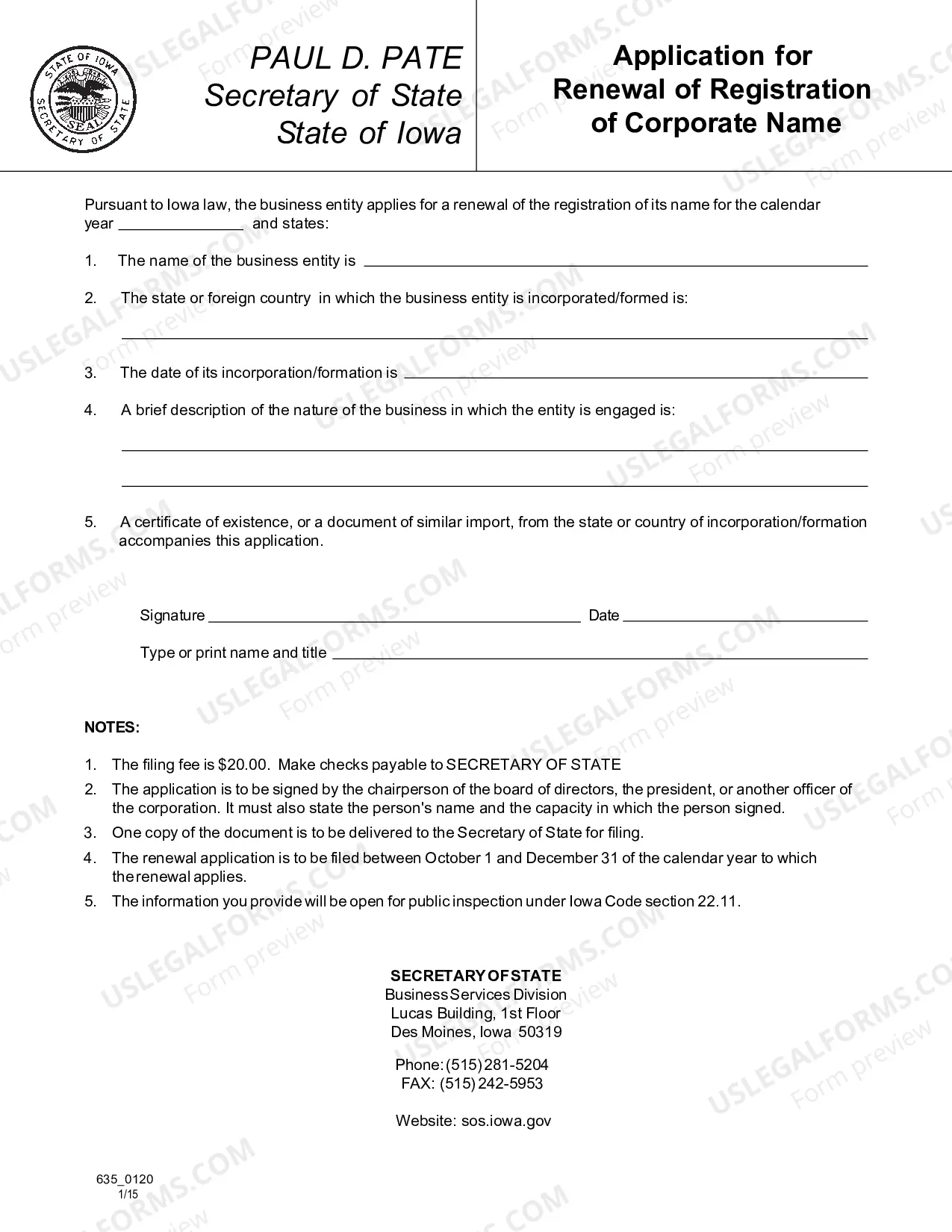
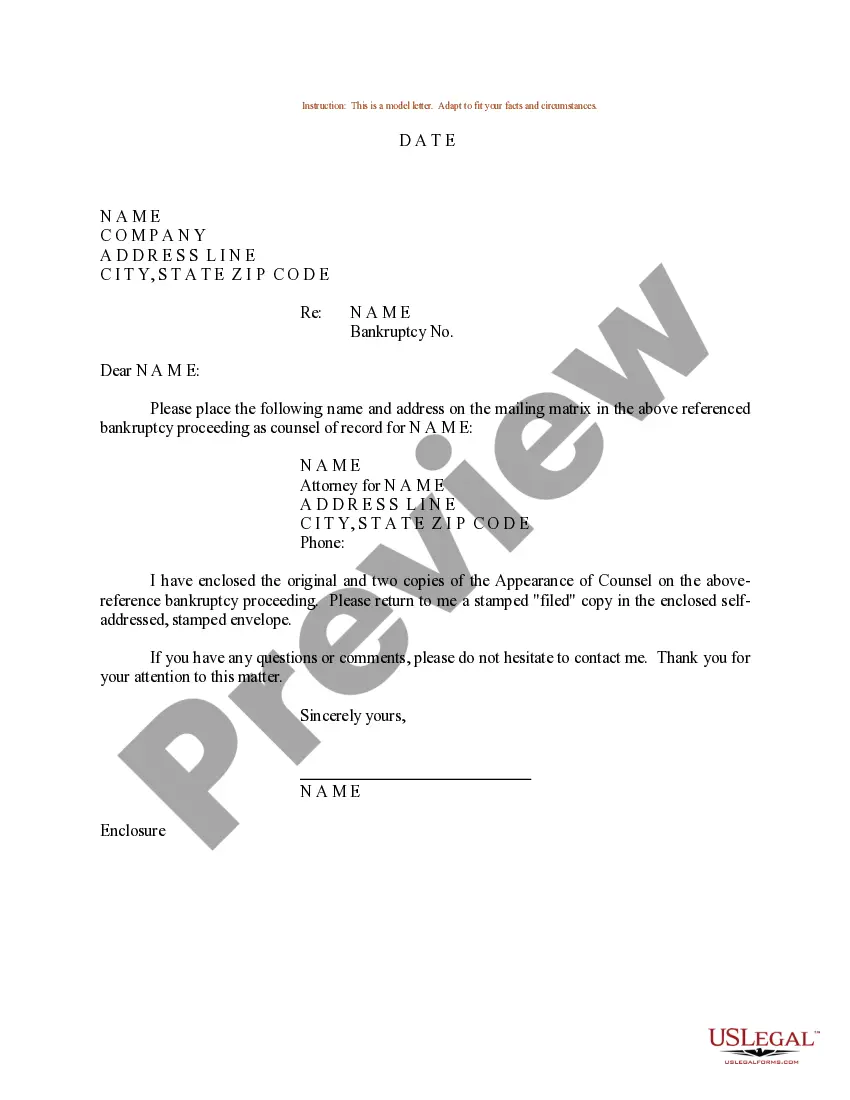
Sample Letter for Appointment of Attorney's Information on Mailing Matrix concerning bankruptcy proceeding
Overview of this form
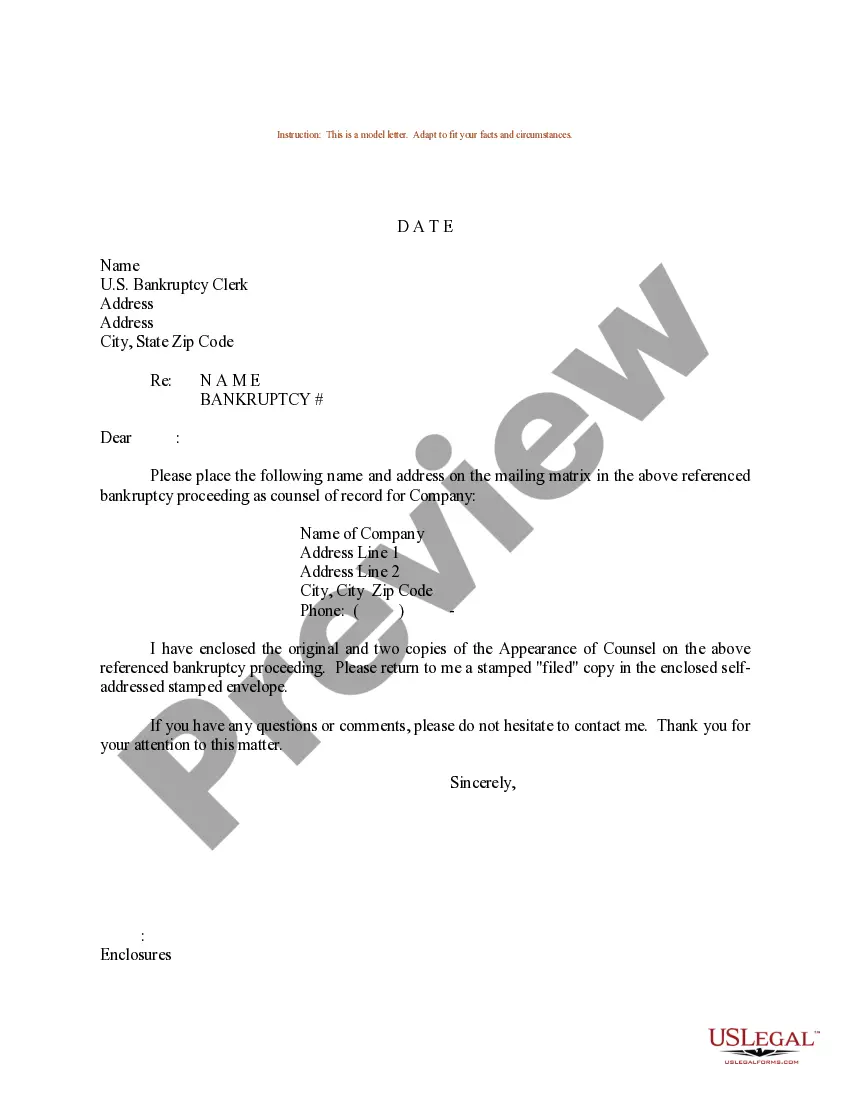
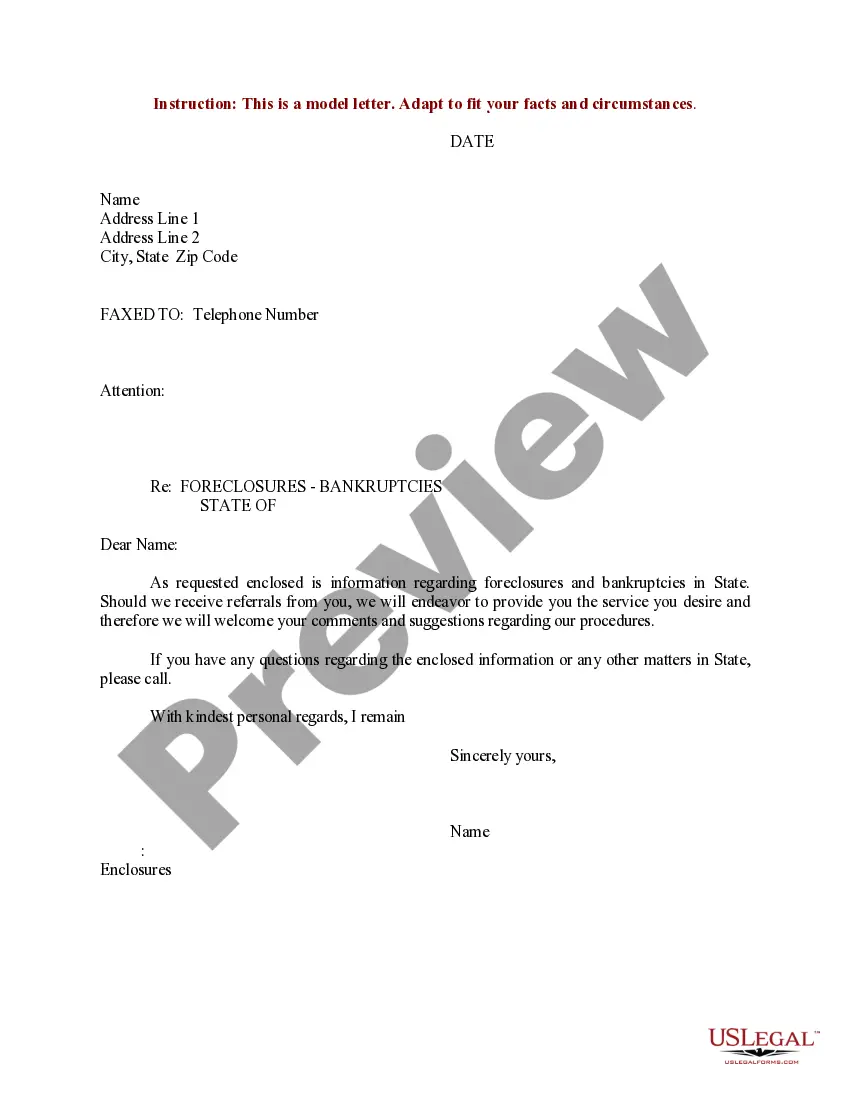
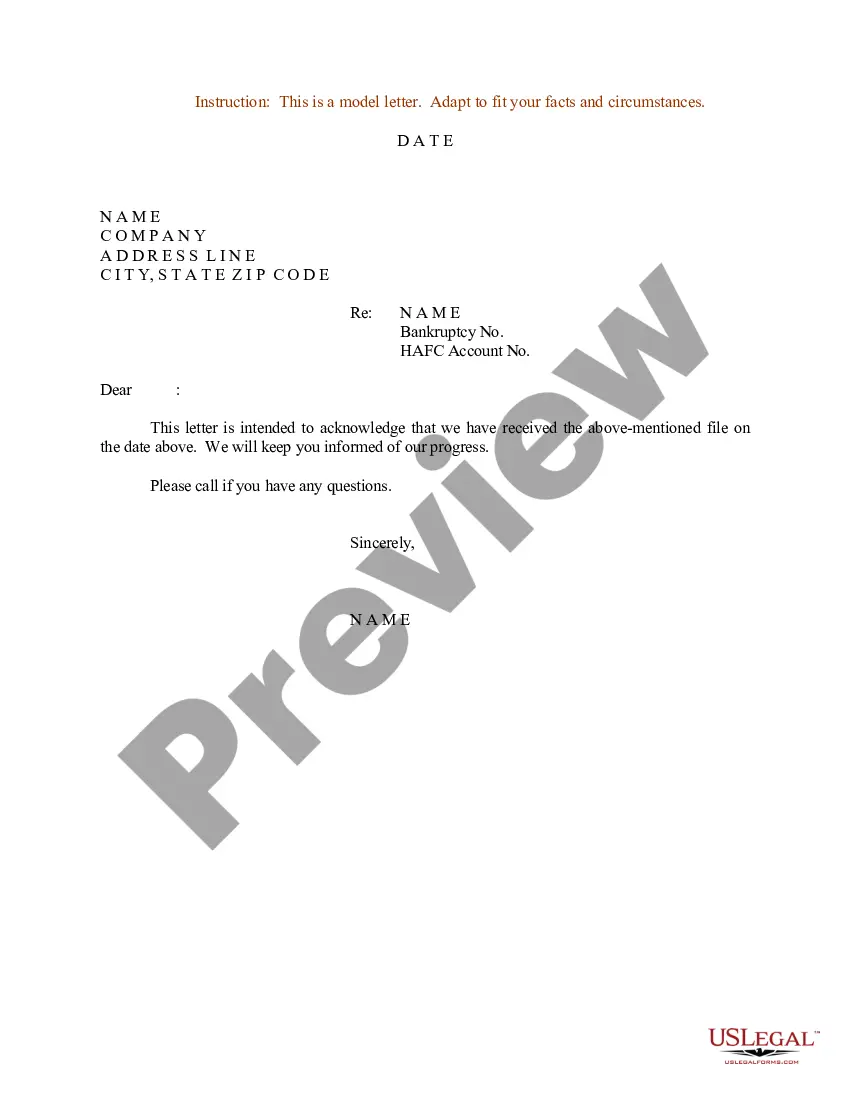
This Sample Letter for Appointment of Attorney's Information on Mailing Matrix concerning bankruptcy proceeding is a template that helps individuals formally notify relevant parties about an appointed attorney's contact details in a bankruptcy case. This letter serves as a communication tool, making it distinct from other forms that might simply document attorney appointments without addressing mailing matrices.
Key parts of this document
- Date of the letter
- Name of the attorney and the law firm
- Reference name for the bankruptcy case

When to use this document
This form should be used when a bankruptcy case is filed, and there is a need to officially communicate the appointed attorney's information to the court, creditors, and other relevant stakeholders. It is particularly useful in situations where multiple recipients must be informed of the attorney handling the bankruptcy proceedings.
Who this form is for
- Individuals filing for bankruptcy
- Attorneys representing clients in bankruptcy cases
- Bankruptcy petition filers needing to notify parties of attorney representation
How to complete this form
- Identify the date you are sending the letter.
- Fill in the name of your appointed attorney and their law firm.
- Enter the full address of the law firm, including city, state, and zip code.
- Include the reference name related to the bankruptcy case.
- Review the form for completeness before sending to the necessary parties.
Does this form need to be notarized?
In most cases, this form does not require notarization. However, some jurisdictions or signing circumstances might. US Legal Forms offers online notarization powered by Notarize, accessible 24/7 for a quick, remote process.
Get your form ready online
Our built-in tools help you complete, sign, share, and store your documents in one place.
Make edits, fill in missing information, and update formatting in US Legal Forms—just like you would in MS Word.
Download a copy, print it, send it by email, or mail it via USPS—whatever works best for your next step.
Sign and collect signatures with our SignNow integration. Send to multiple recipients, set reminders, and more. Go Premium to unlock E-Sign.
If this form requires notarization, complete it online through a secure video call—no need to meet a notary in person or wait for an appointment.
We protect your documents and personal data by following strict security and privacy standards.

Make edits, fill in missing information, and update formatting in US Legal Forms—just like you would in MS Word.

Download a copy, print it, send it by email, or mail it via USPS—whatever works best for your next step.

Sign and collect signatures with our SignNow integration. Send to multiple recipients, set reminders, and more. Go Premium to unlock E-Sign.

If this form requires notarization, complete it online through a secure video call—no need to meet a notary in person or wait for an appointment.

We protect your documents and personal data by following strict security and privacy standards.
Typical mistakes to avoid
- Leaving out the bankruptcy case reference name.
- Not updating the attorney's contact information if it changes.
- Failing to check the requirements for notifying all necessary parties.
Benefits of completing this form online
- Conveniently download and customize the form to fit your specific case.
- Access to reliable, attorney-drafted templates reduces legal errors.
- Easy to complete and update as needed before printing or sending.
Looking for another form?
Form popularity
FAQ
Eligible filers are able to file Chapter 7 for free. If your household income is less than 150% of the federal poverty level, you can ask the bankruptcy judge to waive your court fees with a simple application submitted along with your bankruptcy petition.
Typically court fees and fines cannot be discharged through bankruptcy. You should sit down with an attorney to go over your debts.
You can still file for Chapter 13 bankruptcy if you're unemployed. However, if you don't have employment income, you'll have to show that you have some kind of income from a verifiable source and that you can afford your plan. Otherwise, the court will dismiss your case.
Nondischargeable debt is a type of debt that cannot be eliminated through a bankruptcy proceeding. Such debts include, but are not limited to, student loans; most federal, state, and local taxes; money borrowed on a credit card to pay those taxes; and child support and alimony.
Eligible filers are able to file Chapter 7 for free. If your household income is less than 150% of the federal poverty level, you can ask the bankruptcy judge to waive your court fees with a simple application submitted along with your bankruptcy petition.
In general, attorney fees for a Chapter 7 bankruptcy range from $1,000 to $3,500 depending on the complexity of the case. Larger firms with more advertising and overhead costs sometimes charge more than a solo practitioner, but not always.
Attorney fees can, and should, be included in any bankruptcy filing.Attorney fees are usually treated the same as any other unsecured debt, meaning in most cases you can walk away from that debt at the end of your bankruptcy.
Alimony and child support. Certain unpaid taxes, such as tax liens. Debts for willful and malicious injury to another person or property. Debts for death or personal injury caused by the debtor's operation of a motor vehicle while intoxicated from alcohol or other substances.
In general, attorney fees for a Chapter 7 bankruptcy range from $1,000 to $3,500 depending on the complexity of the case. Larger firms with more advertising and overhead costs sometimes charge more than a solo practitioner, but not always. Some larger operations offer low fees and count on a higher volume of cases.