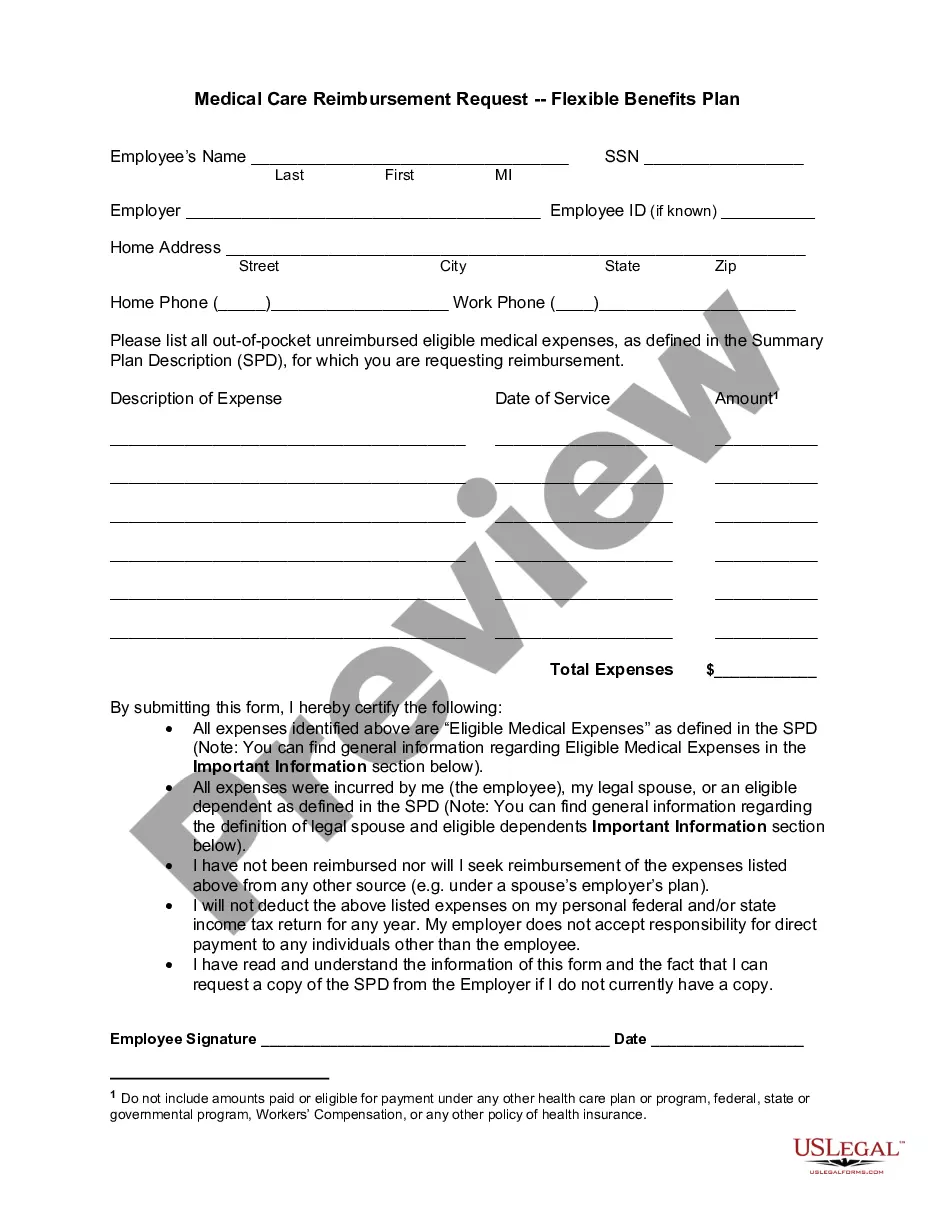
Medical Care Reimbursement Request - Flexible Benefits Plan
About this form
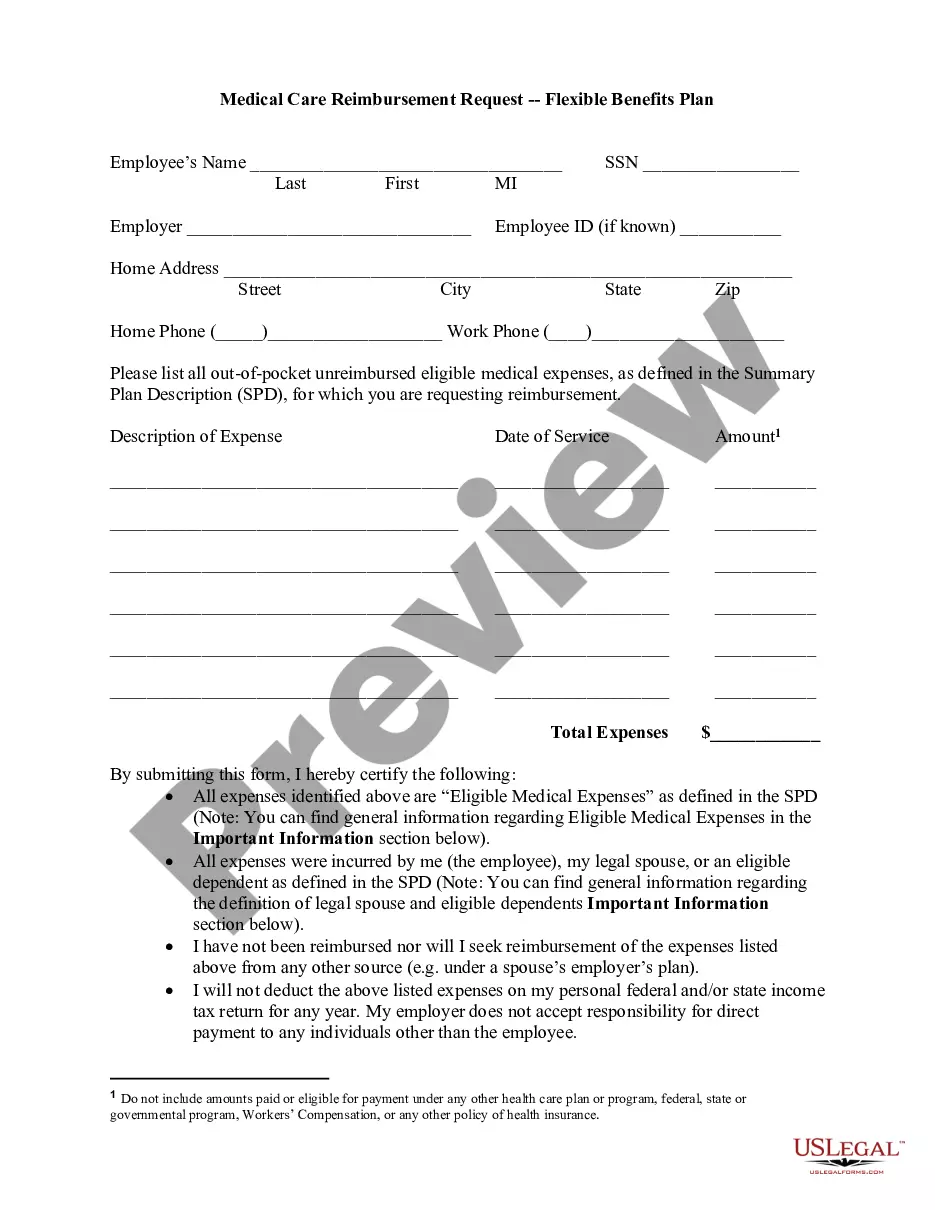
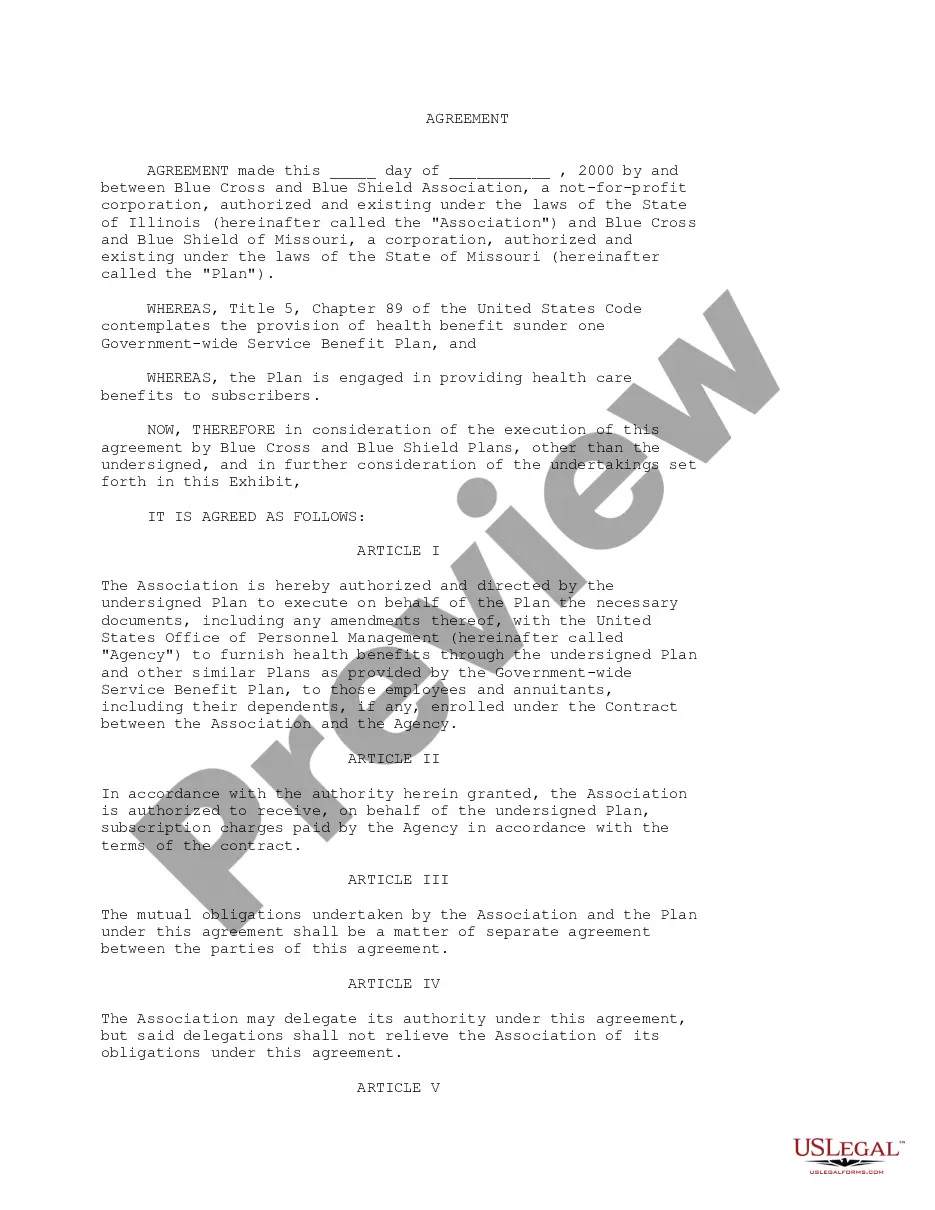
The Medical Care Reimbursement Request form is a document designed for employees participating in a Flexible Benefits Plan, commonly known as a cafeteria plan. This form allows employees to request reimbursement for out-of-pocket medical expenses that are eligible for tax advantages. It ensures that employees can access their benefits efficiently while adhering to the rules set forth in the Summary Plan Description (SPD).
Key components of this form
- Employee information section, including name, Social Security number, and contact details.
- Listing of all out-of-pocket unreimbursed medical expenses, including dates and amounts.
- Certification of the eligibility of expenses and compliance with plan rules.
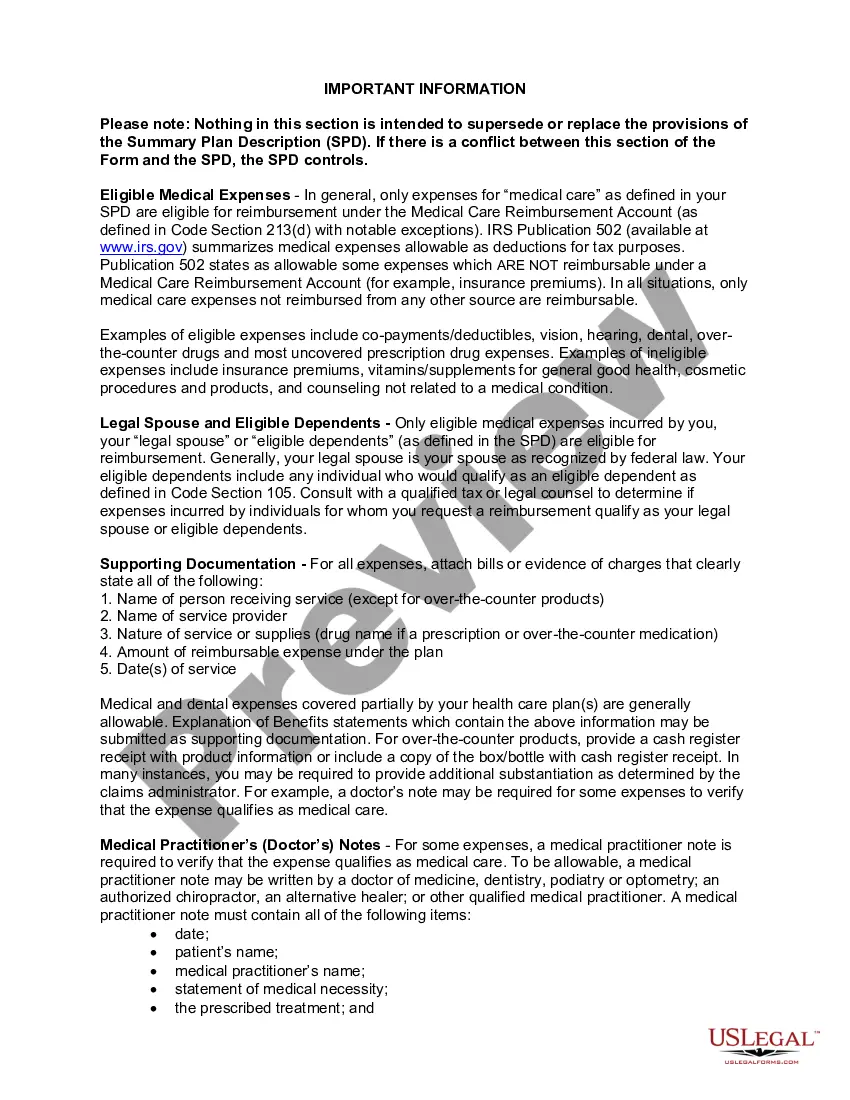
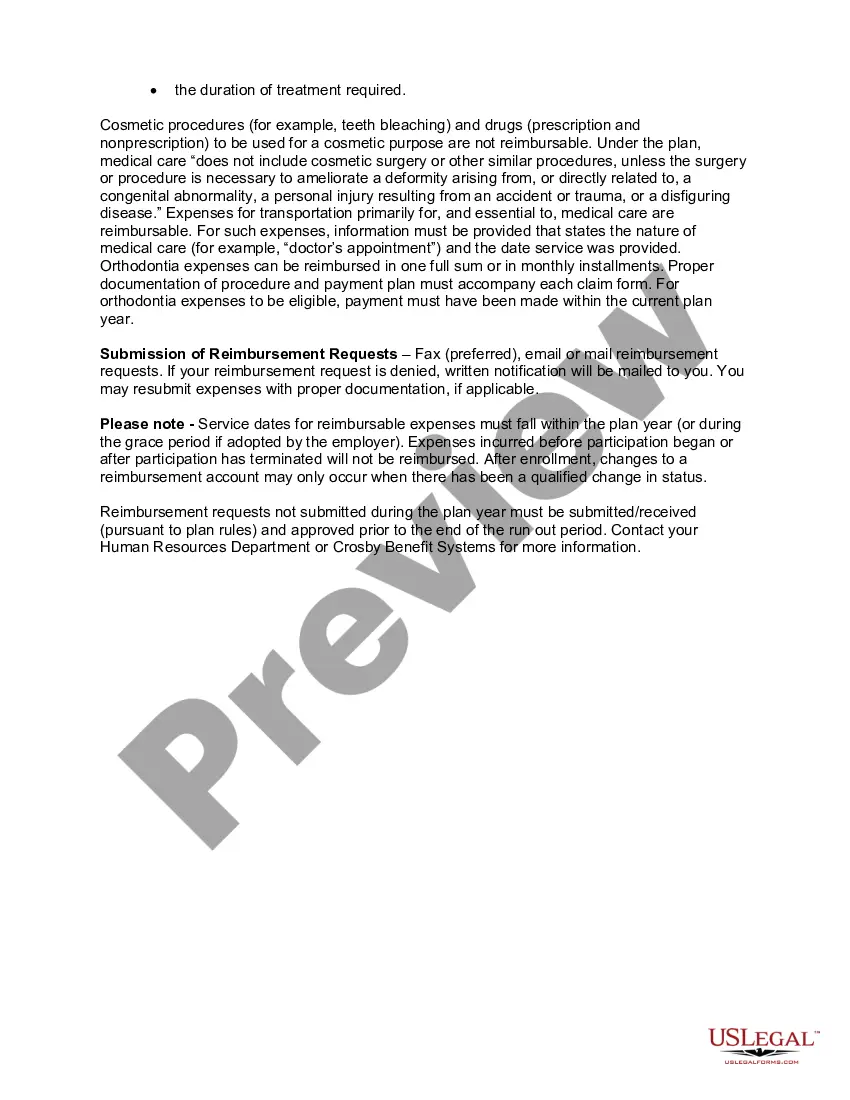
- Section for supporting documentation requirements.
- Signature line for employee verification and date of submission.
When to use this document
This form should be used when employees incur out-of-pocket medical expenses that are not reimbursed by any other source. It is important for situations where individuals want to utilize their Flexible Benefits Plan to recover these costs effectively. Examples include co-payments, deductibles, and certain medical treatments or supplies that qualify under the SPD.
Who this form is for
This form is intended for:
- Employees enrolled in a Flexible Benefits Plan.
- Individuals who have incurred eligible medical expenses that they wish to reimburse.
- Employees seeking to understand and utilize their tax-advantaged benefits related to healthcare costs.
Steps to complete this form
- Fill in your personal details, including your name, Social Security number, and contact information.
- List all eligible medical expenses along with the corresponding dates and amounts.
- Attach supporting documentation for each expense claimed, such as bills or explanation of benefits statements.
- Certify that the listed expenses were not reimbursed through any other source.
- Sign and date the form before submission to your HR department or claims administrator.
Notarization requirements for this form
This form does not typically require notarization unless specified by local law. Ensure that you follow your employer's instructions for submitting the form to avoid any processing delays.
Get your form ready online
Our built-in tools help you complete, sign, share, and store your documents in one place.
Make edits, fill in missing information, and update formatting in US Legal Forms—just like you would in MS Word.
Download a copy, print it, send it by email, or mail it via USPS—whatever works best for your next step.
Sign and collect signatures with our SignNow integration. Send to multiple recipients, set reminders, and more. Go Premium to unlock E-Sign.
If this form requires notarization, complete it online through a secure video call—no need to meet a notary in person or wait for an appointment.
We protect your documents and personal data by following strict security and privacy standards.

Make edits, fill in missing information, and update formatting in US Legal Forms—just like you would in MS Word.

Download a copy, print it, send it by email, or mail it via USPS—whatever works best for your next step.

Sign and collect signatures with our SignNow integration. Send to multiple recipients, set reminders, and more. Go Premium to unlock E-Sign.

If this form requires notarization, complete it online through a secure video call—no need to meet a notary in person or wait for an appointment.

We protect your documents and personal data by following strict security and privacy standards.
Typical mistakes to avoid
- Failing to provide complete and accurate information on medical expenses.
- Not attaching necessary supporting documentation for claims.
- Submitting claims for expenses that are not considered eligible under the SPD.
- Not signing or dating the form before submission.
- Requesting reimbursement for expenses that have been covered by other health programs.
Why complete this form online
- Convenient access and ability to complete the form at your own pace.
- Editable fields to ensure all required information is captured.
- Secure and reliable submission options that protect your personal data.
- Quick access to resources and guidelines regarding eligible expenses.
Legal use & context
- This form complies with IRS guidelines on eligible medical expenses under a Flexible Benefits Plan.
- Claims must only be made for expenses not reimbursed through other health plans.
- Proper documentation is critical for compliance and reimbursement processing.
Summary of main points
- This form is essential for claiming reimbursement for eligible medical expenses under your Flexible Benefits Plan.
- Accurate documentation and adherence to SPD rules are crucial for successful claims.
- Complete the form carefully to avoid common submission errors.
Looking for another form?

Form popularity
FAQ
How to claim Medical reimbursement? One can claim reimbursement of medical expenses by submitting the original bills to the employer. The employer would accordingly reimburse such expenses incurred subject to the overall limit of Rs 15,000 without tax deduction.
Design the plan (decide on employee allowances, eligibility criteria, etc.) Decide how you will set up and administer the plan. Establish written, legal plan documents. Distribute plan documents and benefit information to employees.
Log in to the FSAFEDS app using the same username and password as your online account. Select whether to submit a claim or pay a provider. Follow the prompts to enter claims details. Take photos of your itemized receipts (and other documentation if needed) or upload from your mobile device.
Bottom line: You can reimburse yourself from an HSA or FSA. However, you need to make sure you keep track of your medical expenses and ensure they're all qualified before you reimburse yourself to avoid penalties and taxes.
Start and end dates of service 2022 Dependent's name and date of birth 2022 Itemization of charges 2022 Provider's name, address, and tax ID or Social Security number 2022 Credit card receipts, canceled checks, and balance forward statements do not meet the requirements for acceptable documentation.
A Medical Expense Reimbursement Plan is just a way for employers to give their employees tax-free money that can be used only to pay medical expenses.Employees pay for their own doctor visits and medicine, and then the employer reimburses them.
How to start an individual coverage HRA. You can set up an individual coverage HRA at any time. You'll need to provide a written notice to your employees as soon as they're eligible to participate and 90 days before the beginning of each plan year.
Employers set allowance amounts. With an MERP, employers set a monthly allowance amount for each employee. Employees purchase health care. Employees submit proof of expense. Employers review employee documentation. Employers reimburse employees.