Colorado Warranty Deed for Fiduciary
Overview of this form
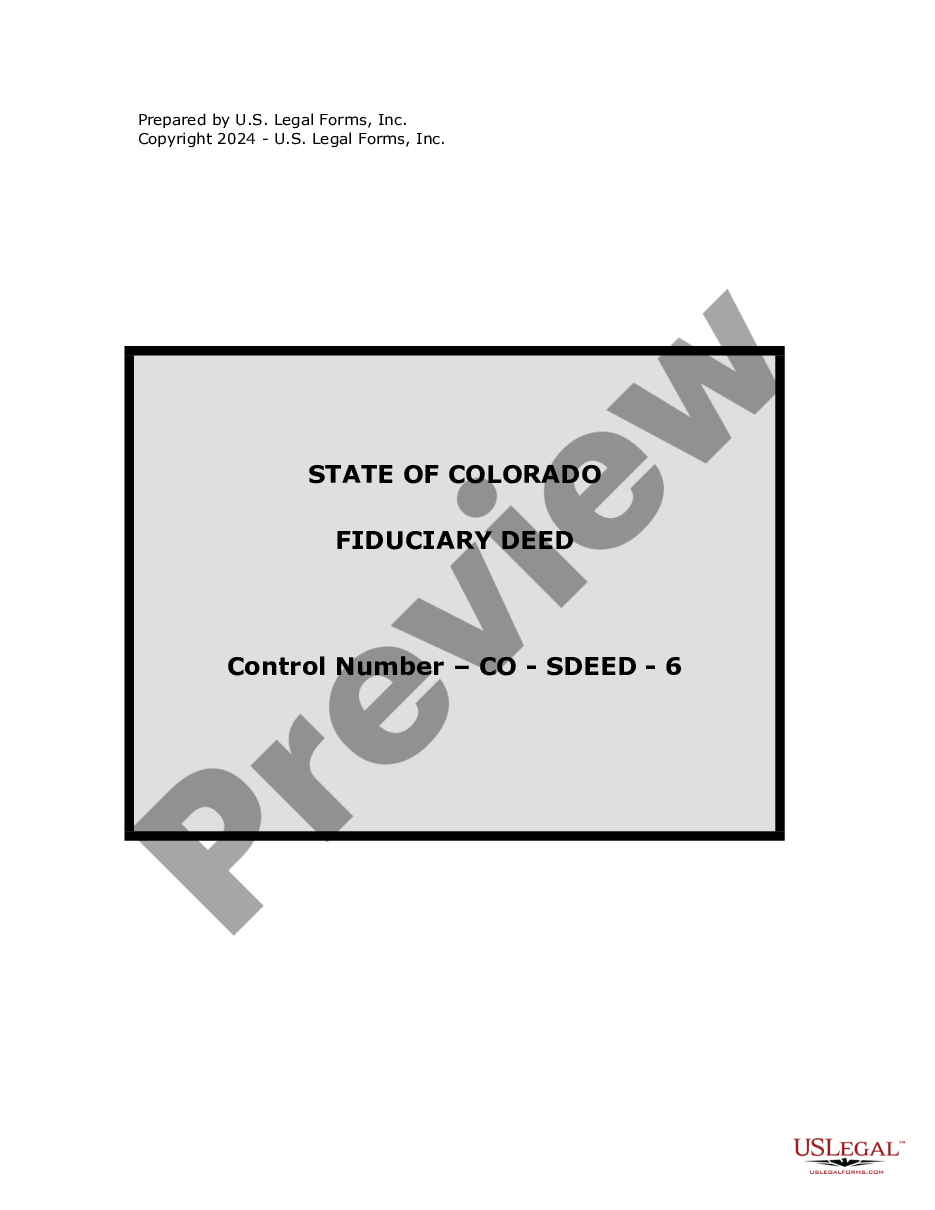
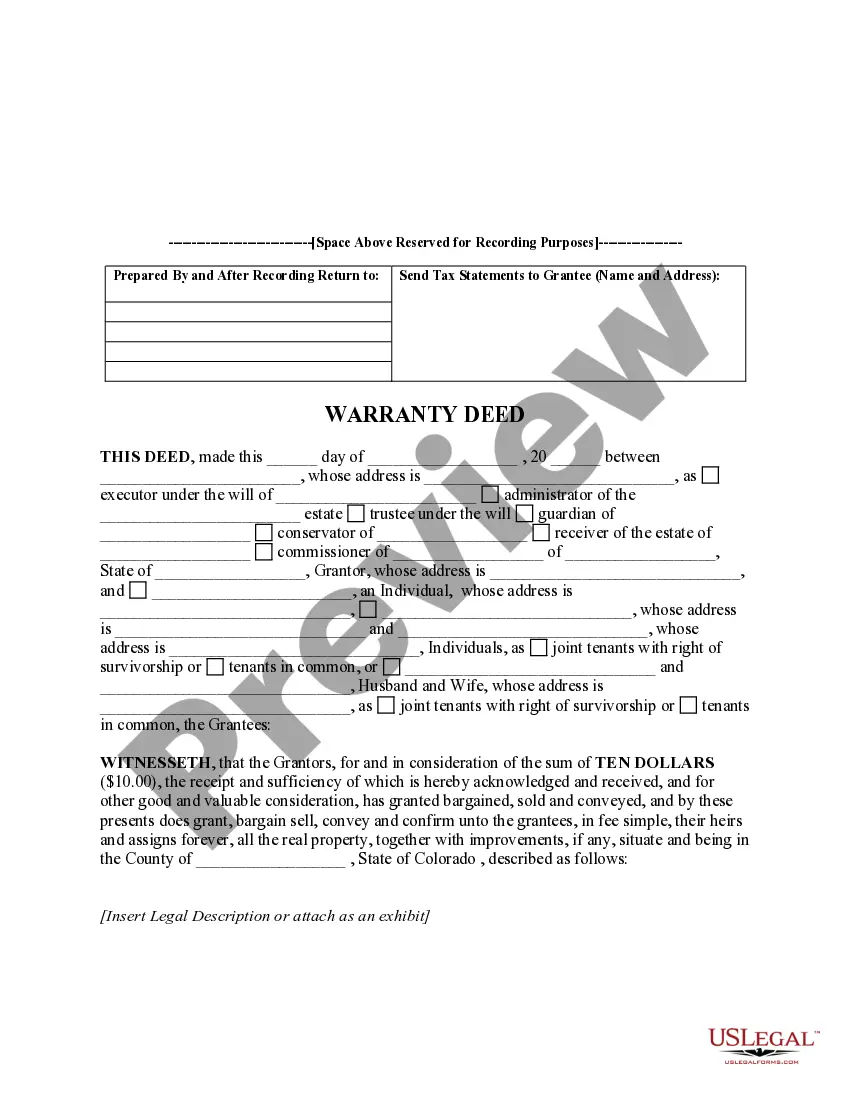
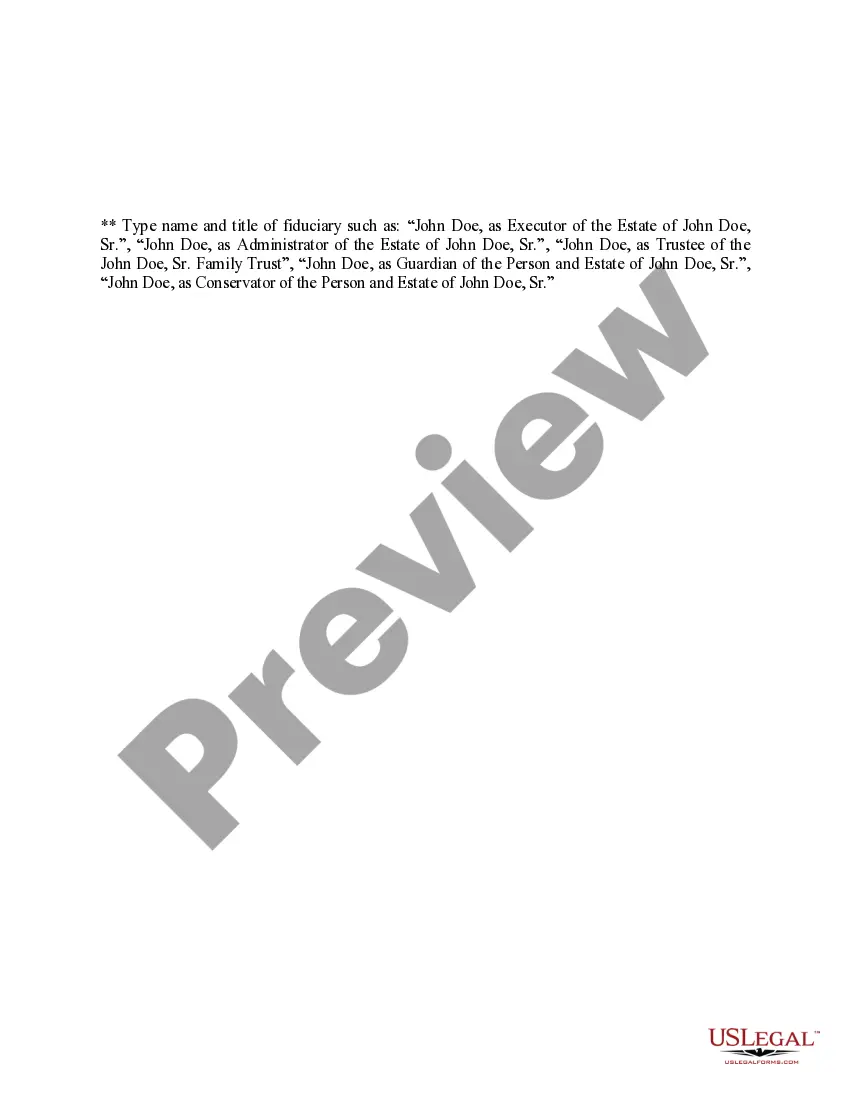
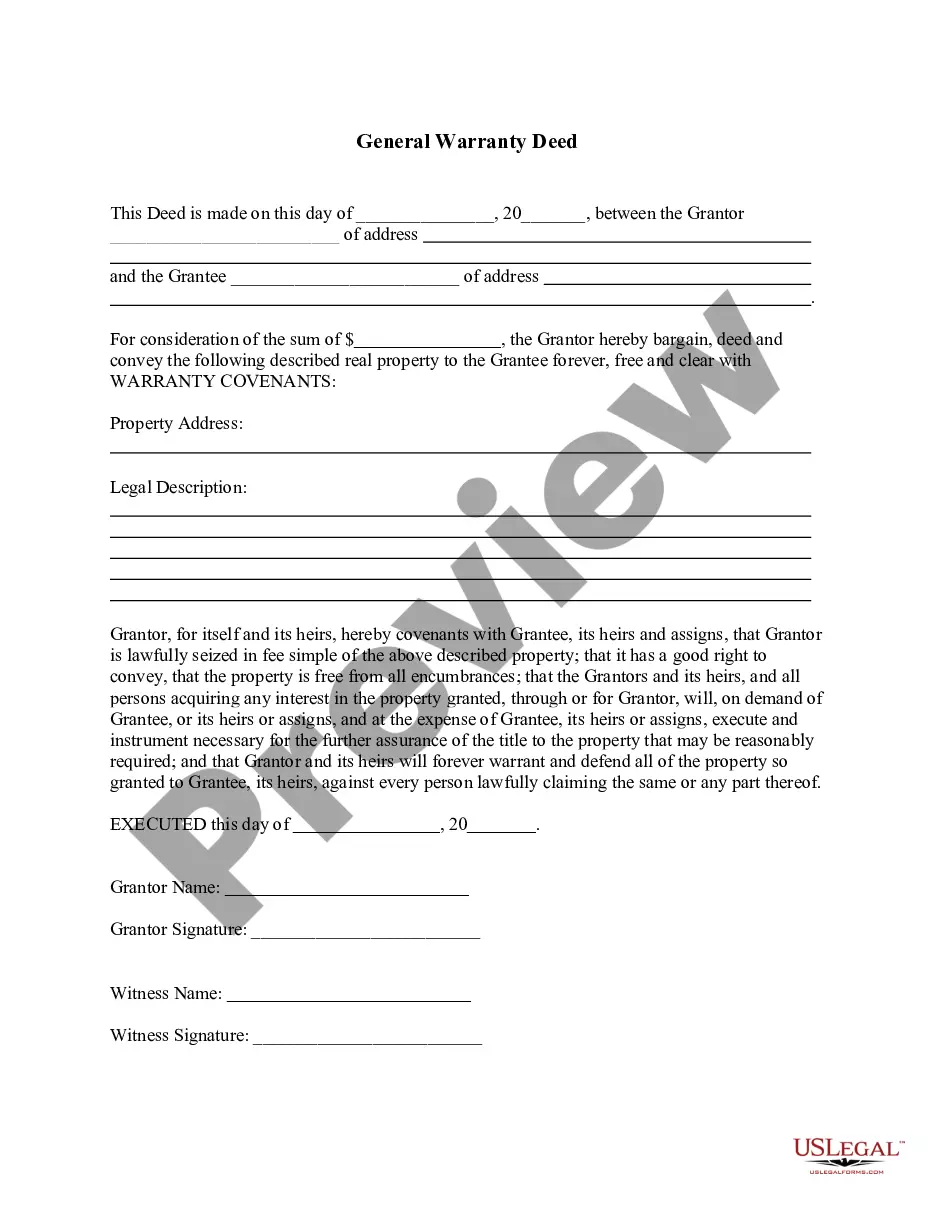
The Warranty Deed for Fiduciary is a legal document used to transfer real property from one party to another when the grantor, such as an executor, trustee, guardian, or conservator, acts on behalf of another party. This form ensures the grantor is legally authorized to convey ownership, providing the grantee with full title to the property. It differs from other types of deeds by specifically addressing the fiduciary role of the grantor, making it essential for real estate transactions involving estates or trusts.
Key parts of this document
- Identification of the grantor and grantee.
- Statement of consideration, typically a nominal amount.
- Legal description of the property being conveyed.
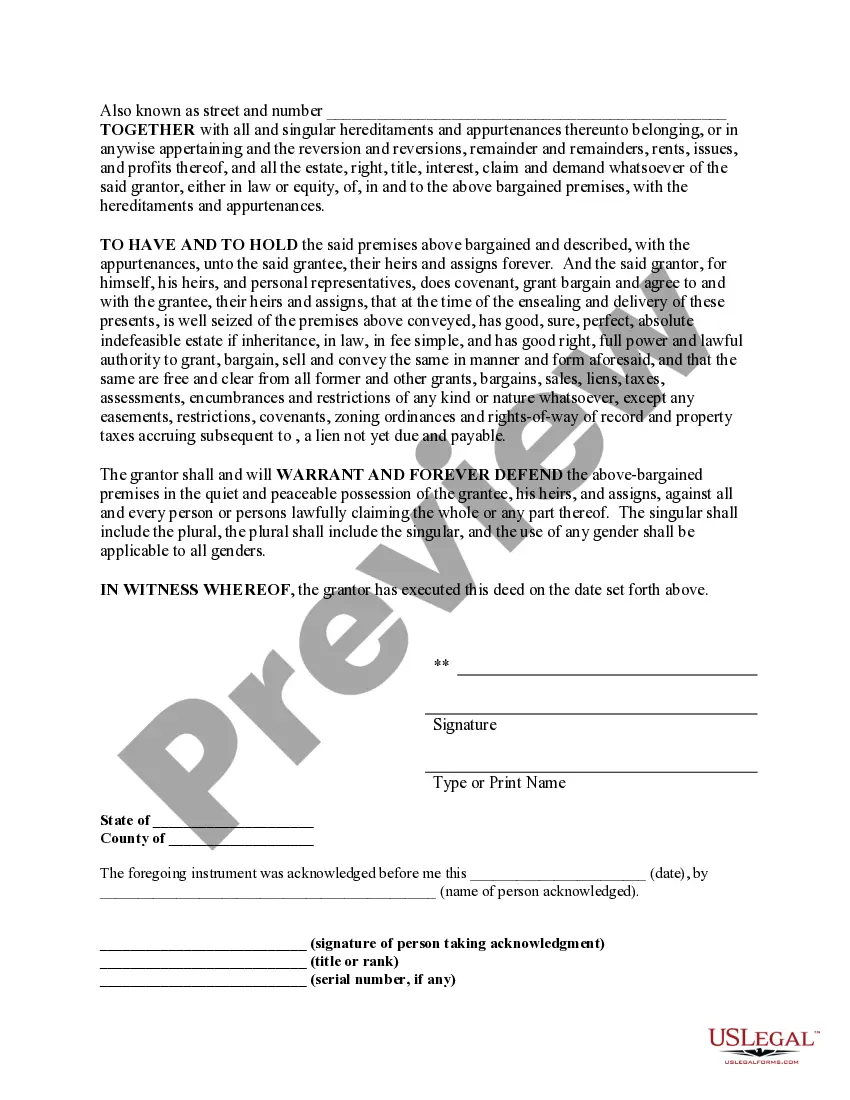
- Warranties provided by the grantor about the title.
- Signatures of the grantor and acknowledgment from a notary public.




Common use cases
This form should be used when a fiduciary, such as an executor of a will or a trustee, is transferring property ownership on behalf of another individual or estate. Common scenarios include settling an estate, transferring property held in a trust, or managing assets for a ward in guardianship cases.
Intended users of this form
The following individuals or entities should consider using this form:
- Executors of wills who are tasked with distributing estate property.
- Trustees managing a trust that includes real property.
- Guardians overseeing property on behalf of minors or incapacitated individuals.
- Conservators responsible for handling assets for individuals with limited capacity.
How to complete this form
- Identify the parties involved: clearly state the names of both grantor and grantee.
- Specify the property by entering its legal description; attach an exhibit if necessary.
- Enter the date of the transfer to establish when the deed takes effect.
- Ensure the grantor signs the deed in the presence of a notary public.
- File the completed deed with the appropriate local government office for record-keeping.
Does this form need to be notarized?
This form needs to be notarized to ensure legal validity. US Legal Forms provides secure online notarization powered by Notarize, allowing you to complete the process through a verified video call, available anytime.
Get your form ready online
Our built-in tools help you complete, sign, share, and store your documents in one place.
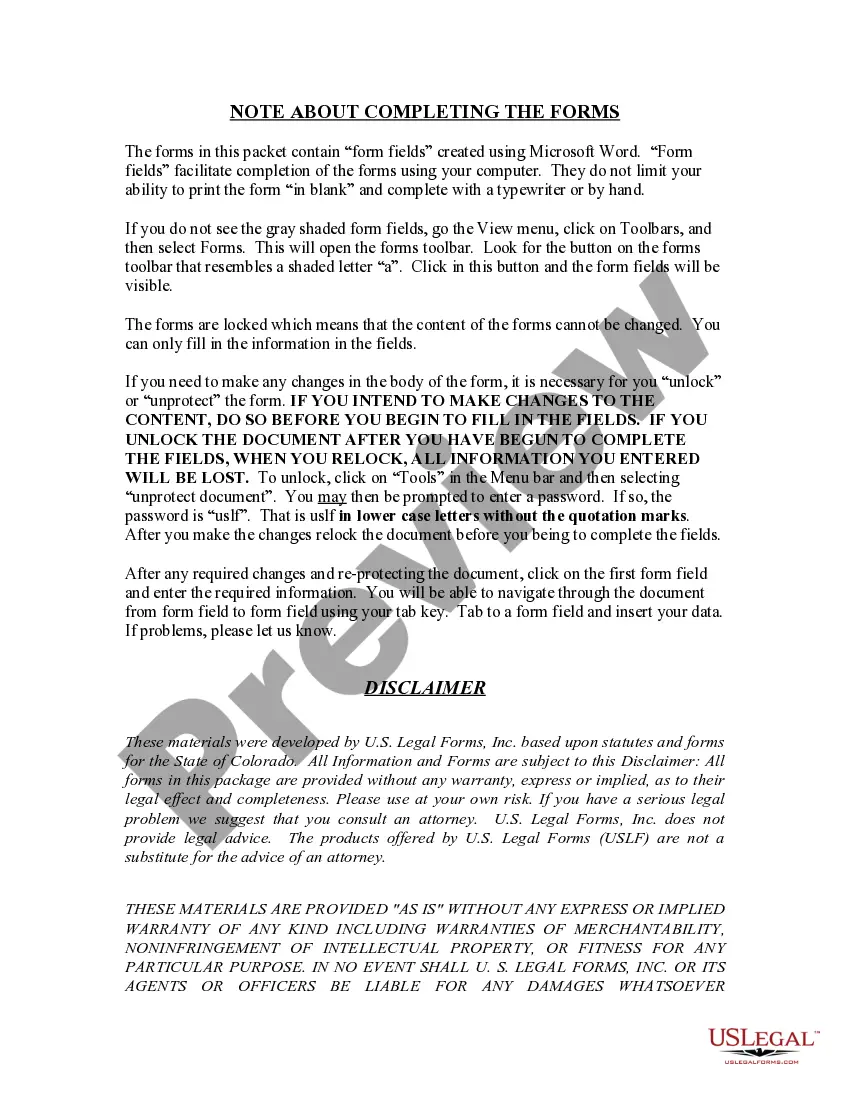
Make edits, fill in missing information, and update formatting in US Legal Forms—just like you would in MS Word.
Download a copy, print it, send it by email, or mail it via USPS—whatever works best for your next step.
Sign and collect signatures with our SignNow integration. Send to multiple recipients, set reminders, and more. Go Premium to unlock E-Sign.
If this form requires notarization, complete it online through a secure video call—no need to meet a notary in person or wait for an appointment.
We protect your documents and personal data by following strict security and privacy standards.

Make edits, fill in missing information, and update formatting in US Legal Forms—just like you would in MS Word.

Download a copy, print it, send it by email, or mail it via USPS—whatever works best for your next step.

Sign and collect signatures with our SignNow integration. Send to multiple recipients, set reminders, and more. Go Premium to unlock E-Sign.

If this form requires notarization, complete it online through a secure video call—no need to meet a notary in person or wait for an appointment.

We protect your documents and personal data by following strict security and privacy standards.
Typical mistakes to avoid
- Failing to accurately describe the property, which can lead to disputes.
- Not obtaining the necessary signatures from all parties involved.
- Neglecting to have the document notarized, which can invalidate the transfer.
- Forgetting to file the deed with local authorities after completion.
Benefits of using this form online
- Convenient access to legally vetted templates, saving time and effort.
- Editability allows for easy customization to fit specific needs.
- Reliable documentation reduces the risk of legal errors in property transfer.
Looking for another form?

Form popularity
FAQ
Filling out a warranty form is a straightforward process if you follow the proper guidelines. Start by entering the names of the parties involved, the property details, and any relevant legal clauses that affirm responsibility for the title. It’s wise to consider the Colorado Warranty Deed for Fiduciary, especially in cases where trust and agency roles are involved. Upon completion, ensure you sign and date the document in front of a notary, which will make it legally binding.
To properly fill out a warranty deed, begin by entering the names of both parties and the legal description of the property. Be sure to include specific language that conveys the full warranty of the title, which ensures that the seller holds clear ownership. The Colorado Warranty Deed for Fiduciary may be especially beneficial, as it provides added assurance in fiduciary situations. After completing the form, sign it in front of a notary and record it with the appropriate county office to finalize the transfer.
Filling out a warranty deed form requires you to detail both the grantor's and grantee's information, along with a description of the property. Each section of the form must be completed accurately, as the warranty deed guarantees the title's validity and provides assurance against defects. Utilizing the Colorado Warranty Deed for Fiduciary can offer additional protections and clear title, ensuring peace of mind for both parties. Always consult a legal expert if there are uncertainties regarding the deed's format or requirements.
To fill out a quit claim deed effectively, first gather the necessary information, including the names of the grantor and grantee, the property description, and any other applicable details. Then, use appropriate state forms or templates to ensure compliance with local laws. If you are dealing with more complex situations, consider incorporating Colorado Warranty Deed for Fiduciary to clarify the intent behind the transfer. Remember to have the document notarized to validate the transfer legally.
Yes, you can file a warranty deed yourself in Colorado. However, it's important to understand that the Colorado Warranty Deed for Fiduciary must be filled out correctly to prevent future issues. Take your time to ensure all details are accurate, and consider using resources like USLegalForms for guidance and access to reliable templates. Filing the deed properly will help secure your ownership and protect your rights.
To file a beneficiary deed in Colorado, you must first complete the Colorado Warranty Deed for Fiduciary form accurately. This deed allows property owners to specify beneficiaries who will inherit the property upon their death, bypassing probate. After you fill out the form, you need to sign it in front of a notary public. Finally, file the deed with the clerk and recorder in the county where the property is located.
The primary beneficiaries of a warranty deed are buyers, who gain significant protection against future title disputes. This legal assurance gives them peace of mind, knowing they have clear ownership of the property. Sellers, especially fiduciaries, also benefit as they demonstrate transparency and compliance during the sale. Utilizing platforms like uslegalforms can simplify obtaining a Colorado Warranty Deed for Fiduciary, ensuring all parties understand and fulfill their roles.
A fiduciary warranty deed is a specific type of warranty deed that allows a fiduciary, such as an executor or trustee, to transfer property on behalf of another party. This deed provides assurances to the buyer about the property's title, protecting their investment. It is crucial for fiduciaries to use a Colorado Warranty Deed for Fiduciary appropriately, ensuring all legal requirements are met during the transaction.
To obtain a copy of your warranty deed in Colorado, visit your county's clerk and recorder's office, or check their official website for online access. Some counties may allow you to order copies digitally, ensuring you receive your Colorado Warranty Deed for Fiduciary quickly. Always keep a copy for your records to manage any future transactions smoothly.
A fiduciary deed, often used in trust or estate situations, grants the same protections as a warranty deed but is executed by someone authorized to act on behalf of another. In contrast, a Colorado Warranty Deed for Fiduciary includes a guarantee that the grantor holds clear title to the property. Understanding these differences is crucial in selecting the right deed for your needs.