Security Agreement in Accounts, Contract Rights, and Inventory
What this document covers
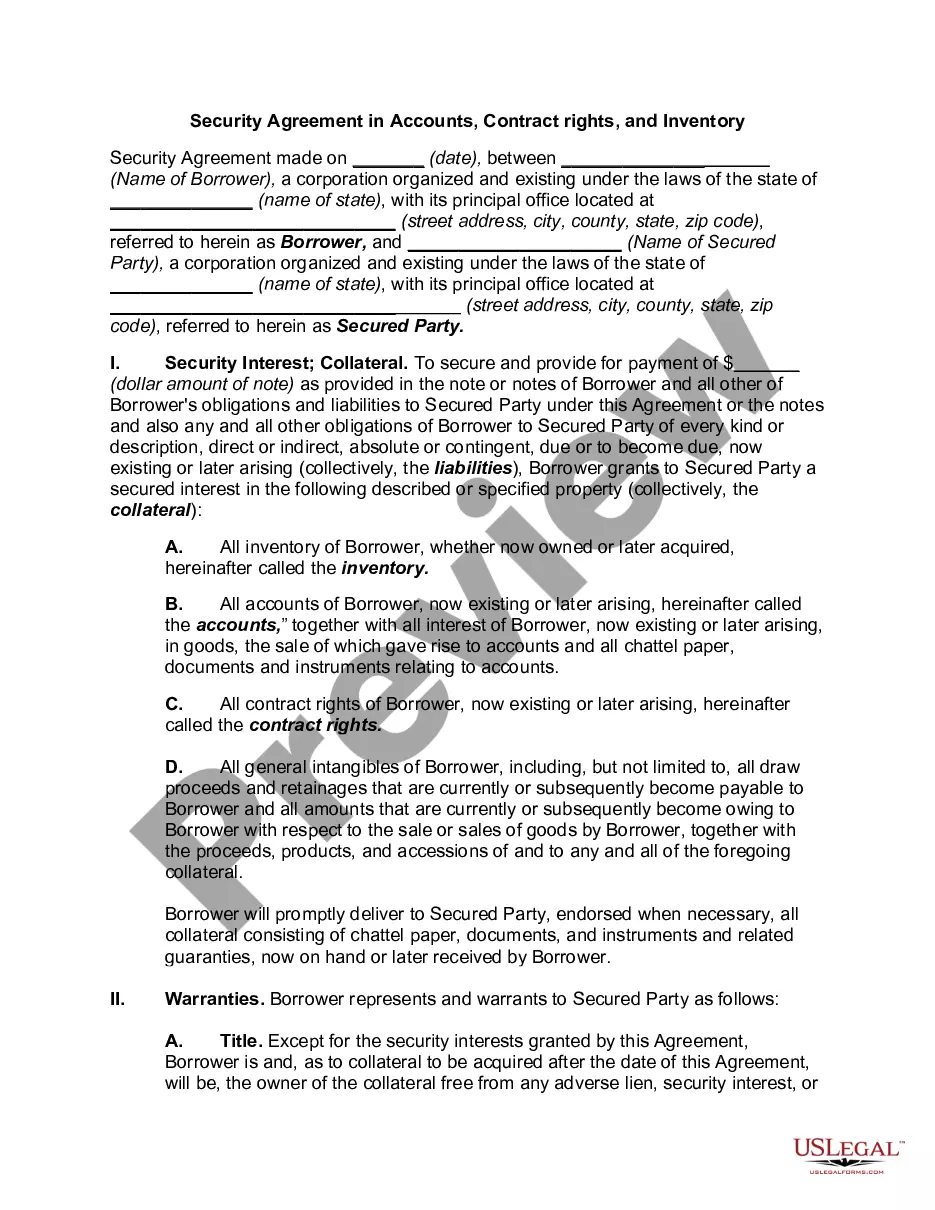
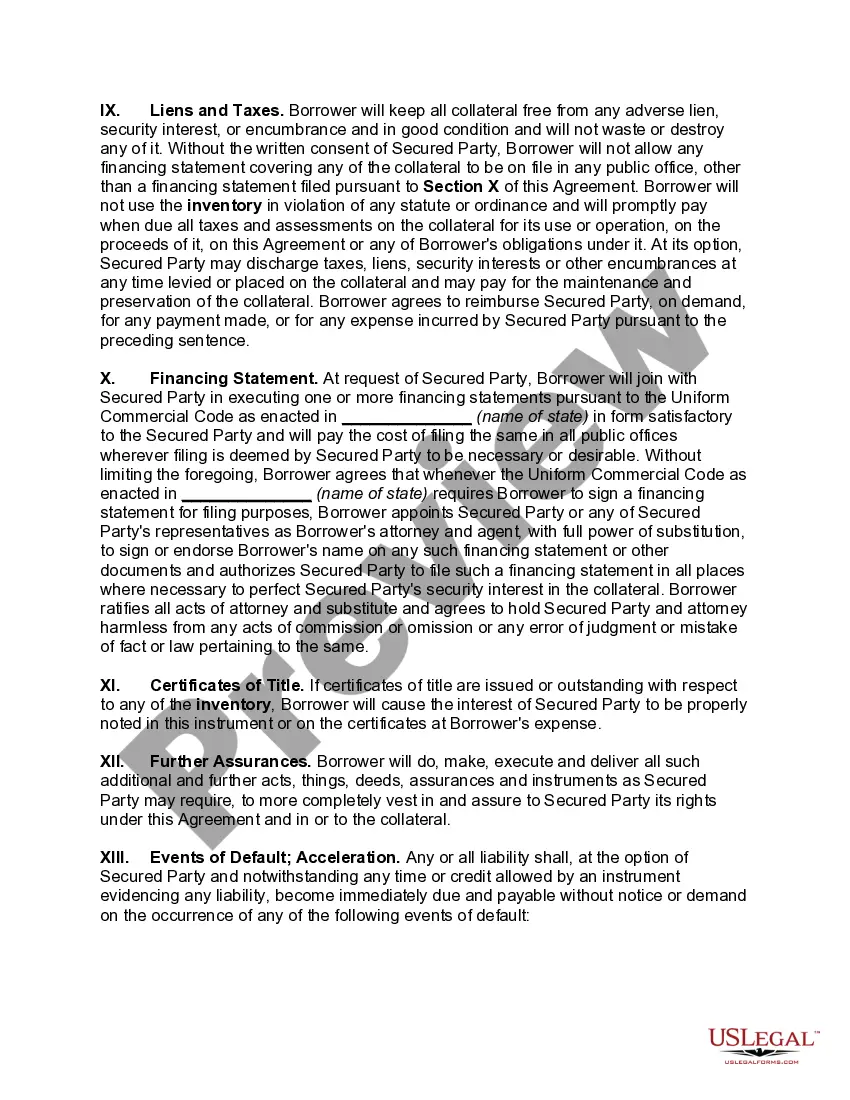
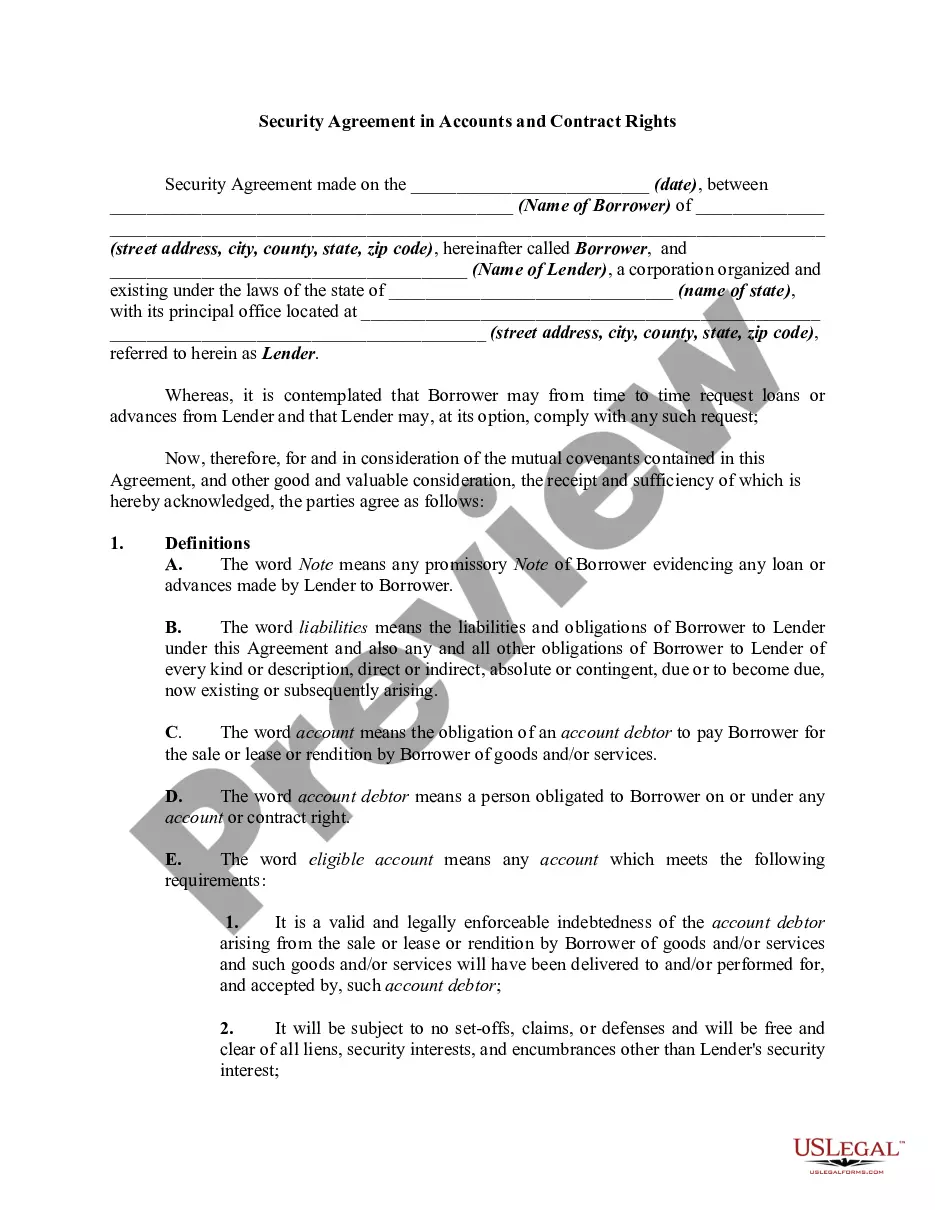
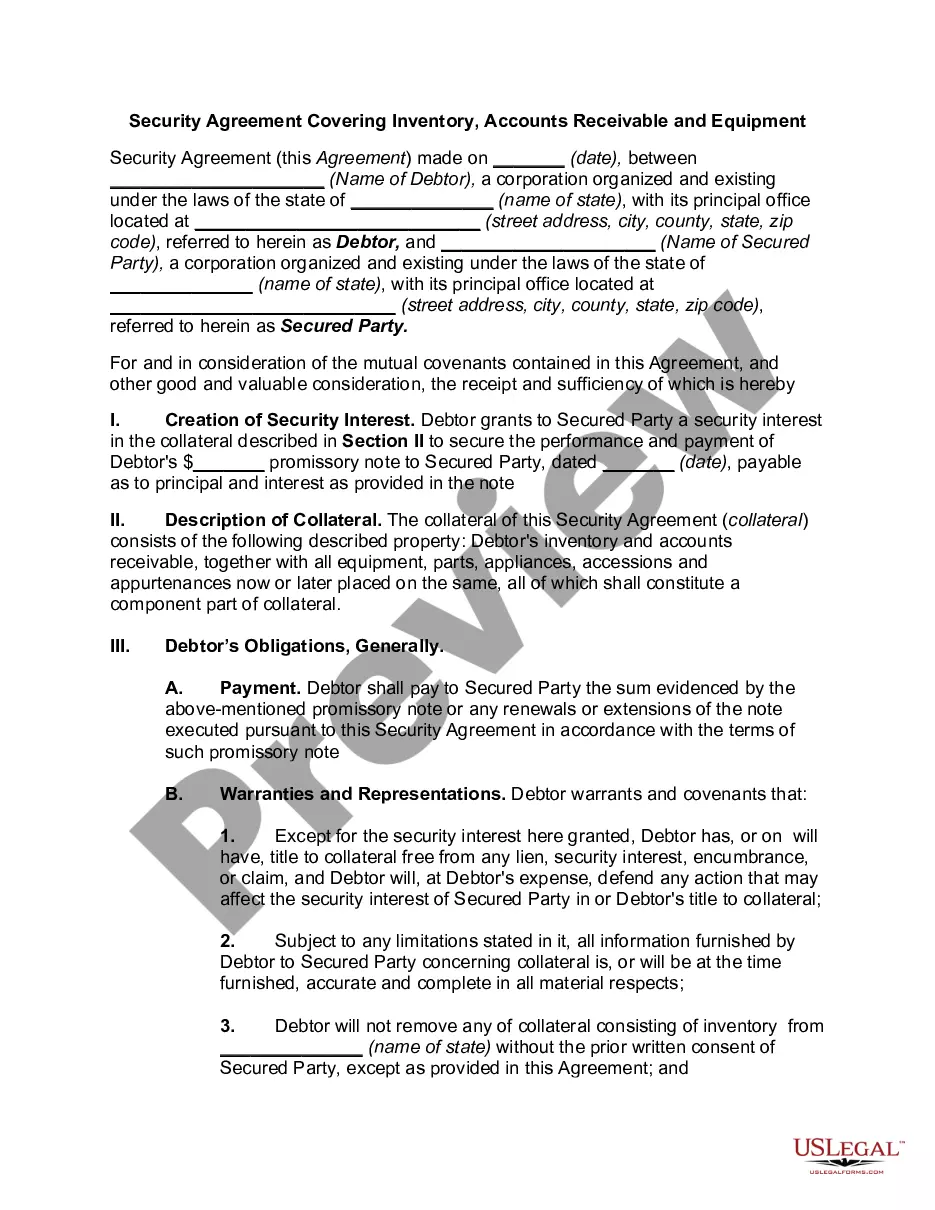
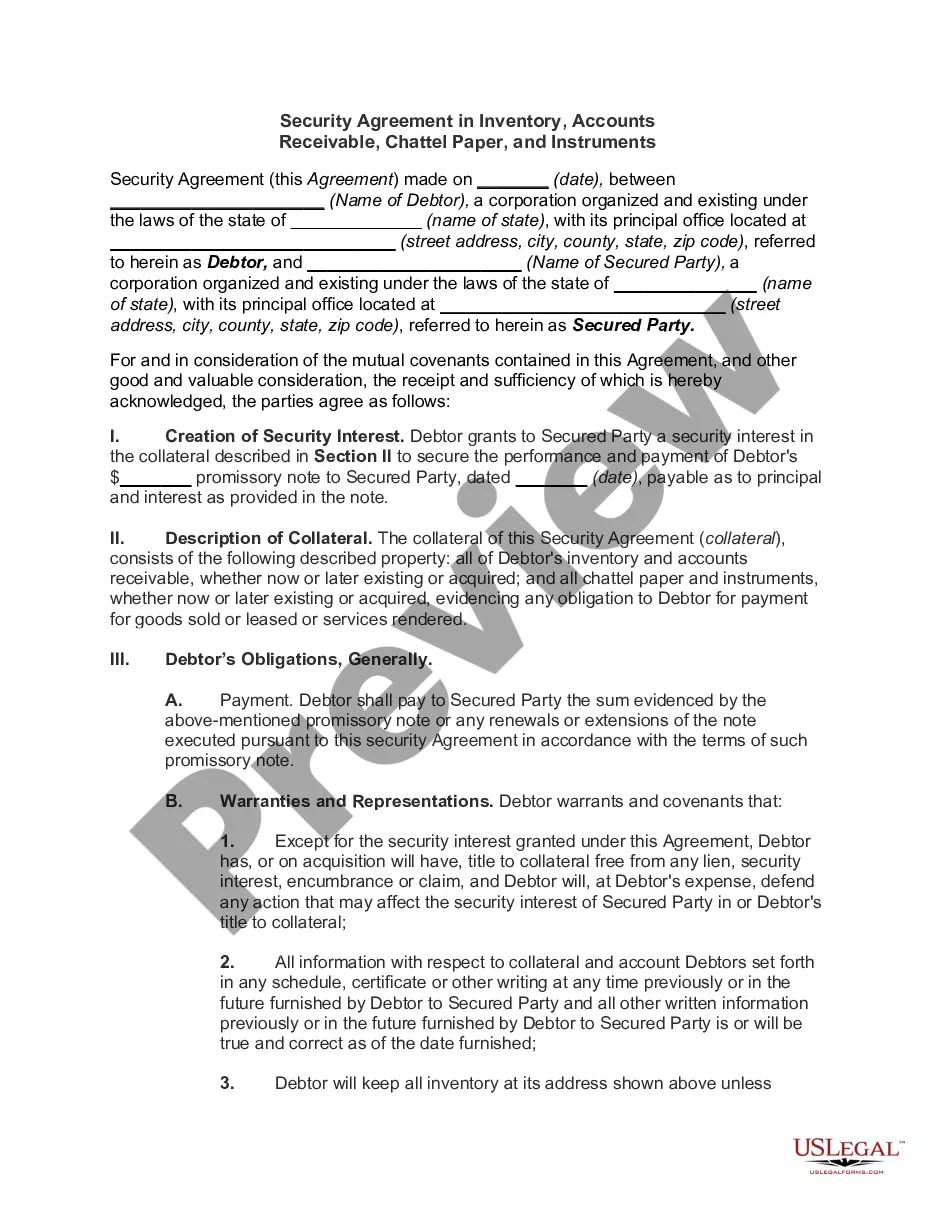
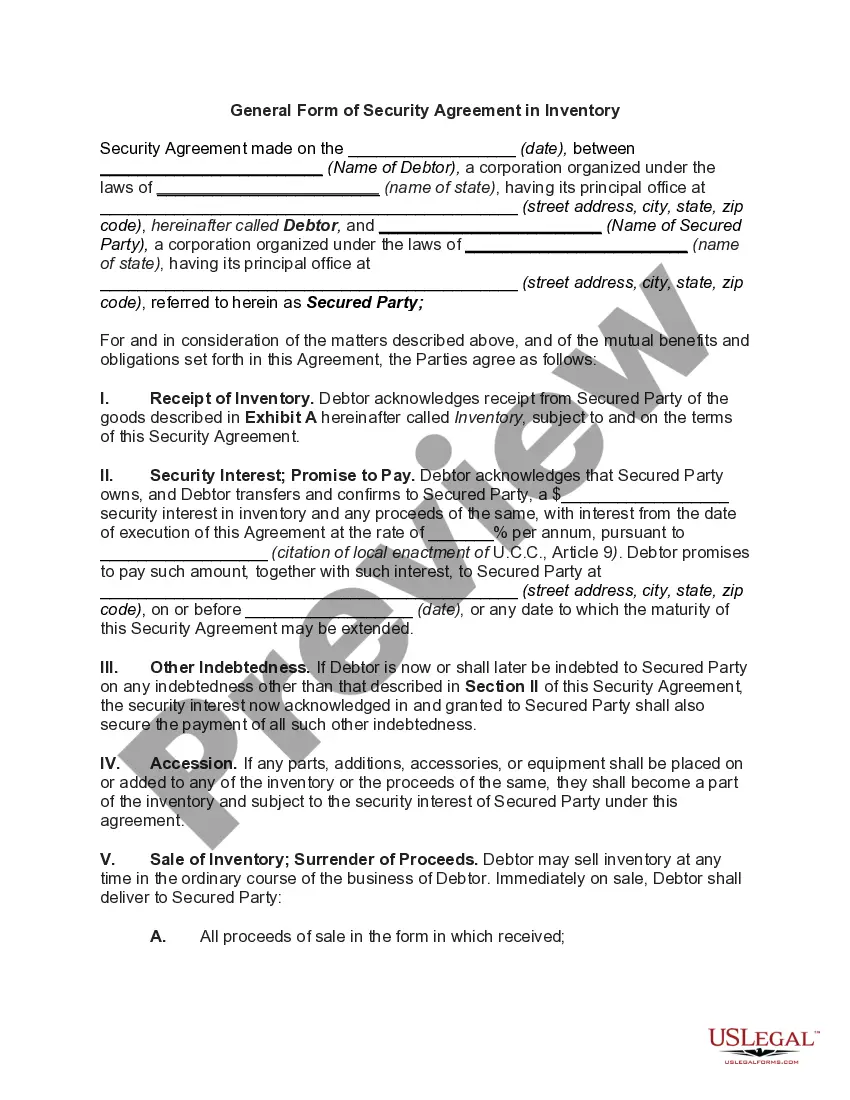
The Security Agreement in Accounts, Contract Rights, and Inventory is a legal document that establishes a secured interest in a borrower's accounts, contract rights, and inventory. This agreement protects lenders by allowing them to claim specific collateral if the borrower defaults on a loan. Unlike simple promissory notes, this form details various types of collateral and specific terms that define the relationship and obligations between the borrower and the secured party, guiding both parties through the secured transaction outlined in Article 9 of the Uniform Commercial Code (UCC).
Main sections of this form
- Identification of Borrower and Secured Party
- Description of the collateral securing the debt
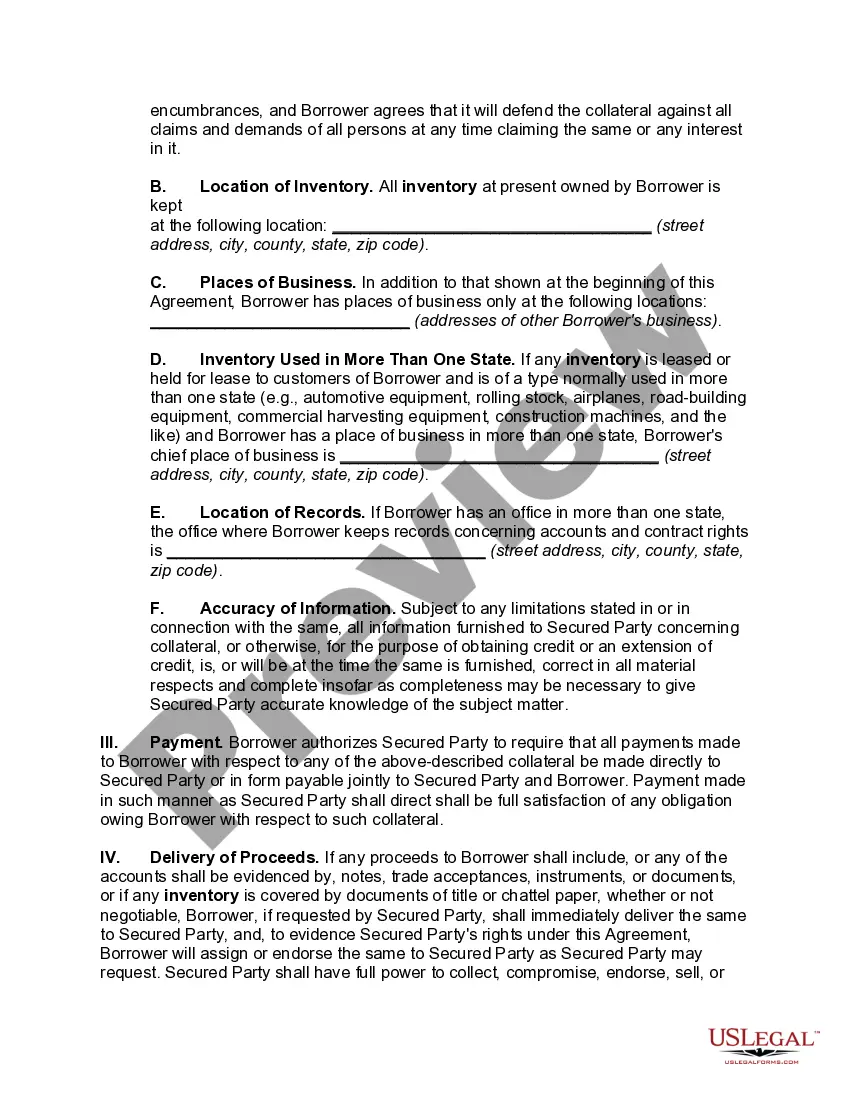
- Warranties regarding ownership and location of collateral
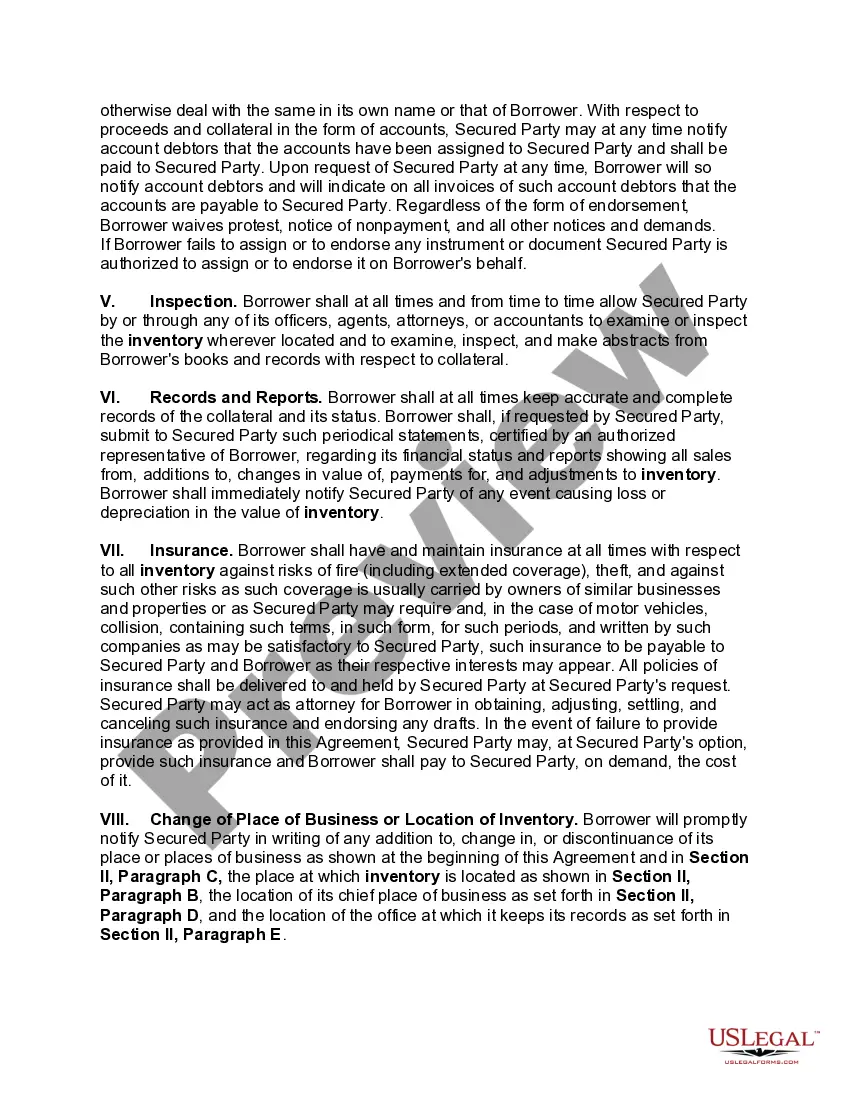
- Details on payment procedures and delivery of proceeds
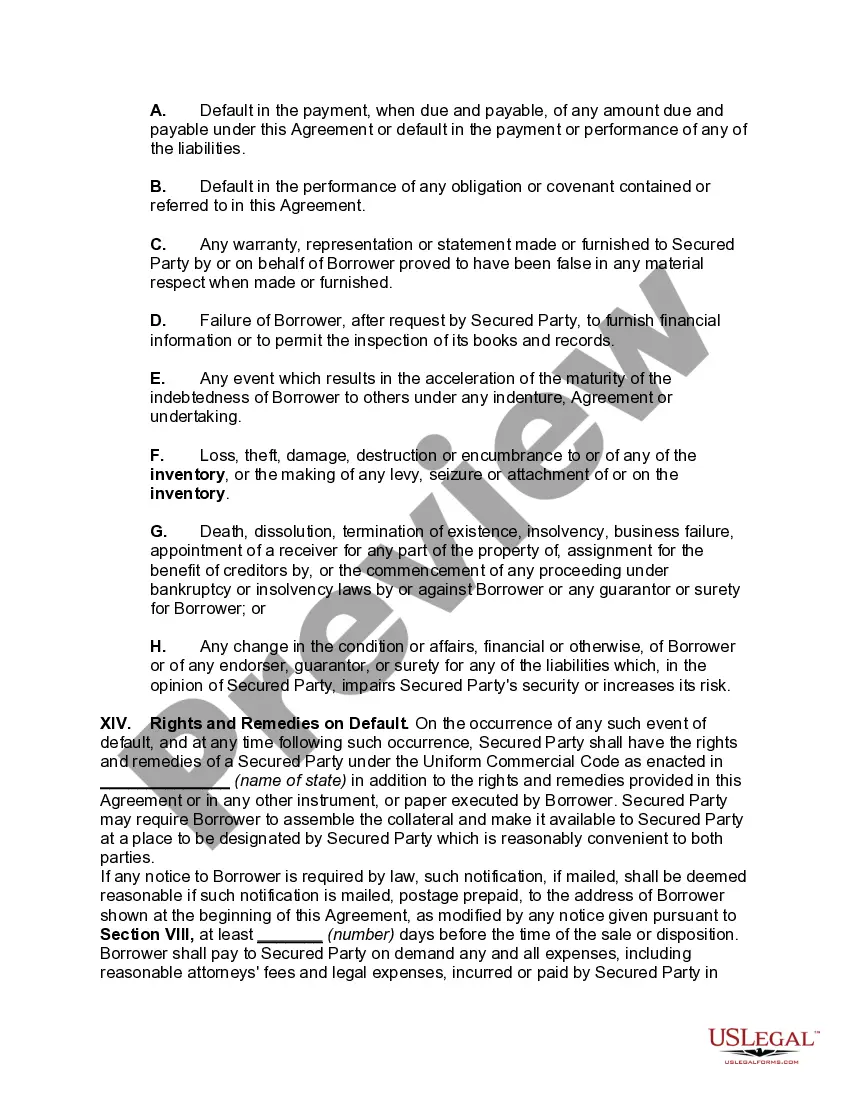
- Conditions for declaring default and rights upon default
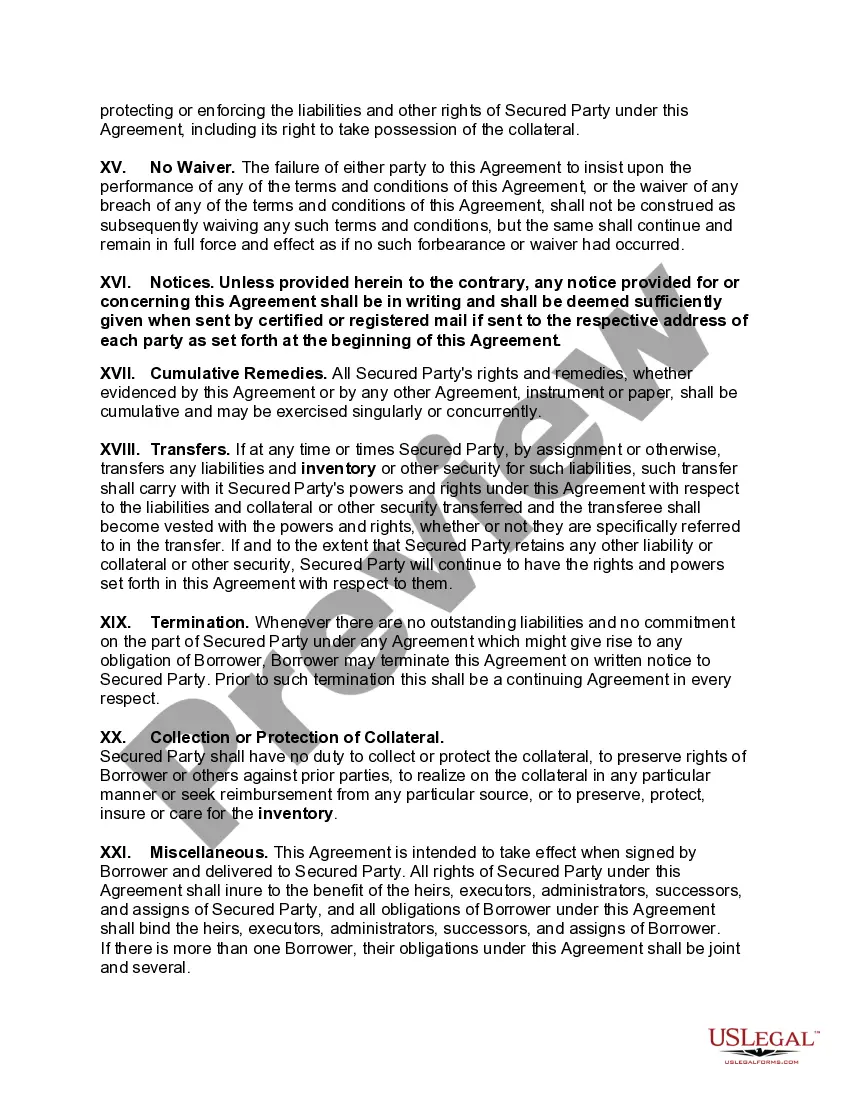
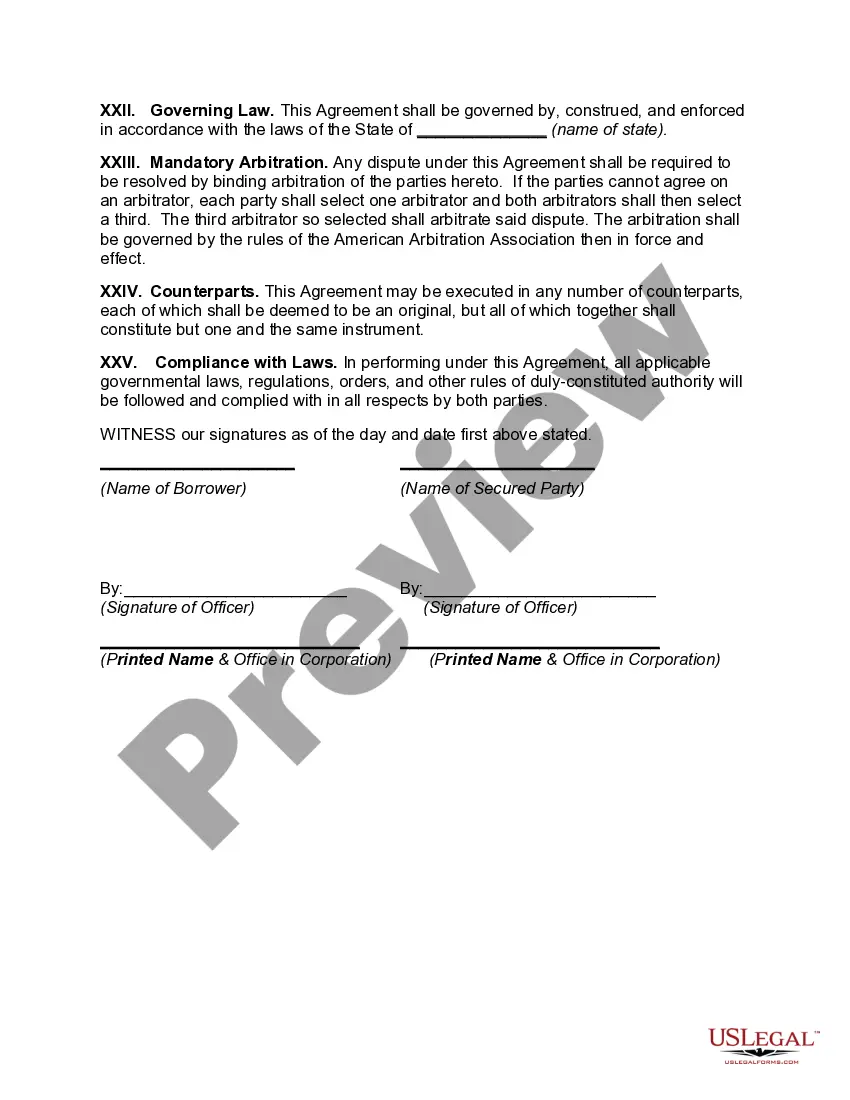
- Governing law and arbitration clause
Common use cases
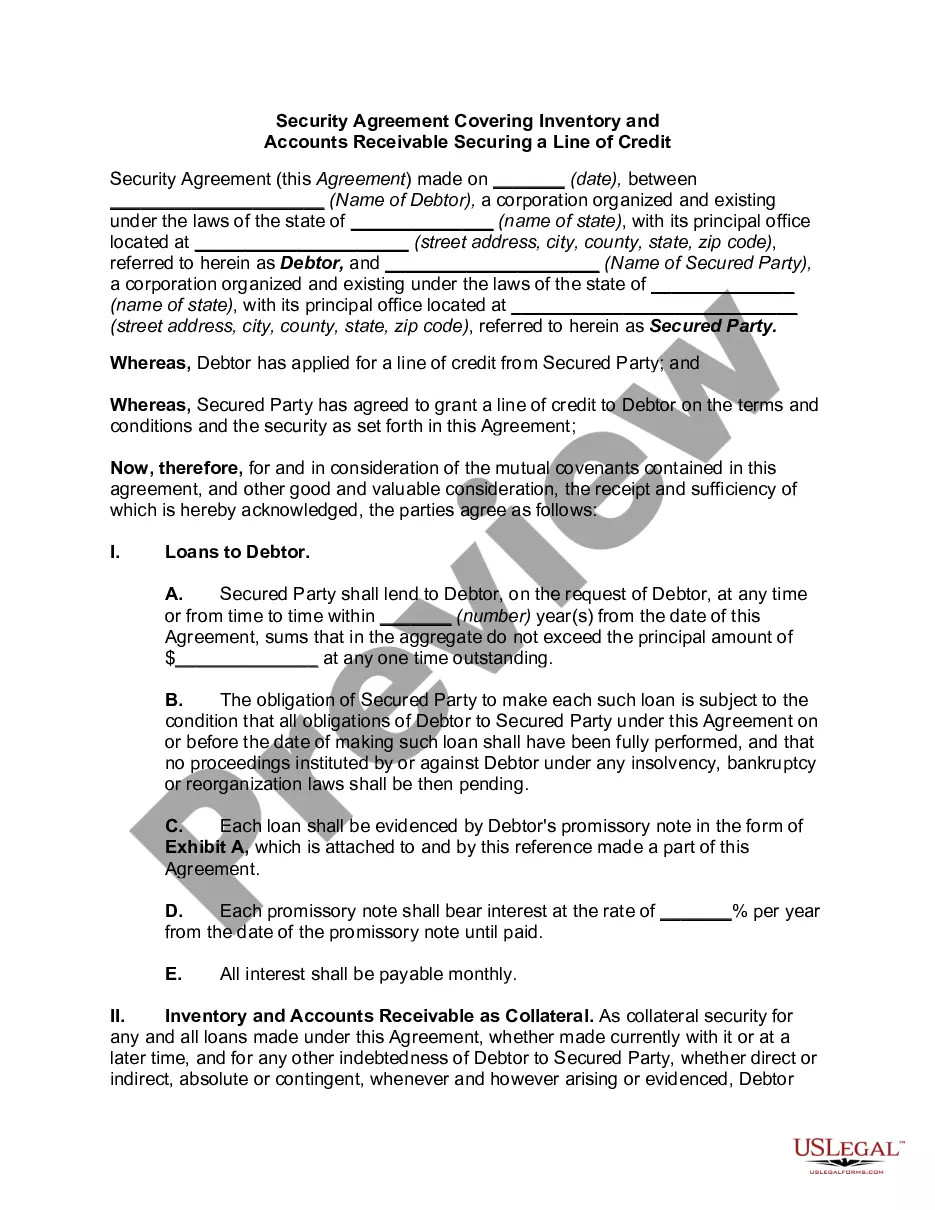
This form should be used when a borrower seeks to secure financing backed by specific assets such as accounts, inventory, and other contract rights. It is particularly relevant for businesses that wish to formalize a loan agreement with lenders while ensuring the lender has a claim to particular collateral in the event of default. Situations may include purchasing stock, leasing equipment, or securing a line of credit.
Who should use this form
- Business owners seeking loans or lines of credit
- Lenders requiring security for loans
- Corporations needing to structure loan agreements with secured interests
- Individuals or entities engaging in commercial transactions that necessitate collateral
Completing this form step by step
- Identify the parties: Enter the name and address of the borrower and the secured party.
- Specify the collateral: Clearly describe the accounts, inventory, and contract rights being secured.
- Set payment details: State the total amount secured and any specific payment terms.
- Complete warranties: Provide information regarding the location of the collateral and any other necessary warranties.
- Gather signatures: Ensure signatures of authorized officers from both parties are included to validate the agreement.
Notarization guidance
This form does not typically require notarization unless specified by local law. However, having it notarized can add an extra layer of authenticity and legal standing.
Get your form ready online
Our built-in tools help you complete, sign, share, and store your documents in one place.
Make edits, fill in missing information, and update formatting in US Legal Forms—just like you would in MS Word.
Download a copy, print it, send it by email, or mail it via USPS—whatever works best for your next step.
Sign and collect signatures with our SignNow integration. Send to multiple recipients, set reminders, and more. Go Premium to unlock E-Sign.
If this form requires notarization, complete it online through a secure video call—no need to meet a notary in person or wait for an appointment.
We protect your documents and personal data by following strict security and privacy standards.

Make edits, fill in missing information, and update formatting in US Legal Forms—just like you would in MS Word.

Download a copy, print it, send it by email, or mail it via USPS—whatever works best for your next step.

Sign and collect signatures with our SignNow integration. Send to multiple recipients, set reminders, and more. Go Premium to unlock E-Sign.

If this form requires notarization, complete it online through a secure video call—no need to meet a notary in person or wait for an appointment.

We protect your documents and personal data by following strict security and privacy standards.
Common mistakes to avoid
- Failing to accurately describe the collateral can lead to enforceability issues.
- Not including the correct legal names and addresses of parties involved.
- Neglecting to obtain all necessary signatures, which may invalidate the agreement.
- Overlooking applicable state-specific legal requirements, resulting in non-compliance.
Why complete this form online
- Convenience of completing the form at your own pace and from anywhere.
- Editable templates allow for customization specific to your transaction.
- Access to legal clarity ensures that the agreement is compliant with current laws.
Legal use & context
- The agreement serves as a formal declaration of the secured interest in the specified collateral.
- It enhances the likelihood of enforcement in court should a dispute arise around enforcement of the loan agreement.
- Proper completion and filing of this form under the UCC helps protect the lenderâs rights.
Quick recap
- The Security Agreement ensures that lenders have clear rights to specific collateral.
- Accurate completion and compliance with state laws are crucial for enforceability.
- Using an online template can simplify the process and ensure that you meet all legal requirements.
Looking for another form?


Form popularity
FAQ
Attachment is a necessary requirement of perfection of a security interest. So, the only answer choice that is not required is that the creditor take control of the collateral within 20 days.
The security agreement must: be signed (or authenticated) by the debtor and the owner of the property, contain a description of the collateral and. make it clear that a security interest is intended.
B. Negotiable Provisions: The definitions in a security agreement are negotiable. The parties may ne- gotiate, for example, whether ?Obligations? will cover existing obligations and hereafter arising obligations, or obligations arising under the loan documents or at any time owing to the secured party.
What is a General Security Agreement? A GSA is a contract signed between two parties, a borrower and a lender. The GSA protects the lender by creating a security interest in all or some of the assets of the borrower. In sum, the GSA outlines the terms and conditions of the loan, and lists the assets used for security.
A security agreement, in the law of the United States, is a contract that governs the relationship between the parties to a kind of financial transaction known as a secured transaction.
In general: (1) the creditor must give value, (2) the debtor must have rights in the collateral, and (3) there must be a security agreement or other action indicating an intent to convey a security interest.
A security agreement creates the security interest, making it enforceable between the secured party and the debtor. A UCC-1 financing statement neither creates a security interest nor does it alter its scope; it only gives notice of the security interest to third parties.
Certain specific requirements are required for the security agreement to form the foundation for a valid security interest, namely 1) it must be signed, 2) it must clearly state that a security interest is intended, and 3) it must contain a sufficient description of the collateral subject to the security interest.