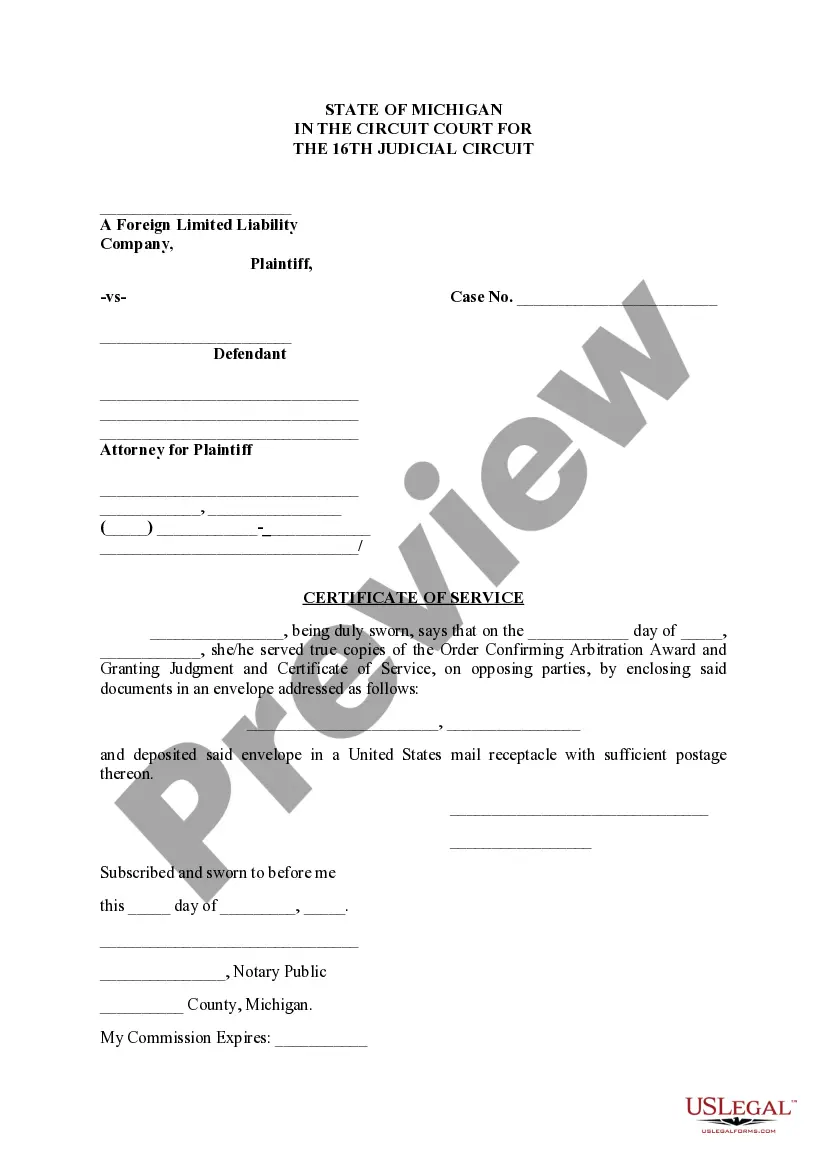
Confidentiality Agreement between a Gas and Electric Utility Company and a Developer specifically for Non-Pipes Alternative Solicitation
What is this form?
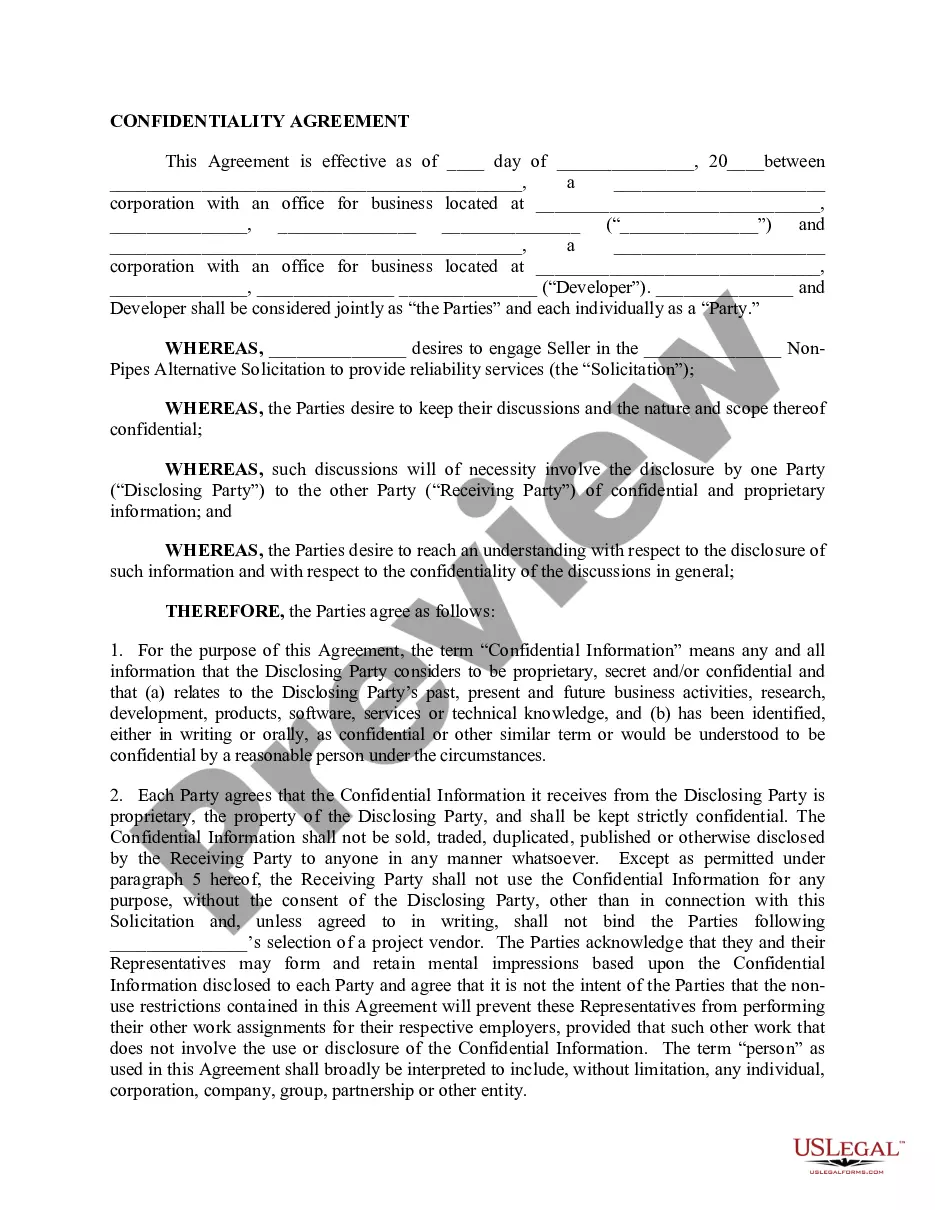
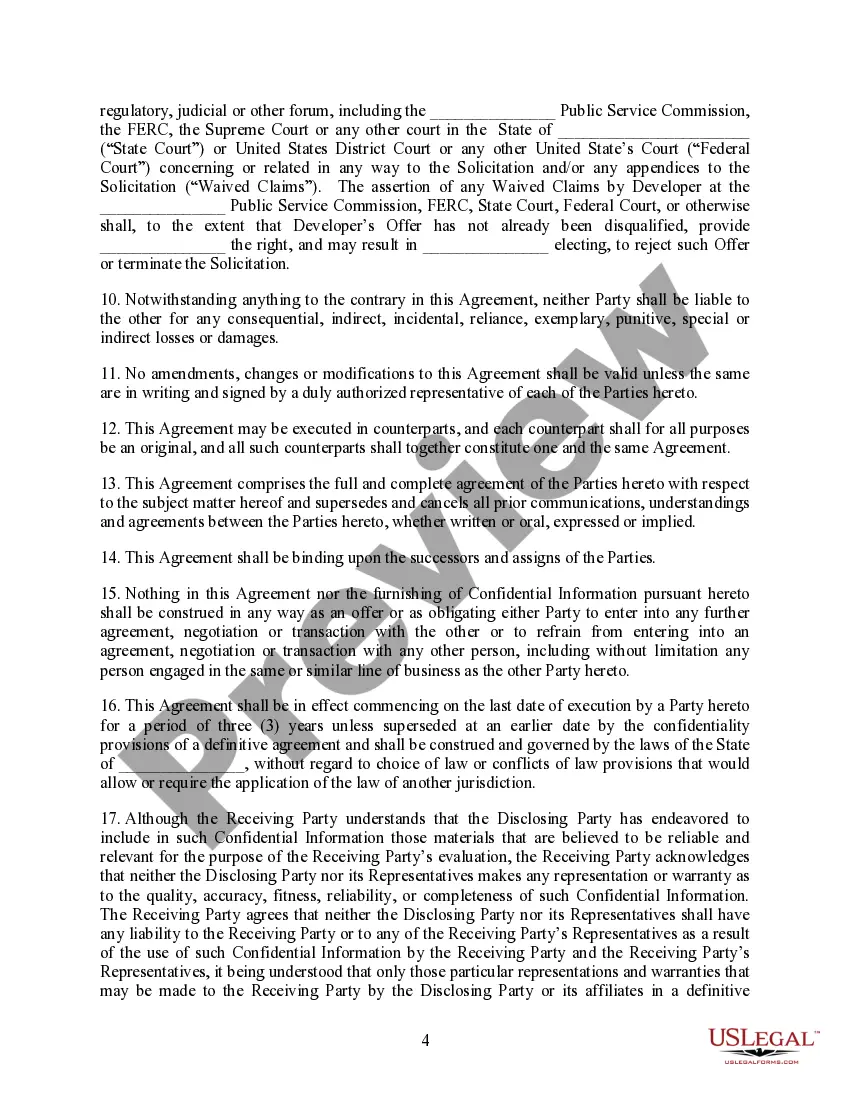
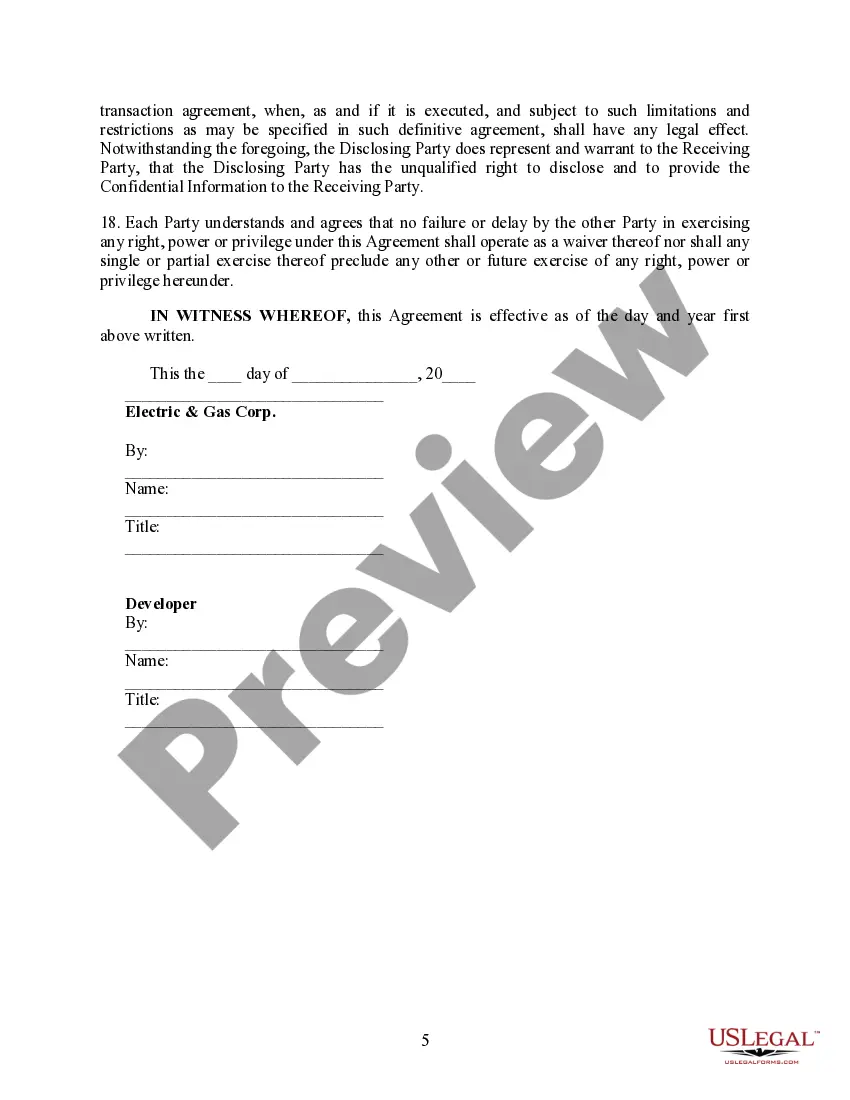
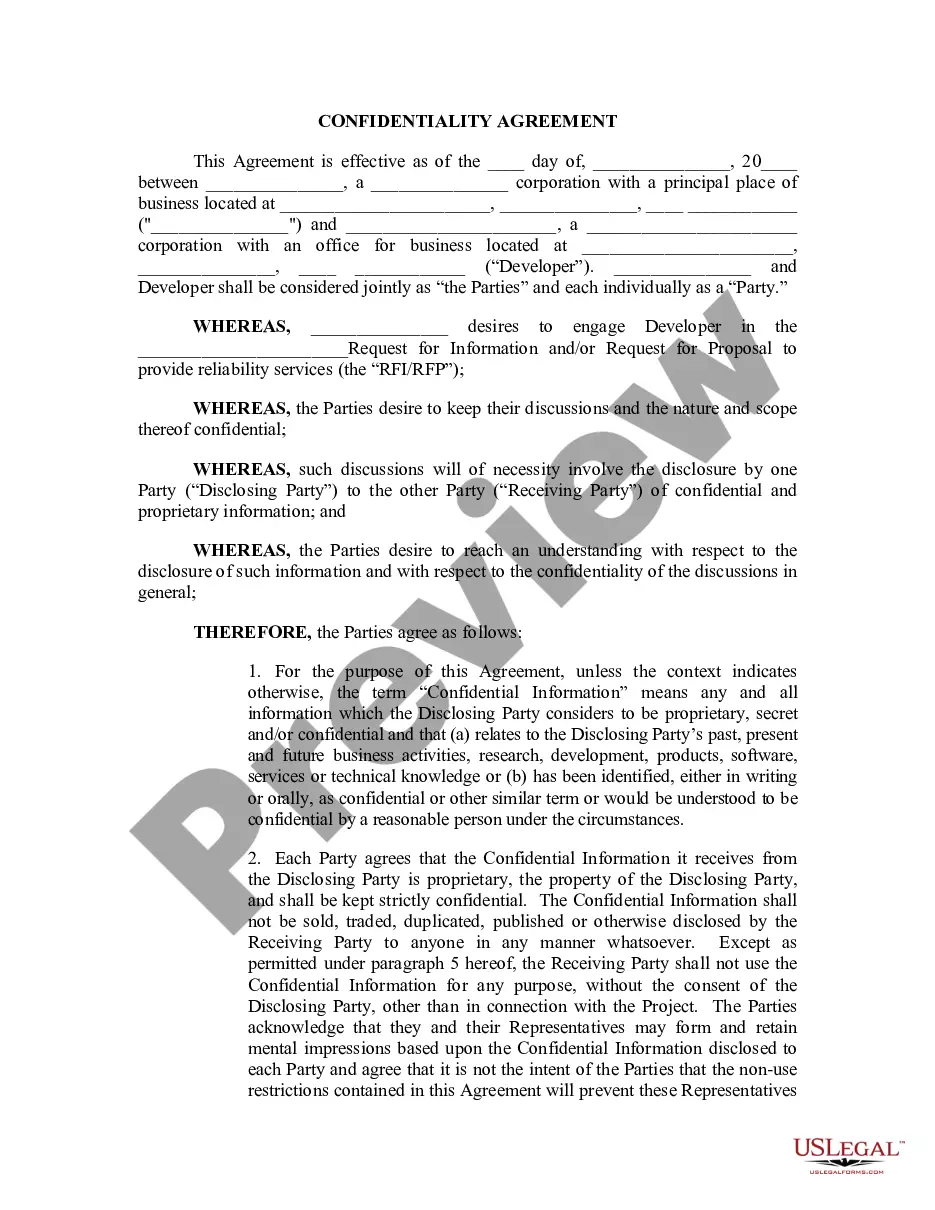
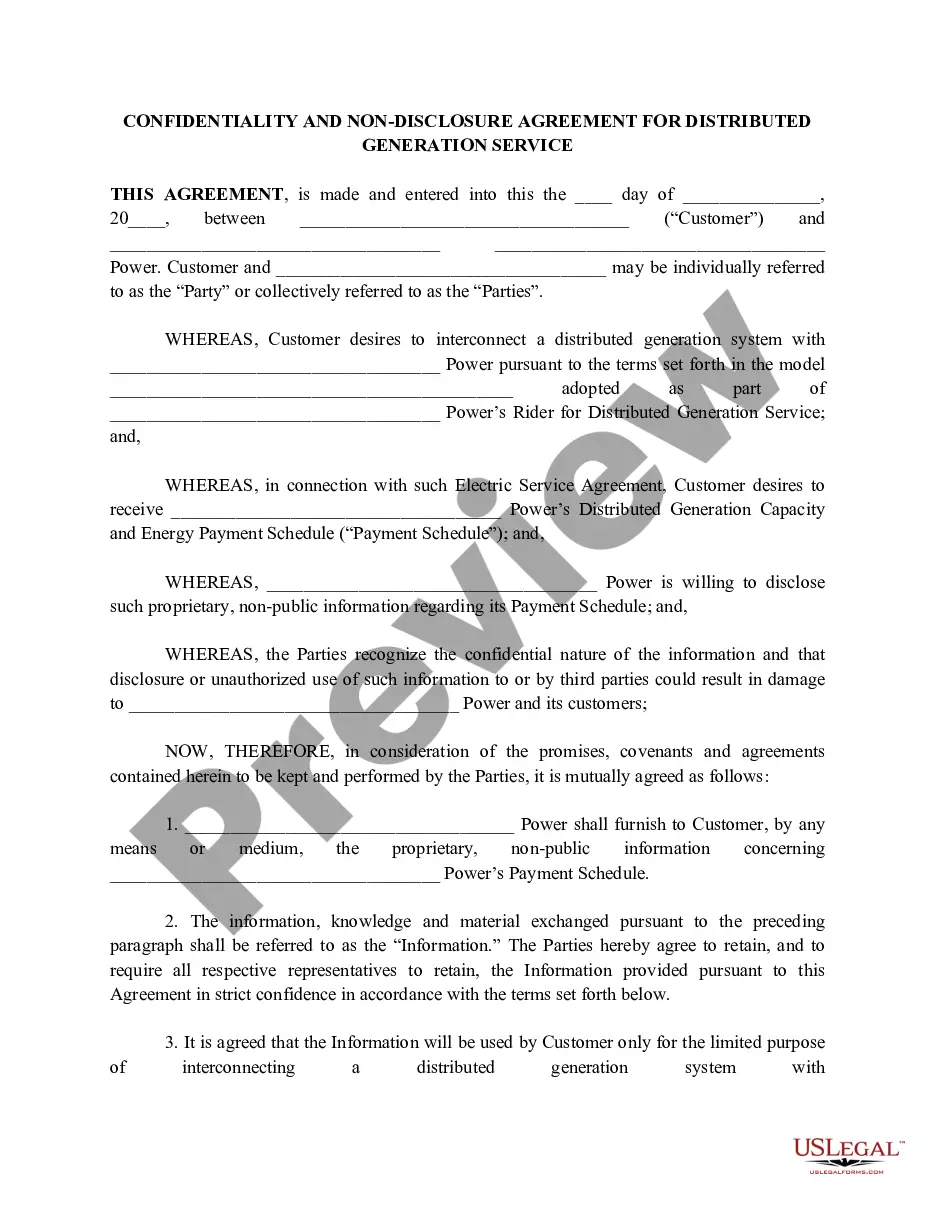
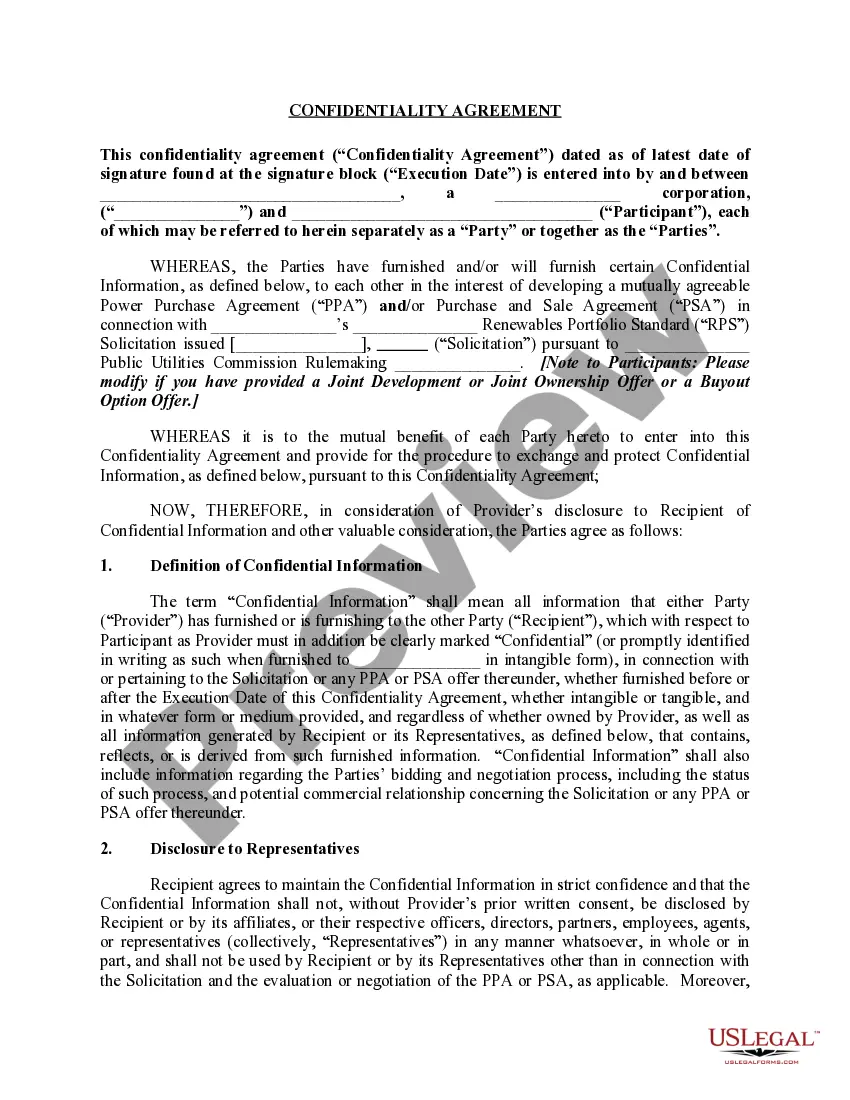
This Confidentiality Agreement is specifically designed for gas and electric utility companies and developers engaged in Non-Pipes Alternative (NPA) solicitations. It establishes the terms under which the parties can discuss sensitive information related to the NPA efforts while ensuring confidentiality. This agreement is crucial for protecting proprietary information, making it distinct from general confidentiality agreements by focusing explicitly on utility-related projects.
Main sections of this form
- Effective date: Specifies when the agreement becomes valid.
- Parties involved: Identifies the gas and electric utility company and the developer.
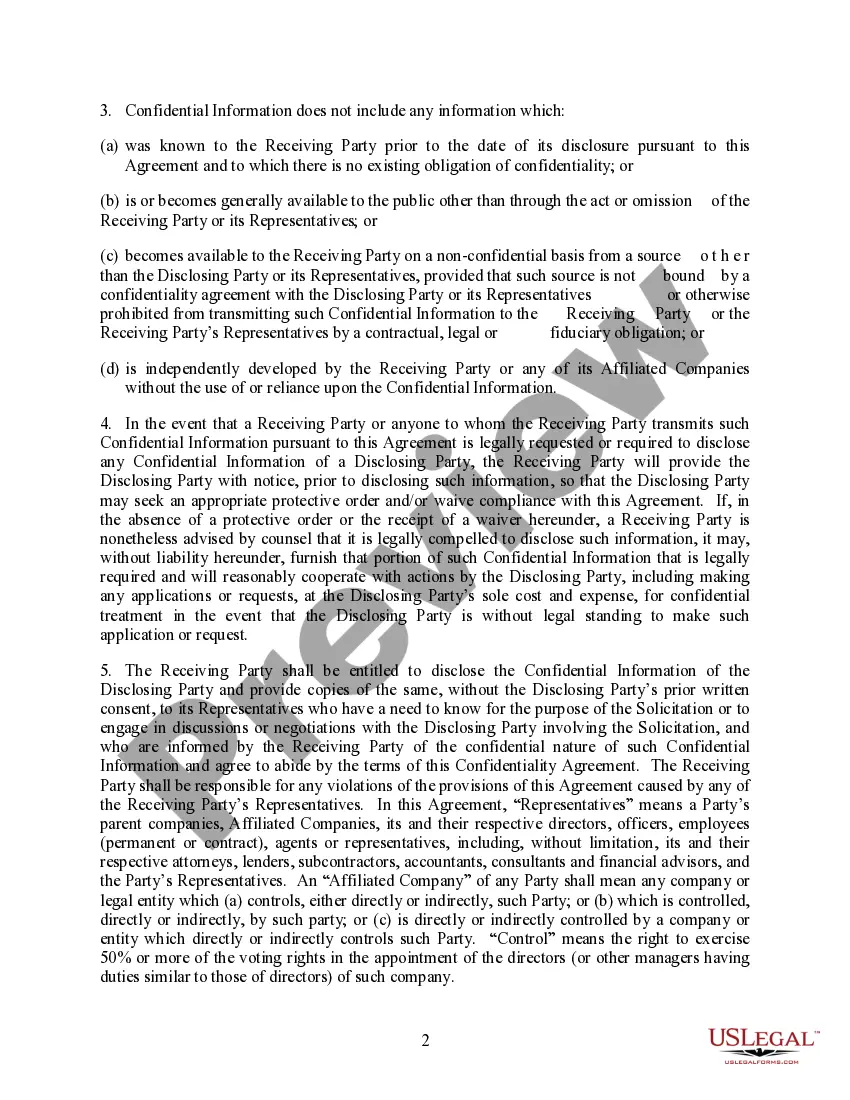
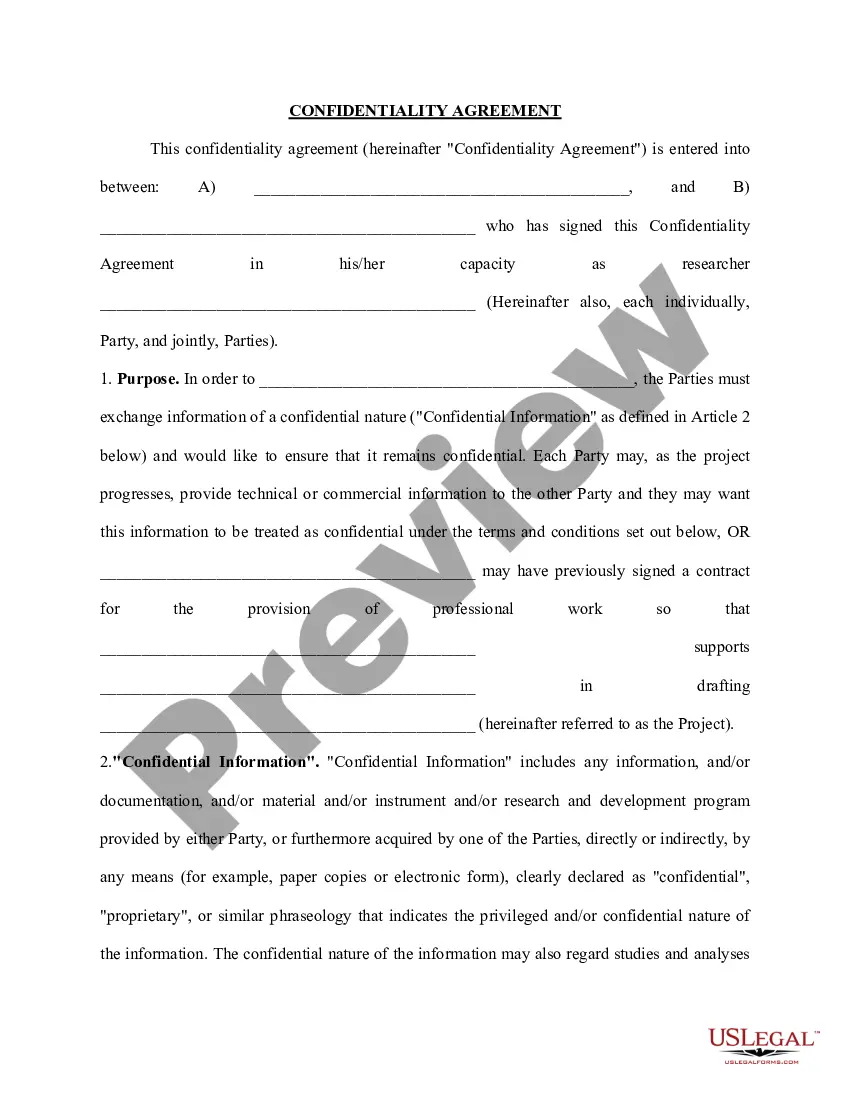
- Confidential Information definition: Outlines what constitutes confidential information between the parties.
- Non-disclosure obligations: Details the obligations of the Receiving Party regarding the use and sharing of confidential information.
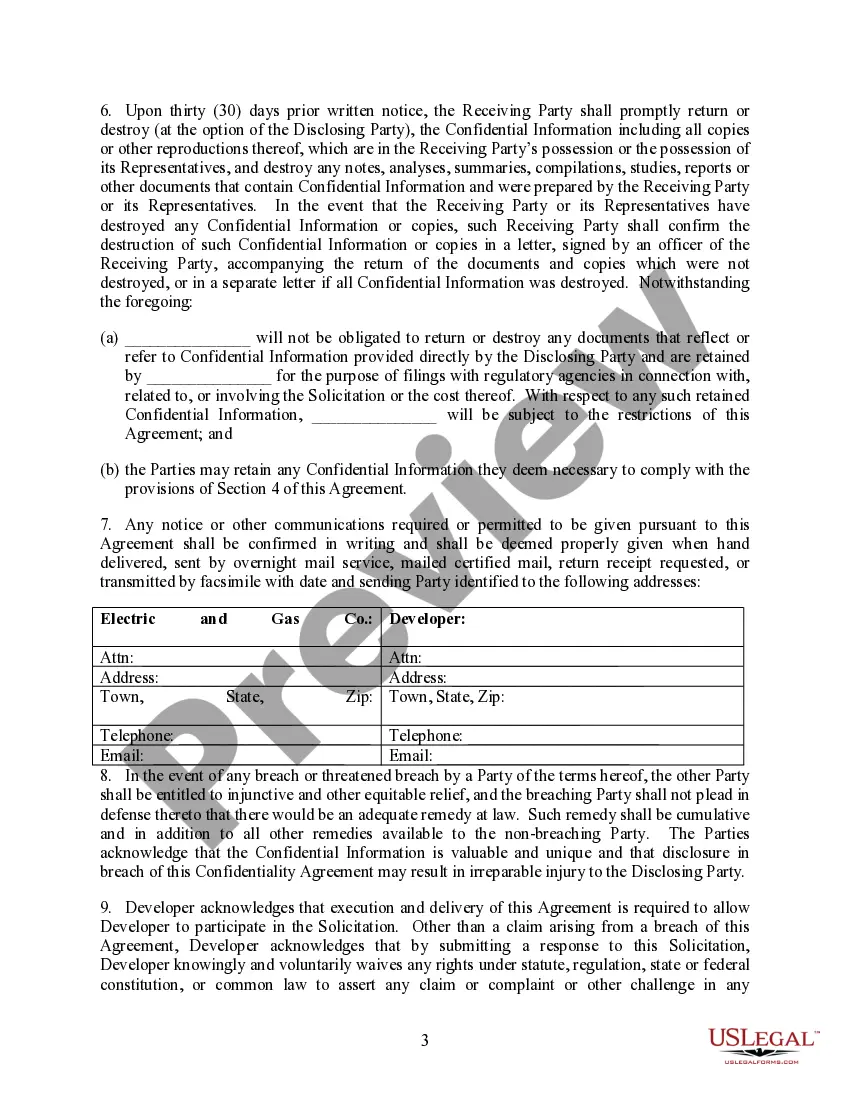
- Destruction or return of information: Specifies the requirements for handling confidential information upon completion or termination of the agreement.
- Legal remedies for breach: Describes remedies available in case of a violation of the agreement.
Situations where this form applies
This form should be used when a gas or electric utility company and a developer intend to discuss or share sensitive information related to a Non-Pipes Alternative solicitation. It is essential in scenarios where proprietary technology, business strategies, or project specifics are disclosed and must be kept confidential to protect both parties' interests.
Who this form is for
- Gas and electric utility companies engaging with developers for NPA projects.
- Developers seeking to participate in solicitations involving confidential discussions with utility companies.
- Legal representatives of either party involved in the agreement.
Instructions for completing this form
- Identify the parties: Fill in the names of the gas and electric utility company and the developer.
- Enter the effective date: Specify the date when the agreement will take effect.
- Define confidential information: Clearly outline what information will be considered confidential.
- Complete the address fields: Provide the business addresses for both parties.
- Sign and date: Ensure both parties sign and date the agreement to make it legally binding.
Does this document require notarization?
This form does not typically require notarization unless specified by local law. It is advisable to check local regulations to confirm specific notarization requirements, if any, for confidentiality agreements in your jurisdiction.
Get your form ready online
Our built-in tools help you complete, sign, share, and store your documents in one place.
Make edits, fill in missing information, and update formatting in US Legal Forms—just like you would in MS Word.
Download a copy, print it, send it by email, or mail it via USPS—whatever works best for your next step.
Sign and collect signatures with our SignNow integration. Send to multiple recipients, set reminders, and more. Go Premium to unlock E-Sign.
If this form requires notarization, complete it online through a secure video call—no need to meet a notary in person or wait for an appointment.
We protect your documents and personal data by following strict security and privacy standards.

Make edits, fill in missing information, and update formatting in US Legal Forms—just like you would in MS Word.

Download a copy, print it, send it by email, or mail it via USPS—whatever works best for your next step.

Sign and collect signatures with our SignNow integration. Send to multiple recipients, set reminders, and more. Go Premium to unlock E-Sign.

If this form requires notarization, complete it online through a secure video call—no need to meet a notary in person or wait for an appointment.

We protect your documents and personal data by following strict security and privacy standards.
Mistakes to watch out for
- Failing to define all confidential information clearly, leading to potential misunderstandings.
- Not including the effective date, which can create ambiguity about the agreement's timeframe.
- Omitting signatures from all parties, which is crucial for the agreement's enforceability.
- Neglecting to consult legal advice for specific state requirements, if applicable.
Benefits of using this form online
- Convenient access: Download and fill out the form at any time and from anywhere.
- Editability: Easily customize the form to suit the specific needs of your agreement.
- Reliability: Forms are drafted by licensed attorneys to ensure compliance with legal standards.
Looking for another form?

Form popularity
FAQ
Non-solicitation clauses are restrictive covenants that are often included in nondisclosure agreements (NDAs) among commercial businesses during preliminary discussions about potential transactions.
solicitation agreement is a contract between an employer and an employee that regulates an employee's right to pursue clients after leaving their current job. Typically, the employee agrees not to approach the company's clients for a predetermined amount of time after leaving the company.
In general, non-solicitation agreements are enforceable. However, they must meet specific guidelines for a court of law to uphold them. An employer cannot impose unnecessary restrictions upon the employee when they leave their positions.
solicitation agreement is a provision in an employment agreement which prohibits an employee from soliciting an employer's customers after leaving the company.
Examples of non-solicitation clauses include: Example 1: Stopping competitors from taking your employees. Example 2: Preventing customers from approaching competitors. Example 3: Limiting suppliers from selling to competitors.
Non-competition, Non Solicitation, and Confidentiality Agreement. An agreement for employees not to work for a competitor, not form a competing business, and to maintain confidentiality during employment. This agreement may or may not be enforceable depending on state law.
(Employees name) will not interfere with the relationship between (company name) and any person engaged as a consultant or contractor employed by (company name). (Employee's name) will not solicit, divert, contact, or call upon customers of (company name) with the intent of doing business.
Escaping Nonsolicitation Agreements Don't sign.Build your book independently.Carve out pre-existing relationships.Require ?for cause? termination as the trigger.Provide for a payoff.Turn clients into friends.Don't treat clients as trade secrets.Invest in your own business.