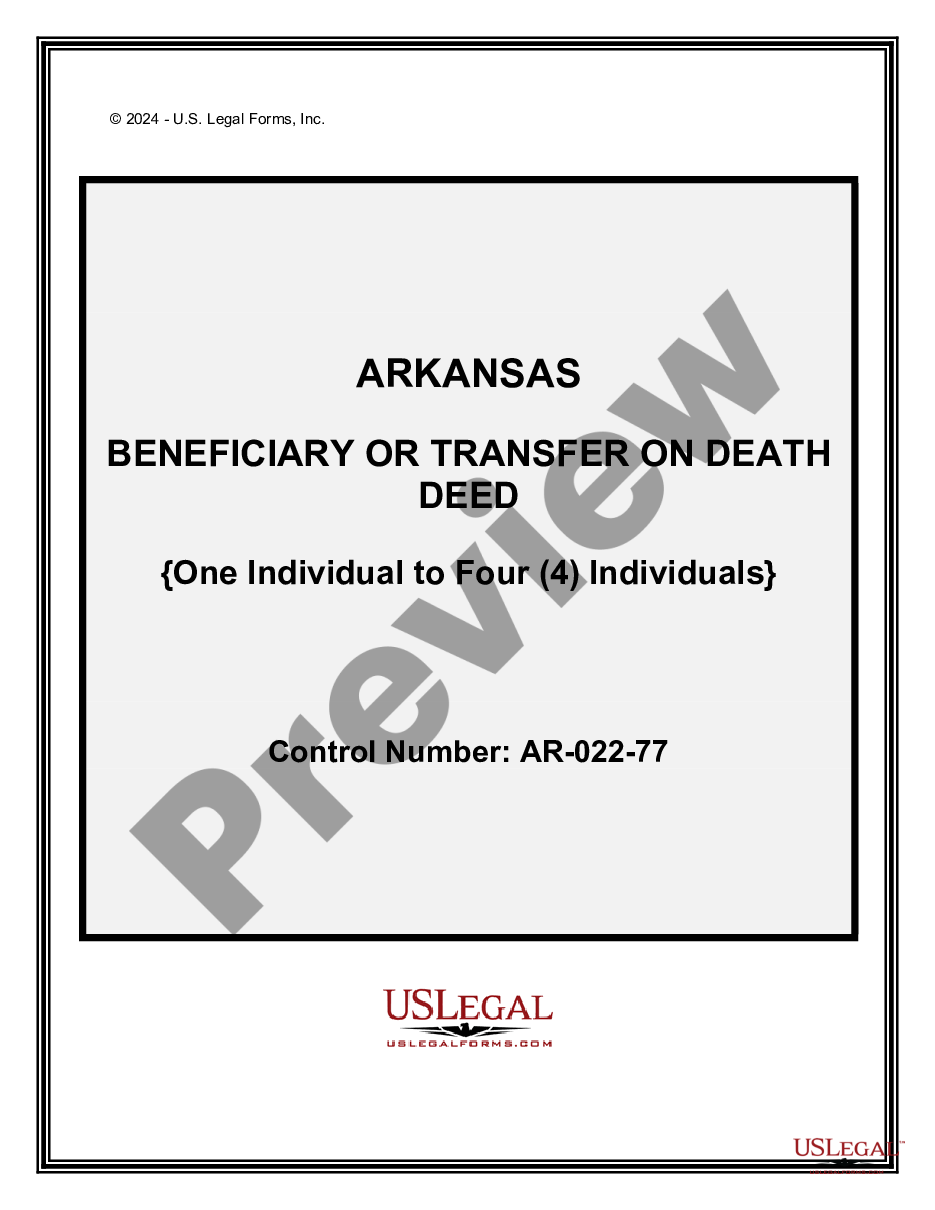
Arkansas Transfer on Death Deed or TOD - Beneficiary Deed for One Individual to Four Individuals
About this form
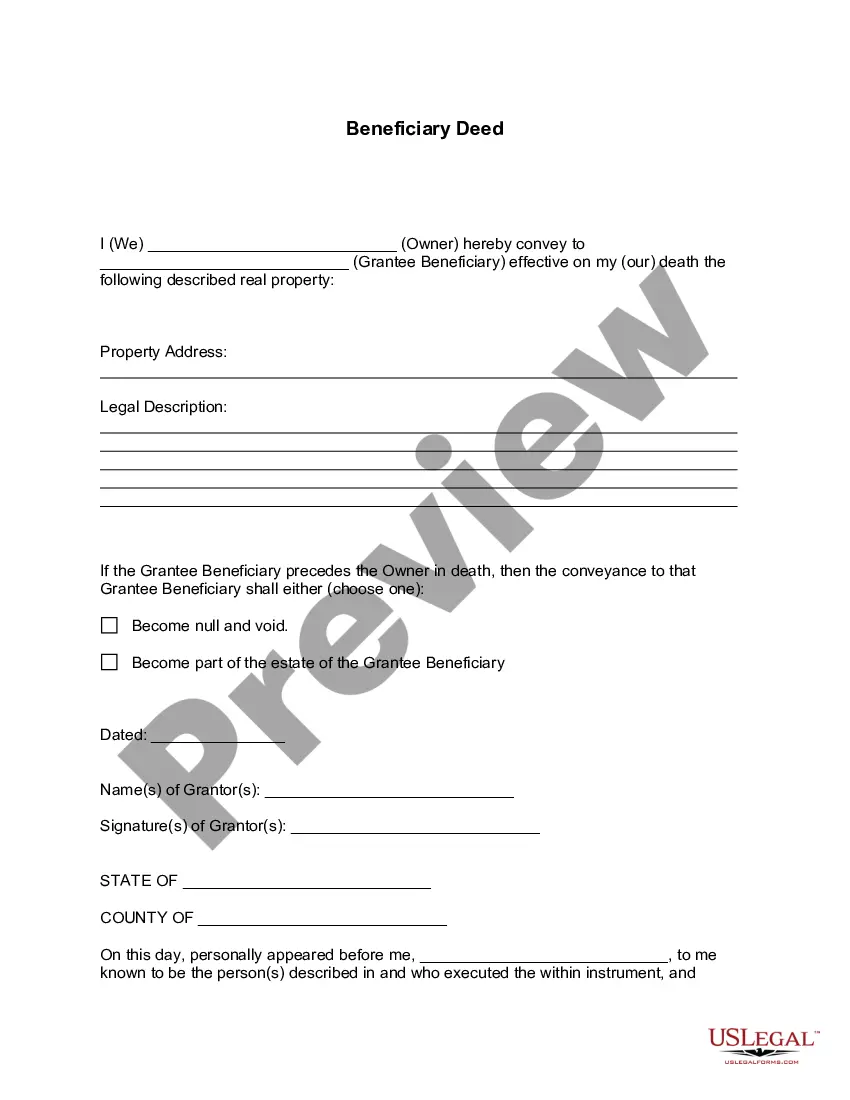
The Transfer on Death Deed (TOD) is a legal document that allows an individual (the grantor) to specify four beneficiaries who will inherit their property upon their death. This form ensures that the transfer of property is straightforward and avoids probate. Unlike a traditional deed, the TOD deed remains revocable until the grantor's death, providing flexibility in estate planning.
What’s included in this form
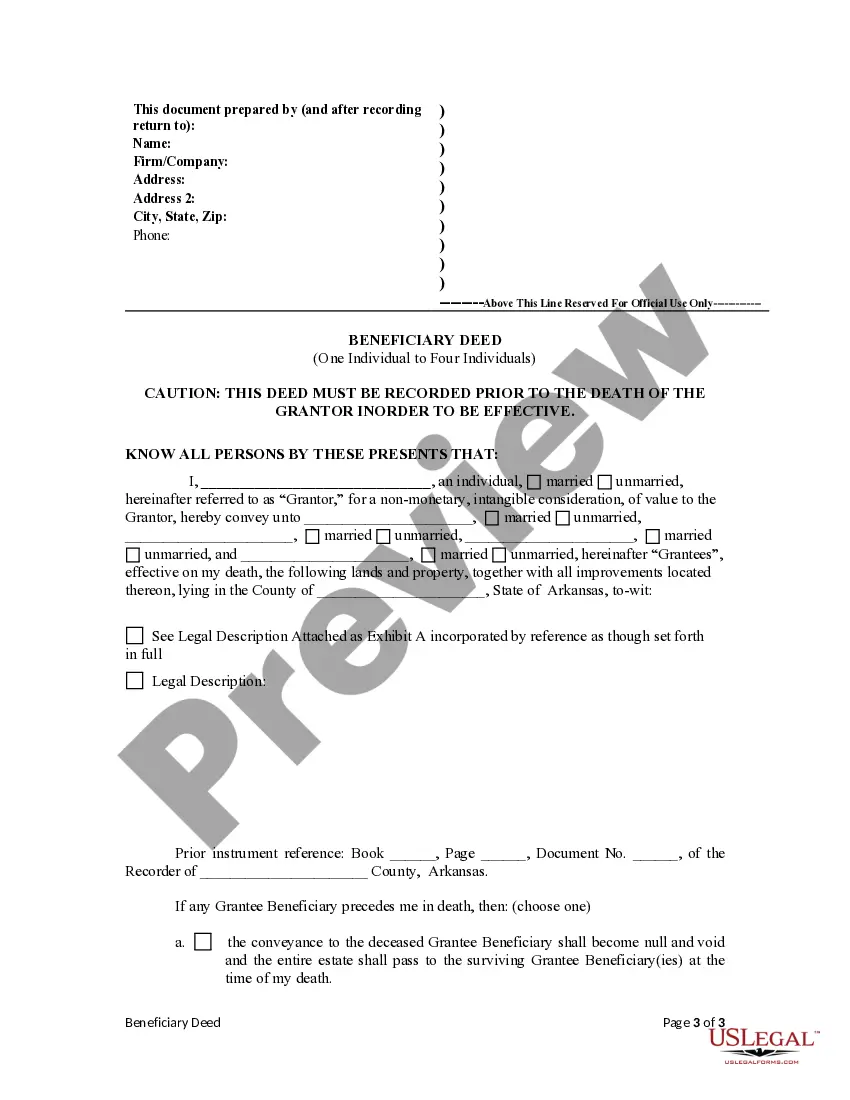
- Identification of the grantor and grantees.
- Description of the property being transferred.
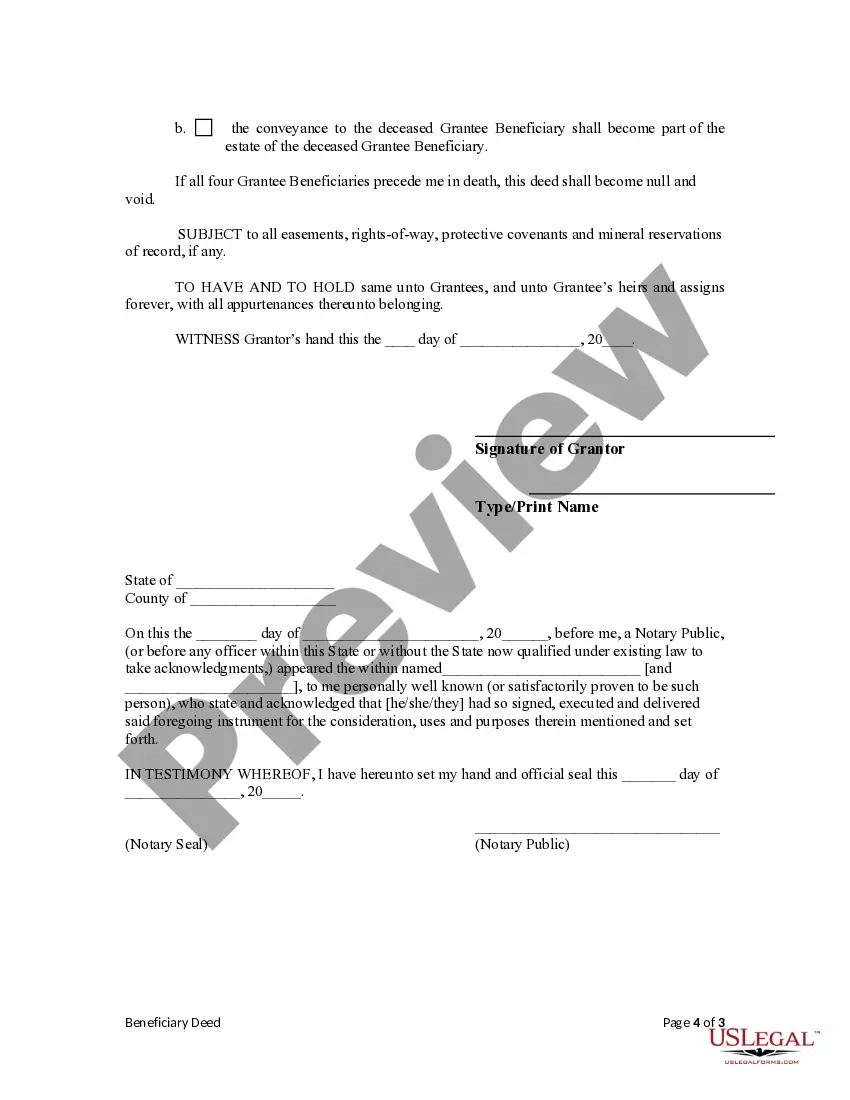
- Revocation clause, allowing the grantor to change beneficiaries before death.
- Instructions on what happens if a grantee predeceases the grantor.
- Signature lines for the grantor and witnesses.




Situations where this form applies
This form should be utilized when an individual wishes to designate multiple individuals to inherit specific real estate upon their death. It is particularly beneficial for those looking to streamline the inheritance process, avoid probate, and maintain control over their property during their lifetime.
Intended users of this form
- Individuals who own real estate and want to name beneficiaries.
- People looking to simplify their estate planning process.
- Individuals who want to avoid the complexities of probate.
- Those who may wish to revoke or change beneficiaries during their lifetime.
Instructions for completing this form
- Identify the grantor and ensure all personal details are accurate.
- List the names of the beneficiaries and confirm their relationship to the grantor.
- Provide a complete description of the property being transferred.
- Complete the revocation clause as necessary.
- Sign the form in the presence of witnesses as required by your state laws.
Is notarization required?
This form does not typically require notarization unless specified by local law. Be sure to check your stateâs requirements to confirm adherence to all legal standards.
Get your form ready online
Our built-in tools help you complete, sign, share, and store your documents in one place.
Make edits, fill in missing information, and update formatting in US Legal Forms—just like you would in MS Word.
Download a copy, print it, send it by email, or mail it via USPS—whatever works best for your next step.
Sign and collect signatures with our SignNow integration. Send to multiple recipients, set reminders, and more. Go Premium to unlock E-Sign.
If this form requires notarization, complete it online through a secure video call—no need to meet a notary in person or wait for an appointment.
We protect your documents and personal data by following strict security and privacy standards.

Make edits, fill in missing information, and update formatting in US Legal Forms—just like you would in MS Word.

Download a copy, print it, send it by email, or mail it via USPS—whatever works best for your next step.

Sign and collect signatures with our SignNow integration. Send to multiple recipients, set reminders, and more. Go Premium to unlock E-Sign.

If this form requires notarization, complete it online through a secure video call—no need to meet a notary in person or wait for an appointment.

We protect your documents and personal data by following strict security and privacy standards.
Common mistakes to avoid
- Failing to complete the property description fully, which may lead to ambiguity.
- Not having the form signed by witnesses when required.
- Assuming the deed is recorded automatically; ensure it is filed with the appropriate local office.
- Neglecting to revoke old deeds if creating a new one to prevent confusion.
Why use this form online
- Convenience of filling out the form from any location.
- Easy access to templates drafted by licensed attorneys, ensuring legal accuracy.
- Editability to customize the form according to individual needs.
- Immediate download for quick processing and filing.
Summary of main points
- The Transfer on Death Deed allows you to designate beneficiaries while retaining control of your property during your lifetime.
- This form is revocable until the death of the grantor, providing flexibility in estate planning.
- Ensure that you complete the form accurately to avoid any probate challenges.
Looking for another form?

Form popularity
FAQ
To execute an Arkansas Transfer on Death Deed or TOD - Beneficiary Deed for One Individual to Four Individuals, you must complete a beneficiary deed form. This form must clearly identify the property and the beneficiaries. After signing the deed, file it with the county clerk’s office to ensure it is legally binding. Resources like US Legal Forms provide easy-to-follow templates that can help you navigate this process smoothly.
While it is not mandatory to hire a lawyer for an Arkansas Transfer on Death Deed or TOD - Beneficiary Deed for One Individual to Four Individuals, consulting one can be very beneficial. An attorney can provide guidance through the legal nuances and help with any state requirements. This step can give you peace of mind that everything is executed properly. If you're unsure, a brief consultation could be a wise investment.
To write a beneficiary deed for an Arkansas Transfer on Death Deed or TOD - Beneficiary Deed for One Individual to Four Individuals, you should start with your information, the property details, and the designated beneficiaries. Clearly state your intent to transfer the property upon your death. Be sure to follow Arkansas state laws to ensure its validity. Utilizing resources like US Legal Forms can streamline this process and offer templates to assist you.
You do not necessarily need an attorney for an Arkansas Transfer on Death Deed or TOD - Beneficiary Deed for One Individual to Four Individuals, but having one could provide clarity. An attorney can help ensure the deed is filed correctly and meets all legal requirements. This can save you time and prevent potential issues down the line. Ultimately, whether to hire an attorney depends on your comfort level with the process.
You do not necessarily need a lawyer to execute an Arkansas Transfer on Death Deed or TOD - Beneficiary Deed for One Individual to Four Individuals, but legal assistance can be invaluable. A lawyer can aid you in ensuring that the deed complies with state laws and protects your intentions. Additionally, if your situation involves complexities or disputes, professional guidance can prevent future complications. Using tools from uslegalforms can simplify the process and enhance your understanding.
A disadvantage of a TOD deed, like the Arkansas Transfer on Death Deed or TOD - Beneficiary Deed for One Individual to Four Individuals, lies in its incapacity to provide control during the transferor's lifetime. If the transferor becomes incapacitated, the beneficiary has no rights to the property until death. This limitation can lead to unforeseen challenges if family members disagree about care or financial matters. Seeking guidance through resources like uslegalforms can help you navigate these issues effectively.
One significant disadvantage of an Arkansas Transfer on Death Deed or TOD - Beneficiary Deed for One Individual to Four Individuals is that it may not fully address complicated family dynamics, such as estrangement. Additionally, if the transferor has outstanding debts, creditors could pursue the property after death. It's also essential to understand that changes in your intentions can create confusion, as revoking the deed must be done explicitly. Consulting with uslegalforms could help clarify these concerns.
You can have up to four beneficiaries on your Arkansas Transfer on Death Deed or TOD - Beneficiary Deed for One Individual to Four Individuals account. This enables you to pass your property smoothly to multiple heirs without requiring probate. Having multiple beneficiaries provides peace of mind, allowing you to ensure your estate reflects your intentions. Explore our platform to learn how to effectively create and manage your beneficiary designations.
The Arkansas Transfer on Death Deed or TOD - Beneficiary Deed for One Individual to Four Individuals permits you to name a maximum of four individuals as beneficiaries. This flexibility helps you designate whom you trust to inherit your property directly upon your death. Keeping this number within the limit helps streamline the process, reducing potential conflicts. Our platform offers resources to help you navigate this aspect efficiently.
The Arkansas Transfer on Death Deed or TOD - Beneficiary Deed for One Individual to Four Individuals does not automatically exempt your estate from inheritance tax. While it allows for a smoother transfer of property, you should consult a tax professional to understand the specific implications based on your situation. Using our platform can help guide you to the right resources for understanding any potential tax obligations.