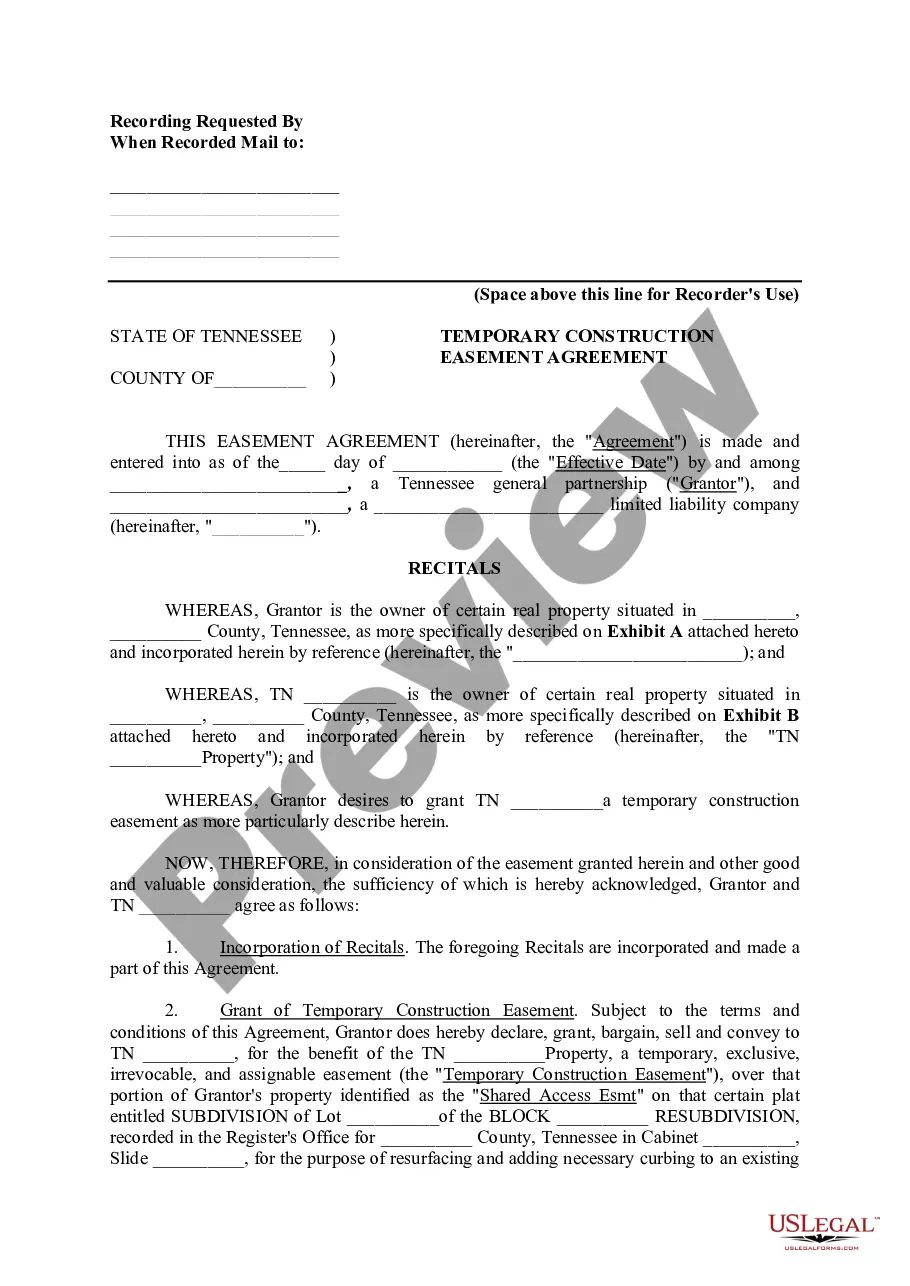
Michigan Discovery and Case Evaluation Order
What is this form?
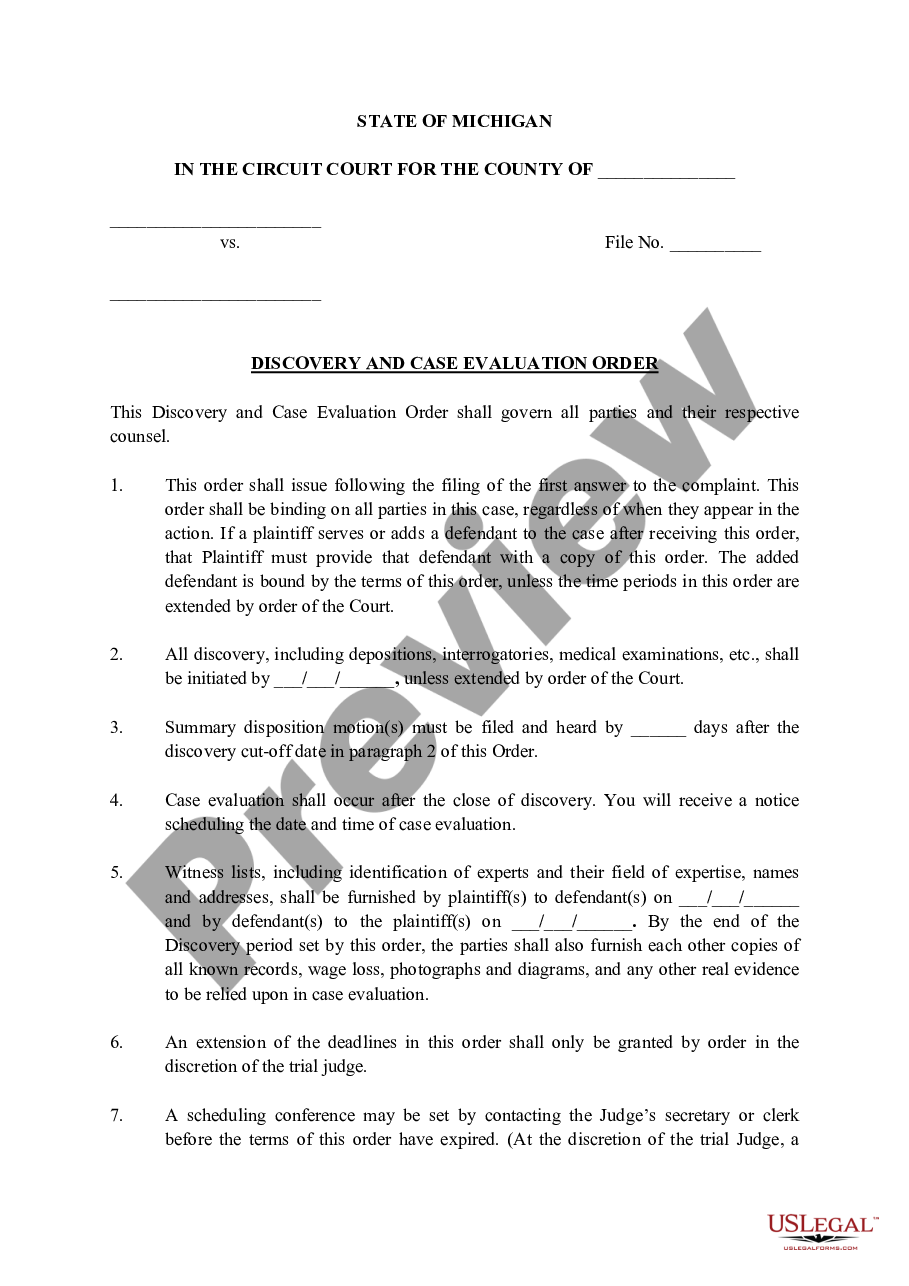
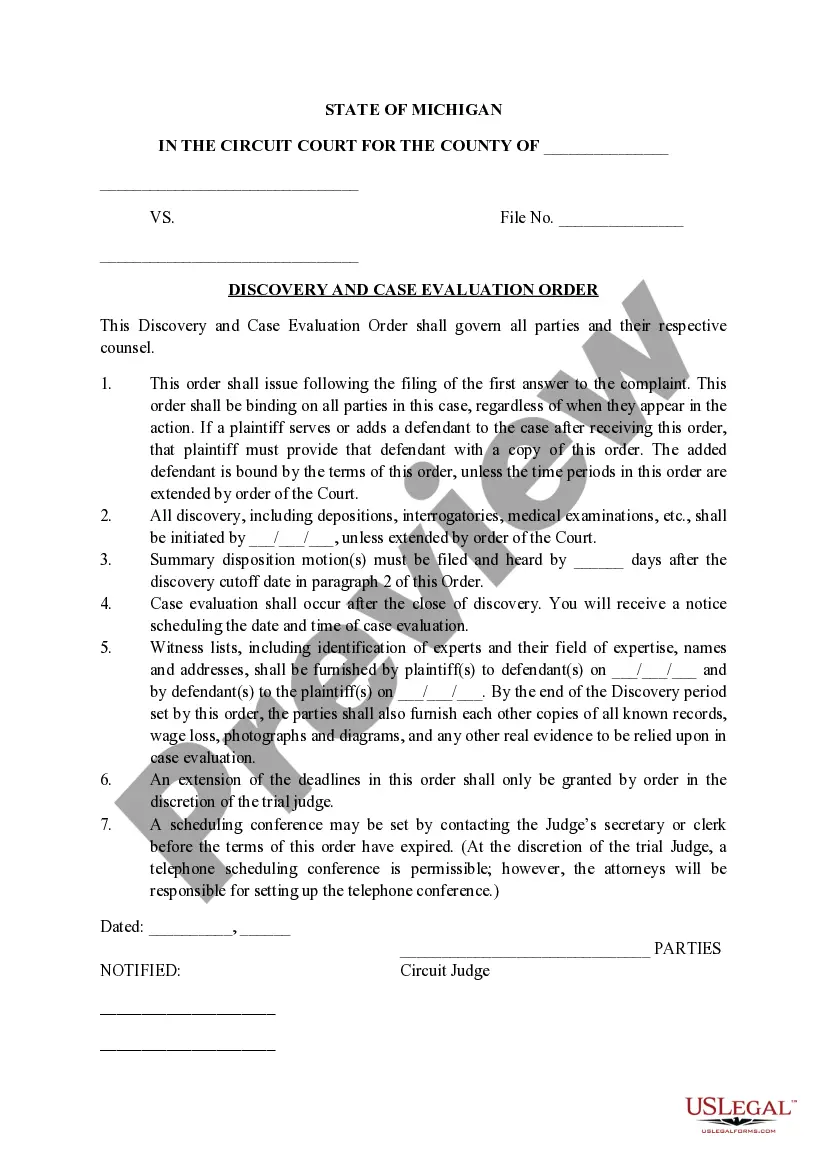
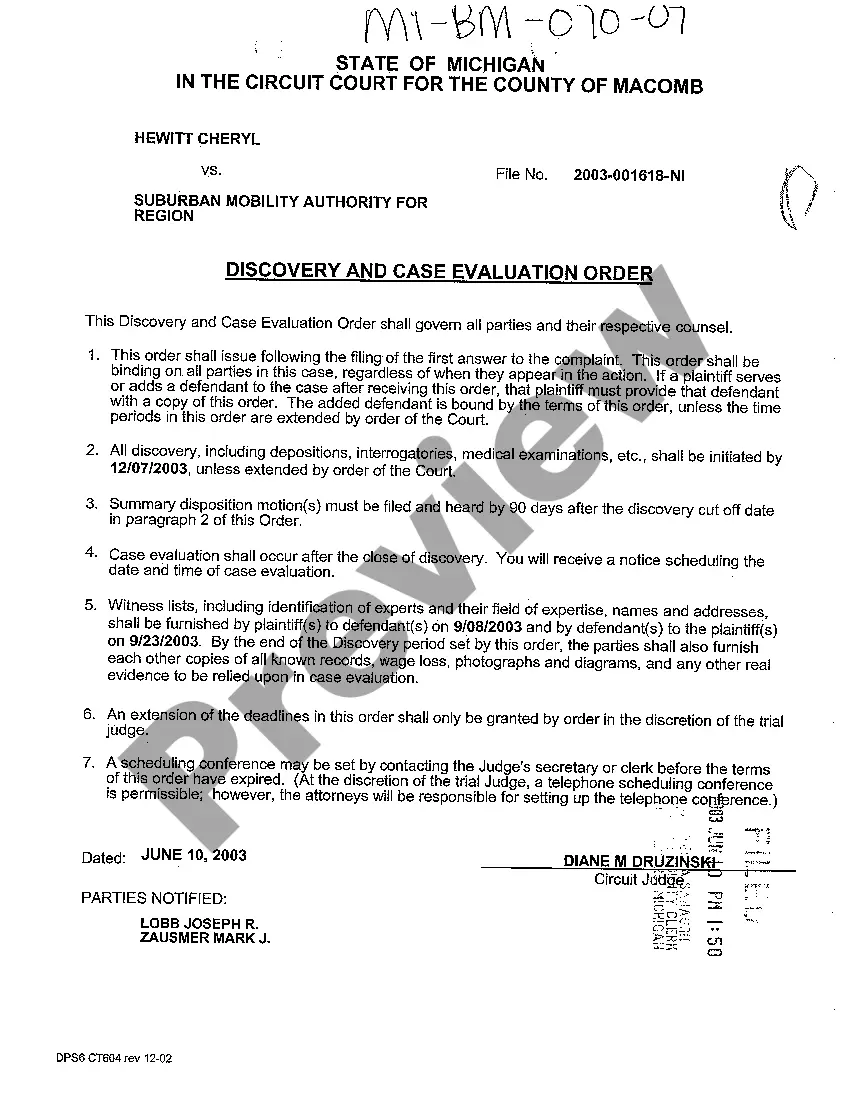
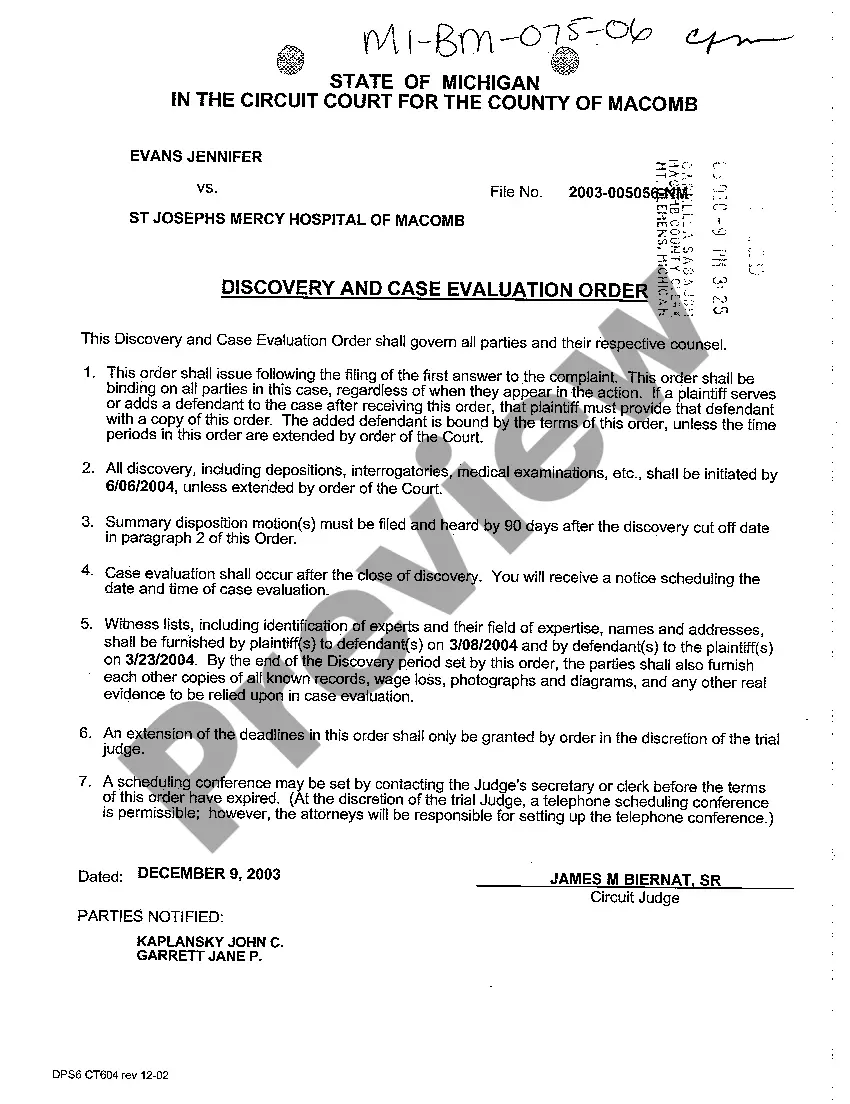
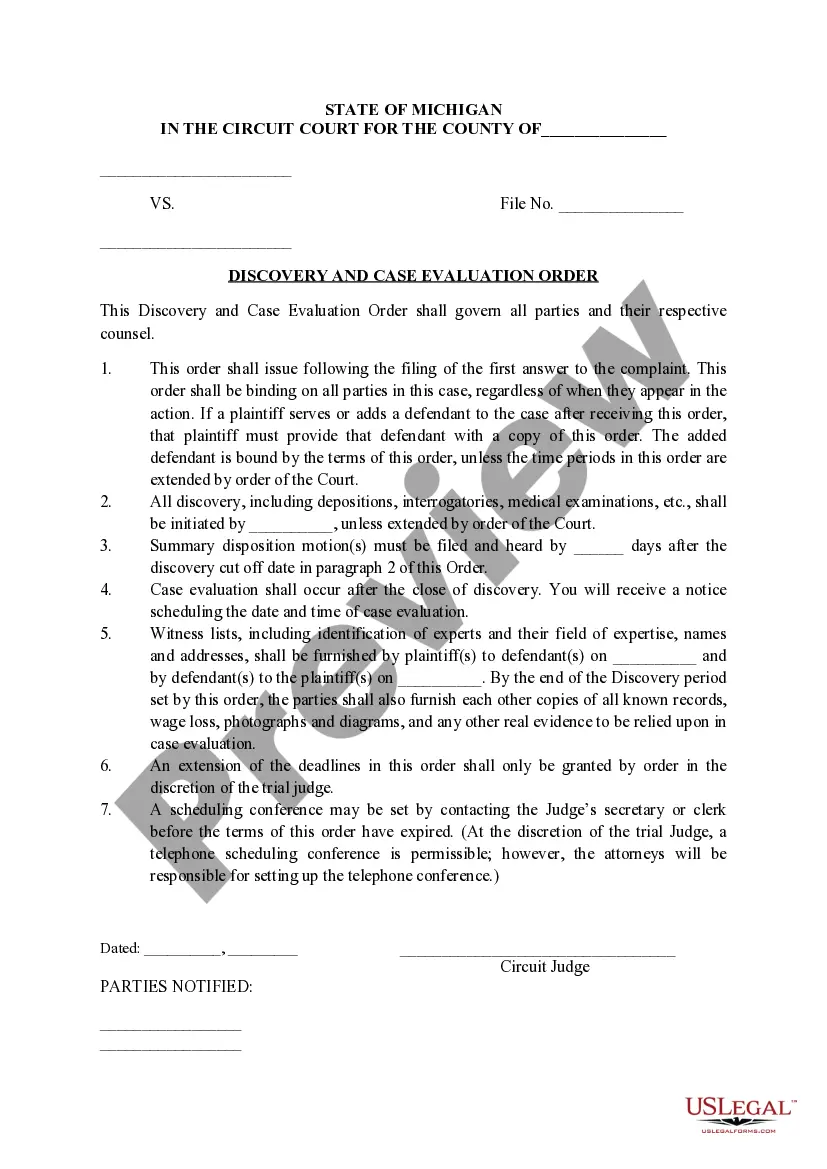
The Discovery and Case Evaluation Order is a court-issued document that governs the discovery process and case evaluation in a legal dispute. It outlines critical dates and responsibilities for both parties involved, ensuring they comply with the established legal procedures. This form helps streamline the process by mandating discovery deadlines and the evaluation of the case by a panel of three attorneys, giving both sides an objective assessment of their claims before proceeding further.
Key components of this form
- Identification of the parties involved in the case.
- Establishment of deadlines for all discovery activities, including depositions and interrogatories.
- Requirement for a summary disposition motion to be filed within a specified timeframe.
- Instructions for exchanging witness lists and evidence between parties.
- Notice of scheduling for case evaluation following the discovery phase.
When to use this form
This form should be used when a dispute has advanced to the point where both parties are ready to engage in discovery and evaluate the merits of the case. It is particularly relevant in civil cases where the court has mandated a structured approach to information gathering and case assessment, ensuring both parties are on equal footing as the case progresses.
Who this form is for
- Individuals or businesses involved in a civil lawsuit.
- Attorneys representing plaintiffs or defendants in a legal dispute.
- Any party that has filed a complaint or answer in a case requiring formal evaluation and discovery.
How to prepare this document
- Identify the parties involved, including plaintiffs and defendants.
- Fill in the case file number assigned by the court.
- Enter specific deadlines for initiating discovery activities.
- Specify the dates for exchanging witness lists and evidence.
- Sign and date the completed order in the designated areas.
Notarization guidance
This form does not typically require notarization unless specified by local law. However, it is advisable to confirm your local jurisdictionâs requirements to ensure compliance.
Get your form ready online
Our built-in tools help you complete, sign, share, and store your documents in one place.
Make edits, fill in missing information, and update formatting in US Legal Forms—just like you would in MS Word.
Download a copy, print it, send it by email, or mail it via USPS—whatever works best for your next step.
Sign and collect signatures with our SignNow integration. Send to multiple recipients, set reminders, and more. Go Premium to unlock E-Sign.
If this form requires notarization, complete it online through a secure video call—no need to meet a notary in person or wait for an appointment.
We protect your documents and personal data by following strict security and privacy standards.

Make edits, fill in missing information, and update formatting in US Legal Forms—just like you would in MS Word.

Download a copy, print it, send it by email, or mail it via USPS—whatever works best for your next step.

Sign and collect signatures with our SignNow integration. Send to multiple recipients, set reminders, and more. Go Premium to unlock E-Sign.

If this form requires notarization, complete it online through a secure video call—no need to meet a notary in person or wait for an appointment.

We protect your documents and personal data by following strict security and privacy standards.
Common mistakes
- Failing to adhere to set deadlines, which may impact the case.
- Not providing necessary documentation exchange between parties.
- Leaving fields blank, such as party identification or case numbers.
- Not informing all new parties of the order when they are added to the case.
Advantages of online completion
- Easy access and immediate downloads, saving time and effort.
- Editable templates that help ensure compliance with your specific case requirements.
- Form templates drafted by licensed attorneys, ensuring legality and enforceability.
Quick recap
- The Discovery and Case Evaluation Order outlines critical procedural steps in civil litigation.
- Timeliness in adhering to the specified deadlines is essential for fair legal proceedings.
- All parties must communicate actively and share necessary documentation.
Looking for another form?

Form popularity
FAQ
To request court documents in Michigan, you usually need to fill out a form and submit it to the court where the case was filed. Many courts allow online requests for records, saving you time and effort. You can access important documents related to your Michigan Discovery and Case Evaluation Order this way. Utilizing the USLegalForms platform simplifies this process by providing templates and guidance for obtaining necessary court documents.
Court rule 9.120 in Michigan pertains to the procedures related to the Michigan Discovery and Case Evaluation Order. This rule outlines the timeline and processes for parties to exchange pertinent information and documents before a case goes to trial. Understanding this rule helps you navigate the legal landscape more effectively and prepares you for smoother case evaluations. It is essential to comply with these guidelines to avoid delays in your legal proceedings.
Rule 2.119 in Michigan relates to motions and how they should be filed and processed in the court system. This rule outlines the necessary documentation and the timeline for submitting motions, ensuring clarity and efficiency in legal proceedings. Complying with this rule is critical, especially during the Michigan Discovery and Case Evaluation Order process, as it can impact your case's progression.
A DUI conviction remains on your record in Michigan for a minimum of five years. After this period, some individuals may be eligible to have their record expunged under certain conditions. It is essential to handle your DUI case carefully from the beginning to improve your chances of favorable outcomes. Leveraging the Michigan Discovery and Case Evaluation Order can assist you in navigating your legal options.
Case evaluation in Michigan refers to a process where a panel of experts reviews the details of a legal case. The evaluation aims to provide an impartial assessment of the case's merits and helps encourage settlement before the trial. This process can reduce time and expenses associated with litigation. Utilizing the Michigan Discovery and Case Evaluation Order can greatly enhance your understanding and participation in this process.
A case evaluation in Michigan is a structured process where an impartial panel provides opinions on case value and settlement options. This method aims to expedite dispute resolution by facilitating communication between parties. By participating in a case evaluation, you can better align with the Michigan Discovery and Case Evaluation Order requirements, leading to a more streamlined legal journey. Services like uslegalforms can help navigate this process efficiently.
To evaluate a case means to analyze its components in terms of legal merits, potential outcomes, and financial implications. This process enables parties to understand their likelihood of success and encourages settlement through informed decision-making. A thorough evaluation is crucial for aligning with the Michigan Discovery and Case Evaluation Order. Comprehensive evaluation increases the chances of reaching favorable resolutions.
The process of case evaluation in Michigan involves a confidential meeting where neutral evaluators assess the strengths and weaknesses of each case. This assessment helps parties reach a settlement prior to going to trial, potentially saving time and resources. Participants must adhere to the Discovery and Case Evaluation Order to ensure all necessary information is provided. Platforms like uslegalforms can guide you through this process effectively.
Rule 2.313 in Michigan governs the production of documents and other discovery materials during legal proceedings. This rule allows parties to request specific documents relevant to their case, ensuring fairness and transparency. Compliance with Rule 2.313 is essential to fostering proper communication between parties, which is vital for the Michigan Discovery and Case Evaluation Order process. Utilizing resources that guide you through these rules can simplify your experience.
The 77-day rule in Michigan refers to the timeframe in which a party must comply with a Discovery and Case Evaluation Order. Specifically, it mandates that all discovery must be completed before the case evaluation hearing, ensuring that both parties prepare adequately. Understanding this rule is crucial for navigating the legal landscape in Michigan. Detection and adherence to deadlines play a significant role in effective case management.