Exit Interview For Tenant
About this form
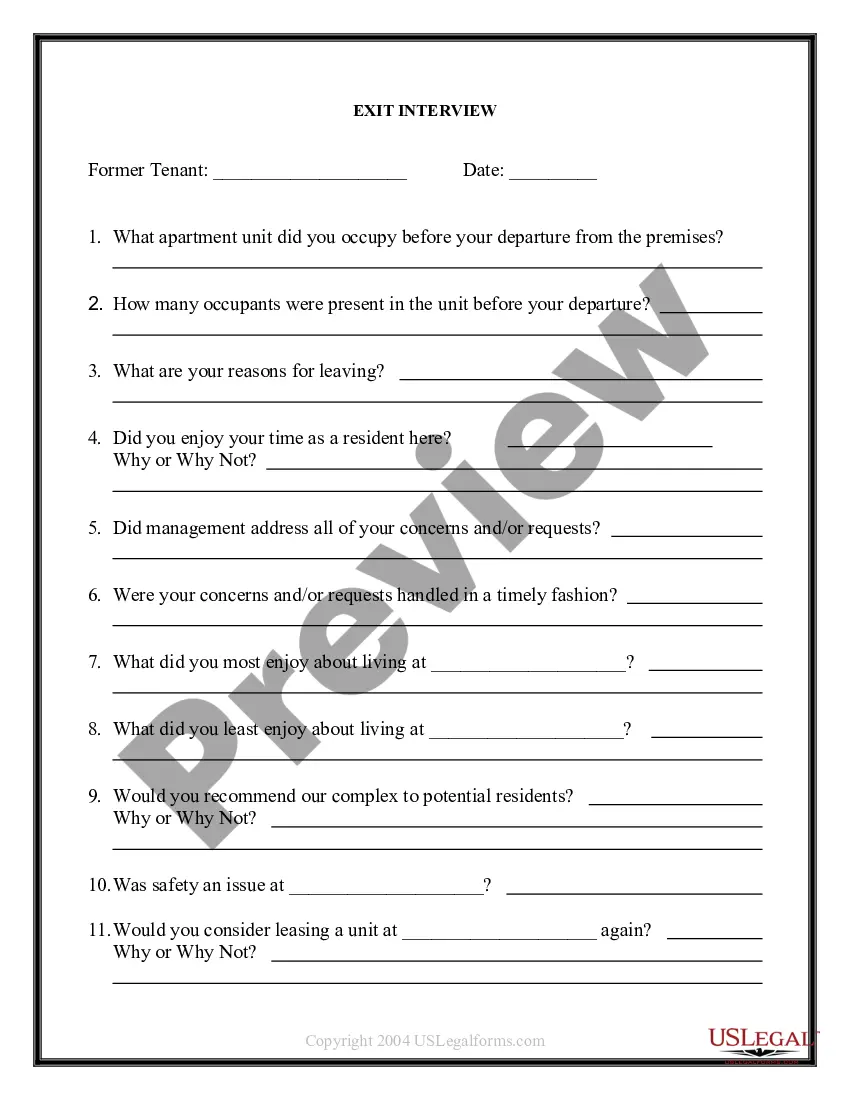
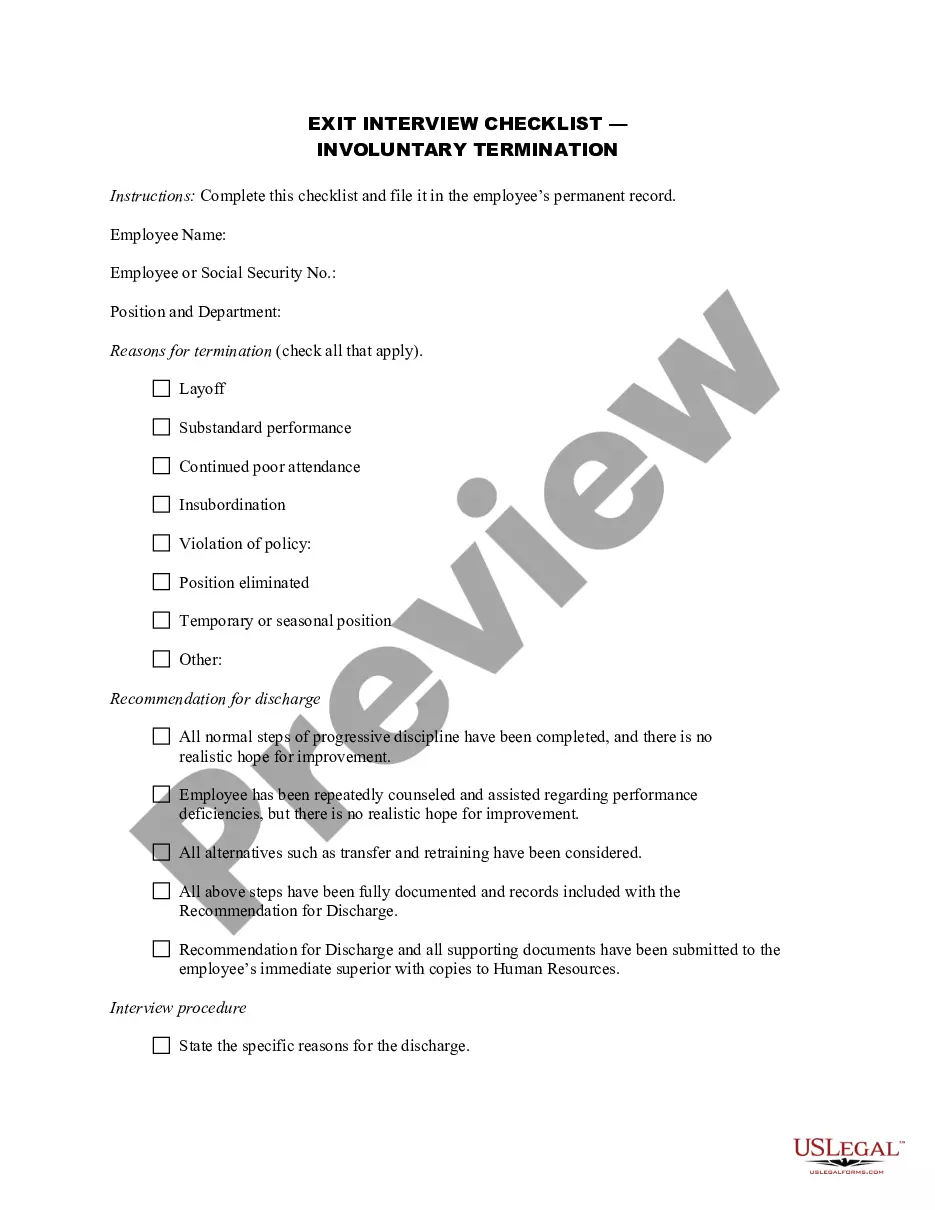
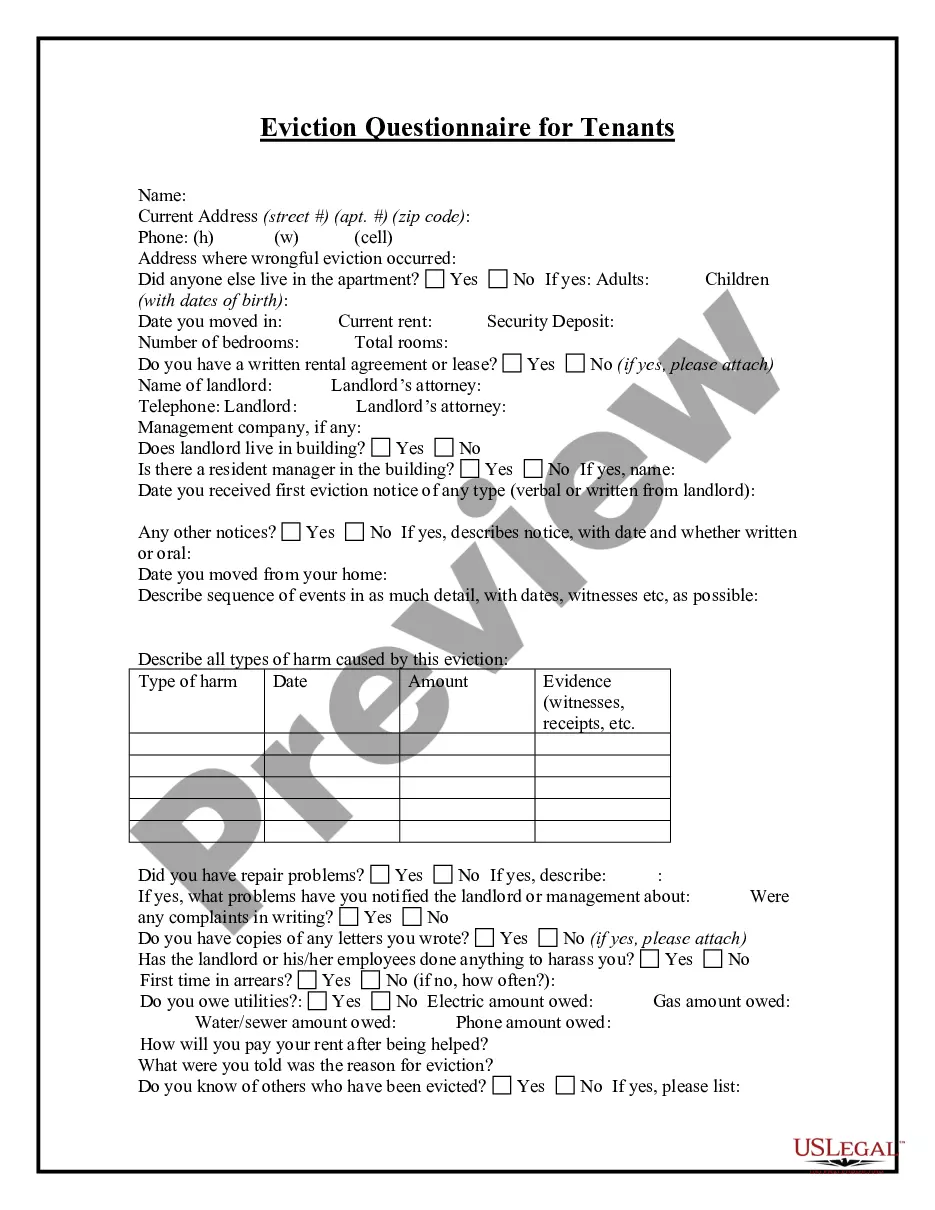
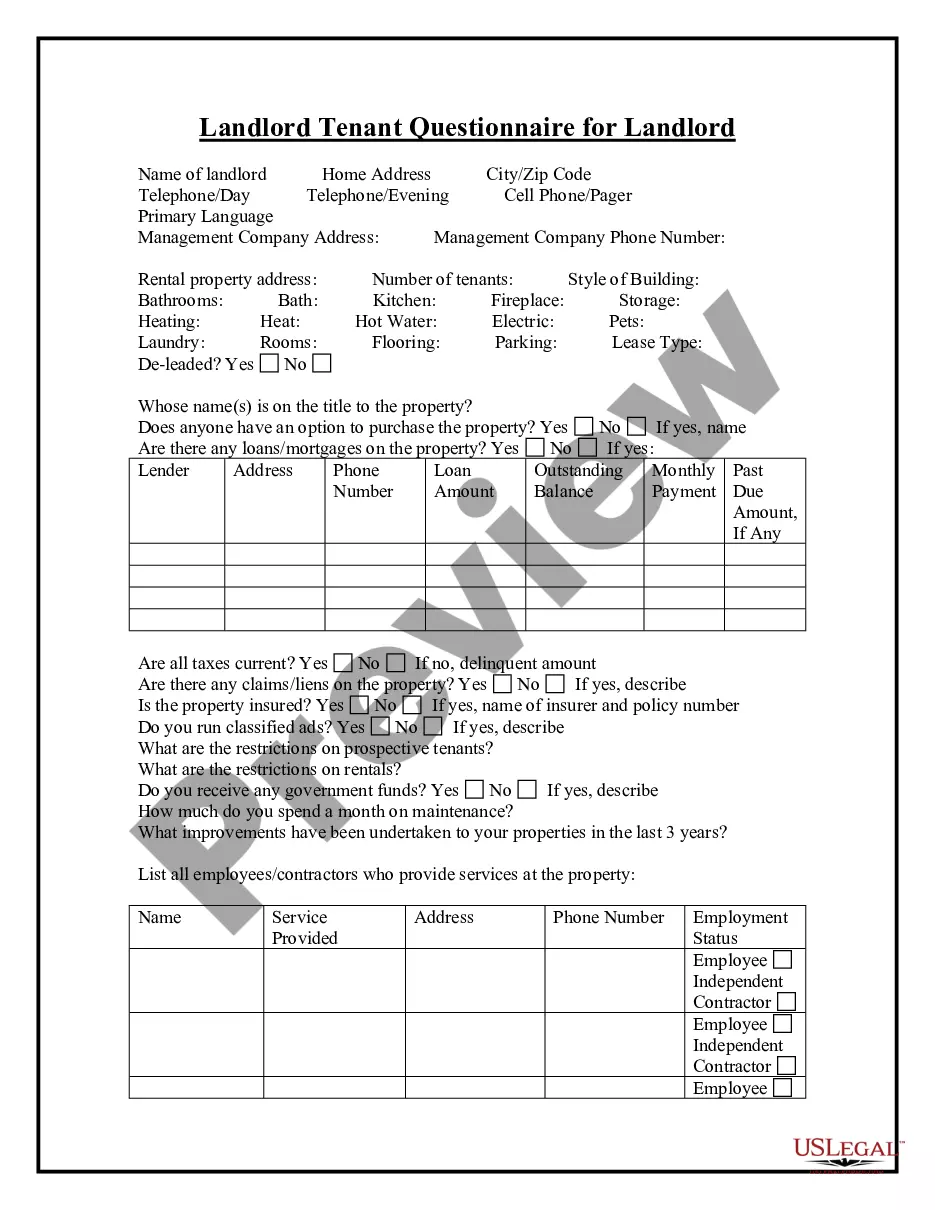
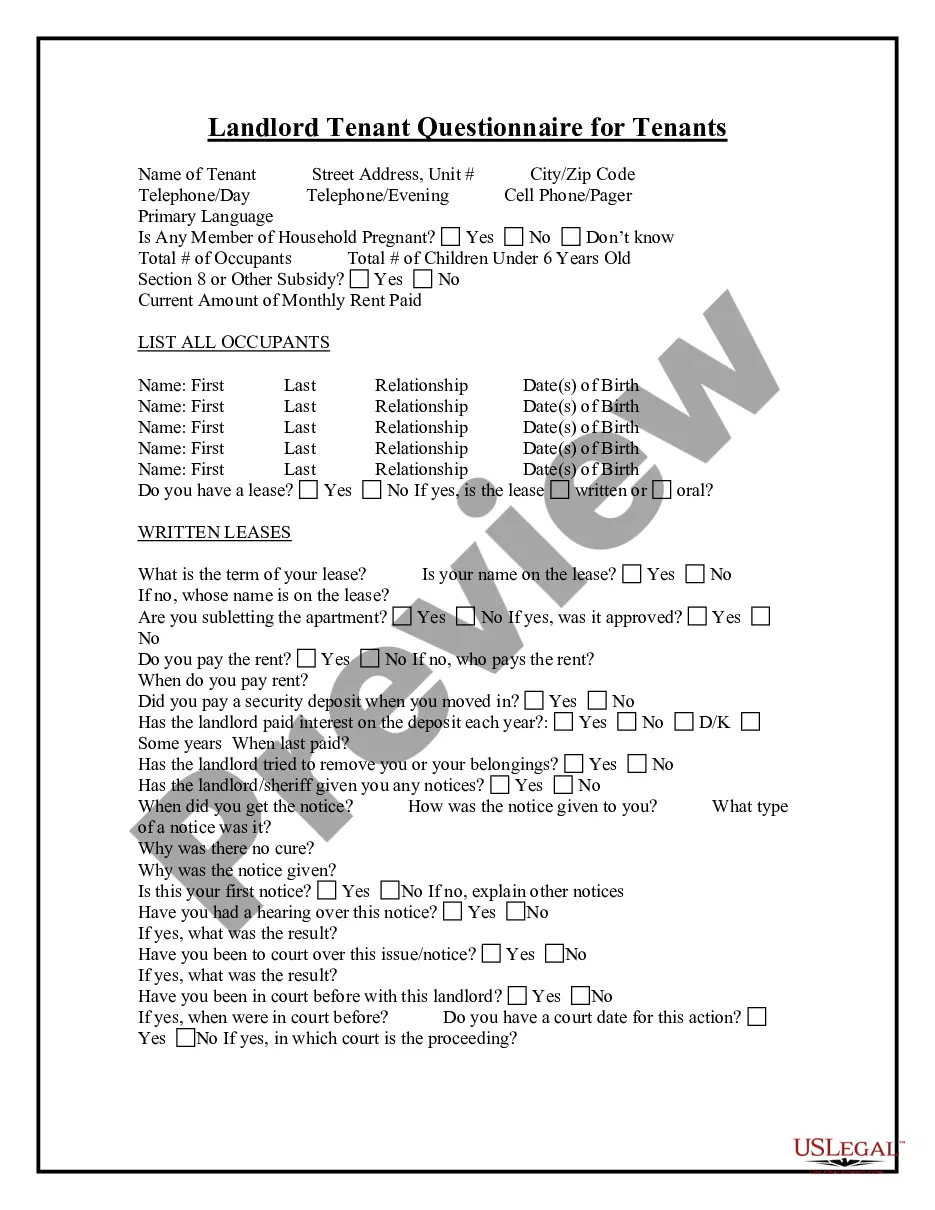
The Exit Interview for Tenant is a legal document designed for tenants moving out of an apartment complex. This form facilitates a structured process for collecting feedback from departing tenants, helping landlords understand tenant experiences and identify areas for improvement. Unlike a general lease termination notice, this form focuses specifically on the exit interview process, ensuring that all necessary information is documented and reviewed before the tenant leaves.
Key parts of this document
- Tenant's name and contact information
- Address of the rental property
- Move-out date
- Feedback on living experience
- Comments regarding property management and maintenance
When to use this form
This form is ideal for landlords or property managers to use whenever a tenant indicates their intention to leave the property. It can help gather valuable insights into the tenant's living experience, any issues they faced, and suggestions for improvements. Using this form can help ensure a smooth transition for both the landlord and the tenant, fostering better relationships and potentially increasing tenant retention in the future.
Intended users of this form
- Landlords managing residential properties
- Property managers overseeing apartment complexes
- Tenants preparing to vacate a rental unit
- Real estate professionals assisting clients with rental properties
How to prepare this document
- Identify the tenant's name and contact details.
- Specify the address of the rental property.
- Enter the planned move-out date.
- Gather feedback by asking specific questions about the tenant's experience.
- Ensure all comments and suggestions are documented clearly.
Is notarization required?
Notarization is not commonly needed for this form. However, certain documents or local rules may make it necessary. Our notarization service, powered by Notarize, allows you to finalize it securely online anytime, day or night.
Get your form ready online
Our built-in tools help you complete, sign, share, and store your documents in one place.
Make edits, fill in missing information, and update formatting in US Legal Forms—just like you would in MS Word.
Download a copy, print it, send it by email, or mail it via USPS—whatever works best for your next step.
Sign and collect signatures with our SignNow integration. Send to multiple recipients, set reminders, and more. Go Premium to unlock E-Sign.
If this form requires notarization, complete it online through a secure video call—no need to meet a notary in person or wait for an appointment.
We protect your documents and personal data by following strict security and privacy standards.

Make edits, fill in missing information, and update formatting in US Legal Forms—just like you would in MS Word.

Download a copy, print it, send it by email, or mail it via USPS—whatever works best for your next step.

Sign and collect signatures with our SignNow integration. Send to multiple recipients, set reminders, and more. Go Premium to unlock E-Sign.

If this form requires notarization, complete it online through a secure video call—no need to meet a notary in person or wait for an appointment.

We protect your documents and personal data by following strict security and privacy standards.
Common mistakes
- Failing to gather all necessary feedback during the exit interview.
- Not specifying the correct move-out date.
- Leaving sections incomplete, which can lead to misunderstandings.
Why use this form online
- Convenient download and completion from home.
- Edit and customize the form as needed.
- Reliable templates that meet legal standards.
Quick recap
- The Exit Interview for Tenant form is essential for gaining insights from tenants who are moving out.
- Completing this form can improve landlord-tenant relationships and enhance future rental experiences.
- Ensure all sections are filled out to maximize the effectiveness of the interview process.
Looking for another form?
Form popularity
FAQ
Tell Them The Problem & Consequences. Explain the reason that you want the tenant to go. Offer Them a Way Out. Let the tenant know that you are willing to give them a lump sum of cash in agreement for leaving the property. The Release.
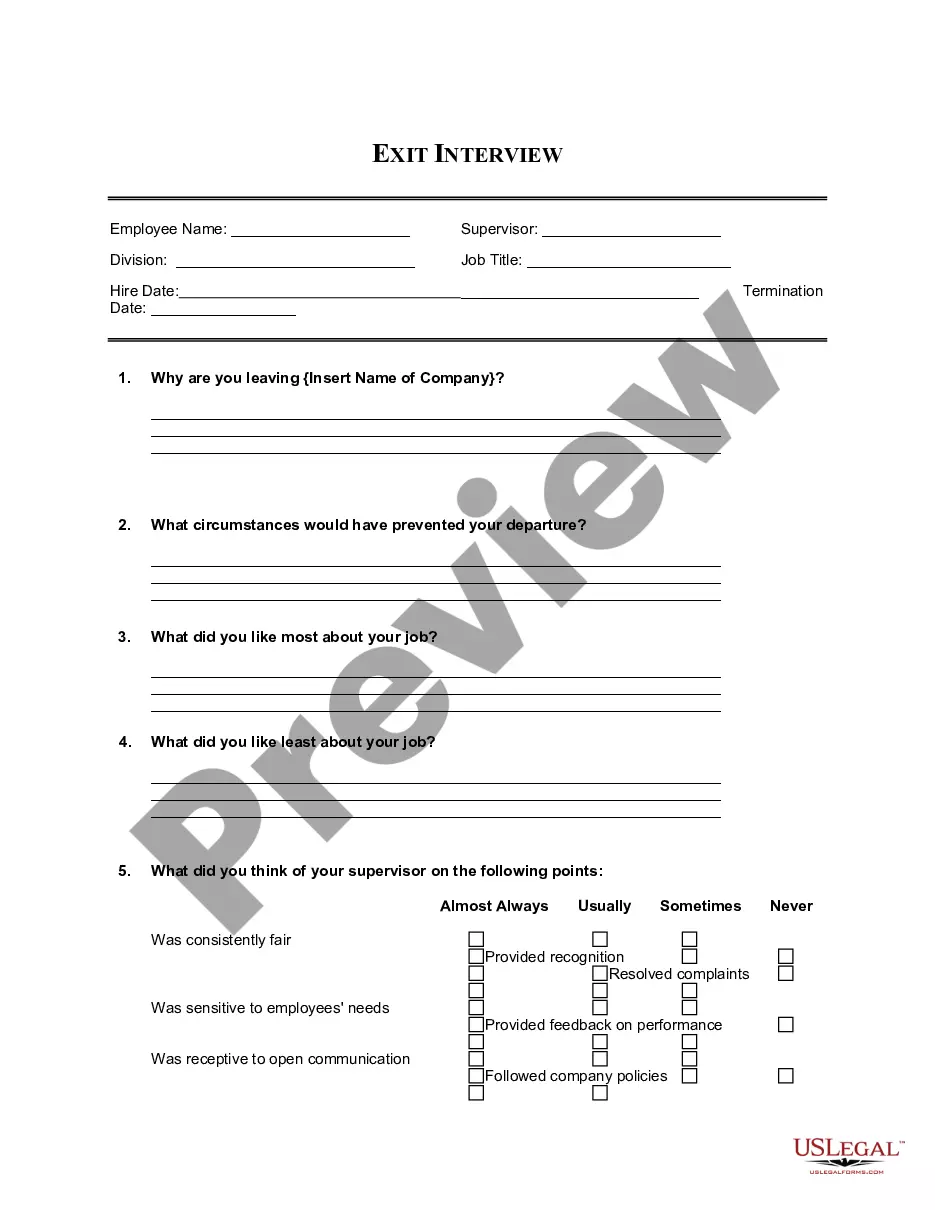
The purpose of an exit interview is to assess the overall employee experience within your organization and identify opportunities to improve retention and engagement.When completed in a consistent and standardized way, these interviews can help you foster positive relationships and a welcoming working environment.
Basically, the exit interview has three purposes: to learn where the company can improve itself, to make sure employees leave feeling good about their service and, in some cases, to encourage the employee to stay under new circumstances, Diamond says.
This place is 'going downhill/a sinking ship/lost without me So-and-so was mean to me/did something bad/hates it here, too SHOW ME THE MONEY! @%! Never, ever again. You could have made me stay, you know. Nobody likes working here.
Please describe your general feelings about working here. What did you enjoy most about working here? If you could change three things, what would they be? How do you feel you were treated by your supervisor and your coworkers?
Explain the Situation Tell your tenant in straightforward terms what the problem is, and explain that they cannot stay on the property any longer. Describe the Consequences Calmly explain that they will be evicted with necessary court orders if they remain on the property.
Be objective. Keep your focus on the job. Practice your answers. Consider asking a friend or colleague for help. Take notes. Consider nonverbal signals and body language.
Why did you begin looking for a new job? What ultimately led you to accept the new position? Did you feel that you were equipped to do your job well? How would you describe the culture of our company? Can you provide more information, such as specific examples? What could have been done for you to remain employed here?
Why did you begin looking for a new job? What ultimately led you to accept the new position? Did you feel that you were equipped to do your job well? How would you describe the culture of our company? Can you provide more information, such as specific examples? What could have been done for you to remain employed here?