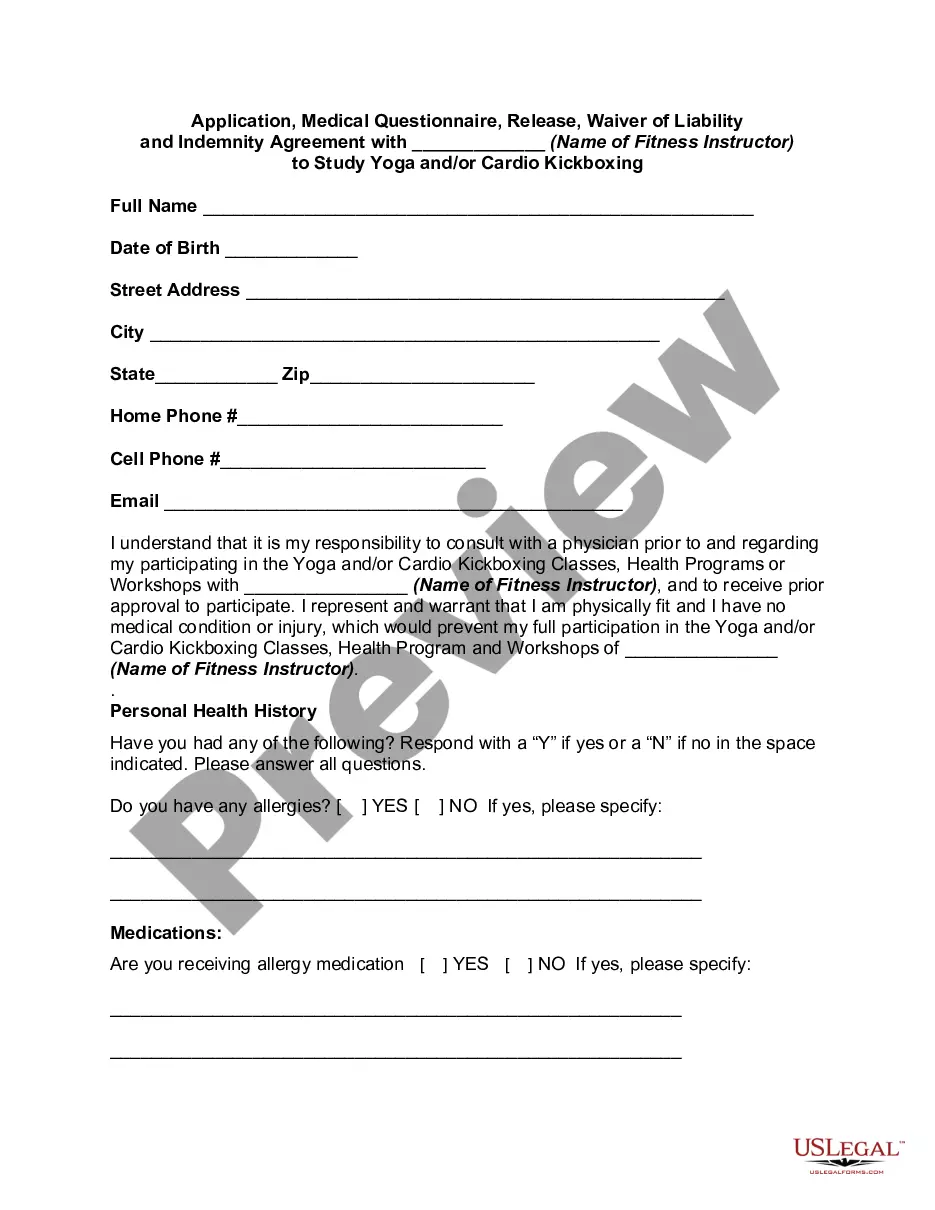
Application, Medical Questionnaire, Release, Waiver of Liability and Indemnity Agreement with Fitness Instructor to Study Yoga and/or Cardio Kickboxing
What is this form?
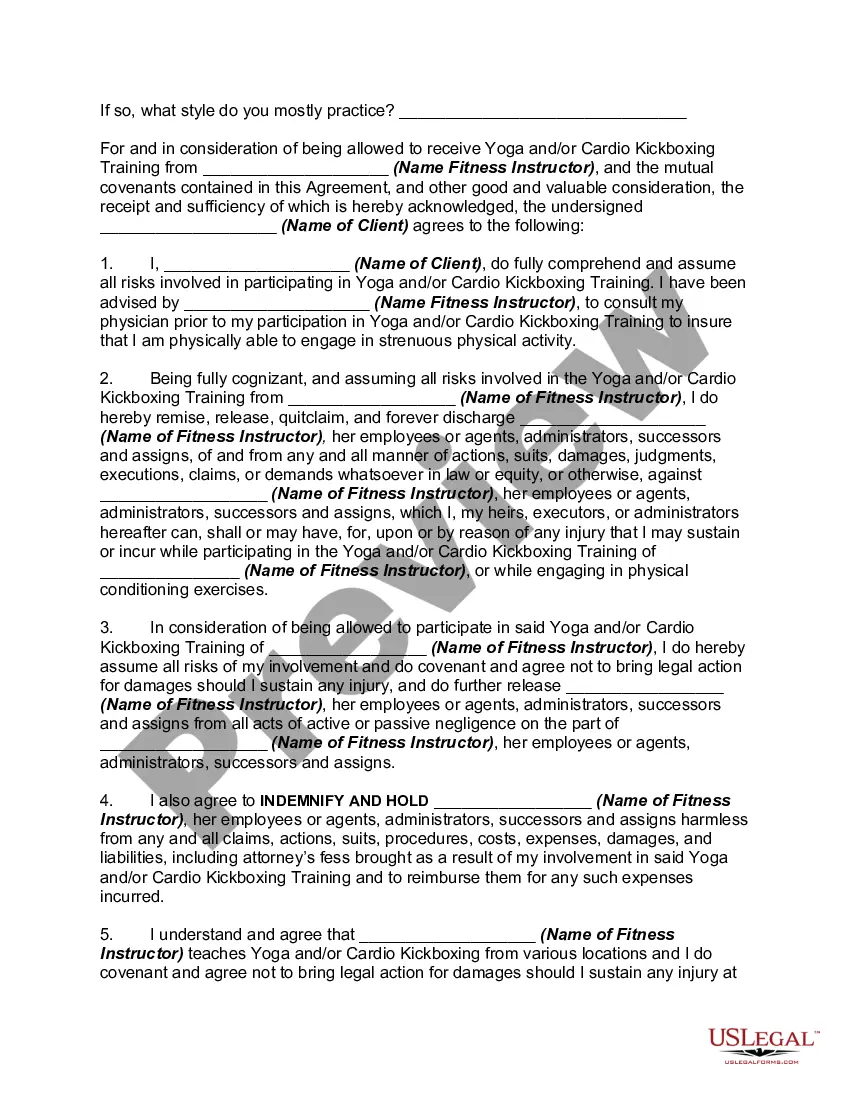
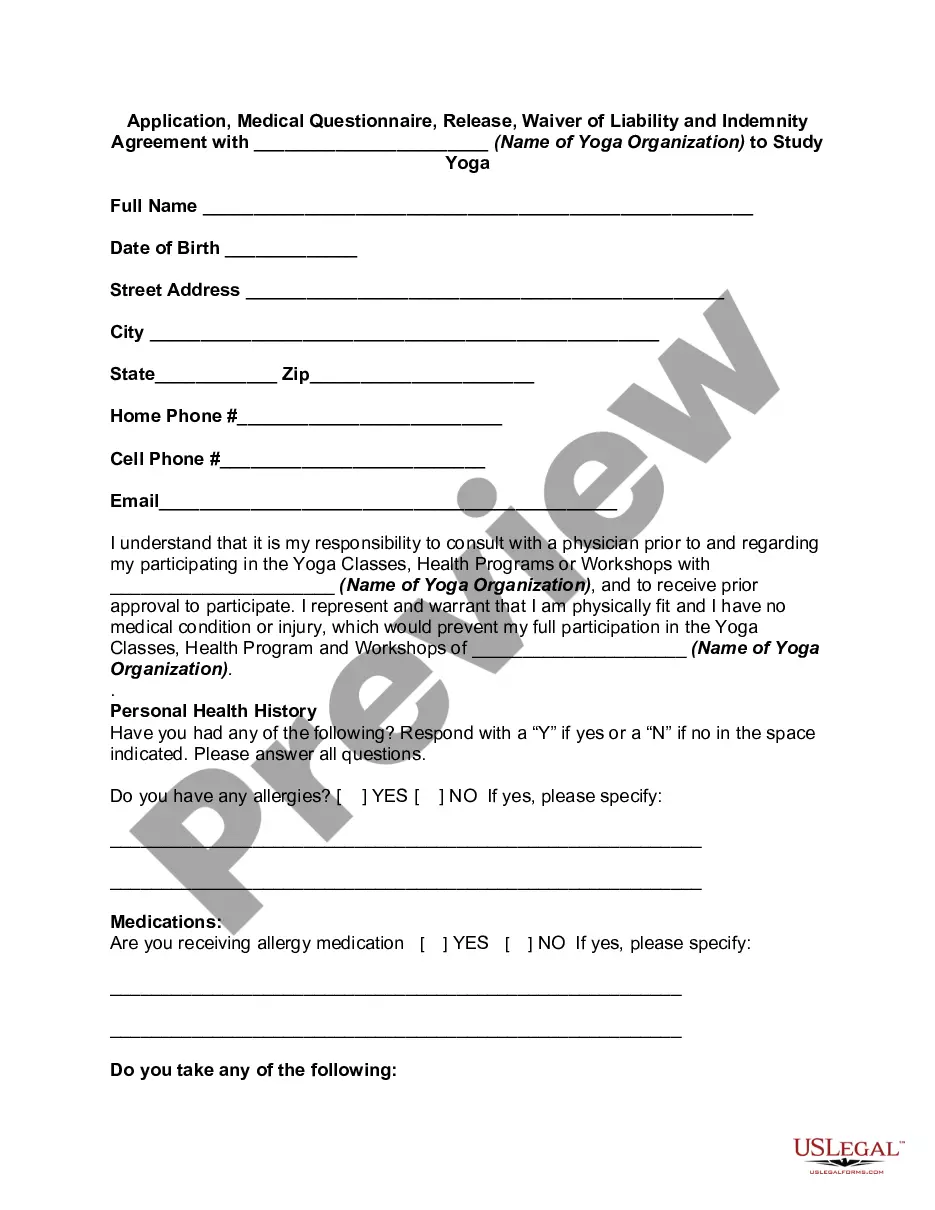
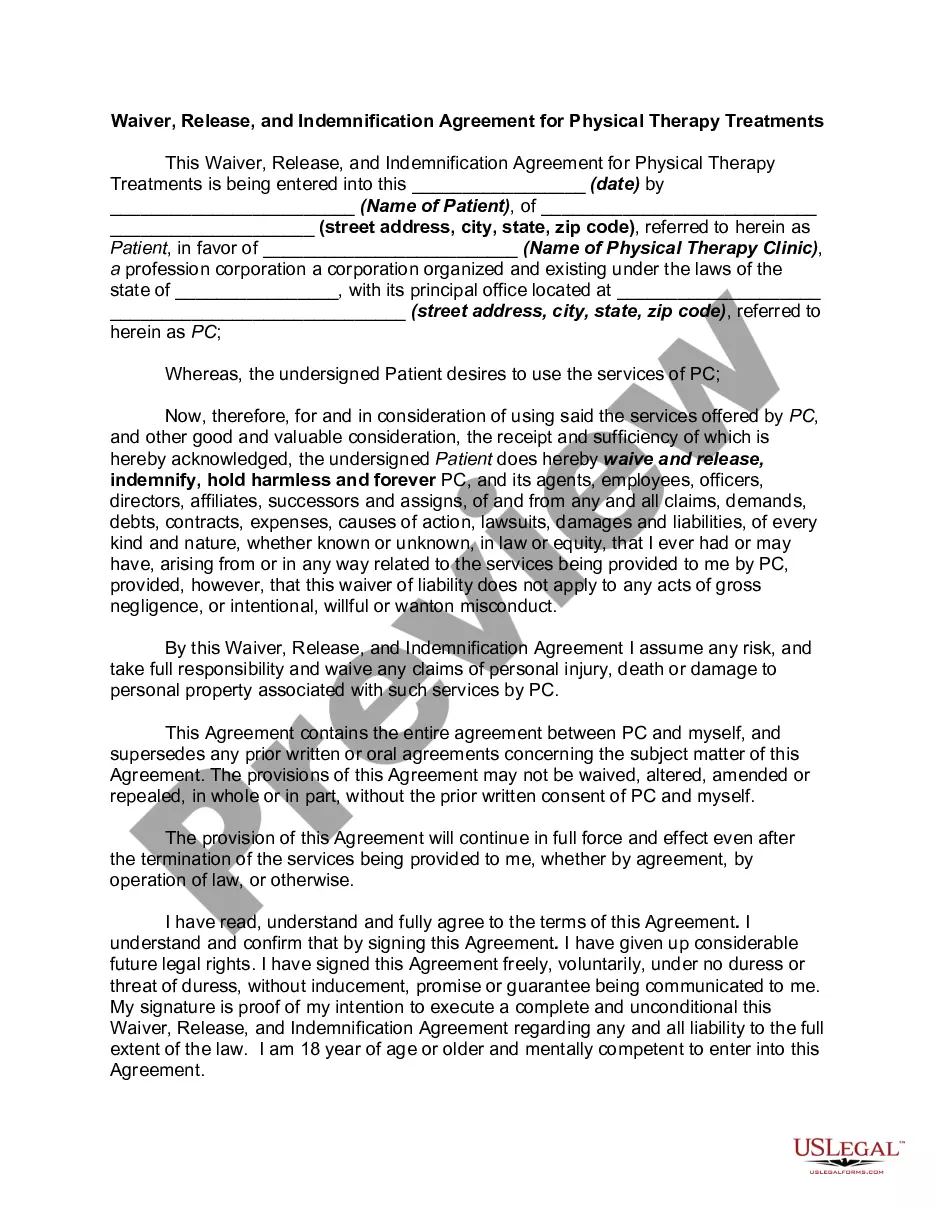
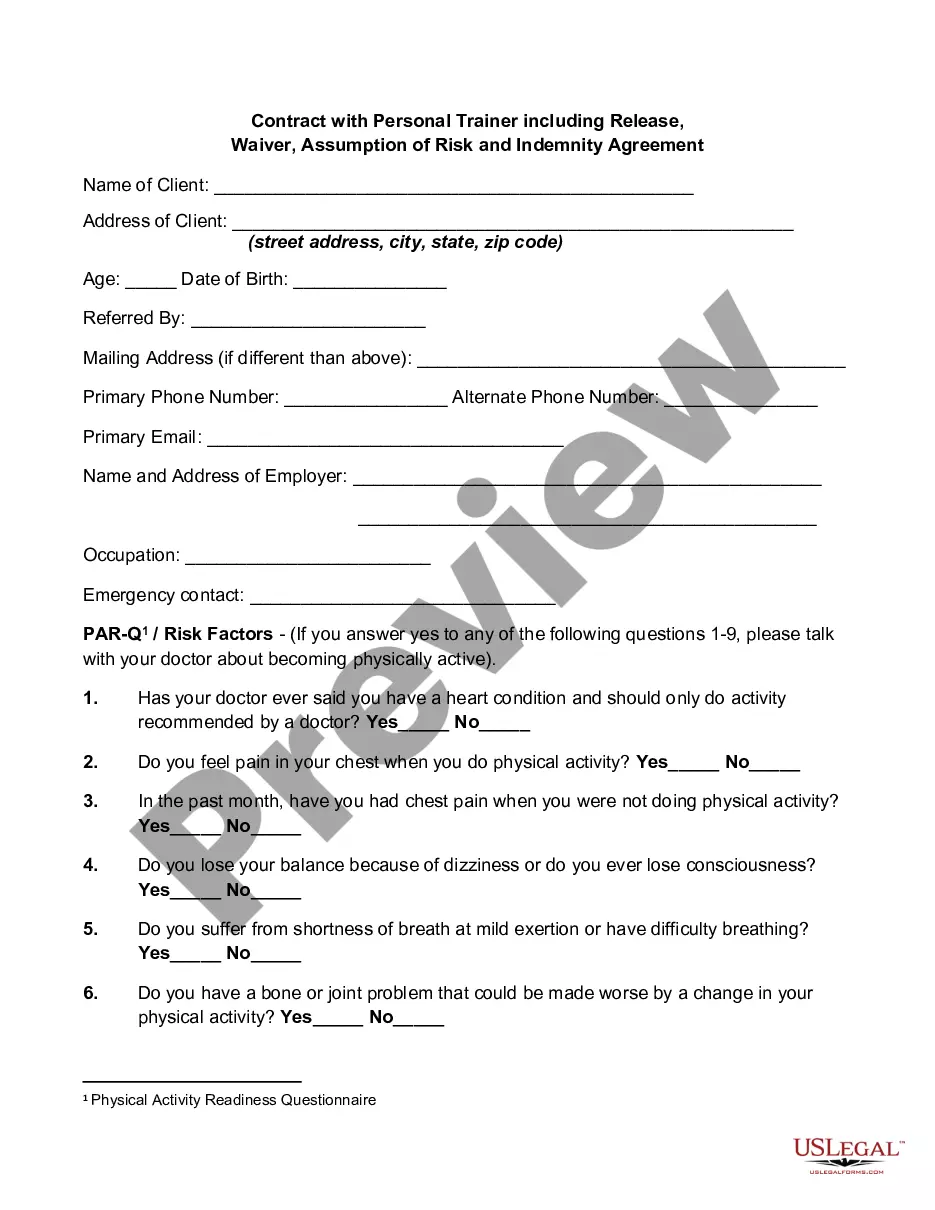
This Application, Medical Questionnaire, Release, Waiver of Liability and Indemnity Agreement with Fitness Instructor to Study Yoga and/or Cardio Kickboxing is a legal document designed to protect fitness instructors and organizations from liability related to injuries sustained during yoga or cardio kickboxing classes. This form requires participants to confirm their health status and agree to assume risks associated with strenuous physical activities. It serves to clarify the responsibilities of both the instructor and the participant, differing from standard waivers by incorporating medical history disclosures and indemnity clauses.
What’s included in this form
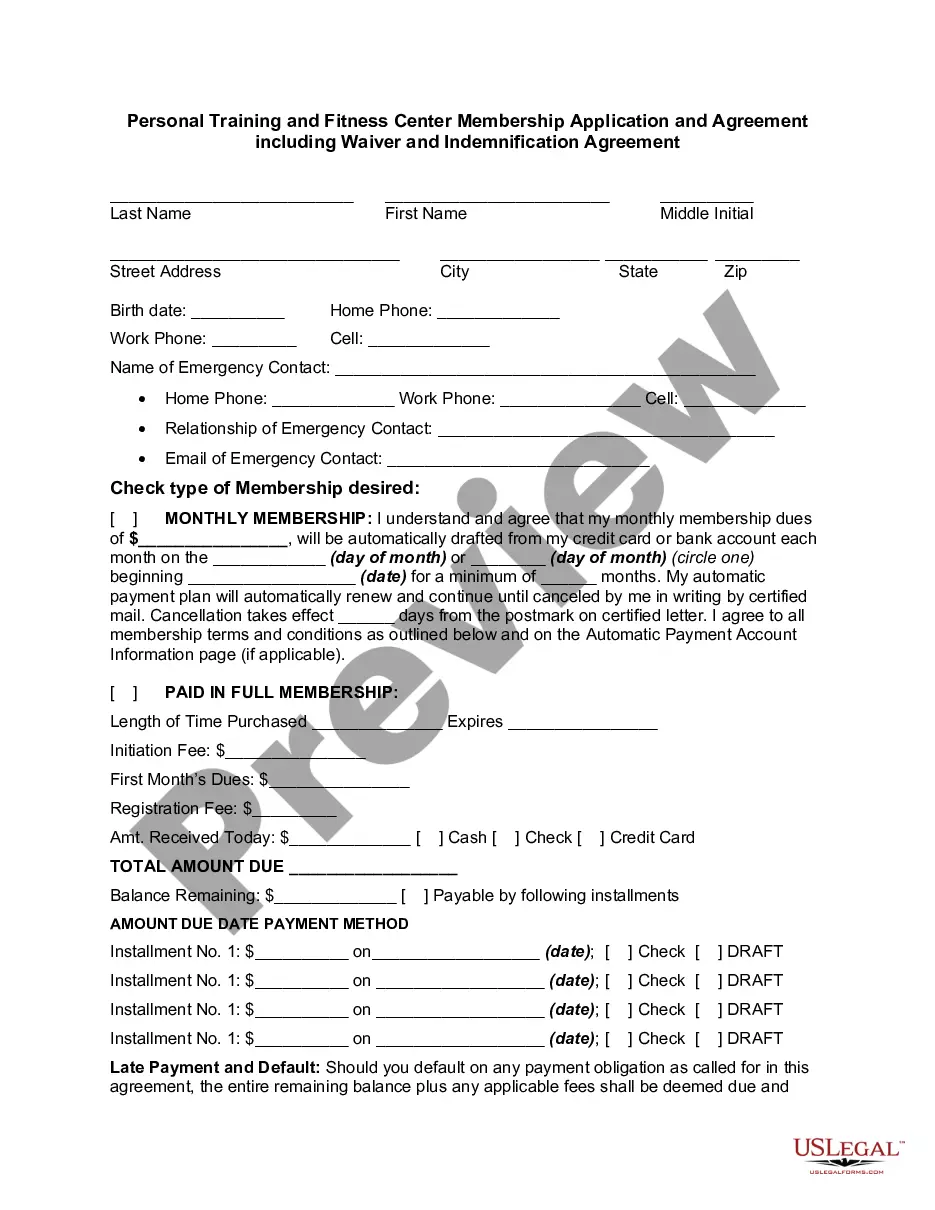
- Identification of the participant and the fitness instructor.
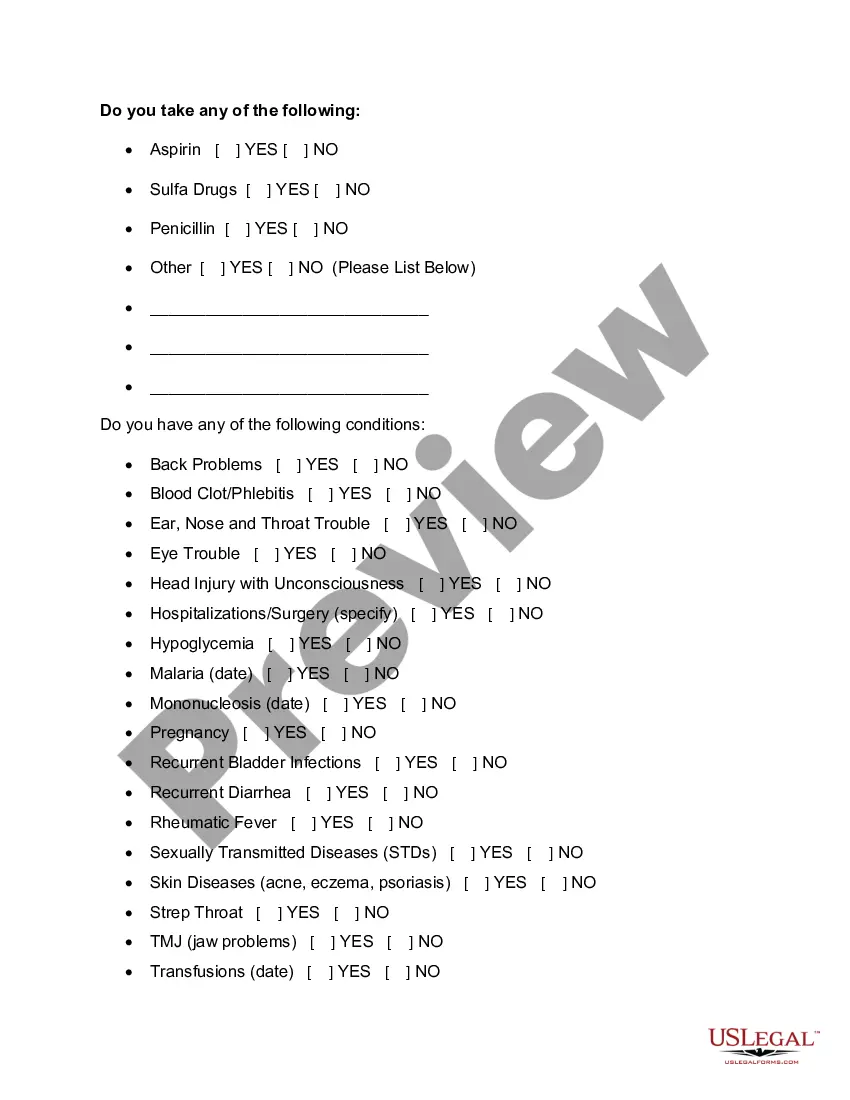
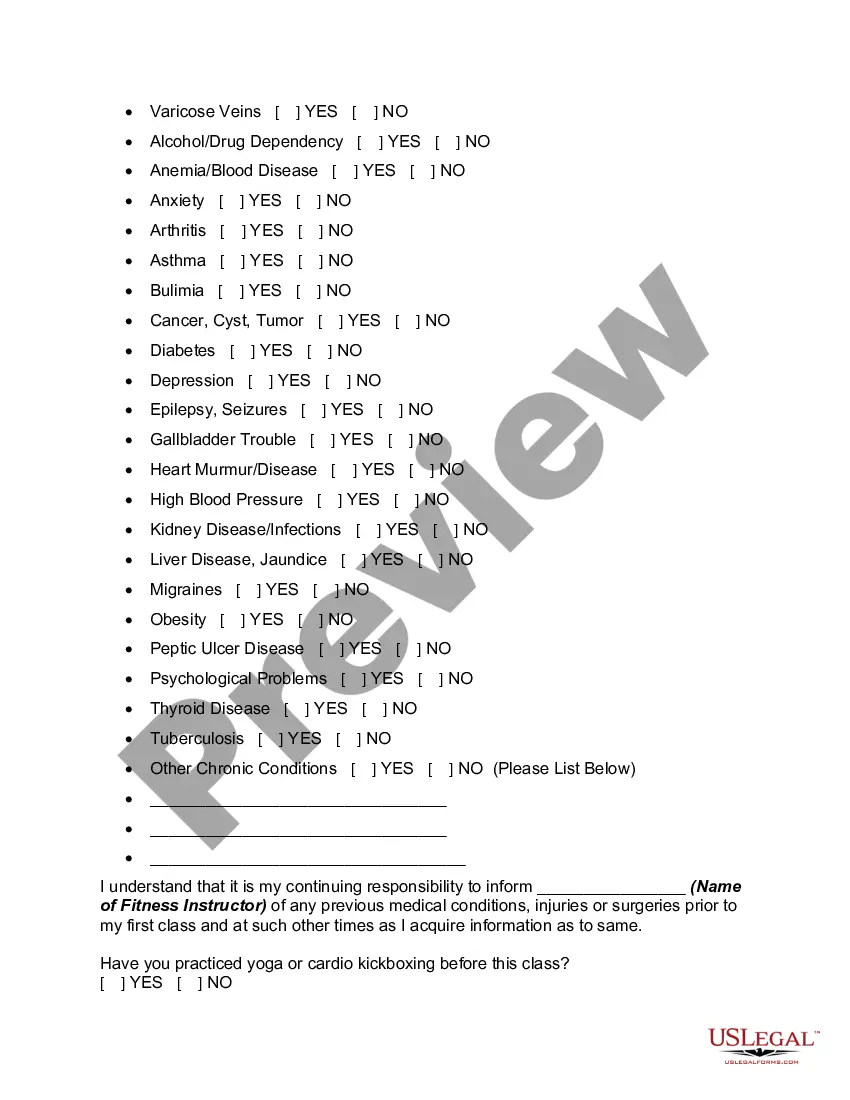
- Medical history questionnaire to assess fitness and potential health risks.
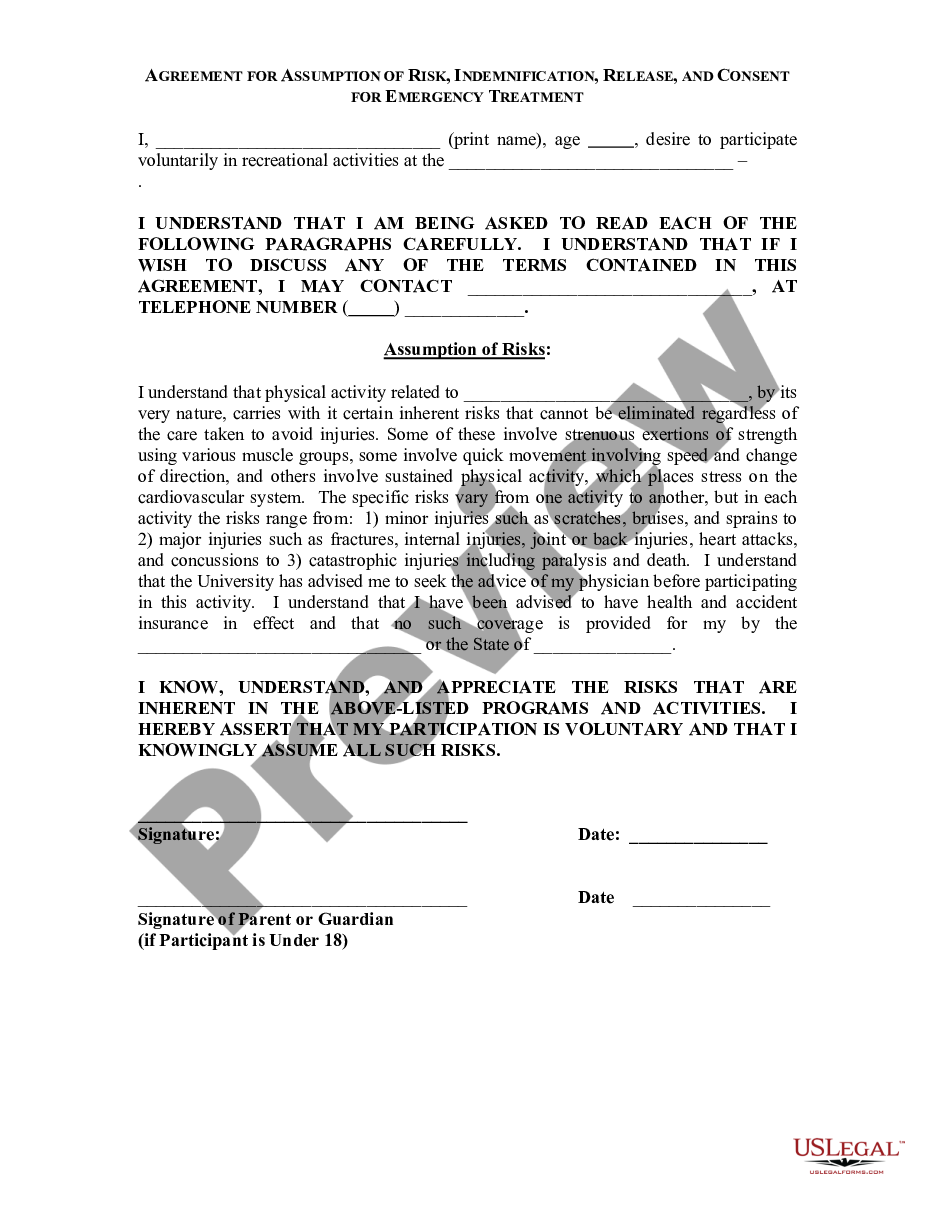
- Assumption of risks and acknowledgment of the instructor's advice to consult a physician.
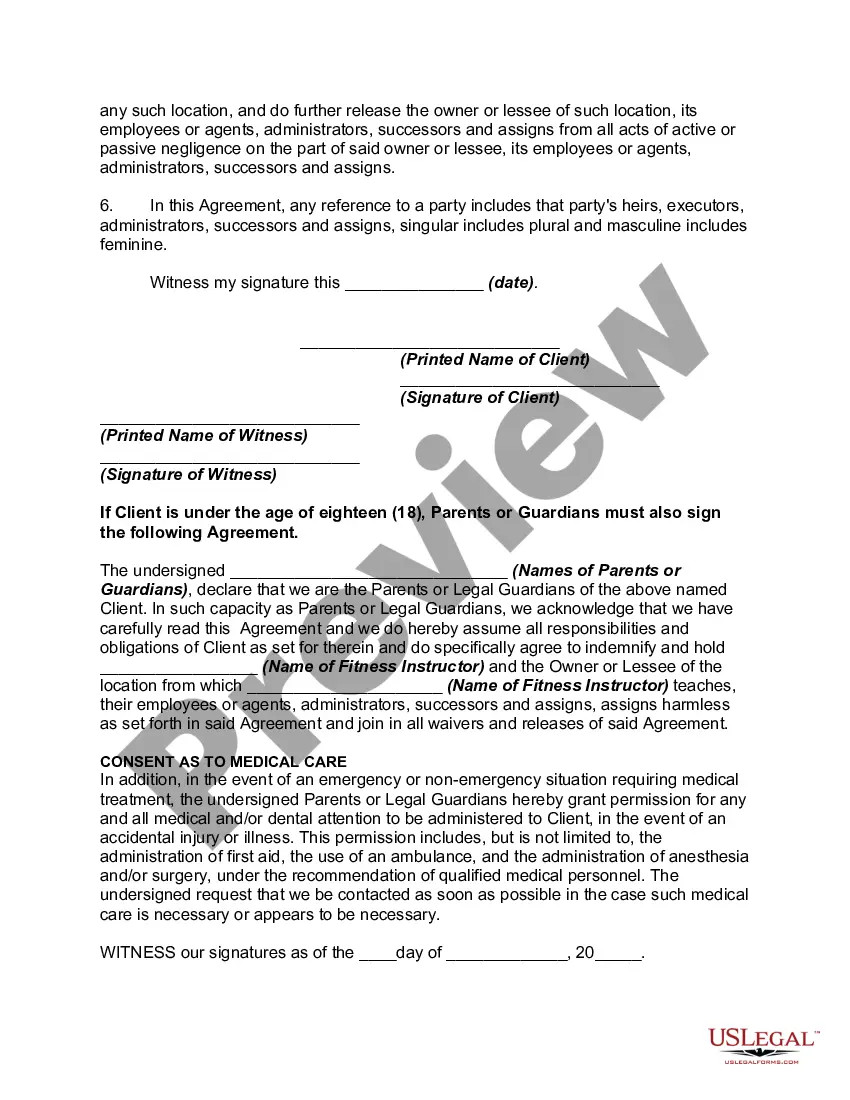
- Release from liability for injuries incurred during classes.
- Indemnity clause to protect the instructor from claims or legal actions arising from participation.
- Consent for medical treatment in case of emergencies.

When to use this form
This form should be used whenever an individual plans to participate in yoga or cardio kickboxing classes with a fitness instructor. It is particularly essential for those who may have existing medical conditions or concerns regarding their health. If you are enrolling in a new fitness program or workshop, having this form completed ensures that both you and the instructor are aware of any health issues and agree to the terms of participation.
Who needs this form
This form is intended for:
- Individuals wishing to enroll in yoga or cardio kickboxing classes.
- Fitness instructors conducting classes who require liability protection.
- Parents or guardians of minors who wish to sign up their children for classes.
How to prepare this document
- Enter your personal information, including name, date of birth, and contact details.
- Complete the medical history questionnaire, answering all questions accurately.
- Confirm your understanding of the risks involved and indicate any prior yoga or cardio kickboxing experience.
- Read and sign the waiver acknowledging the assumptions of risk and liability release.
- If the participant is a minor, ensure a parent or guardian also signs the form.
Notarization requirements for this form
In most cases, this form does not require notarization. However, some jurisdictions or signing circumstances might. US Legal Forms offers online notarization powered by Notarize, accessible 24/7 for a quick, remote process.
Get your form ready online
Our built-in tools help you complete, sign, share, and store your documents in one place.
Make edits, fill in missing information, and update formatting in US Legal Forms—just like you would in MS Word.
Download a copy, print it, send it by email, or mail it via USPS—whatever works best for your next step.
Sign and collect signatures with our SignNow integration. Send to multiple recipients, set reminders, and more. Go Premium to unlock E-Sign.
If this form requires notarization, complete it online through a secure video call—no need to meet a notary in person or wait for an appointment.
We protect your documents and personal data by following strict security and privacy standards.

Make edits, fill in missing information, and update formatting in US Legal Forms—just like you would in MS Word.

Download a copy, print it, send it by email, or mail it via USPS—whatever works best for your next step.

Sign and collect signatures with our SignNow integration. Send to multiple recipients, set reminders, and more. Go Premium to unlock E-Sign.

If this form requires notarization, complete it online through a secure video call—no need to meet a notary in person or wait for an appointment.

We protect your documents and personal data by following strict security and privacy standards.
Mistakes to watch out for
- Forgetting to complete the medical history section.
- Not signing the form or having a witness present when required.
- Assuming liability waivers are universally accepted without checking state regulations.
Advantages of online completion
- Immediate access to a legally vetted form without the need for in-person meetings.
- Editability allows for customization to fit specific class needs.
- Secure storage options for completed forms to ensure they are easily retrievable when needed.
Legal use & context
- This form is legally binding, provided all parties sign it willingly and with understanding.
- It is enforceable in court under general liability principles, but may be subjected to state-specific laws.
- Individuals should understand that signing a waiver can limit their right to pursue legal action for injuries.
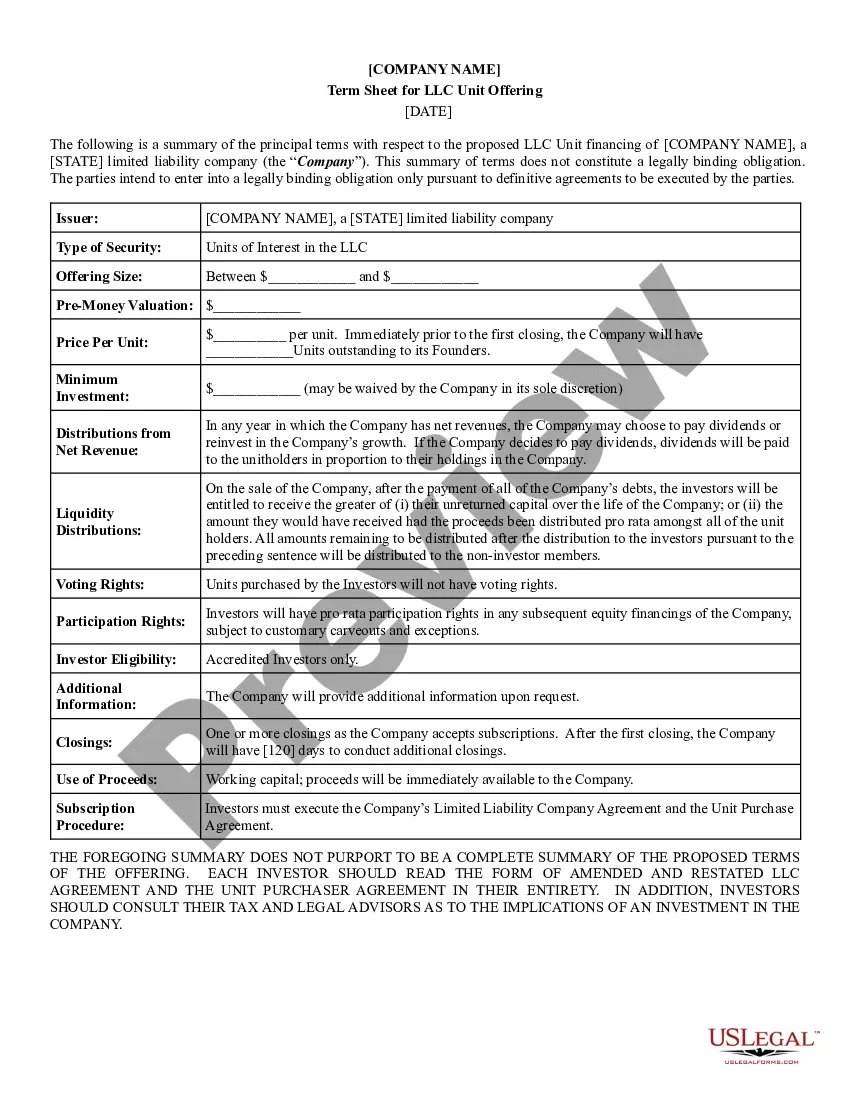
Looking for another form?


Form popularity
FAQ
Indemnity is defined by Black's Law Dictionary as a duty to make good any loss, damage, or liability incurred by another. Indemnity has a general meaning of holding one harmless; that is to say, that one party holds the other harmless for some loss or damage.
An indemnity clause is a contractual transfer of risk between two contractual parties generally to prevent loss or compensate for a loss which may occur as a result of a specified event.
What is an indemnity?An indemnity form also limits the person's contractual and delictual liability. This means that a person indemnifies another person from liability by giving up his/her right to sue that person when s/he suffers damages, loses something or gets injured.
To indemnify someone is to absolve that person from responsibility for damage or loss arising from a transaction. Indemnification is the act of not being held liable for or being protected from harm, loss, or damages, by shifting the liability to another party.
Indemnity means making compensation payments to one party by the other for the loss occurred. Description: Indemnity is based on a mutual contract between two parties (one insured and the other insurer) where one promises the other to compensate for the loss against payment of premiums.
Introduction to Letter of Indemnity In simple words, the primary objective of a letter of indemnity is to make sure that both parties involved in a contract meet all the requirements so as to avoid losses to both the parties involved in a transaction.
For example, the term "indemnify" is used when a business hopes to protect itself against claims from a customer's error, while a hold harmless clause prevents a business from taking any responsibility for a customer's mistake.
When the term indemnity is used in the legal sense, it may also refer to an exemption from liability for damages. Indemnity is a contractual agreement between two parties. In this arrangement, one party agrees to pay for potential losses or damages caused by another party.
What is a Hold Harmless (Indemnity) Agreement? A Hold Harmless (Indemnity) Agreement is used between two parties (such as an employer and employee) to establish protection from liabilities, losses, claims, or damages for one of the parties during their involvement in an activity.
The most important part of an indemnification clause is that it protects the indemnified party from lawsuits filed by third parties. This protection is important because damaged parties are still able to pursue compensation for their losses even if this clause isn't in the contract.