Release from Liability under Guaranty
Overview of this form
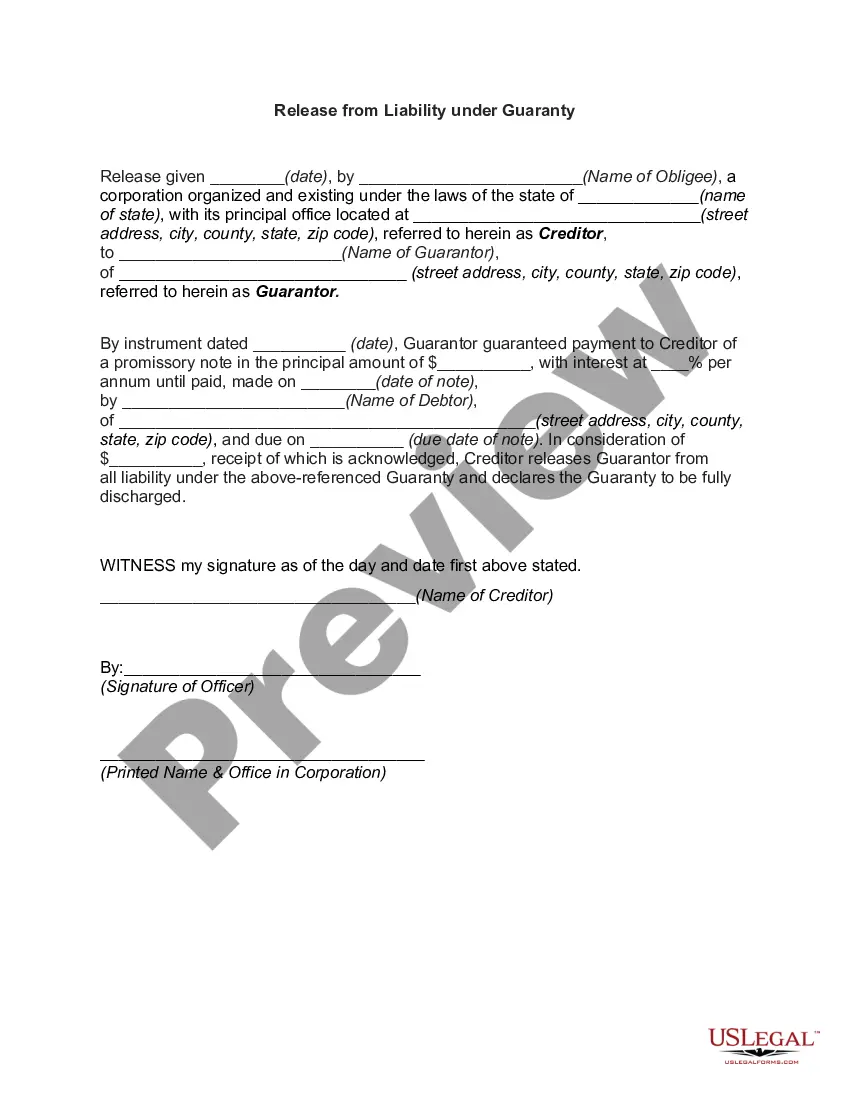
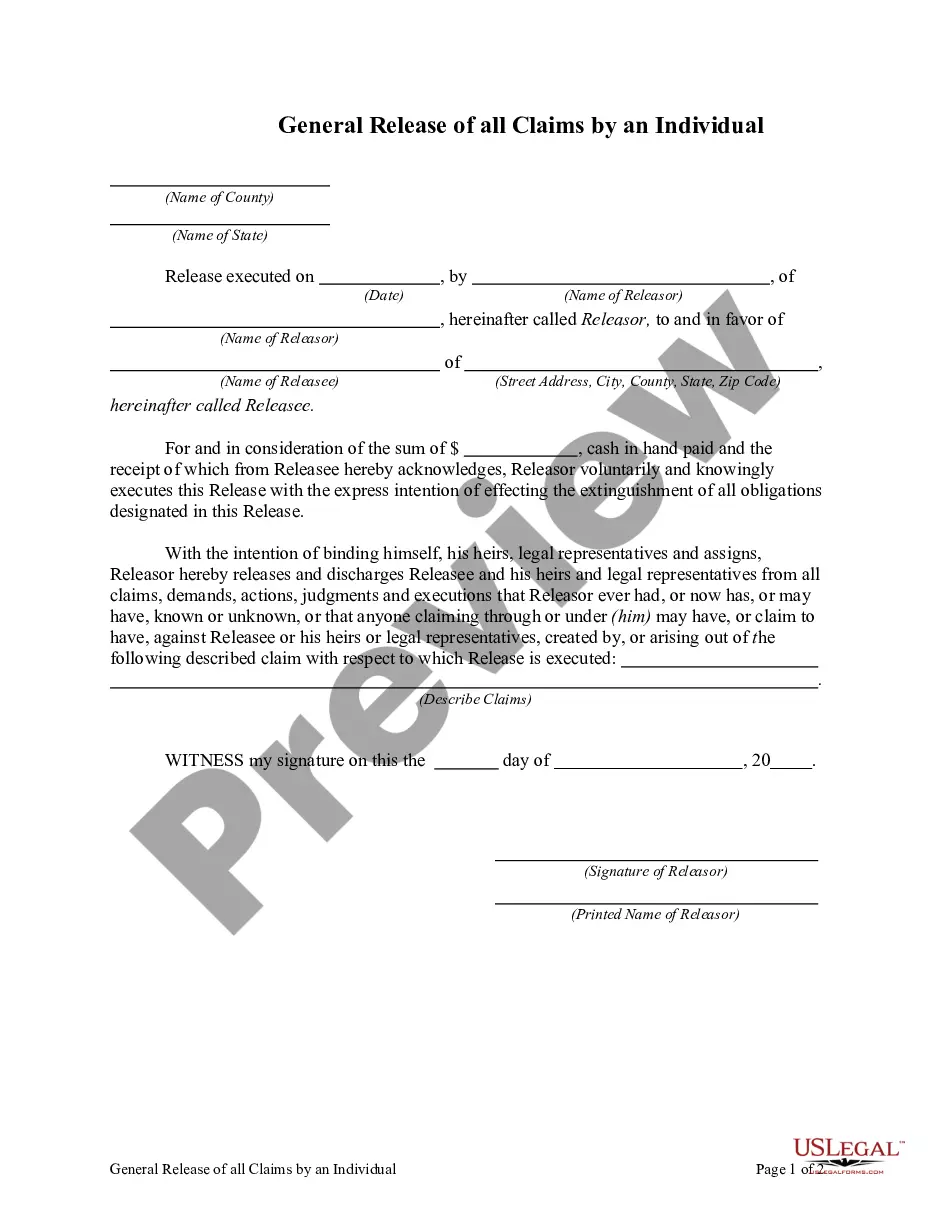
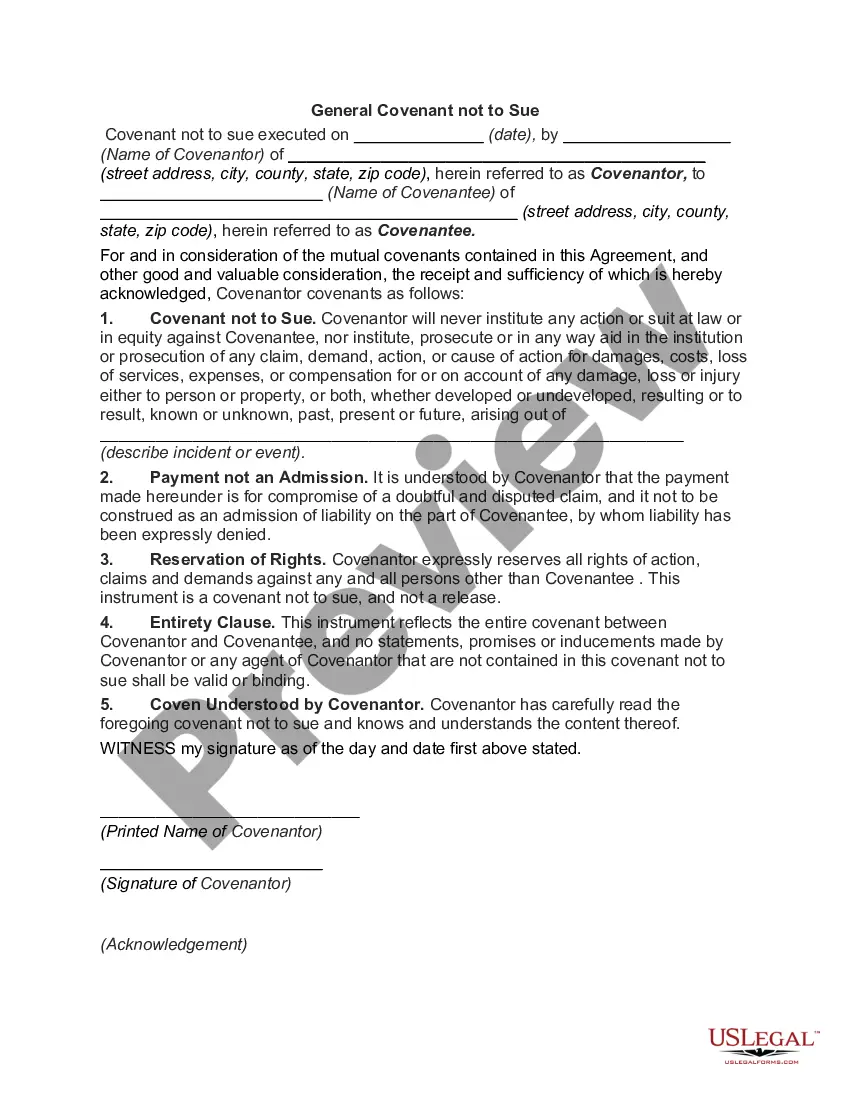
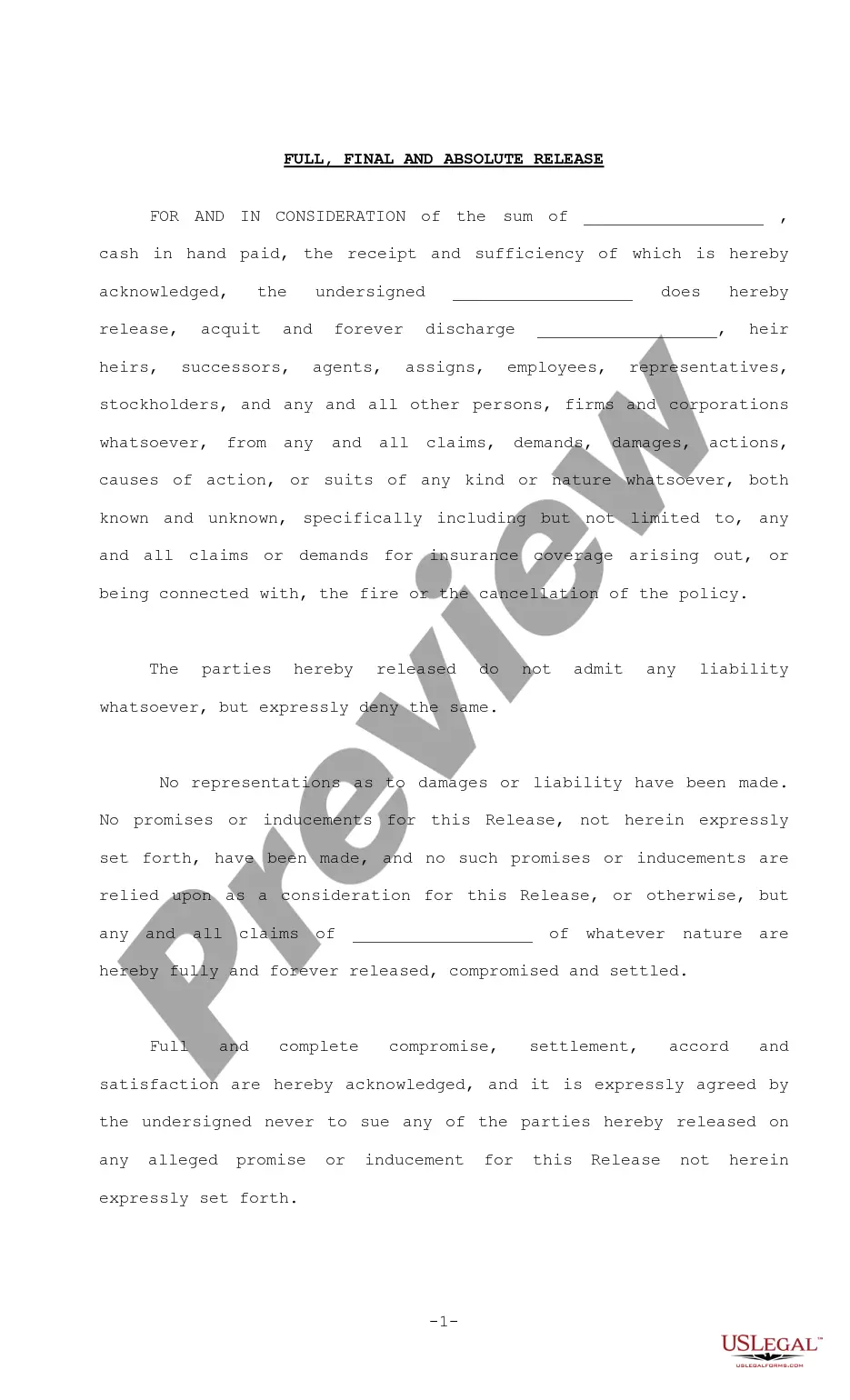
The Release from Liability under Guaranty is a legal document that formally releases a guarantor from their obligation to pay a debt or perform a duty if the debtor fails to do so. This release occurs once the creditor receives an agreed-upon payment or consideration. Unlike other forms of release, this document specifically pertains to guarantors, ensuring they are no longer liable under the specified guaranty agreement.
Key parts of this document
- Date of the release
- Name and address of the creditor
- Name and address of the guarantor
- Description of the debt or obligation guaranteed
- Amount of consideration paid to the creditor
- Signature and printed name of the creditorâs authorized officer
When to use this document
This form should be used when a creditor no longer wishes to hold a guarantor liable for a debt or obligation covered by a guaranty. This situation often arises when the debt is paid off or when the terms of the agreement have been satisfied, thereby allowing the creditor to release the guarantor from any further responsibility.
Who needs this form
- Creditors who want to release a guarantor from their liability
- Guarantors seeking a formal release from their obligations
- Businesses that have engaged third parties in a guaranty agreement
Completing this form step by step
- Identify and enter the date the release is given.
- Provide the name and address of the creditor.
- Fill in the name and address of the guarantor.
- Describe the original debt or obligation along with relevant dates.
- Specify the amount of consideration the creditor will receive.
- Obtain the signature and print the name and title of the creditorâs authorized officer.
Notarization guidance
This form does not typically require notarization unless specified by local law. However, notarization may provide additional legal assurance of the authenticity of signatures.
Get your form ready online
Our built-in tools help you complete, sign, share, and store your documents in one place.
Make edits, fill in missing information, and update formatting in US Legal Forms—just like you would in MS Word.
Download a copy, print it, send it by email, or mail it via USPS—whatever works best for your next step.
Sign and collect signatures with our SignNow integration. Send to multiple recipients, set reminders, and more. Go Premium to unlock E-Sign.
If this form requires notarization, complete it online through a secure video call—no need to meet a notary in person or wait for an appointment.
We protect your documents and personal data by following strict security and privacy standards.

Make edits, fill in missing information, and update formatting in US Legal Forms—just like you would in MS Word.

Download a copy, print it, send it by email, or mail it via USPS—whatever works best for your next step.

Sign and collect signatures with our SignNow integration. Send to multiple recipients, set reminders, and more. Go Premium to unlock E-Sign.

If this form requires notarization, complete it online through a secure video call—no need to meet a notary in person or wait for an appointment.

We protect your documents and personal data by following strict security and privacy standards.
Common mistakes
- Failing to include all parties' correct names and addresses.
- Not providing the specific consideration amount exchanged for the release.
- Omitting the signature of the creditorâs authorized officer.
Why complete this form online
- Convenient access to the form from anywhere.
- Editable templates to tailor the document to specific needs.
- Reliability with forms prepared by licensed attorneys.
Looking for another form?

Form popularity
FAQ
As nouns the difference between guarantee and guarantor is that guarantee is anything that assures a certain outcome while guarantor is a person, or company, that gives a guarantee.
Contract your mortgage broker to review your financial situation. Arrange a bank valuation. Confirm the total loan amount. Make sure you meet the lender's criteria. Submit a partial release, or internal refinance. 6. (
Guaranteed Liability means any agreement, undertaking or arrangement by which any Person guarantees, endorses or otherwise becomes or is contingently liable upon (by direct or indirect agreement, contingent or otherwise, to provide funds for payment, to supply funds to, or otherwise to invest in, a debtor, or otherwise
In case of non-payment, a guarantor is liable to legal action. If the lender files a recovery case, it will file the case against both the borrower and the guarantor. A court can force a guarantor to liquidate assets to pay off the loan," added Mishra.
An otherwise valid and enforceable personal guarantee can be revoked later in several different ways. A guaranty, much like any other contract, can be revoked later if both the guarantor and the lender agree in writing. Some debts owed by personal guarantors can also be discharged in bankruptcy.
Guarantee can refer to the agreement itself as a noun, and the act of making the agreement as a verb. Guaranty is a specific type of guarantee that is only used as a noun.
Noun. a promise or assurance, especially one in writing, that something is of specified quality, content, benefit, etc., or that it will perform satisfactorily for a given length of time: a money-back guarantee.a person who gives a guarantee or guaranty; guarantor. a person to whom a guarantee is made.
A guarantee obligation is an example of a contingent obligation. Under the terms of the guarantee, the guarantor assumes liability for all guaranteed obligations, but its liability to make payments is conditional.
Put another way, a guaranty of collection requires that the debtor must exhaust certain remedies against the debtor before proceeding against the guarantor, while a guaranty of payment means that the lender can proceed directly against the guarantor even if the debtor is solvent and otherwise able to pay.