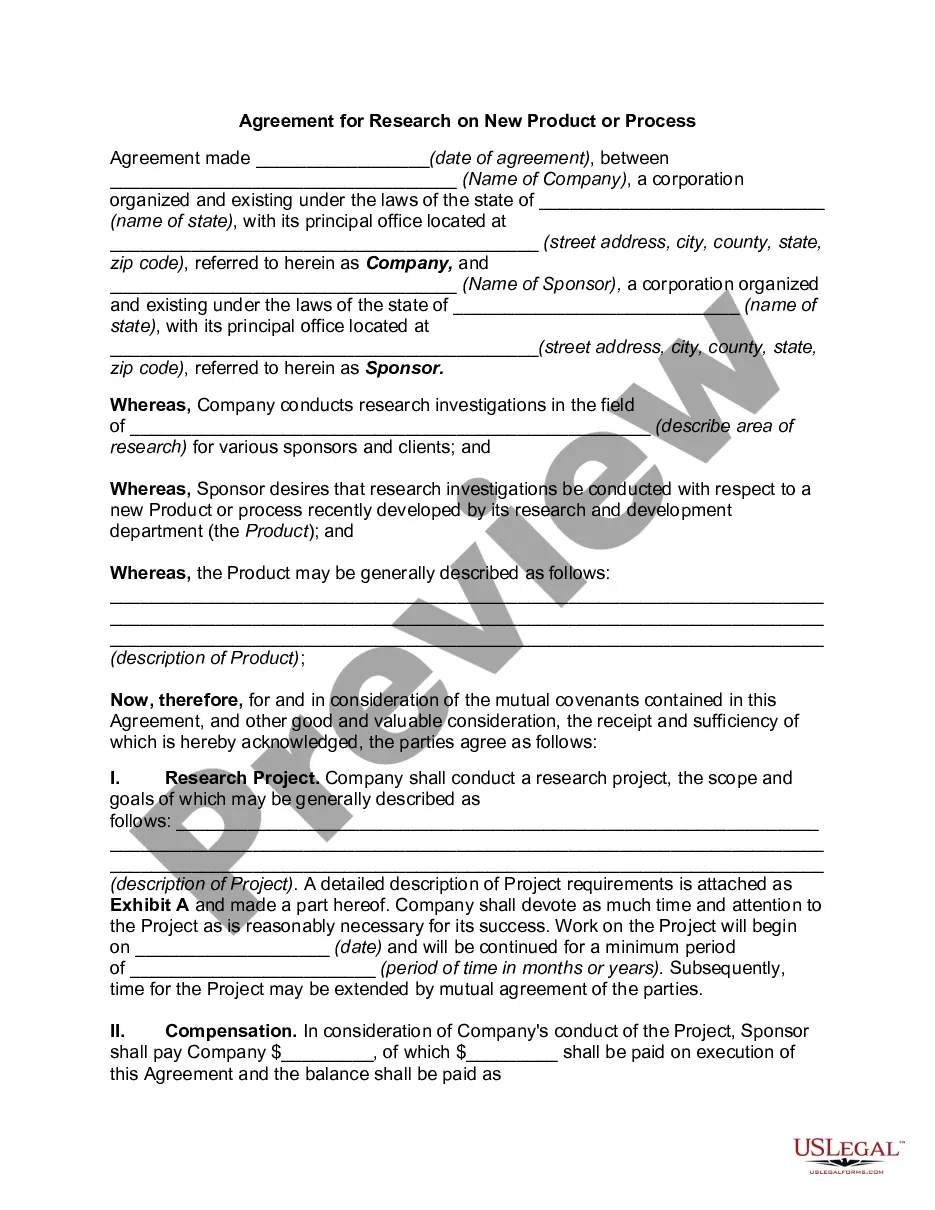
Agreement for Research on New Product or Process
Understanding this form
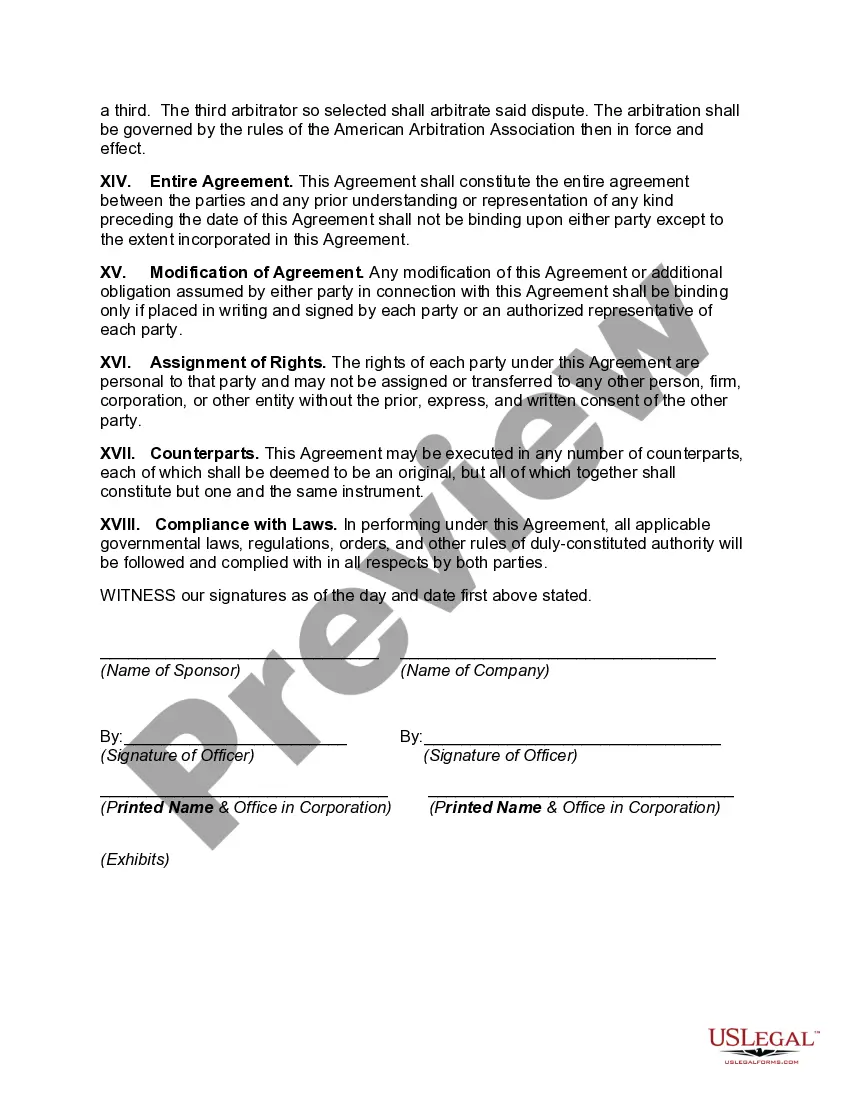
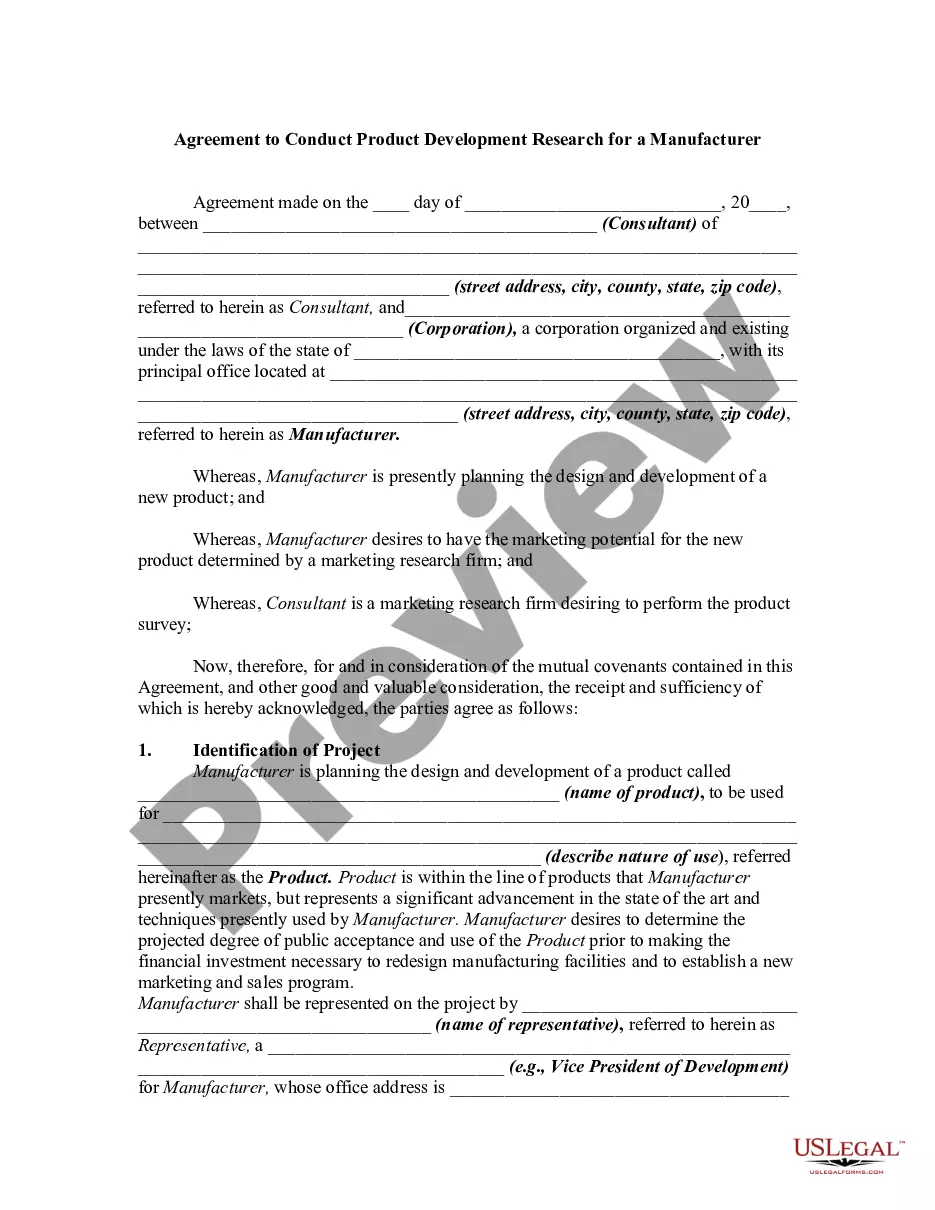
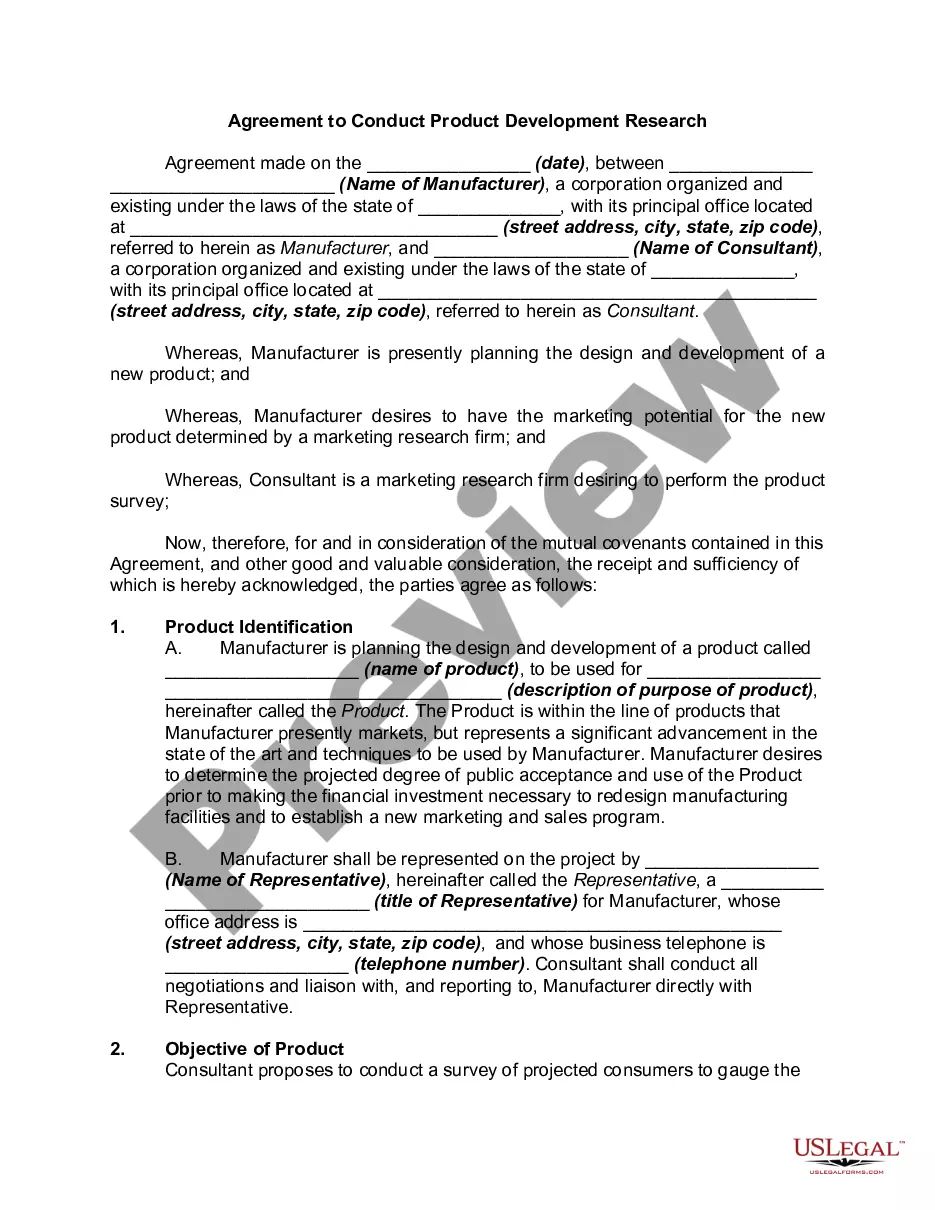
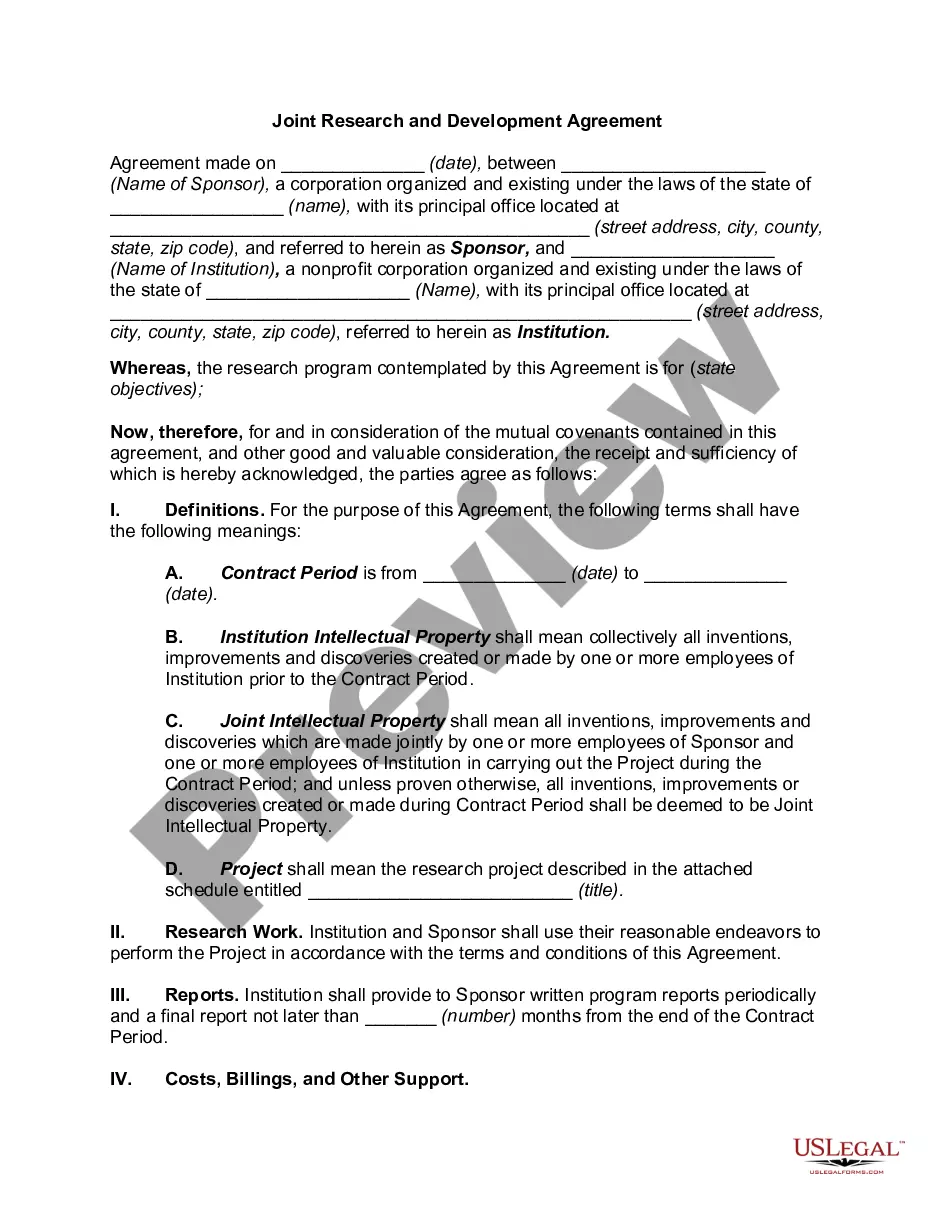
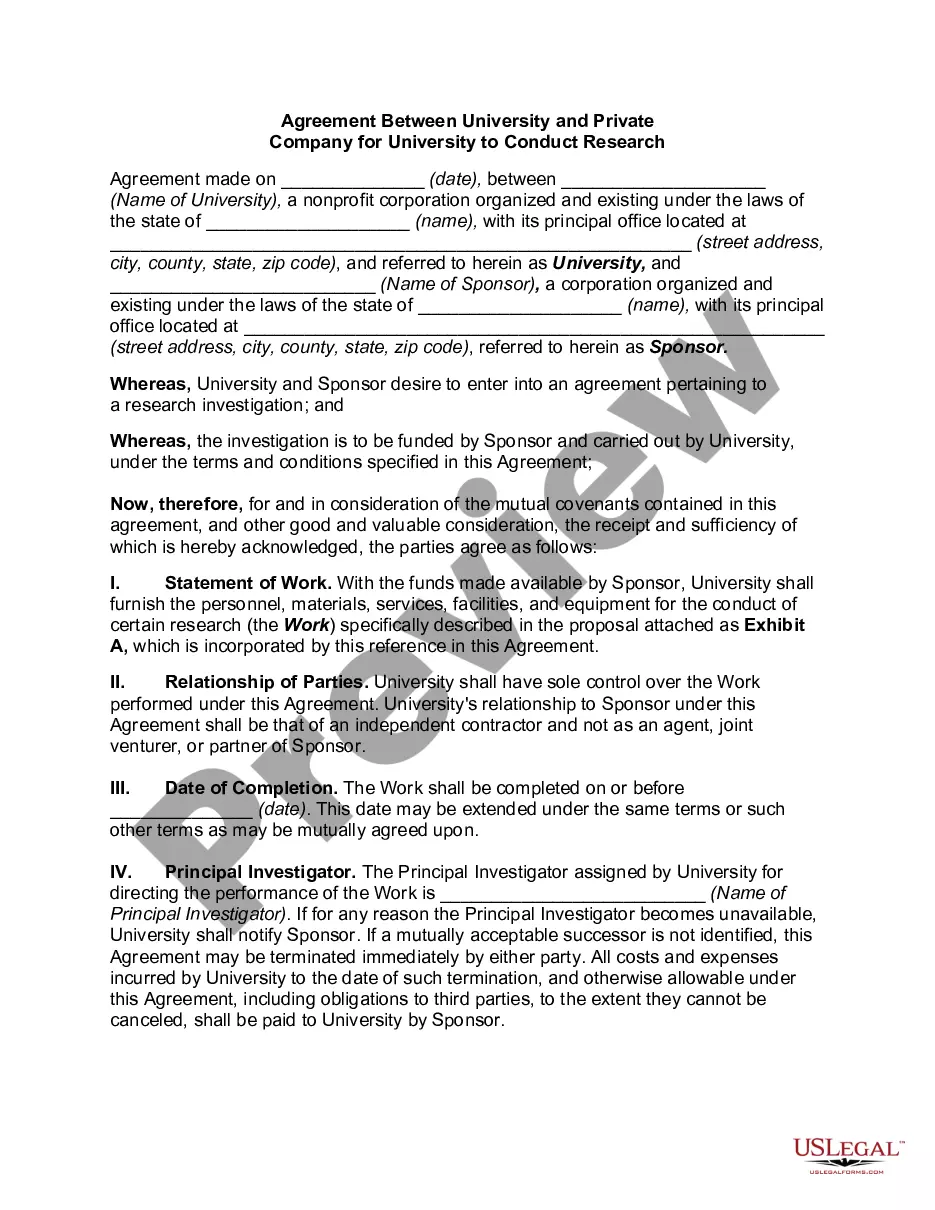
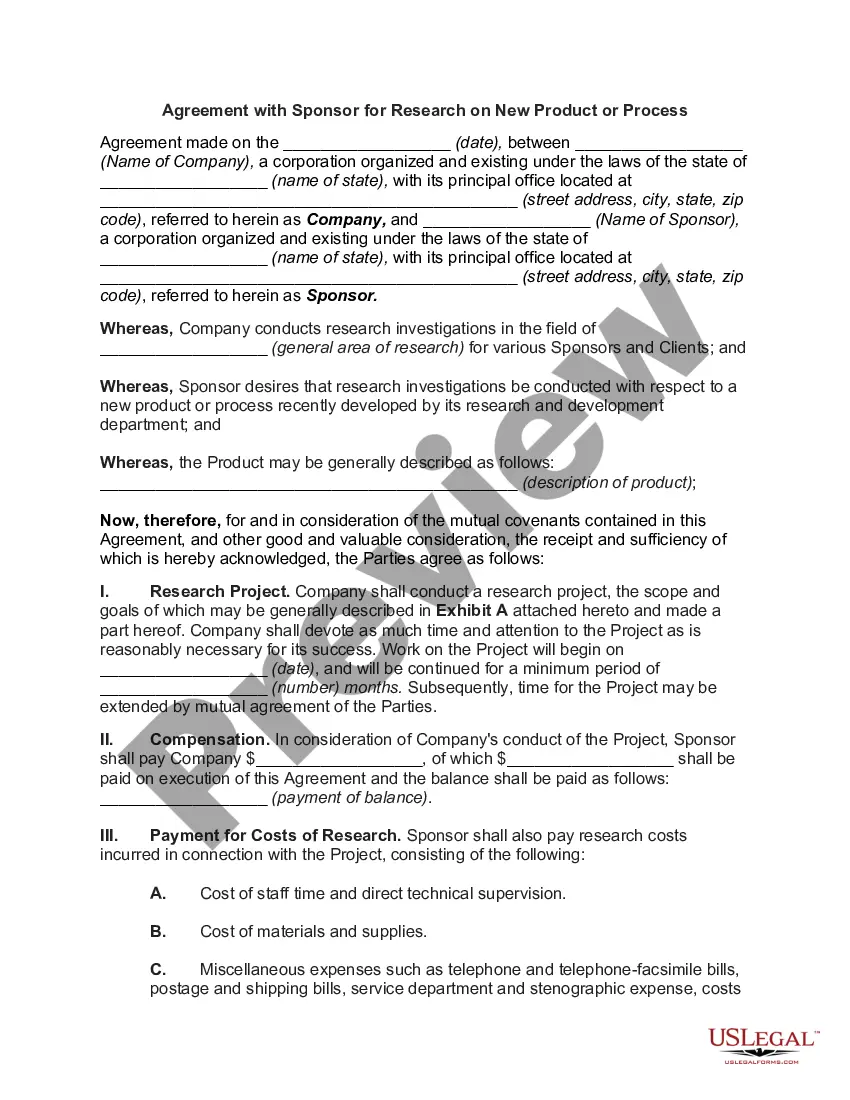
The Agreement for Research on New Product or Process is a legal document that establishes a framework for a research and development project between a manufacturer (Company) and a sponsor (Sponsor). This agreement allows the Company to conduct research on a product or process developed by the Sponsor, outlining the responsibilities, compensation, and intellectual property rights involved. This form is key for organizations engaged in product development and is distinct from general consulting agreements as it specifically addresses research and development activities.
What’s included in this form
- Identification of parties involved and the date of the agreement.
- Description of the research project and its scope.
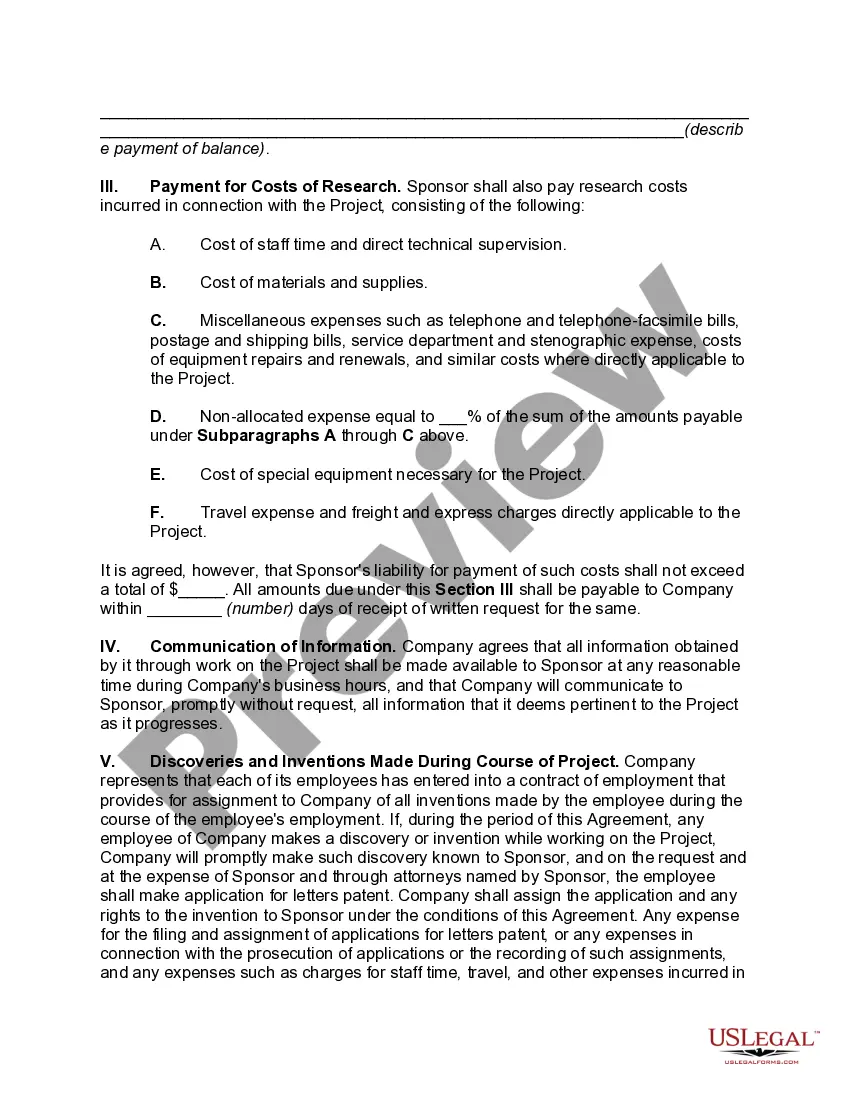
- Details regarding compensation, including payment terms and research costs.
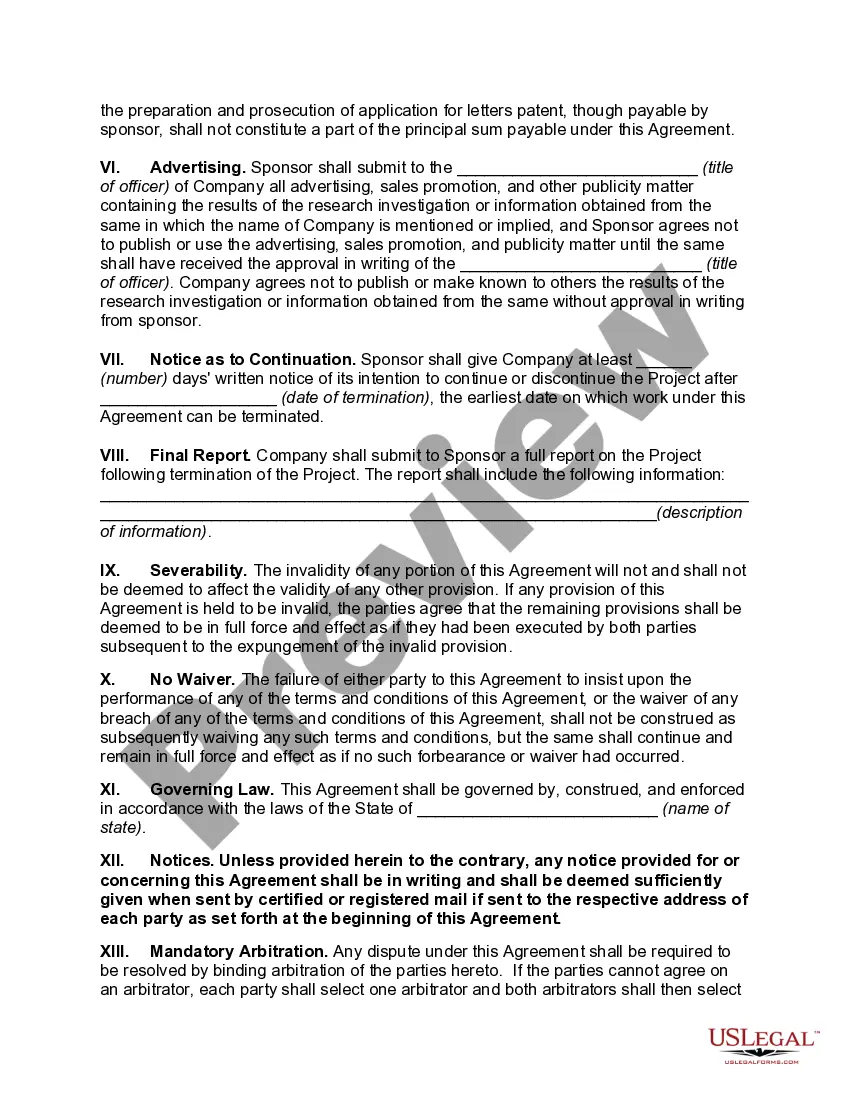
- Clauses addressing communication of findings and reporting requirements.
- Provisions for ownership of discoveries and patent applications.
- Governing law and arbitration procedures in case of disputes.
When to use this form
This form should be used when a company engages a consultant or research organization to conduct research and development on a new product or process. It is essential in scenarios where the Sponsor seeks to explore new technology or enhance existing products, guaranteeing that both parties understand their obligations, compensation, and rights regarding intellectual property.
Who can use this document
- Manufacturers or companies looking to develop new products or processes.
- Consultants or research organizations conducting research and development projects.
- Sponsors who require external expertise to further their research initiatives.
- Legal professionals and business managers involved in product development agreements.
How to prepare this document
- Identify and enter the date when the agreement is made.
- Fill in the names and addresses of both the Company and the Sponsor.
- Clearly describe the research project and its scope in the designated fields.
- Specify the agreed compensation and outline any additional research costs.
- Ensure proper signatures from authorized officers of both parties.
Notarization guidance
This form does not typically require notarization unless specified by local law. It is advisable to check jurisdiction-specific requirements to confirm compliance.
Get your form ready online
Our built-in tools help you complete, sign, share, and store your documents in one place.
Make edits, fill in missing information, and update formatting in US Legal Forms—just like you would in MS Word.
Download a copy, print it, send it by email, or mail it via USPS—whatever works best for your next step.
Sign and collect signatures with our SignNow integration. Send to multiple recipients, set reminders, and more. Go Premium to unlock E-Sign.
If this form requires notarization, complete it online through a secure video call—no need to meet a notary in person or wait for an appointment.
We protect your documents and personal data by following strict security and privacy standards.

Make edits, fill in missing information, and update formatting in US Legal Forms—just like you would in MS Word.

Download a copy, print it, send it by email, or mail it via USPS—whatever works best for your next step.

Sign and collect signatures with our SignNow integration. Send to multiple recipients, set reminders, and more. Go Premium to unlock E-Sign.

If this form requires notarization, complete it online through a secure video call—no need to meet a notary in person or wait for an appointment.

We protect your documents and personal data by following strict security and privacy standards.
Common mistakes
- Failing to clearly define the research project scope, which can lead to misunderstandings.
- Neglecting to specify payment terms, leading to disputes later.
- Not including signatures from authorized representatives, which can invalidate the agreement.
- Omitting details about communication and reporting requirements.
- Forgetting to review and comply with state-specific regulations if applicable.
Benefits of using this form online
- Convenient access to a legally drafted template without the need for a lawyer.
- Editability allows customization according to specific project needs.
- Quick download and easy distribution to all parties involved.
- Reliability of using a form designed by licensed attorneys to ensure legal compliance.
Legal use & context
- The agreement provides a legally binding framework for the R&D partnership.
- It ensures intellectual property rights are clearly defined between the parties.
- Mutual obligations help prevent disputes related to the scope of work and compensation.
- Enforceable under the governing law specified within the agreement.
What to keep in mind
- The Agreement for Research on New Product or Process is vital for structured R&D engagements.
- Defining roles, compensation, and rights upfront can mitigate future conflicts.
- This form is adaptable across various states, encouraging widespread use.
- Completing this form carefully ensures legal protection for both parties involved.
Looking for another form?
Form popularity
FAQ
Feasibility study and design planning. Design and development. Testing & verification. Validation & collateral production. Manufacture/launch. Improvement.
Research Hashtags On Social Media To Uncover Trending Products. Study Amazon Categories For Product Research That People Sell. Walk Around Brick And Mortar Stores For Product Ideas. Use The Pins and Comments on Pinterest To Source Ideas.
Step 1: Generating. Step 2: Screening The Idea. Step 3: Testing The Concept. Step 4: Business Analytics. Step 5: Beta / Marketability Tests. Step 6: Technicalities + Product Development. Step 7: Commercialize. Step 8: Post Launch Review and Perfect Pricing.
Know your market and your competitors. Target your customer. Devise your Unique Value Proposition. Determine your marketing strategy. Test your product and overall approach. Roll out your marketing campaign. Monitor your product lifecycle.
Set a clear goal. Know what target market to survey. Know what you want to investigate. Get help from the people who know surveys. Consider the best way to get your answers. Administer the survey effectively. Conduct a thorough survey analysis. Uncover the wider implications.
Determine the purpose of your study. There are many reasons why businesses might conduct market research. Look at your industry's outlook. Pinpoint target customers. Compare your competition. Gather additional data. Analyze your findings. Put your analysis into action.
Idea Generation. The first step in the new-product development process is to come up with some ideas that will satisfy unmet needs.Idea Screening.Business Analysis.Prototype Development.Test Marketing.Commercialization.
New product development is the process of bringing an original product idea to market. Although it differs by industry, it can essentially be broken down into six stages: ideation, research, planning, prototyping, sourcing, and costing.