Escrow Agreement for Residential Sale
What this document covers
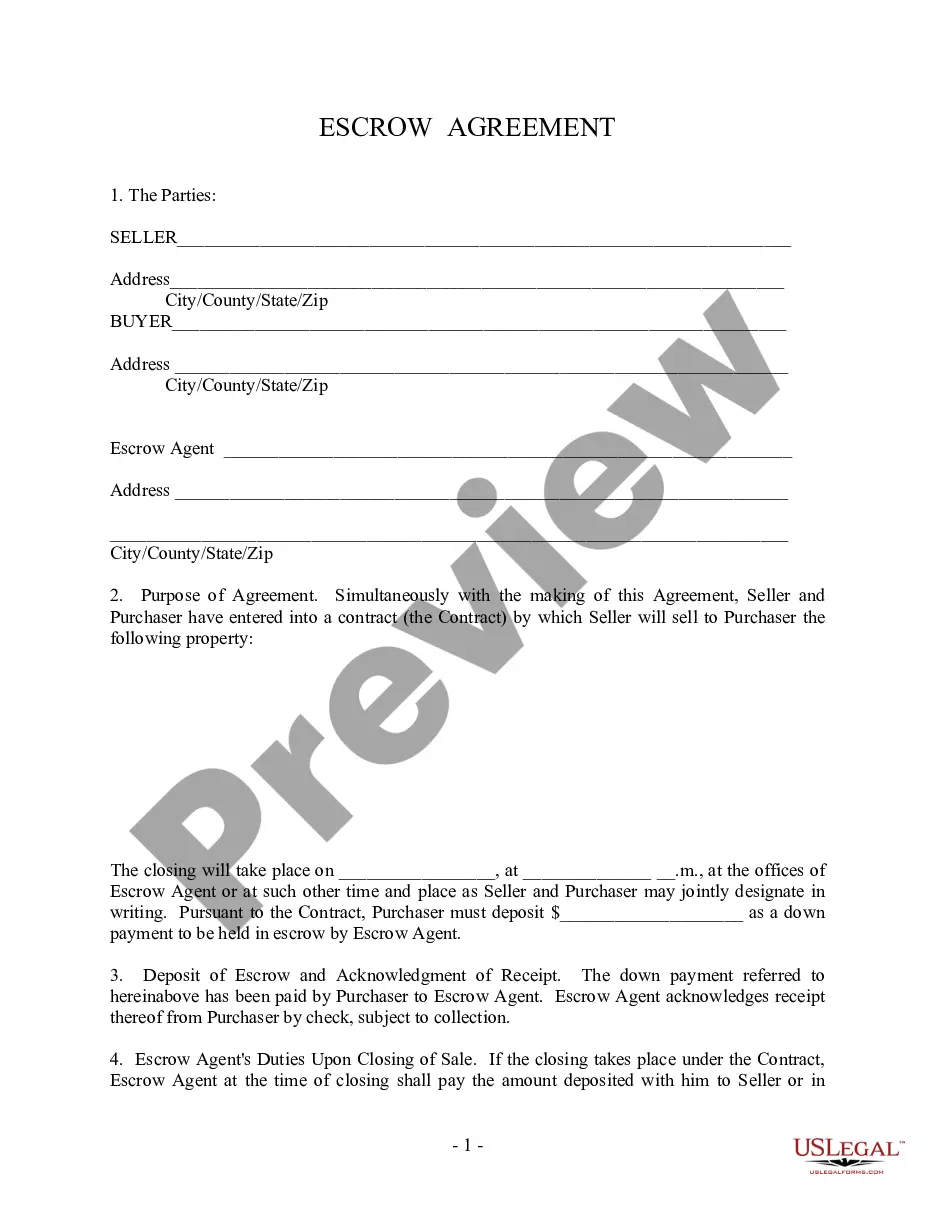
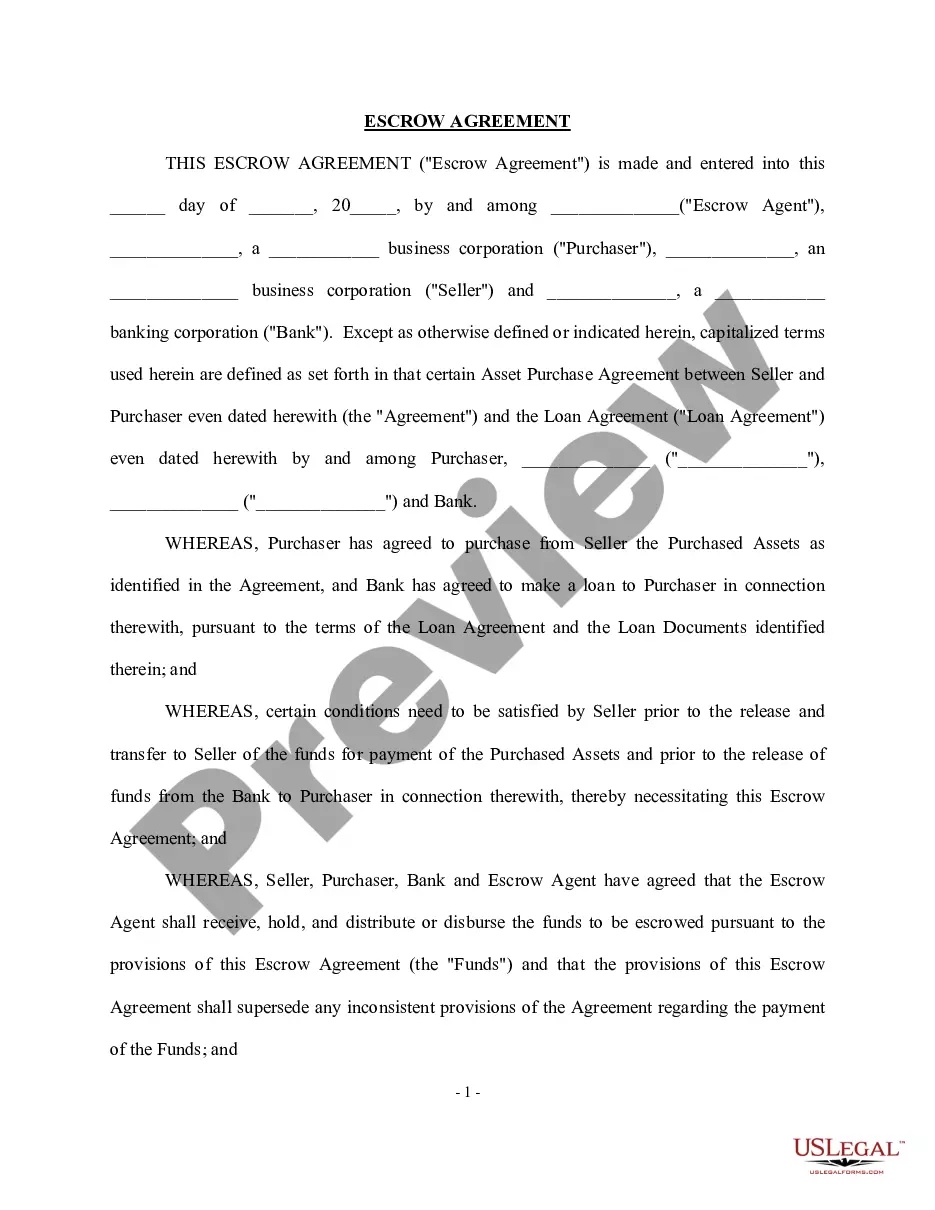
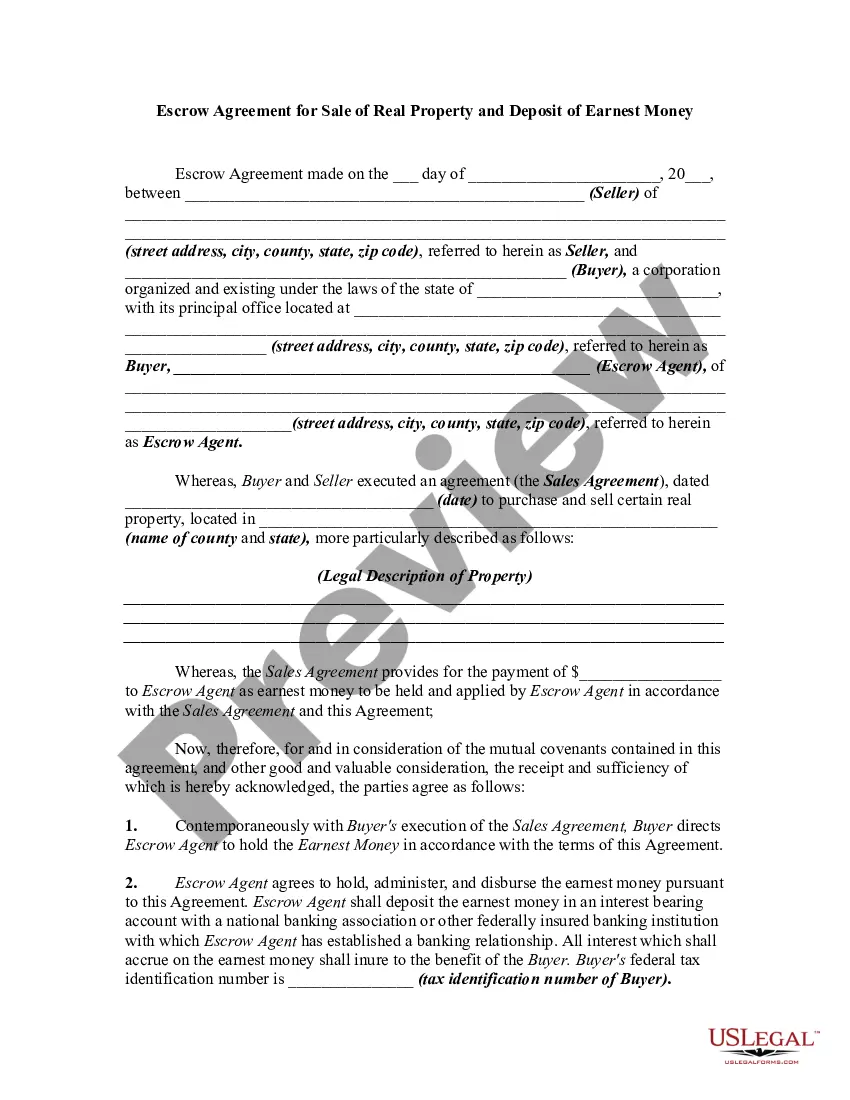
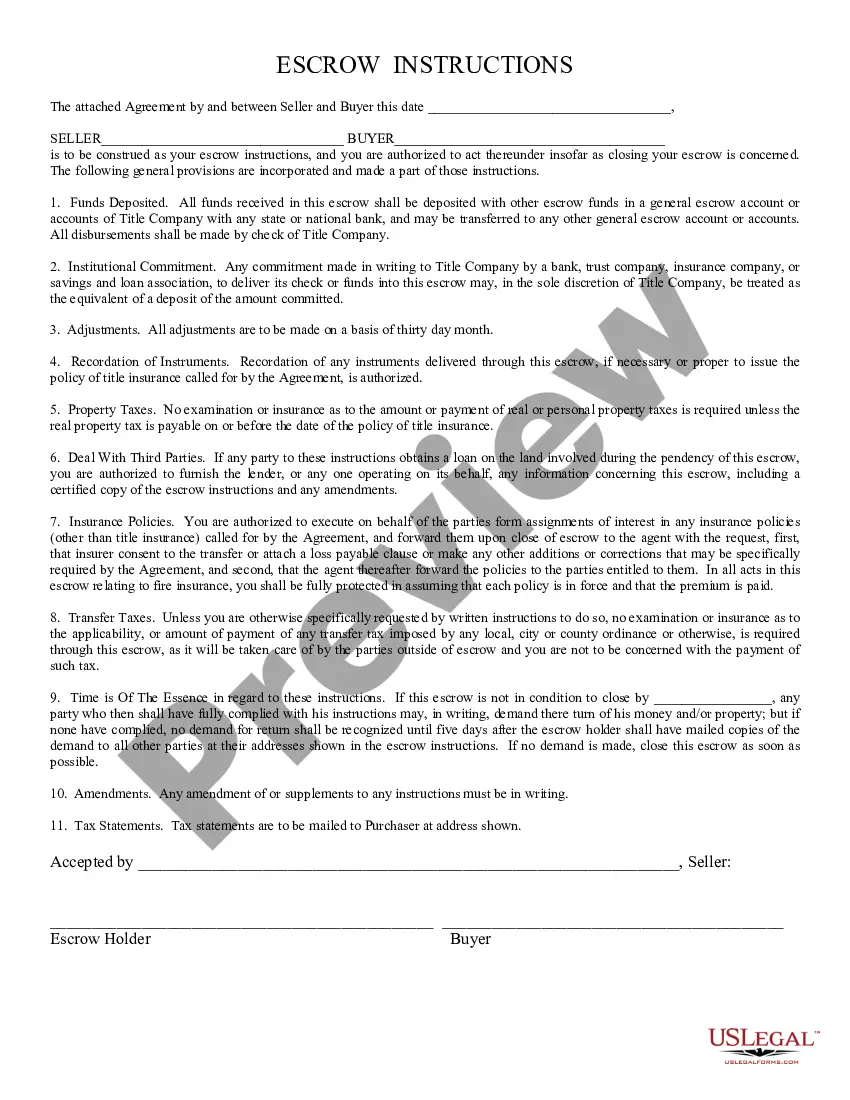
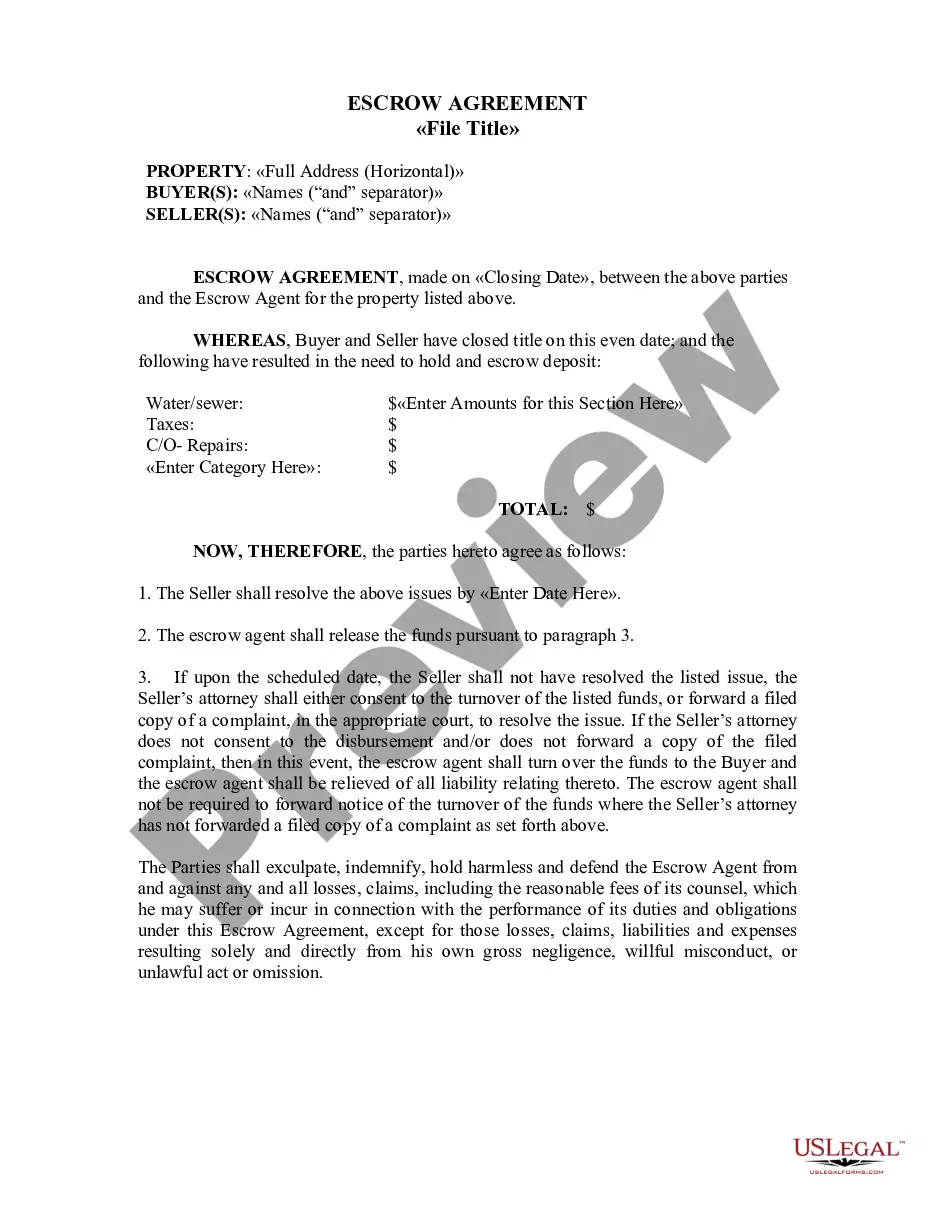
The Escrow Agreement for Residential Sale is a legal document that outlines the responsibilities and compensation of an escrow agent involved in a real estate transaction. This form creates a binding agreement between a seller, a buyer, and an escrow agent, specifying how funds will be held and disbursed during the sale process. It is particularly useful for protecting both parties' interests until the transaction is fully completed.
Key parts of this document
- Identification of the parties involved: seller, buyer, and escrow agent.
- Details on the purpose of the agreement and the related sales contract.
- Provisions for the deposit of escrow funds and acknowledgment of receipt.
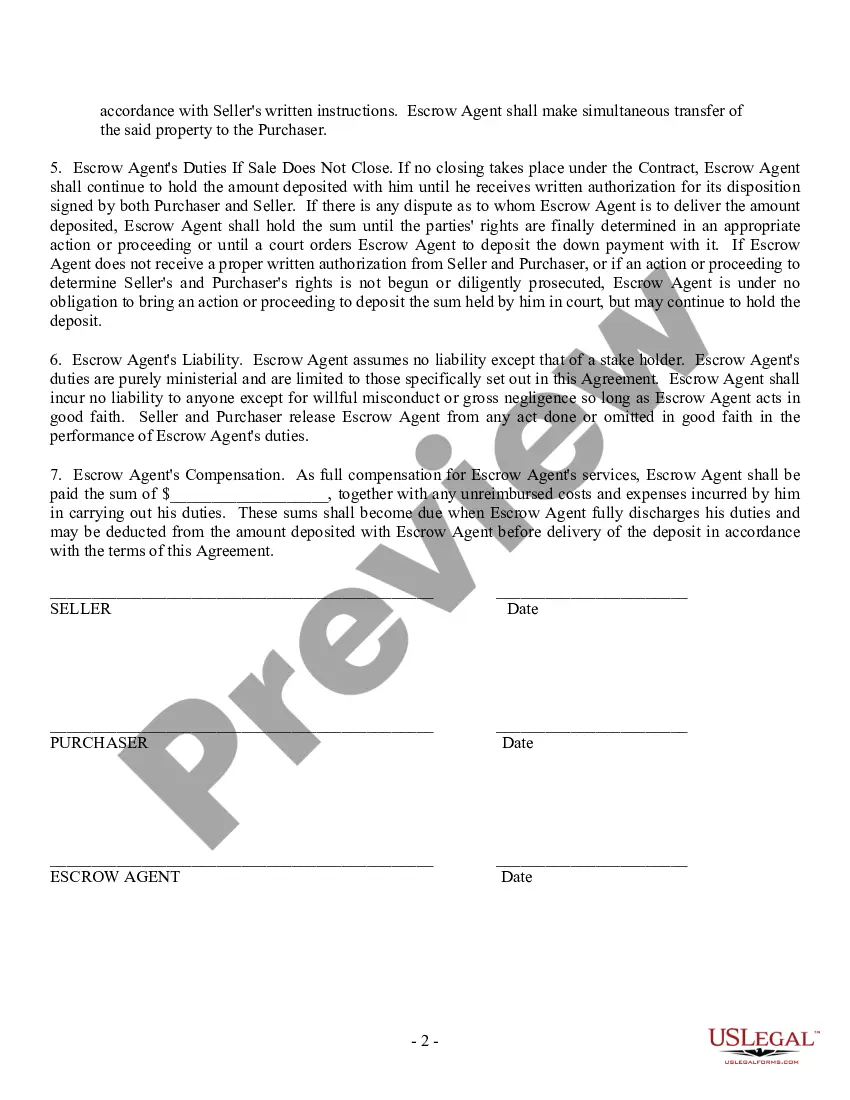
- Escrow agent's duties upon closing and if the sale does not close.
- Liability limitations for the escrow agent regarding the handling of funds.
- Compensation terms for the escrow agent for services rendered.

Situations where this form applies
You should use the Escrow Agreement for Residential Sale when you are engaging in a real estate transaction that involves the transfer of property. It is essential when a buyer needs to deposit a down payment with an escrow agent, ensuring that the funds are secure until the sale is finalized. This form is relevant in scenarios such as purchasing a home, where both parties want to ensure that conditions of the sale are met before money changes hands.
Who this form is for
- Homebuyers who need to secure a down payment.
- Sellers looking to ensure safe handling of transaction funds.
- Real estate agents or brokers facilitating the sale.
- Escrow agents managing the funds throughout the transaction.
Steps to complete this form
- Identify and enter the names and addresses of the seller and buyer.
- Designate the escrow agent along with their contact information.
- Specify the details of the property being sold and the closing date.
- Document the down payment amount that the buyer will deposit.
- Collect signatures from all parties and date the agreement.
Is notarization required?
This form does not typically require notarization unless specified by local law. For added security and verification, you may consider having it notarized, especially for significant financial transactions.
Get your form ready online
Our built-in tools help you complete, sign, share, and store your documents in one place.
Make edits, fill in missing information, and update formatting in US Legal Forms—just like you would in MS Word.
Download a copy, print it, send it by email, or mail it via USPS—whatever works best for your next step.
Sign and collect signatures with our SignNow integration. Send to multiple recipients, set reminders, and more. Go Premium to unlock E-Sign.
If this form requires notarization, complete it online through a secure video call—no need to meet a notary in person or wait for an appointment.
We protect your documents and personal data by following strict security and privacy standards.

Make edits, fill in missing information, and update formatting in US Legal Forms—just like you would in MS Word.

Download a copy, print it, send it by email, or mail it via USPS—whatever works best for your next step.

Sign and collect signatures with our SignNow integration. Send to multiple recipients, set reminders, and more. Go Premium to unlock E-Sign.

If this form requires notarization, complete it online through a secure video call—no need to meet a notary in person or wait for an appointment.

We protect your documents and personal data by following strict security and privacy standards.
Common mistakes to avoid
- Failing to clearly identify all parties involved in the transaction.
- Not specifying the exact amount of the down payment and its handling.
- Neglecting to provide a closing date or specific details about the property.
Benefits of using this form online
- Convenient access to download and complete the form at your convenience.
- Editable fields allow you to customize the agreement to your needs.
- Reliability of using attorney-drafted templates to ensure legal compliance.
Legal use & context
- The Escrow Agreement provides a legally binding framework for the transaction.
- It clarifies the responsibilities and liabilities of the escrow agent.
- This document ensures that the buyer's deposit is protected until closing.
Summary of main points
- The Escrow Agreement for Residential Sale is crucial for managing real estate transactions safely.
- It specifies the roles and compensation of the escrow agent to prevent disputes.
- Completing this form correctly protects both the buyer and seller during the sale process.
Looking for another form?
Form popularity
FAQ
You must withdraw from escrow in writing. In California, buyers must usually provide written notice to the seller before canceling via a Notice to Seller to Perform. The written cancellation of contract and escrow that follows must then be signed by the seller to officially withdraw from escrow.
Your mortgage lender or servicer is allowed to collect the amount of your homeowners insurance and property tax payments, plus a cushion, month in and month out, in escrow. While it's nice to not have to think about making these payments, this pro can be a con for savers who may be able to put the funds to better use.
Escrow protects all of the relevant parties in a real estate transaction, including the seller, the home buyer, and the lender, by ensuring that no escrow funds from your lender and other property change hands until all of the conditions in the agreement have been met.
This neutral third party holds the buyer's funds to meet the terms and conditions of a written purchase contract between the buyer and a seller. Once the escrow agent verifies that all parties completed their obligations under the purchase contract, the buyer's funds pay for the real property.
It's a binding agreement between the party who makes the promise and the one to whom the promise is made. Written documents are held in escrow until the underlying agreement is accomplished.Any written document executed in accordance with all the necessary legal formalities may be put into escrow.
Funds or assets held in escrow are temporarily transferred to and held by a third party, usually on behalf of a buyer and seller to facilitate a transaction. "In escrow" is often used in real estate transactions whereby property, cash, and the title are held in escrow until predetermined conditions are met.
Most escrow agreements are put into place when one party wants to make sure the other party meets certain conditions or obligations before it moves forward with a deal. For instance, a seller may set up an escrow agreement to ensure a potential homebuyer can secure financing before the sale goes through.
In financial transactions, the term "in escrow" indicates a temporary condition of an item, such as money or property, that has been transferred to a third party. This transfer is usually done on behalf of a buyer and seller.Valuables held in escrow can include real estate, money, stocks, and securities.
Escrows are voluntarily completed by full performance/execution and closing, or the escrow may be terminated by mutual consent. The termination of the sale escrow is accomplished by cancellation of the escrow, and by rescission or cancellation of the residential purchase agreement, or other form of agreement of sale.