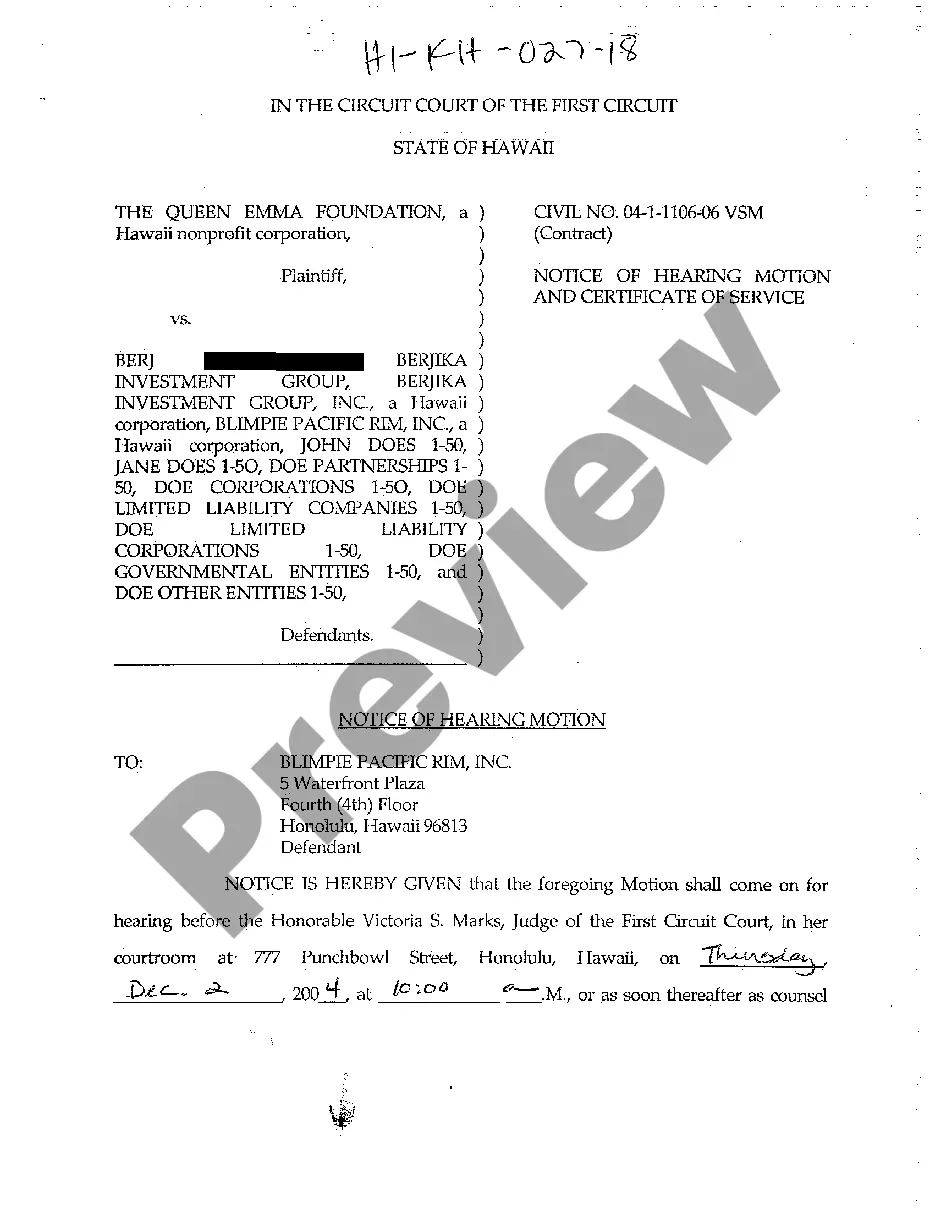
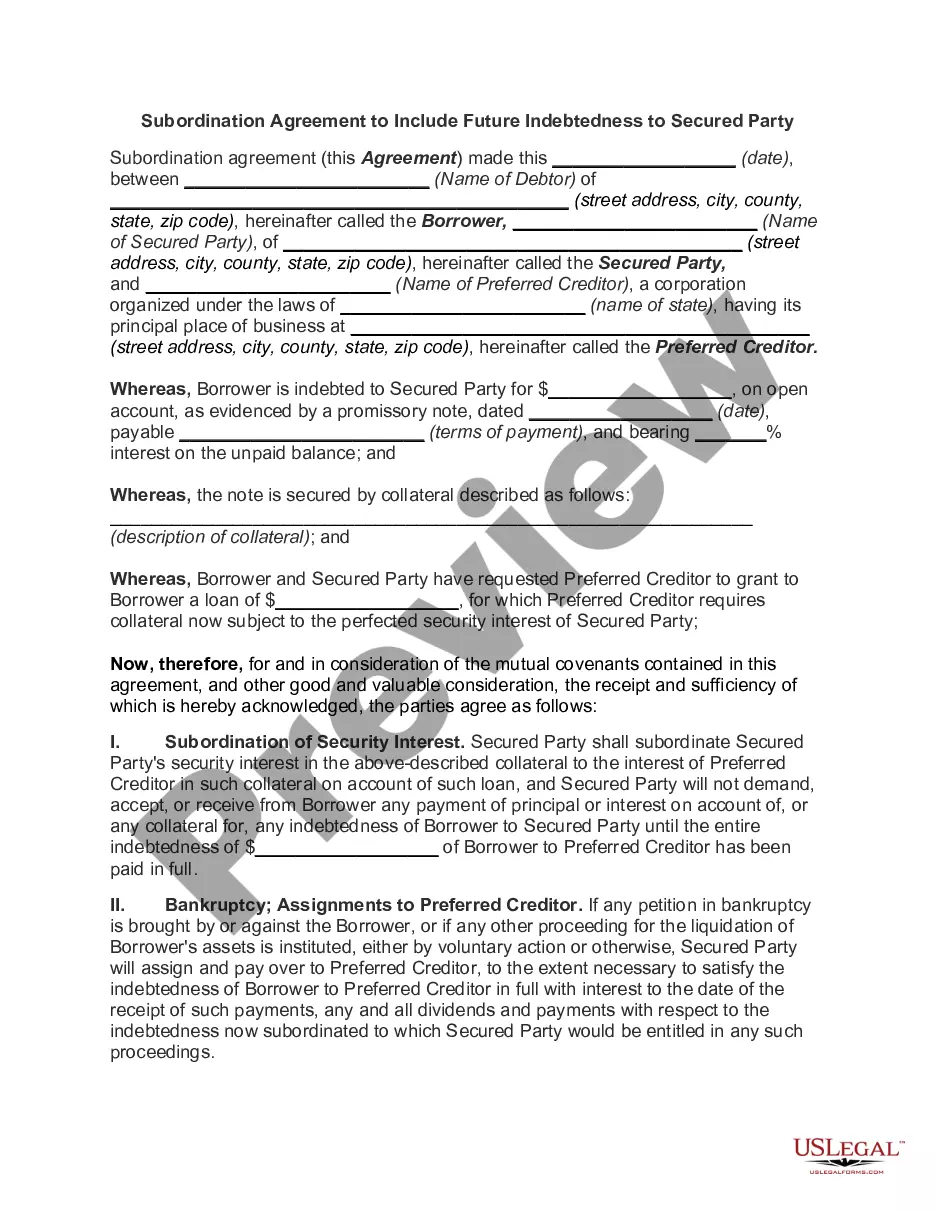
Subordination Agreement to Include Future Indebtedness to Secured Party
About this form
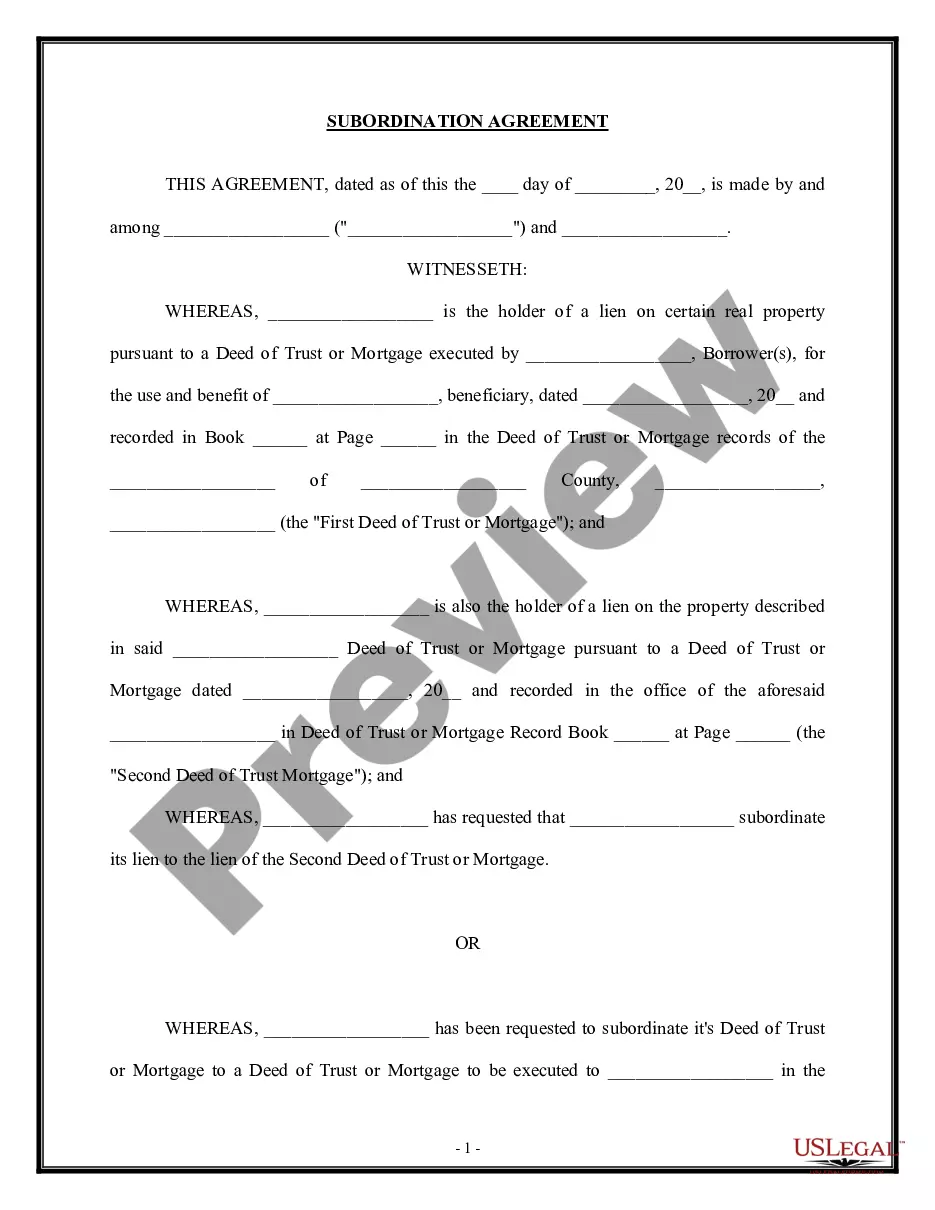
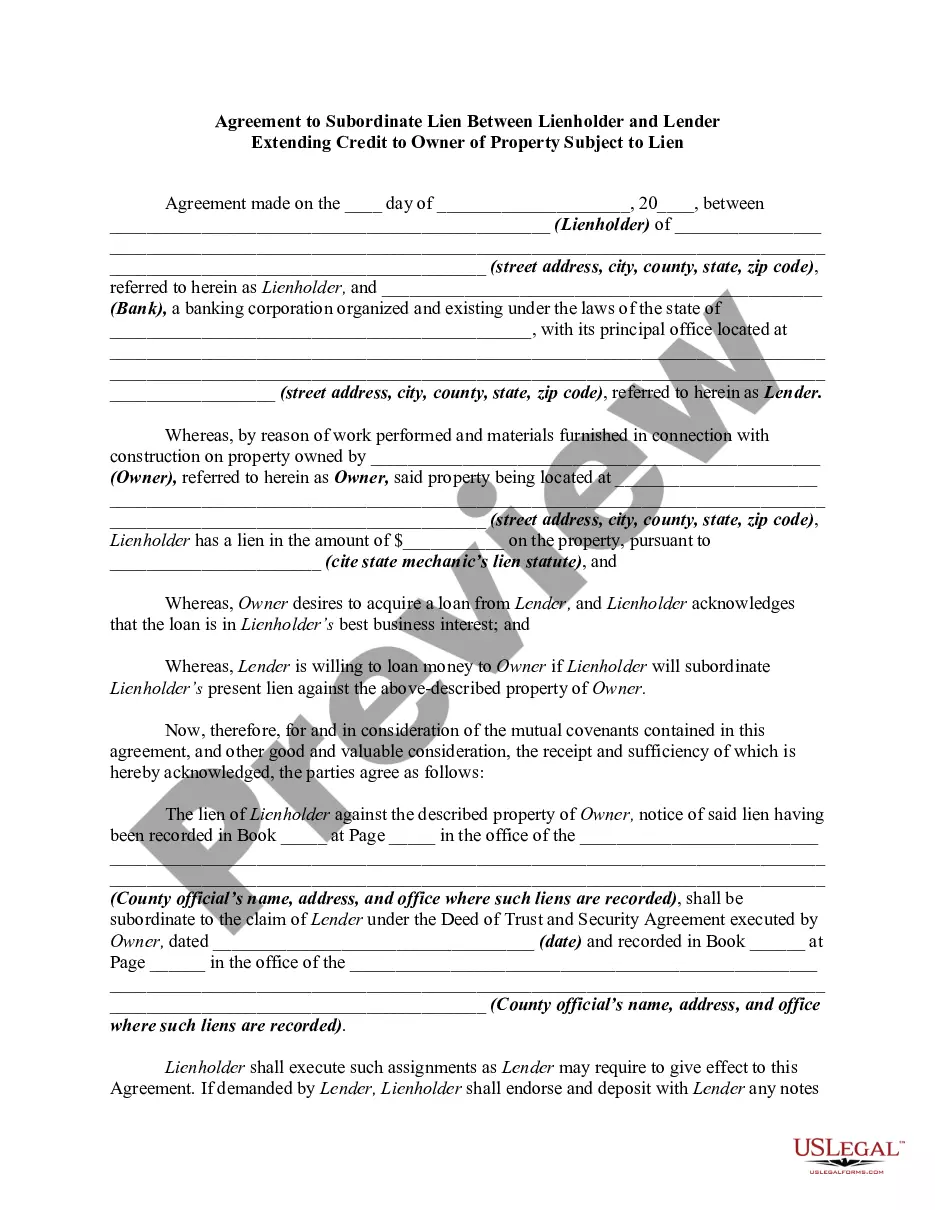
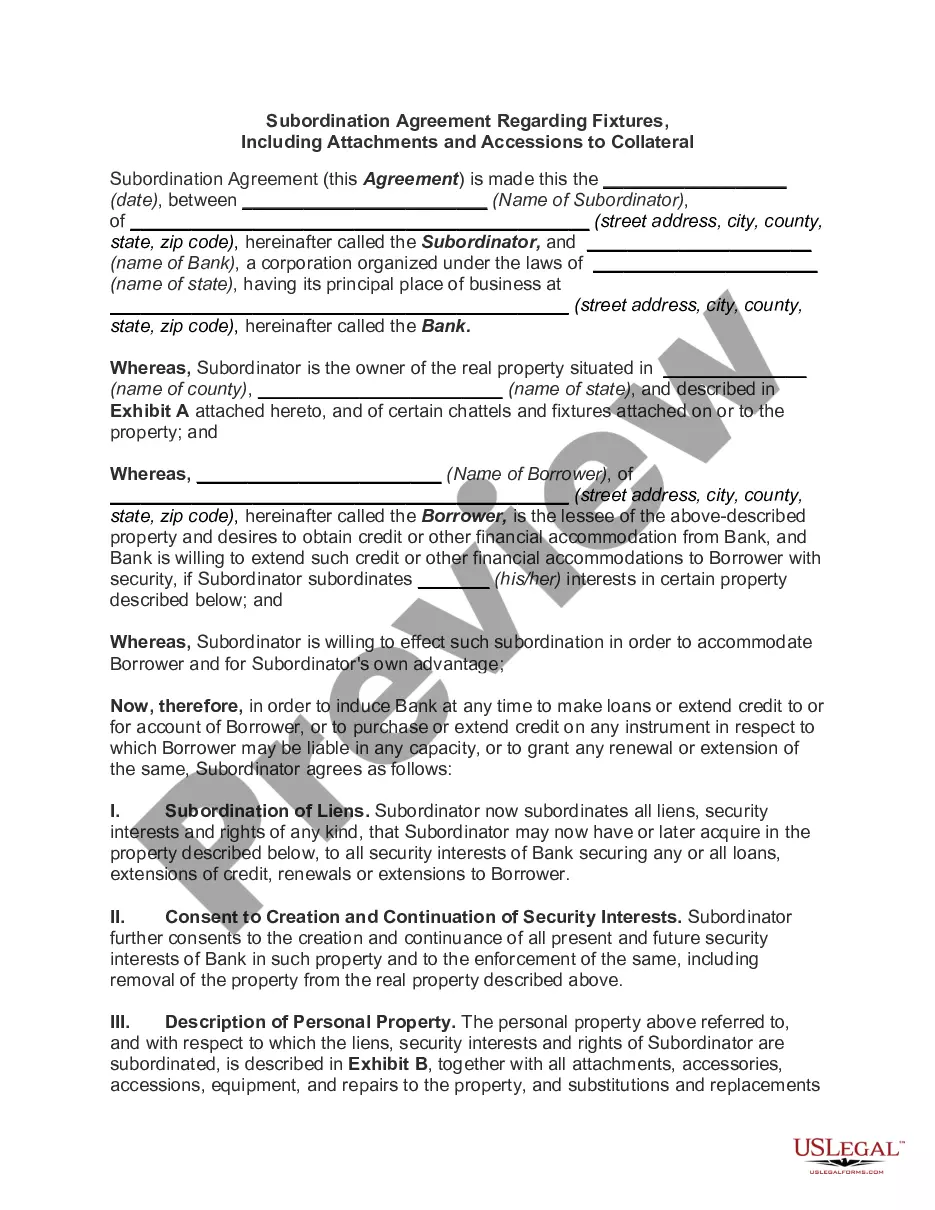
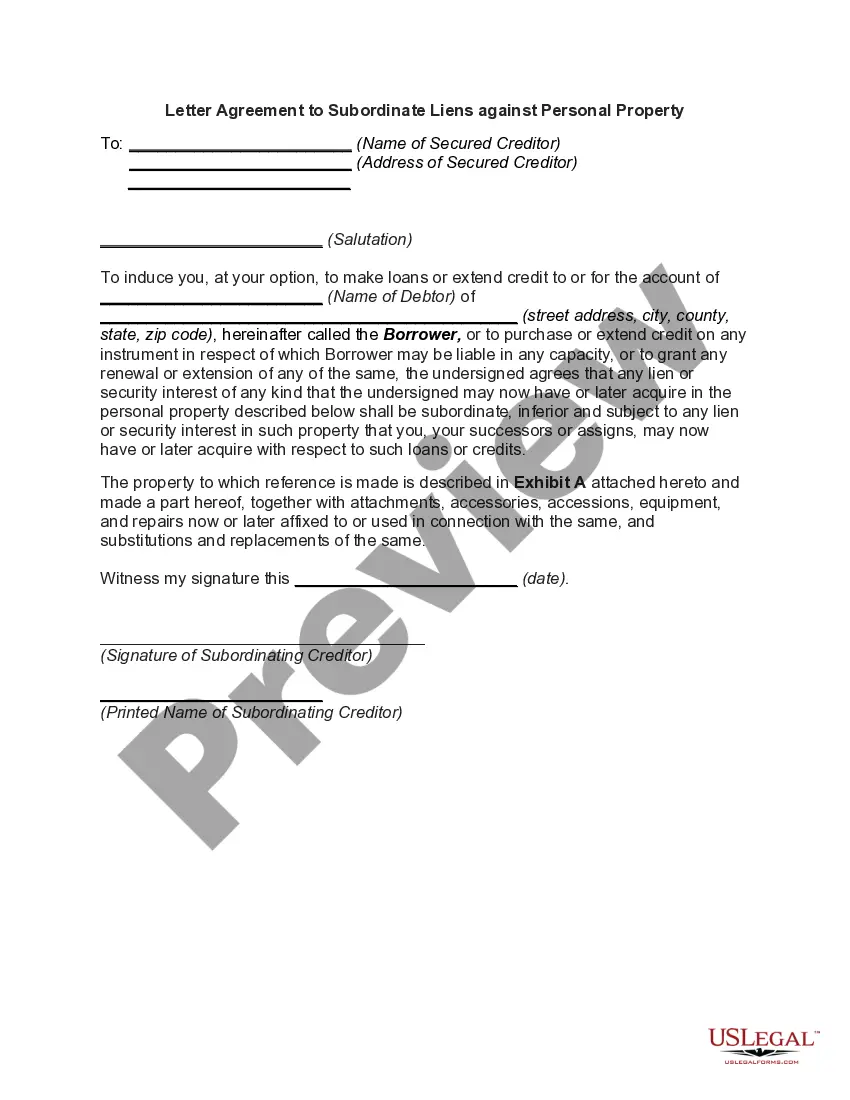
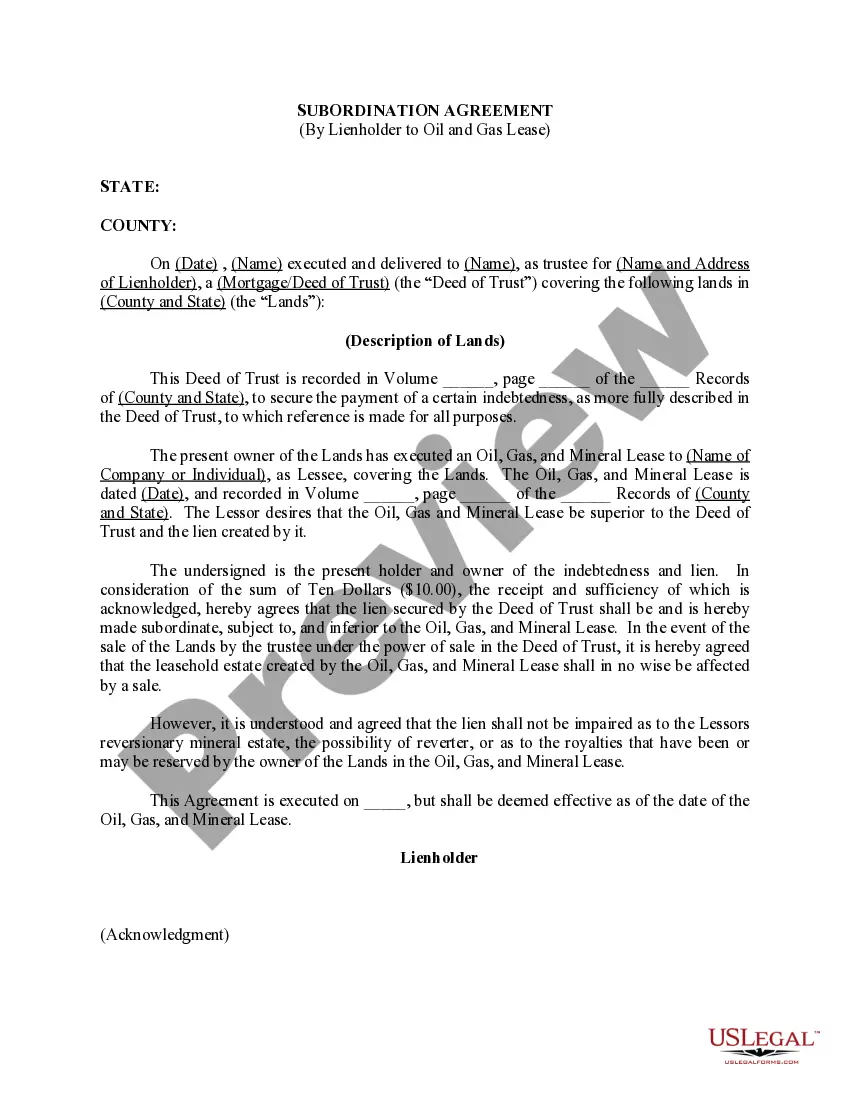
The Subordination Agreement to Include Future Indebtedness to Secured Party is a legal document that establishes the hierarchy of claims attached to collateral. This form is particularly useful when a borrower seeks additional financing from a new creditor (the Preferred Creditor), which requires that the secure partyâs rights are subordinated. This form ensures that any future indebtedness is covered, distinguishing it from basic subordination agreements by including provisions for future debts.
Main sections of this form
- Identification of the Borrower, Secured Party, and Preferred Creditor.
- Details and terms of the existing indebtedness, including loan amounts and payment terms.
- Subordination clause outlining the conditions under which the Secured Party's interests are subordinated.
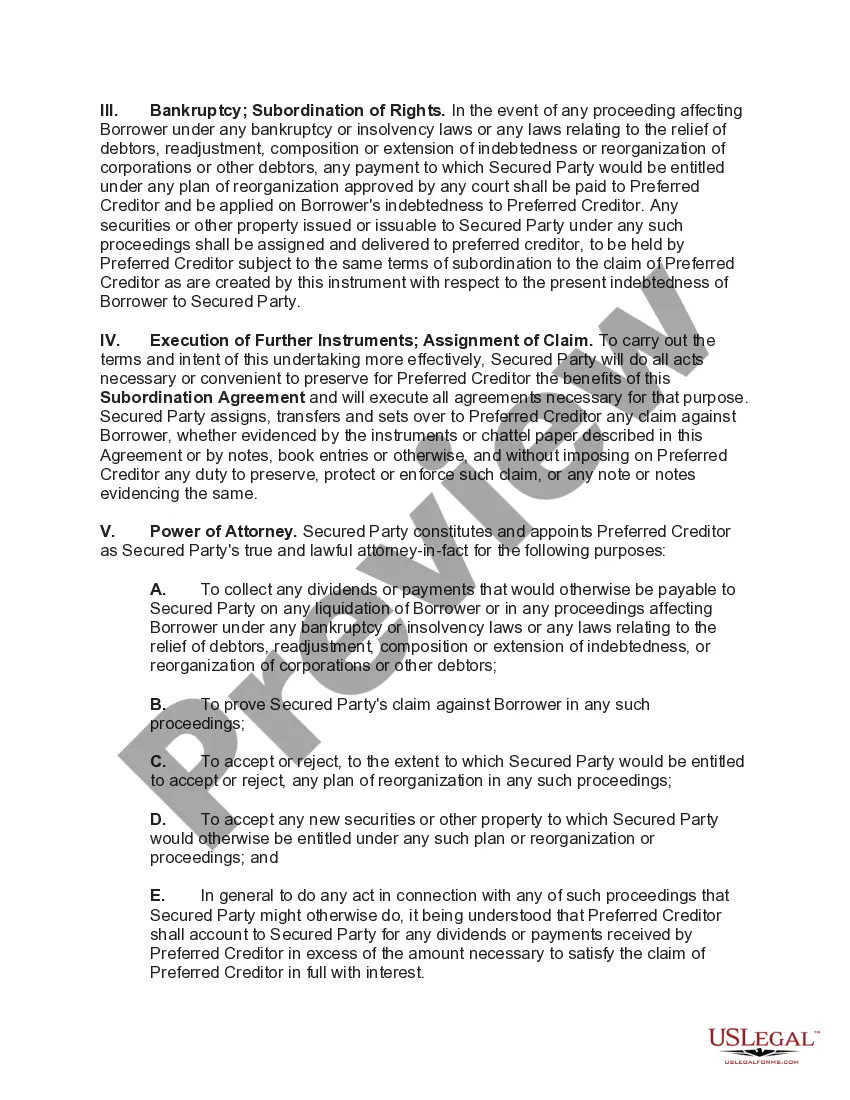
- Provisions for actions in bankruptcy situations regarding the claims of the Secured Party.
- Power of attorney granting authority to the Preferred Creditor for specific actions related to the agreement.
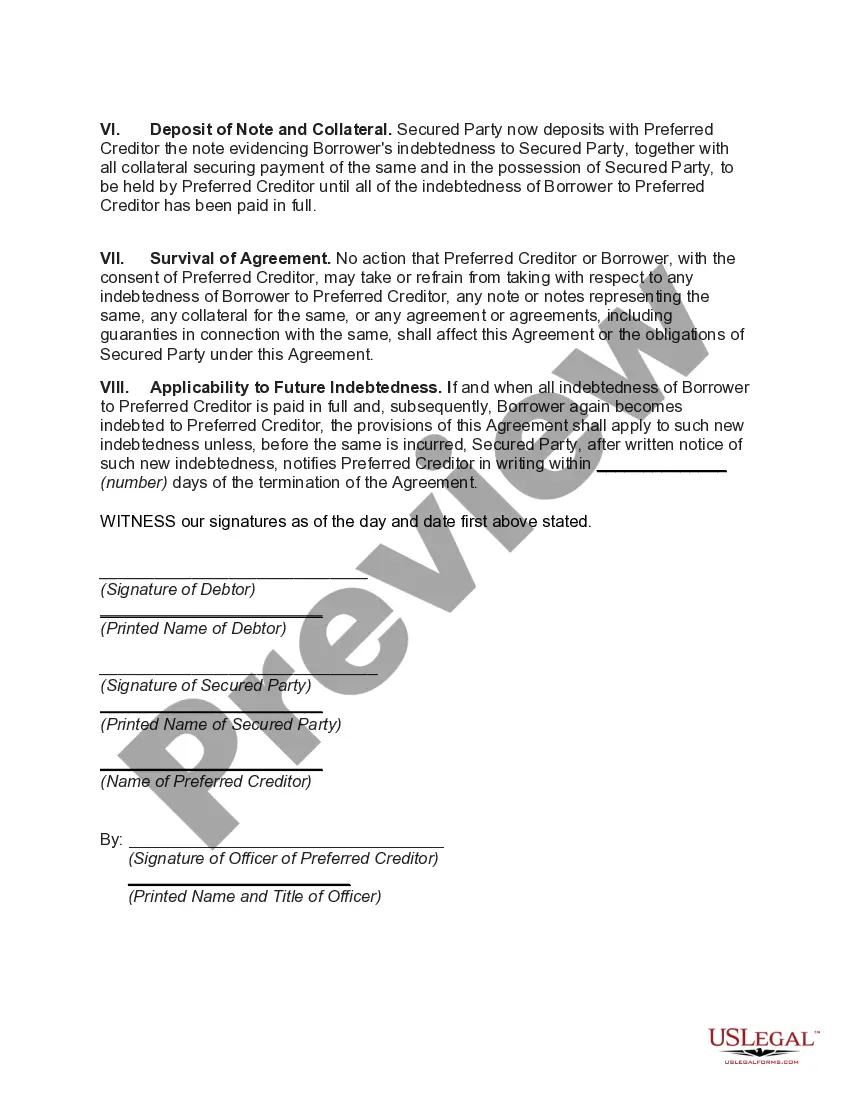
- Survival clause ensuring the agreement remains enforceable despite subsequent transactions.
Common use cases
This form should be used when a borrower wishes to secure an additional loan from a new creditor, but the existing secured party's interests need to be subjugated to allow for this. It is especially applicable in situations where the borrower is looking to refinance, expand credit, or acquire more capital while ensuring that existing creditor claims remain valid but subordinate.
Who should use this form
- Borrowers who need additional financing while having existing debt obligations.
- Secured parties who are willing to subordinate their claims to allow the borrower to take on further debt.
- Preferred creditors who require security interest and assurance in the hierarchy of claims over collateral.
Completing this form step by step
- Identify and enter the names and addresses of all parties involved: the Borrower, Secured Party, and Preferred Creditor.
- Specify the amount of the initial indebtedness and terms under which it is to be repaid.
- Describe the collateral that secures the current obligation.
- Fill in any additional financing details addressed in the agreement, including potential future debts.
- Ensure all parties sign and date the form, acknowledging their agreement to the terms set forth.
Does this form need to be notarized?
This form does not typically require notarization unless specified by local law. However, having it notarized can provide additional verification and may facilitate legal processes in certain jurisdictions.
Get your form ready online
Our built-in tools help you complete, sign, share, and store your documents in one place.
Make edits, fill in missing information, and update formatting in US Legal Forms—just like you would in MS Word.
Download a copy, print it, send it by email, or mail it via USPS—whatever works best for your next step.
Sign and collect signatures with our SignNow integration. Send to multiple recipients, set reminders, and more. Go Premium to unlock E-Sign.
If this form requires notarization, complete it online through a secure video call—no need to meet a notary in person or wait for an appointment.
We protect your documents and personal data by following strict security and privacy standards.

Make edits, fill in missing information, and update formatting in US Legal Forms—just like you would in MS Word.

Download a copy, print it, send it by email, or mail it via USPS—whatever works best for your next step.

Sign and collect signatures with our SignNow integration. Send to multiple recipients, set reminders, and more. Go Premium to unlock E-Sign.

If this form requires notarization, complete it online through a secure video call—no need to meet a notary in person or wait for an appointment.

We protect your documents and personal data by following strict security and privacy standards.
Typical mistakes to avoid
- Failing to clearly define the collateral being subordinated.
- Not including the necessary party signatures, which can invalidate the agreement.
- Omitting specific terms related to future indebtedness.
- Using vague language that may lead to misinterpretation of terms.
Benefits of using this form online
- Quick access to legally drafted forms tailored by professionals.
- Convenience of filling out and storing the form digitally.
- Editability allows users to adapt the form for specific needs without hassle.
- Reliable legal framework that ensures compliance with applicable laws.
Legal use & context
- This agreement is legally binding once signed by all parties involved.
- It ensures that the Preferred Creditor's interests take precedence over the Secured Party when it comes to new loans.
- Understanding state-specific laws regarding subordination can impact its enforceability.
Quick recap
- The Subordination Agreement is essential for borrowers seeking further financing with existing obligations.
- Clearly outlining all parties and terms is vital for the agreementâs validity.
- The form accommodates future indebtedness, providing flexibility for borrowing strategies.
- Consultation with legal professionals is recommended to ensure compliance with all local laws.
Glossary of terms used in this form
- Subordination: The act of ranking one debt claim below another in terms of priority for repayment.
- Secured party: A lender or creditor with a legal right to specific collateral if the borrower defaults.
- Preferred creditor: A lender or entity that receives preferential treatment regarding debt repayment over other creditors.
- Indebtedness: The state of being under obligation to pay money to another party.
Looking for another form?
Form popularity
FAQ
Subordinated debt is any debt that falls under, or behind, senior debt.Examples of subordinated debt include mezzanine debt, which is debt that also includes an investment. Additionally, asset-backed securities generally have a subordinated feature, where some tranches are considered subordinate to senior tranches.
And many lenders charge a fee to review the subordination package, a fee that might run as high as $100. Your lender will probably pass this fee to you.
Subordination clauses in mortgages refer to the portion of your agreement with the mortgage company that says their lien takes precedence over any other liens you may have on your property.The primary lien on a house is usually a mortgage. However, it's also possible to have other liens.
Despite its technical-sounding name, the subordination agreement has one simple purpose. It assigns your new mortgage to first lien position, making it possible to refinance with a home equity loan or line of credit. Signing your agreement is a positive step forward in your refinancing journey.
A subordination agreement is a legal document that establishes one debt as ranking behind another in priority for collecting repayment from a debtor. The priority of debts can become extremely important when a debtor defaults on payments or declares bankruptcy.
A subordination agreement prioritizes collateralized debts, ranking one behind another for purposes of collecting repayment from a debtor in the event of foreclosure or bankruptcy. A second-in-line creditor collects only when and if the priority creditor has been fully paid.
But as property values are going up and the demand for refinance isn't as much, it seems that the subordination process has gotten a little easier. Typically, it takes two to three weeks to get the resubordination paperwork through, and it is likely to set you back $200 to $300.
Senior debt is often secured and is more likely to be paid back while subordinated debt is not secured and is more of a risk.
Banks issue subordinated debt for various reasons, including shoring up capital, funding investments in technology, acquisitions or other opportunities, and replacing higher-cost capital. In the current low-interest rate environment, subordinated debt can be relatively inexpensive capital.