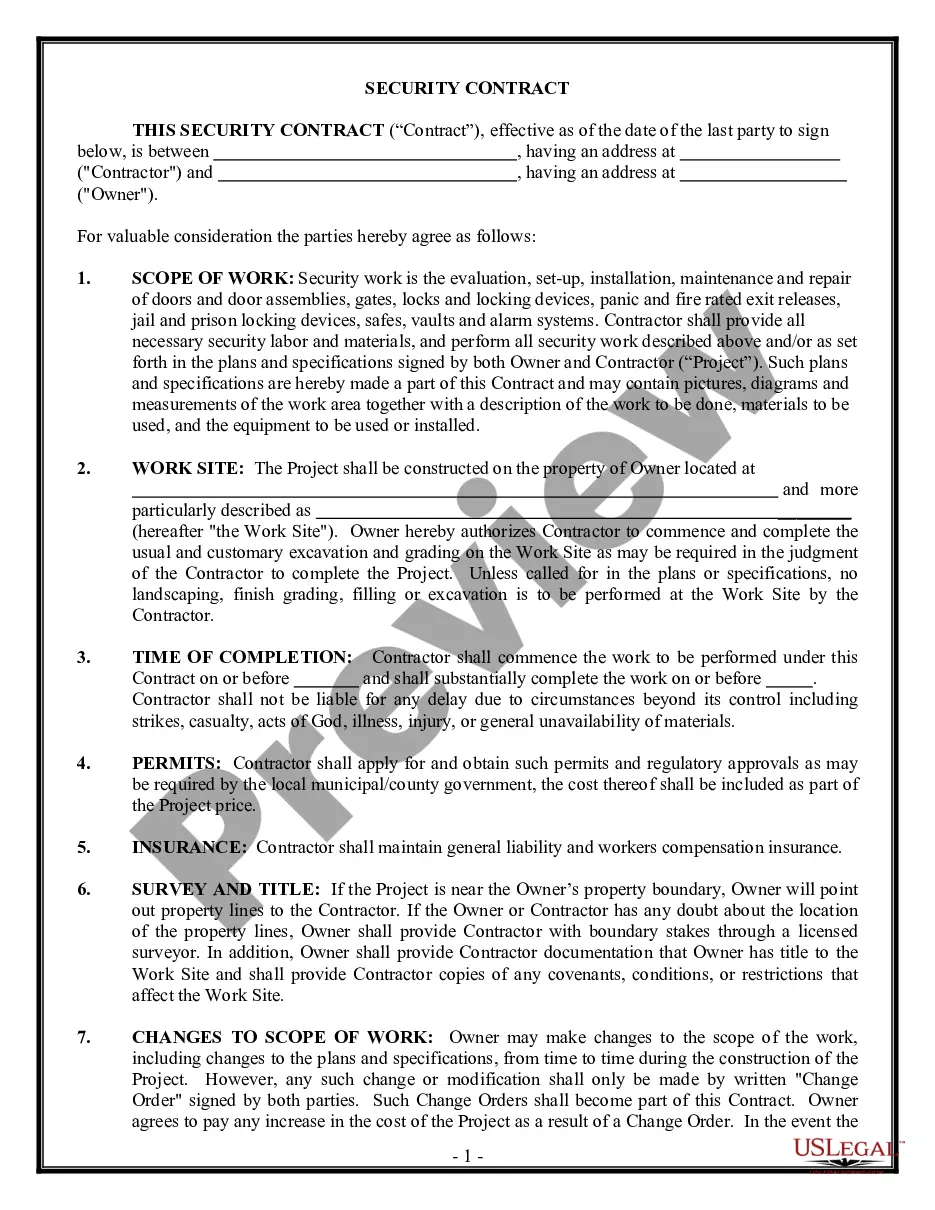
General Form of Irrevocable Trust Agreement
Overview of this form
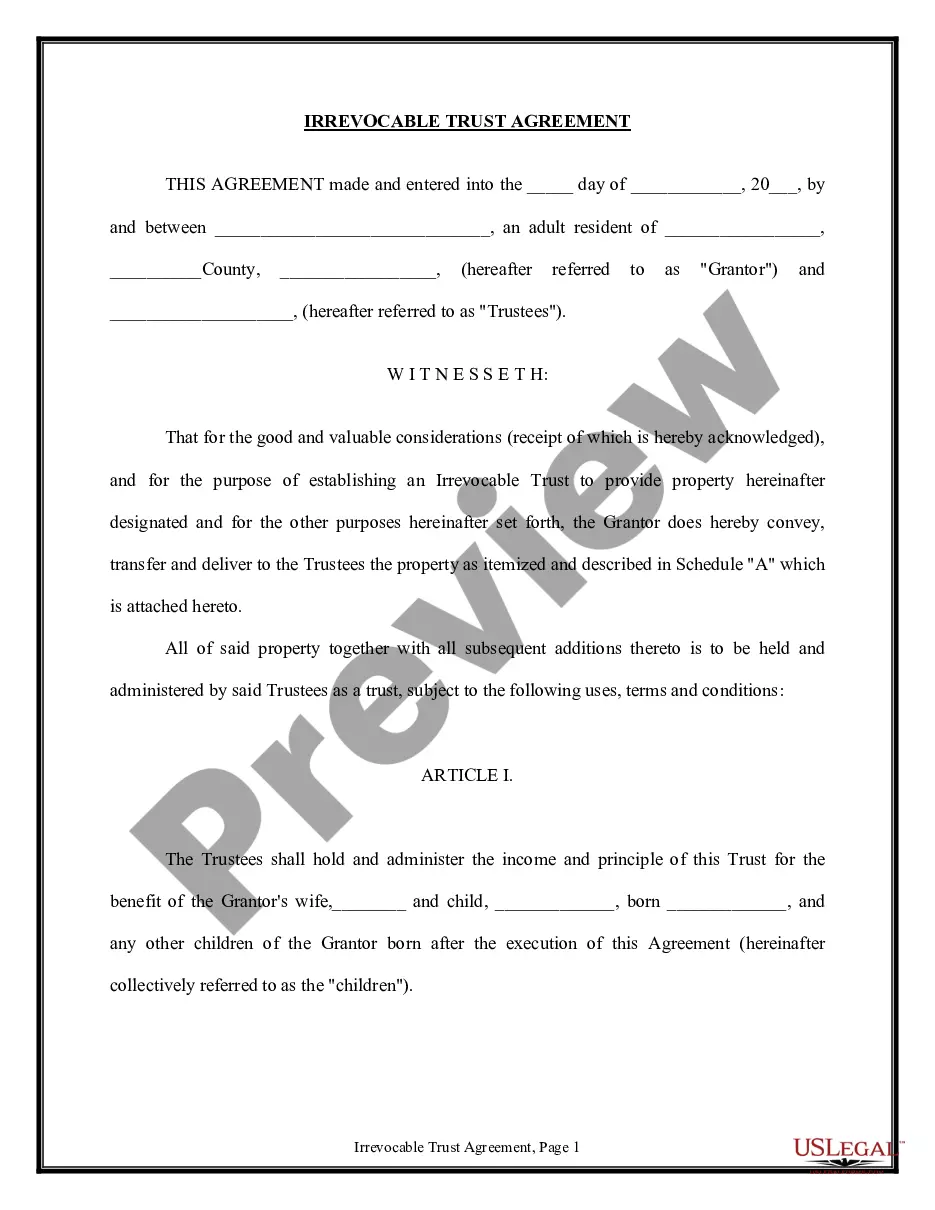
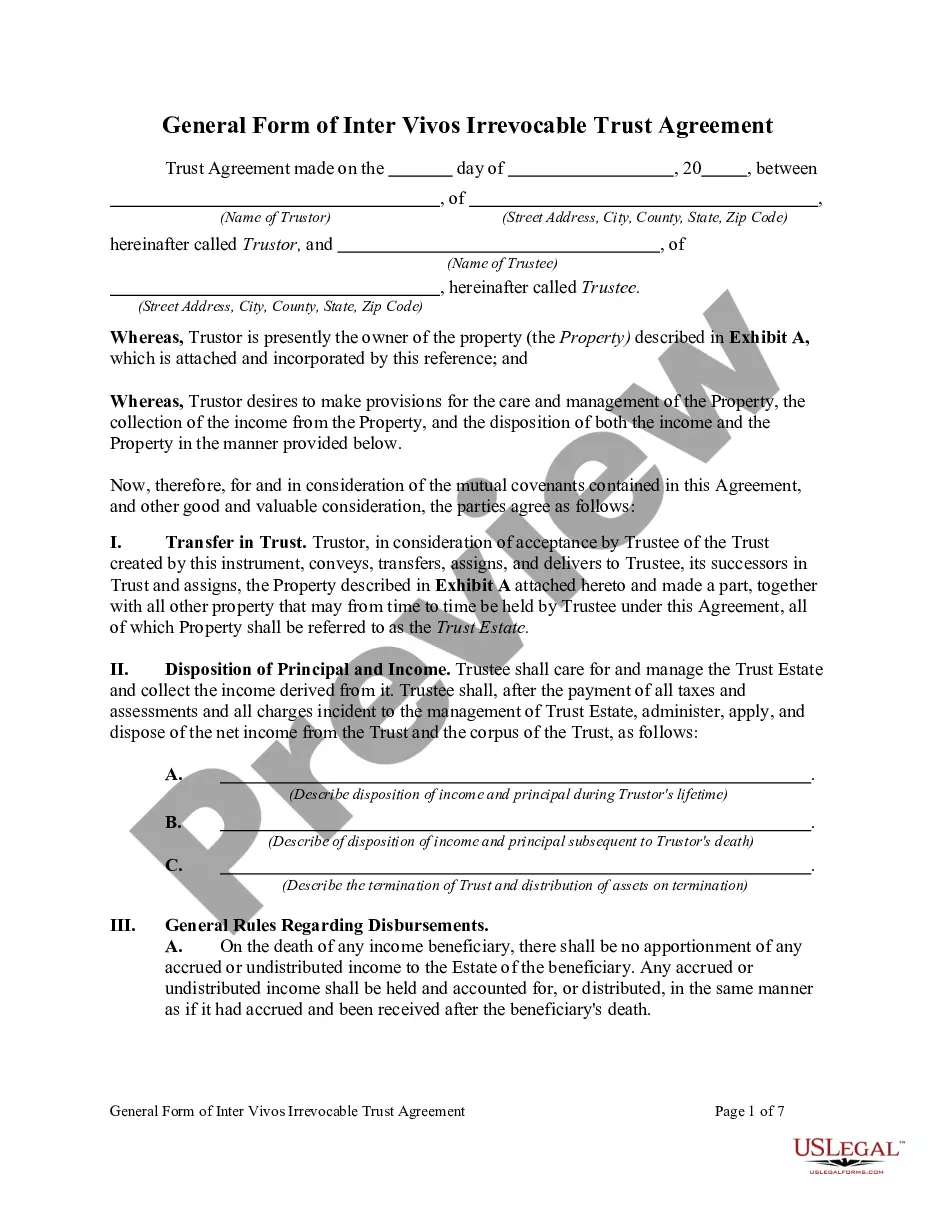
The General Form of Irrevocable Trust Agreement is a legal document establishing an irrevocable trust, which cannot be changed or canceled without the beneficiary's consent. Unlike revocable trusts, the assets placed into this trust cannot be withdrawn by the original trustor, providing permanence to both the trust and its terms.
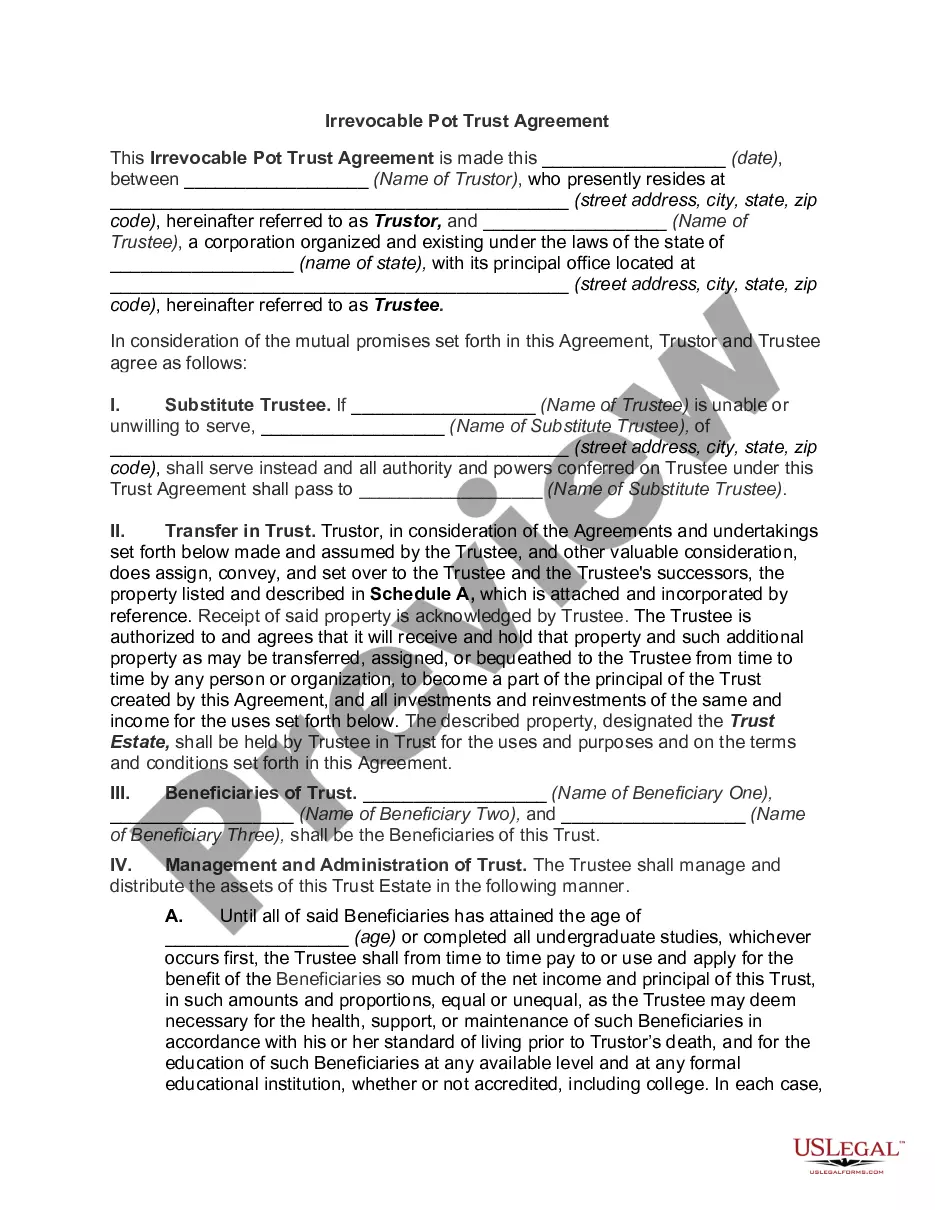
What’s included in this form
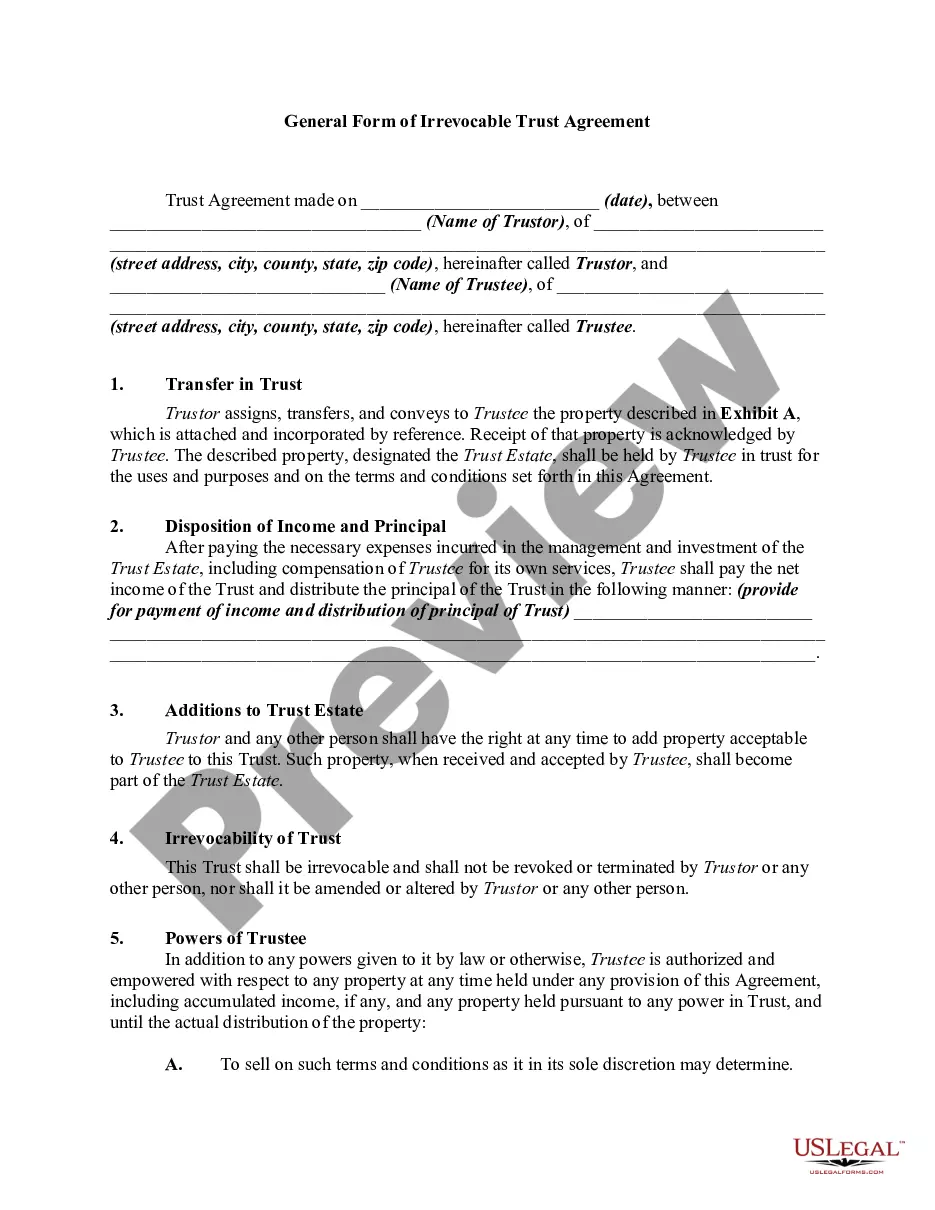
- Transfer in Trust: Specifies the property being placed in trust.
- Disposition of Income and Principal: Outlines how income and principal are distributed.
- Additions to Trust Estate: Allows for future contributions to the trust.
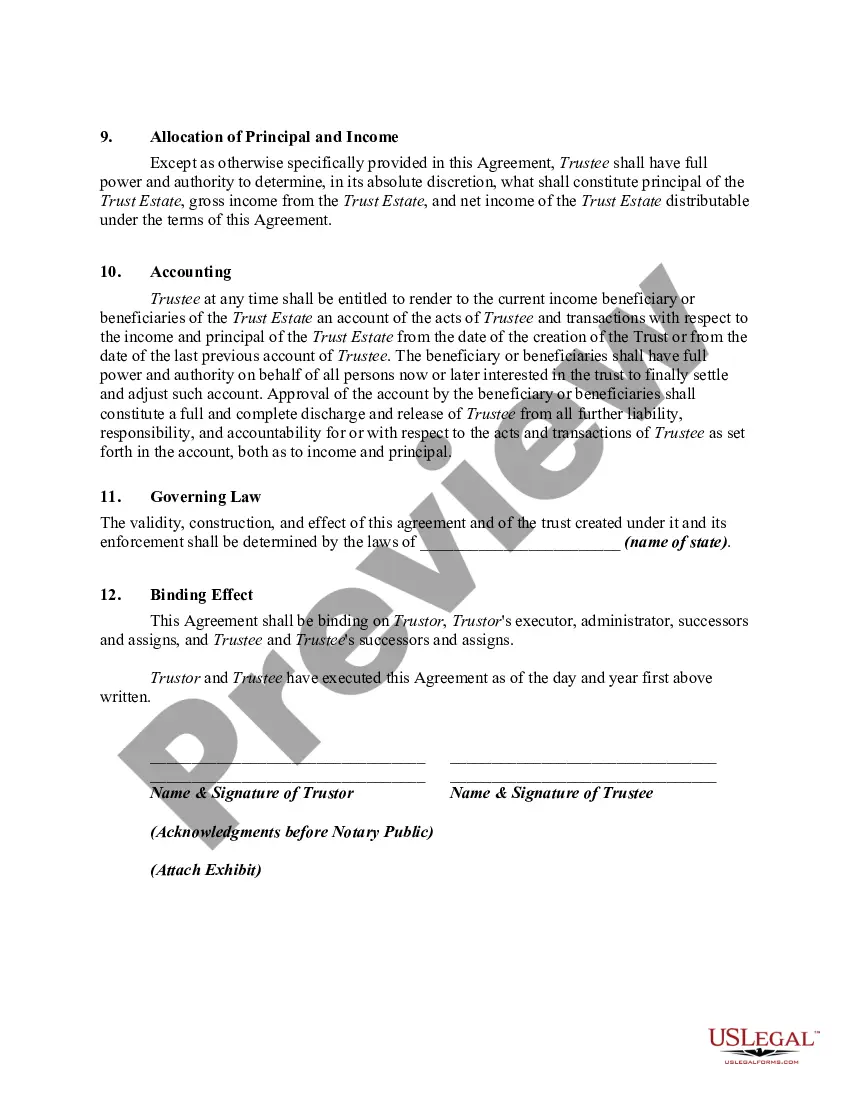
- Irrevocability of Trust: Confirms the trust cannot be revoked or amended.
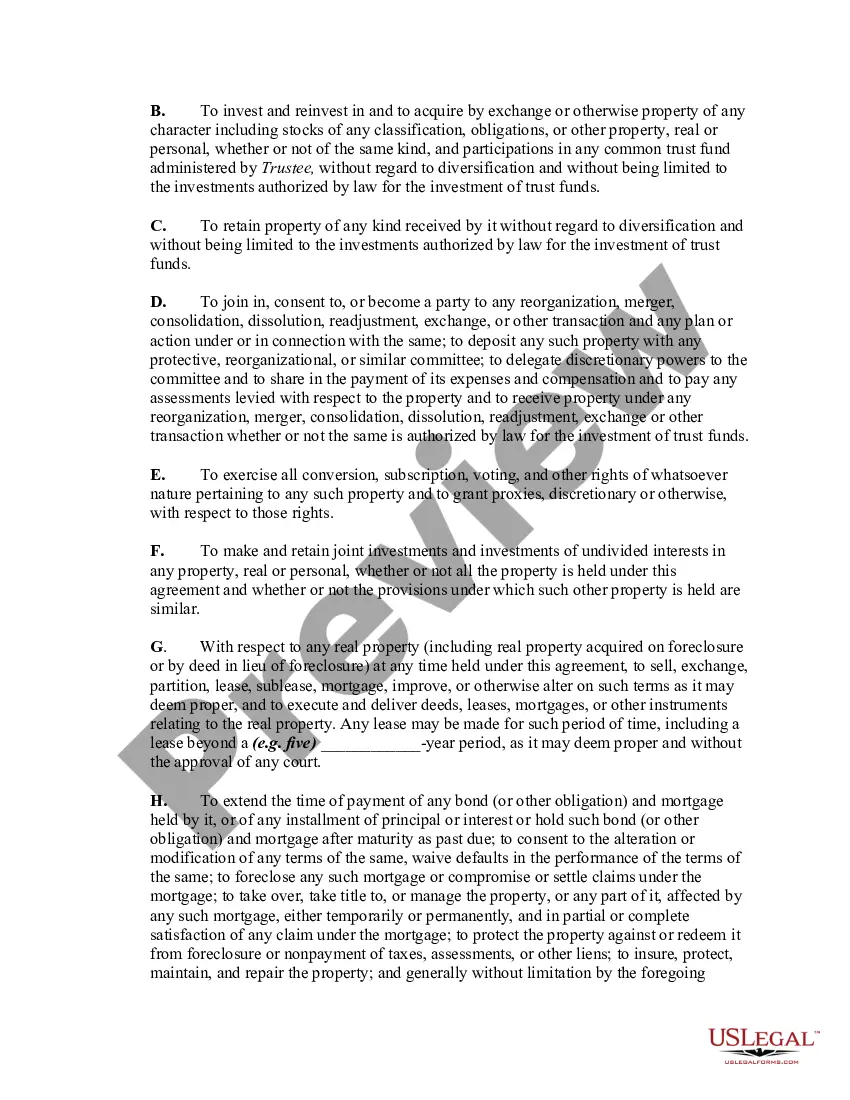
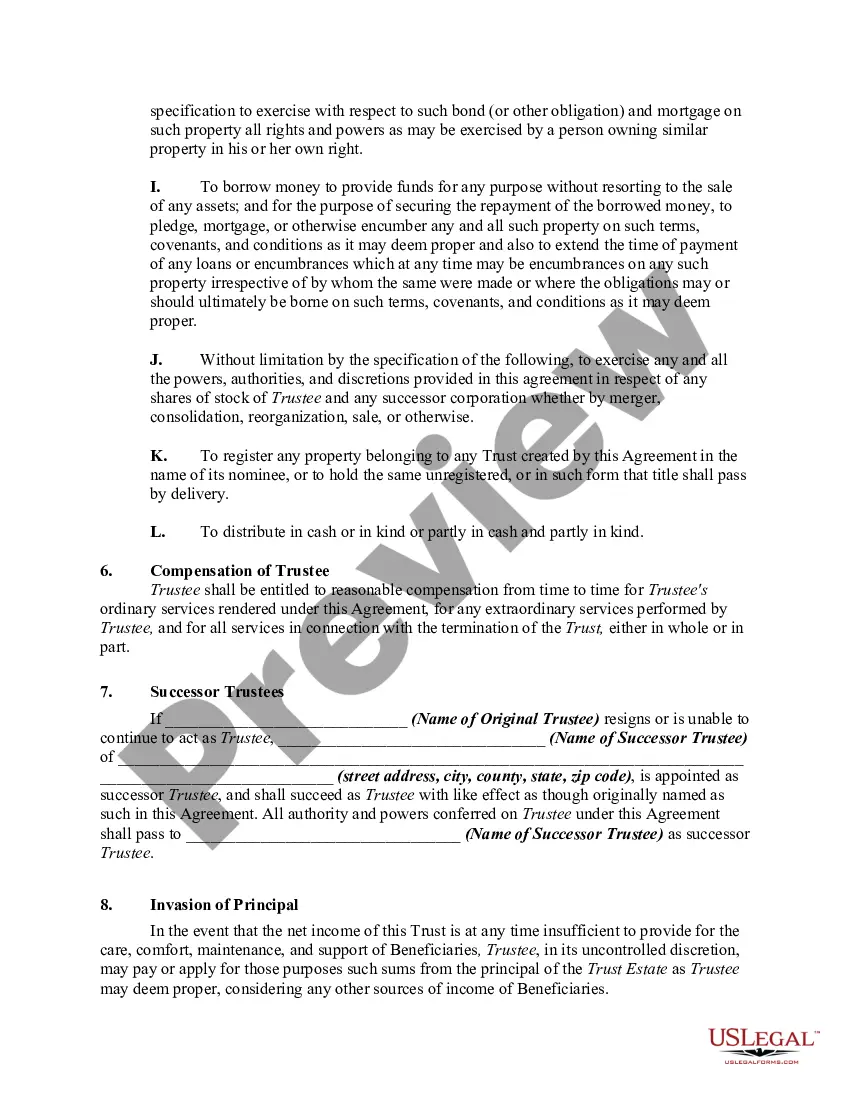
- Powers of Trustee: Details the powers and obligations of the trustee.
- Successor Trustees: Addresses the procedure for appointing new trustees.
Situations where this form applies
This form should be used when a trustor wishes to establish an irrevocable trust to manage and protect assets for beneficiaries. Common situations include estate planning, charitable contributions, and ensuring the financial security of dependents. It is particularly useful when tax benefits or asset protection are sought through trust arrangements.
Who needs this form
- Individuals looking to establish a trust for estate planning.
- Parents wanting to secure financial assets for their children.
- Business owners seeking to protect business assets.
- Individuals aiming to make charitable gifts while retaining some control over assets.
How to prepare this document
- Identify the parties involved by entering the names and addresses of the trustor and trustee.
- Specify the date the trust agreement is made.
- Detail the property being transferred into the trust.
- Outline how income and principal will be distributed.
- Sign and date the form before a notary if required by your jurisdiction.
Notarization guidance
This form must be notarized to be legally valid. US Legal Forms provides secure online notarization powered by Notarize, allowing you to complete the process through a verified video call.
Get your form ready online
Our built-in tools help you complete, sign, share, and store your documents in one place.
Make edits, fill in missing information, and update formatting in US Legal Forms—just like you would in MS Word.
Download a copy, print it, send it by email, or mail it via USPS—whatever works best for your next step.
Sign and collect signatures with our SignNow integration. Send to multiple recipients, set reminders, and more. Go Premium to unlock E-Sign.
If this form requires notarization, complete it online through a secure video call—no need to meet a notary in person or wait for an appointment.
We protect your documents and personal data by following strict security and privacy standards.
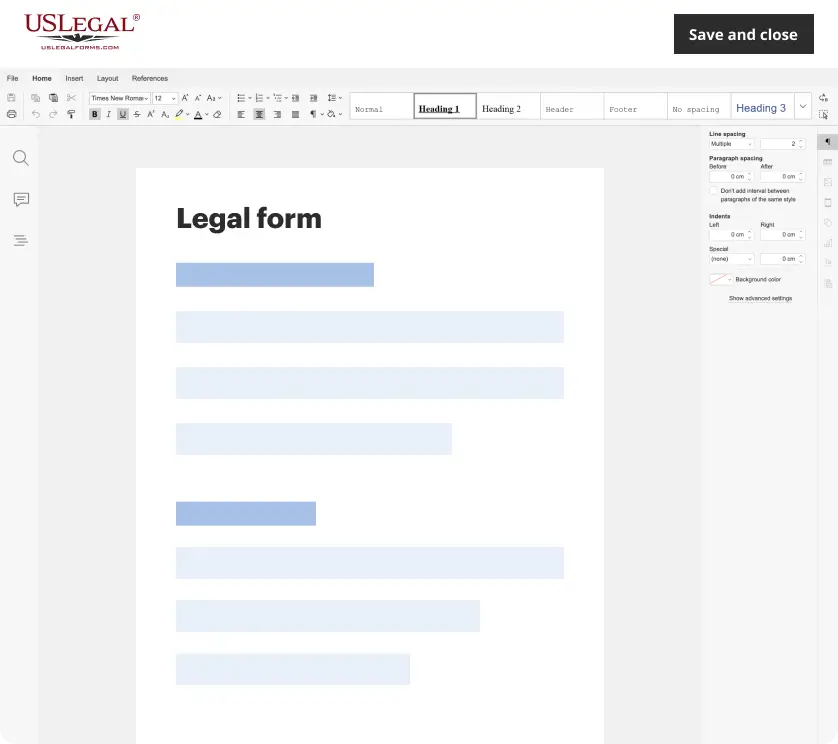
Make edits, fill in missing information, and update formatting in US Legal Forms—just like you would in MS Word.
Download a copy, print it, send it by email, or mail it via USPS—whatever works best for your next step.
Sign and collect signatures with our SignNow integration. Send to multiple recipients, set reminders, and more. Go Premium to unlock E-Sign.

If this form requires notarization, complete it online through a secure video call—no need to meet a notary in person or wait for an appointment.

We protect your documents and personal data by following strict security and privacy standards.
Mistakes to watch out for
- Failing to include all relevant property in Exhibit A.
- Overlooking the need for signatures from witnesses or notaries.
- Leaving sections regarding distributions vague or incomplete.
Benefits of using this form online
- Convenience of completing the form from home.
- Editability allows for tailored agreements to meet specific needs.
- Access to professionally drafted templates ensures reliability and compliance.
Quick recap
- An irrevocable trust cannot be changed or revoked without beneficiary consent.
- It provides asset protection and potential tax benefits.
- Clearly define property transfers and distribution methods within the trust.
- Consult legal standards based on your state for compliance.
Looking for another form?


Form popularity
FAQ
Plan the purpose and scope of the irrevocable trust. Choose a trustee. Prepare an irrevocable trust agreement. Obtain a taxpayer identification number for the trust from the Internal Revenue Service.
What assets can I transfer to an irrevocable trust? Frankly, just about any asset can be transferred to an irrevocable trust, assuming the grantor is willing to give it away. This includes cash, stock portfolios, real estate, life insurance policies, and business interests.
When you transfer your assets into an irrevocable trust, you relinquish control of them. The trust is now the owner of the assets, which you'll retitle or register in the trust's name. The assets are no longer yours, and have no bearing on your wealth, the value of your estate, or your tax liability .
Irrevocable trust: The purpose of the trust is outlined by an attorney in the trust document. Once established, an irrevocable trust usually cannot be changed. As soon as assets are transferred in, the trust becomes the asset owner. Grantor: This individual transfers ownership of property to the trust.
The main downside to an irrevocable trust is simple: It's not revocable or changeable. You no longer own the assets you've placed into the trust. In other words, if you place a million dollars in an irrevocable trust for your child and want to change your mind a few years later, you're out of luck.