Instruction to Jury that Unauthorized Sale of Personal Property can Constitute Conversion
Overview of this form
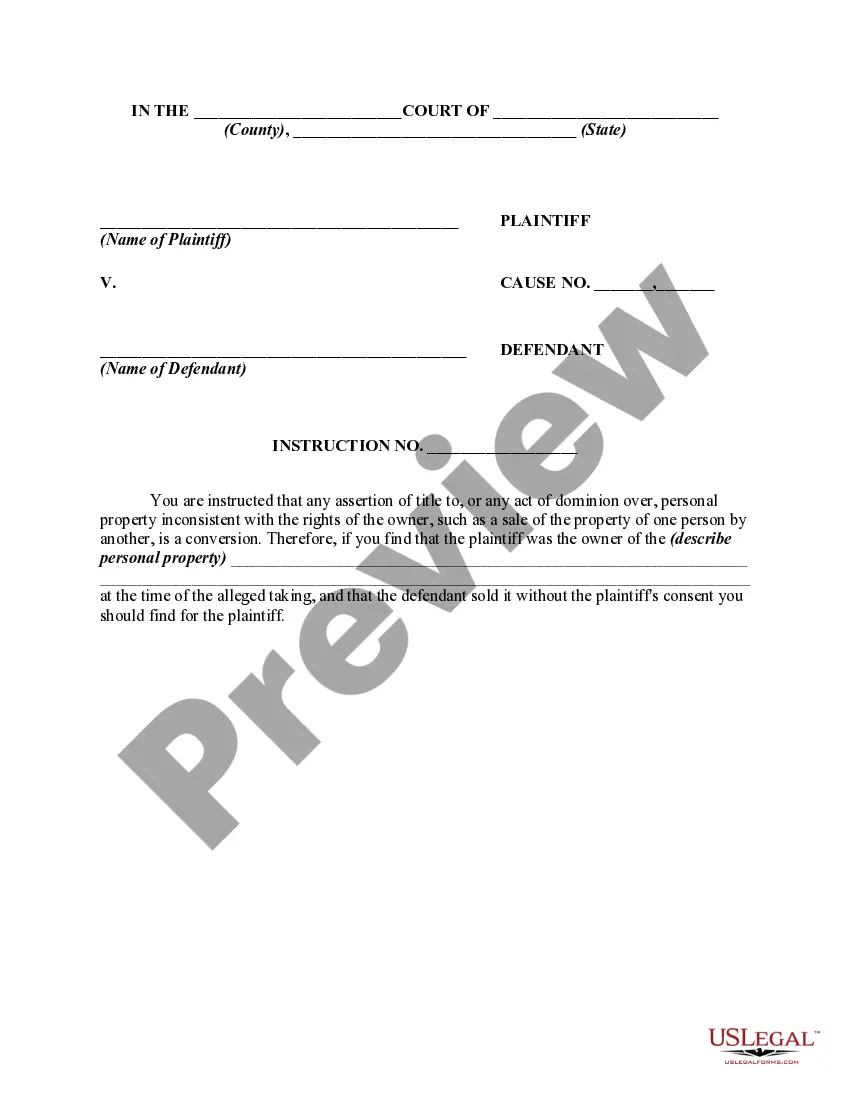
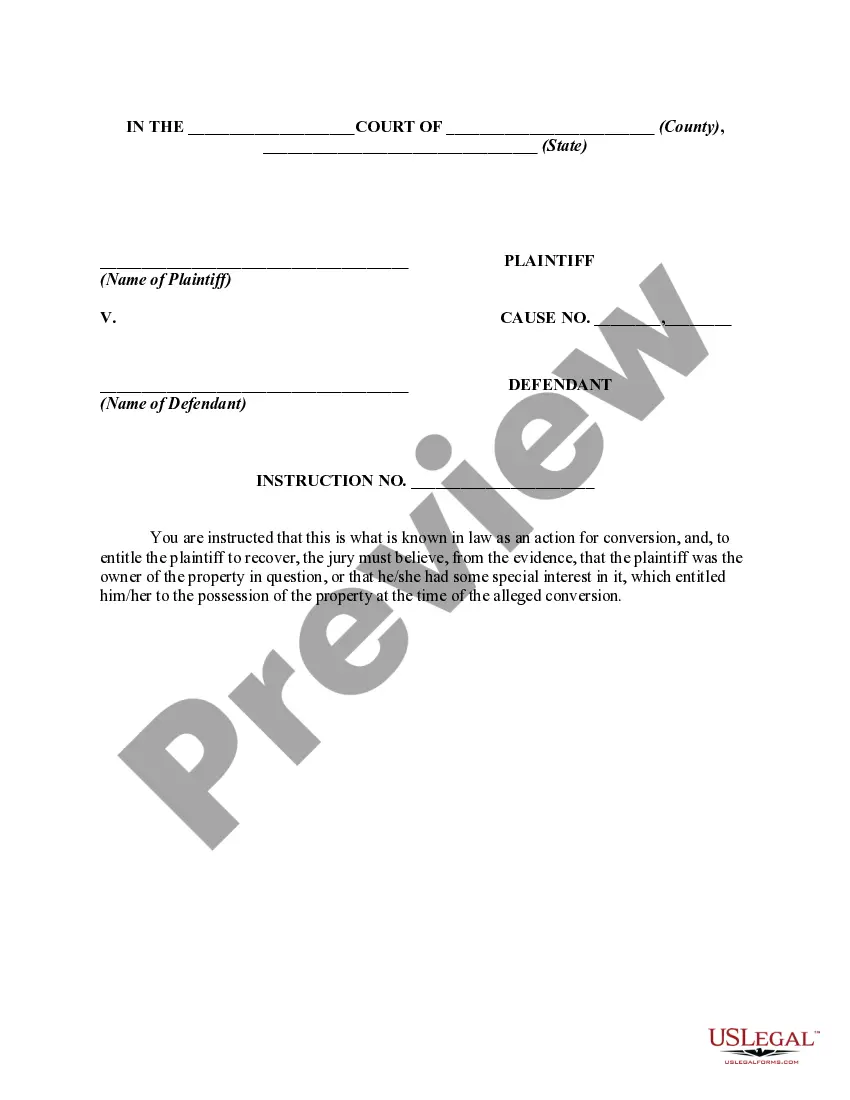
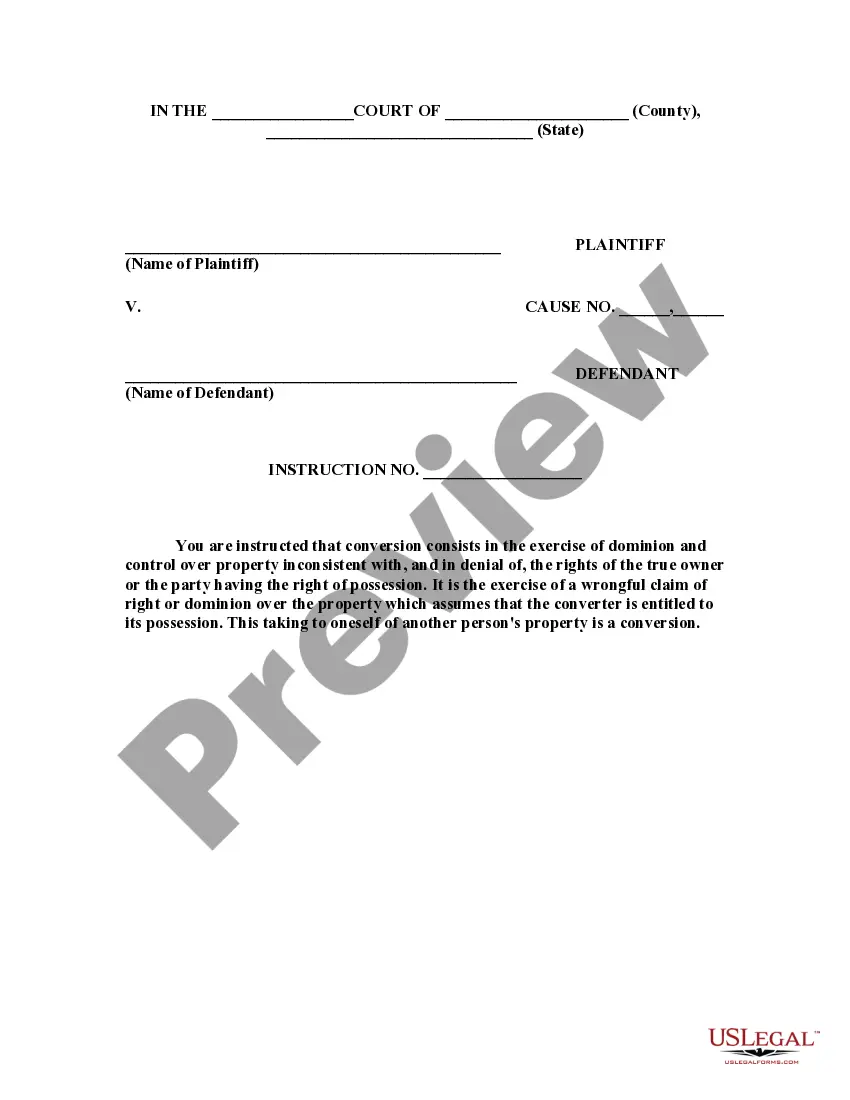
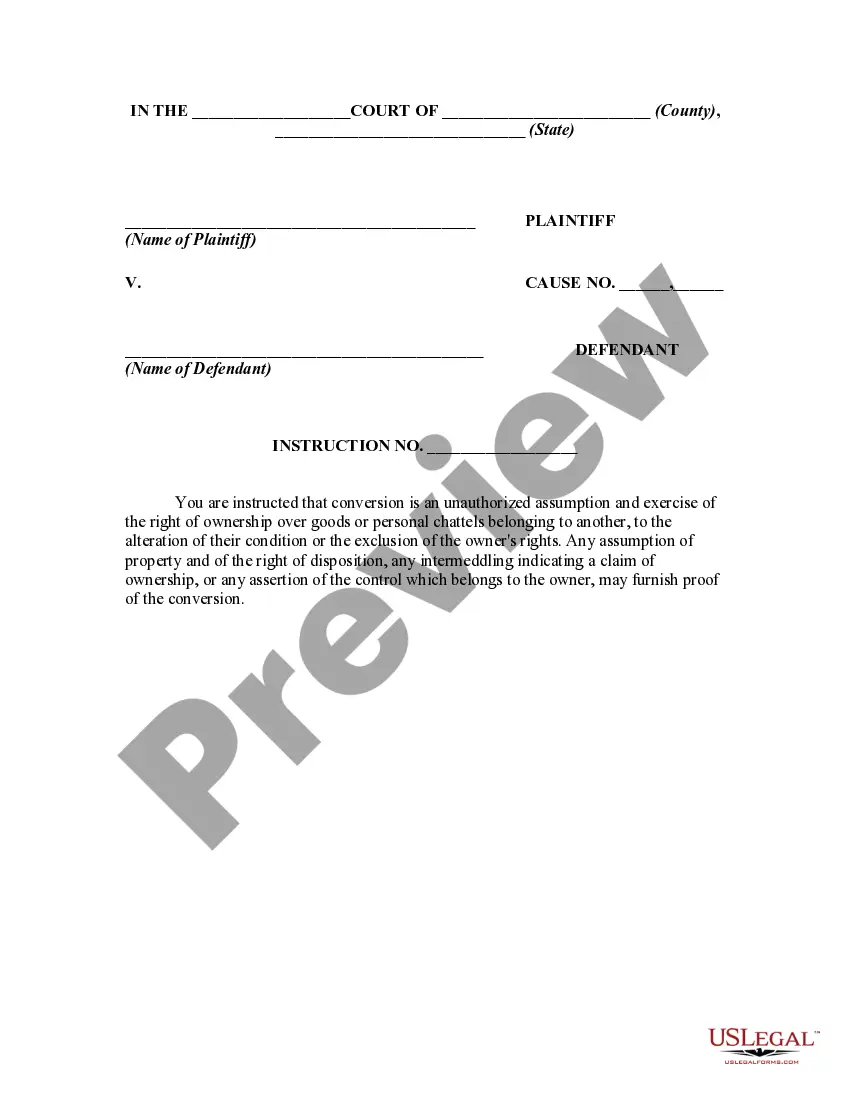
This form is an Instruction to Jury that Unauthorized Sale of Personal Property can Constitute Conversion. It provides essential guidance to jurors in cases where a defendant unlawfully took and sold personal property belonging to another person. This form differs from other forms of jury instructions by specifically addressing the legal concept of conversion, which is related to but distinct from theft.
Key parts of this document
- Case title: Identifies the parties involved in the case.
- Cause number: A unique identifier for the case.
- Instruction number: Indicates which jury instruction is being provided.
- Definition of conversion: Clarifies what constitutes conversion in the context of unauthorized sales.
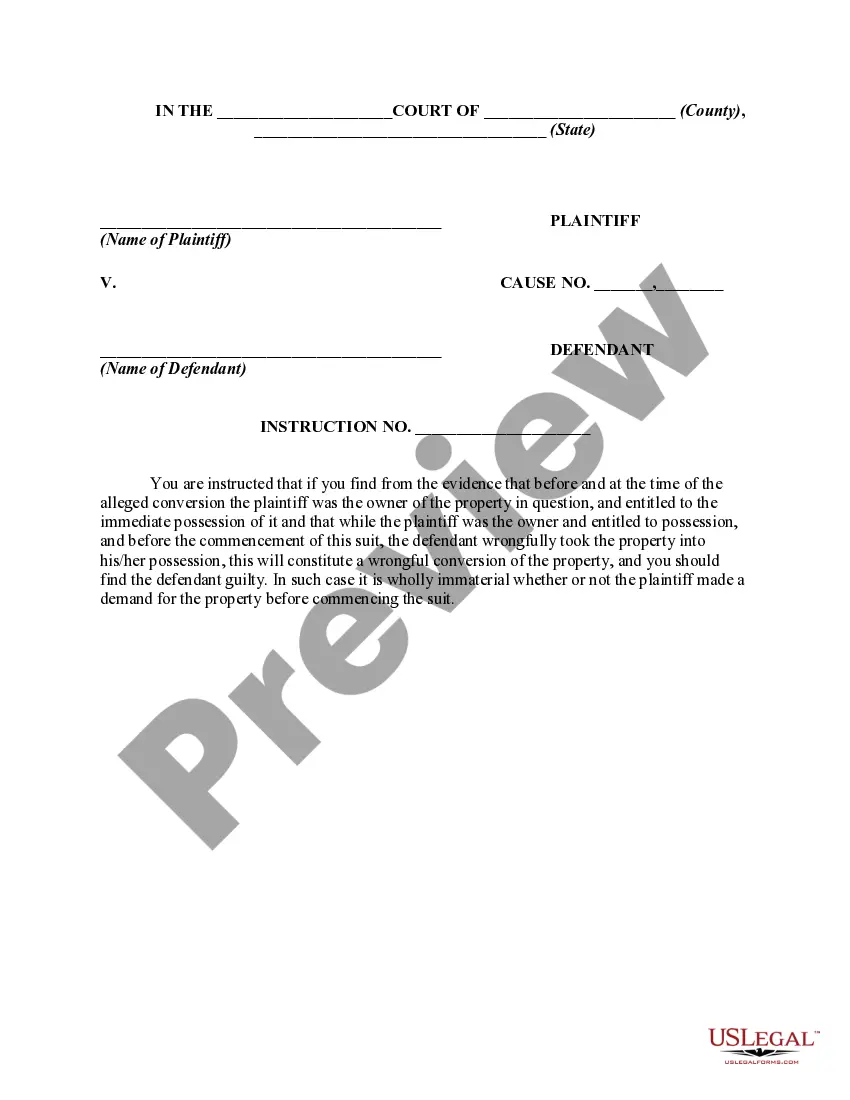
- Ownership assertion: Requires jurors to determine if the plaintiff was the rightful owner of the property at the time of taking.
- Consent requirement: Highlights the importance of whether the defendant had permission to sell the property.
Situations where this form applies
The Instruction to Jury that Unauthorized Sale of Personal Property can Constitute Conversion is used in legal cases where a plaintiff claims that their personal property was wrongfully taken and sold by a defendant. It is appropriate when the ownership of the property and the absence of consent for its sale are in dispute. This form is essential in providing jurors with the legal standards they must apply in deciding the case.
Who this form is for
- Judges issuing jury instructions in civil cases involving conversion claims.
- Attorneys representing plaintiffs or defendants in conversion lawsuits.
- Legal professionals seeking standardized jury instructions regarding property conversion.
Steps to complete this form
- Identify the plaintiff and defendant: Input the names of both parties involved in the case at the top of the form.
- Assign a cause number: Insert the unique case number that corresponds to the legal proceeding.
- Enter the instruction number: Specify the sequential number of this jury instruction.
- Describe the personal property: Provide a clear description of the property that was allegedly converted.
- Clarify ownership: Ensure the jury understands that they must find the plaintiff was the rightful owner at the time of taking.
- State the lack of consent: Emphasize that jurors need to determine whether the defendant sold the property without getting permission from the plaintiff.
Notarization guidance
This form does not typically require notarization to be legally valid. However, some jurisdictions or document types may still require it. US Legal Forms provides secure online notarization powered by Notarize, available 24/7 for added convenience.
Get your form ready online
Our built-in tools help you complete, sign, share, and store your documents in one place.
Make edits, fill in missing information, and update formatting in US Legal Forms—just like you would in MS Word.
Download a copy, print it, send it by email, or mail it via USPS—whatever works best for your next step.
Sign and collect signatures with our SignNow integration. Send to multiple recipients, set reminders, and more. Go Premium to unlock E-Sign.
If this form requires notarization, complete it online through a secure video call—no need to meet a notary in person or wait for an appointment.
We protect your documents and personal data by following strict security and privacy standards.

Make edits, fill in missing information, and update formatting in US Legal Forms—just like you would in MS Word.

Download a copy, print it, send it by email, or mail it via USPS—whatever works best for your next step.

Sign and collect signatures with our SignNow integration. Send to multiple recipients, set reminders, and more. Go Premium to unlock E-Sign.

If this form requires notarization, complete it online through a secure video call—no need to meet a notary in person or wait for an appointment.

We protect your documents and personal data by following strict security and privacy standards.
Typical mistakes to avoid
- Failing to clearly define the property in question.
- Not accurately stating the ownership details.
- Omitting the instruction number or cause number.
- Neglecting to outline the consent issues clearly.
Why complete this form online
- Convenience: Easily access and download the form from anywhere at any time.
- Editability: Make necessary adjustments before finalizing the content.
- Reliability: Obtain a form drafted by licensed attorneys, ensuring legal compliance.
Looking for another form?
Form popularity
FAQ
Conversion occurs when a person uses or alters a piece of personal property belonging to someone else without the owner's consent. The degree of interference for conversion must be so serious that the tortfeasor, or person accused of committing the tort, may be required to pay the full value of the property.
Conversion in California is a civil cause of action that applies when a person unlawfully and without permission, took or interfered with someone else's possession of their property. The victim can bring a claim for recovery of the property, or compensation for the value of the lost property.
Conversion in California is a civil cause of action that applies when a person unlawfully and without permission, took or interfered with someone else's possession of their property. The victim can bring a claim for recovery of the property, or compensation for the value of the lost property.
Wrongful conversion is to protect you against loss following the purchase of a vehicle from someone who is not the true owner. Personal Accident and Assault. Personal Accident and Assault covers bodily injury to you or your employees as a result of an accident caused by theft or attempted theft.
By tortuous taking; by any use or appropriation of the use of the person in possession, indicating a claim of right in opposition to rights of the owner; or. refusal to give up possession to the owner on demand.
Conversion can occur when someone, acting without your consent, does any of the following with your property: Takes and fails to return your property. Sells your property. Substantially changes your property, like cutting down trees to use the wood in construction.
Conversion in California is a civil cause of action that applies when a person unlawfully and without permission, took or interfered with someone else's possession of their property. The victim can bring a claim for recovery of the property, or compensation for the value of the lost property.
Prosecutors are responsible for bringing charges against people who have stolen property. Conversion is the civil equivalent of criminal theft charges. Individuals who want to sue to reclaim the value of their property may sue in small claims court or by hiring a civil attorney to handle the case for them.
Conversion is a tort that exposes you to liability for damages in a civil lawsuit. It applies when someone intentionally interferes with personal property belonging to another person.