Uncorroborated Testimony of Accomplice
Understanding this form
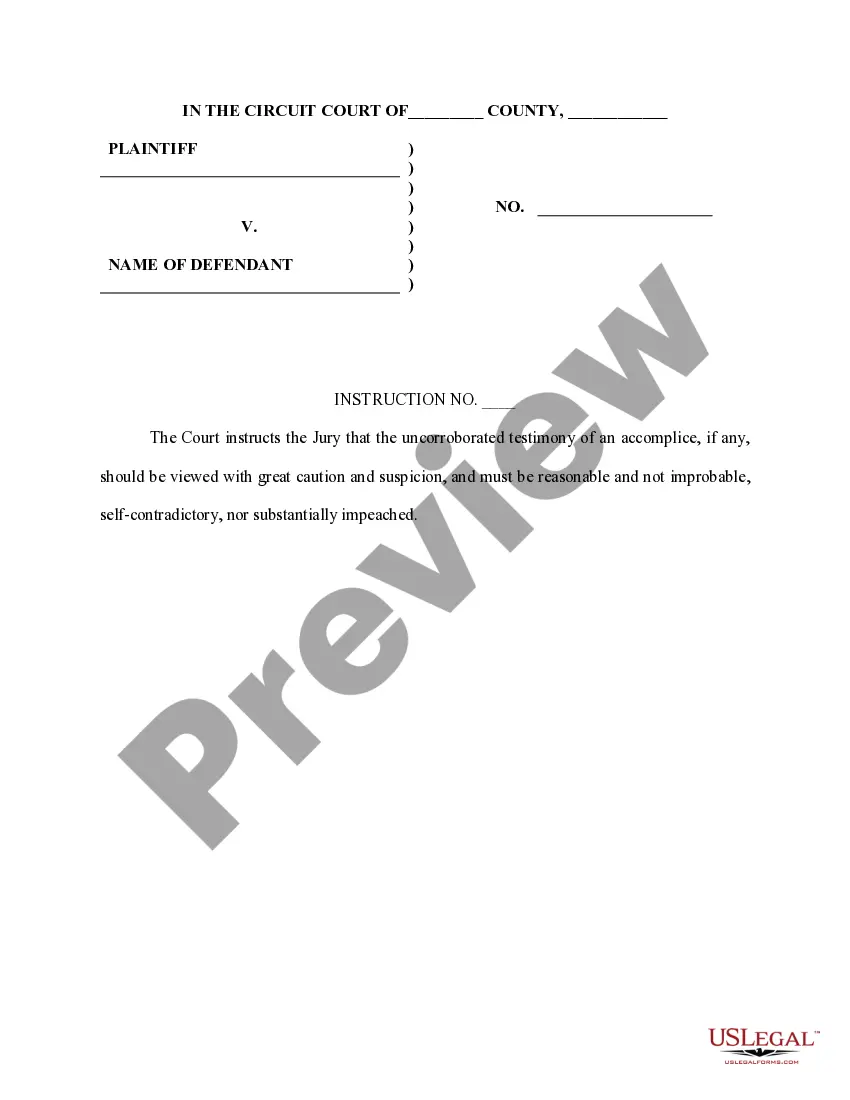
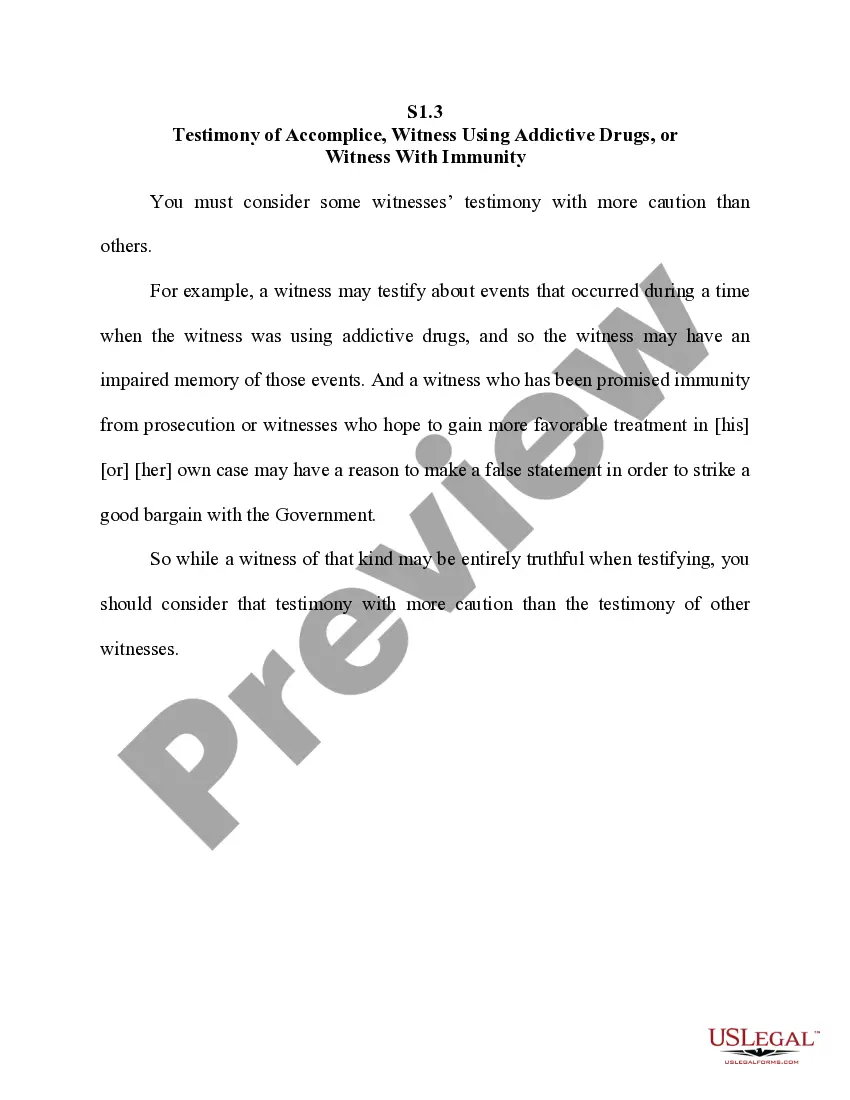
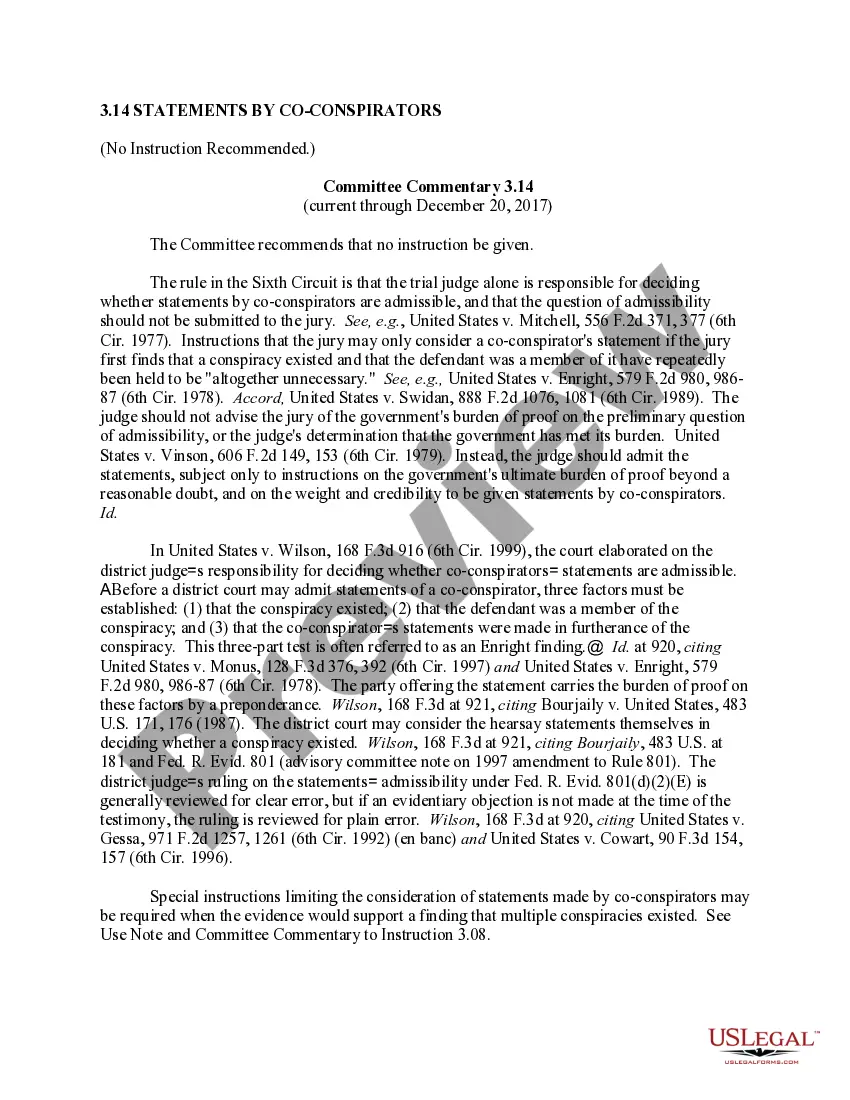
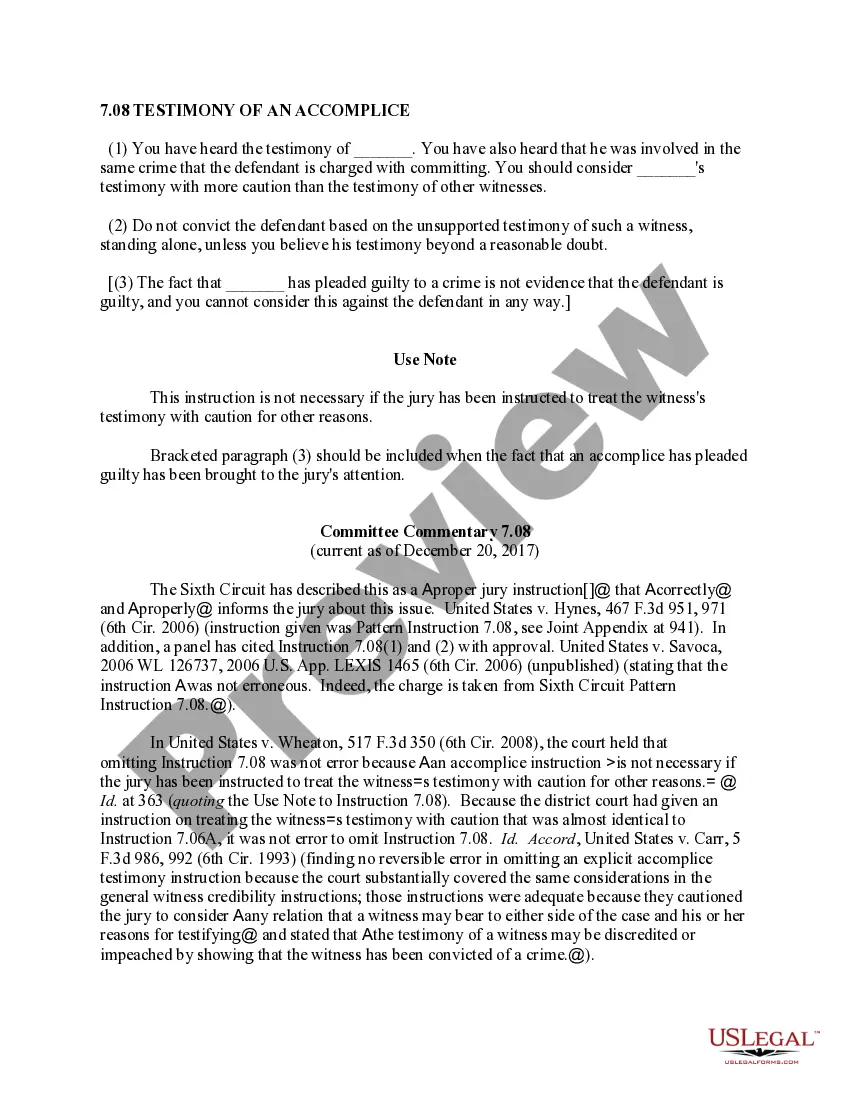
The Uncorroborated Testimony of Accomplice form is a jury instruction that guides jurors in assessing the credibility of an accomplice's testimony. This instruction emphasizes that any uncorroborated testimony should be scrutinized with great caution due to its inherent unreliability. This form is crucial for ensuring that jurors are aware of the potential biases and motivations of accomplices, distinguishing it from other evidentiary instructions used in court.
What’s included in this form
- Instructions for jurors to approach uncorroborated testimony with heightened suspicion.
- Criteria indicating the necessity for testimony to be reasonable and not improbable.
- Guidance on identifying self-contradictory or substantially impeached statements.
- Clarification of the legal standards applicable in the given jurisdiction.
Situations where this form applies
This form should be used in criminal cases where an accomplice's testimony is presented without corroborating evidence. It helps establish the framework for jurors to evaluate the reliability of such testimonies, particularly in cases involving serious charges, where the credibility of the witness may significantly impact the outcome of the trial.
Who should use this form
- Legal professionals involved in criminal defense or prosecution.
- Judges issuing jury instructions in court.
- Litigants who wish to ensure that juries properly assess accomplice testimonies.
Completing this form step by step
- Review the relevant case details and context for the accomplice's testimony.
- Ensure that the instruction language aligns with state-specific legal requirements.
- Clearly state the criteria jurors should consider regarding the testimony's reliability.
- Finalize and proofread the instruction for clarity and legal accuracy.
- Distribute the instruction to jurors before they deliberate on the case.
Notarization requirements for this form
In most cases, this form does not require notarization. However, some jurisdictions or signing circumstances might. US Legal Forms offers online notarization powered by Notarize, accessible 24/7 for a quick, remote process.
Get your form ready online
Our built-in tools help you complete, sign, share, and store your documents in one place.
Make edits, fill in missing information, and update formatting in US Legal Forms—just like you would in MS Word.
Download a copy, print it, send it by email, or mail it via USPS—whatever works best for your next step.
Sign and collect signatures with our SignNow integration. Send to multiple recipients, set reminders, and more. Go Premium to unlock E-Sign.
If this form requires notarization, complete it online through a secure video call—no need to meet a notary in person or wait for an appointment.
We protect your documents and personal data by following strict security and privacy standards.

Make edits, fill in missing information, and update formatting in US Legal Forms—just like you would in MS Word.

Download a copy, print it, send it by email, or mail it via USPS—whatever works best for your next step.

Sign and collect signatures with our SignNow integration. Send to multiple recipients, set reminders, and more. Go Premium to unlock E-Sign.

If this form requires notarization, complete it online through a secure video call—no need to meet a notary in person or wait for an appointment.

We protect your documents and personal data by following strict security and privacy standards.
Avoid these common issues
- Failing to adjust the instructions according to state law nuances.
- Using ambiguous language that may confuse jurors.
- Neglecting to explain the significance of corroborating evidence.
Why use this form online
- Easy access to vetted legal language drafted by licensed attorneys.
- Ability to customize instructions to fit specific case needs.
- Convenience of downloading and printing directly from your device.
Quick recap
- The Uncorroborated Testimony of Accomplice form is essential for guiding jury evaluations of witness credibility.
- Using this form correctly ensures that jurors understand the potential risks associated with relying on accomplice testimony.
- Always refer to state-specific requirements to adapt the form accurately.
Looking for another form?








Form popularity
FAQ
Conclusion. To attract Section 133 of The Evidence Act, 1872, a person must be an accomplice. An accomplice is a person who has taken part in the commission of the crime, along with another or others. If an accomplice is arrested and thereafter has been given a pardon, he is referred to as an approver.
A witness to a crime who, either as principal, Accomplice, or Accessory, was connected with the crime by unlawful act or omission on his or her part, transpiring either before, at time of, or after commission of the offense, and whether or not he or she was present and participated in the crime.
Under the English common law, an accomplice is a person who actively participates in the commission of a crime, even if they take no part in the actual criminal offense. For example, in a bank robbery, the person who points the gun at the teller and demands the money is guilty of armed robbery.
An accessory to a crime can face a fine of up to $5,000 and/or up to one year in a county jail.Consult with an experienced criminal defense attorney if you are facing criminal charges for being an accomplice of or accessory to a crime. The prosecution must prove you assisted or encouraged the commission of the crime.
Under the English common law, an accomplice is a person who actively participates in the commission of a crime, even if they take no part in the actual criminal offense. For example, in a bank robbery, the person who points the gun at the teller and demands the money is guilty of armed robbery.
Section 133 of the Indian Evidence Act, 1872 deals with the Accomplice Witness.An accomplice is a competent witness provided he is not a co accused under trial in the same case. But such competency which has been conferred on him by a process of law does not divest him of the character of an accused.
Law. In the law, testimony is a form of evidence that is obtained from a witness who makes a solemn statement or declaration of fact. Testimony may be oral or written, and it is usually made by oath or affirmation under penalty of perjury.Their expertise is in the examination of evidence or relevant facts in the case.
Under the English common law, an accomplice is a person who actively participates in the commission of a crime, even if they take no part in the actual criminal offense.An accessory is generally not present at the actual crime, and may be subject to lesser penalties than an accomplice or principal.
: one associated with another especially in wrongdoing was convicted as an accomplice to murder.