Trust Agreement - Family Special Needs

What this document covers
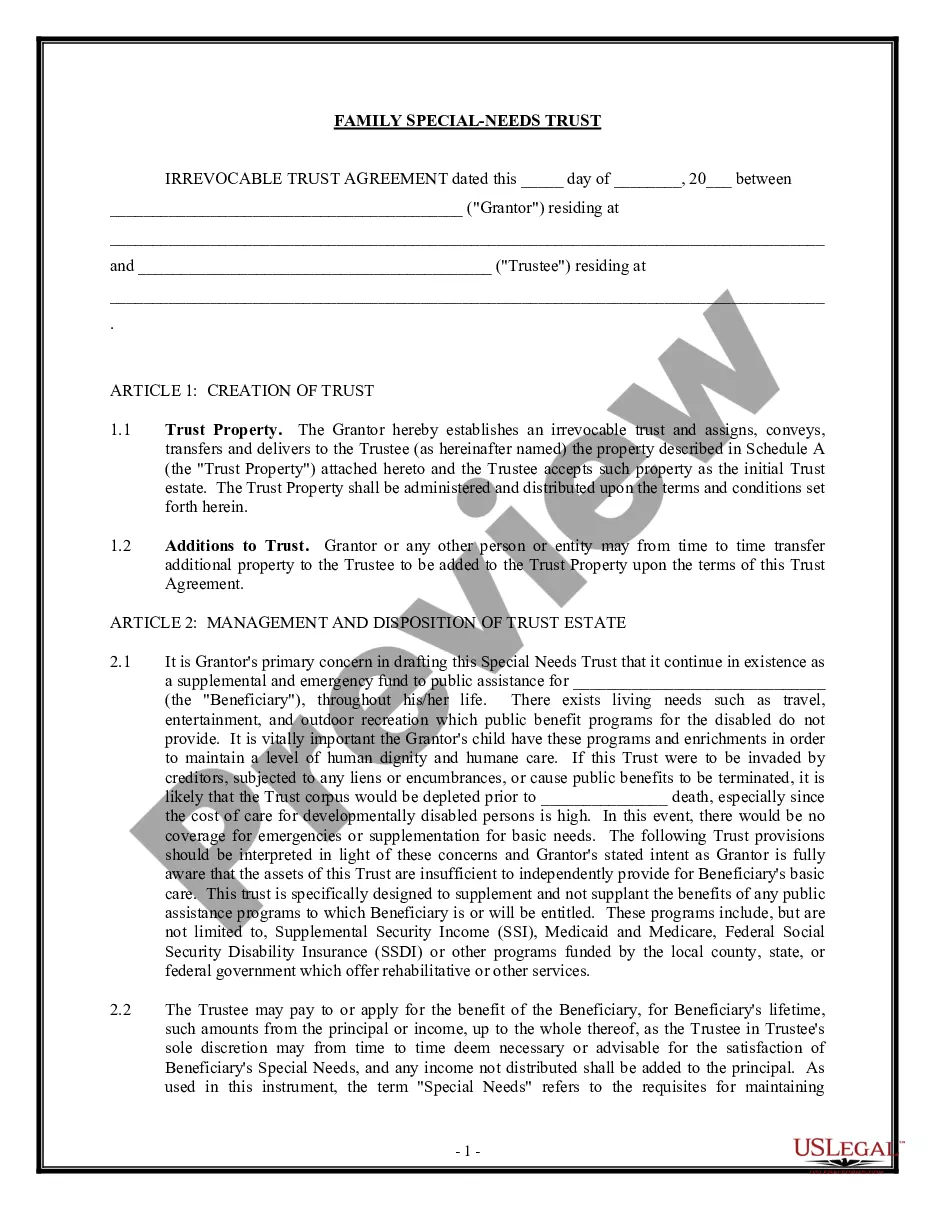
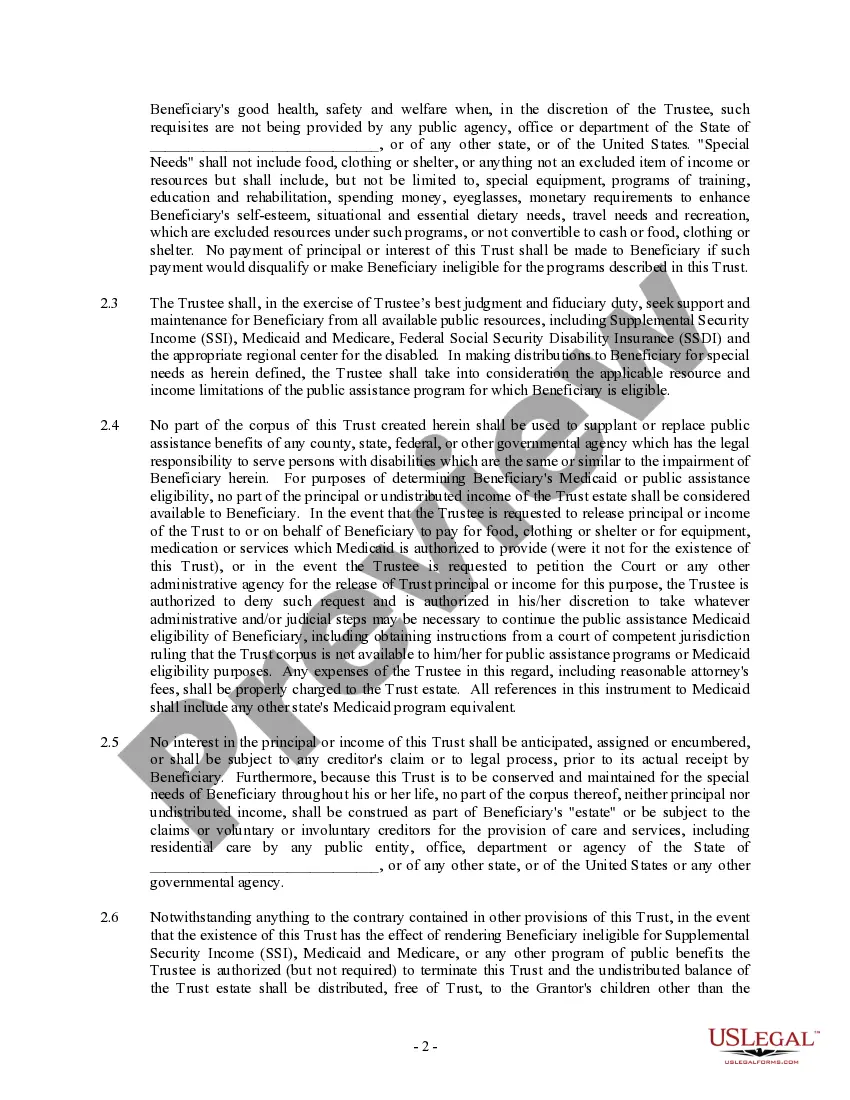
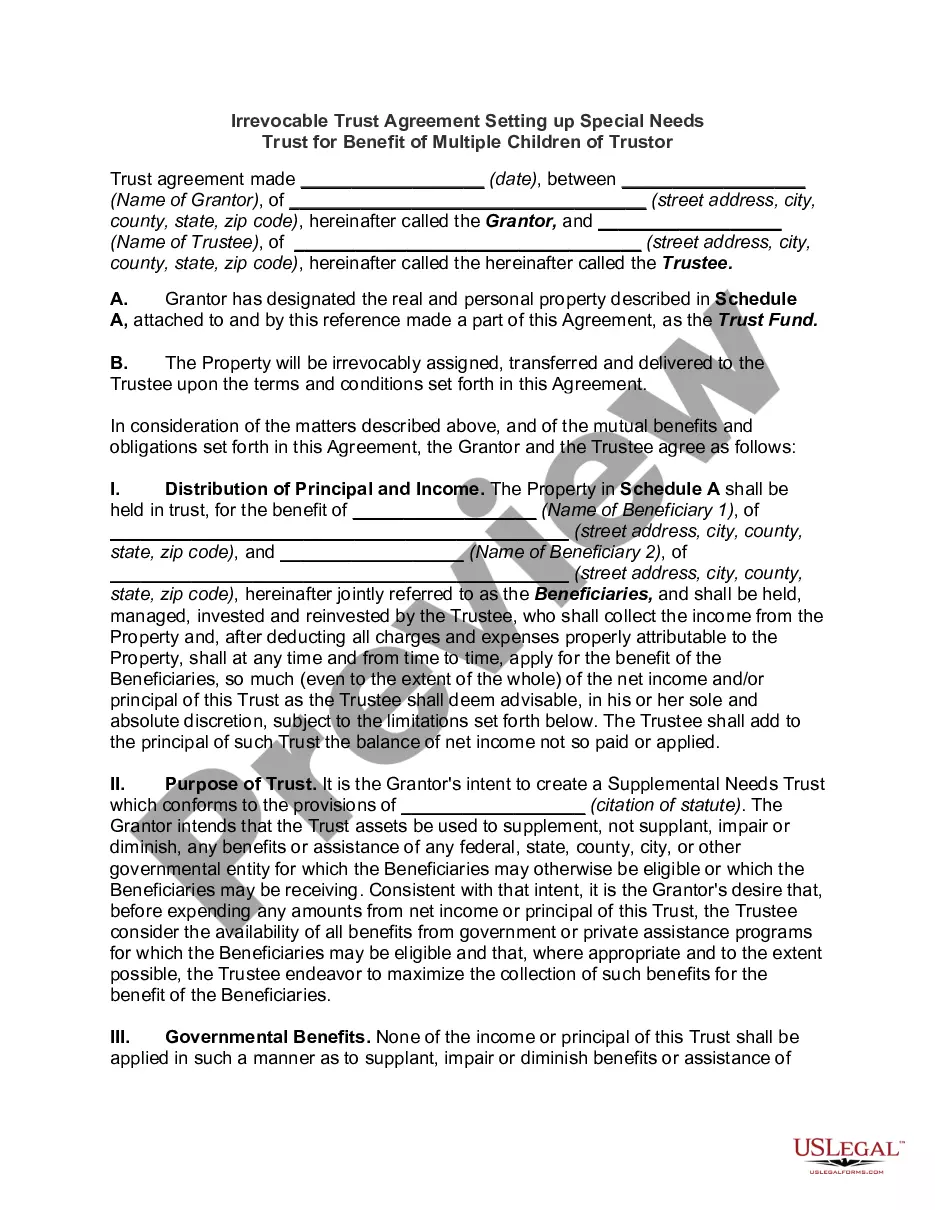
The Trust Agreement - Family Special Needs is a legal document that establishes an irrevocable trust designed specifically to provide financial support for a beneficiary with special needs without jeopardizing their eligibility for public assistance. This trust allows the grantor to assign assets to a trustee, who will manage these assets to supplement the beneficiary's needs throughout their lifetime. Unlike other trusts, this agreement uniquely focuses on maintaining the necessary balance between providing additional support and preserving access to public benefits.
What’s included in this form
- Creation of Trust: Establishes the trust and assigns property to the trustee.
- Management of Trust Estate: Outlines how the trustee should manage and distribute the trust assets to meet the beneficiary's special needs.
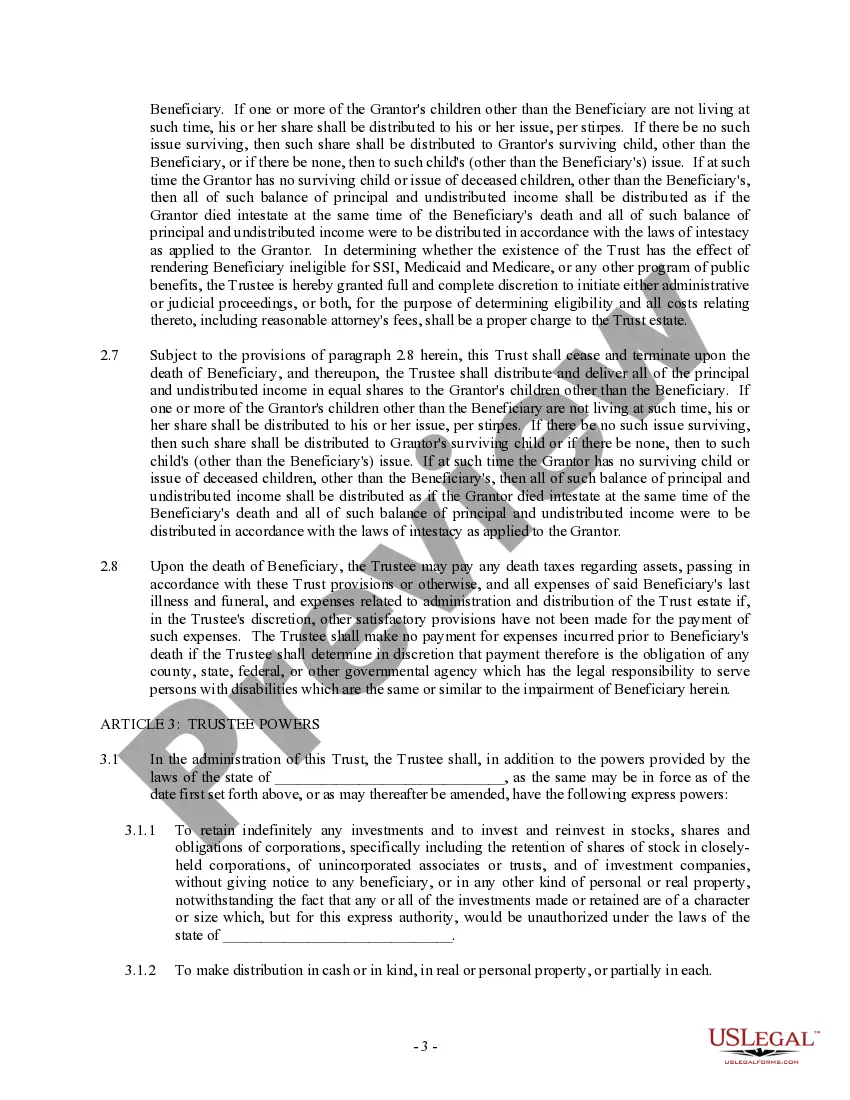
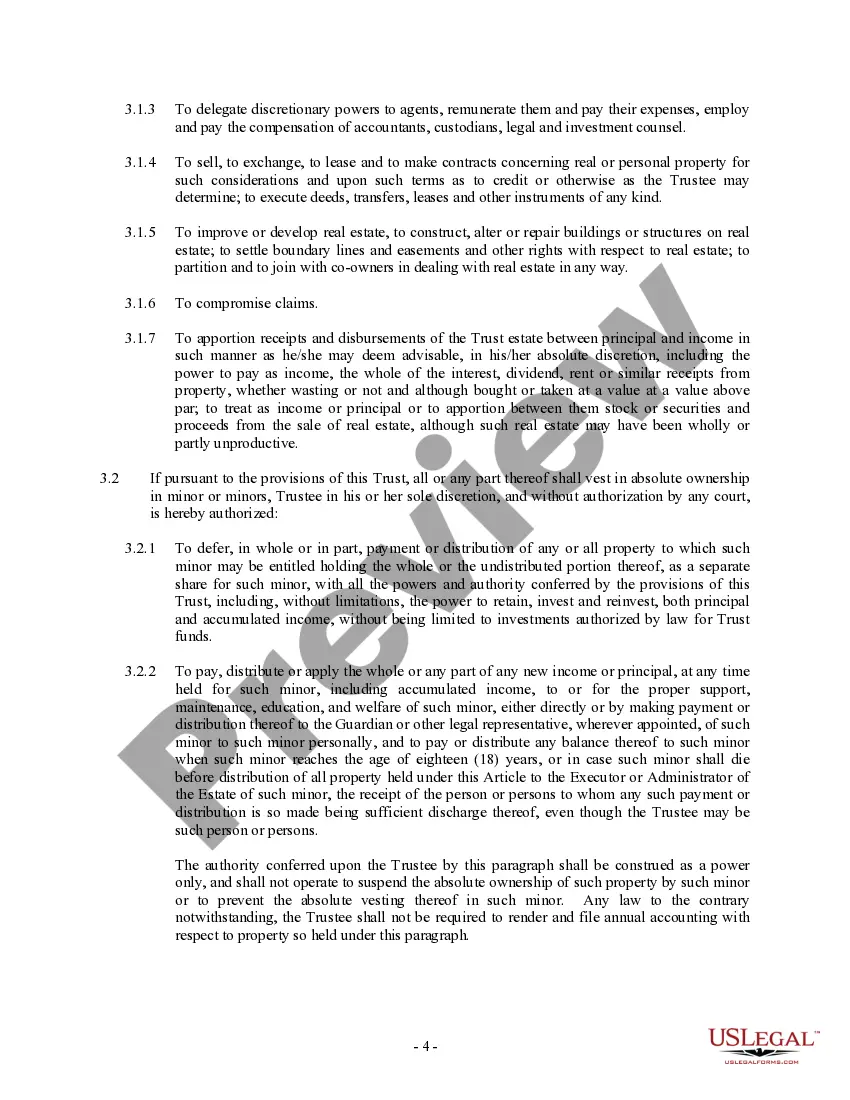
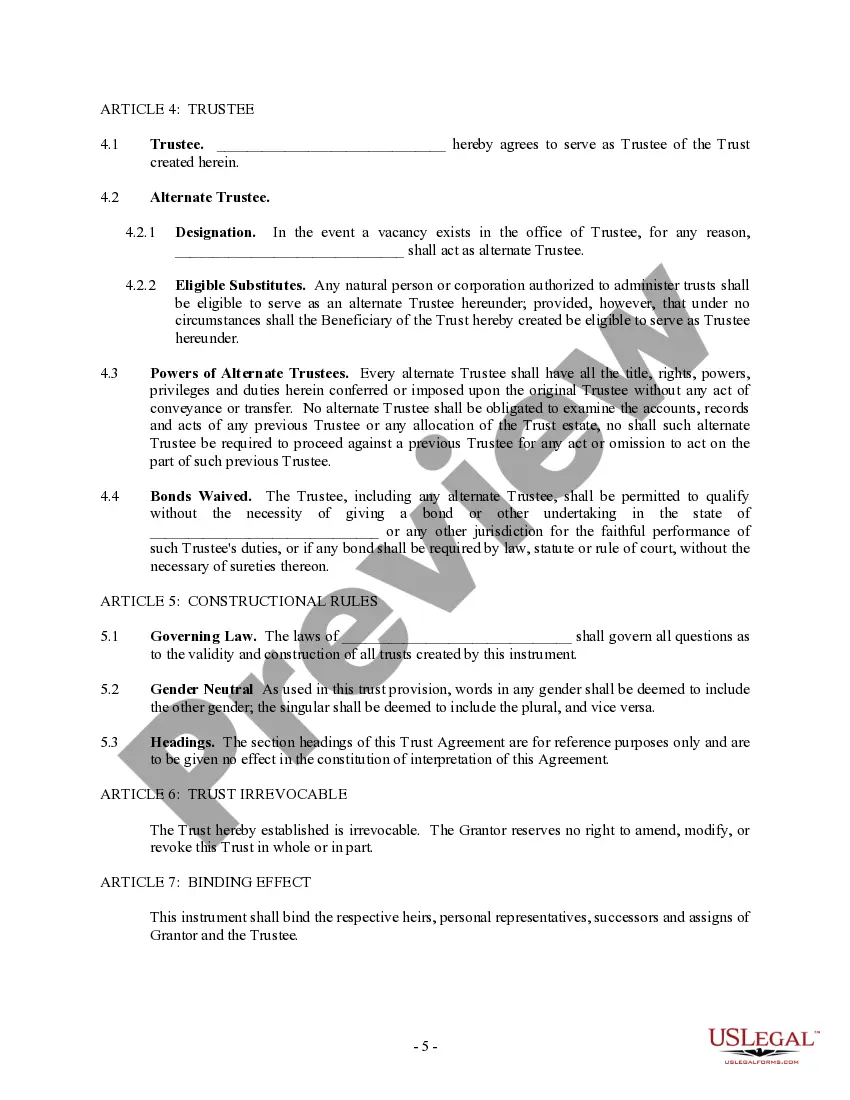
- Trustee Powers: Details the authority and responsibilities of the trustee in administering the trust.
- Distribution Upon Death: Specifies how the trust assets will be distributed after the beneficiary's death.
- Trustee Responsibilities: Highlights the trustee's obligations to preserve public assistance eligibility while managing the trust assets.
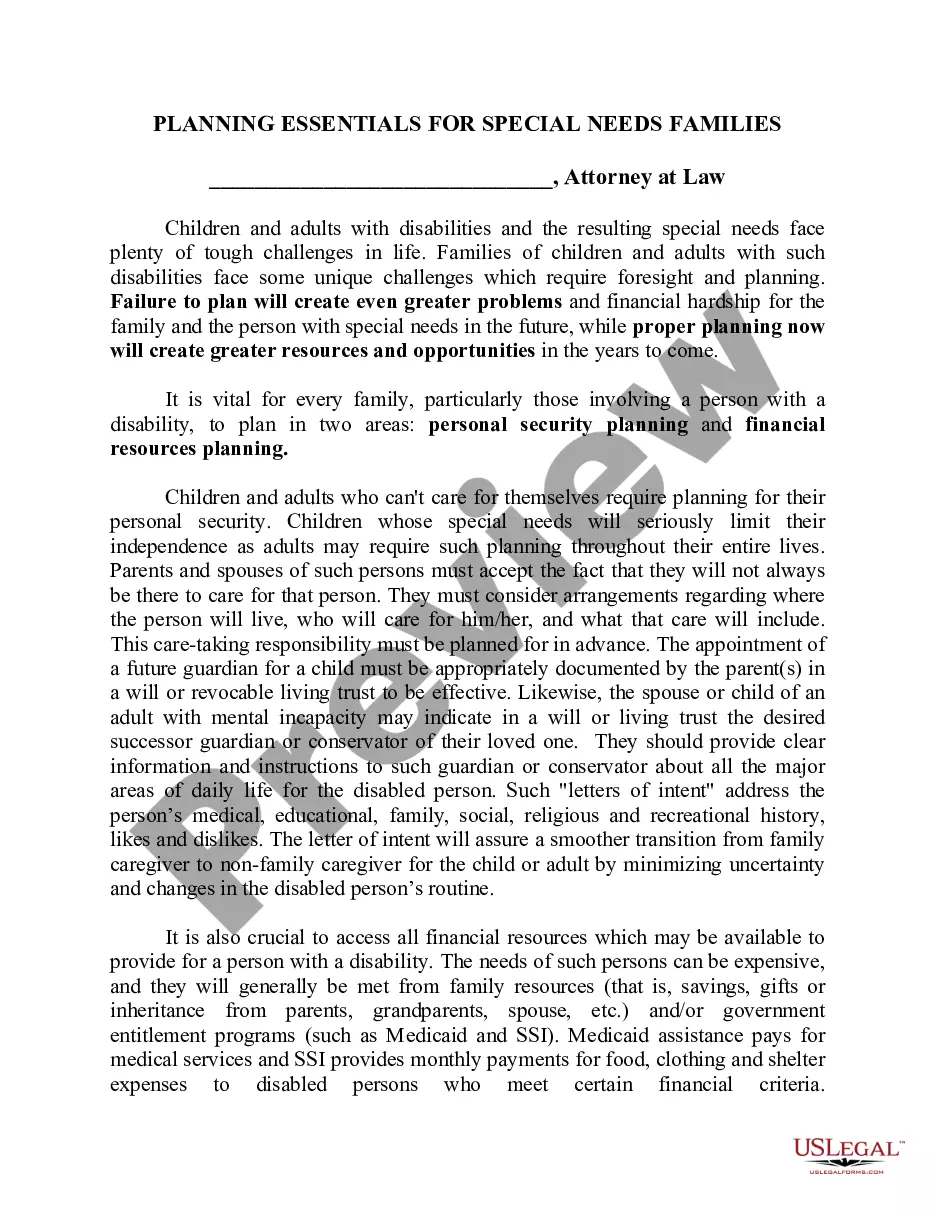
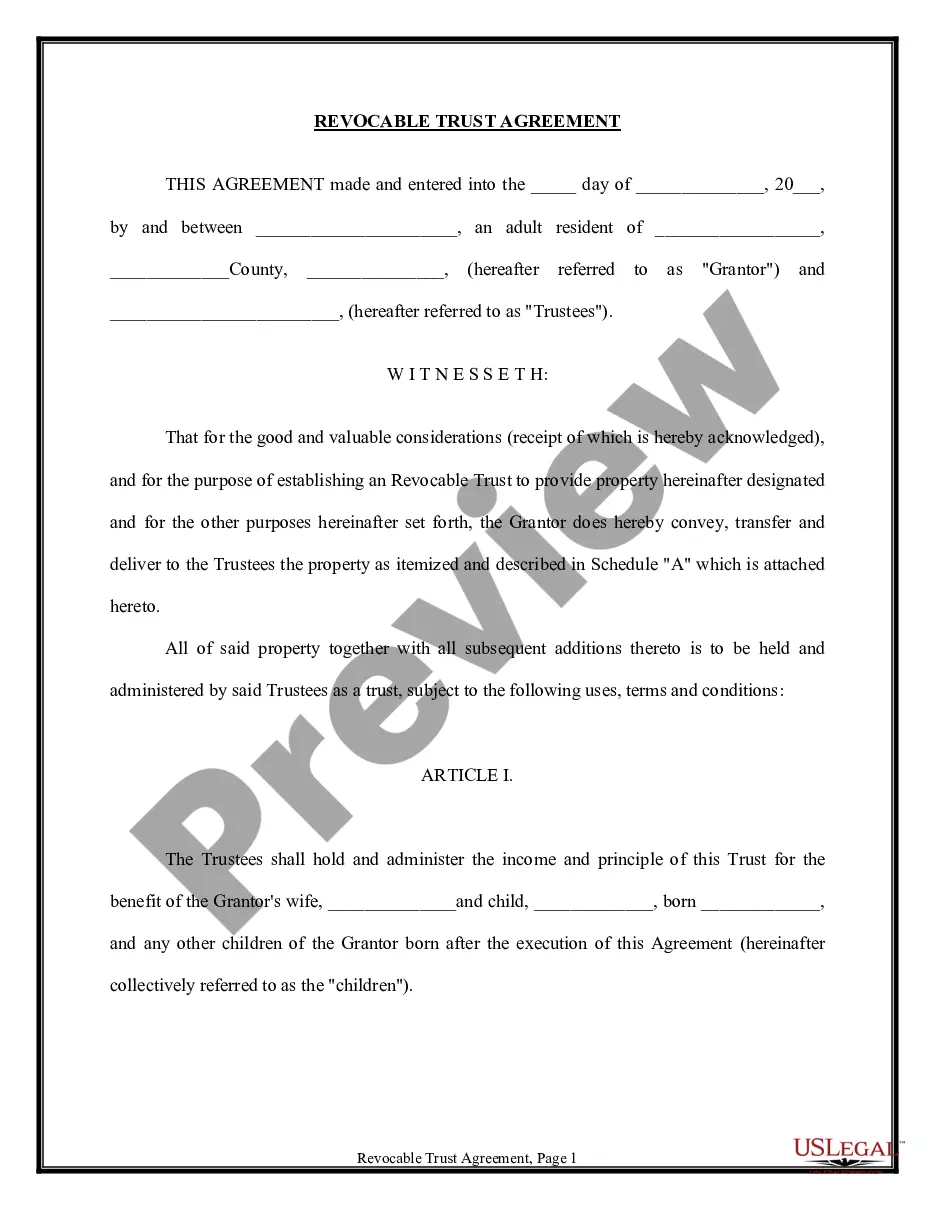

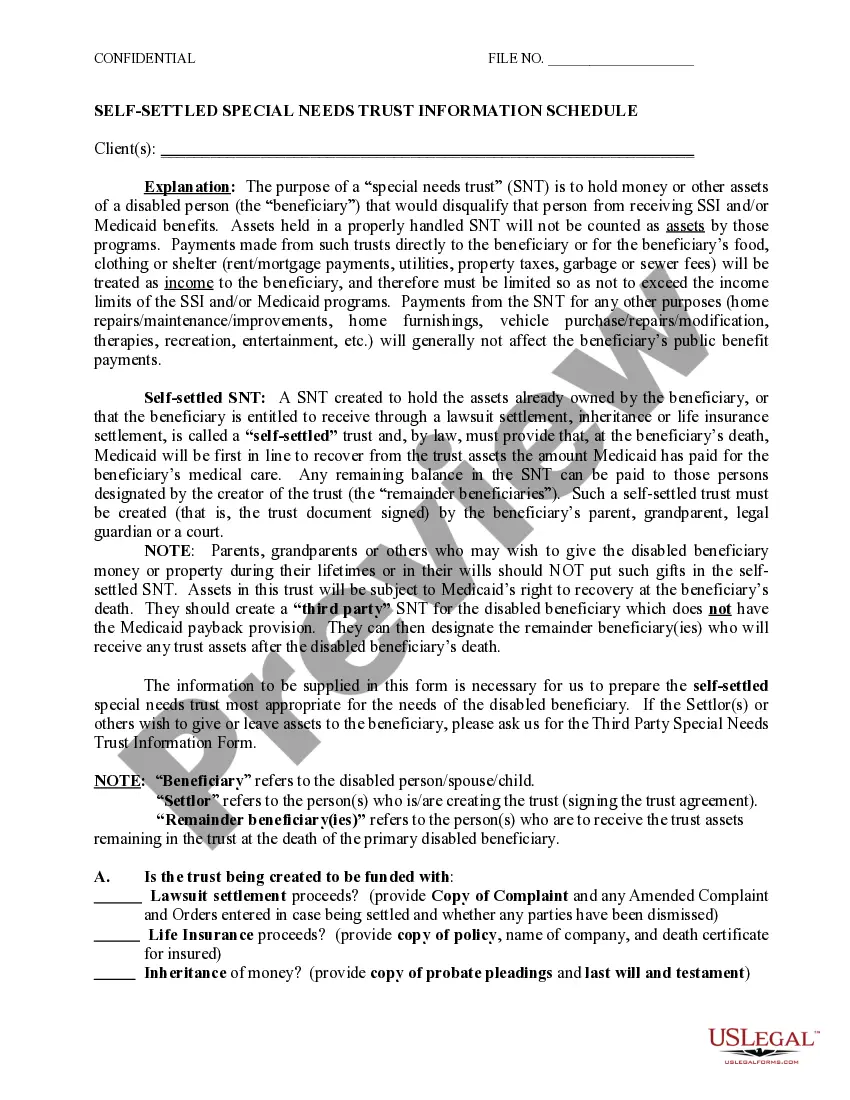
Common use cases
This form should be used when a grantor wishes to secure financial resources for a family member with special needs, ensuring that these funds do not interfere with the beneficiary's eligibility for important public assistance programs such as Medicaid and Supplemental Security Income. It is ideal for families wanting to provide a safety net for medical, educational, and recreational needs without affecting benefits received from public sources.
Who can use this document
- Families with a member who has special needs and requires supplemental financial support.
- Individuals wishing to leave assets to a disabled relative while protecting their government benefits.
- Anyone planning for the long-term care of a developmentally disabled person.
- Guardians or caretakers involved in estate planning for individuals with special needs.
How to prepare this document
- Identify the grantor and trustee by providing their names and addresses at the beginning of the agreement.
- Clearly describe the property being transferred into the trust in Schedule A.
- Specify the beneficiaryâs name and their special needs to guide trustee actions.
- Detail the powers of the trustee, ensuring they have clear guidelines for managing trust assets.
- Sign and date the document in the presence of a notary, if required, to ensure legal validity.
Notarization requirements for this form
This form does not typically require notarization unless specified by local law. However, it is advisable to consult with a legal professional to confirm the validity of the trust in your jurisdiction.
Get your form ready online
Our built-in tools help you complete, sign, share, and store your documents in one place.
Make edits, fill in missing information, and update formatting in US Legal Forms—just like you would in MS Word.
Download a copy, print it, send it by email, or mail it via USPS—whatever works best for your next step.
Sign and collect signatures with our SignNow integration. Send to multiple recipients, set reminders, and more. Go Premium to unlock E-Sign.
If this form requires notarization, complete it online through a secure video call—no need to meet a notary in person or wait for an appointment.
We protect your documents and personal data by following strict security and privacy standards.

Make edits, fill in missing information, and update formatting in US Legal Forms—just like you would in MS Word.

Download a copy, print it, send it by email, or mail it via USPS—whatever works best for your next step.

Sign and collect signatures with our SignNow integration. Send to multiple recipients, set reminders, and more. Go Premium to unlock E-Sign.

If this form requires notarization, complete it online through a secure video call—no need to meet a notary in person or wait for an appointment.

We protect your documents and personal data by following strict security and privacy standards.
Common mistakes to avoid
- Failing to include detailed descriptions of the assets being transferred to the trust.
- Not clearly defining the special needs of the beneficiary, which may lead to mismanagement of funds.
- Our misunderstanding of the trustee's powers, which can lead to conflicts or difficulties in management.
- Neglecting to seek legal advice when setting up the trust to ensure compliance with local laws.
Why complete this form online
- Convenient access to the form anytime and anywhere.
- Immediate download for quick completion and implementation.
- Edit and customize the form to fit specific needs without legal jargon.
- Reliable templates drafted by licensed attorneys that comply with current laws.
Legal use & context
- This Trust Agreement is intended to create a legally enforceable trust, protecting the beneficiaryâs special needs while allowing them to retain access to public assistance programs.
- It is crucial that the trustee adheres to the guidelines outlined in the trust to maintain its integrity and compliance with applicable laws.
- Users should stay informed about any changes in relevant laws that may affect their trust or the benefits their beneficiaries receive.
Main things to remember
- The Trust Agreement - Family Special Needs provides a framework for supporting individuals with disabilities.
- It safeguards eligibility for government assistance while offering additional financial resources.
- Precise completion and understanding the obligations of the trustee are critical for the trustâs success.
Looking for another form?

Form popularity
FAQ
The child cannot accumulate more than $2,000 in assets or risk losing important and life-sustaining public assistance benefits. For that reason, a special needs trust must to be set up carefully and by an experienced special needs planning attorney. Regardless, once you set up the trust, it must be funded.
Special Needs Trusts are typically irrevocable, which means that they cannot be revoked and can only be amended in very limited circumstances, if at all. These trusts are usually in place for the lifetime of the Beneficiary, and over such a long time, various circumstances invariably change.
Special needs trusts are beneficial for those who have permanent special needs or disabilities, those who currently qualify for governmental benefits, those who have special needs but may not qualify for governmental benefits later, and those who cannot manage finances on their own.
A special needs trust lets parents, other family members and other interested parties contribute funds for the benefit of a disabled person, while also enabling him or her to still receive means-tested benefits such as Medicaid and Security Supplemental Income (SSI).
Special needs trusts pay for comforts and luxuries -- "special needs" -- that could not be paid for by public assistance funds. This means that if money from the trust is used for food or shelter costs on a regular basis or distributed directly to the beneficiary, such payments will count as income to the beneficiary.
Failure to set up a special needs trust might affect them, even if not as much as another person who receives, say, SSI and Medicaid. Even someone receiving Medicare will have some effect from having a higher income.
A special needs trust is a trust tailored to a person with special needs that is designed to manage assets for that person's benefit while not compromising access to important government benefits. There are three main types of special needs trusts: the first-party trust, the third-party trust, and the pooled trust.
In general, trust structures are intended to provide a legal way to title and hold assets to be used to support one or more beneficiaries. Special needs trusts are similar and are used to benefit someone who has physical or mental disabilities.