Affidavit by an Attorney-in-Fact or by Affiant in the Capacity of an Attorney-in-Fact
What this document covers
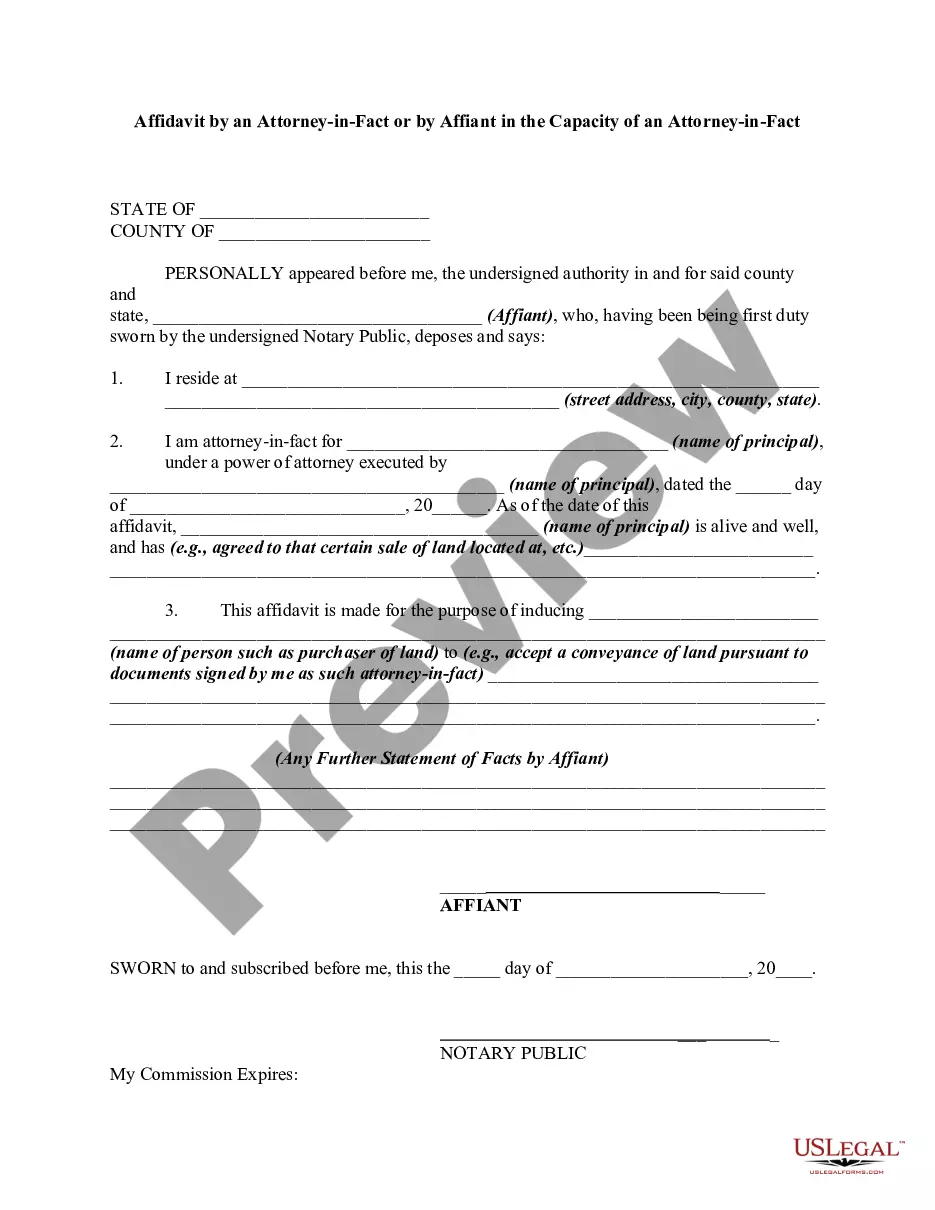
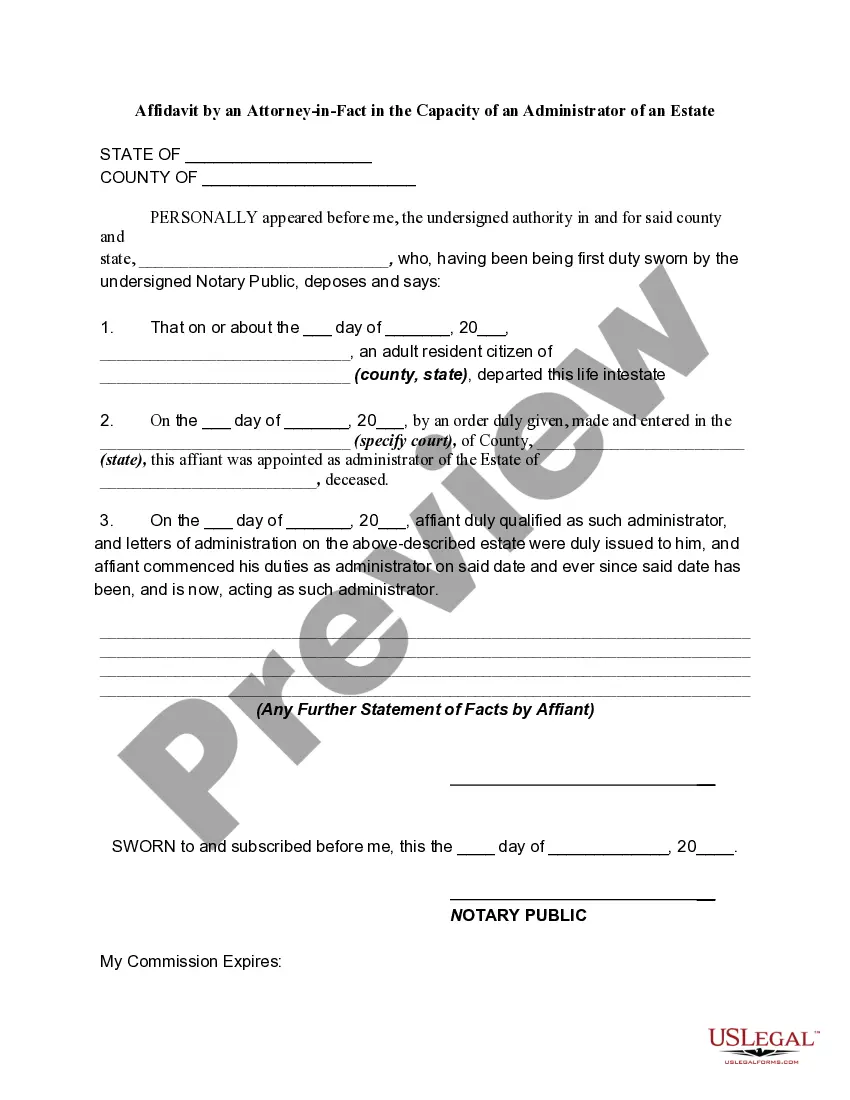
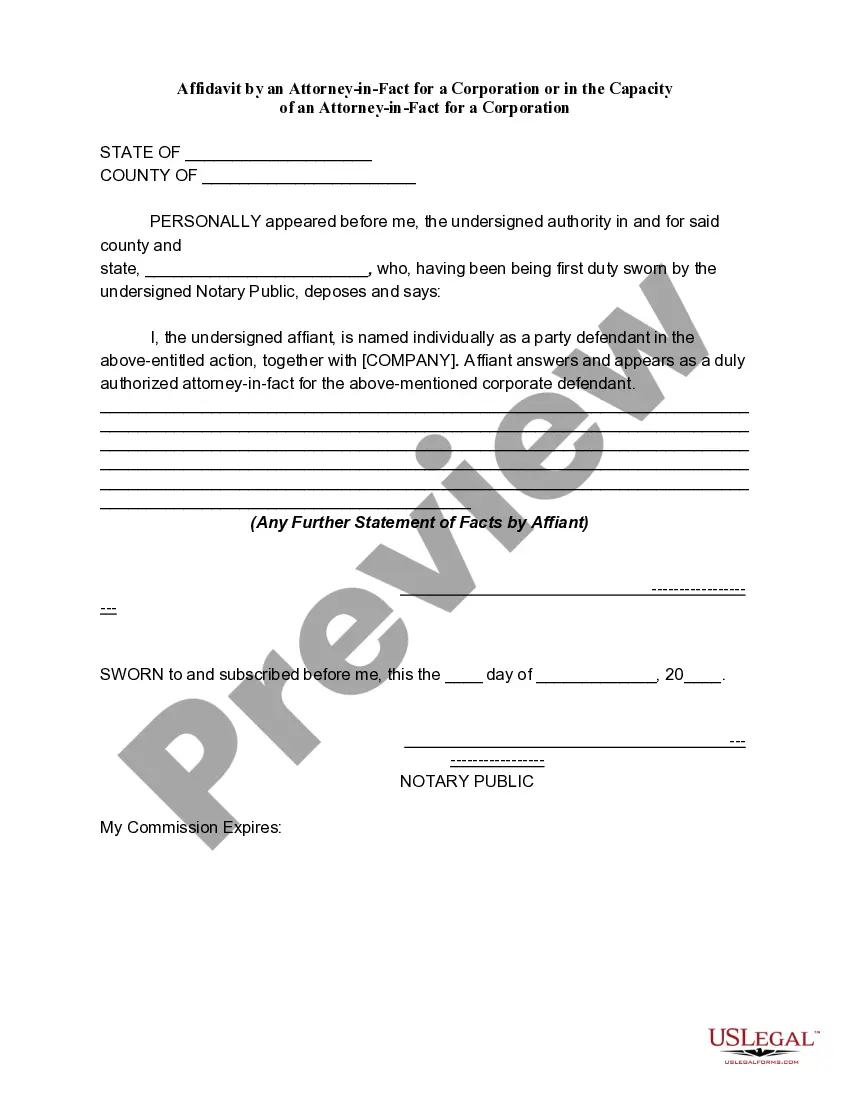
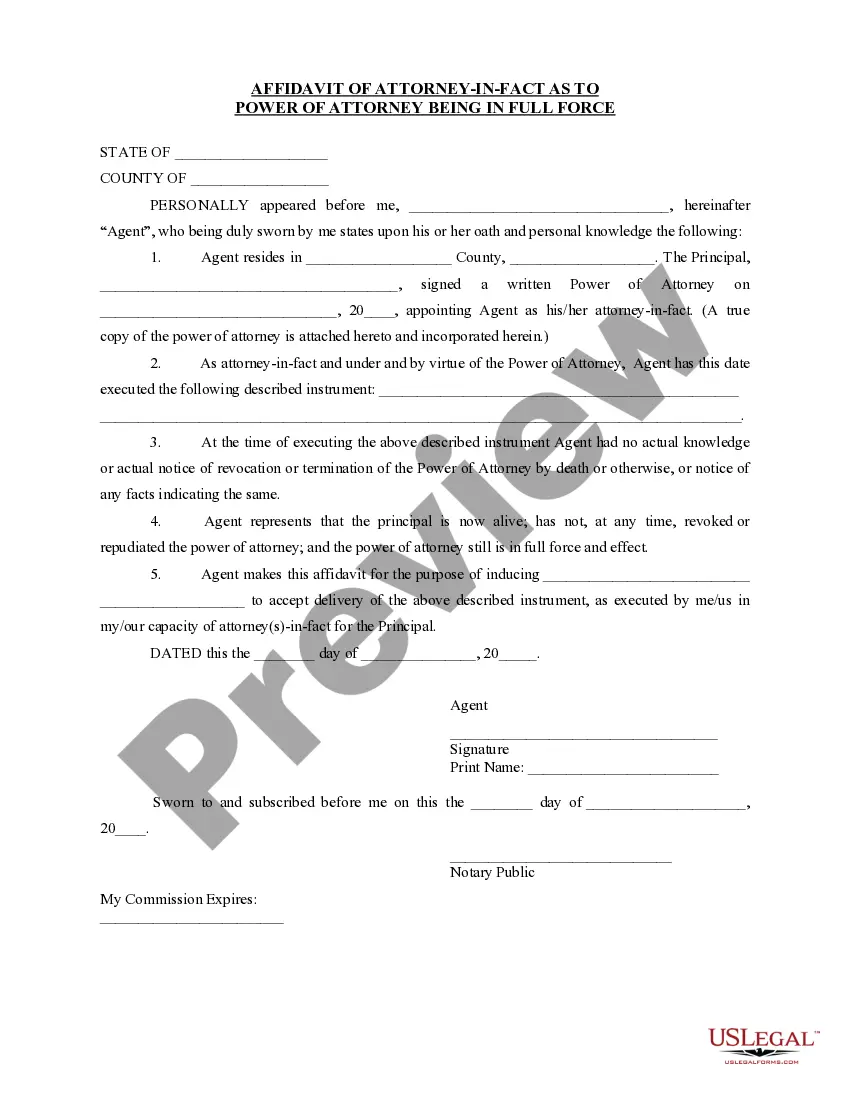
The affidavit by an attorney-in-fact is a legal document that allows someone to act on behalf of another person, known as the principal. This form verifies that the affiant, who is authorized through a power of attorney, is making statements under oath about the principal's capacity and welfare. It is commonly used in transactions where the principal cannot be present, such as real estate dealings or legal agreements, ensuring that the affiant acts within their legal authority.
Key components of this form
- Identification of the affiant, including name and residence.
- Statement of the affiant's authority as an attorney-in-fact, including details of the power of attorney.
- A confirmation of the principal's current status and ability to provide consent.
- The purpose of the affidavit, outlining the specific actions undertaken on behalf of the principal.
- Signature lines for the affiant and notary public, alongside notarization details.

When to use this document
This form should be used when an individual needs to authorize someone else to act on their behalf in legal, financial, or real estate matters. For instance, use this affidavit when the principal is unable to be present for significant transactions, such as selling or conveying property, or when securing financial actions that require verified consent.
Intended users of this form
- Individuals acting as attorneys-in-fact under a valid power of attorney.
- Principals who wish to delegate authority but require formal documentation of that delegation.
- Legal professionals assisting clients with real estate or financial transactions requiring affidavits.
Steps to complete this form
- Identify the parties by entering the full names and addresses of both the affiant and the principal.
- Specify the authority by detailing the power of attorney, including the date it was executed.
- Confirm the principal's status as alive and capable, and include relevant details about the transaction at hand.
- Clearly state the purpose of the affidavit and what actions the affiant is authorized to undertake.
- Sign and date the affidavit in the presence of a notary public, ensuring all legal requirements are met for notarization.
Notarization requirements for this form
Notarization is required for this form to take effect. Our online notarization service, powered by Notarize, lets you verify and sign documents remotely through an encrypted video session, available 24/7.
Get your form ready online
Our built-in tools help you complete, sign, share, and store your documents in one place.
Make edits, fill in missing information, and update formatting in US Legal Forms—just like you would in MS Word.
Download a copy, print it, send it by email, or mail it via USPS—whatever works best for your next step.
Sign and collect signatures with our SignNow integration. Send to multiple recipients, set reminders, and more. Go Premium to unlock E-Sign.
If this form requires notarization, complete it online through a secure video call—no need to meet a notary in person or wait for an appointment.
We protect your documents and personal data by following strict security and privacy standards.

Make edits, fill in missing information, and update formatting in US Legal Forms—just like you would in MS Word.

Download a copy, print it, send it by email, or mail it via USPS—whatever works best for your next step.

Sign and collect signatures with our SignNow integration. Send to multiple recipients, set reminders, and more. Go Premium to unlock E-Sign.

If this form requires notarization, complete it online through a secure video call—no need to meet a notary in person or wait for an appointment.

We protect your documents and personal data by following strict security and privacy standards.
Avoid these common issues
- Failing to include the complete names and addresses of both the affiant and the principal.
- Incomplete or vague descriptions of the authority granted under the power of attorney.
- Not notarizing the affidavit, which may render it invalid.
- Omitting the date of execution of the power of attorney.
Why use this form online
- Convenience: Download and complete the form from anywhere, at any time.
- Editability: Customize the form to fit specific transactions and requirements easily.
- Reliability: Use professionally drafted forms created by licensed attorneys to ensure legal compliance.
Looking for another form?







Form popularity
FAQ
After the principal's name, write by and then sign your own name. Under or after the signature line, indicate your status as POA by including any of the following identifiers: as POA, as Agent, as Attorney in Fact or as Power of Attorney.
If you have executed a Durable Power of Attorney, then you have signed a document appointing a person to make financial decisions on your behalf. The document is called a Power of Attorney, and the person named to make decisions on your behalf is called an Attorney-in-Fact (otherwise known as an Agent).
When the document goes into effect, you become that person's attorney in fact, which means you act as their agent. Generally, to sign documents in this capacity, you will sign the principal's name first, then your name with the designation "attorney in fact" or "power of attorney."
This means you verify the identity of the attorney in fact not the principal and write only the attorney in fact's name in the notarial certificate wording. The attorney in fact signing your journal entry should sign only his or her name.
An agent authorized to act on behalf of another person, but not necessarily authorized to practice law, e.g. a person authorized to act by a power of attorney. An attorney in fact is a fiduciary. Also known as attorney in fact or private attorney.
The lawyer has asked you to sign for them, above their name and position title at the end of the letter. You write 'p. p' in the signature space and sign your name after it. This validates the letter, in informing the reader the letter has been signed on behalf of the lawyer with authorisation.
3 attorney answers Sign his name and then add underneath "by your name, attorney in fact".
After the principal's name, write by and then sign your own name. Under or after the signature line, indicate your status as POA by including any of the following identifiers: as POA, as Agent, as Attorney in Fact or as Power of Attorney.