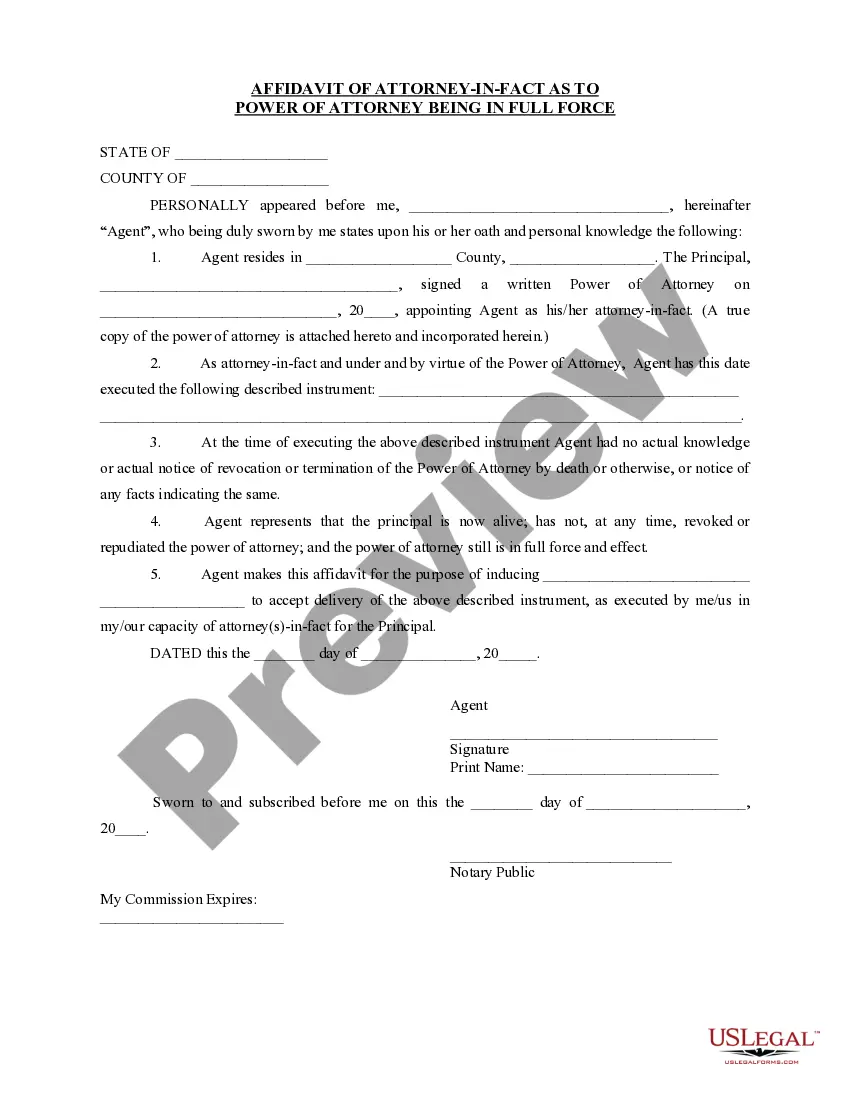
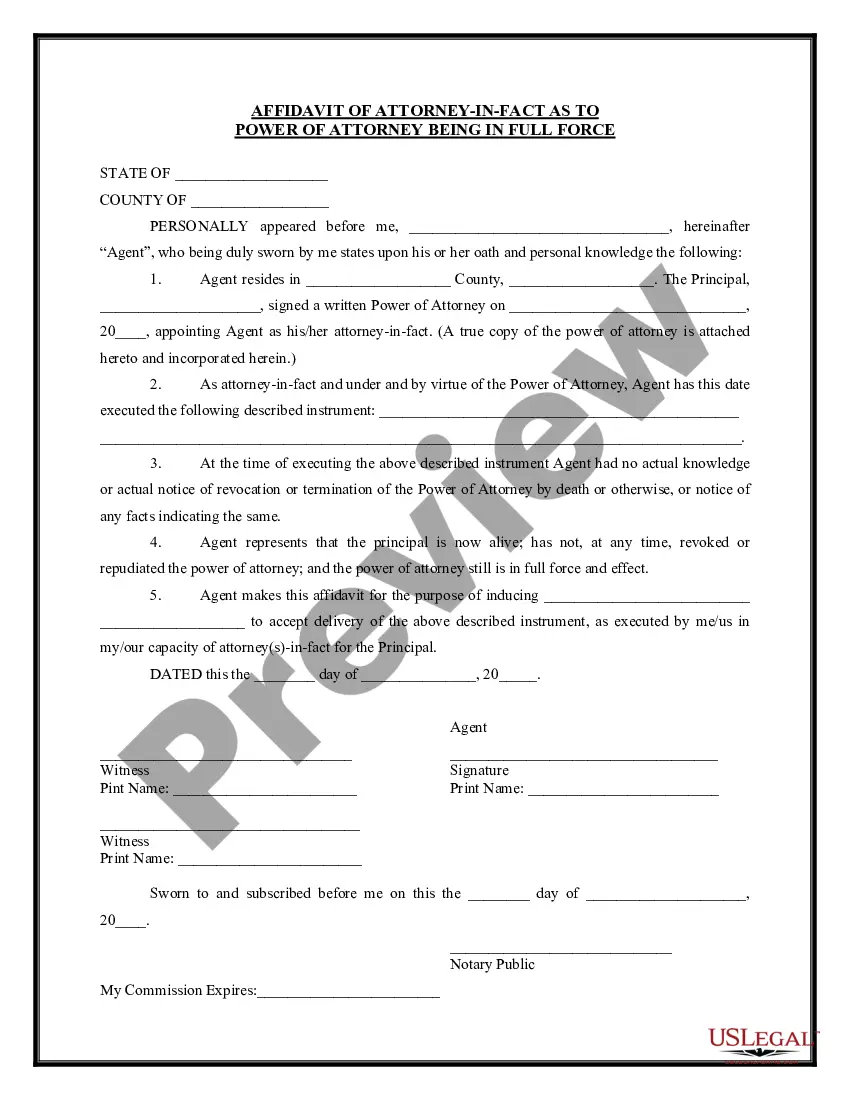
This affidavit is for an attorney-in-fact to certify that the power of attorney under which he or she is operating has not been revoked and remains in full force. For all States except Florida, Georgia, Michigan, Ohio, South Carolina or Vermont.
Affidavit of Attorney-in-Fact that Power of Attorney in Full Force
Category:
State:
Multi-State
Control #:
US-P098
Format:
Word;
Rich Text
Instant download
Description
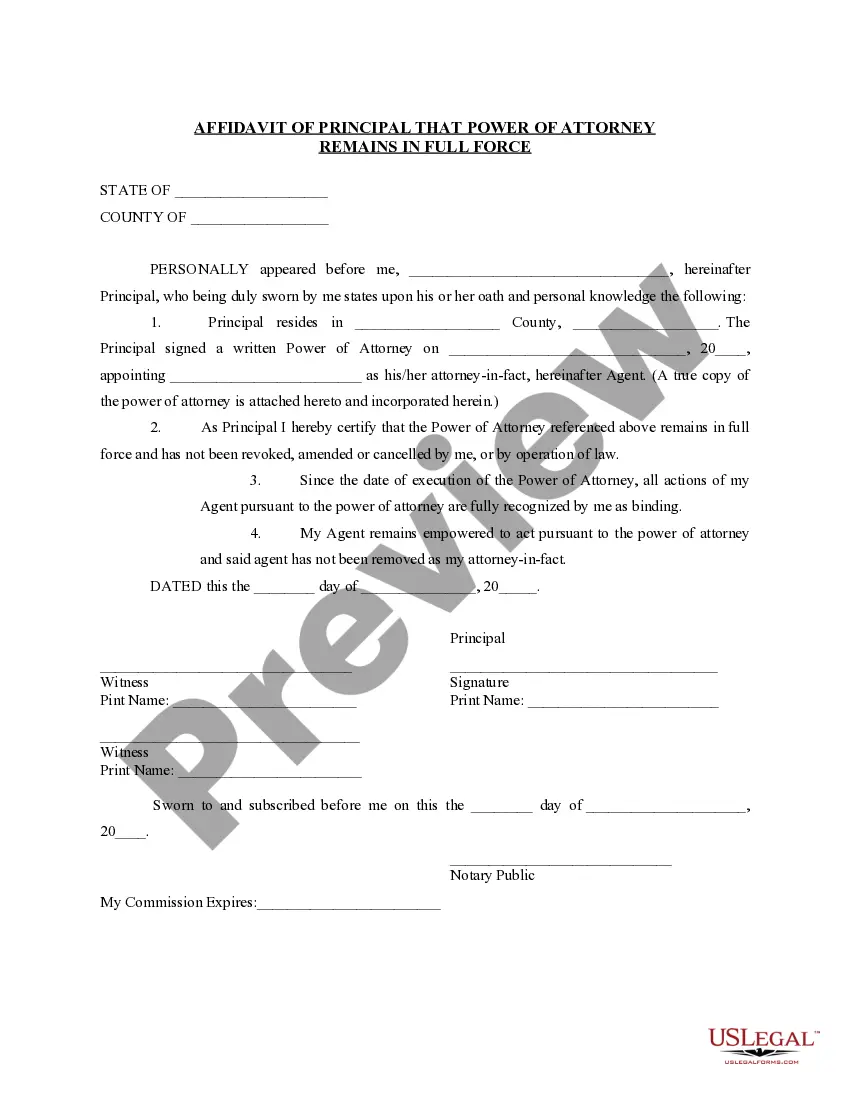
How to fill out Affidavit Of Attorney-in-Fact That Power Of Attorney In Full Force?
When it comes to drafting a legal form, it’s better to leave it to the professionals. Nevertheless, that doesn't mean you yourself can not get a template to utilize. That doesn't mean you yourself can’t get a template to use, nevertheless. Download Affidavit of Attorney-in-Fact that Power of Attorney in Full Force straight from the US Legal Forms website. It provides a wide variety of professionally drafted and lawyer-approved documents and templates.
For full access to 85,000 legal and tax forms, customers simply have to sign up and select a subscription. After you are signed up with an account, log in, search for a specific document template, and save it to My Forms or download it to your gadget.
To make things less difficult, we have incorporated an 8-step how-to guide for finding and downloading Affidavit of Attorney-in-Fact that Power of Attorney in Full Force promptly:
- Make confident the document meets all the necessary state requirements.
- If available preview it and read the description before purchasing it.
- Hit Buy Now.
- Select the suitable subscription to meet your needs.
- Create your account.
- Pay via PayPal or by debit/visa or mastercard.
- Select a needed format if several options are available (e.g., PDF or Word).
- Download the file.
After the Affidavit of Attorney-in-Fact that Power of Attorney in Full Force is downloaded you can fill out, print out and sign it in almost any editor or by hand. Get professionally drafted state-relevant papers in a matter of minutes in a preferable format with US Legal Forms!
Form popularity
FAQ
When the document goes into effect, you become that person's attorney in fact, which means you act as their agent. Generally, to sign documents in this capacity, you will sign the principal's name first, then your name with the designation "attorney in fact" or "power of attorney."
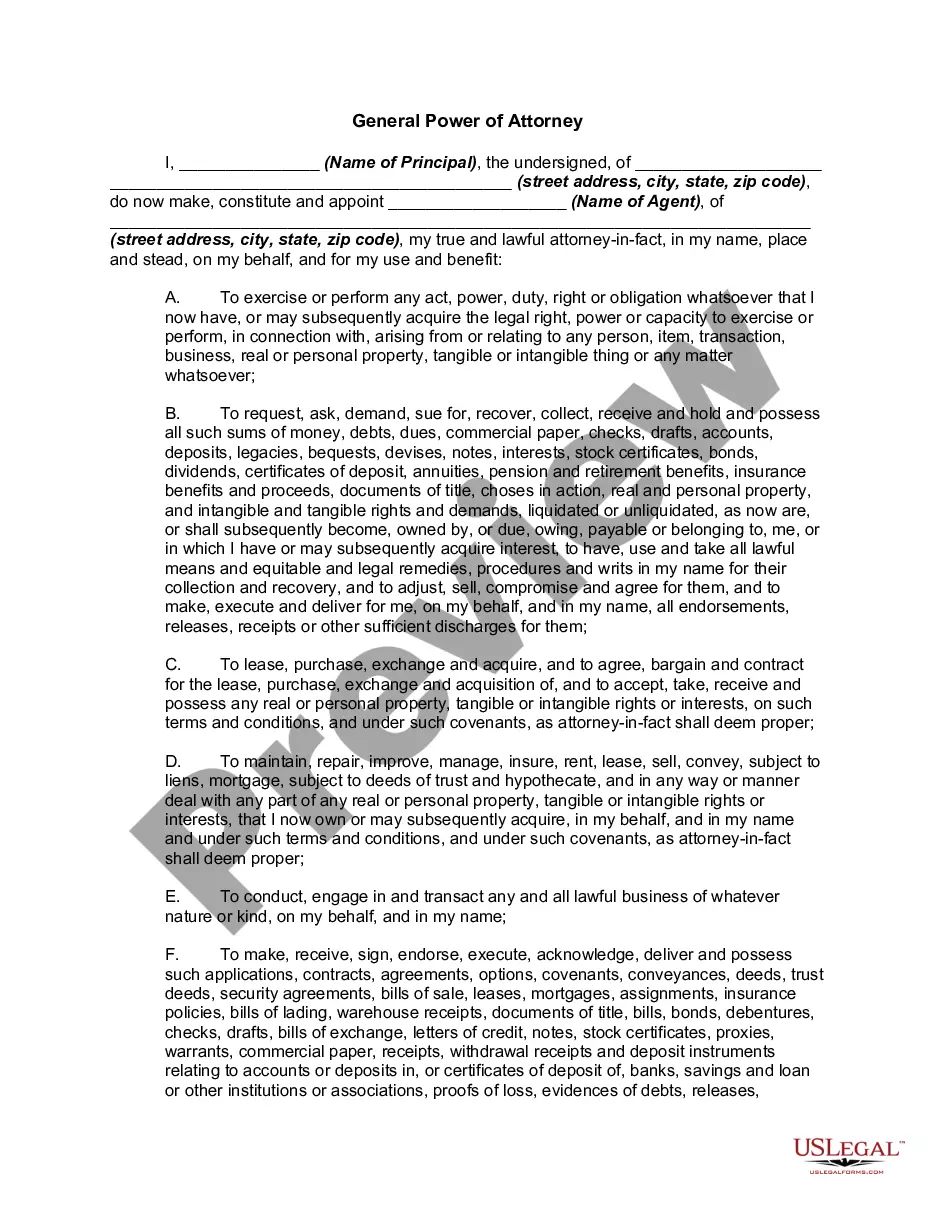
Non-Durable Power of Attorney. Durable Power of Attorney. Special or Limited Power of Attorney. Medical Power of Attorney. Springing Power of Attorney. Create Your Power of Attorney Now.
An attorney-in-fact is a person who is authorized to act on behalf of another person, usually to perform business or other official transactions. The person represented usually designates someone as their attorney-in-fact by assigning power of attorney. An attorney-in-fact is not necessarily a lawyer.
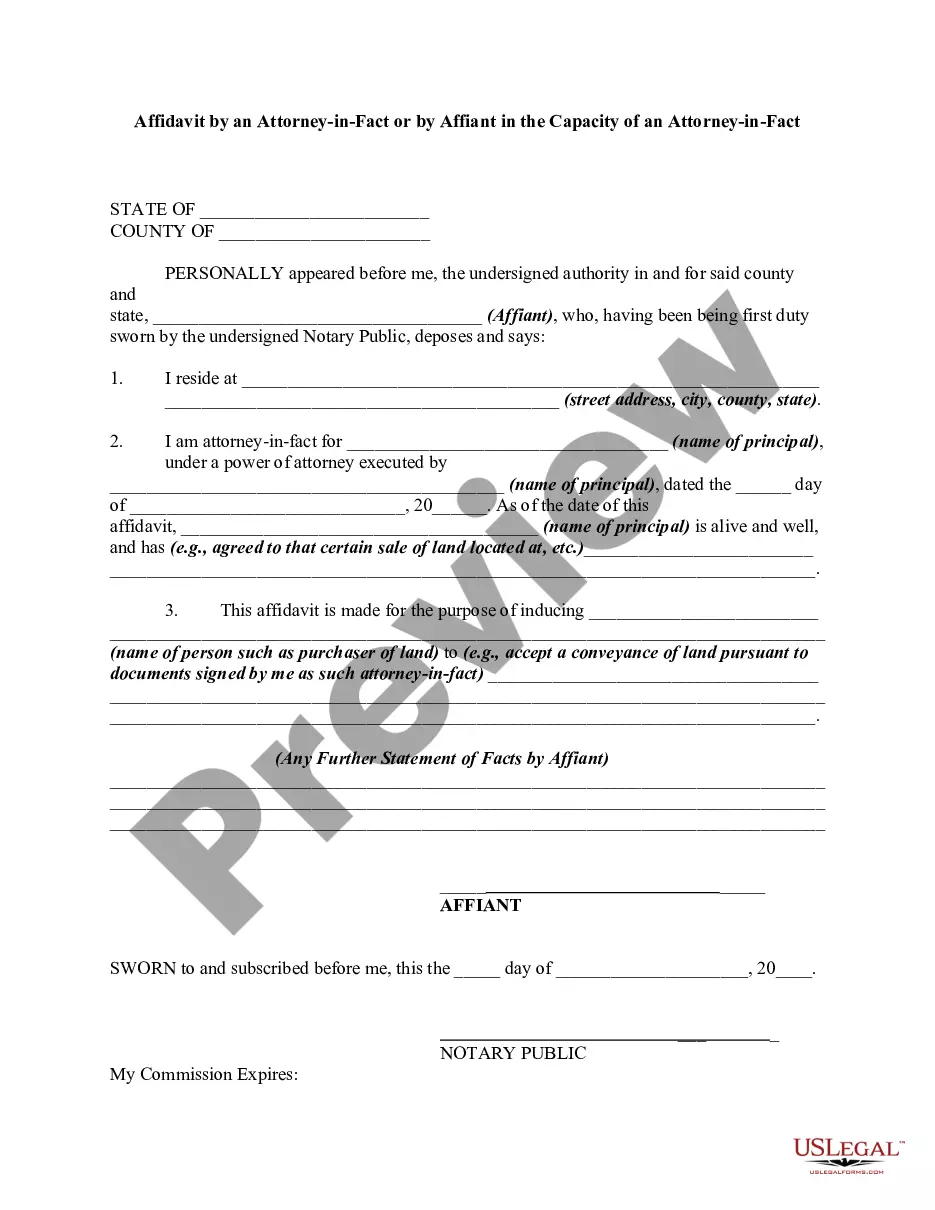
An affidavit is a sworn written statement. A third party may require you, as the Attorney-in-Fact, to sign an affidavit stating that you are validly exercising your duties under the Power of Attorney.In most cases, once the law is explained to the third party, the Power of Attorney is accepted.
Definition. An agent authorized to act on behalf of another person, but not necessarily authorized to practice law, e.g. a person authorized to act by a power of attorney. An attorney in fact is a fiduciary. Also known as attorney in fact or private attorney.
An affidavit, by itself, is inadmissible. One cannot cross examine a piece of paper. It is hearsay without the person who signed it present in court and ready to testify about it as well as authenticate it if necessary. So, an affidavit by itself does not stand up in a court of law.
An attorney in fact is a person authorized to sign documents on someone else's behalf, but is not necessarily a practicing lawyer.When an attorney in fact signs a document, the signature should include the name of the principal he or she represents.
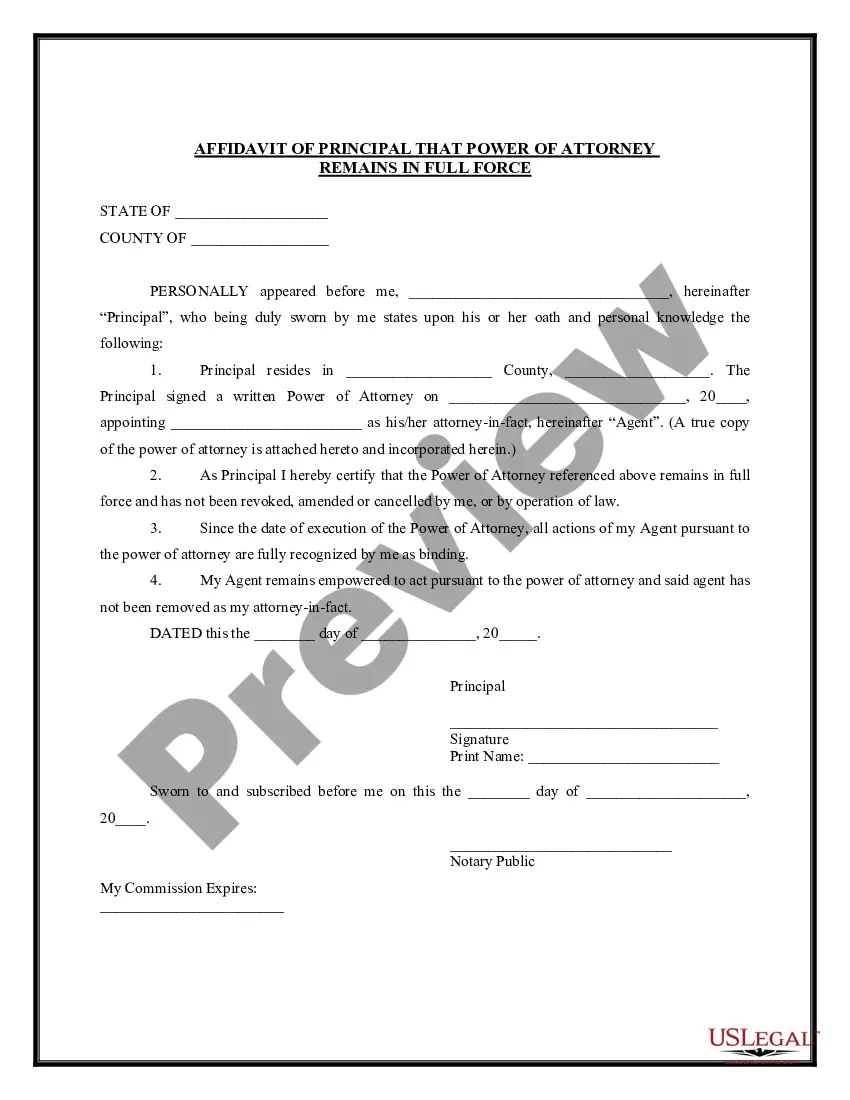
A power of attorney allows your agent to act on your behalf with another party. Now that party might ask the agent to prove that you have given him the authority.The affidavit can be accompanied by a copy of the power of attorney granted by you.
If you have executed a Durable Power of Attorney, then you have signed a document appointing a person to make financial decisions on your behalf. The document is called a Power of Attorney, and the person named to make decisions on your behalf is called an Attorney-in-Fact (otherwise known as an Agent).