Cease and Desist Letter for Libelous or Slanderous Statements - Defamation of Character
What is this form?
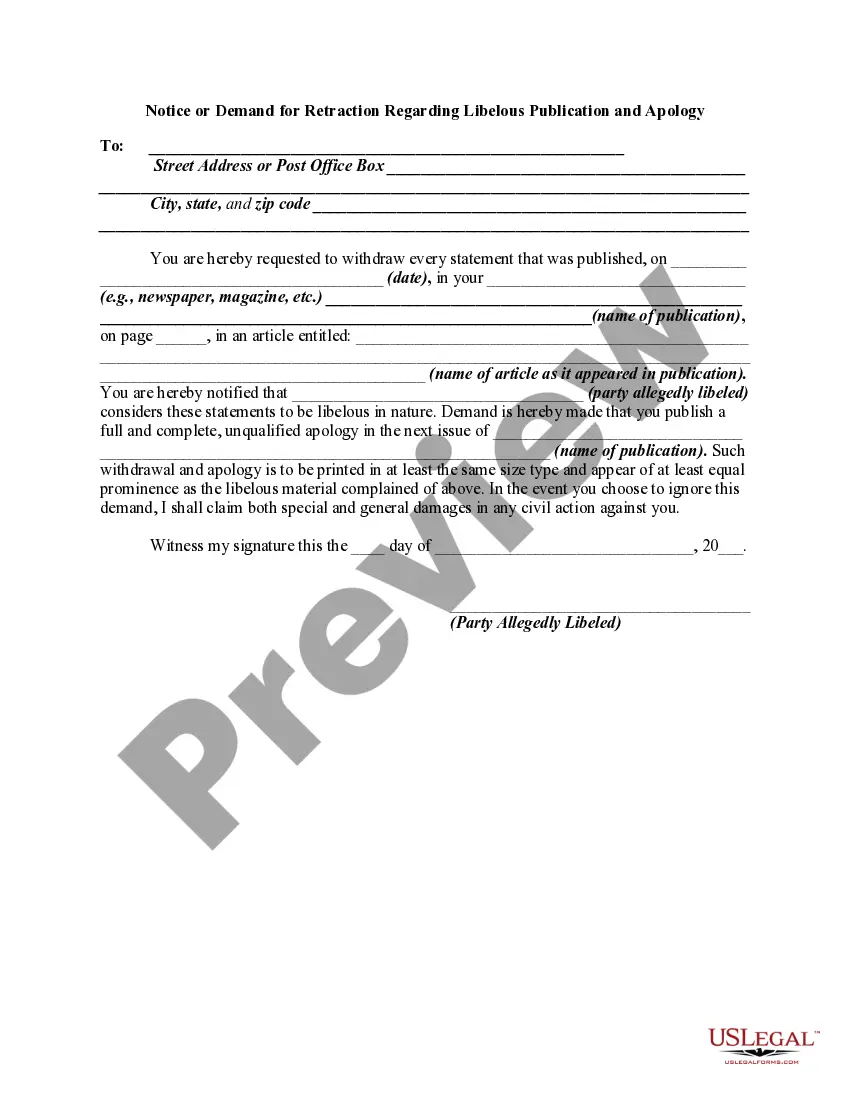
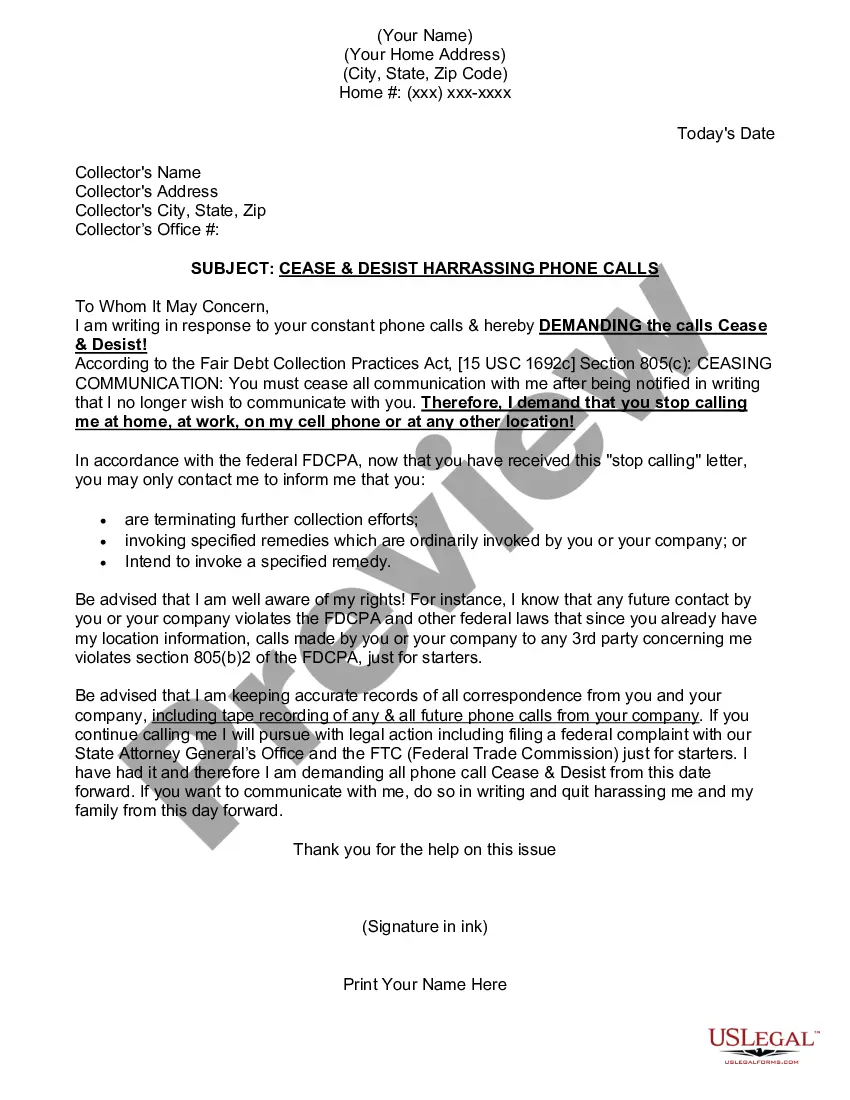
A cease and desist letter for libelous or slanderous statements is a formal document used to demand that an individual or organization stop making false statements that could harm someone's reputation. The purpose of this letter is to prevent further defamation and to put the offending party on notice that legal action may be pursued if the harmful statements are not retracted. This form is essential for individuals seeking to protect their character from untrue accusations and is different from general cease and desist letters that may address other legal issues, such as business disputes or copyright infringement.
What’s included in this form
- Identification of the parties involved, including the sender and the recipient.
- A clear description of the defamatory statements that have been made.
- A demand for the recipient to cease making these statements immediately.
- An explanation of the potential legal consequences if the statements continue.
- Space for the sender's signature and date to validate the communication.

When this form is needed
Use this cease and desist letter when you have been the subject of false statements that harm your reputation or character. Common scenarios include:
- When someone spreads rumors about your personal life that are untrue.
- If an individual makes false claims about your professional conduct or qualifications.
- When written statements, such as in a blog or a social media post, are published that misrepresent facts about you.
Who can use this document
- Individuals who believe they are victims of defamation.
- Professionals whose reputations have been damaged by false statements.
- Anyone needing to formally request the cessation of harmful speech, both oral and written.
Steps to complete this form
- Identify the sender by entering your full name and address at the top of the letter.
- Clearly state the name and address of the recipient under the sender's information.
- List the specific statements that are considered defamatory along with any relevant dates or contexts.
- Include a strong request for the recipient to stop making these statements and to retract previous communications.
- Sign and date the letter at the bottom to authenticate the document.
Notarization requirements for this form
This form does not typically require notarization unless specified by local law. It is sufficient to send the letter with your signature to show it is a formal request.
Get your form ready online
Our built-in tools help you complete, sign, share, and store your documents in one place.
Make edits, fill in missing information, and update formatting in US Legal Forms—just like you would in MS Word.
Download a copy, print it, send it by email, or mail it via USPS—whatever works best for your next step.
Sign and collect signatures with our SignNow integration. Send to multiple recipients, set reminders, and more. Go Premium to unlock E-Sign.
If this form requires notarization, complete it online through a secure video call—no need to meet a notary in person or wait for an appointment.
We protect your documents and personal data by following strict security and privacy standards.

Make edits, fill in missing information, and update formatting in US Legal Forms—just like you would in MS Word.

Download a copy, print it, send it by email, or mail it via USPS—whatever works best for your next step.

Sign and collect signatures with our SignNow integration. Send to multiple recipients, set reminders, and more. Go Premium to unlock E-Sign.

If this form requires notarization, complete it online through a secure video call—no need to meet a notary in person or wait for an appointment.

We protect your documents and personal data by following strict security and privacy standards.
Typical mistakes to avoid
- Failing to provide enough detail about the defamatory statements.
- Not allowing the recipient a chance to respond before pursuing legal action.
- Using vague or emotional language rather than clear facts.
- Omitting the potential legal consequences of continued defamation.
Advantages of online completion
- Immediate access to a professionally drafted cease and desist letter.
- Editability allows for personalized details to be added efficiently.
- A reliable resource designed to comply with current legal standards.
- Convenience of printing and sending directly from your device.
Legal use & context
- Cease and desist letters are generally enforceable in a court of law if properly drafted.
- This form allows you to formally document your request, preserving any future legal claims.
- Understand that while sending this letter can deter defamation, it does not replace the need for legal action if the issue persists.
Quick recap
- The cease and desist letter is an important tool in handling defamation disputes.
- Addressing defamation promptly can help mitigate the damage to your reputation.
- Using this form can avoid the costs and complexities of legal action initially.
Looking for another form?

Form popularity
FAQ
A Cease and Desist Letter for Libelous or Slanderous Statements - Defamation of Character is a formal notice used to stop false statements that harm a person’s reputation. It puts the recipient on notice that continued defamation may lead to legal action and guides you through identifying the parties, describing the statements, demanding cessation, and signing the document.
Yes. This form is designed to draft a cease and desist letter specifically for defamation of character, including sections to identify the sender and recipient, describe the defamatory statements, demand that the statements stop immediately, outline potential legal consequences, and provide space for the sender’s signature and date.
Yes. This template addresses both libel and slander by providing a written demand to stop defamatory statements and serving as formal notice. It is a drafting tool, not a court filing by itself; for pursuing court action, consult an attorney.
The form is used when false statements harm a person’s reputation and requires identifying the defamatory statements and the parties involved, with a demand to stop and an outline of potential consequences if the statements continue. It provides a formal notice focused on defamation.
This form is a template, not a filled example. It provides the structure you would use: identify the sender and recipient, describe the defamatory statements, demand cessation, note potential legal consequences, and sign/date. An actual letter would fill these fields with your facts.
This form is tailored to defamation of character, focusing on libel and slander. It requires a clear description of defamatory statements and applies to both oral and written harms, with a dedicated consequences section. Generic cease and desist letters may address other issues and lack defamation-specific language.