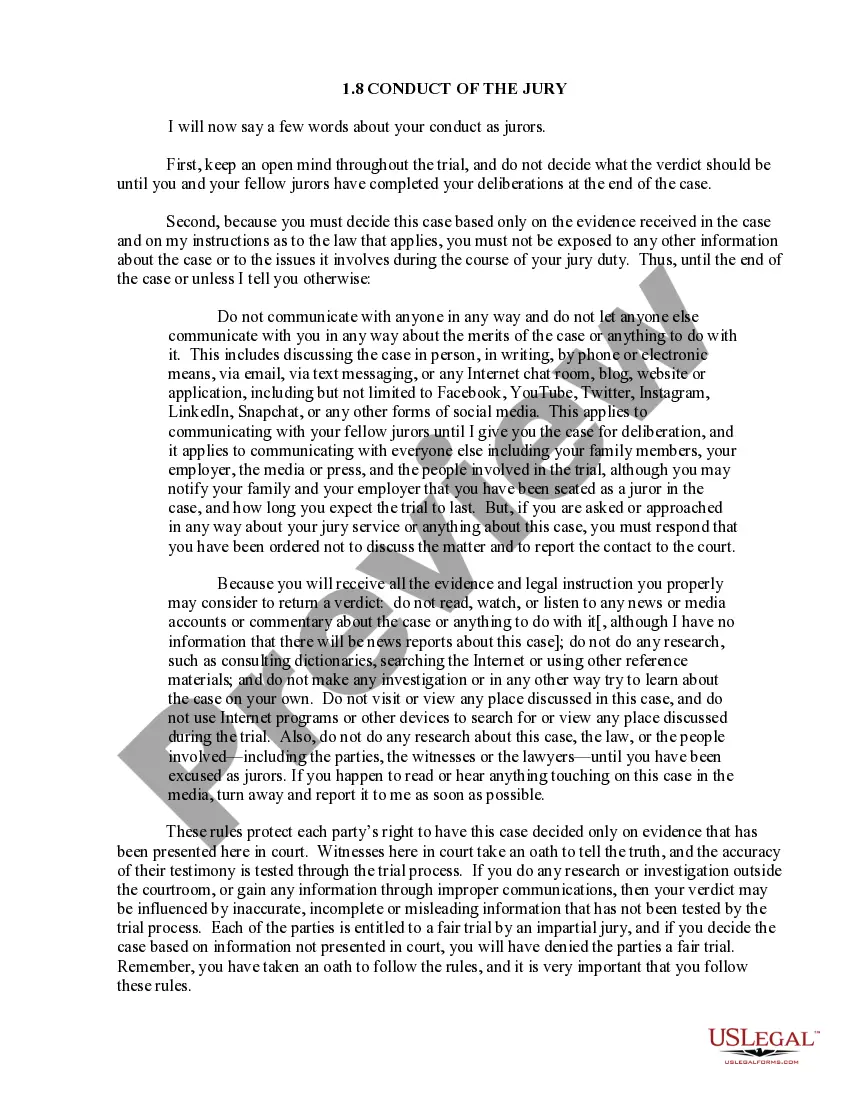
Release and Cancellation of Trust Agreement - Trust Indenture
What is this form?
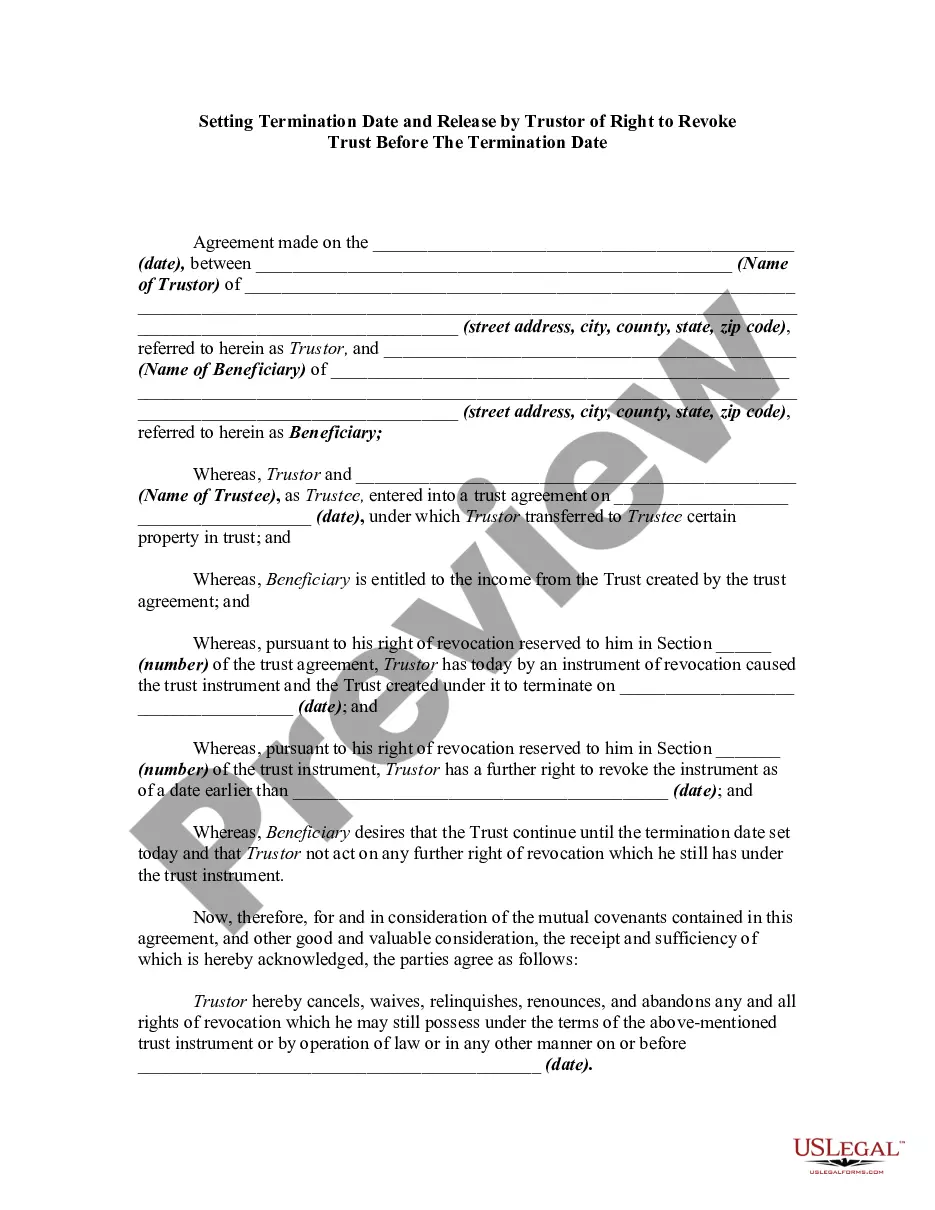
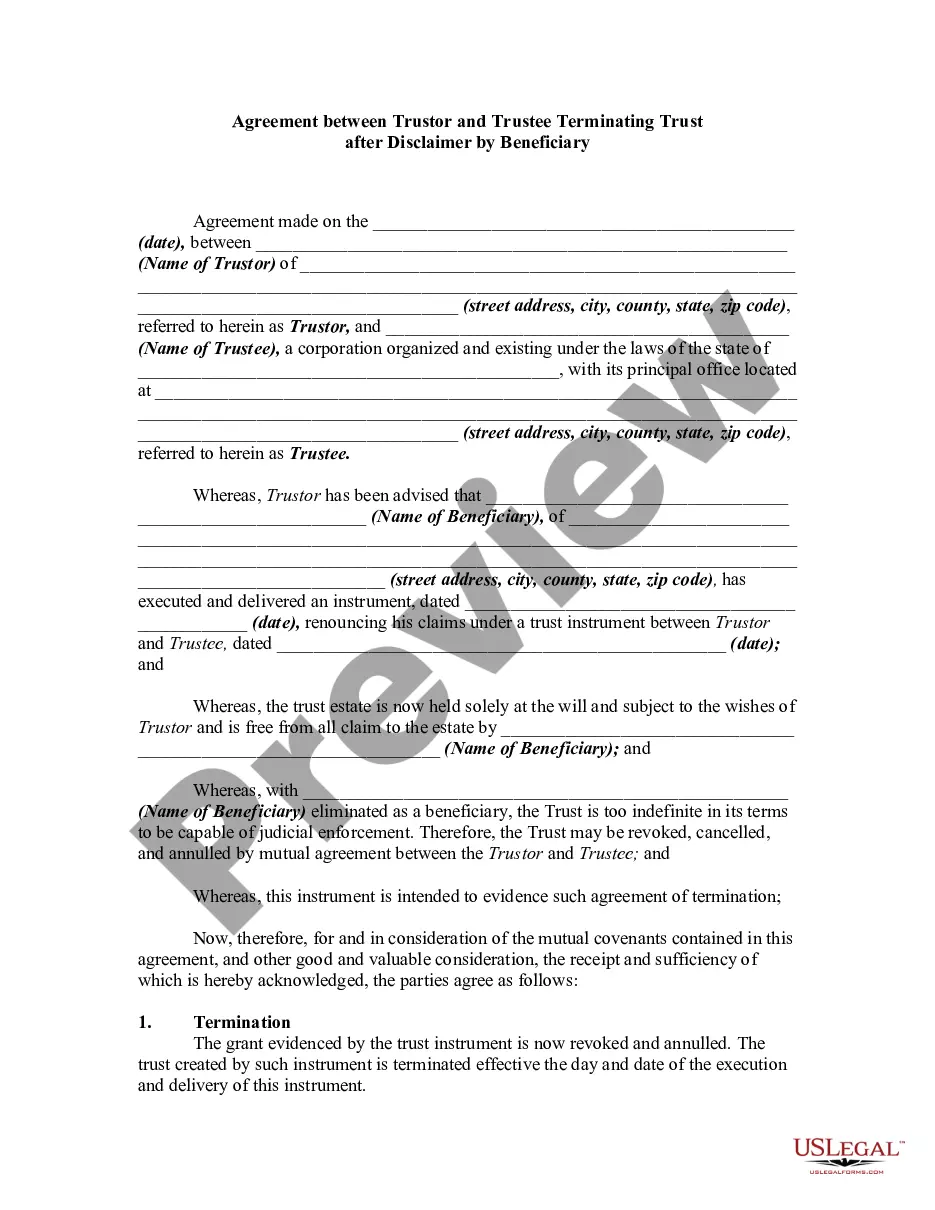
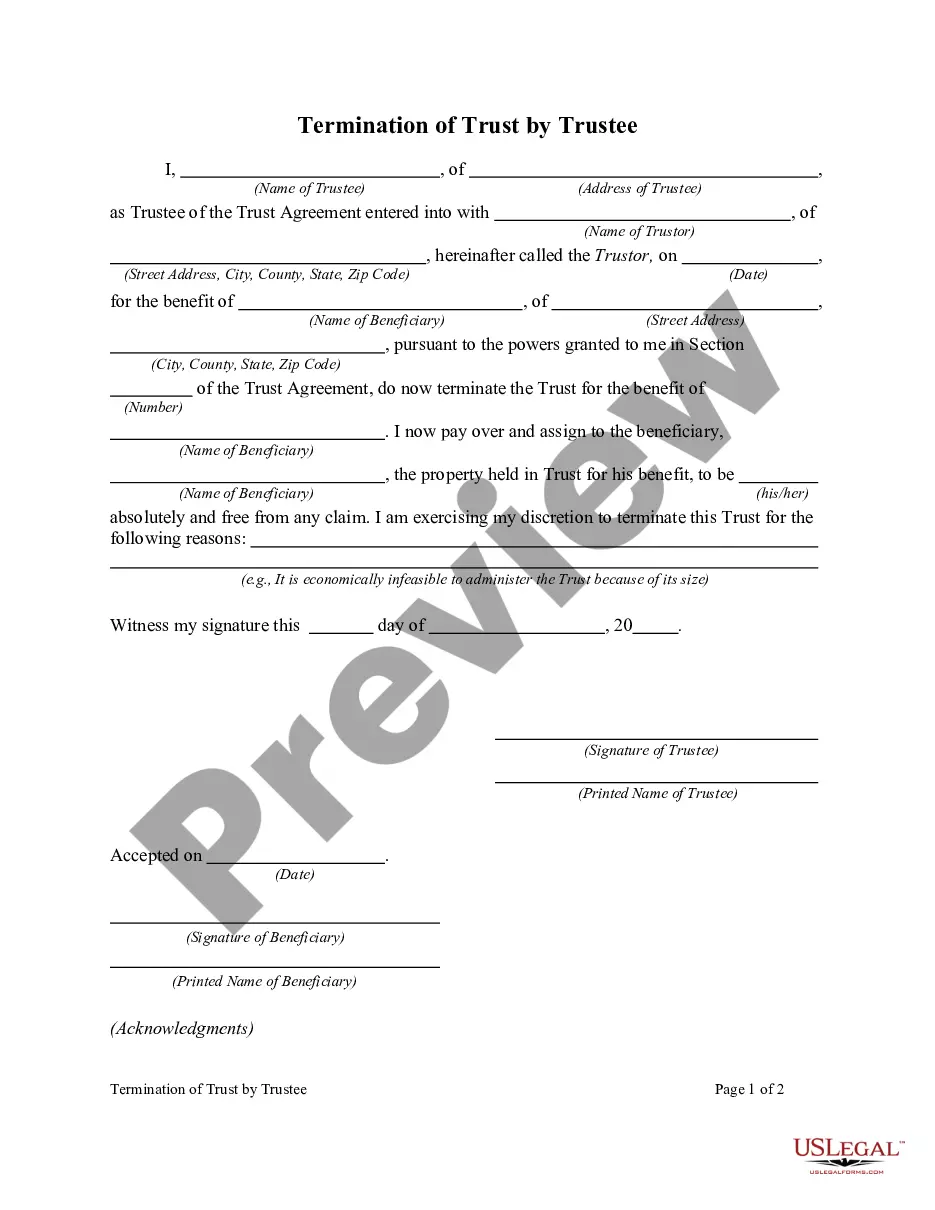
This form is a Release and Cancellation of Trust Agreement, also known as a Trust Indenture. Its main purpose is to formally release and cancel a previously established trust agreement, ensuring that any associated liens and encumbrances are satisfied. This form differs from other trust agreements as it finalizes any obligations and clears related records, providing peace of mind regarding the status of the trust.
Form components explained
- Identification of the parties involved, including their official titles.
- Reference to the original Trust Agreement/Trust Indenture, including its date and recording information.
- Statement certifying that all obligations of the original trust have been satisfied.
- Authorization for the Chancery Clerk to enter satisfaction and cancel the trust record.
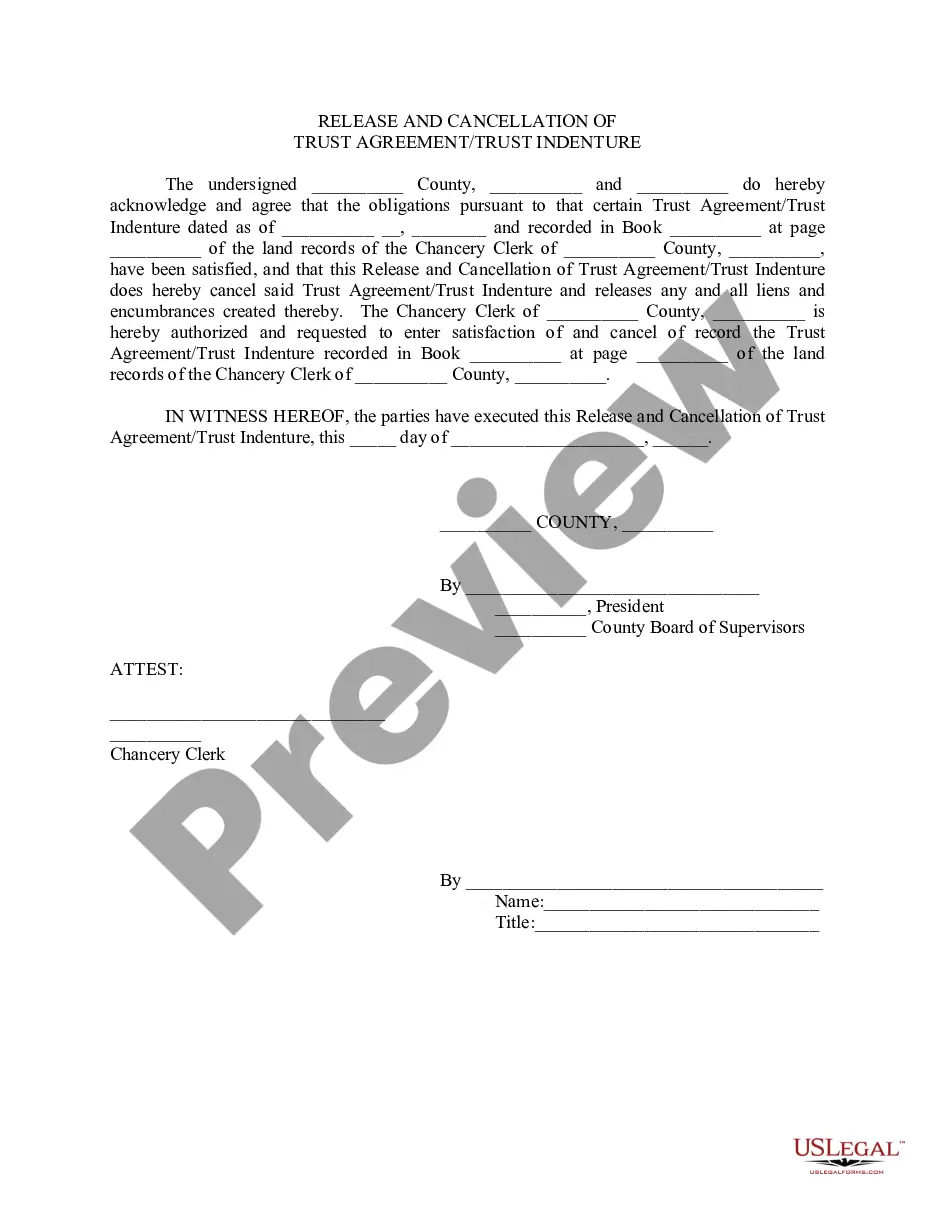
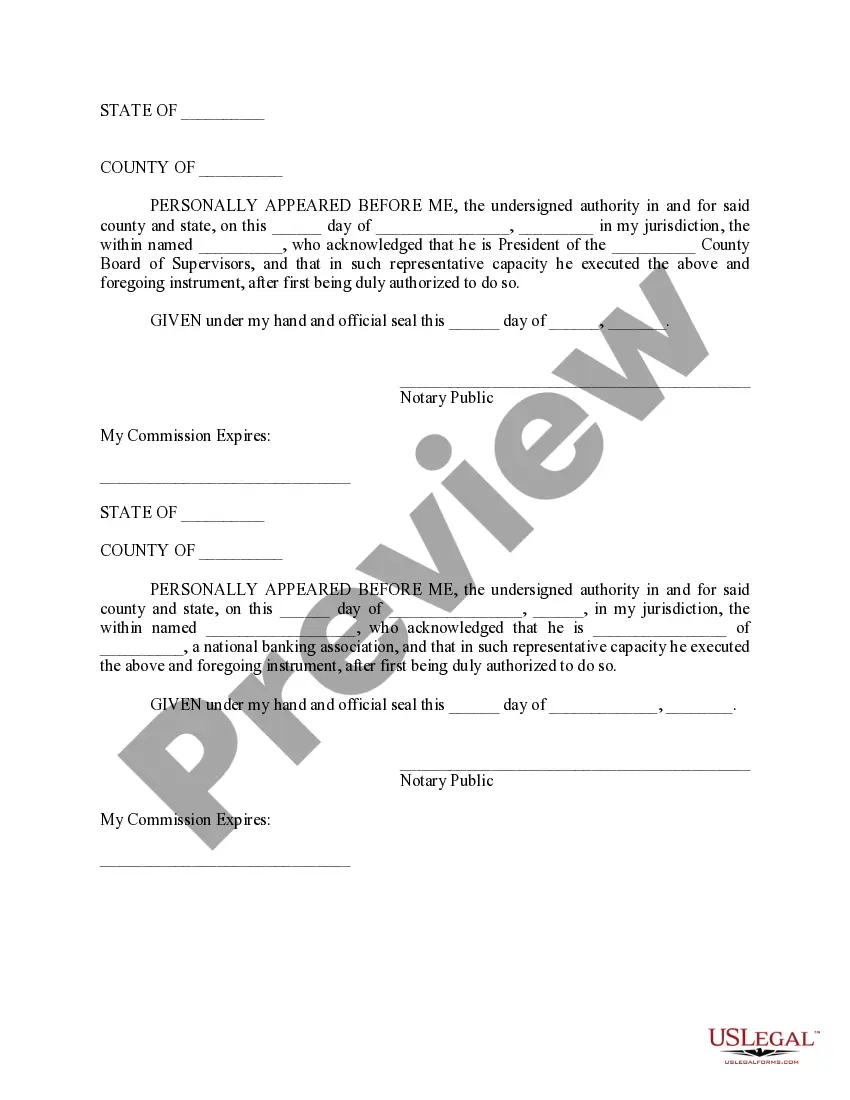
- Signature lines for all parties, including a notary acknowledgment for verification.
When to use this document
This form should be used when the parties involved in a trust wish to officially cancel the trust and ensure that any associated liens are released. Common scenarios include after the trust has been fulfilled, the property has been sold, or when the parties have mutually agreed to dissolve the trust for any reason. It is essential to use this form to maintain clear records and provide legal closure regarding the trust's obligations.
Who needs this form
This form is intended for:
- Individuals or entities who are parties to a trust agreement.
- Trustees responsible for the management of the trust.
- Beneficiaries who wish to confirm the trust's cancellation.
- Legal representatives acting on behalf of any involved parties.
Instructions for completing this form
- Identify and enter the names of the parties involved in the trust.
- Provide the date of the original Trust Agreement and its recording details.
- Confirm that all obligations have been satisfied.
- Include signatures from all involved parties and a notary public if necessary.
- Submit the completed form to the local Chancery Clerk's office for record cancellation.
Is notarization required?
To make this form legally binding, it must be notarized. Our online notarization service, powered by Notarize, lets you verify and sign documents remotely through an encrypted video session.
Get your form ready online
Our built-in tools help you complete, sign, share, and store your documents in one place.
Make edits, fill in missing information, and update formatting in US Legal Forms—just like you would in MS Word.
Download a copy, print it, send it by email, or mail it via USPS—whatever works best for your next step.
Sign and collect signatures with our SignNow integration. Send to multiple recipients, set reminders, and more. Go Premium to unlock E-Sign.
If this form requires notarization, complete it online through a secure video call—no need to meet a notary in person or wait for an appointment.
We protect your documents and personal data by following strict security and privacy standards.

Make edits, fill in missing information, and update formatting in US Legal Forms—just like you would in MS Word.

Download a copy, print it, send it by email, or mail it via USPS—whatever works best for your next step.

Sign and collect signatures with our SignNow integration. Send to multiple recipients, set reminders, and more. Go Premium to unlock E-Sign.

If this form requires notarization, complete it online through a secure video call—no need to meet a notary in person or wait for an appointment.

We protect your documents and personal data by following strict security and privacy standards.
Typical mistakes to avoid
- Failing to complete all required signatures and notary acknowledgments.
- Not referencing the original trust agreement details accurately.
- Using this form without confirming that all obligations have indeed been met.
- Omitting to submit the form to the appropriate local government office.
Advantages of online completion
- The convenience of downloading and completing the form at your own pace.
- Editable fields allow you to input specific details tailored to your situation.
- Reliable templates drafted by licensed attorneys, ensuring legal compliance.
- Quick access to legal forms without the need for in-person visits to lawyers.
Looking for another form?
Form popularity
FAQ
1) Generally, any written agreement between two parties. 2) A real estate deed in which two parties agree to continuing obligations; for example, one party may agree to maintain the property and the other to make periodic payments.
As nouns the difference between indenture and deed is that indenture is (legal) a contract which binds a person to work for another, under specified conditions, for a specified time (often as an apprentice) while deed is an action or act; something that is done.
Congress passed the Trust Indenture Act of 1939 to protect bond investors. It prohibits the sale of any debt securities in a public offering unless they are issued under a qualified indenture.With the act, trustees are required to make a list of the investors available so they can communicate with each other.
To be indentured is to be forced to work by some contract.Use the adjective indentured to describe someone who's bound or attached in a legal sense. If you're an indentured plumber's apprentice, you have guaranteed that you'll do that job in a particular way, for a specific length of time.
Indenture refers to a legal and binding agreement, contract, or document between two or more parties.Historically, indenture has also referred to a contract binding one person to work for another for a set period of time (indentured servant), particularly European immigrants.
Indentured labour was a system of bonded labour that was instituted following the abolition of slavery. Indentured labour were recruited to work on sugar, cotton and tea plantations, and rail construction projects in British colonies in West Indies, Africa and South East Asia.
As nouns the difference between indenture and deed is that indenture is (legal) a contract which binds a person to work for another, under specified conditions, for a specified time (often as an apprentice) while deed is an action or act; something that is done.
An indenture is a legal contract that reflects or covers a debt or purchase obligation. It specifically refers to two types of practices: in historical usage, an indentured servant status, and in modern usage, it is an instrument used for commercial debt or real estate transaction.
(Entry 1 of 2) 1a(1) : a document or a section of a document that is indented. (2) : a formal or official document usually executed in two or more copies. (3) : a contract binding one person to work for another for a given period of time often used in plural.