Subordination Agreement of Deed of Trust
Overview of this form
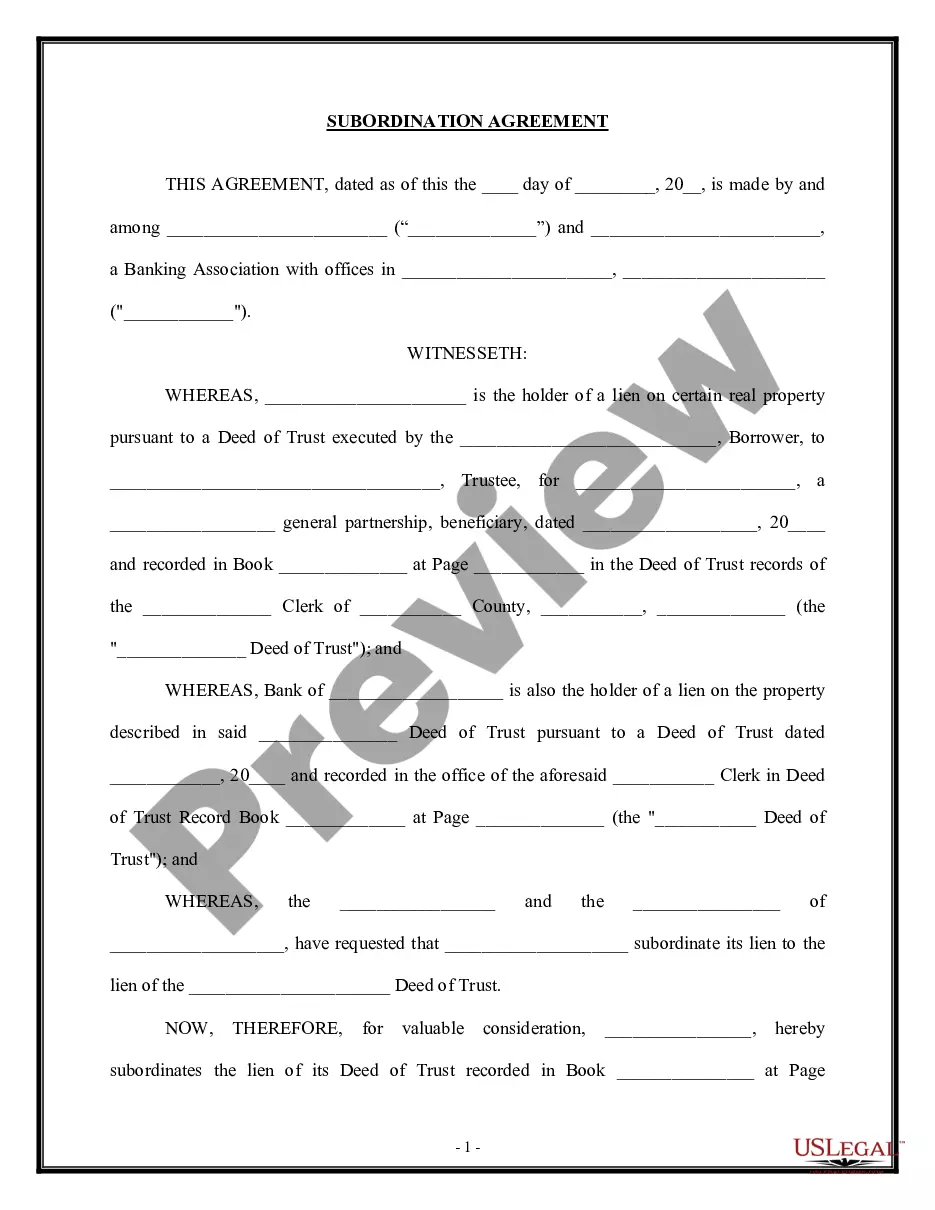
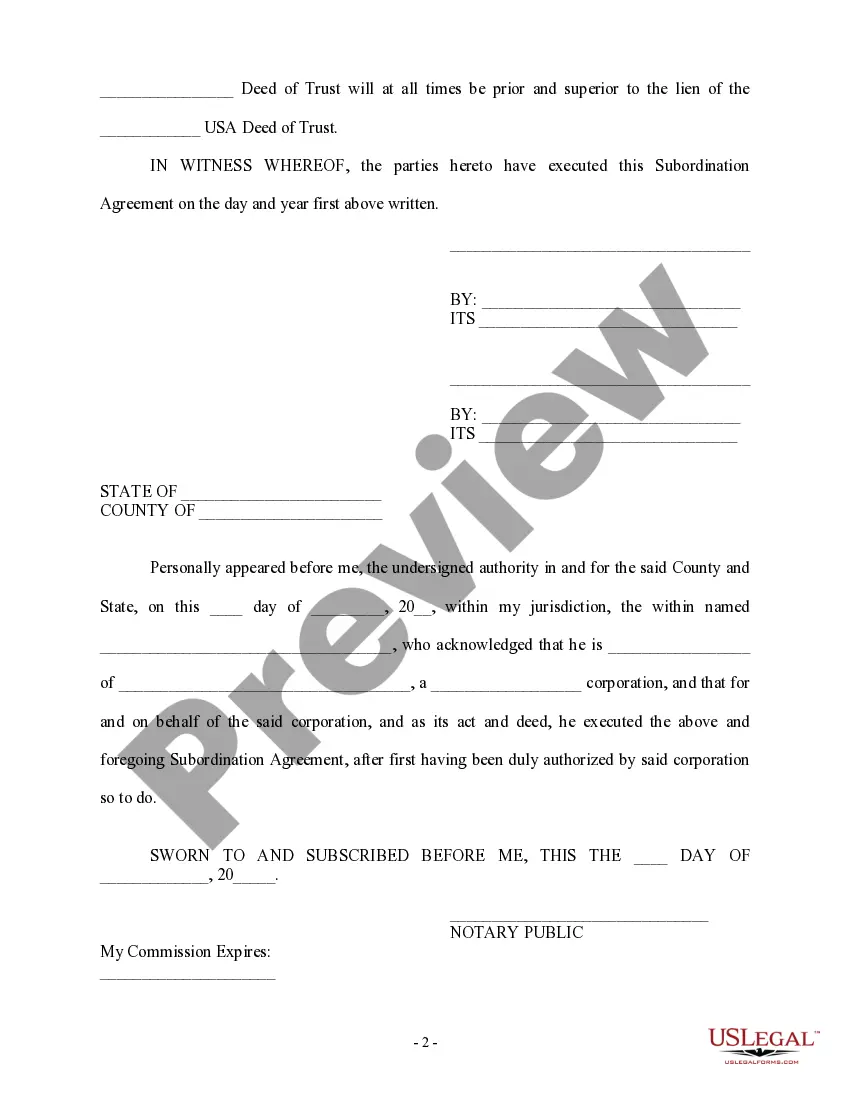
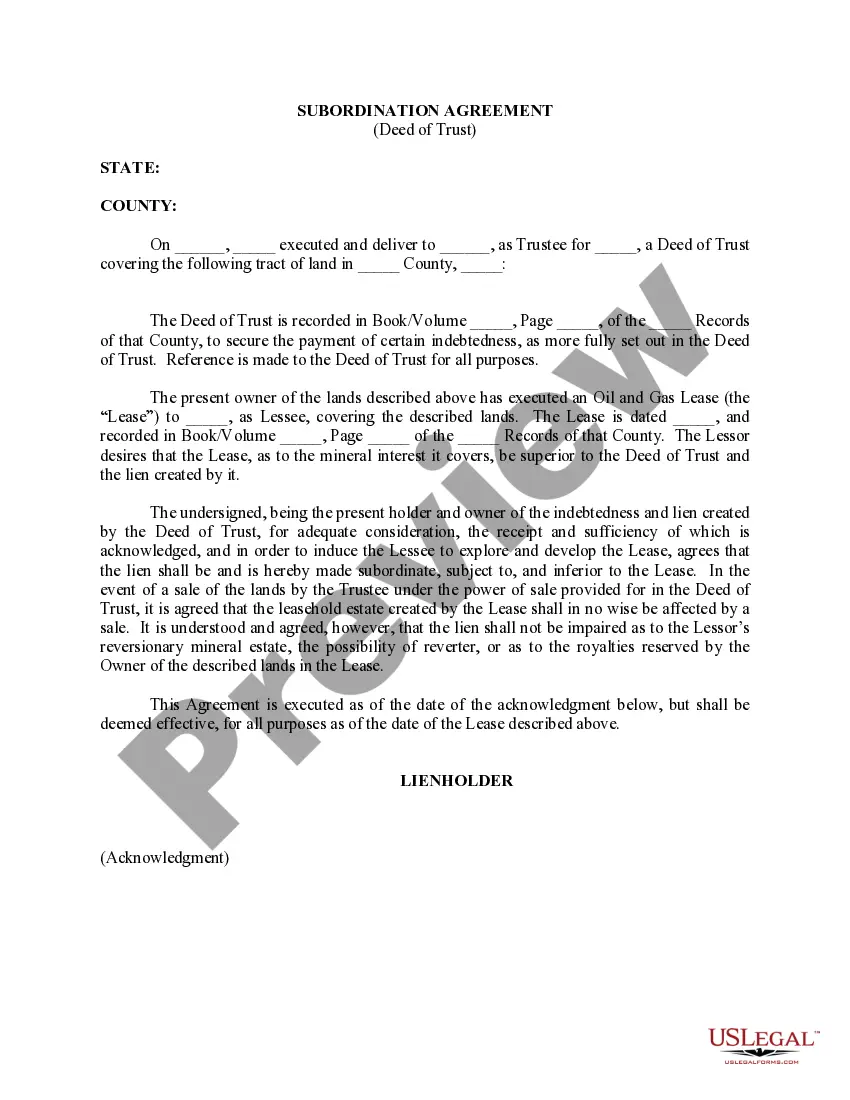
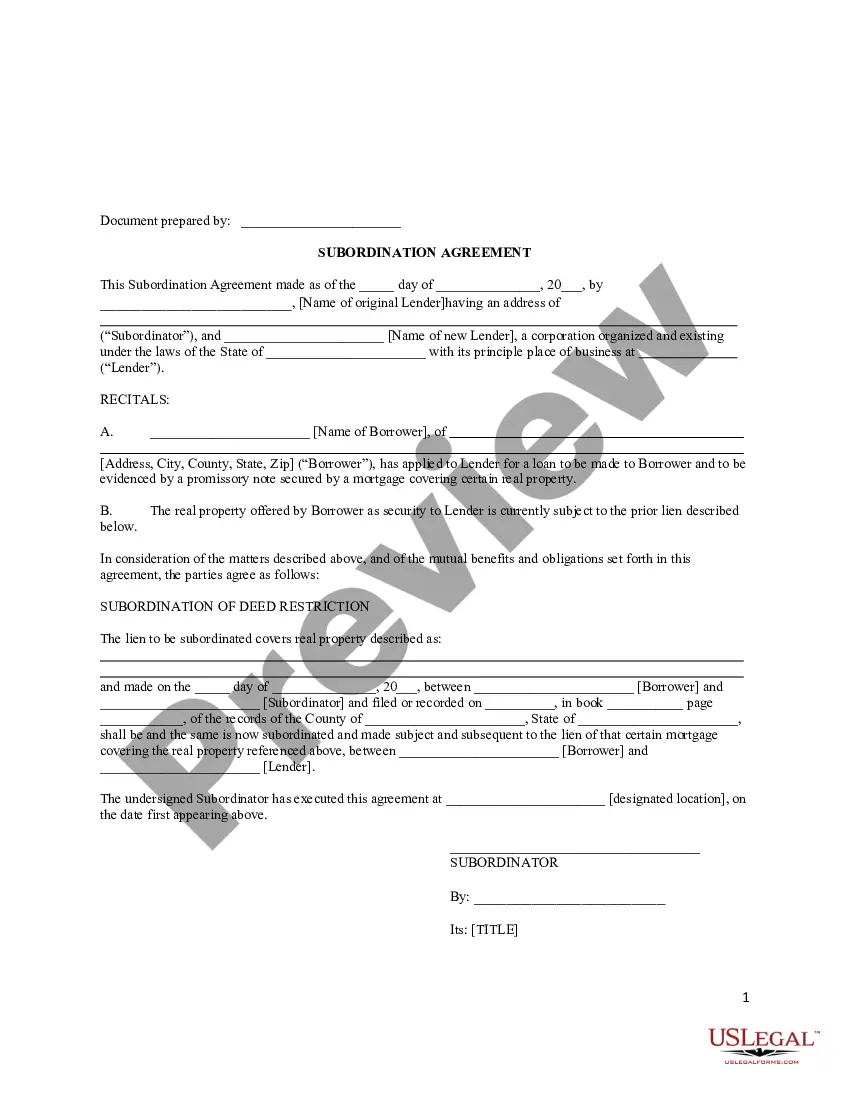
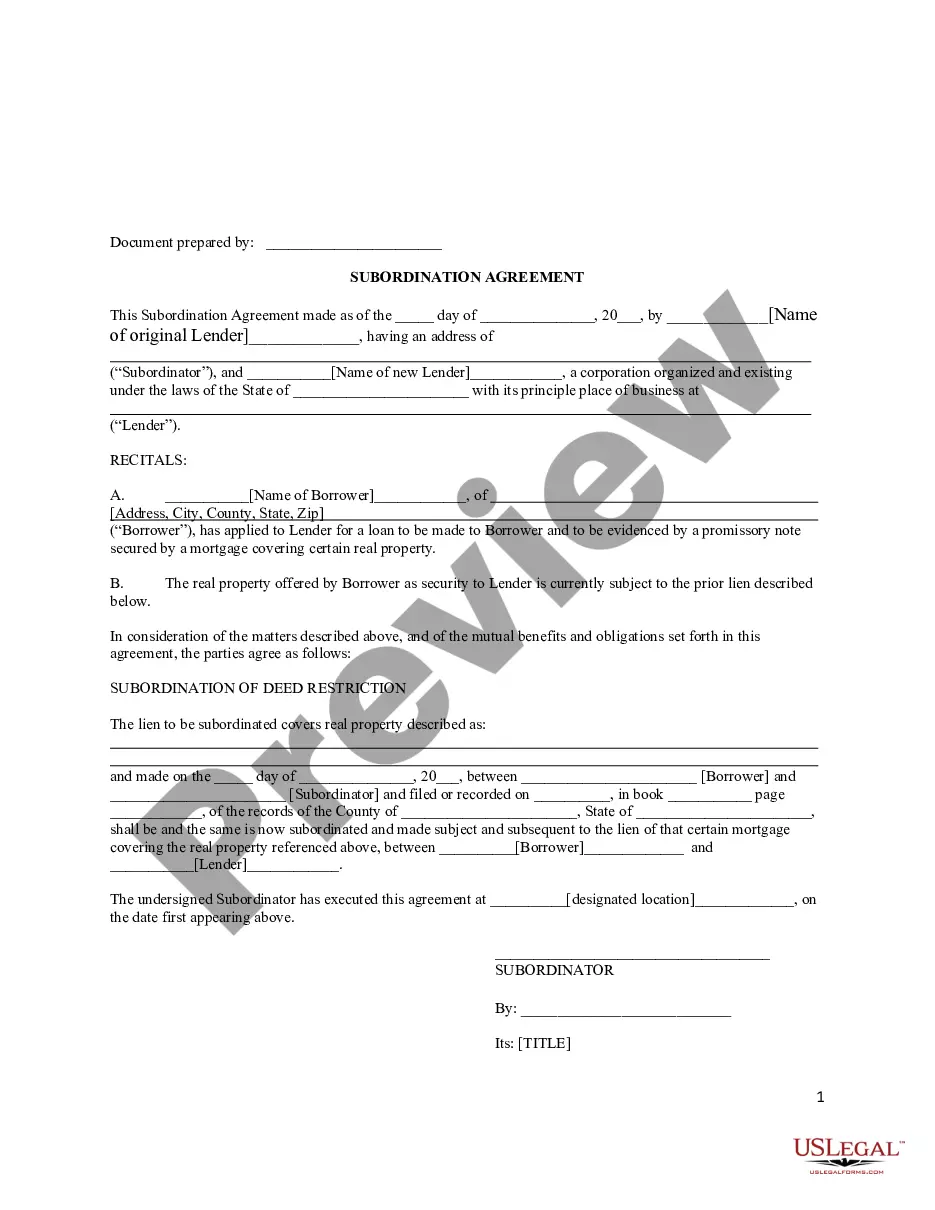
The Subordination Agreement of Deed of Trust is a legal document that enables one lien holder to subordinate their deed of trust to another lien holder's claim. This agreement is essential when a property has multiple loans secured by liens, allowing for clear priority between lenders. By using this form, parties can ensure that one lien will take precedence over another, clarifying real estate financing arrangements.
Key parts of this document
- Identification of the parties involved in the agreement.
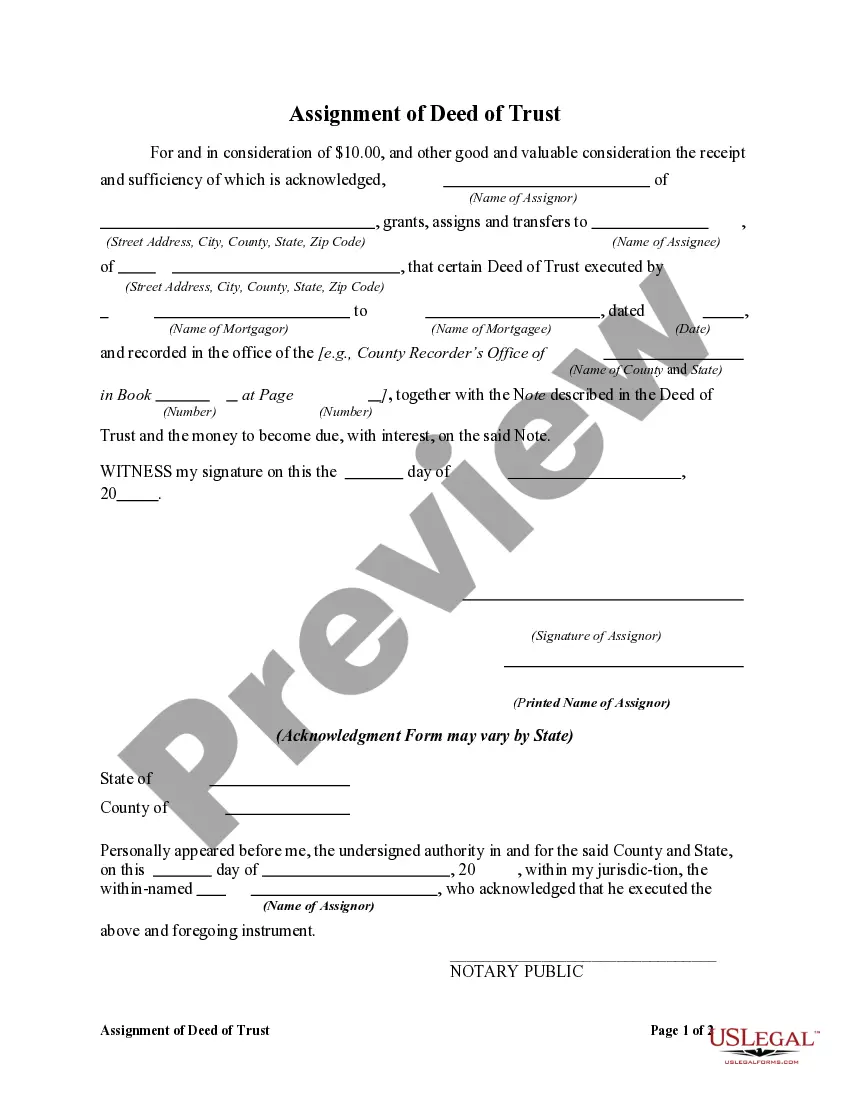
- Details of the original deed of trust being subordinated.
- Information about the deed of trust that will remain superior.
- Effective date of the subordination agreement.
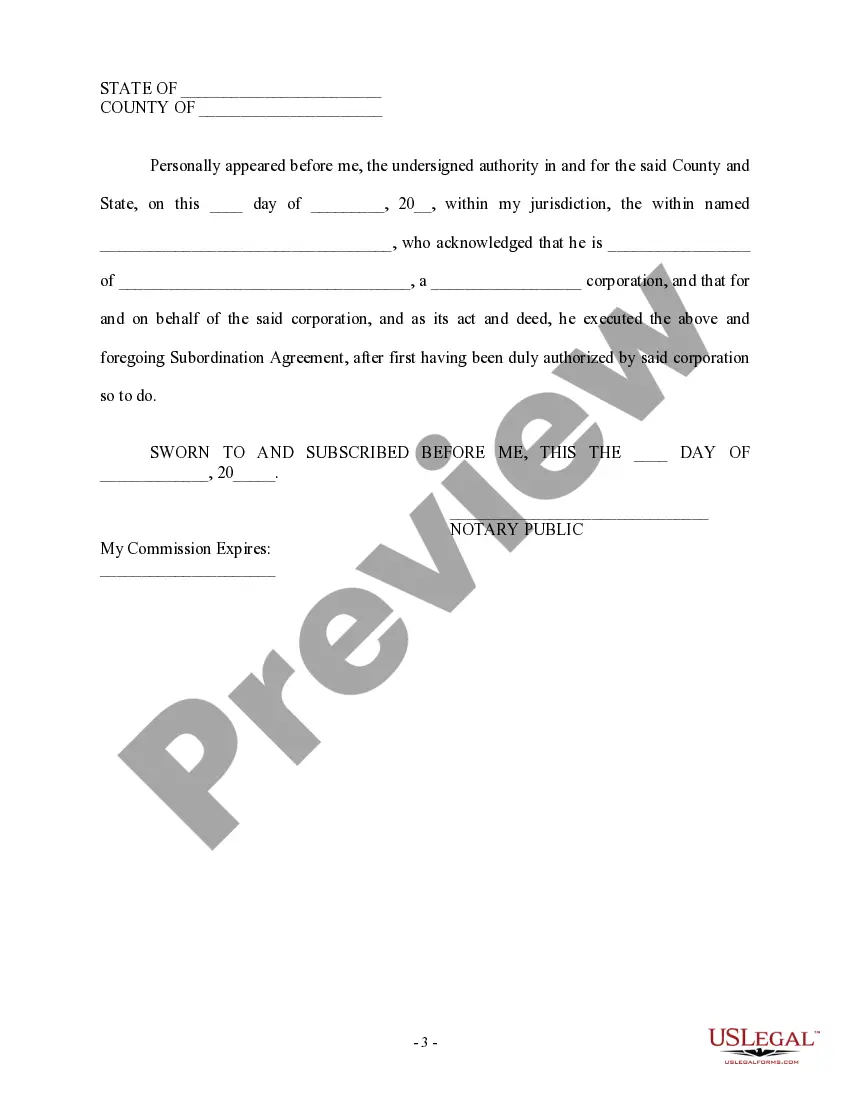
- Space for the signatures of all parties and a notary acknowledgment.

Common use cases
This form should be used when a lender or lien holder wants to subordinate their existing lien on a property to another lender's lien. Scenarios for its use include refinancing, acquiring additional financing, or when changes in the priority of liens are necessary for completing a real estate transaction.
Who can use this document
- Property owners looking to refinance loans.
- Lenders wanting to establish lien priority for new loans.
- Real estate attorneys assisting clients with lien agreements.
Steps to complete this form
- Identify all parties involved, including lien holders and borrowers.
- Specify the details of the original deed of trust to be subordinated.
- Clearly state the lien that will maintain superior status.
- Enter the effective date of the agreement.
- Ensure all parties sign the agreement in the presence of a notary public.
Notarization requirements for this form
Notarization is required for this form to take effect. Our online notarization service, powered by Notarize, lets you verify and sign documents remotely through an encrypted video session, available 24/7.
Get your form ready online
Our built-in tools help you complete, sign, share, and store your documents in one place.
Make edits, fill in missing information, and update formatting in US Legal Forms—just like you would in MS Word.
Download a copy, print it, send it by email, or mail it via USPS—whatever works best for your next step.
Sign and collect signatures with our SignNow integration. Send to multiple recipients, set reminders, and more. Go Premium to unlock E-Sign.
If this form requires notarization, complete it online through a secure video call—no need to meet a notary in person or wait for an appointment.
We protect your documents and personal data by following strict security and privacy standards.

Make edits, fill in missing information, and update formatting in US Legal Forms—just like you would in MS Word.

Download a copy, print it, send it by email, or mail it via USPS—whatever works best for your next step.

Sign and collect signatures with our SignNow integration. Send to multiple recipients, set reminders, and more. Go Premium to unlock E-Sign.

If this form requires notarization, complete it online through a secure video call—no need to meet a notary in person or wait for an appointment.

We protect your documents and personal data by following strict security and privacy standards.
Common mistakes
- Failing to include the correct legal descriptions of the property.
- Not obtaining all required signatures before notarization.
- Overlooking the effective date, leading to ambiguity about when the subordination takes effect.
Why complete this form online
- Easy to complete and customize for your specific situation.
- Access to reliable legal documents drafted by licensed attorneys.
- Convenient downloadable format allows you to keep a record easily.
Looking for another form?



Form popularity
FAQ
The Subordination Agreement of Deed of Trust is a real estate document that lets one lien holder subordinate their deed of trust to another lien holder's claim. It’s used when multiple loans are secured by the property, enabling a clear priority order between lenders so the financing can proceed according to agreed-upon lien priorities.
Its purpose is to establish which lien has priority when more than one loan is secured by the property. This form documents that one deed of trust will be subordinate to a superior lien, helping lenders and borrowers align expectations and ensure the financing can close.
Typically, the borrower, the lenders, or their attorneys prepare a subordination agreement, often with input from a real estate attorney. The form provides space to identify the parties, the original deed of trust, the superior deed, the effective date, and lines for all required signatures and a notary acknowledgment.
Another common name is a subordination deed or subordination clause. This form specifically covers a Subordination Agreement of Deed of Trust, tying the concept to a deed of trust on real property and outlining how one lien will be subordinated to another.
The party seeking new financing—usually the borrower or a new lender—often benefits, because the subordination allows the intended loan to proceed with a defined lien priority. The existing lien holder may agree to subordinate to facilitate refinancing or additional financing and to keep the overall transaction moving forward.
This form specifically applies to deeds of trust on real estate and sets the priority between two liens on the same property. It includes the essential details (identification of parties, original deed of trust, superior lien, and effective date) and requires signatures and a notary, tailoring the document to real estate financing scenarios.