Tennessee Warranty Deed from Husband and Wife to an Individual
Understanding this form
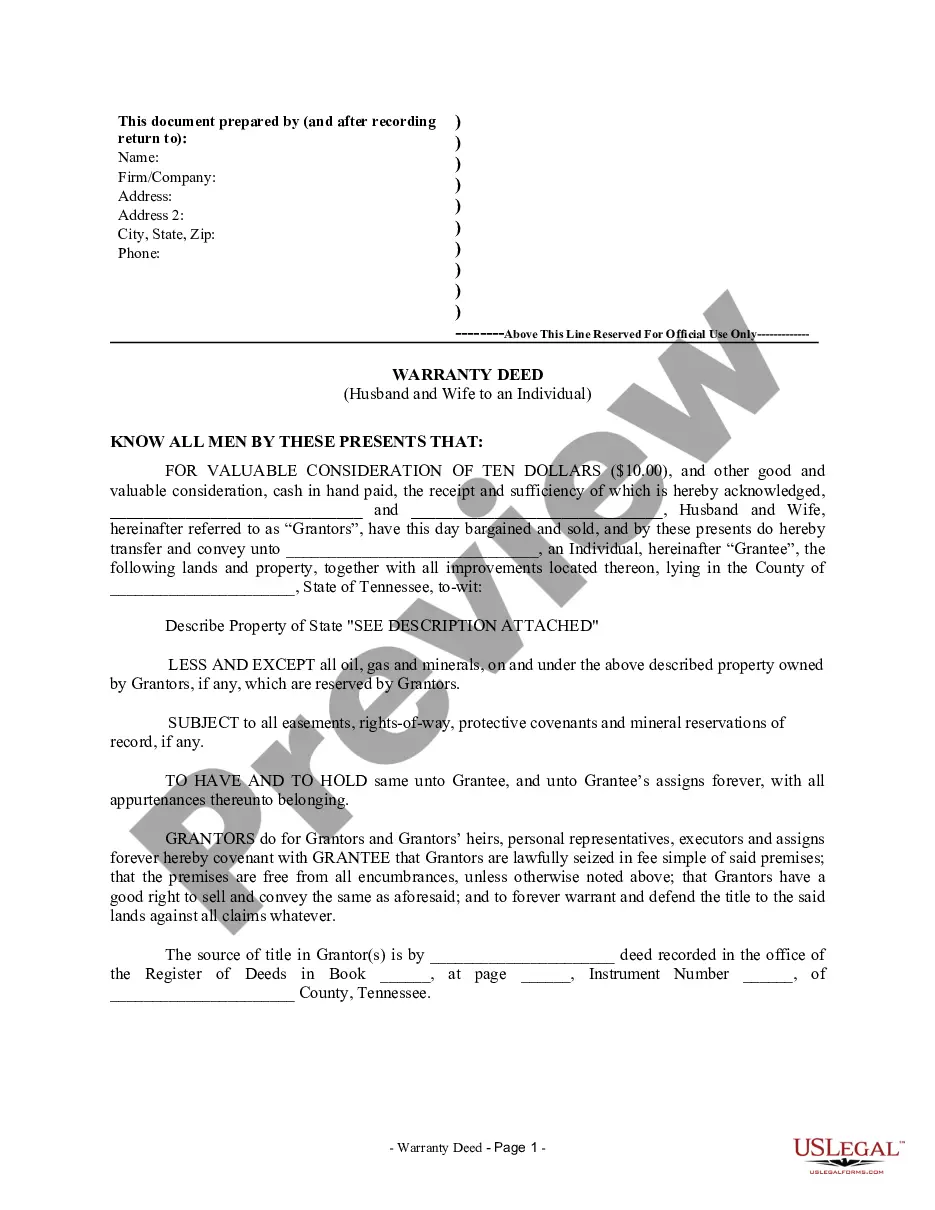
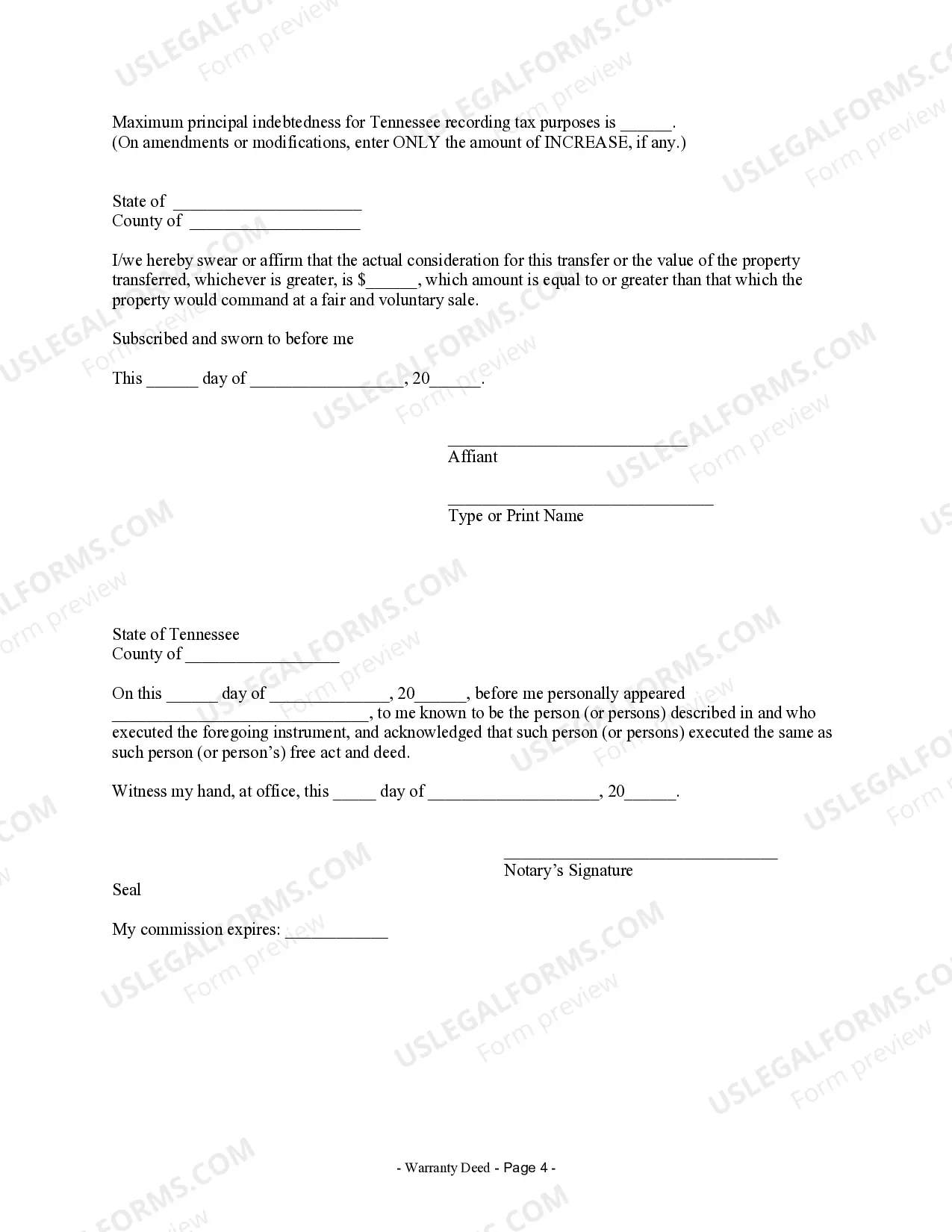
This Warranty Deed from Husband and Wife to an Individual is a legal document that transfers property ownership from a married couple (the grantors) to an individual (the grantee). The deed offers a guarantee, ensuring the property is free from encumbrances, except for certain exceptions like oil, gas, and minerals. Unlike quitclaim deeds, warranty deeds provide a higher level of security for the buyer, making it a more secure option for property transactions.
Key parts of this document
- Identification of grantors (husband and wife) and grantee (individual).
- Description of the property being transferred, including any reservations such as oil, gas, and minerals.
- Grantors' covenant ensuring they have the legal right to sell the property and that the title is clear from encumbrances.
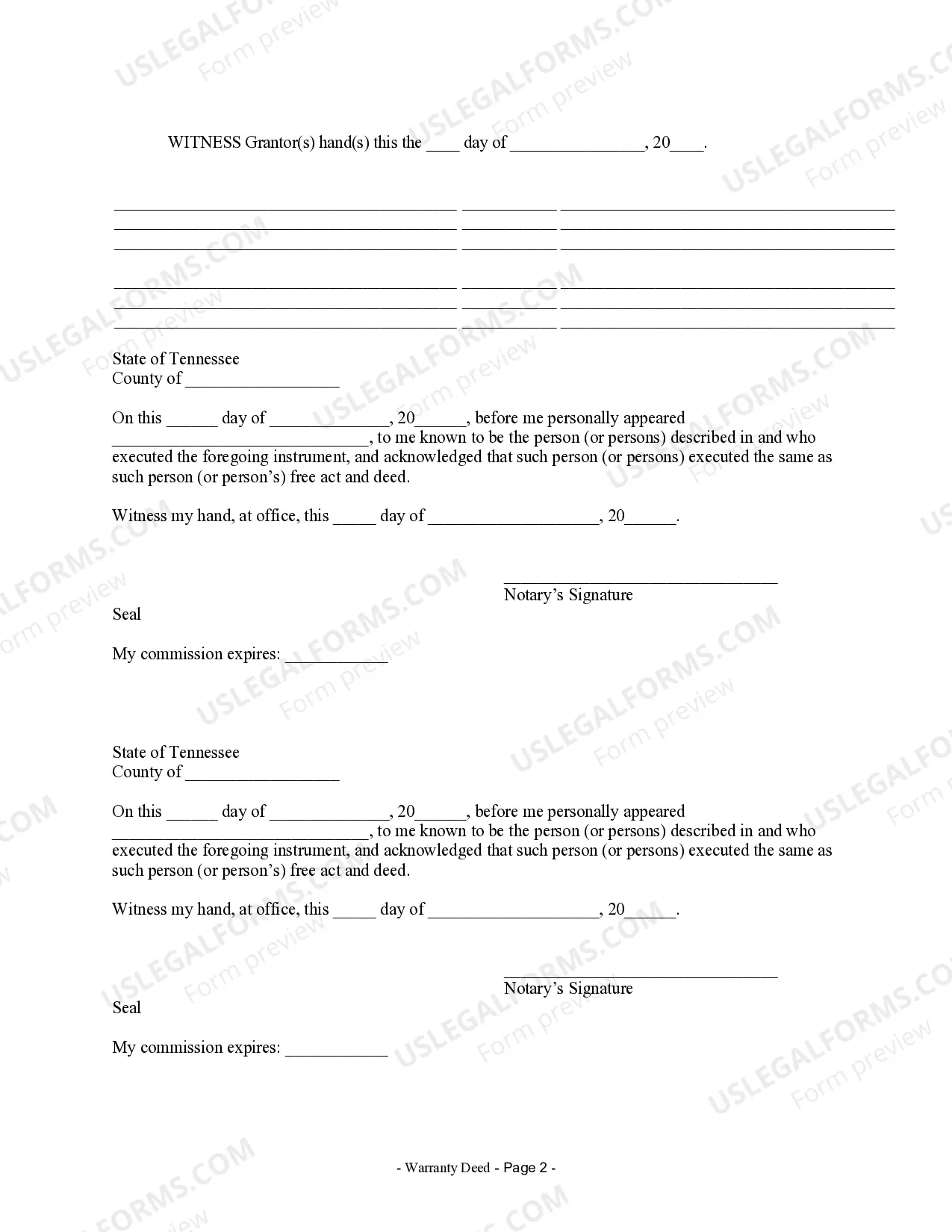
- Notary acknowledgment section to confirm the legality of the transfer.
- Space for recording details, including previous source of title.





Situations where this form applies
This warranty deed should be used when a married couple wishes to transfer ownership of real property to a single individual. This may occur during a property sale, inheritance distribution, or when simplifying ownership structures amongst family members. It is particularly important when the couple wishes to assure the grantee of their rights to the property and provide a warranty against any future claims to the title.
Intended users of this form
- Married couples who own property together and want to transfer it to an individual.
- Individuals receiving property as part of an estate settlement.
- Real estate professionals assisting clients with property transfers.
- Anyone needing to formalize the ownership transfer while assuring clear title.
Instructions for completing this form
- Fill in the names of both grantors (husband and wife).
- Provide the name of the individual grantee receiving the property.
- Complete the property description section, noting any exceptions (like oil, gas, and minerals).
- Enter details regarding the source of title, including previous deed information.
- Sign the deed in the presence of a notary public and ensure the notary completes their section.
Notarization guidance
This form must be notarized to be legally valid. US Legal Forms provides secure online notarization powered by Notarize, allowing you to complete the process through a verified video call.
Get your form ready online
Our built-in tools help you complete, sign, share, and store your documents in one place.
Make edits, fill in missing information, and update formatting in US Legal Forms—just like you would in MS Word.
Download a copy, print it, send it by email, or mail it via USPS—whatever works best for your next step.
Sign and collect signatures with our SignNow integration. Send to multiple recipients, set reminders, and more. Go Premium to unlock E-Sign.
If this form requires notarization, complete it online through a secure video call—no need to meet a notary in person or wait for an appointment.
We protect your documents and personal data by following strict security and privacy standards.

Make edits, fill in missing information, and update formatting in US Legal Forms—just like you would in MS Word.

Download a copy, print it, send it by email, or mail it via USPS—whatever works best for your next step.

Sign and collect signatures with our SignNow integration. Send to multiple recipients, set reminders, and more. Go Premium to unlock E-Sign.

If this form requires notarization, complete it online through a secure video call—no need to meet a notary in person or wait for an appointment.

We protect your documents and personal data by following strict security and privacy standards.
Common mistakes to avoid
- Failing to accurately describe the property, which can lead to disputes.
- Not including necessary exceptions for mineral rights or easements.
- Neglecting to have the deed notarized, which may invalidate the transfer.
- Forgetting to record the deed with the county clerk's office after signing.
Why use this form online
- Immediate access to legally drafted templates, ensuring compliance with current laws.
- Convenient edits to suit individual circumstances without the need for attorney visits.
- Easy downloading and printing for personal use or record keeping.
Looking for another form?



Form popularity
FAQ
The drawback, quite simply, is that quitclaim deeds offer the grantee/recipient no protection or guarantees whatsoever about the property or their ownership of it. Maybe the grantor did not own the property at all, or maybe they only had partial ownership.
If the lender accepts your offer of a Quit Claim, you sign a document called a Transfer of title to your lender. You and the lender both sign the Quit Claim. The Quit Claim states that you agree to transfer the ownership of your property to the lender and the lender agrees to release you from any debt owed.
A Tennessee Quit Claim Deed is a legal document conveys property from a seller to a buyer in an expeditious fashion. This document provides no guarantee that the property title is free of encumbrances and that the seller has the legal right to sell the property.
Recording. Once the quitclaim deed is signed and notarized, it is a valid legal document.Recording serves to notify the public and the public authorities that the transaction has taken place. The grantee cannot assume legal title to the property without recording a quitclaim deed.
Tennessee deed forms convey interest in property from one party (the Grantor) to another (the Grantee). The documents can be prepared by anyone as long as the required information is written in the deed as outlined in § 66-5-103.
When recorded, a special warranty deed conveys an interest in real property to the named grantee with limited warranties of title. In Tennessee, special warranty deeds are statutory.This means that the deed will not protect the grantee against title issues that arose prior to the time the grantor acquired title.
1Retrieve your original deed.2Get the appropriate deed form.3Draft the deed.4Sign the deed before a notary.5Record the deed with the county recorder.6Obtain the new original deed.
In order to convey any real property or an interest in property in Tennessee, the deed must be in writing, acknowledged by the grantor, and registered in the county where the property is located. The Annotated Code of Tennessee allows for the transfer of real property through the usage of a variety of deeds.
A quitclaim deed is dangerous if you don't know anything about the person giving you the property. You should be sure that a person actually has rights to a property before signing it over with a quitclaim deed.