Sample Letter for Complaint Served Upon Registered Agent
Overview of this form
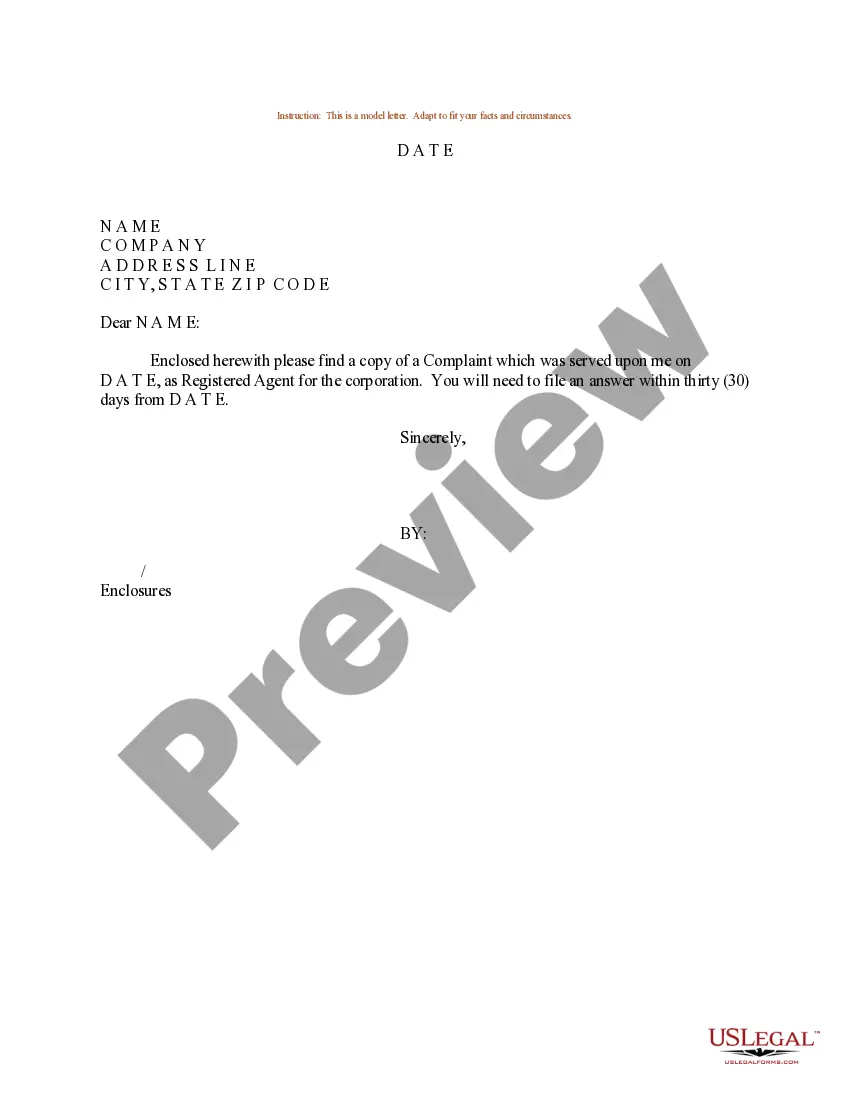
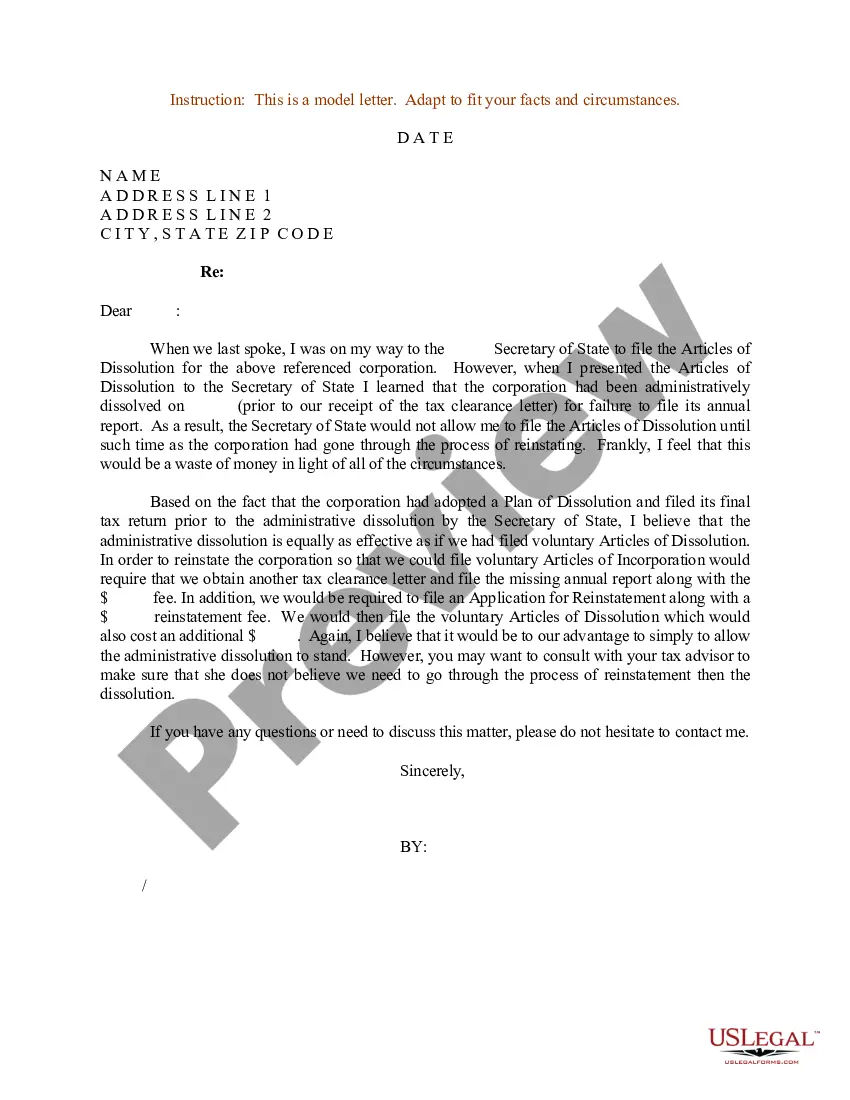
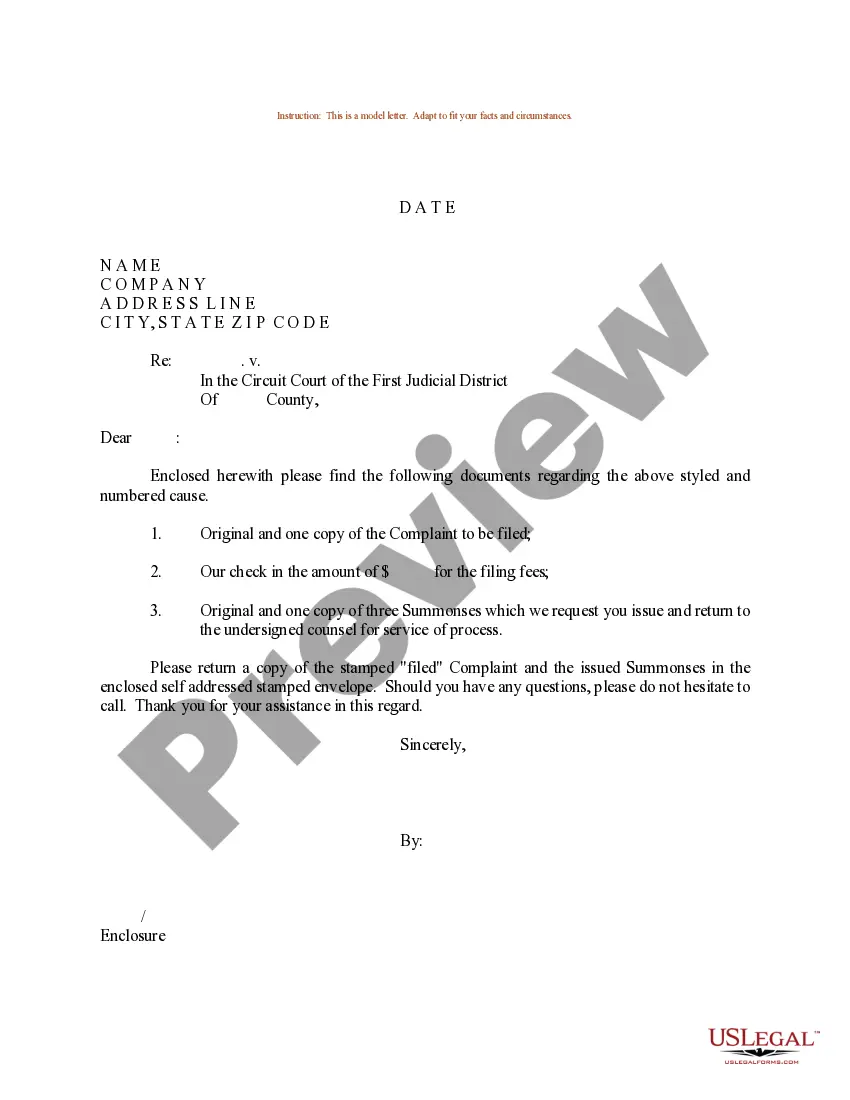
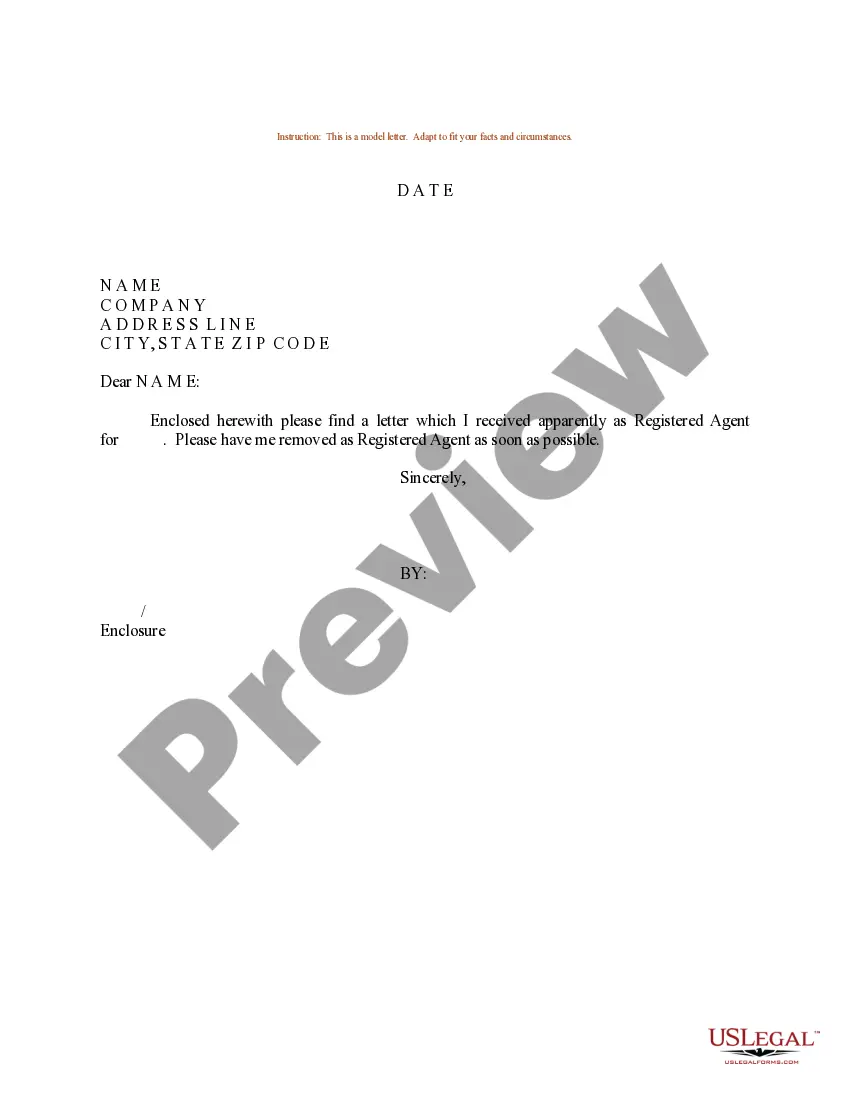
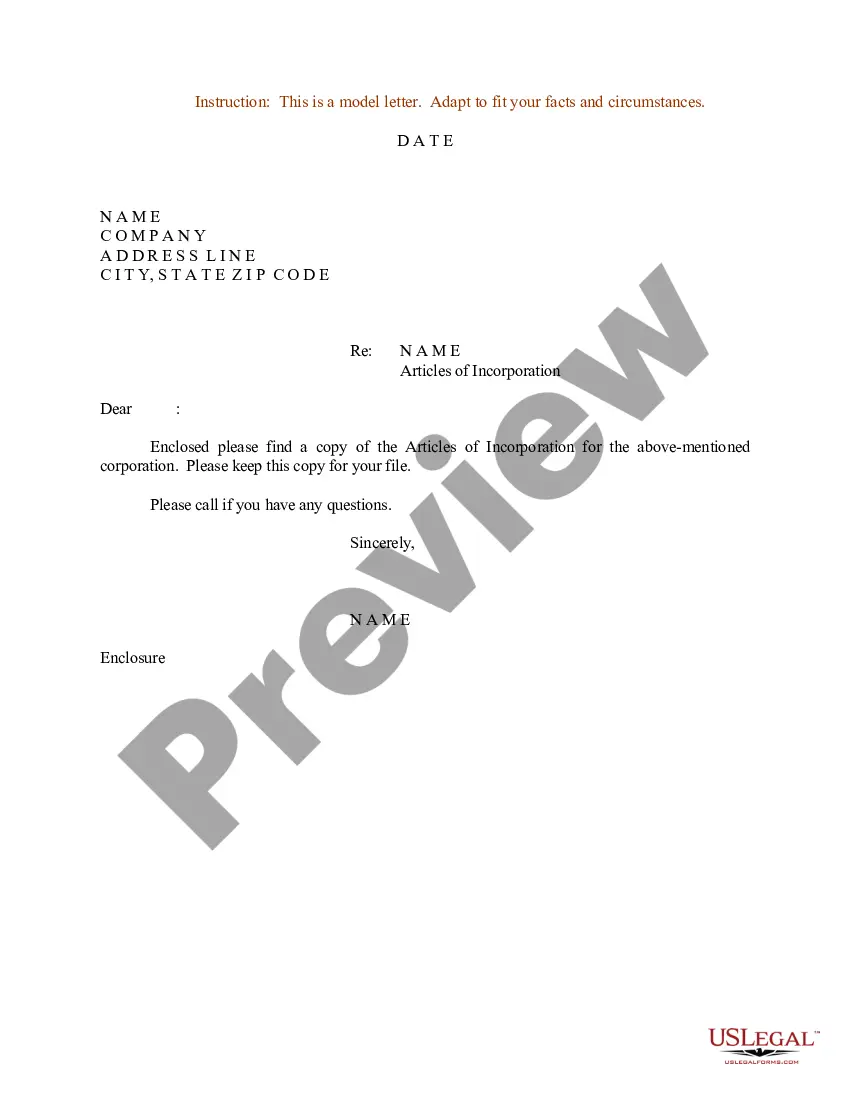
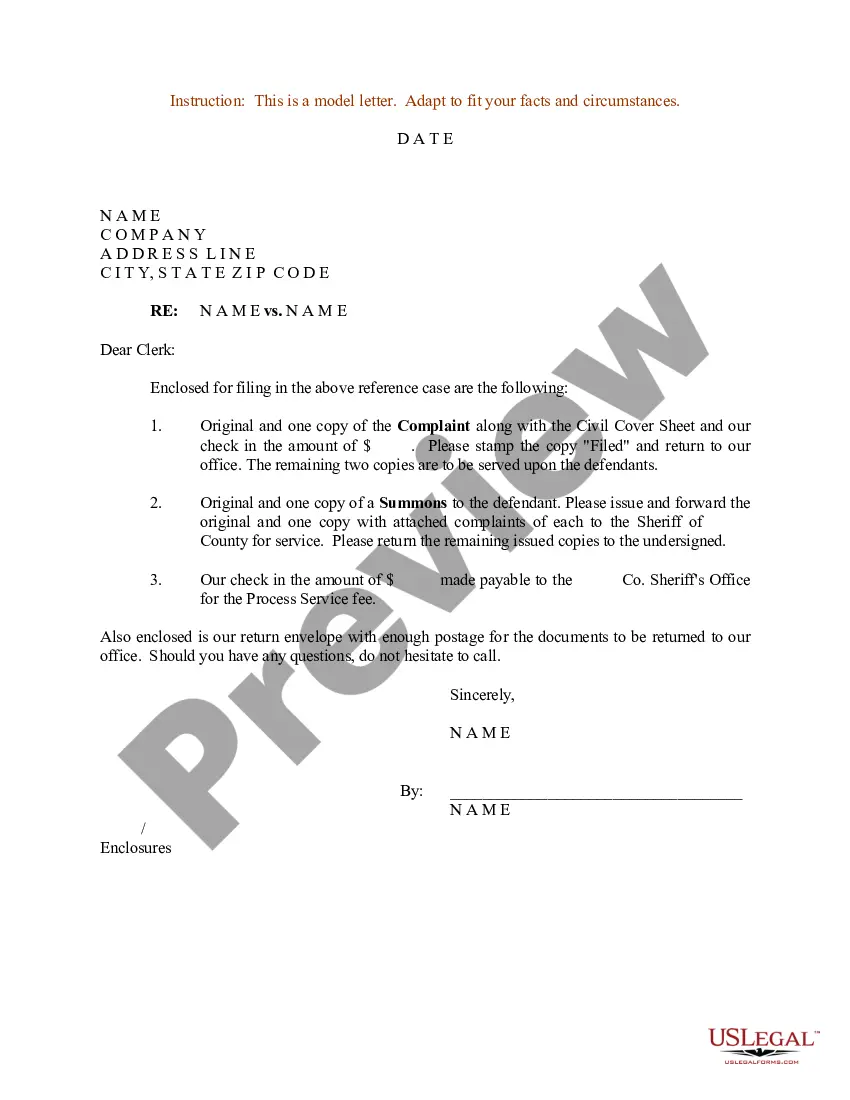
The Sample Letter for Complaint Served Upon Registered Agent is a template designed to help individuals notify a company or individual that a legal complaint has been officially served. This letter is essential for communication about the complaint, ensuring all parties are informed of the ongoing legal proceedings. Unlike other letters, this form is specific to situations where a registered agent receives the complaint, providing an accurate framework for notification.
Main sections of this form
- Date of the letter.
- Name and address of the recipient (usually the registered agent).
- A formal greeting directed to the recipient.
- Details of the enclosed complaint and its service date.
When this form is needed
This letter is used when a formal complaint has been served to a registered agent on behalf of a corporation. It is typically required in situations involving disputes, lawsuits, or when a company needs to be formally notified about legal actions initiated against it. Using this form ensures that proper legal communication protocols are followed, which is crucial for future legal proceedings.
Who this form is for
- Filing parties involved in a legal dispute.
- Lawyers representing clients in lawsuits.
- Registered agents responsible for receiving legal documents.
- Individuals needing to inform companies about lawsuits effectively.
How to complete this form
- Enter the current date at the top of the letter.
- Fill in the name and address of the recipient, typically the registered agent.
- Begin with a formal greeting, addressing the recipient directly.
- Clearly state that a copy of the complaint is enclosed.
- Specify the date the complaint was served for context.
Is notarization required?
Notarization is not commonly needed for this form. However, certain documents or local rules may make it necessary. Our notarization service, powered by Notarize, allows you to finalize it securely online anytime, day or night.
Get your form ready online
Our built-in tools help you complete, sign, share, and store your documents in one place.
Make edits, fill in missing information, and update formatting in US Legal Forms—just like you would in MS Word.
Download a copy, print it, send it by email, or mail it via USPS—whatever works best for your next step.
Sign and collect signatures with our SignNow integration. Send to multiple recipients, set reminders, and more. Go Premium to unlock E-Sign.
If this form requires notarization, complete it online through a secure video call—no need to meet a notary in person or wait for an appointment.
We protect your documents and personal data by following strict security and privacy standards.

Make edits, fill in missing information, and update formatting in US Legal Forms—just like you would in MS Word.

Download a copy, print it, send it by email, or mail it via USPS—whatever works best for your next step.

Sign and collect signatures with our SignNow integration. Send to multiple recipients, set reminders, and more. Go Premium to unlock E-Sign.

If this form requires notarization, complete it online through a secure video call—no need to meet a notary in person or wait for an appointment.

We protect your documents and personal data by following strict security and privacy standards.
Mistakes to watch out for
- Failing to include the date of service.
- Omitting the recipient's full name and correct address.
- Using informal language that may not be legally appropriate.
Why complete this form online
- Instant access to professionally drafted templates.
- Edit and customize the form quickly according to specific needs.
- Downloadable format for easy sharing and filing purposes.
Looking for another form?
Form popularity
FAQ
Fill out your court forms. Have your forms reviewed. Make at least 2 copies of all your forms. File your forms with the court clerk. Serve your papers on the other parent. File your Proof of Service. Go to your court hearing.
Generally, process servers make at least three attempts to serve somebody. These attempts are normally made at different times of day and on different days to maximize our chance of serving the papers.
Read the summons and make sure you know the date you must answer by. Read the complaint carefully. Write your answer. Sign and date the answer. Make copies for the plaintiff and yourself. Mail a copy to the plaintiff. File your answer with the court by the date on the summons.
Provide the name of the court at the top of the Answer. You can find the information on the summons. List the name of the plaintiff on the left side. Write the case number on the right side of the Answer. Address the Judge and discuss your side of the case. Ask the judge to dismiss the case.
If you have not been properly served, and you don't show up, the court has no personal jurisdiction over you, and can't enter a judgment against you. The case can be continued to another court date, and the other side can try again to serve you. It's tricky if you were improperly served.
When drafting an answer, one must: (1) follow the local, state, and federal court rules; (2) research the legal claims in the adversary's complaint; (3) respond to the adversary's factual allegations; and (4) assert affirmative defenses, counterclaims, cross-claims, or third-party claims, if applicable.
You can file an answer or a general denial. Filing an answer. You can file a motion In certain situations, you can respond to the lawsuit by filing a motion (a request) that usually tells the court that the plaintiff made a mistake in the lawsuit. Talk to a lawyer!
Send a USPS mail to the person's last address. Search social media (networking) sites. Use online service that search for people. Contact the relatives or friends. Call4112033 ask for city where you think the person may live. Go to tax assessor's office or recorder's office and search property records.
Can Someone Refuse to Be Served Papers? No, in California a person cannot refuse to accept service. If we can identify a person on whom legal service can be made either personally or by sub-service and they refuse to accept the documents, we can absolutely still serve them.