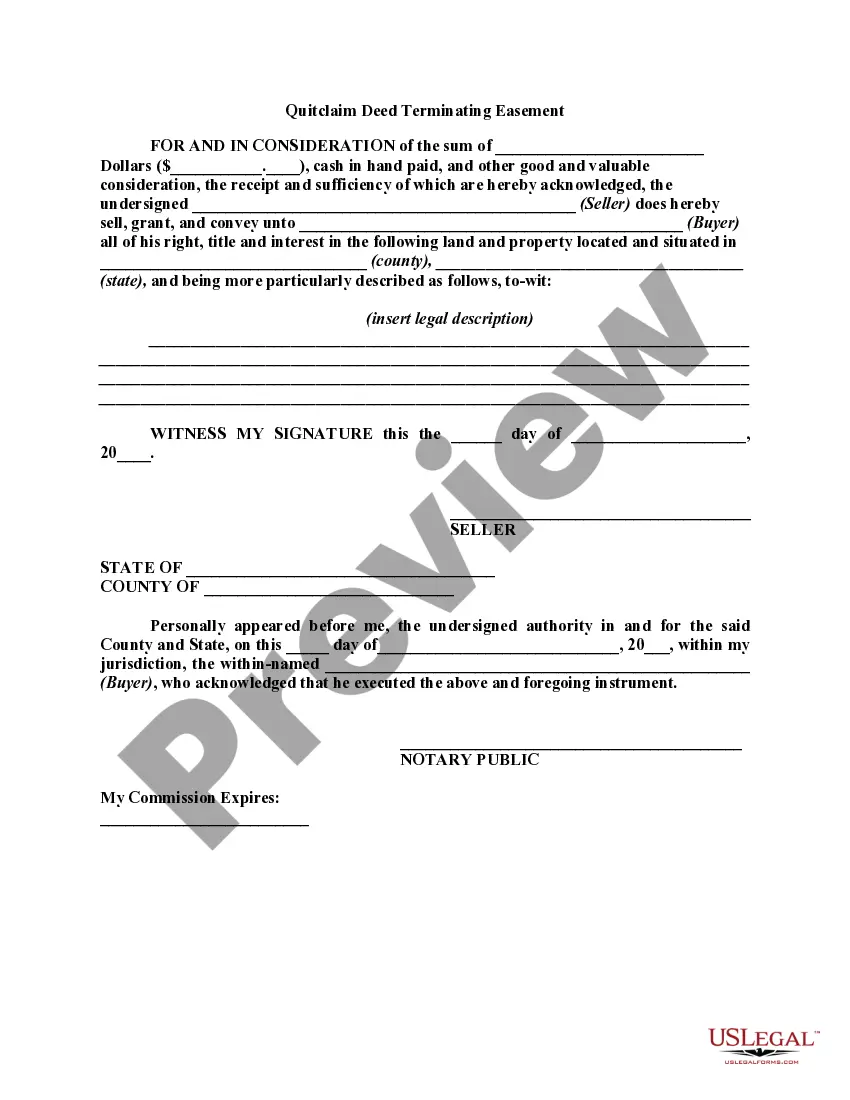
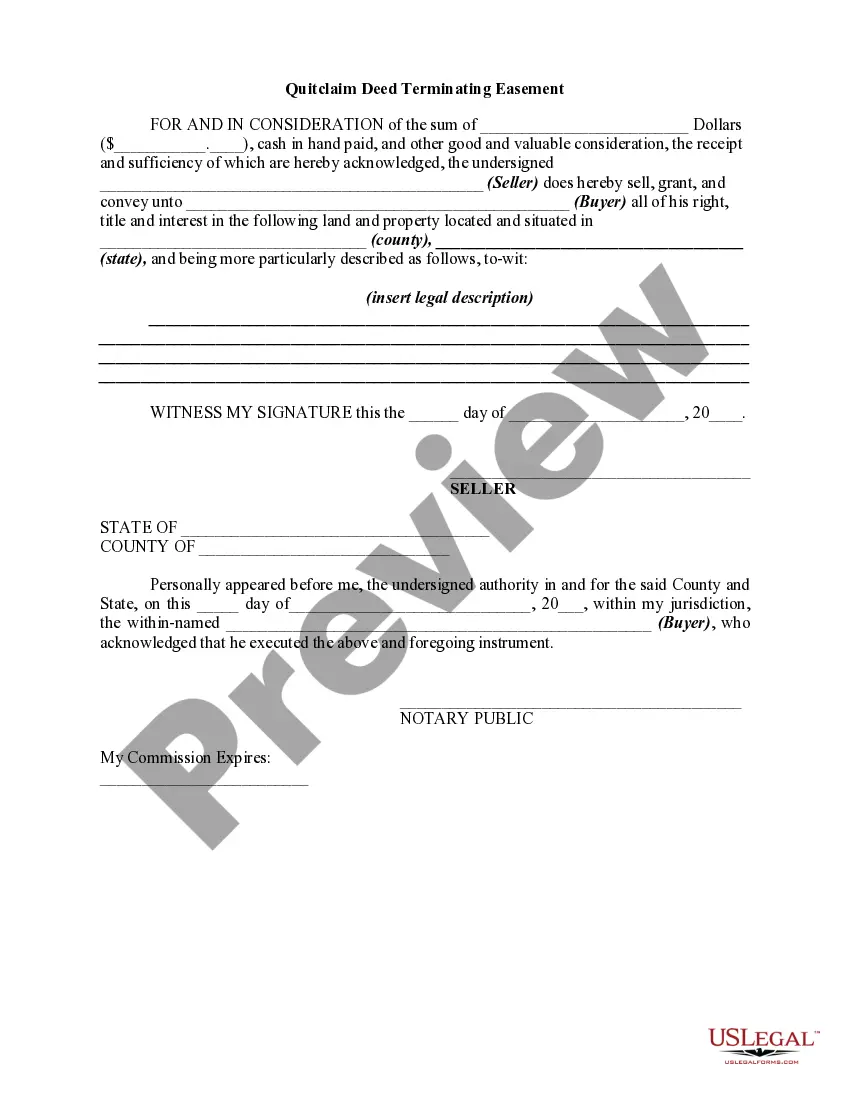
Quitclaim Deed Termination or Terminating Easement
About this form
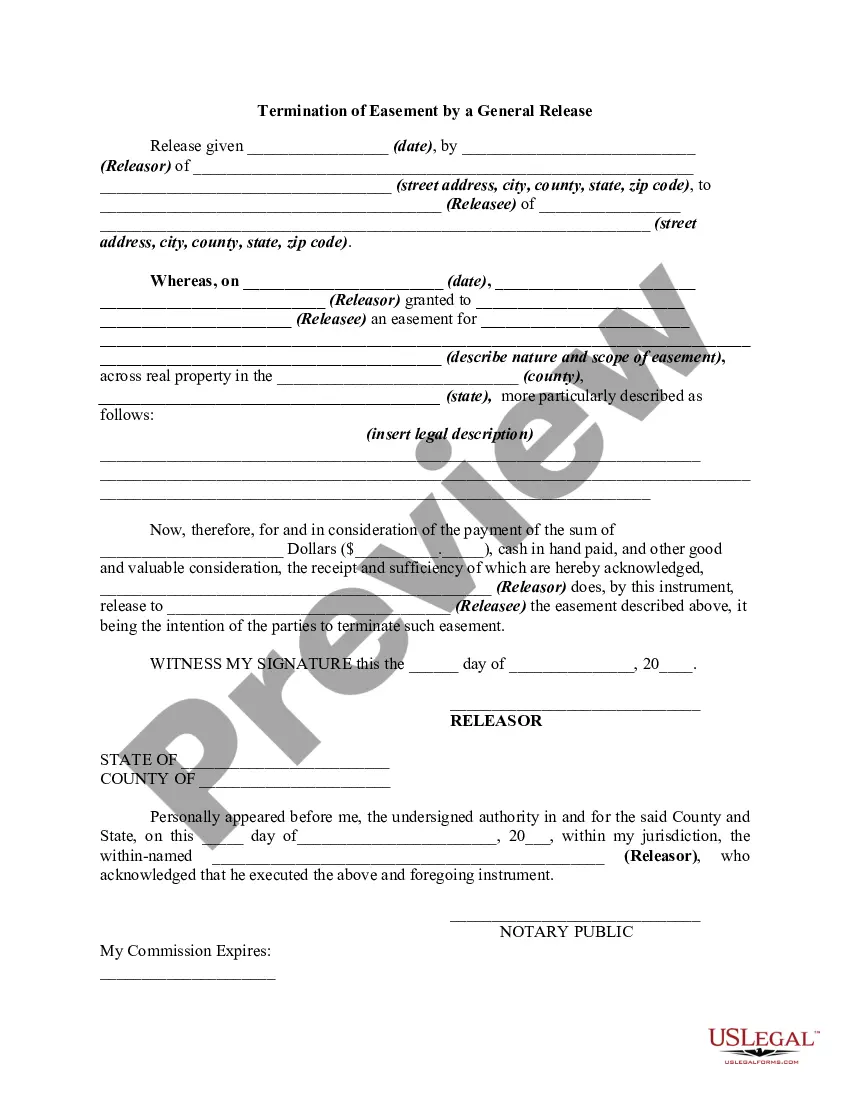
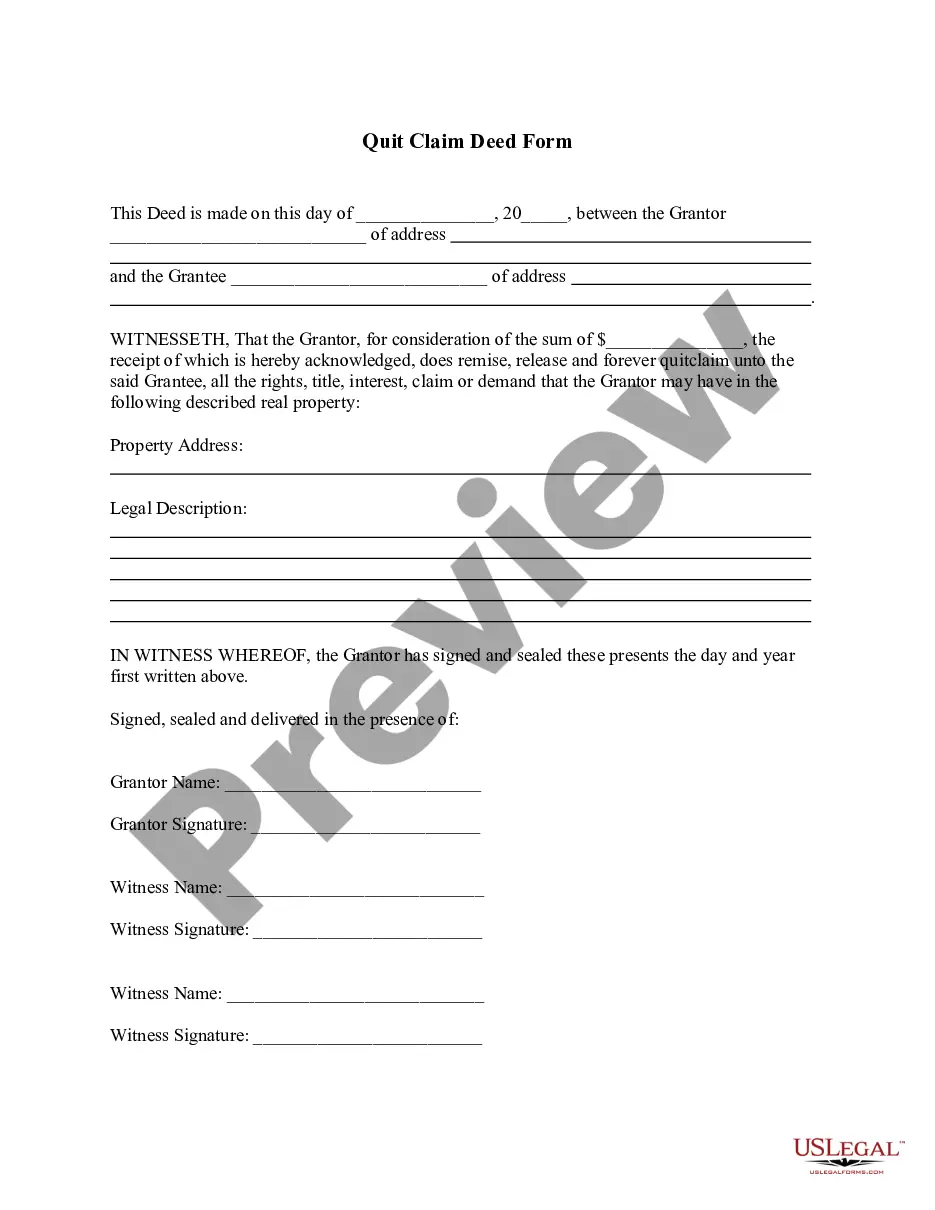
A Quitclaim Deed Termination is a legal document used to transfer any interest the grantor may have in a property, without guaranteeing that they have any interest at all. This form is particularly valuable for terminating an easement, which is a right to use a portion of someone else's property. Unlike warranty deeds, quitclaim deeds do not provide any guarantees about the ownership of the property. Thus, if you need to dissolve an easement, this form serves as a straightforward solution.
What’s included in this form
- Parties involved: Identifies the seller (grantor) and buyer (grantee).
- Legal description of the property: Specifies the real property affected by the easement.
- Consideration: States the amount exchanged for the termination of the easement.
- Execution: Requires signatures from both the seller and notary public.

When this form is needed
This form is used when a property owner wishes to terminate an existing easement, allowing full use of their property without the burden of the easement. Situations include when the easement is no longer needed, when the property is sold, or when the affected parties agree to end the easement. Completing this quitclaim deed ensures that the easement is officially dissolved and clarifies property rights.
Who should use this form
- Property owners who wish to terminate an easement on their land.
- Real estate professionals assisting clients with property rights issues.
- Anyone involved in a property transaction that includes relinquishing an easement.
How to complete this form
- Identify the parties: Clearly state the names of the seller and buyer.
- Specify the property: Provide a legal description of the land involved.
- Enter consideration: Include the monetary amount paid for the termination.
- Sign and date: Both parties must sign the document, and it should be dated.
- Notarization: The signing should be witnessed by a notary public, if required.
Is notarization required?
To make this form legally binding, it must be notarized. Our online notarization service, powered by Notarize, lets you verify and sign documents remotely through an encrypted video session.
Get your form ready online
Our built-in tools help you complete, sign, share, and store your documents in one place.
Make edits, fill in missing information, and update formatting in US Legal Forms—just like you would in MS Word.
Download a copy, print it, send it by email, or mail it via USPS—whatever works best for your next step.
Sign and collect signatures with our SignNow integration. Send to multiple recipients, set reminders, and more. Go Premium to unlock E-Sign.
If this form requires notarization, complete it online through a secure video call—no need to meet a notary in person or wait for an appointment.
We protect your documents and personal data by following strict security and privacy standards.

Make edits, fill in missing information, and update formatting in US Legal Forms—just like you would in MS Word.

Download a copy, print it, send it by email, or mail it via USPS—whatever works best for your next step.

Sign and collect signatures with our SignNow integration. Send to multiple recipients, set reminders, and more. Go Premium to unlock E-Sign.

If this form requires notarization, complete it online through a secure video call—no need to meet a notary in person or wait for an appointment.

We protect your documents and personal data by following strict security and privacy standards.
Avoid these common issues
- Failing to include a complete legal description of the property.
- Not having the document notarized when required.
- Leaving out the consideration amount, which can lead to disputes.
- Not having both parties' signatures, making the form invalid.
Benefits of completing this form online
- Convenience: Easily download and fill out the form from home.
- Editability: Make changes as needed before finalizing the document.
- Reliability: Forms are drafted by licensed attorneys to ensure legality.
Looking for another form?

Form popularity
FAQ
The drawback, quite simply, is that quitclaim deeds offer the grantee/recipient no protection or guarantees whatsoever about the property or their ownership of it. Maybe the grantor did not own the property at all, or maybe they only had partial ownership.
III. Vacating or Reopening a Public Way or Easement. Anytime after the municipality closes the public way or easement, a property owner may commence an action to either vacate (i.e., foreclose) the municipality's right to reopen the closed public way or easement or to have the closed public way or easement reopened.
There are eight ways to terminate an easement: abandonment, merger, end of necessity, demolition, recording act, condemnation, adverse possession, and release.
Thus, the simplest method by which an owner can prevent an easement from being acquired on his or her property is by giving his consent to the other person's use. Once permission is given, the use by the neighbor (or the neighbor's tenant) is not adverse.
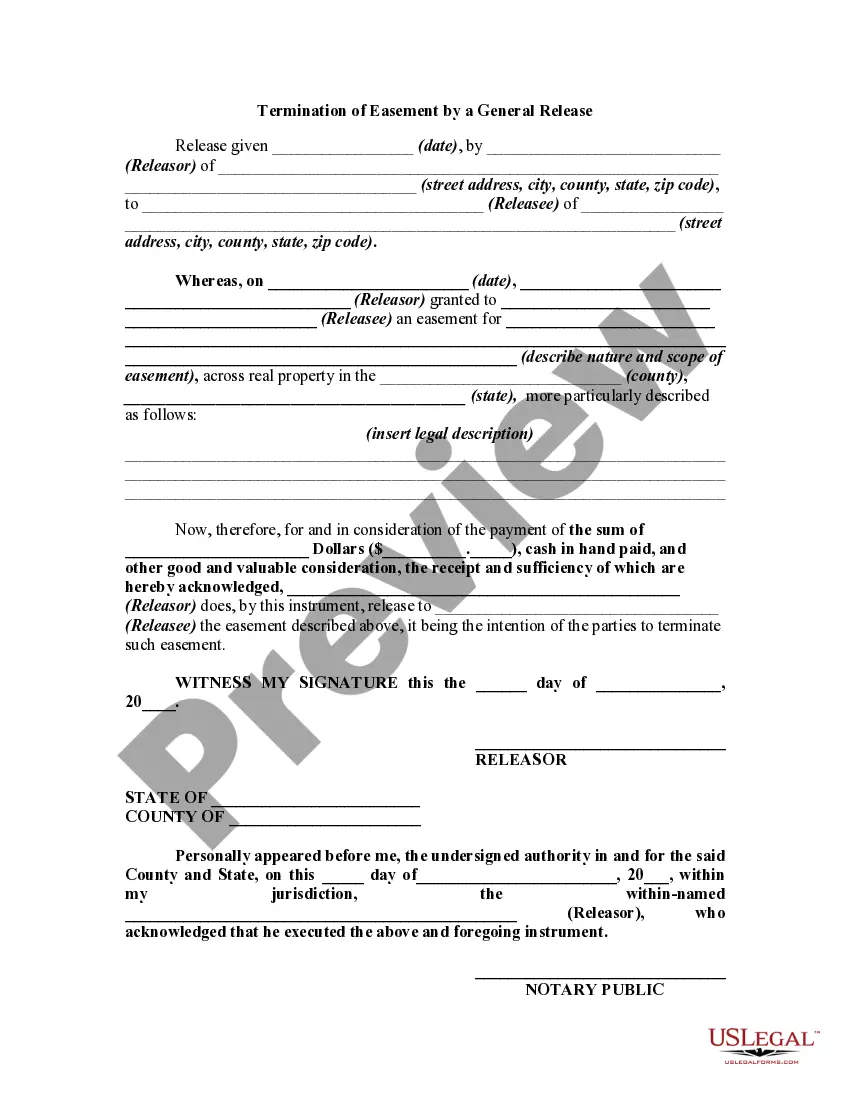
You can terminate an easement by release. A release is a surrender of a right or interest, such as an easement. Only the person holding the right can release it, such as the owner of the dominant estate in an easement appurtenant or the holder of an easement in gross.
Can I reverse a quit claim deed?Once a quit claim deed has been completed and filed with the County Clerk's Office, the title will officially pass from the grantor to the grantee. The only way to reverse a quit claim deed is to go to court and prove that the grantor was forced to sign the document under duress.
Once the transfer is complete, there is no way to nullify or undo a quitclaim deed unless both parties consent to the arrangement. If the original grantor does agree to take back the property, you must draft and file a new quitclaim deed to void the original.
When you sign a deed transferring your interest in real property, you cannot reverse it simply because you regret your decision. Assuming you are on congenial terms with the person who was the grantee of your deed, he can sign a similar deed transferring the property interest back to you.
The party gaining the benefit of the easement is the dominant estate (or dominant tenement), while the party granting the benefit or suffering the burden is the servient estate (or servient tenement). For example, the owner of parcel A holds an easement to use a driveway on parcel B to gain access to A's house.