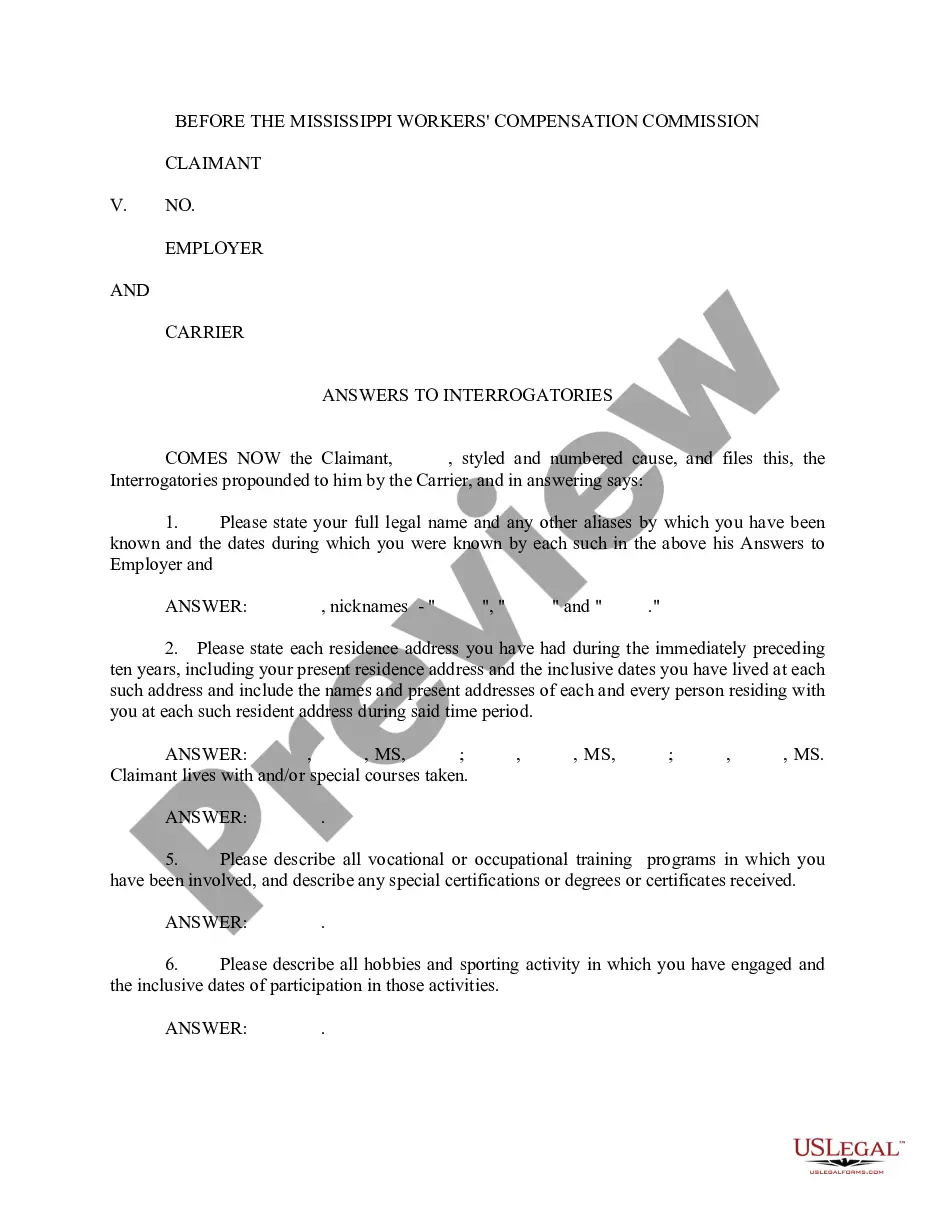
Rhode Island Warranty Deed from Individual to Husband and Wife
Understanding this form
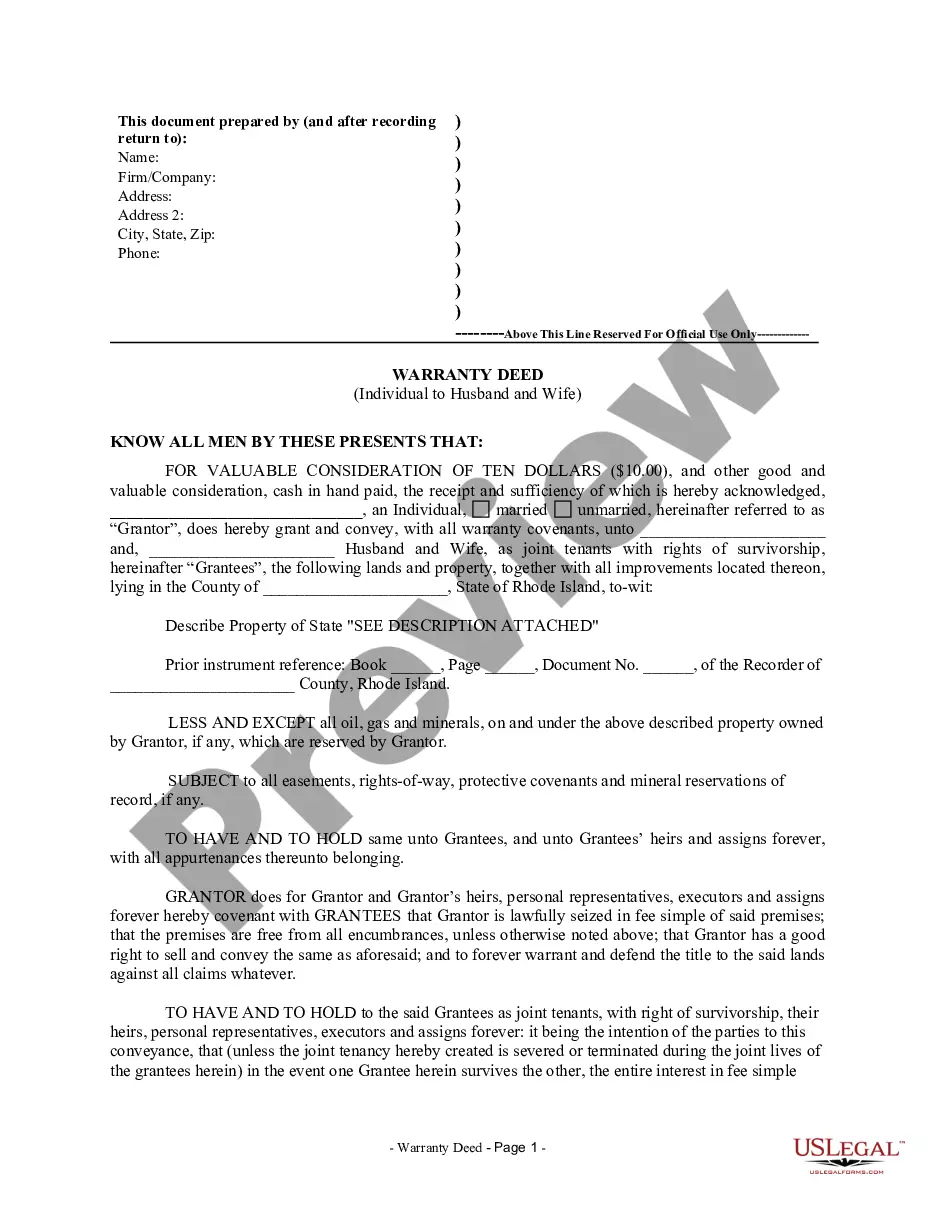
The Warranty Deed from Individual to Husband and Wife is a legal document that transfers property ownership from an individual (the Grantor) to a married couple (the Grantees). This deed includes essential warranties that assure the Grantees of the Grantorâs legal right to convey the property and guarantees that the property is free of encumbrances, except as noted. It is important for formalizing property ownership between spouses and ensuring that both partners have rights to the property, particularly in scenarios involving joint tenancy with right of survivorship.
What’s included in this form
- Identification of the Grantor and Grantees, including legal names and relationship status.
- Description of the property being conveyed, including any prior instrument reference.
- Reservation of oil, gas, and mineral rights by the Grantor, if applicable.
- Covenant stating the Grantor's lawful ownership and assurance of no encumbrances.
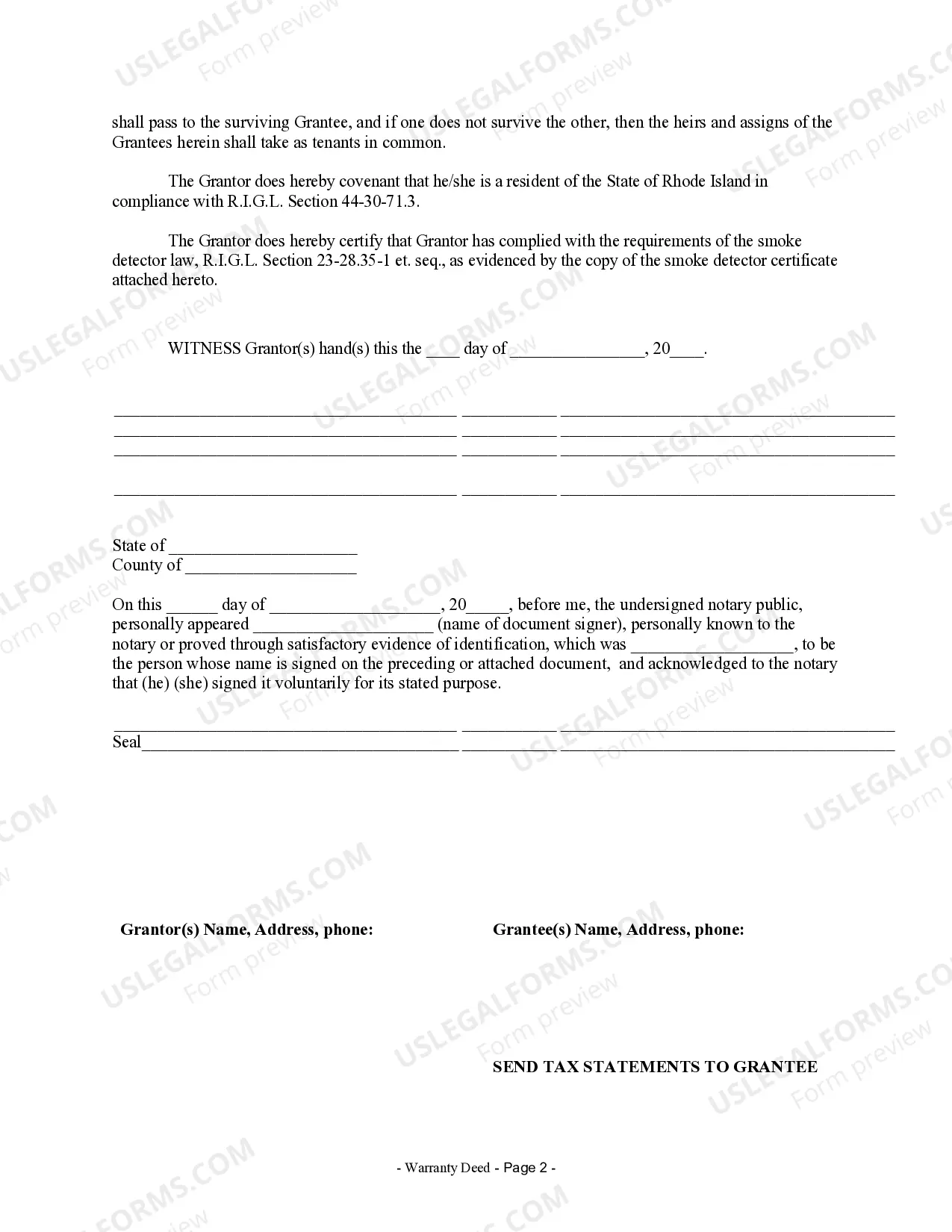
- Provisions regarding joint tenancy and survivorship rights for Grantees.
- Space for notarization certifying proper execution of the deed.





When this form is needed
This form is typically used when an individual wants to transfer real property to their spouse, ensuring that both partners have equal ownership and rights to the property. It is appropriate in situations like marriage, when consolidating assets, or when wanting to ensure property remains within the couple, especially if one partner passes away. Using this deed can simplify inheritance and protect the property from claims outside the marriage.
Who can use this document
- Individuals looking to transfer property ownership to their spouse.
- Married couples interested in joint ownership of real estate.
- Homeowners who want to clarify title status and future inheritance rights.
Completing this form step by step
- Identify all parties involved by entering the legal names of the Grantor and Grantees.
- Provide a thorough description of the property being transferred, including any relevant prior instrument references.
- Indicate the reservation of oil, gas, and mineral rights if applicable.
- Complete the date and signature fields for the Grantor.
- Arrange for notarization by having the deed signed in the presence of a notary public.
Is notarization required?
Yes, this form must be notarized to be legally valid. Notarization provides an essential verification process that confirms the authenticity of the parties' signatures and the voluntary nature of the transfer. US Legal Forms offers integrated online notarization services with 24/7 availability, ensuring a secure and efficient process without the need for travel.
Get your form ready online
Our built-in tools help you complete, sign, share, and store your documents in one place.
Make edits, fill in missing information, and update formatting in US Legal Forms—just like you would in MS Word.
Download a copy, print it, send it by email, or mail it via USPS—whatever works best for your next step.
Sign and collect signatures with our SignNow integration. Send to multiple recipients, set reminders, and more. Go Premium to unlock E-Sign.
If this form requires notarization, complete it online through a secure video call—no need to meet a notary in person or wait for an appointment.
We protect your documents and personal data by following strict security and privacy standards.

Make edits, fill in missing information, and update formatting in US Legal Forms—just like you would in MS Word.

Download a copy, print it, send it by email, or mail it via USPS—whatever works best for your next step.

Sign and collect signatures with our SignNow integration. Send to multiple recipients, set reminders, and more. Go Premium to unlock E-Sign.

If this form requires notarization, complete it online through a secure video call—no need to meet a notary in person or wait for an appointment.

We protect your documents and personal data by following strict security and privacy standards.
Common mistakes
- Failing to provide a complete and accurate property description.
- Not notarizing the document before its execution.
- Leaving out the reservation of rights when applicable.
- Incorrectly identifying the Grantor or Grantees, leading to potential disputes.
Benefits of completing this form online
- Convenient download that allows for immediate access and completion.
- Editable templates to suit individual needs without requiring attorney fees.
- Access to legal document formats compliant with state requirements.
What to keep in mind
- The Windsor Deed effectively transfers property between an individual and a married couple.
- It includes important warranties regarding the propertyâs title and encumbrances.
- This form should be accurately completed and notarized to ensure legal validity.
Looking for another form?



Form popularity
FAQ
Retrieve your original deed. Get the appropriate deed form. Draft the deed. Sign the deed before a notary. Record the deed with the county recorder. Obtain the new original deed.
Yes you can. This is called a transfer of equity but you will need the permission of your lender. If you are not married or in a civil partnership you may wish to consider creating a deed of trust and a living together agreement which we can explain to you.
In states like California and Florida, the spouses may use a quitclaim deed to transfer the property without warranting title. Other stateslike Texasrecognize a similar type of deed called a deed without warranty.
Identify the donee or recipient. Discuss terms and conditions with that person. Complete a change of ownership form. Change the title on the deed. Hire a real estate attorney to prepare the deed. Notarize and file the deed.
You may be able to transfer your interest in the property through a quitclaim deed, where you relinquish all ownership of the property to someone else. Your lender may also agree to add another name to the mortgage. In this case, someone else would be able to legally make payments on the mortgage.
You can gift property to spouse, child or any relative and register the same. Under section 122 of the Transfer of Property Act, 1882, you can transfer immovable property through a gift deed. The deed should contain your details as well as those of the recipient.
When it comes to reasons why you shouldn't add your new spouse to the Deed, the answer is simple divorce and equitable distribution. If you choose not to put your spouse on the Deed and the two of you divorce, the entire value of the home is not subject to equitable distribution.
Two of the most common ways to transfer property in a divorce are through an interspousal transfer deed or quitclaim deed. When spouses own property together, but then one spouse executes an interspousal transfer or a quitclaim deed, this is known as transmutation.
The easiest way to grant your spouse title to your home is via a quitclaim deed (Californians generally use an interspousal grant deed). With a quitclaim deed, you can name your spouse as the property's joint owner. The quitclaim deed must include the property's description, including its boundary lines.