Mississippi Motion, Answer and Defenses
What this document covers
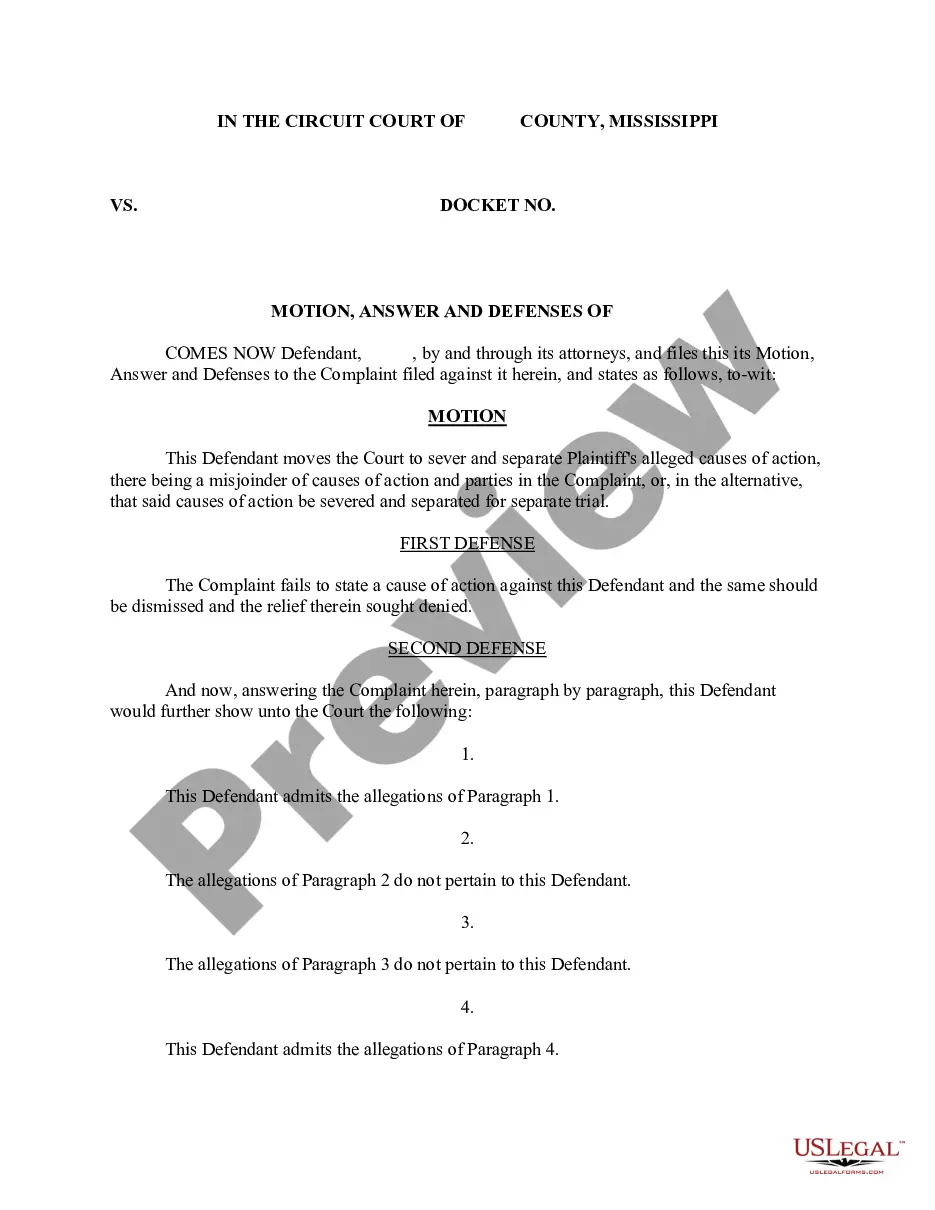
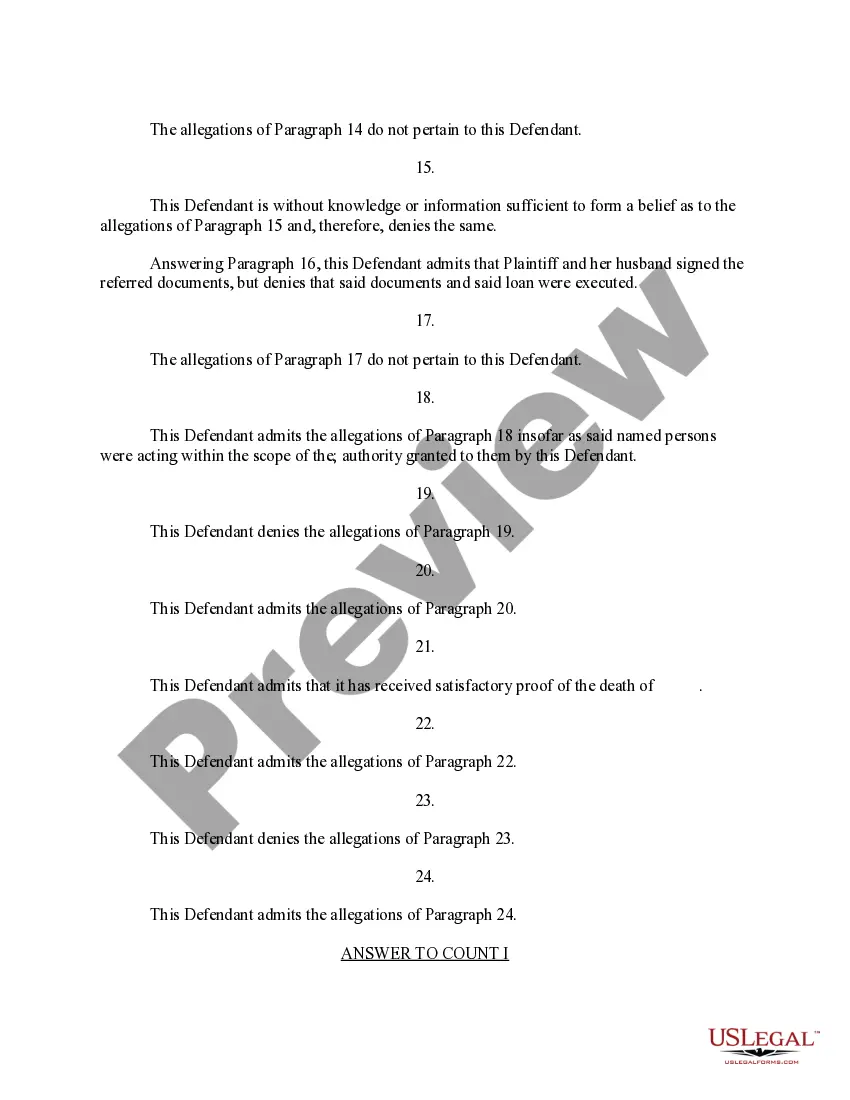
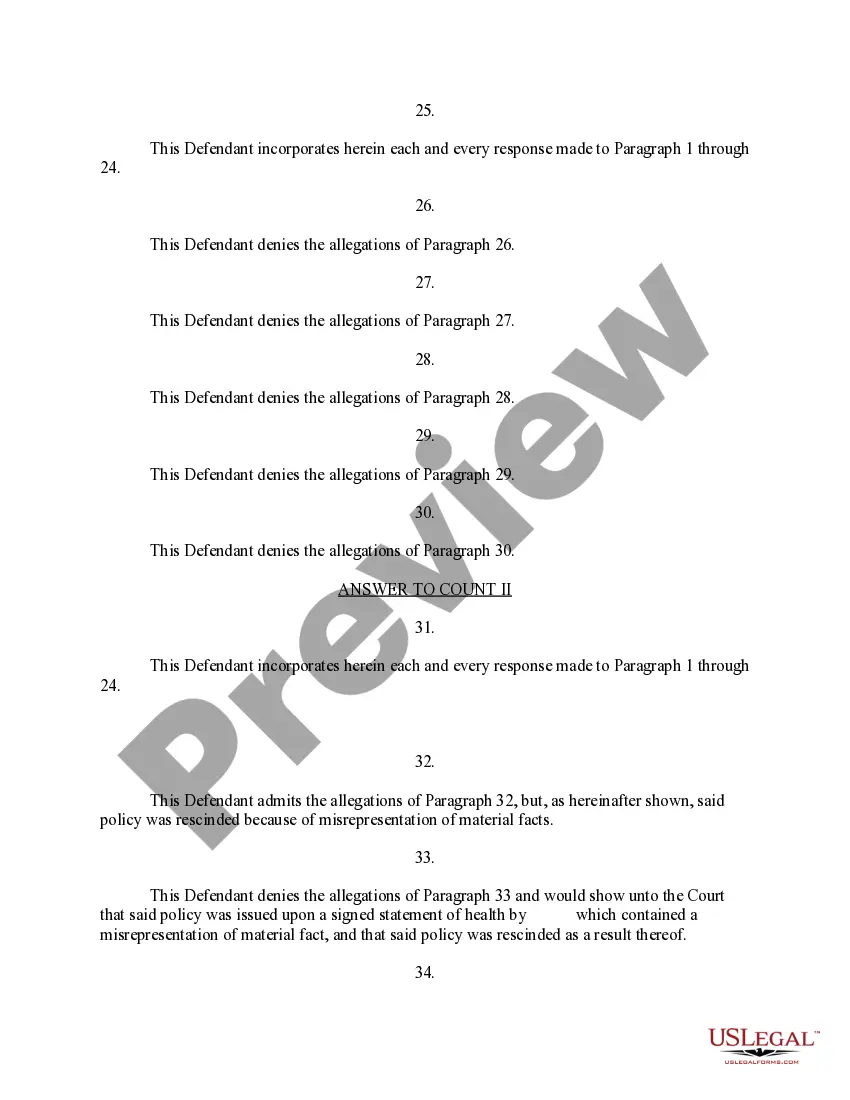
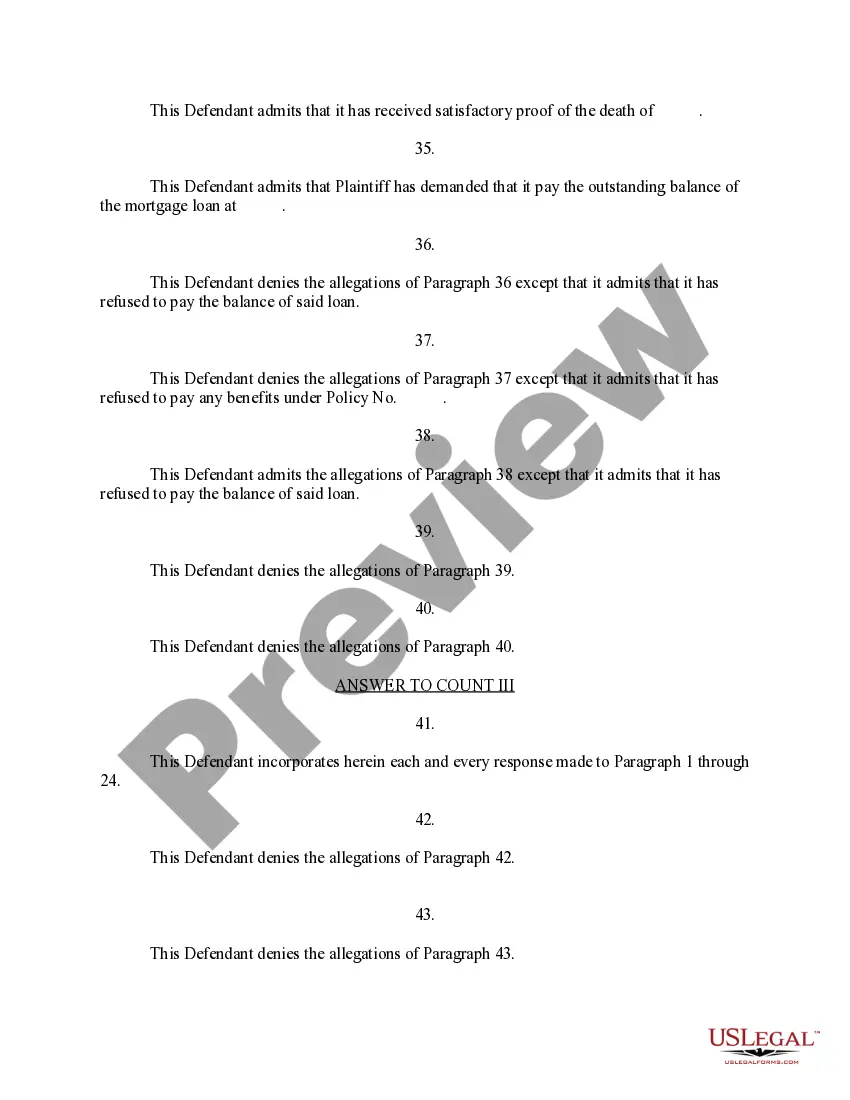
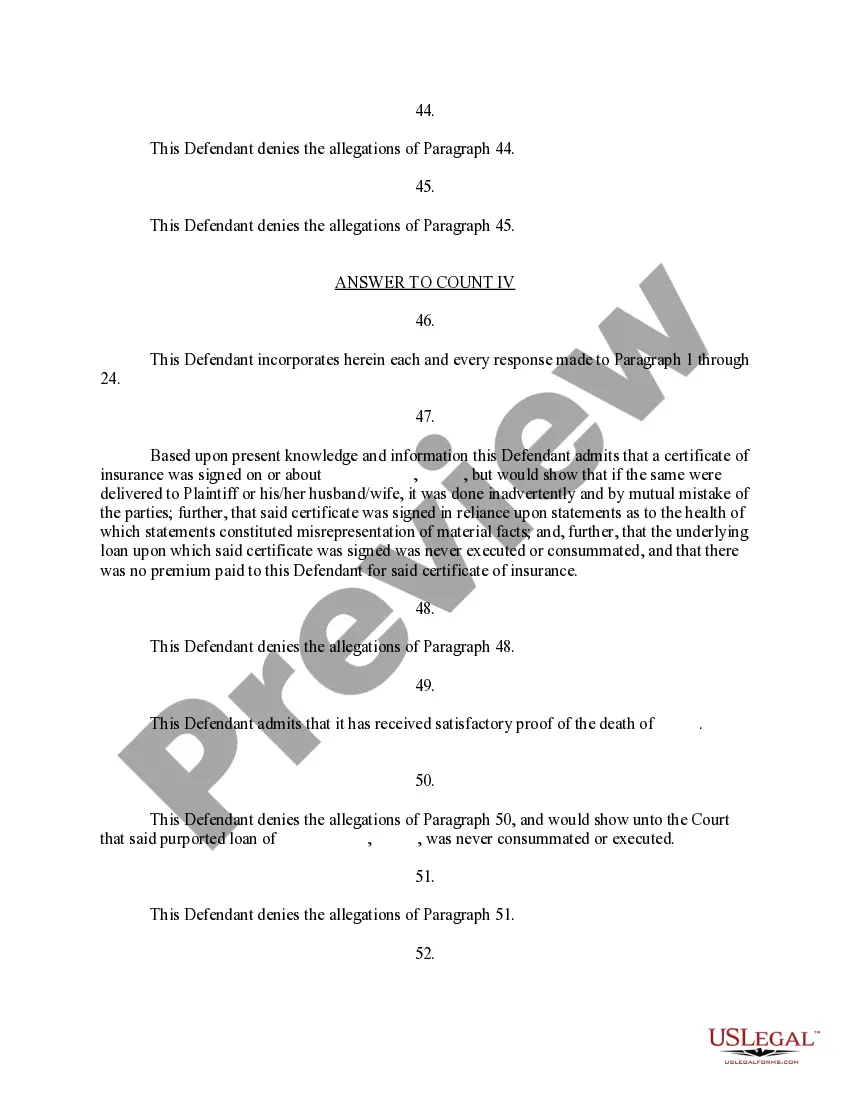
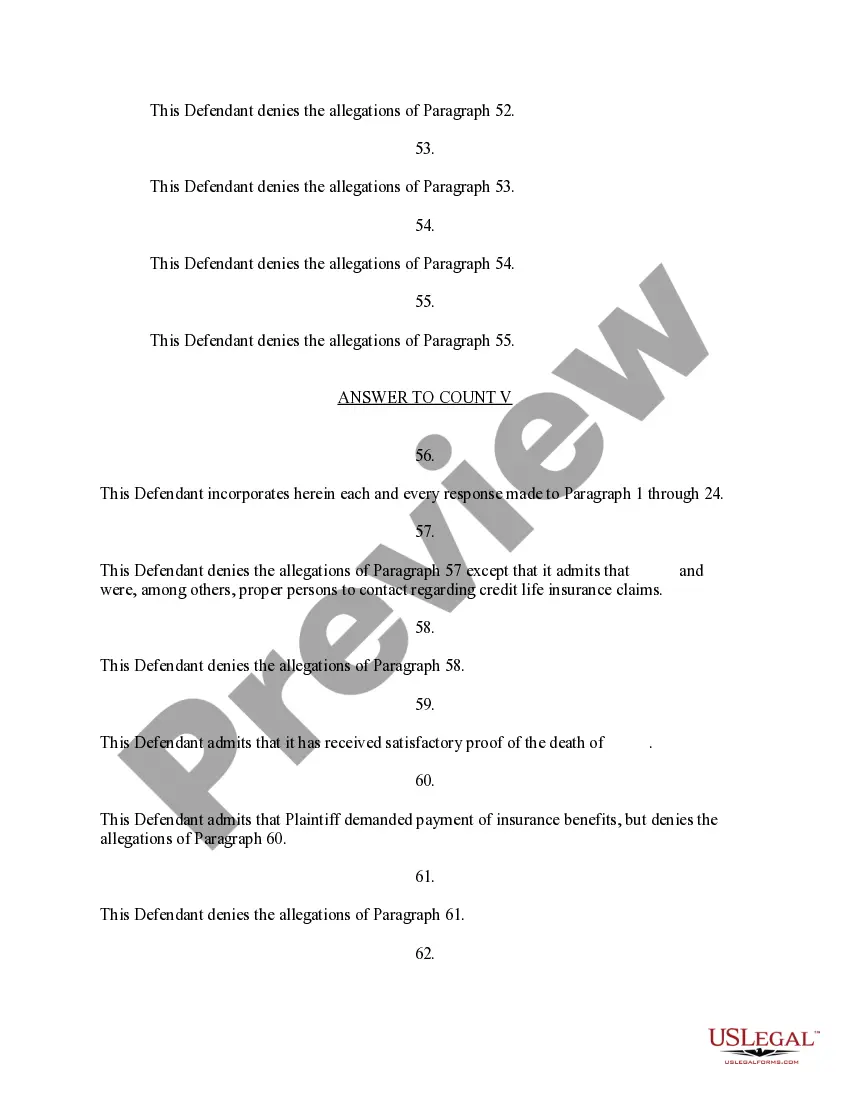
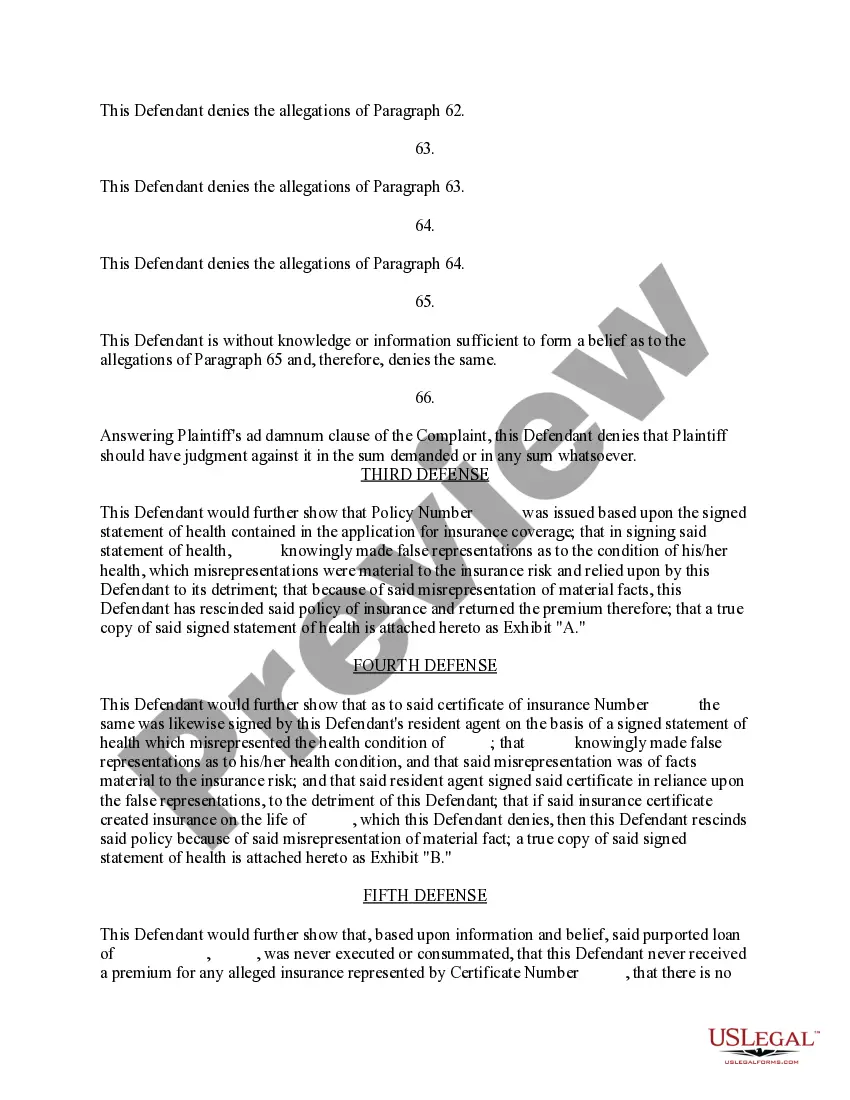
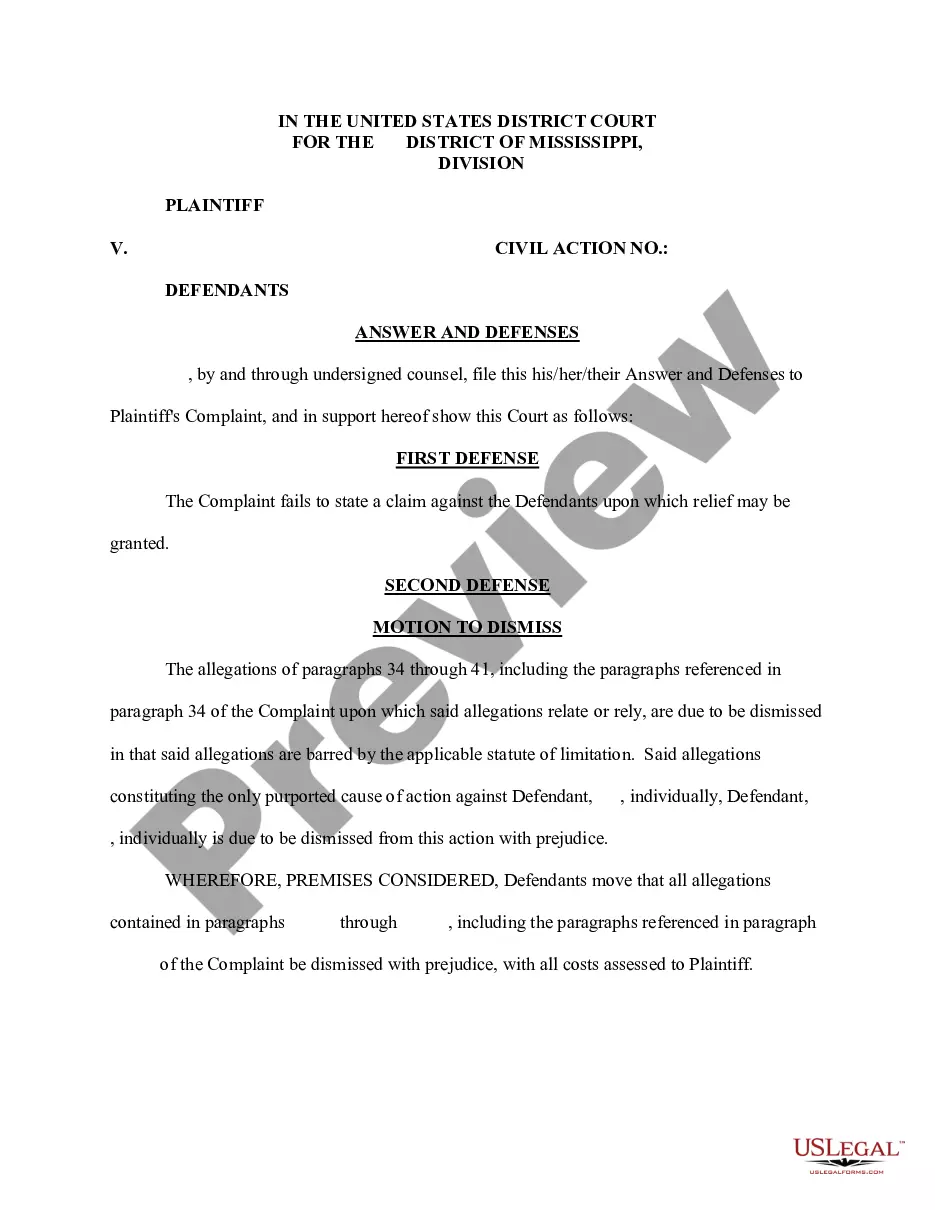
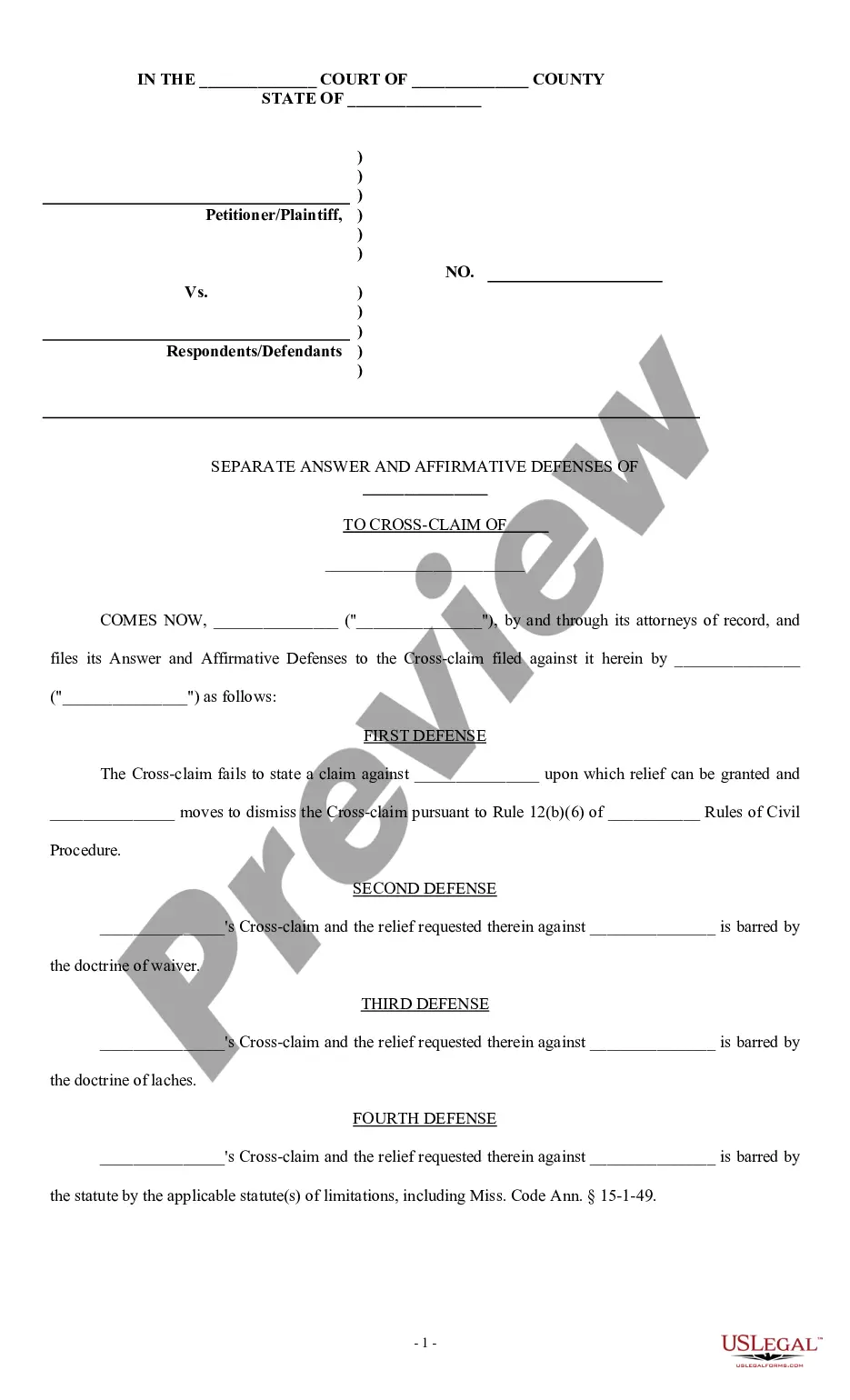
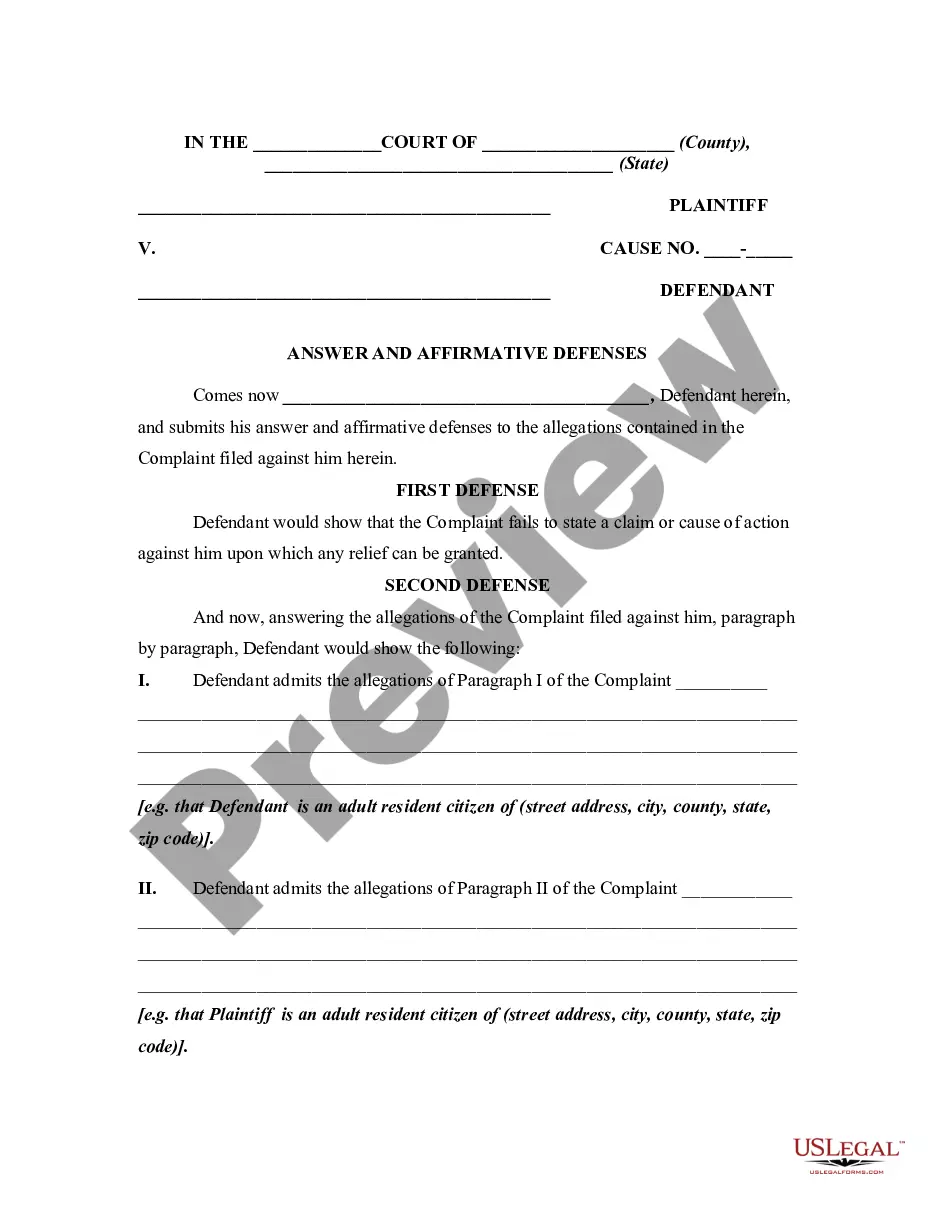
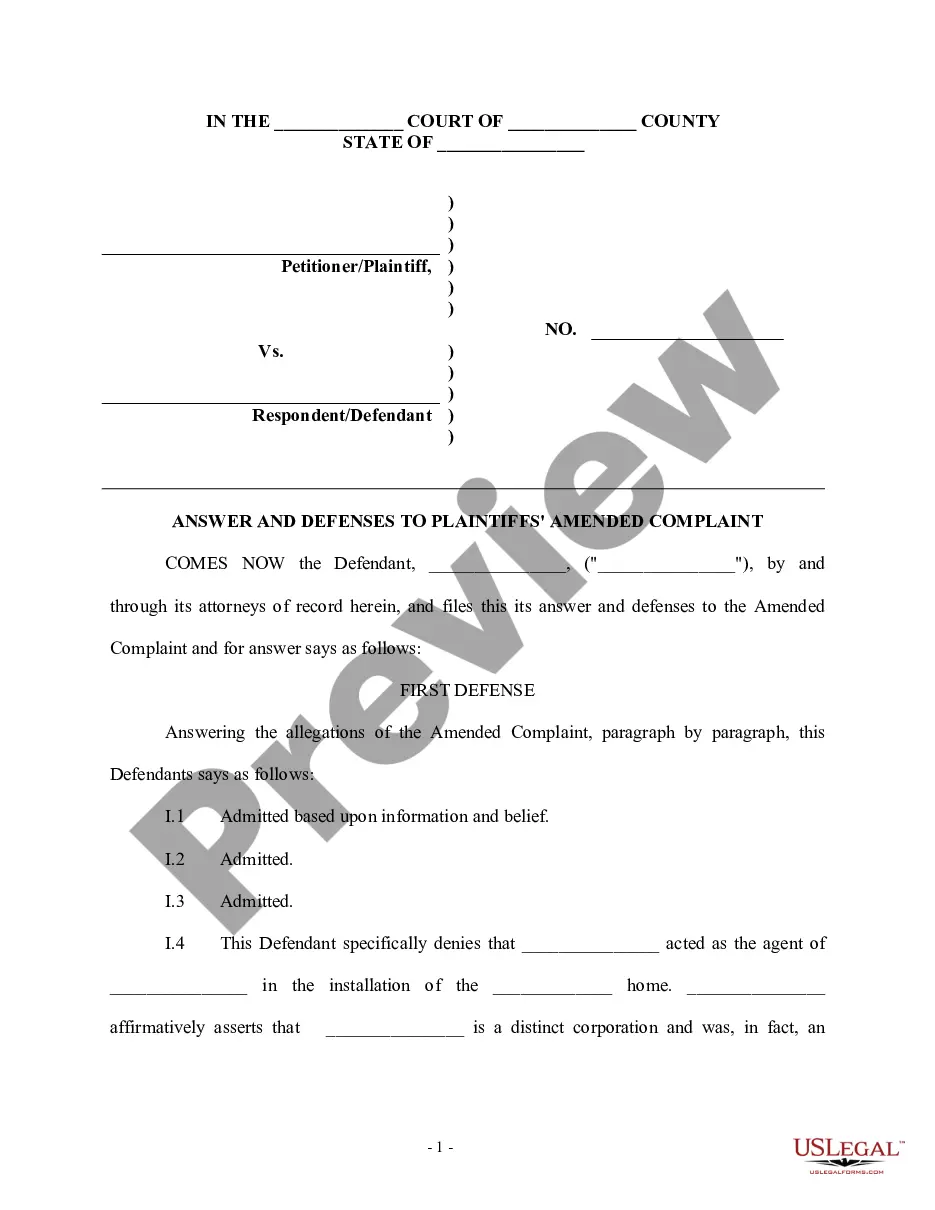
The Motion, Answer and Defenses form is a legal document used to formally respond to a complaint in court. This form allows a defendant to request that the court take specific actions, such as severing causes of action or providing defenses against the allegations made in the complaint. It combines both a motion and an answer, distinguishing it from standard answer forms by its dual purpose of addressing the court and responding to claims. This document is crucial for those seeking to articulate their position clearly and lawfully in legal proceedings.
Key components of this form
- Motion: A request to the court to take a specific action, such as severing causes of action.
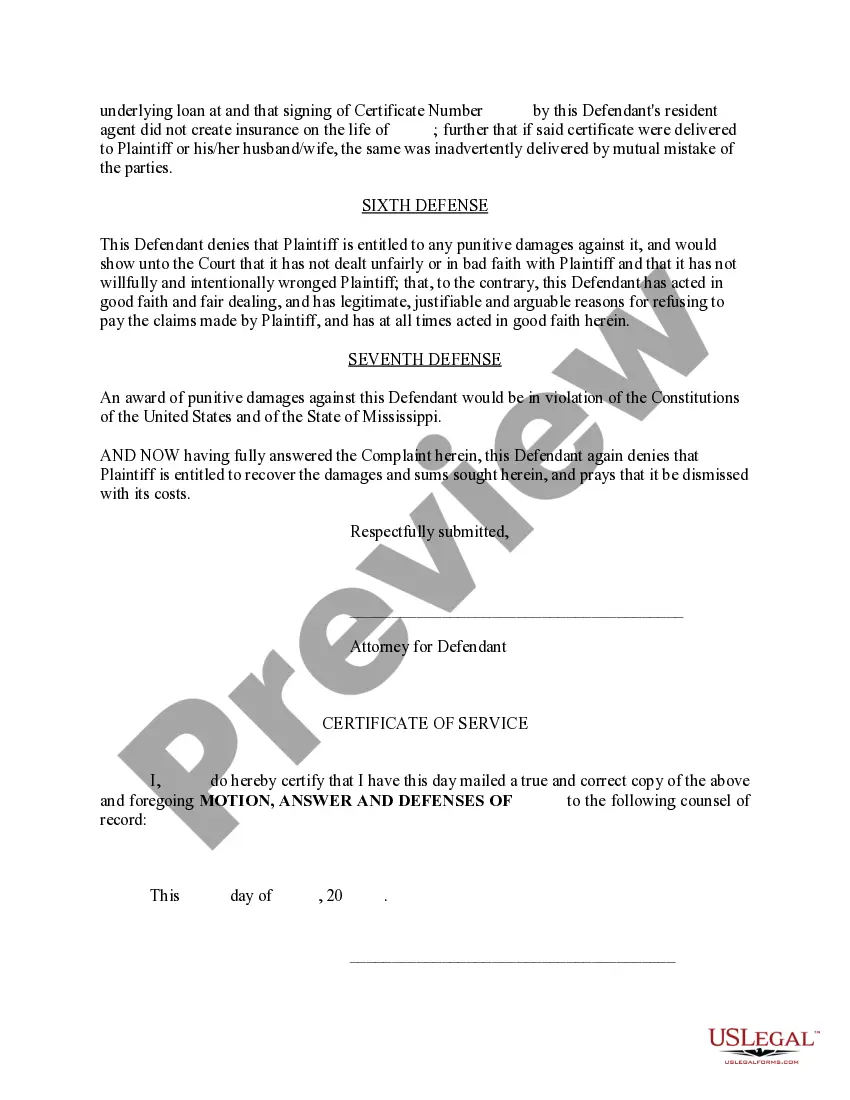
- Defenses: Clear statements outlining the defenses against each allegation presented in the complaint.
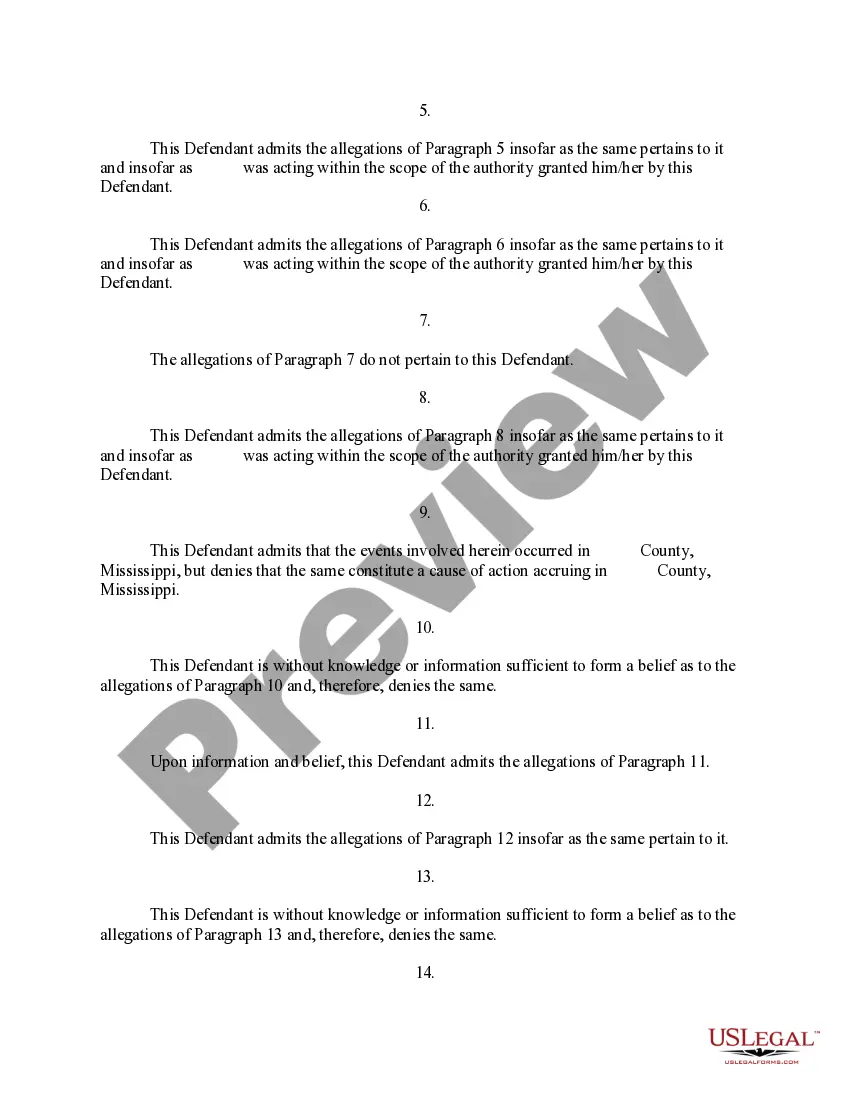
- Admissions and Denials: Sections to admit or deny the allegations made in specific paragraphs of the complaint.
- Prayer for Relief: A concluding statement requesting the dismissal of the complaint with costs.
When to use this document
Use the Motion, Answer and Defenses form when you have received a complaint and need to file a response in court. It is essential for situations where the allegations involve multiple causes of action, or when there are defenses you wish to assert against the complaint. This form is particularly valuable if you believe that the complaint is flawed or does not correctly state a viable claim against you.
Who can use this document
- Defendants in a civil lawsuit who have received a complaint.
- Individuals or businesses contesting the claims made against them in court.
- Parties seeking to formally request the court to take specific actions related to the complaint.
- Those aiming to clearly articulate their defenses against multiple allegations.
How to prepare this document
- Identify the parties: Fill in the names and details of both the defendant and plaintiff.
- State the motion: Clearly specify the motion you are requesting from the court.
- Respond to claims: Go through each paragraph of the complaint and provide your admissions or denials.
- Detail your defenses: Outline each defense you are asserting clearly and concisely.
- Include closing statements: Finish with a prayer for relief, requesting the dismissal of the complaint.
Does this form need to be notarized?
Notarization is generally not required for this form. However, certain states or situations might demand it. You can complete notarization online through US Legal Forms, powered by Notarize, using a verified video call available anytime.
Get your form ready online
Our built-in tools help you complete, sign, share, and store your documents in one place.
Make edits, fill in missing information, and update formatting in US Legal Forms—just like you would in MS Word.
Download a copy, print it, send it by email, or mail it via USPS—whatever works best for your next step.
Sign and collect signatures with our SignNow integration. Send to multiple recipients, set reminders, and more. Go Premium to unlock E-Sign.
If this form requires notarization, complete it online through a secure video call—no need to meet a notary in person or wait for an appointment.
We protect your documents and personal data by following strict security and privacy standards.

Make edits, fill in missing information, and update formatting in US Legal Forms—just like you would in MS Word.

Download a copy, print it, send it by email, or mail it via USPS—whatever works best for your next step.

Sign and collect signatures with our SignNow integration. Send to multiple recipients, set reminders, and more. Go Premium to unlock E-Sign.

If this form requires notarization, complete it online through a secure video call—no need to meet a notary in person or wait for an appointment.

We protect your documents and personal data by following strict security and privacy standards.
Common mistakes to avoid
- Failing to respond within the legal timeframe, which can result in default judgment.
- Omitting specific defenses or failing to articulate them clearly.
- Not properly formatting the document according to court rules.
- Using vague language that does not adequately address the allegations.
Benefits of using this form online
- Convenience of downloading and completing the form at your own pace.
- Editability allows customization to fit specific circumstances and facts.
- Access to forms drafted by licensed attorneys ensures legal compliance.
- Time-saving as you avoid trips to legal offices for form collection.
Legal use & context
- This document must be filed with the appropriate court and follows the procedural rules set forth in the jurisdiction.
- Filing a motion incorrectly or failing to follow procedures may undermine your legal position.
- Judges will evaluate the motions and defenses based on legal standards applicable in the jurisdiction.
Key takeaways
- This form combines a motion with responses to a plaintiff's complaint.
- Careful attention to detail and adherence to deadlines is critical.
- Defendants can assert multiple defenses to protect their rights effectively.
Looking for another form?

Form popularity
FAQ
When the answers respond to the factual assertions of an opponent's prior pleading, for example, by denying them, they are called responsive pleadings.The distinguishing feature of a responsive pleading is that it replies to the merits of the allegations raised by an opposing party.
Accord and Satisfaction, Arbitration and Award, Assumption of the Risk, Contributory Negligence, Discharge in Bankruptcy, Duress, Estoppel, Failure of Consideration,
Comply With the Relevant Federal, State, and Local Rules. Research Before Writing. Allege Subject Matter Jurisdiction, Personal Jurisdiction, and Venue. Draft Concise and Plain Statement of the Facts. Draft Separate Counts for Each Legal Claim. Plead Facts With Particularity Where Necessary.
Complaint. A lawsuit begins when a plaintiff (the party suing) files a complaint against a defendant (the party being sued.) Answer. The answer is the defendant's written response to the plaintiff's complaint. Counterclaim. Cross-claim. Amended Pleadings.