Mississippi Motion in Limine
Overview of this form
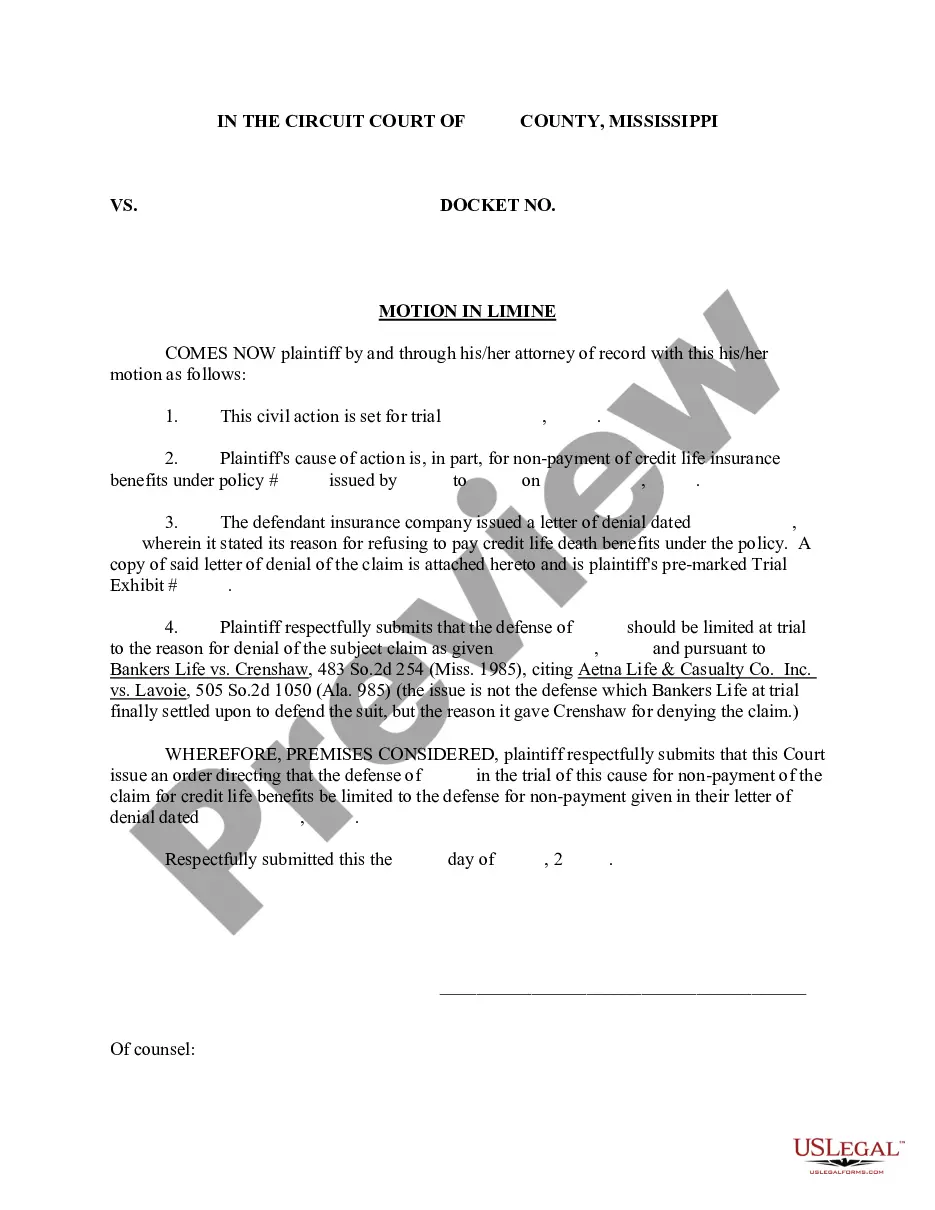
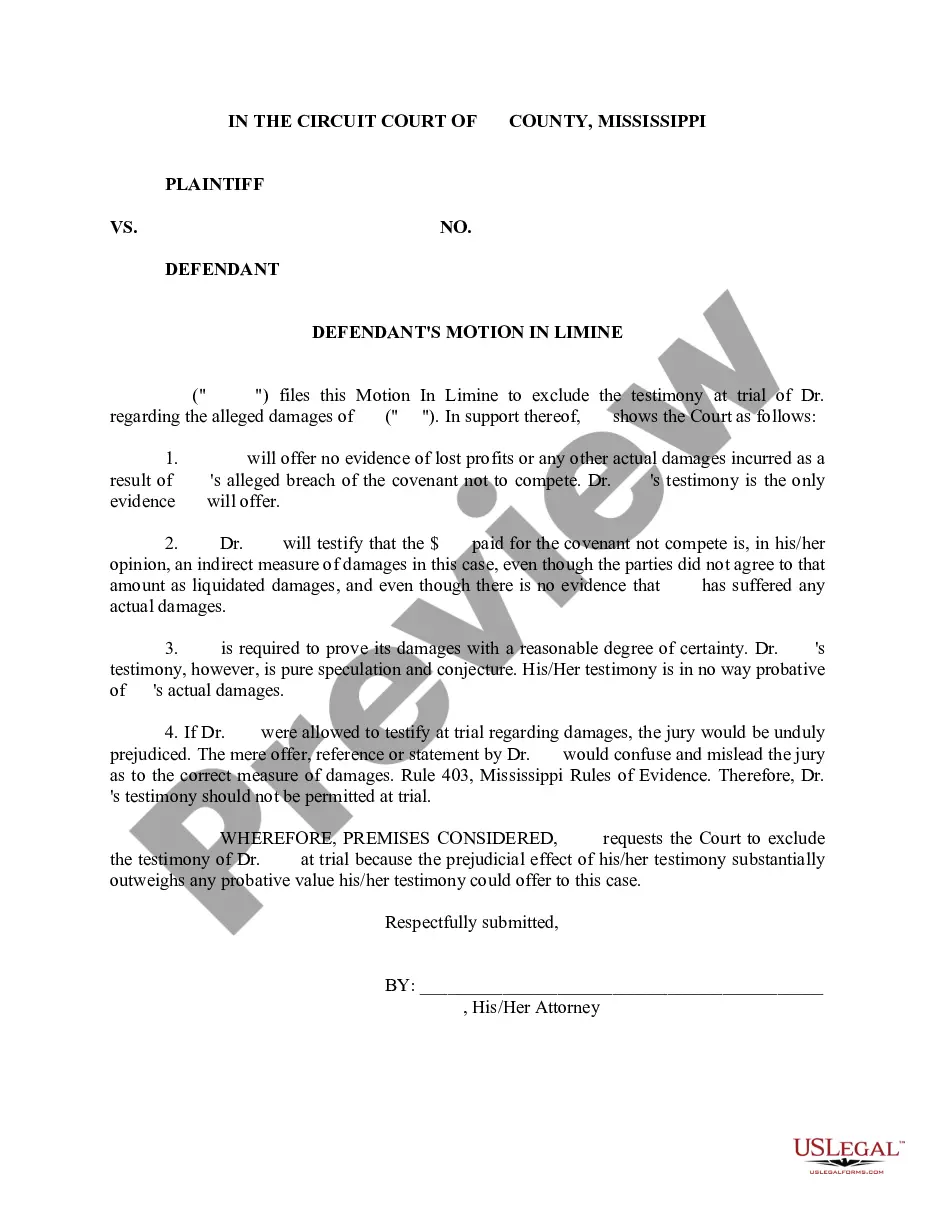
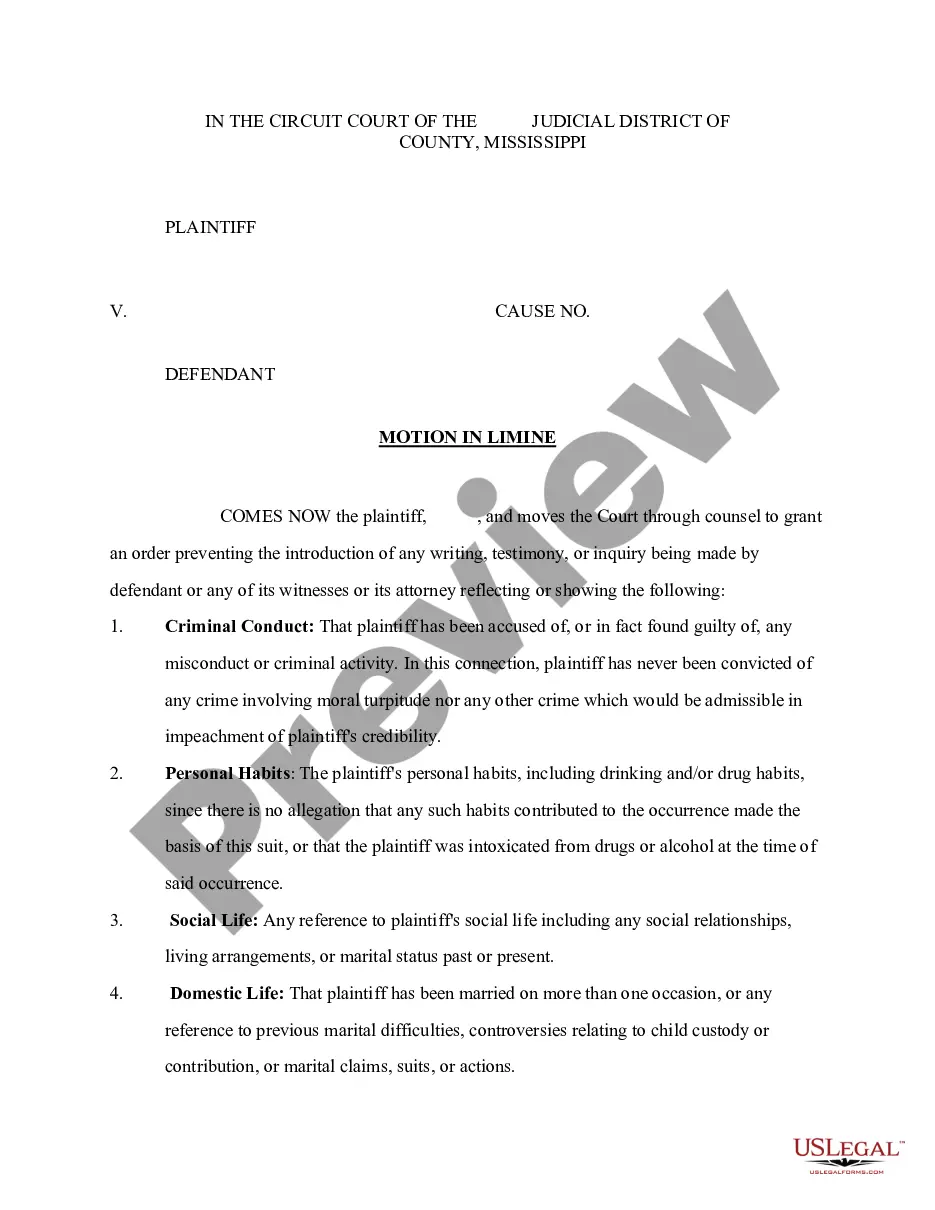
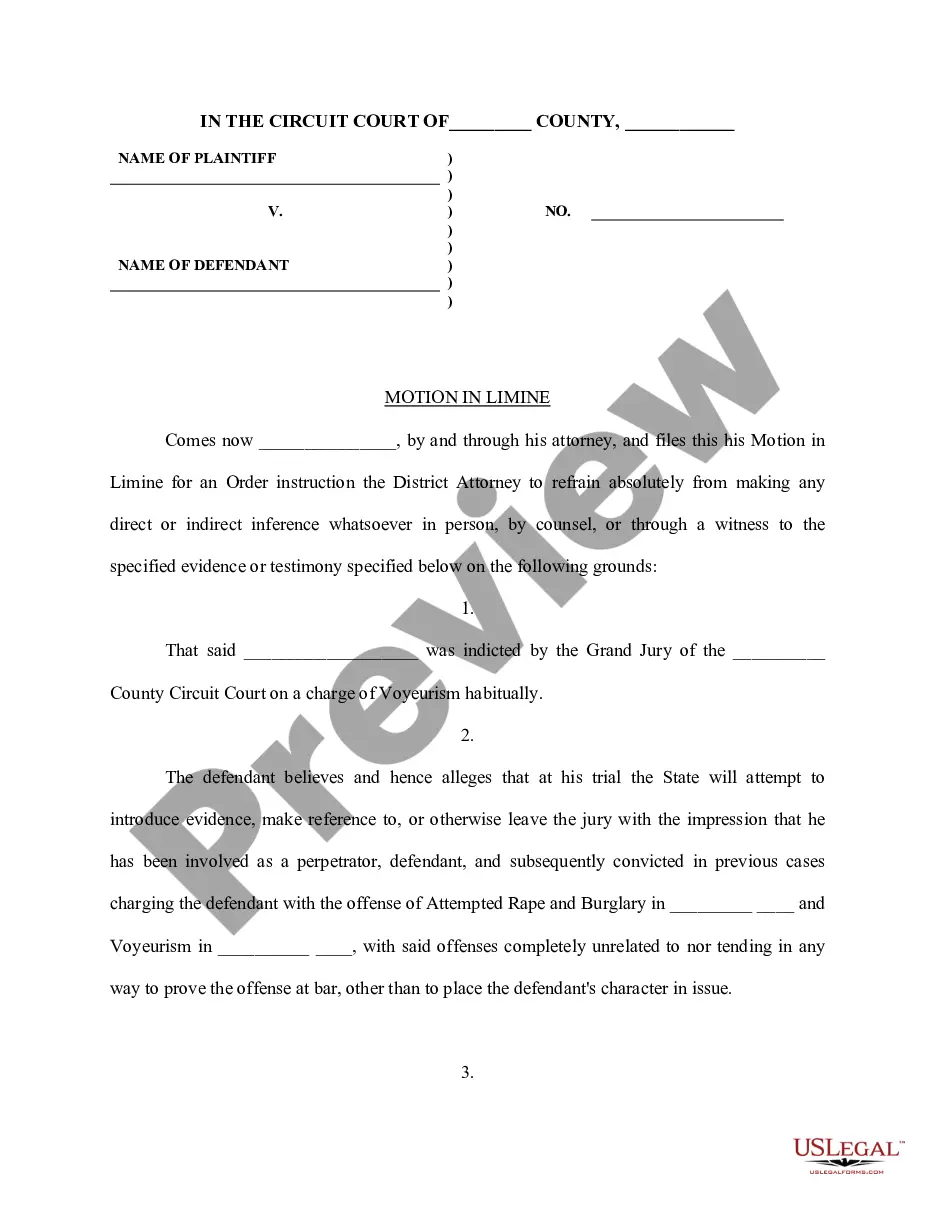
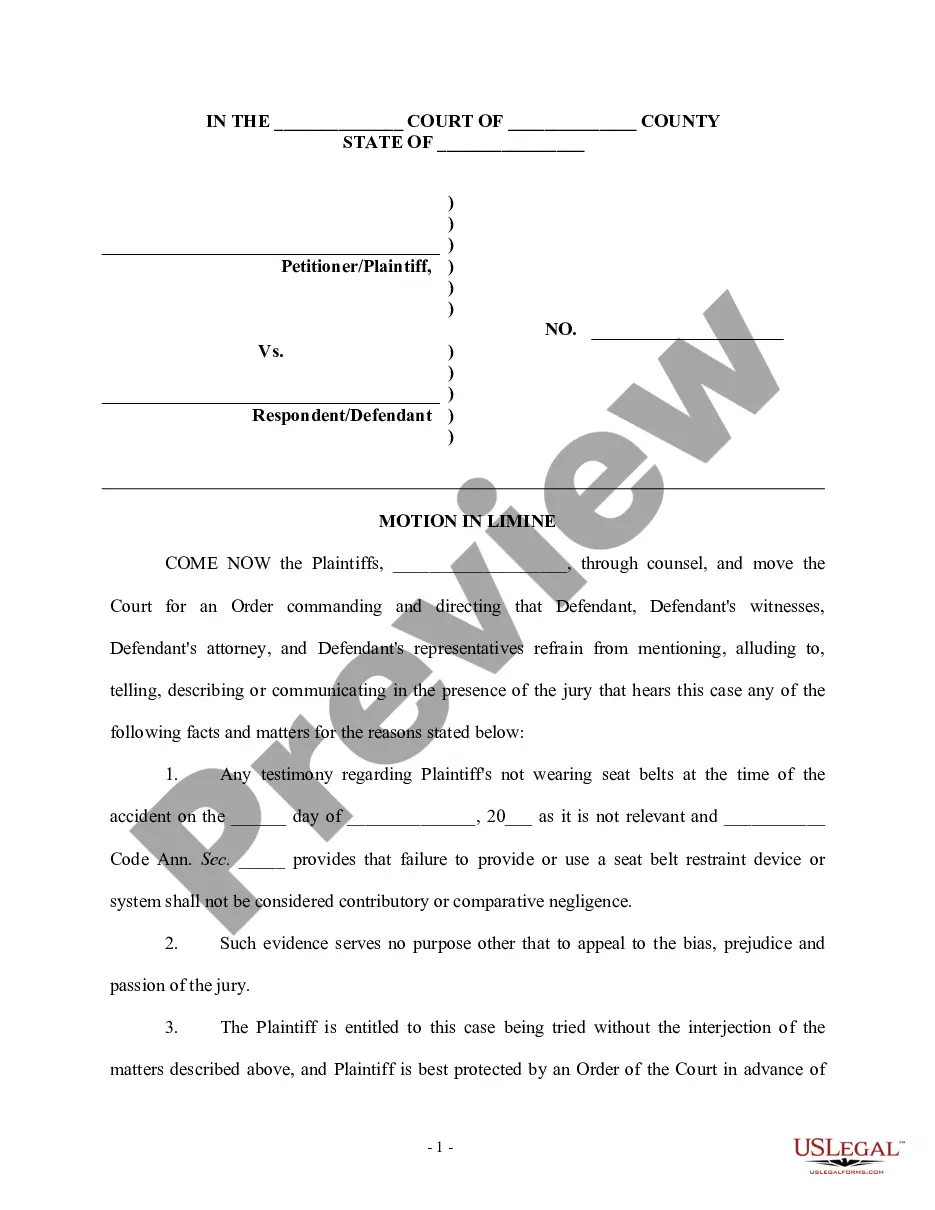
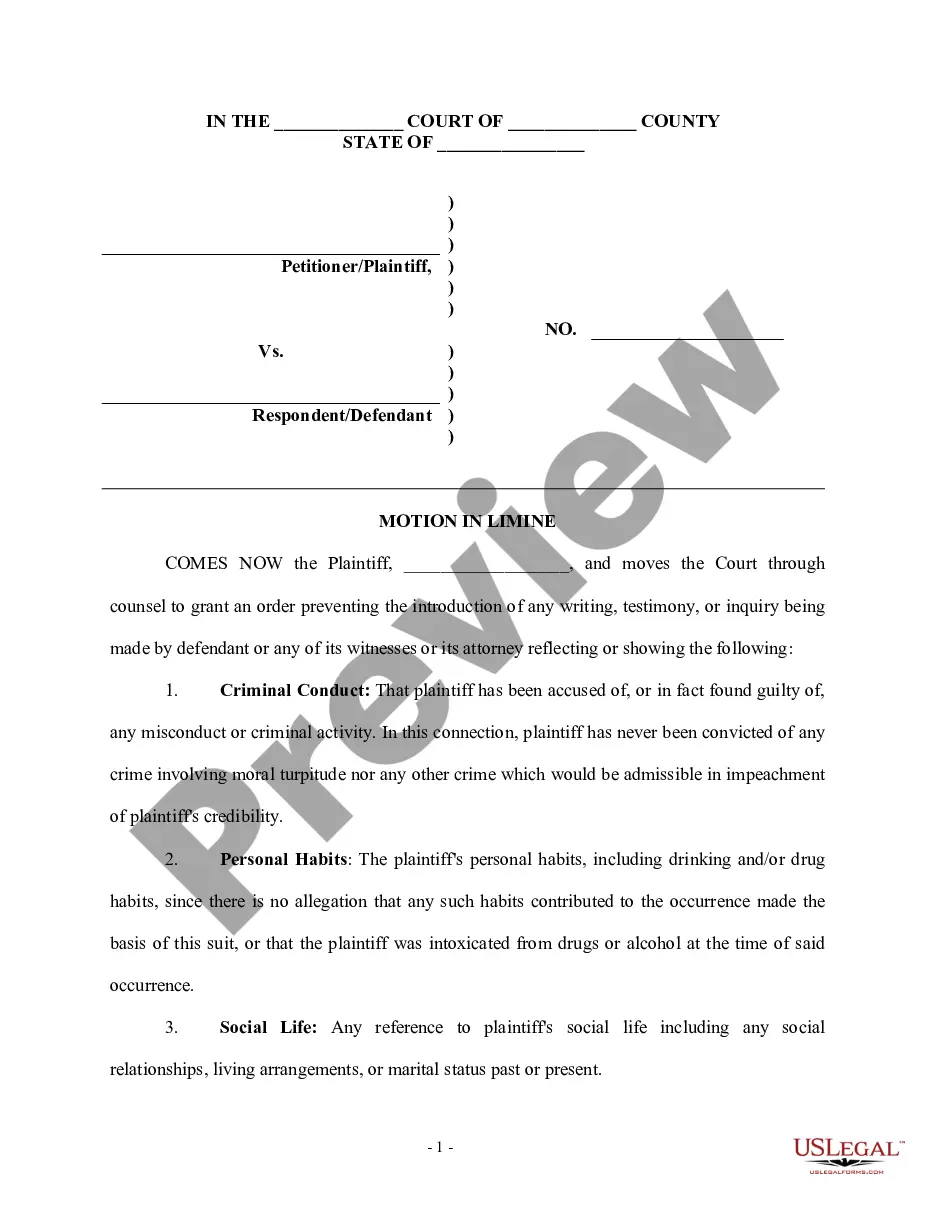
A Motion in Limine is a legal document filed with a court requesting that certain evidence be deemed inadmissible during a trial. It differs from other motions in that it specifically addresses the exclusion of prejudicial or irrelevant information before the trial begins. This motion helps prevent unfair influence on the jury or court proceedings by ensuring that only relevant evidence is presented.
Form components explained
- Case caption: Identifies the court, parties involved, and case number.
- Title of the motion: Clearly states it is a Motion in Limine.
- Statements of fact: Provides context and reasons for the request.
- Specific evidence targeted: Details which evidence the party seeks to exclude.
- Supporting legal argument: Cites applicable laws or regulations that support the motion.
- Signature area: Where the filing party signs to validate the motion.

When to use this document
This form is typically used in trials when a party believes that presenting certain evidence could unfairly sway the court or jury. It is often filed in civil and criminal cases to challenge the admissibility of evidence that is irrelevant, misleading, or overly prejudicial. For example, you may use this motion if you want to exclude prior criminal history evidence in a criminal trial or inadmissible expert witness testimony in a civil case.
Who should use this form
- Attorneys representing clients in court proceedings.
- Individuals involved in a legal dispute who wish to challenge the admissibility of evidence.
- Parties preparing for trial who need to protect their interests and ensure a fair trial.
How to complete this form
- Identify the parties involved in the case and enter their names in the case caption.
- Clearly label the document as a Motion in Limine at the top of the form.
- Draft a statement of facts explaining why the evidence should be excluded.
- List the specific evidence you wish to exclude and provide a rationale based on legal standards.
- Include any legal citations that support your request.
- Sign the motion and include the date of submission.
Notarization guidance
In most cases, this form does not require notarization. However, some jurisdictions or signing circumstances might. US Legal Forms offers online notarization powered by Notarize, accessible 24/7 for a quick, remote process.
Get your form ready online
Our built-in tools help you complete, sign, share, and store your documents in one place.
Make edits, fill in missing information, and update formatting in US Legal Forms—just like you would in MS Word.
Download a copy, print it, send it by email, or mail it via USPS—whatever works best for your next step.
Sign and collect signatures with our SignNow integration. Send to multiple recipients, set reminders, and more. Go Premium to unlock E-Sign.
If this form requires notarization, complete it online through a secure video call—no need to meet a notary in person or wait for an appointment.
We protect your documents and personal data by following strict security and privacy standards.

Make edits, fill in missing information, and update formatting in US Legal Forms—just like you would in MS Word.

Download a copy, print it, send it by email, or mail it via USPS—whatever works best for your next step.

Sign and collect signatures with our SignNow integration. Send to multiple recipients, set reminders, and more. Go Premium to unlock E-Sign.

If this form requires notarization, complete it online through a secure video call—no need to meet a notary in person or wait for an appointment.

We protect your documents and personal data by following strict security and privacy standards.
Common mistakes to avoid
- Failing to provide a clear justification for excluding the evidence.
- Neglecting to follow court-specific formatting rules.
- Not citing relevant laws or legal precedents to support the motion.
- Forgetting to properly sign and date the document.
Benefits of using this form online
- Immediate access to legally drafted documents, ensuring accuracy.
- Convenience of downloading and customizing the form for your needs.
- Easy to update and edit as your situation or case requirements change.
Legal use & context
Filing a Motion in Limine is a common practice in litigation to manage evidence before trial. It is important to ensure that the motion is well-founded to enhance the likelihood of approval by the court.
Summary of main points
- A Motion in Limine requests the exclusion of certain evidence in court.
- This form is critical for ensuring a fair trial by preventing undue prejudice.
- Proper completion and submission of this form are essential for its effectiveness.
Looking for another form?


Form popularity
FAQ
Importantly, motions in limine are generally made before a trial begins, and always argued outside the presence of the jury. Thus, a motion in limine allows key evidentiary questions to be decided without the jury present and, if the motion is granted, will preclude the jury from ever learning of the disputed evidence.
Stated in the most general terms, a proper motion in limine is an evidentiary motion that seeks a determination as to whether to exclude (or admit) evidence before it is offered at trial.
Motions in limine should be used only for their original purpose to challenge evidence that is so inadmissible and prejudicial that its mere mention in the presence of the jury would lead to an unfair trial.On appeal this ruling of the trial court was affirmed.
A motion in limine is a powerful weapon for advocates that can alter the entire makeup of the case. This type of motion is a pretrial request of the court to rule on the admissibility of a certain piece of evidence.
Whereas the motion in limine is based on the trial court's inherent discretion to exclude prejudicial evidence, the motion to suppress is based on the court's duty to exclude evidence which has been im- properly Qbtained.
There is also authority for the proposition that if a motion in limine is denied, the party opposing the evidence can be the first to offer the objectionable evidence without waiving the merits of the evidentiary objection on appeal.
Generally, a party in a lawsuit files a motion in limine to exclude evidence from a trial because the evidence isn't relevant or because its prejudicial effect substantially outweighs its probative value. You can oppose the motion in limine by drafting and filing your own motion in opposition.
A motion in limine is a powerful weapon for advocates that can alter the entire makeup of the case. This type of motion is a pretrial request of the court to rule on the admissibility of a certain piece of evidence.
Something is not right. Motions in Limine are generally filed shortly before trial and not months prior. Also, the terms used here ("amend" and "modify") are confusing and not generally used with motions but are used in connections with...