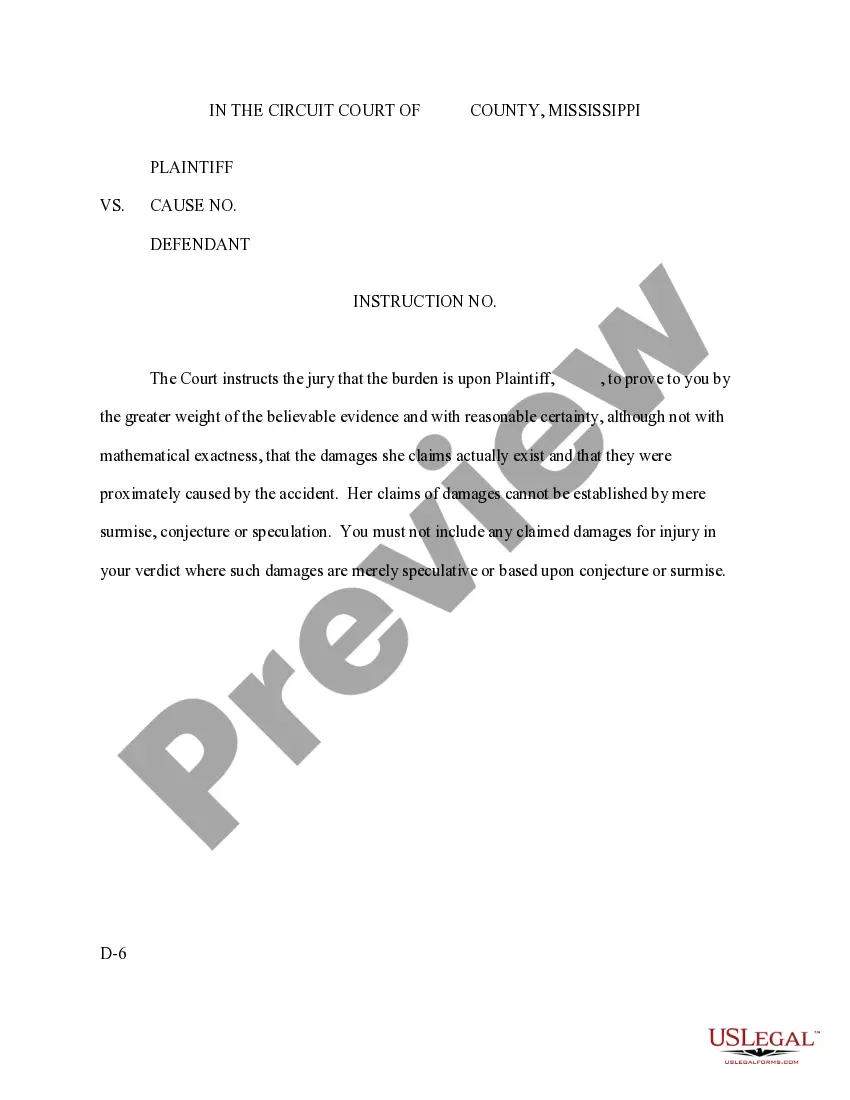
Pennsylvania Last Will and Testament for other Persons
What this document covers
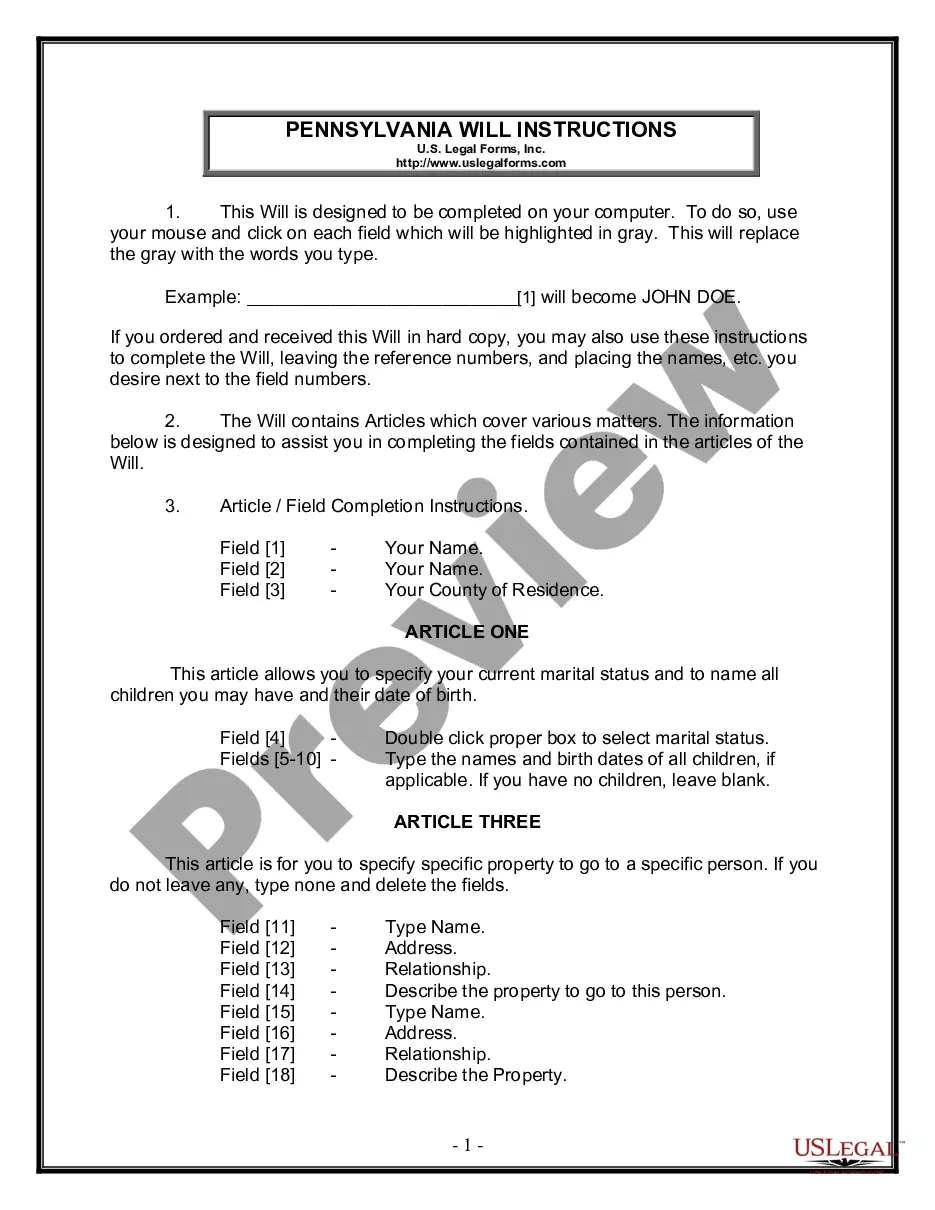
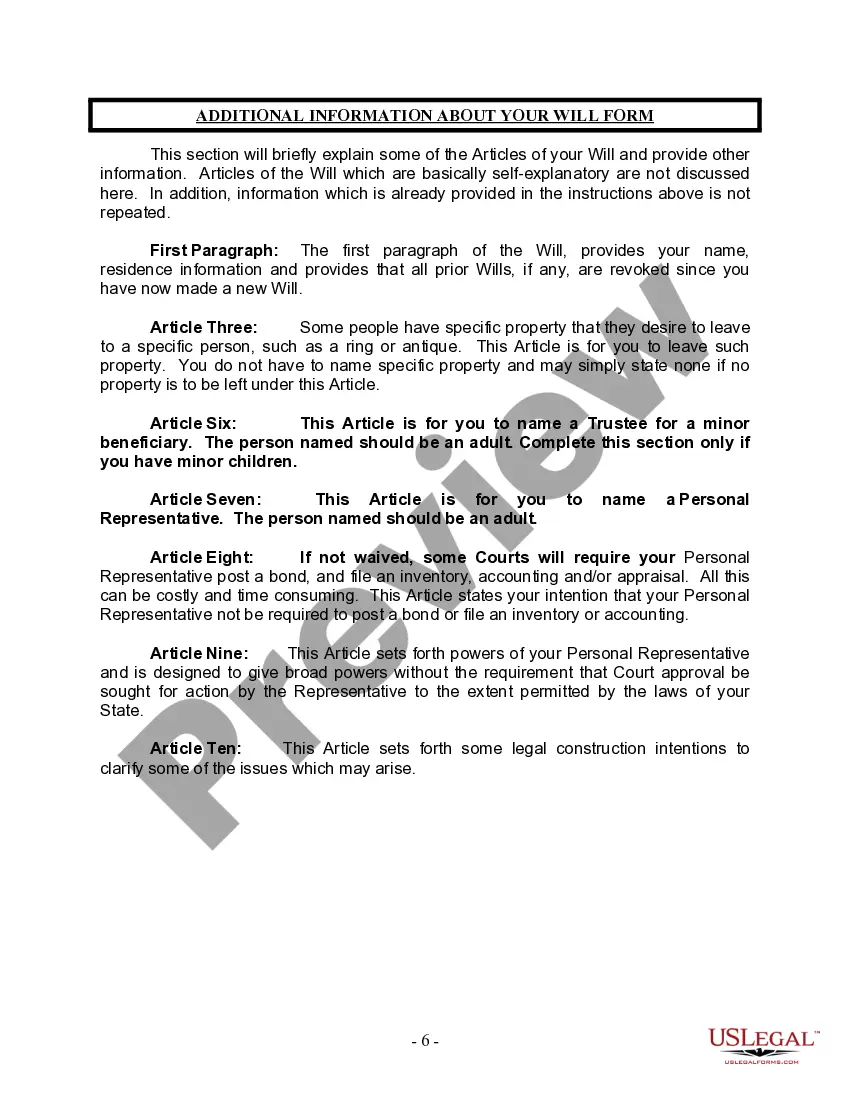
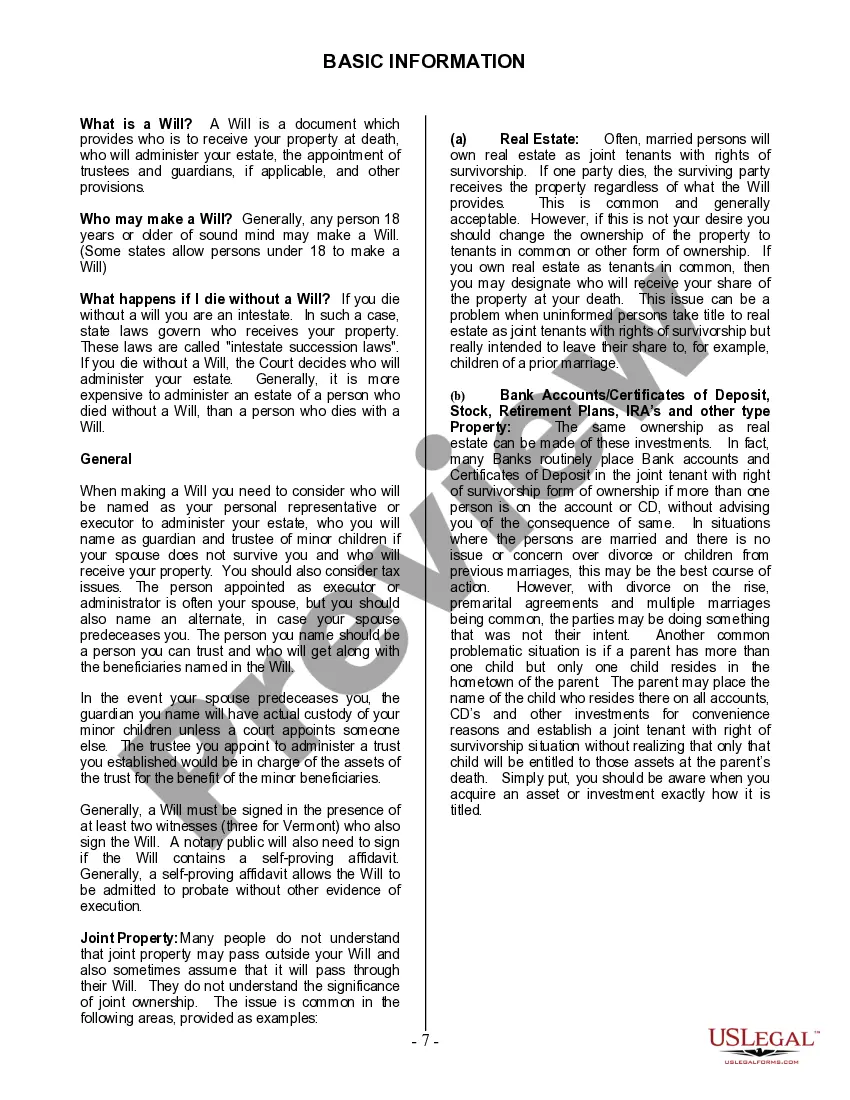
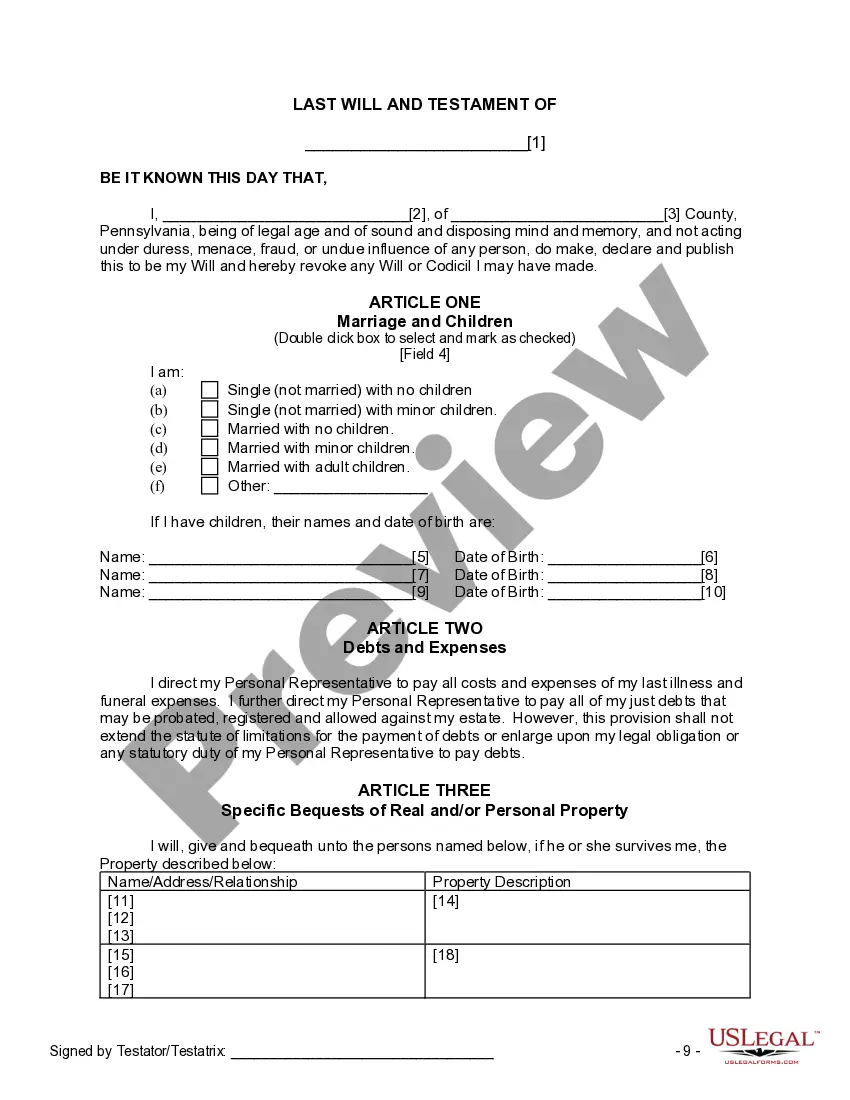
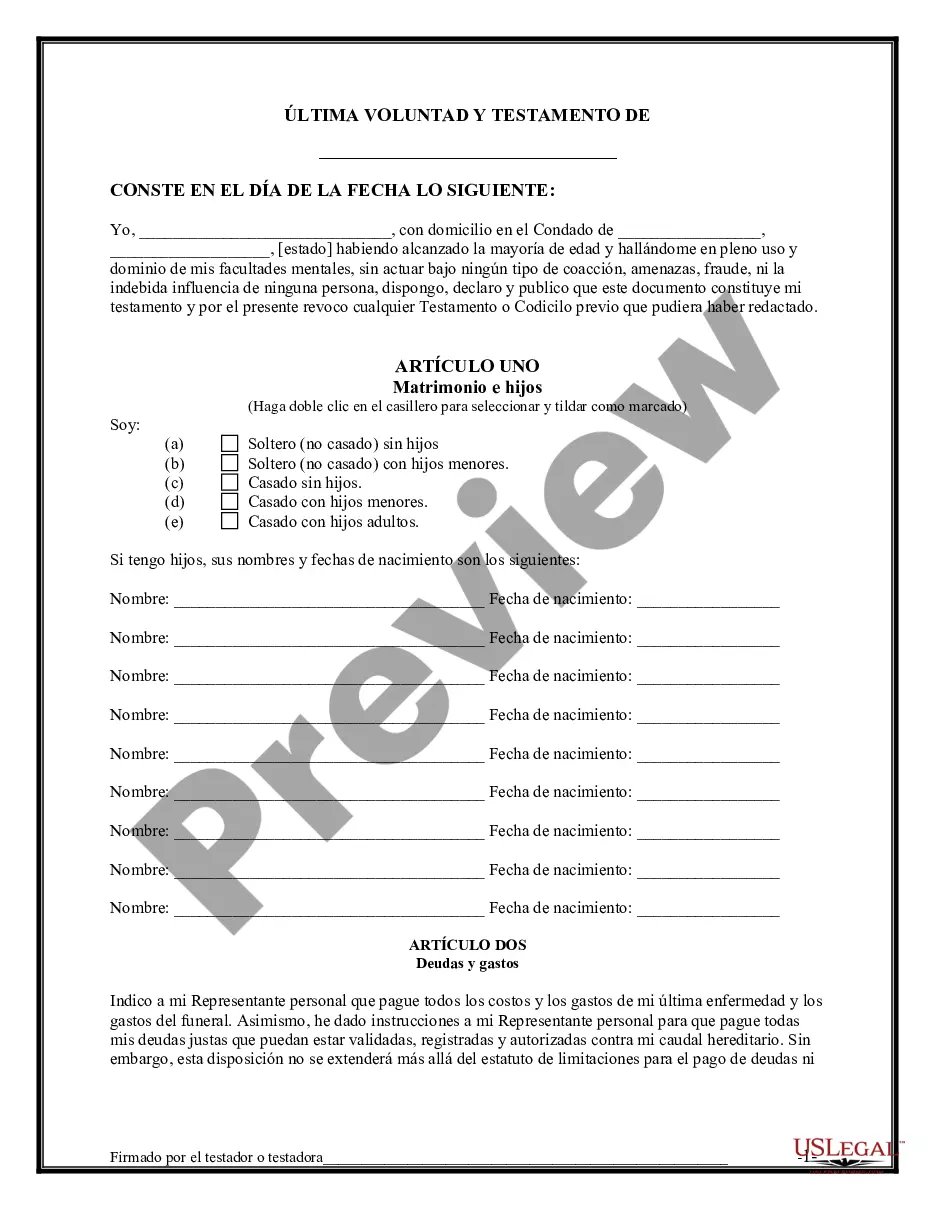
The Last Will and Testament for Other Persons is a legal document that outlines how you want your property distributed after your death. It specifies the beneficiaries of your assets, appoints an executor to administer your estate, and may include provisions for guardianship of minor children. This form is specifically designed for individuals residing in Pennsylvania who need a will but cannot find another suitable document. It allows for ease in completion, as it can be filled out on your computer.
Main sections of this form
- Your personal information, including name and county of residence.
- Marital status and details of any children you may have.
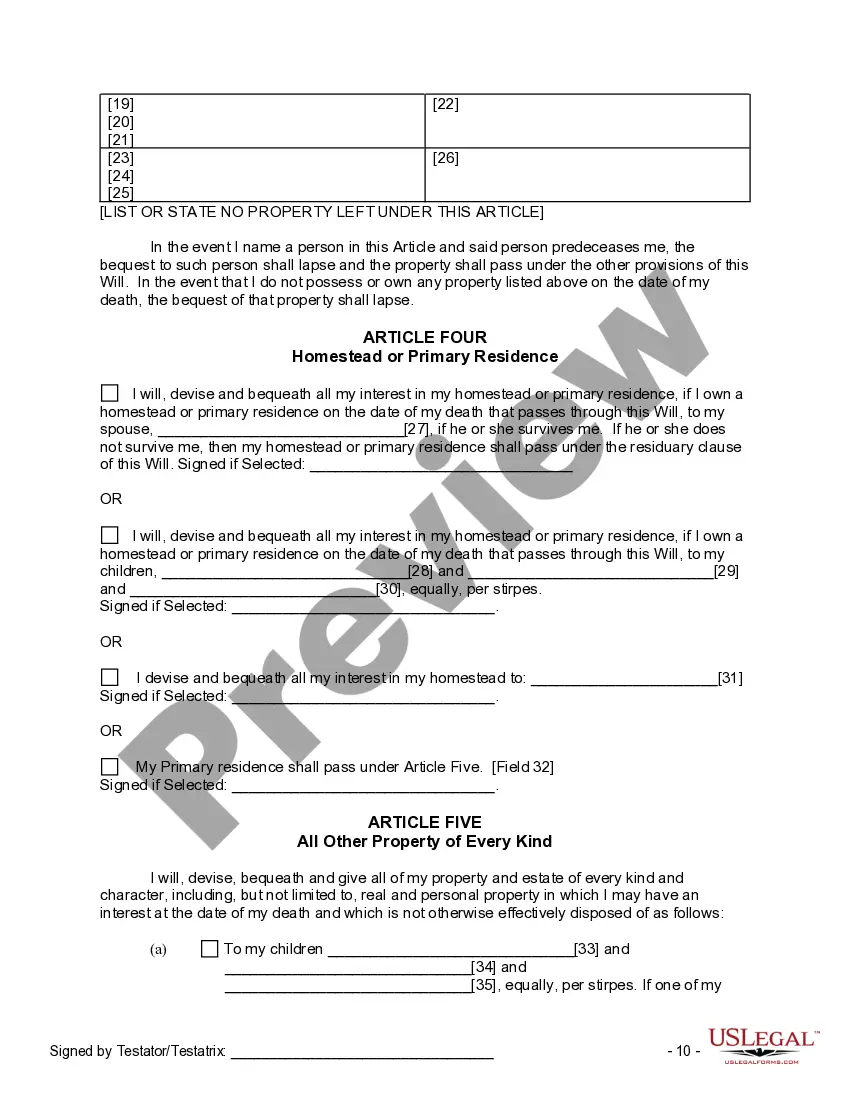
- Specific bequests of property to named individuals.
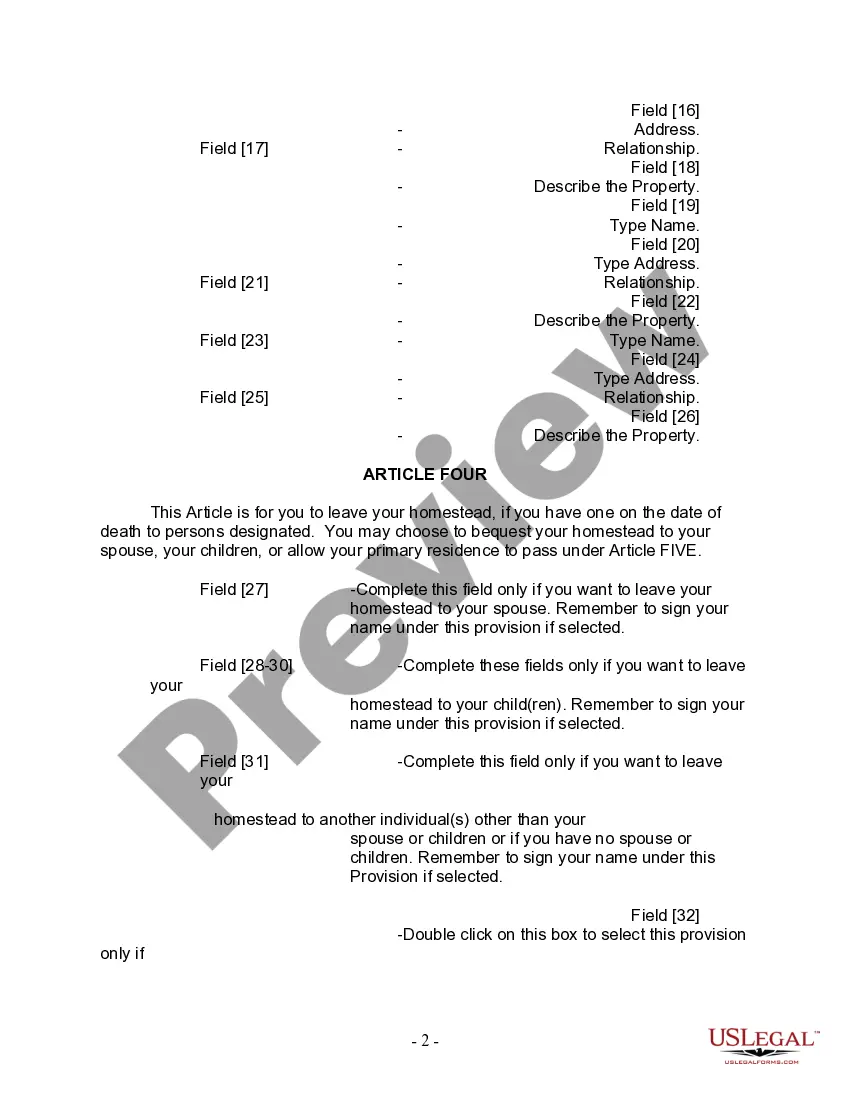
- Provisions for your homestead and other real estate.
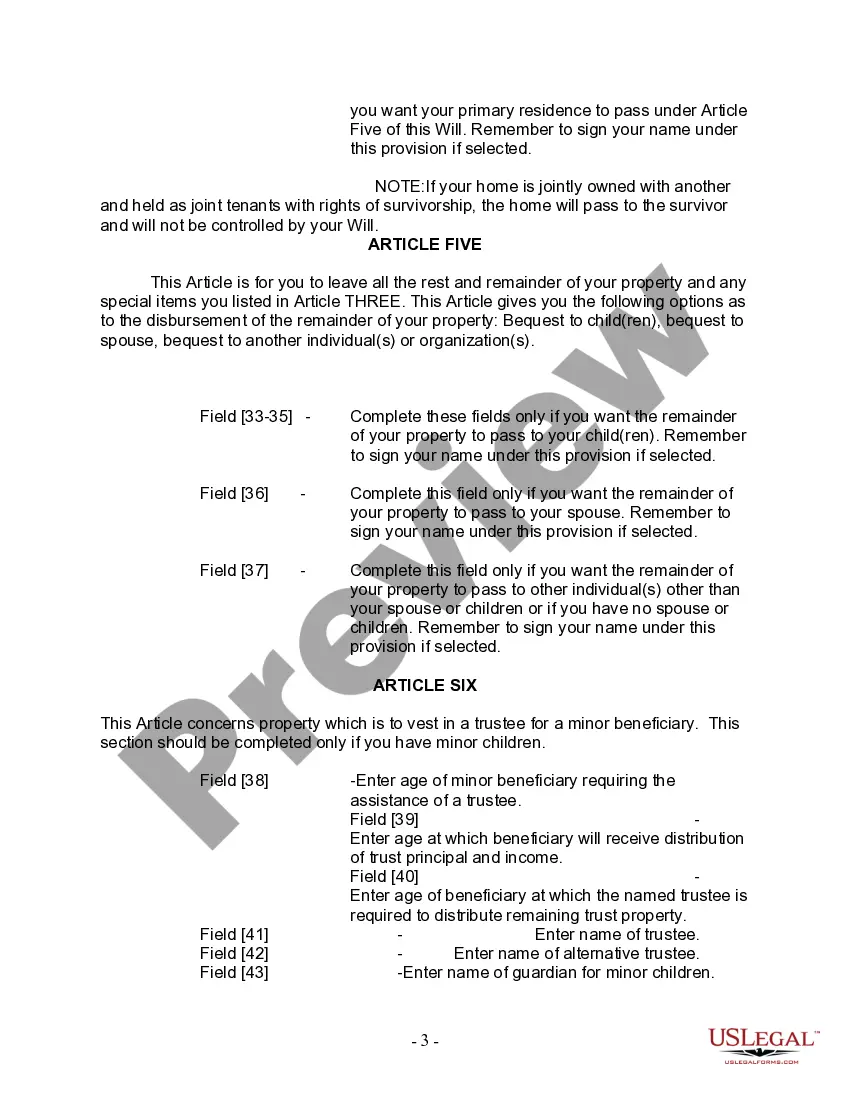
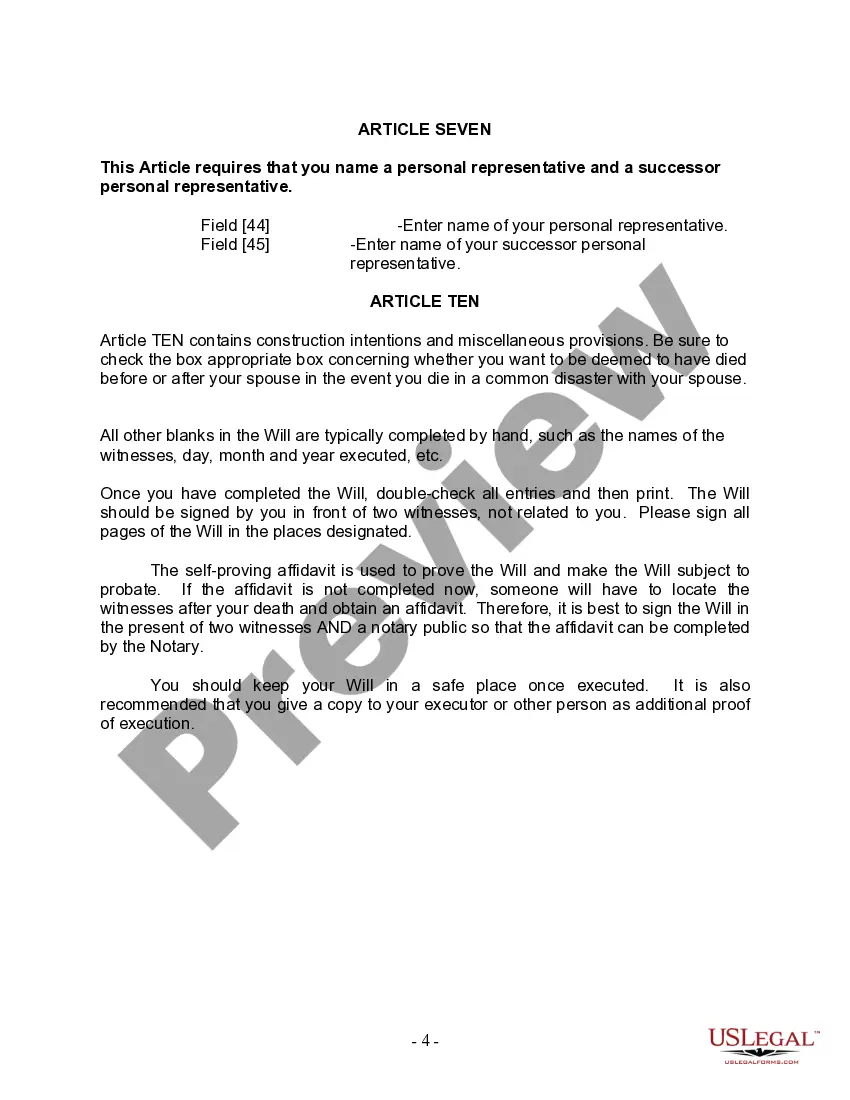
- Appointment of a personal representative to handle your estate.





Common use cases
You should use this form when you need to create a legally binding last will and testament and you do not have a pre-existing will that meets your current needs. It is especially important to have a will if you want to control the distribution of your assets, appoint guardians for minor children, or designate someone to manage your estate after your death.
Who this form is for
- Individuals who are 18 years or older and of sound mind.
- Residents of Pennsylvania looking to establish their last will and testament.
- Anyone needing a customizable will template that addresses their specific needs.
How to complete this form
- Enter your full name and county of residence at the beginning of the document.
- Select your marital status and list the names and dates of birth of any children you have.
- Specify any particular items you wish to bequeath to others, filling in their names and relationships.
- Appoint a personal representative who will oversee the distribution of your estate.
- Ensure to sign the document in the presence of two witnesses, and if applicable, complete the self-proving affidavit.
Notarization guidance
This document requires notarization to meet legal standards. US Legal Forms provides secure online notarization powered by Notarize, allowing you to complete the process through a verified video call, available 24/7.
Get your form ready online
Our built-in tools help you complete, sign, share, and store your documents in one place.
Make edits, fill in missing information, and update formatting in US Legal Forms—just like you would in MS Word.
Download a copy, print it, send it by email, or mail it via USPS—whatever works best for your next step.
Sign and collect signatures with our SignNow integration. Send to multiple recipients, set reminders, and more. Go Premium to unlock E-Sign.
If this form requires notarization, complete it online through a secure video call—no need to meet a notary in person or wait for an appointment.
We protect your documents and personal data by following strict security and privacy standards.

Make edits, fill in missing information, and update formatting in US Legal Forms—just like you would in MS Word.

Download a copy, print it, send it by email, or mail it via USPS—whatever works best for your next step.

Sign and collect signatures with our SignNow integration. Send to multiple recipients, set reminders, and more. Go Premium to unlock E-Sign.

If this form requires notarization, complete it online through a secure video call—no need to meet a notary in person or wait for an appointment.

We protect your documents and personal data by following strict security and privacy standards.
Common mistakes to avoid
- Not signing the will in front of witnesses or failing to have the proper number of witnesses.
- Overlooking the need to appoint a personal representative for your estate.
- Failing to update the will after major life events, such as marriage, divorce, or the birth of children.
Why complete this form online
- Convenient online access allows you to complete your will from home at your own pace.
- Editable format enables you to easily customize your will to fit your specific needs.
- Reliable legal forms drafted by licensed attorneys provide confidence in the document's validity.
Key takeaways
- This Last Will and Testament is essential for specifying how your property should be distributed after your death.
- Completing the will accurately helps prevent disputes among potential heirs and ensures your desires are honored.
- Always consult with a legal professional if unsure about any specific provisions or circumstances.
Looking for another form?
Form popularity
FAQ
No, in Pennsylvania, you do not need to notarize your will to make it legal. However, you must go to a notary to make your will self-proving, see above.
Self-written wills are typically valid, even when handwritten, as long as they're properly witnessed and notarized, or proven in court. A handwritten will that is not witnessed or notarized is considered a holographic will. Not all states accept holographic wills .
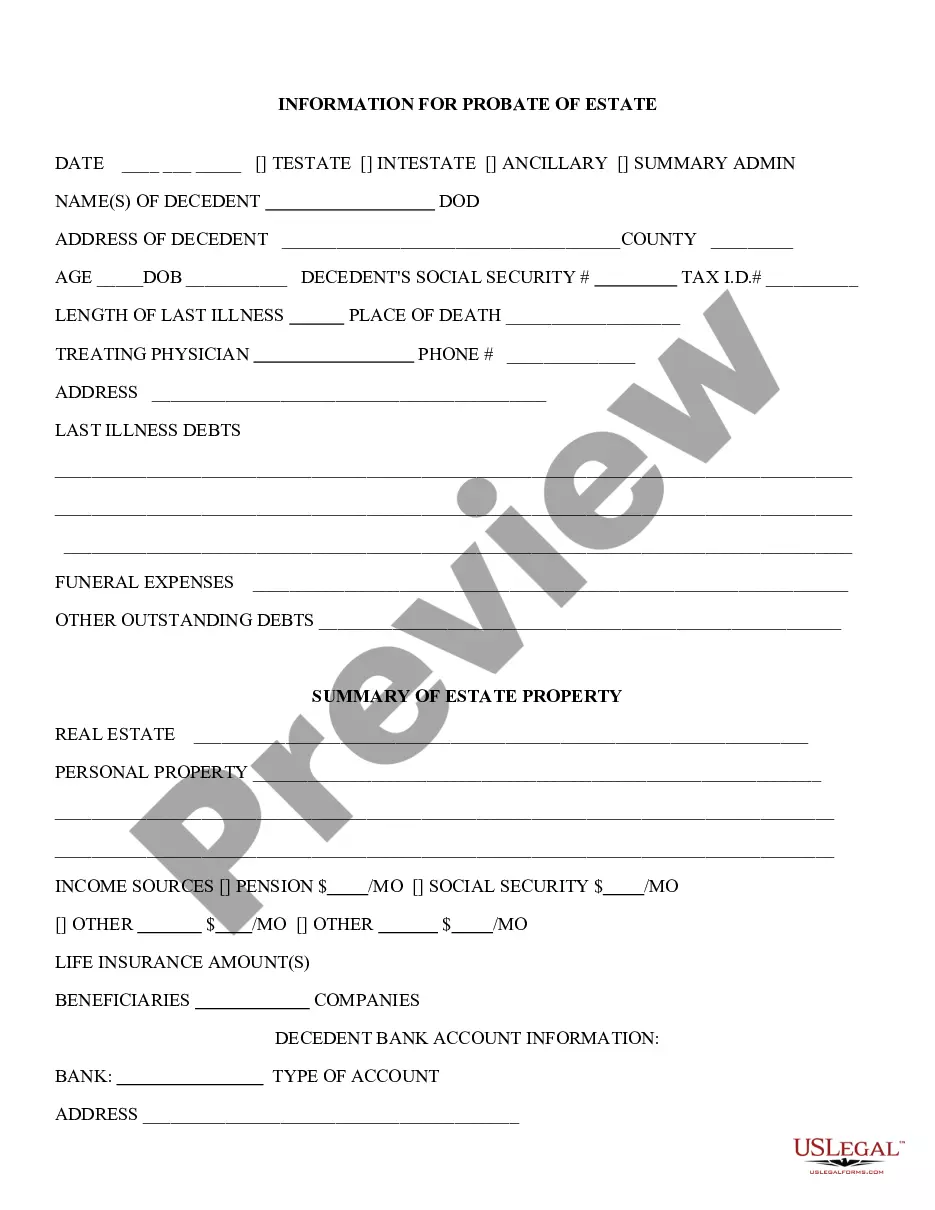
But for estates in Pennsylvania that exceed the small estate's threshold, and for which there is either no Will, or a Will (but not a Living Trust), probate will be required before an estate can be tranferred to the decedent's heirs or beneficiaries.
Identify beneficiaries. One of the main purposes of a last will is distributing your assets to certain people upon your death. Perform an inventory of property. Decide who gets what. Designate a personal representative. Draft the final will.
No, in Pennsylvania, you do not need to notarize your will to make it legal. However, you must go to a notary to make your will self-proving, see above.
To create a valid will in Pennsylvania, the will creator (testator) must be 18 years of age and must possess a sound mind. Possessing a sound mind means that the testator is mentally competent and fully understands what property they own and who they are conveying their property to.
For example, California requires that all sections of the will necessary to make the will valid must be written entirely by hand and that the person writing the will must sign it. If these state rules aren't followed, the holographic will won't be valid.
A handwritten will may be legal in Pennsylvania depending on the individual circumstances. Under Pennsylvania state code, wills must be in writing and signed by the person making the will, known as the testator.The state of Pennsylvania therefore makes no legal distinction between a handwritten and typed will.