Mississippi Motion to Dismiss Fault Grounds
About this form
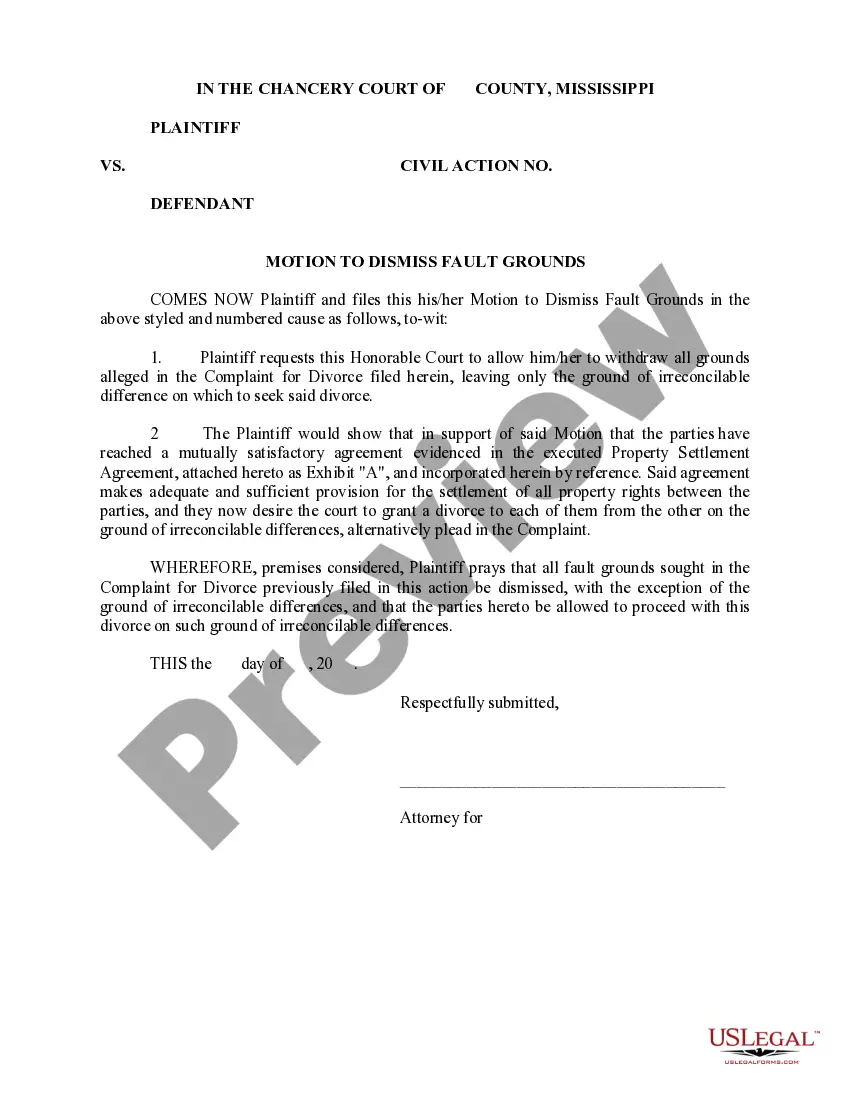
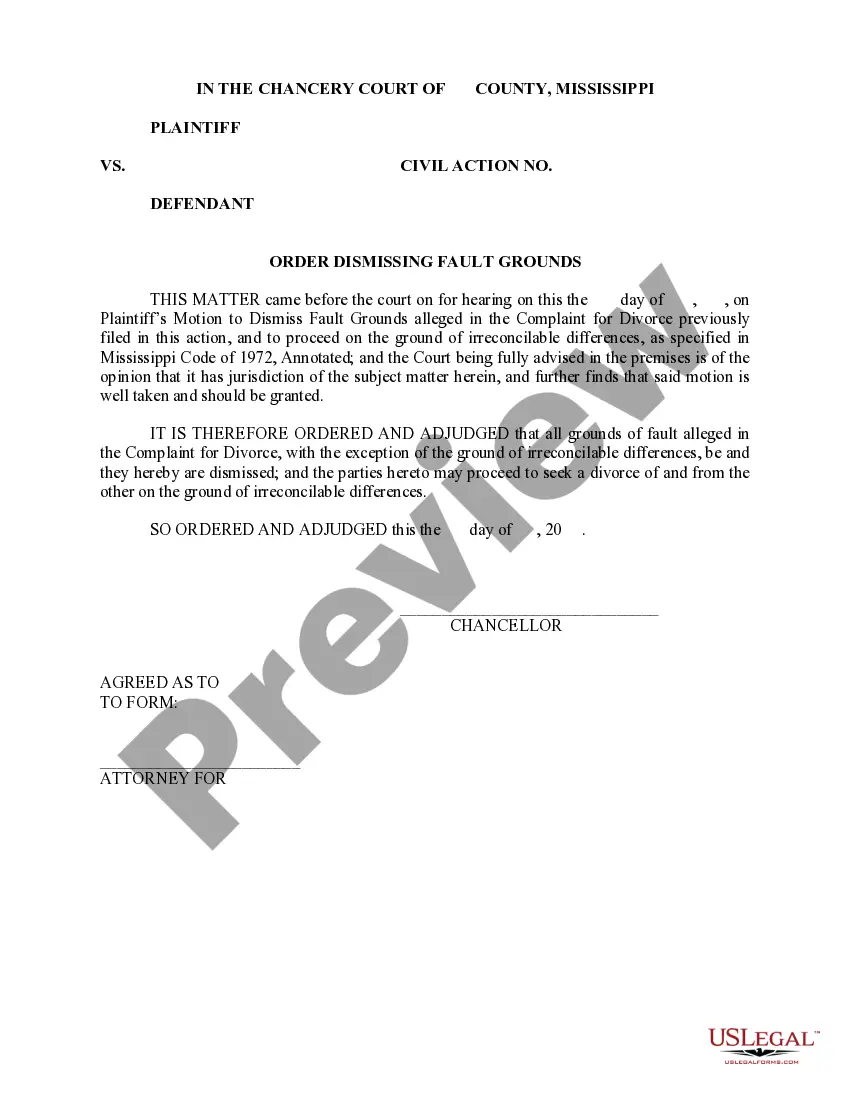
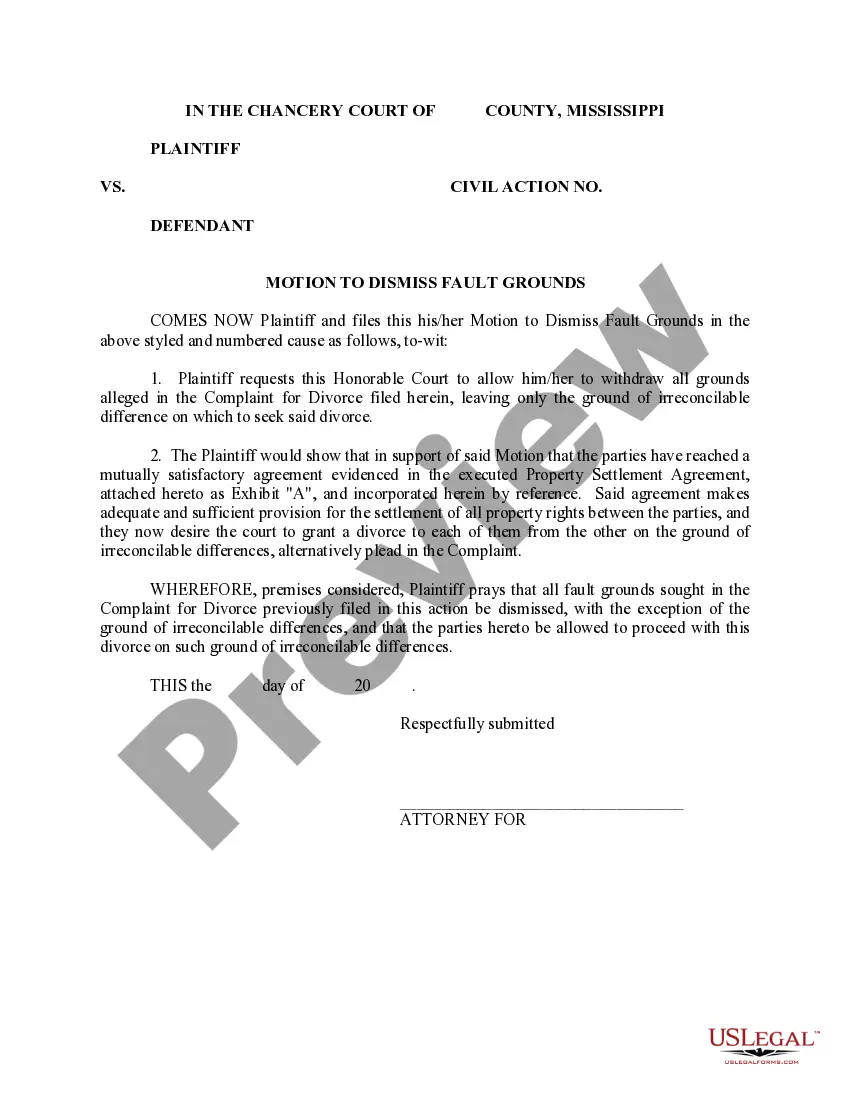
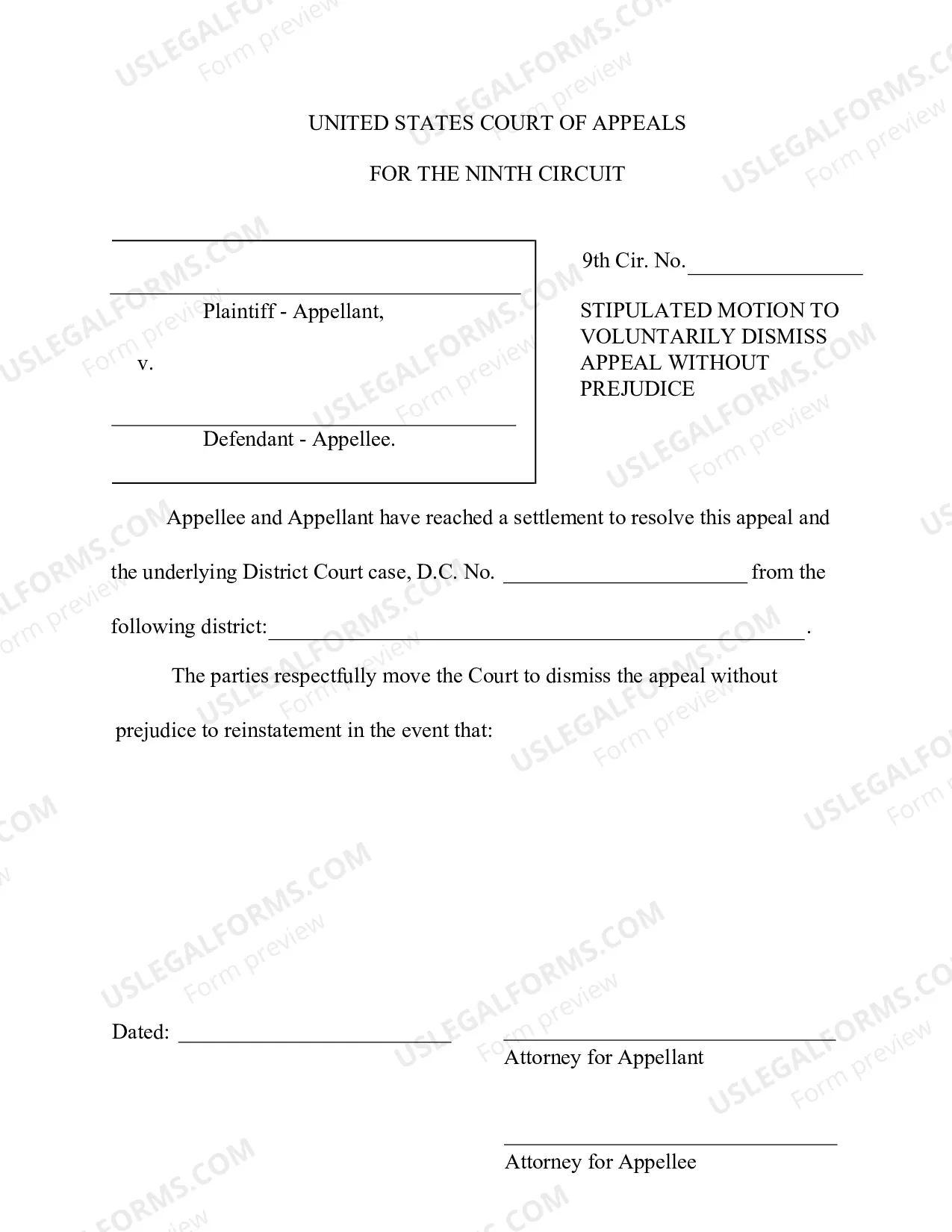
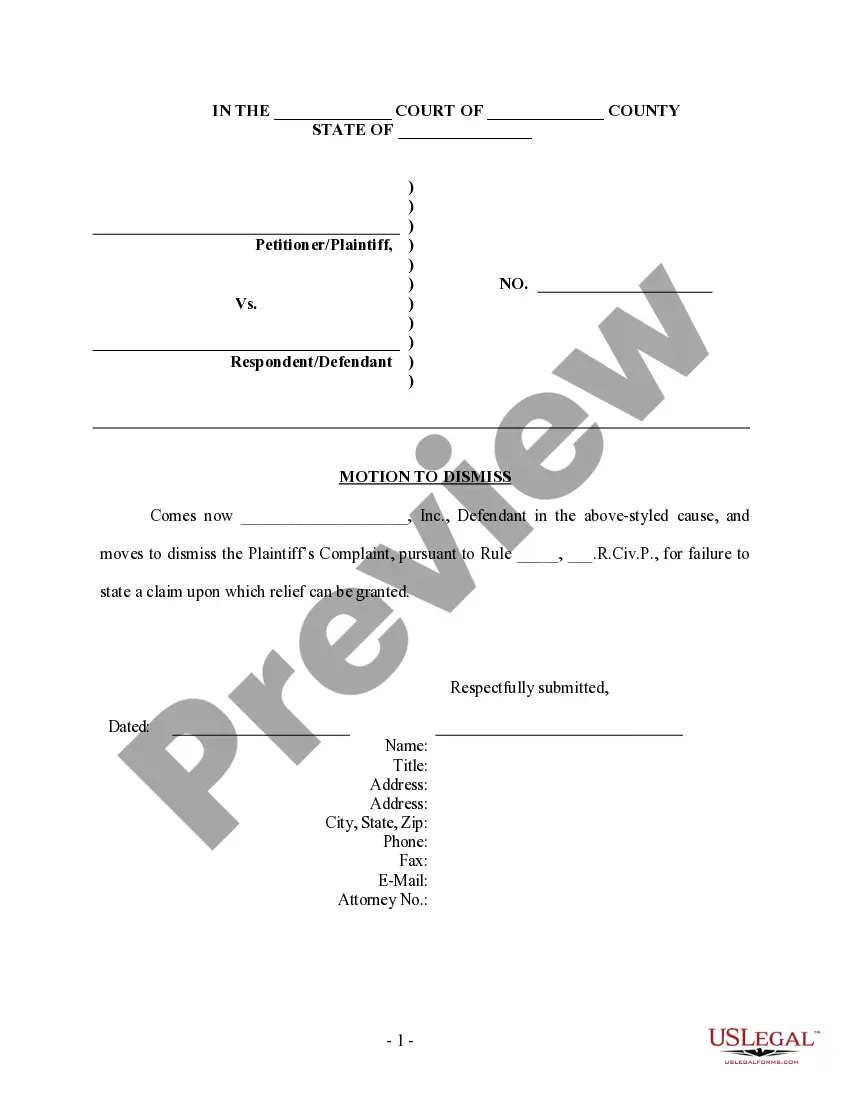
The Motion to Dismiss Fault Grounds is a legal document that allows a party to request the court to dismiss specific fault claims made in a divorce proceeding. Unlike other motions, this form focuses specifically on seeking to narrow the grounds for divorce to irreconcilable differences, which is often seen as a more amicable approach to divorce. It is especially useful for parties who have reached an agreement and wish to simplify the legal process.
Main sections of this form
- Case title: Identifies the Plaintiff and Defendant in the action.
- Statement of request: A formal request to the court for the dismissal of specific fault grounds.
- Basis for request: Explanation of the agreement reached by both parties, referencing an attached Property Settlement Agreement.
- Prayer for relief: Formal request to the court to allow the divorce to proceed based solely on irreconcilable differences.
- Signature block: Space for the attorneyâs signature and date, affirming submission.
When to use this document
This form is typically used in divorce cases where the parties have initially filed for divorce on fault grounds, such as abandonment or adultery. If both parties have reconciled and come to a mutually satisfactory agreement regarding their property and wish to pursue the divorce on the grounds of irreconcilable differences only, this motion is the appropriate legal tool to simplify and expedite the process.
Intended users of this form
- Individuals filing for divorce who have alleged fault grounds in their original complaint.
- Parties who have reached an agreement on property settlements and seek to streamline the divorce process.
- Representatives or attorneys acting on behalf of the Plaintiff in a divorce case.
Steps to complete this form
- Identify the parties: Fill in the names of the Plaintiff and Defendant in the case title.
- State the motion: Clearly state the request to dismiss the fault grounds in the body of the motion.
- Attach supporting documents: Include the executed Property Settlement Agreement as Exhibit A.
- Sign and date: Ensure the attorney signs the document and includes the date of submission.
- File with the court: Submit the completed motion to the appropriate court for processing.
Does this document require notarization?
This form does not typically require notarization unless specified by local law. However, it is advisable to check the specific requirements of your state or jurisdiction regarding notarization of legal documents.
Get your form ready online
Our built-in tools help you complete, sign, share, and store your documents in one place.
Make edits, fill in missing information, and update formatting in US Legal Forms—just like you would in MS Word.
Download a copy, print it, send it by email, or mail it via USPS—whatever works best for your next step.
Sign and collect signatures with our SignNow integration. Send to multiple recipients, set reminders, and more. Go Premium to unlock E-Sign.
If this form requires notarization, complete it online through a secure video call—no need to meet a notary in person or wait for an appointment.
We protect your documents and personal data by following strict security and privacy standards.

Make edits, fill in missing information, and update formatting in US Legal Forms—just like you would in MS Word.

Download a copy, print it, send it by email, or mail it via USPS—whatever works best for your next step.

Sign and collect signatures with our SignNow integration. Send to multiple recipients, set reminders, and more. Go Premium to unlock E-Sign.

If this form requires notarization, complete it online through a secure video call—no need to meet a notary in person or wait for an appointment.

We protect your documents and personal data by following strict security and privacy standards.
Avoid these common issues
- Failing to attach the required Property Settlement Agreement.
- Not providing adequate details about the grounds for requesting dismissal.
- Omitting signatures or dates on the motion.
- Neglecting to check local court rules for formatting requirements.
Why use this form online
- Convenience: Access and complete the form at your own pace from the comfort of home.
- Editability: Easily customize the document to fit your specific circumstances.
- Reliability: All forms are drafted by licensed attorneys to ensure they meet legal standards.
Legal use & context
- Recognized by courts for simplifying the divorce process.
- Effective in cases where mutual agreements exist, helping reduce court workload.
- Minimizes the potential for adversarial proceedings when handled correctly.
Key takeaways
- A Motion to Dismiss Fault Grounds streamlines divorce proceedings by focusing only on irreconcilable differences.
- It is essential for a plaintiff to have reached an amicable settlement with the spouse before utilizing this form.
- Proper completion of the form, including attachments, is critical for court acceptance.
Looking for another form?

Form popularity
FAQ
A motion to dismiss (aka demurrer in some states) is a powerful litigation tool that can stop a lawsuit cold in its tracks. When granting a motion to dismiss, the judge essentially decides the case in the defendant's favor most often denying the plaintiff the opportunity to go to trial.
A motion to dismiss or motion for dismissal is a motion made in a civil case, where one party asks the court to dismiss or throw out the case without reviewing all of the facts and legal arguments of the case.
You do not have to file a response. However, you would be wise to do so as a motion to dsmiss , if granted, could end your suit. Motions to dimiss for failure to state a claim are rarely granted.
When a defendant files a motion to dismiss, he asks the Court to throw out all or part of the plaintiff's case.The parties (well, their lawyers) will come to court, explain their positions on the motion to dismiss, and answer any questions posed by the judge. Finally, the judge will decide to grant or deny the motion.
A motion to dismiss is filed when a party believes that the complaint is legally invalid, which can be based on a variety of grounds.
If the losing party agrees it lacked sufficient evidence to prove a claim, it is required to preserve the matter by filing a motion to present the proof. If the motion was denied, it could pursue an appeal. In essence, the proof submitted at the summary judgment becomes irrelevant to the case.
You've written a motion and submitted it to the court. The court has set it for oral argument - now what? Read the rules. Know the judge. Review your written motion. Shepardize your cases again. Review opposing counsel's written motion. Note cases that are directly opposed to your argument. Prepare your argument.
To defend against a motion to dismiss for lack of personal jurisdiction, you should be prepared to show the judge that the other party has had contact with the state where you have filed the case, s/he was served in the state, or there is some other reason why the court has jurisdiction.
When a judge denies a defendant's motion to dismiss, the case will continue because defendant did not convince the judge to terminate the case.When students read a U.S. court decision where a judge denies a motion to dismiss, it may appear that the judge is ruling that the plaintiff won her case.