Mississippi Plaintiff's First Set of Interrogatories to Defendant
What is this form?
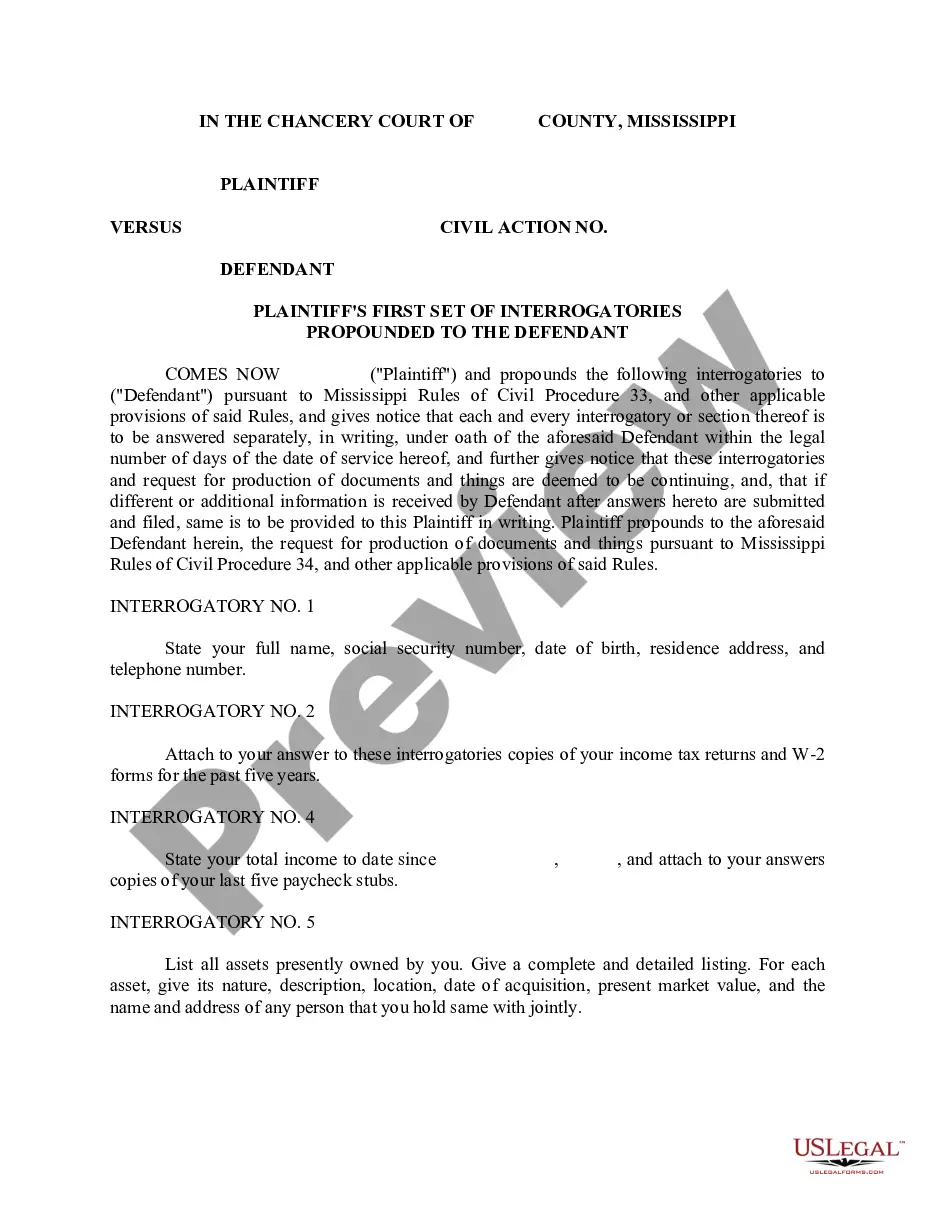
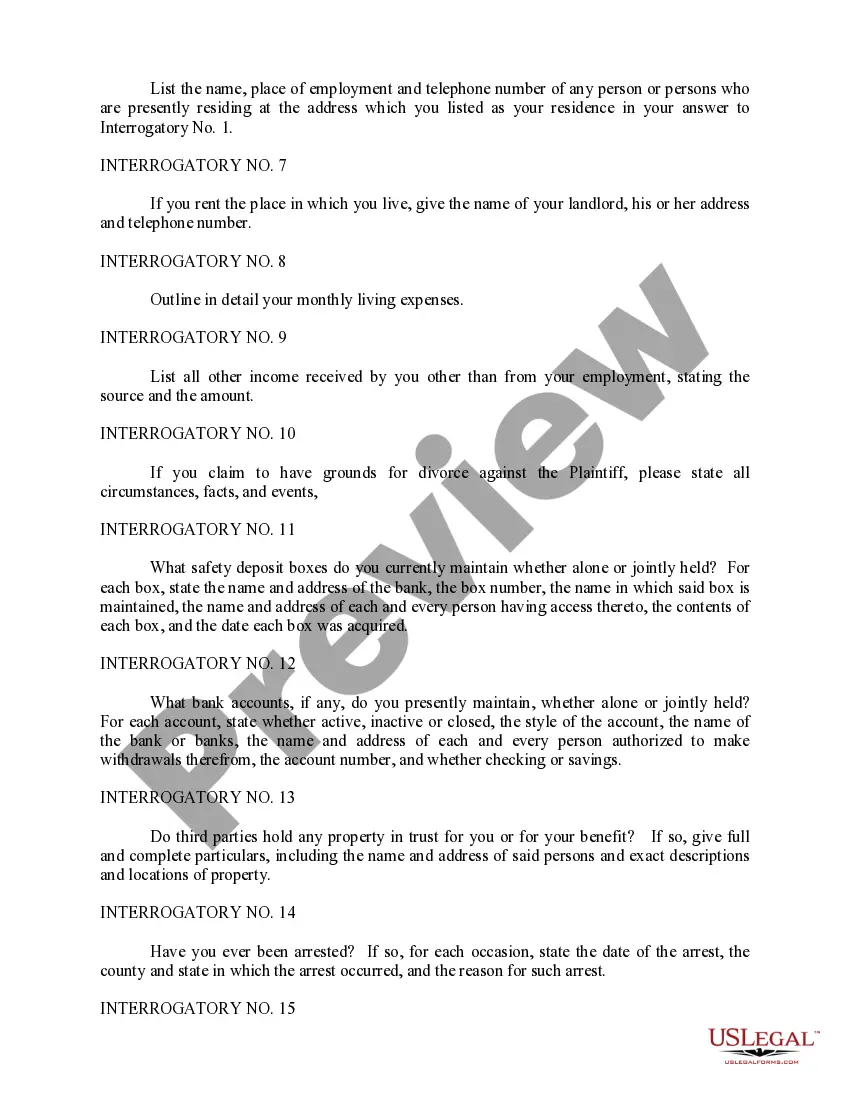
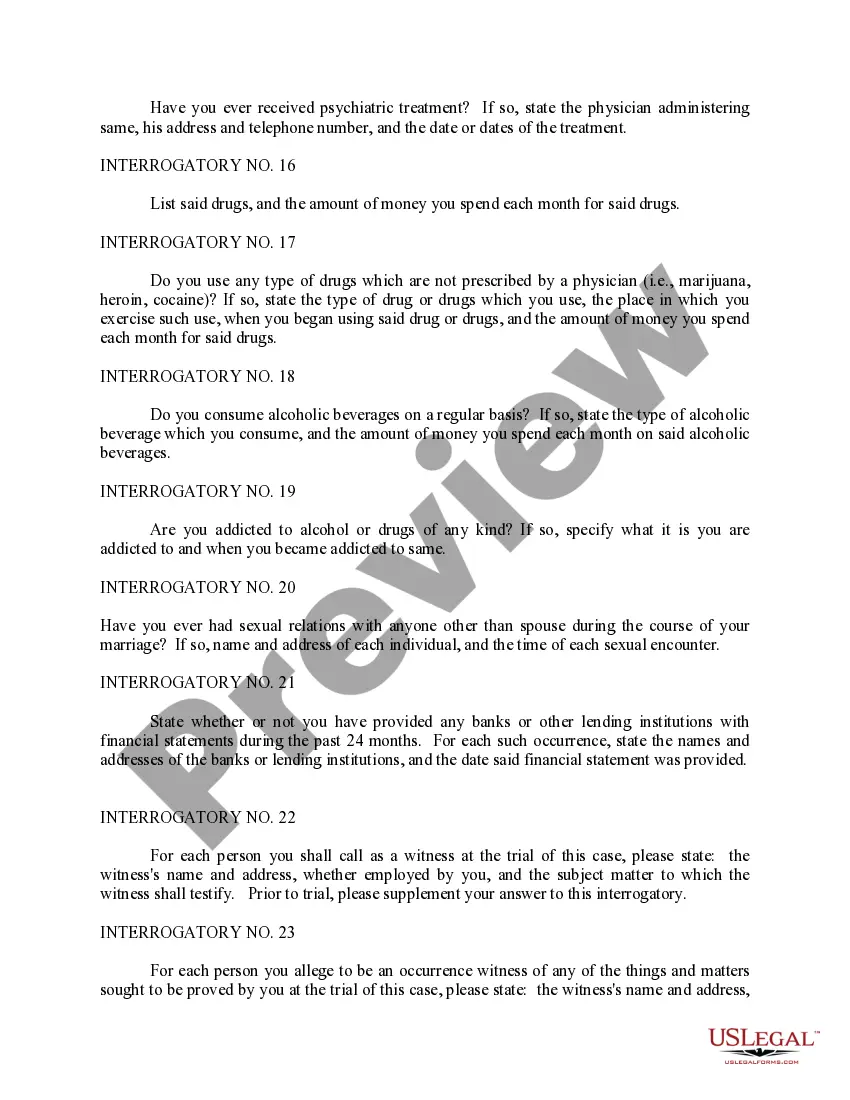
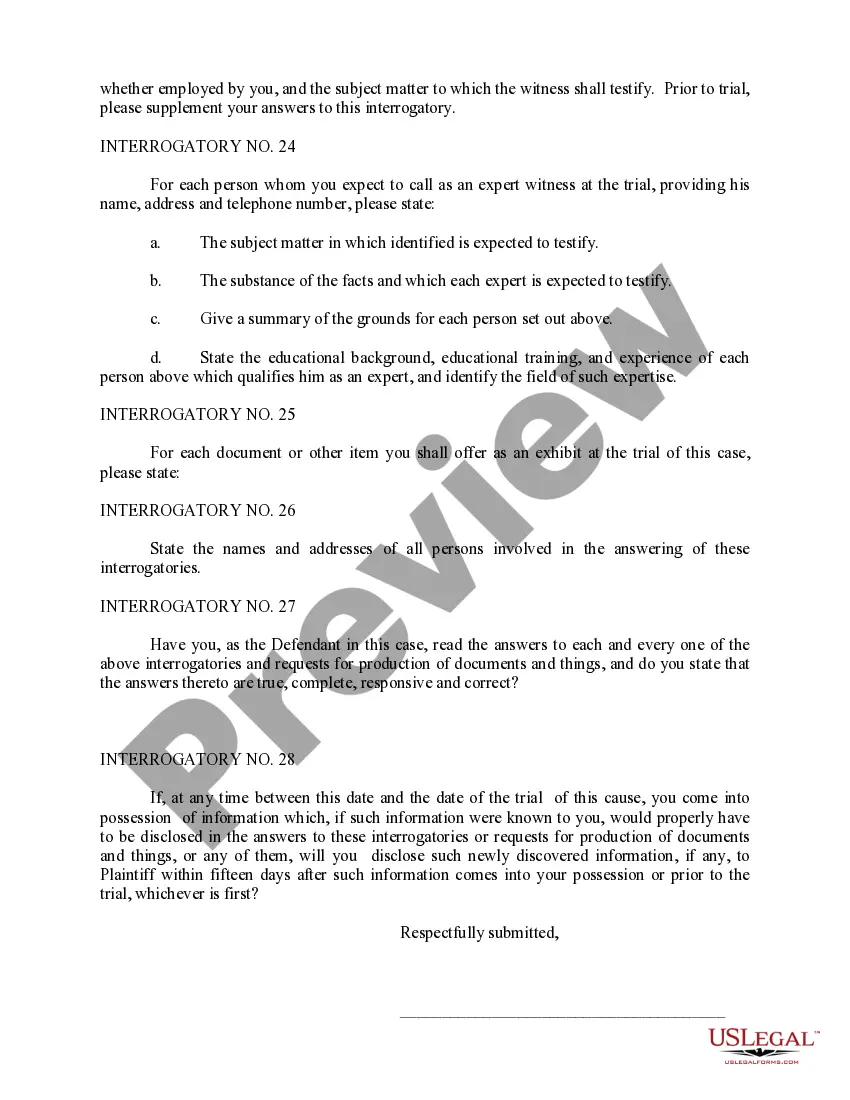
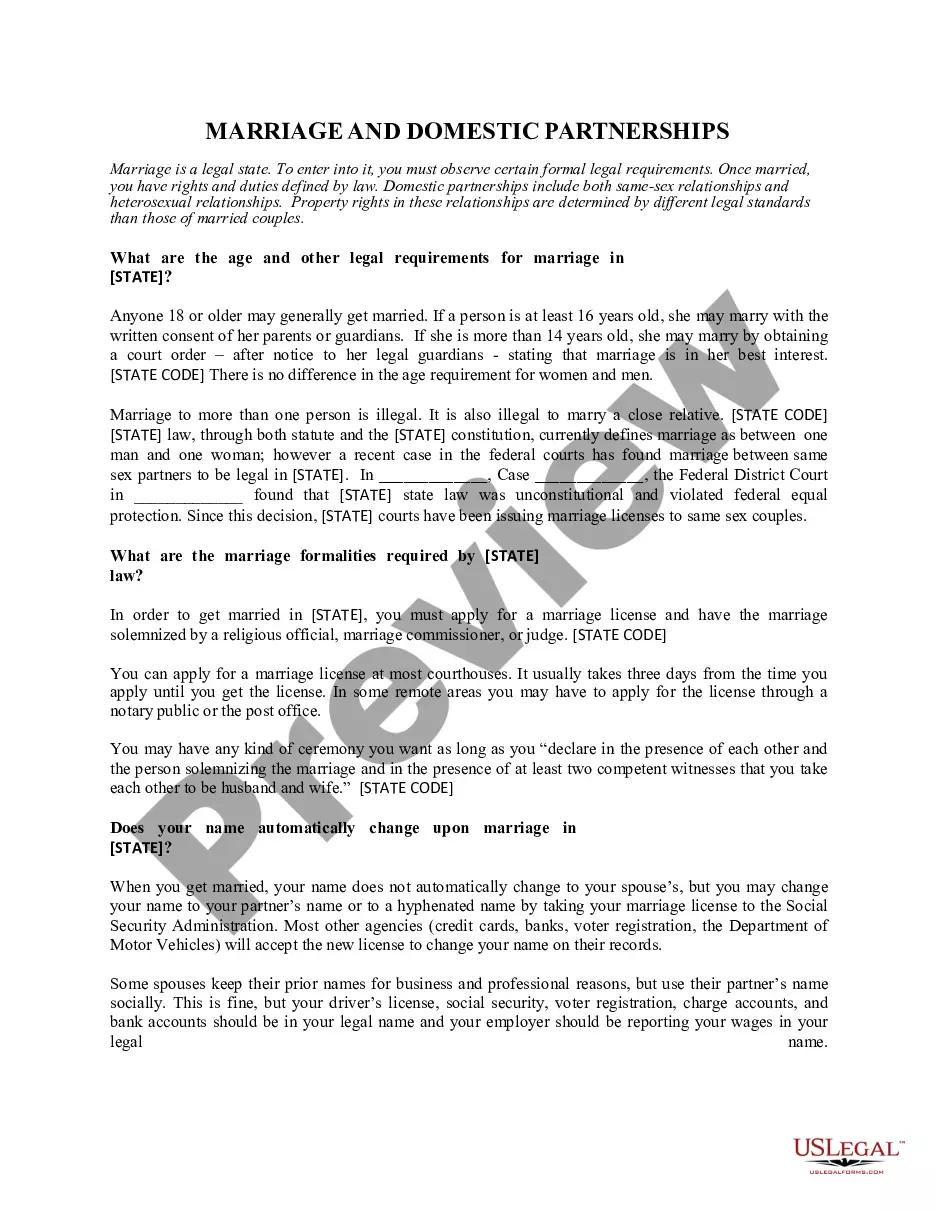
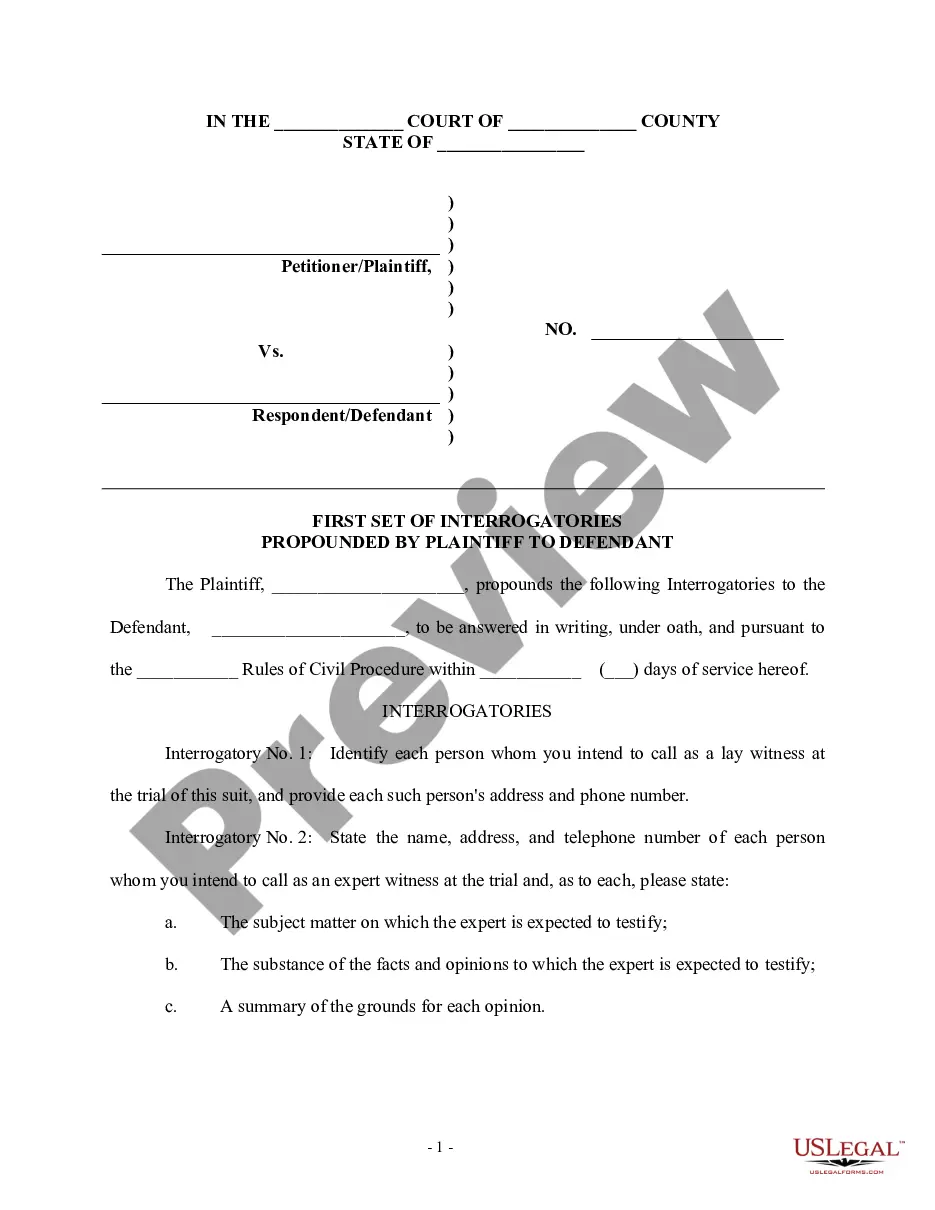
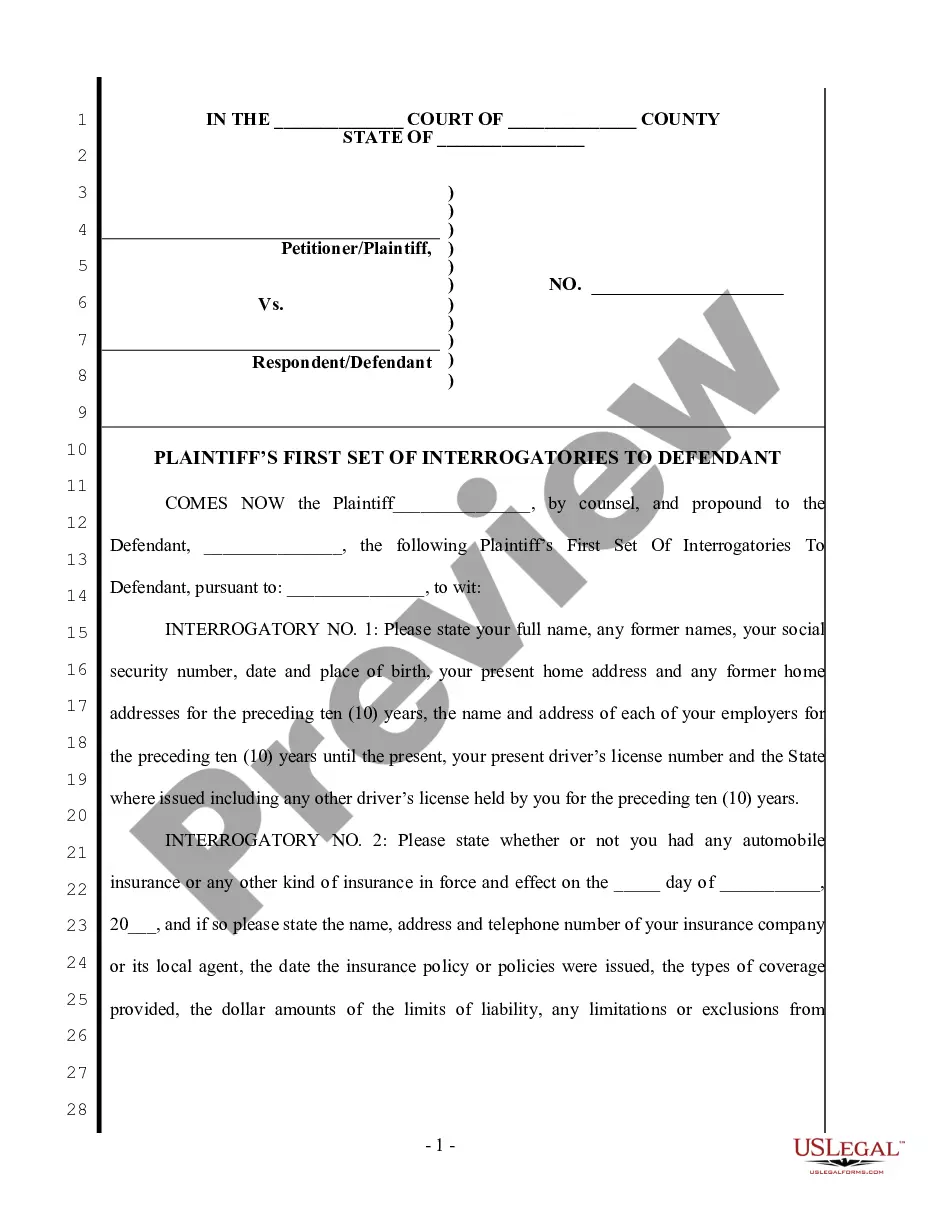
The Plaintiff's First Set of Interrogatories to Defendant is a legal document used in civil litigation during the discovery phase. This form facilitates communication between the parties by allowing the plaintiff to submit written questions to the defendant that must be answered under oath. Unlike depositions, which involve oral questioning, interrogatories provide a structured format for gathering information relevant to the case, ensuring that both sides have a chance to clarify details and compile necessary evidence.
Form components explained
- Introduction detailing the parties involved and the legal context for the interrogatories.
- A series of numbered questions that the defendant must answer, covering personal information, financial status, and relevant facts of the case.
- Instructions for the defendant regarding the format and timeframe for responding to the interrogatories.
- A notice about the continuous nature of the requests for information, ensuring updates are shared if new data becomes available.
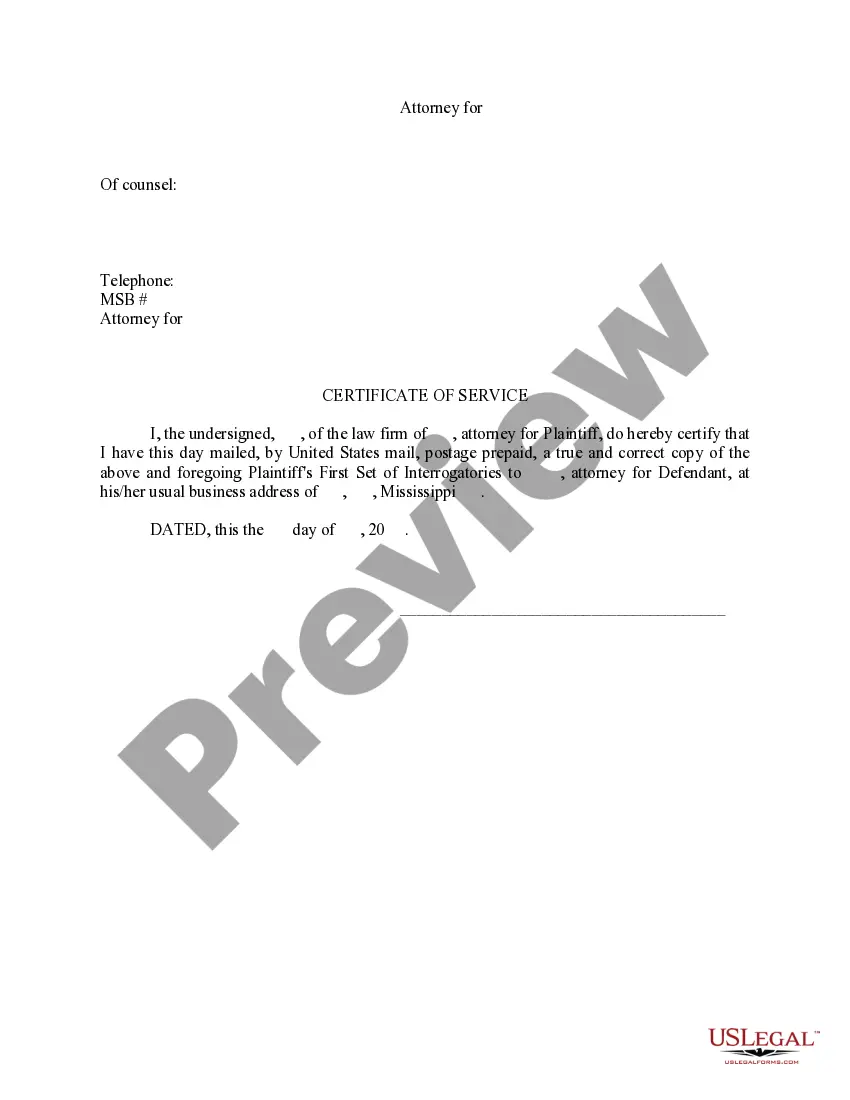
- Certification of service to confirm that the document has been properly sent to the opposing party.
Situations where this form applies
This form should be used when you, as a plaintiff, need to gather detailed information from the defendant in a civil lawsuit. It is particularly useful in cases involving disputes over finances, divorce, or any claims where obtaining factual clarity is essential. For example, if you are filing for divorce and need to establish the defendant's financial situation, this form will help you outline your inquiries effectively.
Intended users of this form
This form is intended for:
- Plaintiffs in civil lawsuits seeking information from defendants.
- Individuals involved in divorce proceedings needing to assess the defendant's financial status.
- Legal representatives who require a structured format for questioning the opposing party.
Completing this form step by step
- Identify the parties involved: Clearly state the full names of both the plaintiff and defendant at the beginning of the form.
- Answer each interrogatory: The defendant must provide comprehensive responses to all questions in the form, ensuring accuracy and completeness.
- Gather supporting documents: Where requested, attach relevant documents, such as tax returns or financial statements, to substantiate the answers provided.
- Sign and date the form: Ensure that the document is signed by the defendant or their legal representative, certifying the truthfulness of the responses.
- File the form with the court: Submit the completed form to the relevant court with any required filing fees and serve a copy to the opposing party.
Notarization requirements for this form
Notarization is not commonly needed for this form. However, certain documents or local rules may make it necessary. Our notarization service, powered by Notarize, allows you to finalize it securely online anytime, day or night.
Get your form ready online
Our built-in tools help you complete, sign, share, and store your documents in one place.
Make edits, fill in missing information, and update formatting in US Legal Forms—just like you would in MS Word.
Download a copy, print it, send it by email, or mail it via USPS—whatever works best for your next step.
Sign and collect signatures with our SignNow integration. Send to multiple recipients, set reminders, and more. Go Premium to unlock E-Sign.
If this form requires notarization, complete it online through a secure video call—no need to meet a notary in person or wait for an appointment.
We protect your documents and personal data by following strict security and privacy standards.

Make edits, fill in missing information, and update formatting in US Legal Forms—just like you would in MS Word.

Download a copy, print it, send it by email, or mail it via USPS—whatever works best for your next step.

Sign and collect signatures with our SignNow integration. Send to multiple recipients, set reminders, and more. Go Premium to unlock E-Sign.

If this form requires notarization, complete it online through a secure video call—no need to meet a notary in person or wait for an appointment.

We protect your documents and personal data by following strict security and privacy standards.
Mistakes to watch out for
- Failing to answer all questions fully, which may lead to objections or sanctions.
- Not providing supporting documents as requested, hindering your case.
- Missing the deadline for responses, which can affect your legal standing.
- Incompletely signing or dating the document, making it invalid.
Benefits of completing this form online
- Immediate access allows for quick preparation and submission of the form.
- The form can be easily edited to customize responses according to specific case needs.
- Online availability ensures you have the most up-to-date legal templates drafted by licensed attorneys.
Legal use & context
- The form is legally binding once completed and signed, subject to the rules of civil procedure governing interrogatories.
- Responses are typically admissible as evidence in court, depending on the case specifics.
- Ensuring compliance with interrogatory guidelines helps avoid potential consequences, such as sanctions for non-compliance.
Looking for another form?

Form popularity
FAQ
In law, interrogatories (also known as requests for further information) are a formal set of written questions propounded by one litigant and required to be answered by an adversary in order to clarify matters of fact and help to determine in advance what facts will be presented at any trial in the case.
The purpose of interrogatories is to learn a great deal of general information about a party in a lawsuit. For example, the defendant in a personal injury lawsuit about a car accident might send you interrogatories asking you to disclose things like: Where you live.
A: Assuming that I draft about 30 - 40 questions per set, and assuming that I can re-use some of my special interrogatories from other past cases, then maybe 2 - 3 hours of my time to prepare a set of special interrogatories. Then another 1 - 2 hours afterward to review and discuss their responses with you.
Your answers to the interrogatories should usually be short, clear, and direct and should answer only the question that is being asked. This is not the time to set out your entire case or defense to the other side. Take the time to make sure your answers are correct and truthful.
The purpose of interrogatories is to learn a great deal of general information about a party in a lawsuit. For example, the defendant in a personal injury lawsuit about a car accident might send you interrogatories asking you to disclose things like: Where you live.
Have a strategy. Adjust the scope of your requests to the questions at issue. Send clear requests. Always consider how your client would be prepared to respond to similar requests. Make your objections clear and specific.
Interrogatories Interrogatories are written questions that are sent by one party to another. Generally speaking, the party who receives these questions has 30 days to answer them.If the other party fails to respond on time, within 30 days, then the questions are deemed admitted.
Be alert to possible objections while you're drafting. Ask about particular contentions. Refer to allegations in the pleading. Ask for facts on which the contention is based.
Personal/Corporate information of opposing party. Identifying information of witnesses. Contact information & background of expert witnesses. Insurance information.