Oregon Notice of Assignment of Contract for Deed
What this document covers
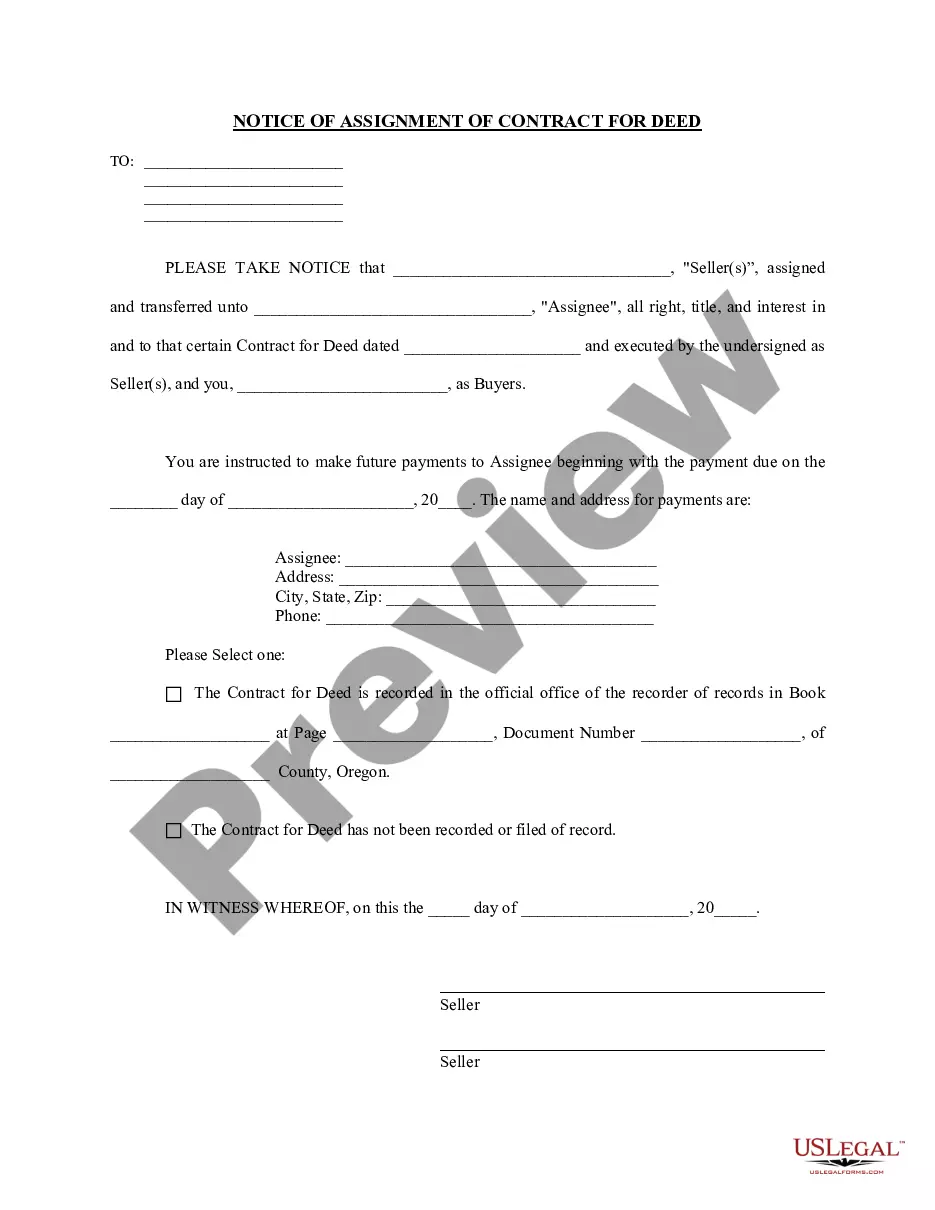
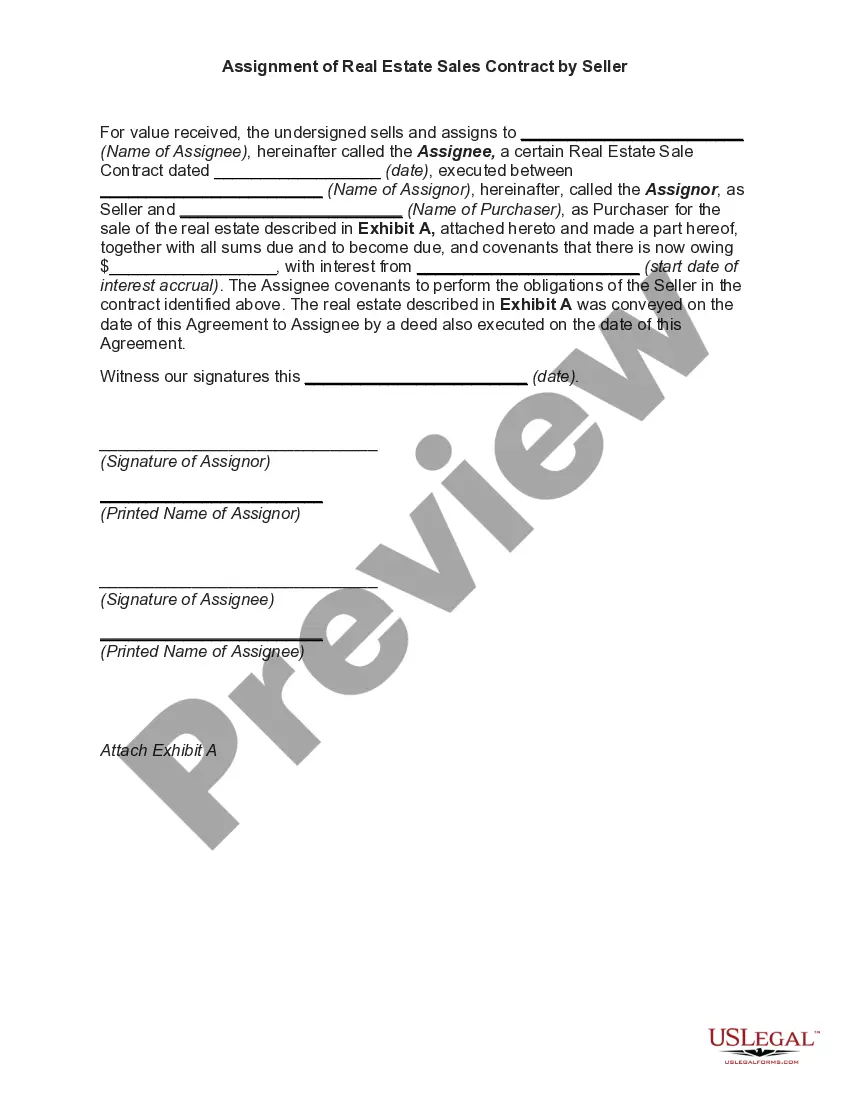
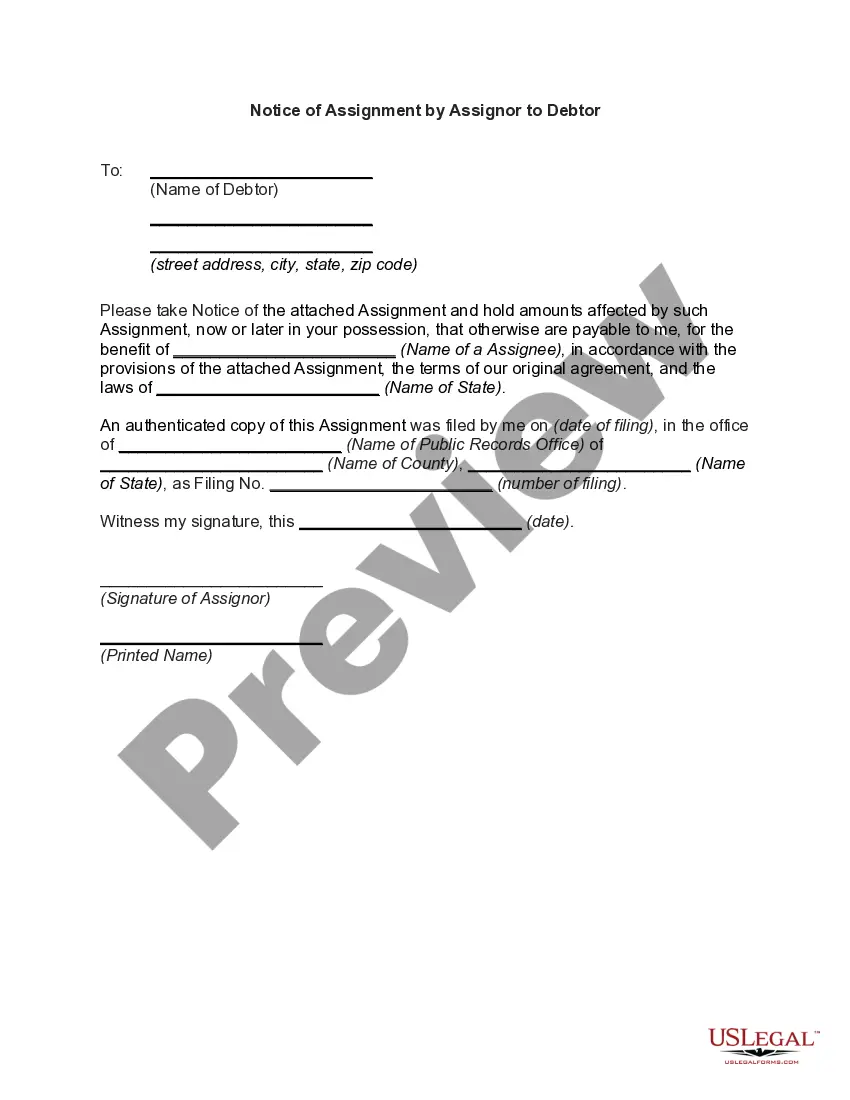
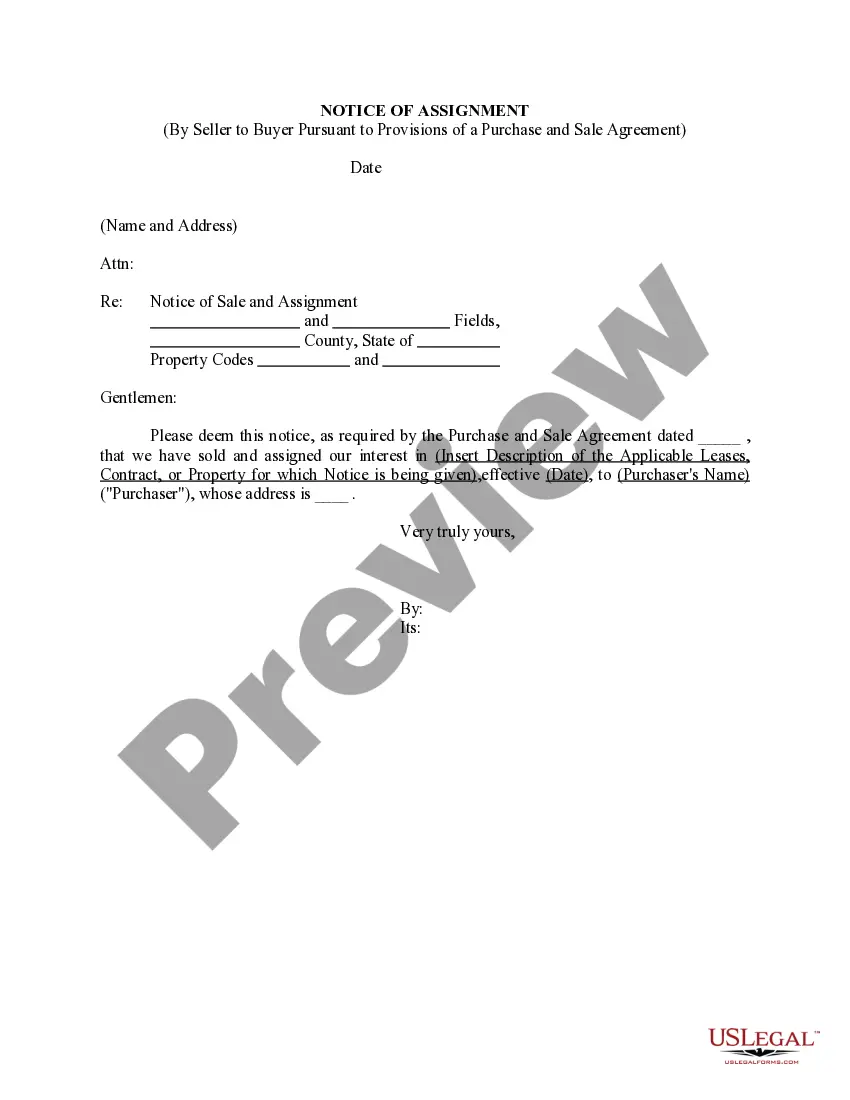
The Notice of Assignment of Contract for Deed is a legal document that allows a seller to inform the buyer that the contract for deed has been assigned to a third party. This form is essential for ensuring that future payments are directed to the third party, outlining the seller's intention and responsibility. It is important to note that the Notice of Assignment differs from other real estate transactions as it involves the assignment of contractual obligations rather than the sale or transfer of property itself.
Main sections of this form
- Date of notice issuance
- Information about the seller and buyer
- Details of the assignment to the third party
- Signature of the seller
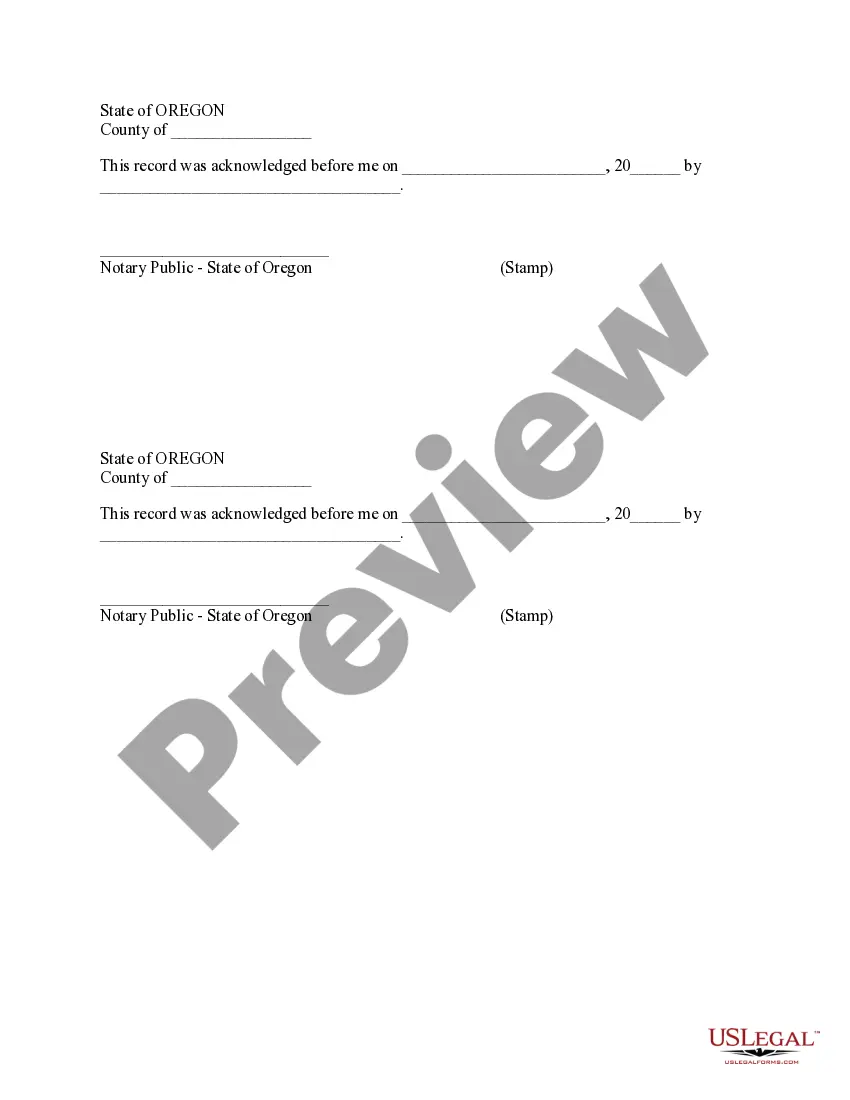
- Notarization area
Common use cases
This form should be used when a seller has decided to assign their contract for deed to another party. It is particularly useful in situations where the seller wishes to transfer their rights and obligations under the contract without terminating the existing agreement with the buyer. This could occur during a sale of the seller's interest in the contract or if the seller is unable to continue with the terms of the agreement.
Who this form is for
- Sellers who need to assign their contract for deed
- Buyers who need clarification on payment direction due to assignment
- Real estate professionals involved in the contract assignment process
How to complete this form
- Identify the date of the notice at the top of the form.
- Fill in the names and addresses of the seller and buyer.
- Provide details about the third party to whom the contract for deed is assigned.
- Ensure the seller signs the notice.
- Have the document notarized to validate the assignment.
Does this document require notarization?
To make this form legally binding, it must be notarized. Our online notarization service, powered by Notarize, lets you verify and sign documents remotely through an encrypted video session.
Get your form ready online
Our built-in tools help you complete, sign, share, and store your documents in one place.
Make edits, fill in missing information, and update formatting in US Legal Forms—just like you would in MS Word.
Download a copy, print it, send it by email, or mail it via USPS—whatever works best for your next step.
Sign and collect signatures with our SignNow integration. Send to multiple recipients, set reminders, and more. Go Premium to unlock E-Sign.
If this form requires notarization, complete it online through a secure video call—no need to meet a notary in person or wait for an appointment.
We protect your documents and personal data by following strict security and privacy standards.

Make edits, fill in missing information, and update formatting in US Legal Forms—just like you would in MS Word.

Download a copy, print it, send it by email, or mail it via USPS—whatever works best for your next step.

Sign and collect signatures with our SignNow integration. Send to multiple recipients, set reminders, and more. Go Premium to unlock E-Sign.

If this form requires notarization, complete it online through a secure video call—no need to meet a notary in person or wait for an appointment.

We protect your documents and personal data by following strict security and privacy standards.
Common mistakes to avoid
- Failing to have the form notarized if required by state law.
- Not providing complete information about the third party.
- Missing signatures from one or both sellers.
- Using outdated forms that do not comply with current state regulations.
Why use this form online
- Immediate access to a professionally drafted form
- Easy customization to fit your specific situation
- Secure download and storage options
- Efficient and time-saving process compared to manual preparation
Looking for another form?
Form popularity
FAQ
Purchase price. Down payment. Interest rate. Number of monthly installments. Responsibilities of the buyer and seller. Legal remedies for the seller if the buyer does not make payments.
Generally, contract for deed sellers use IRS Form 6252 to report installment sales in the year in which they take place. You also use Form 6252 during each year you receive income from your contract for deed.
In the first instance, if your deed is not recorded, there is nothing in the public record to stop the seller from conveying the property to another person.The second situation could happen if your seller fails to pay his or her debts and the seller's creditors file liens or judgments against your property.
Retrieve your original deed. Get the appropriate deed form. Draft the deed. Sign the deed before a notary. Record the deed with the county recorder. Obtain the new original deed.
The buyer must record the contract for deed with the county recorder where the land is located within four months after the contract is signed. Contracts for deed must provide the legal name of the buyer and the buyer's address.
The buyer should record the contract for deed with the county recorder where the land is located and does so normally within four months after the contract is signed, though the time may vary depending on state law.
In order to cancel a contract for deed, a seller needs to complete a form called a notice of cancellation of contract for deed, and have the notice personally served on the buyer.A seller can cancel a contract for deed for buyer's default in making the monthly payments.
A conveyance of land in Oregon, or of any estate or interest therein located in Oregon, can be created, transferred, or declared by a deed in writing and should be signed by the person of lawful age (or their agent) from whom the estate or interest is intended to pass.