Oregon Contract for Deed Package

Overview of this form package
The Oregon Contract for Deed Package provides essential legal documents necessary for owner financing of real estate transactions in Oregon. This comprehensive package is specifically designed for ease of use, containing all relevant forms that facilitate the buying and selling of property through owner financing. Unlike generic form packages, this collection includes state-specific documents tailored to comply with Oregon's legal requirements.
Documents contained in this package
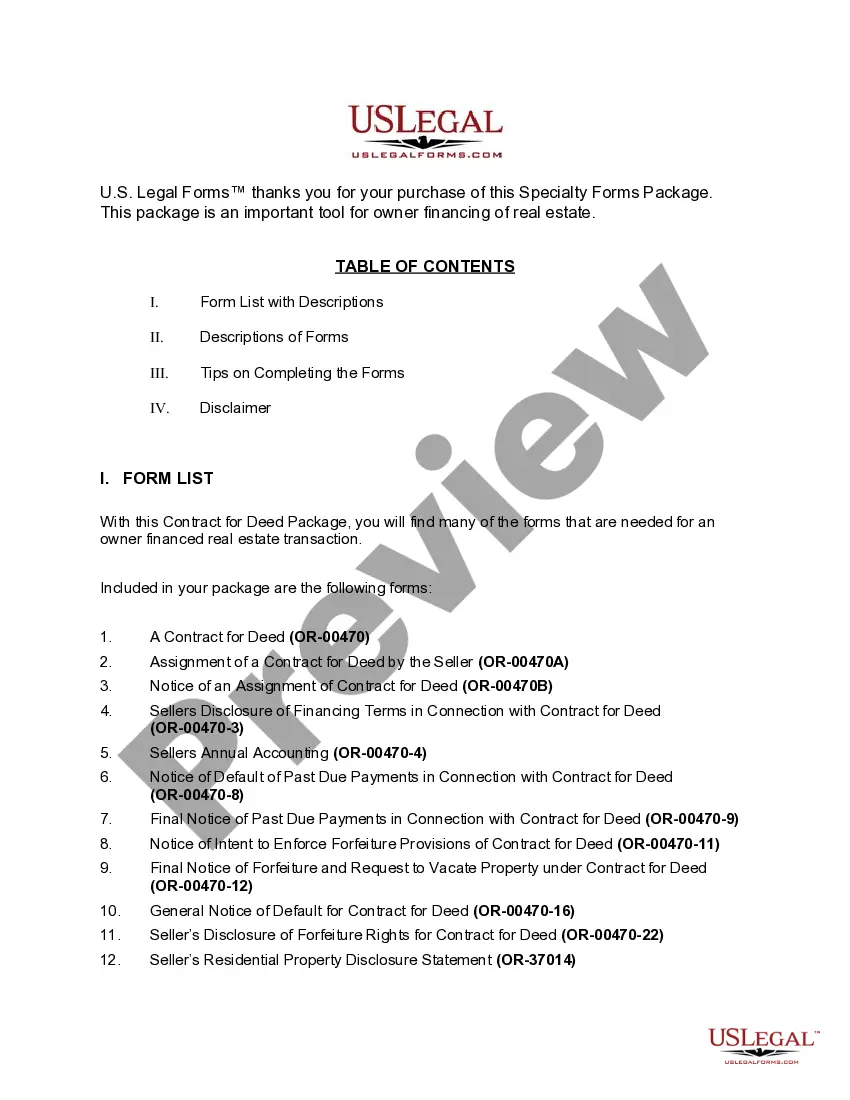
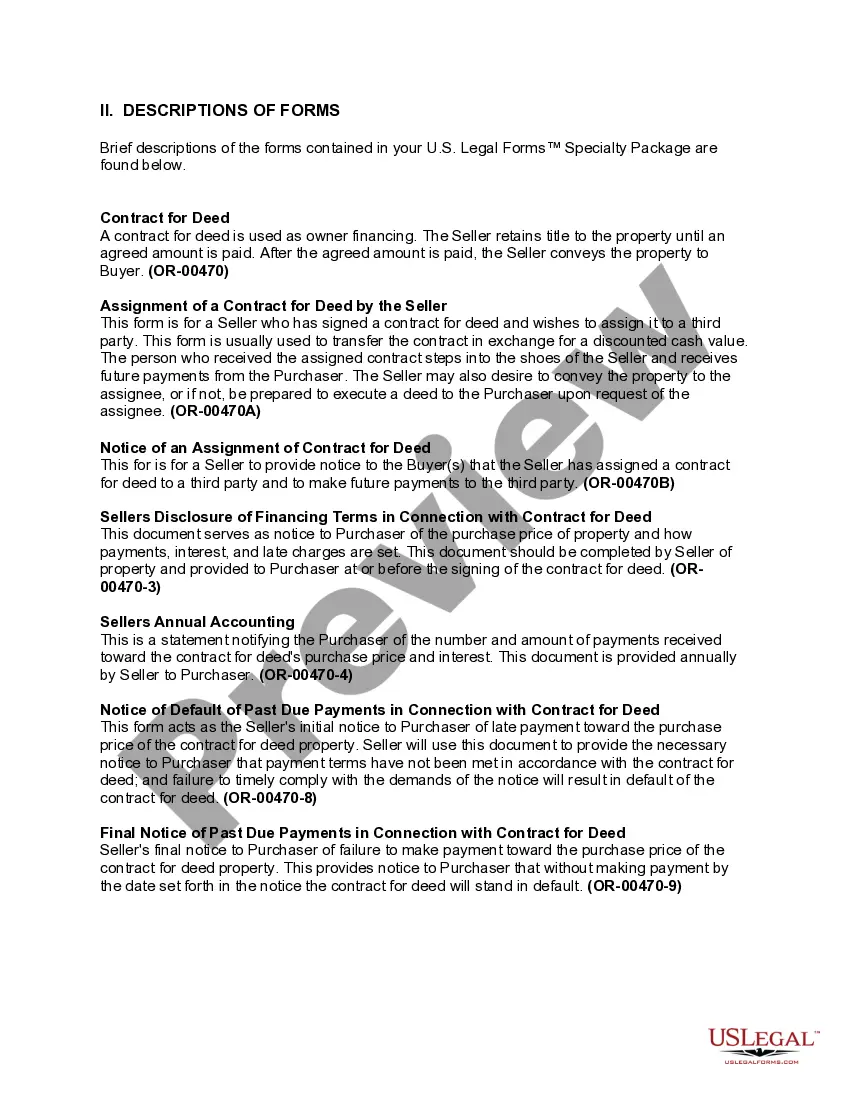
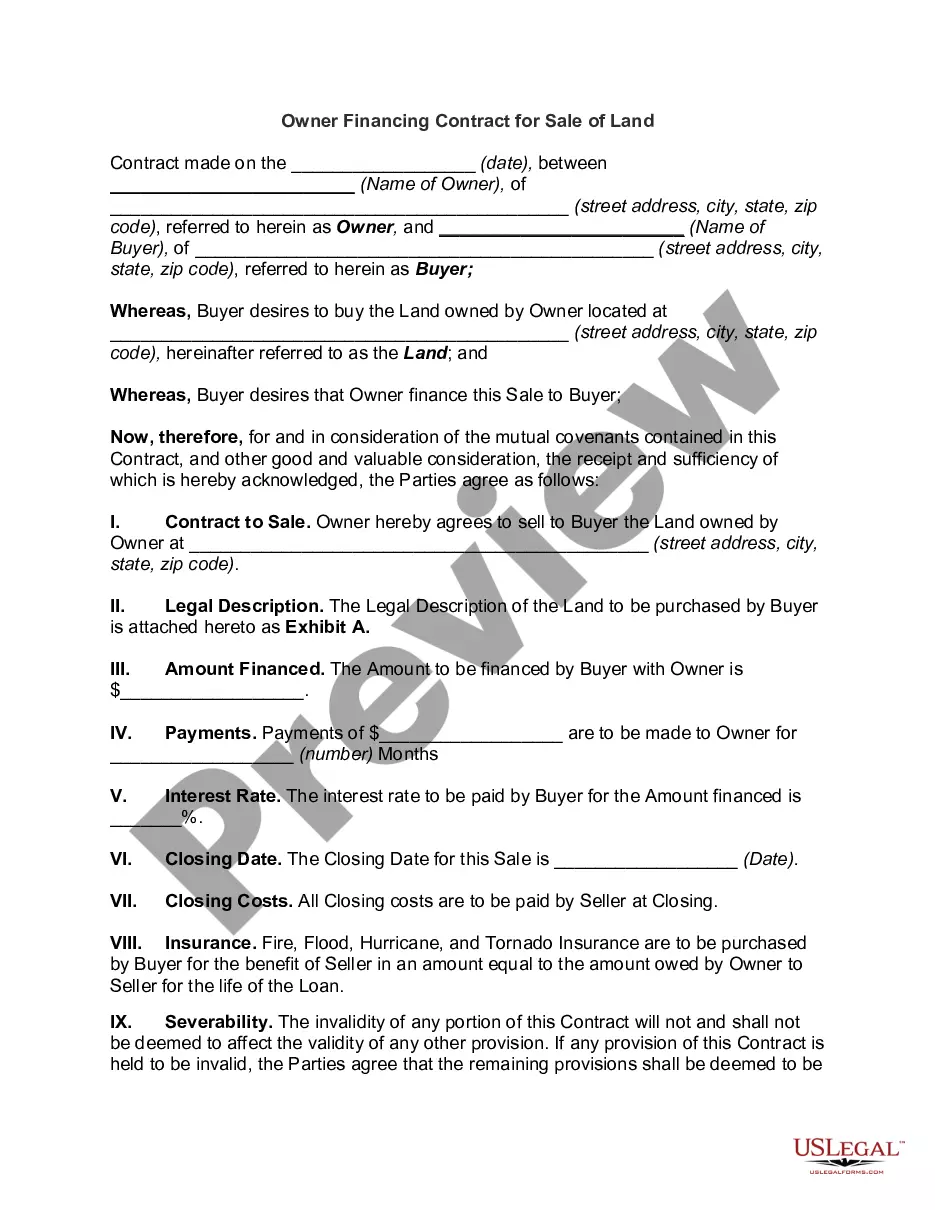
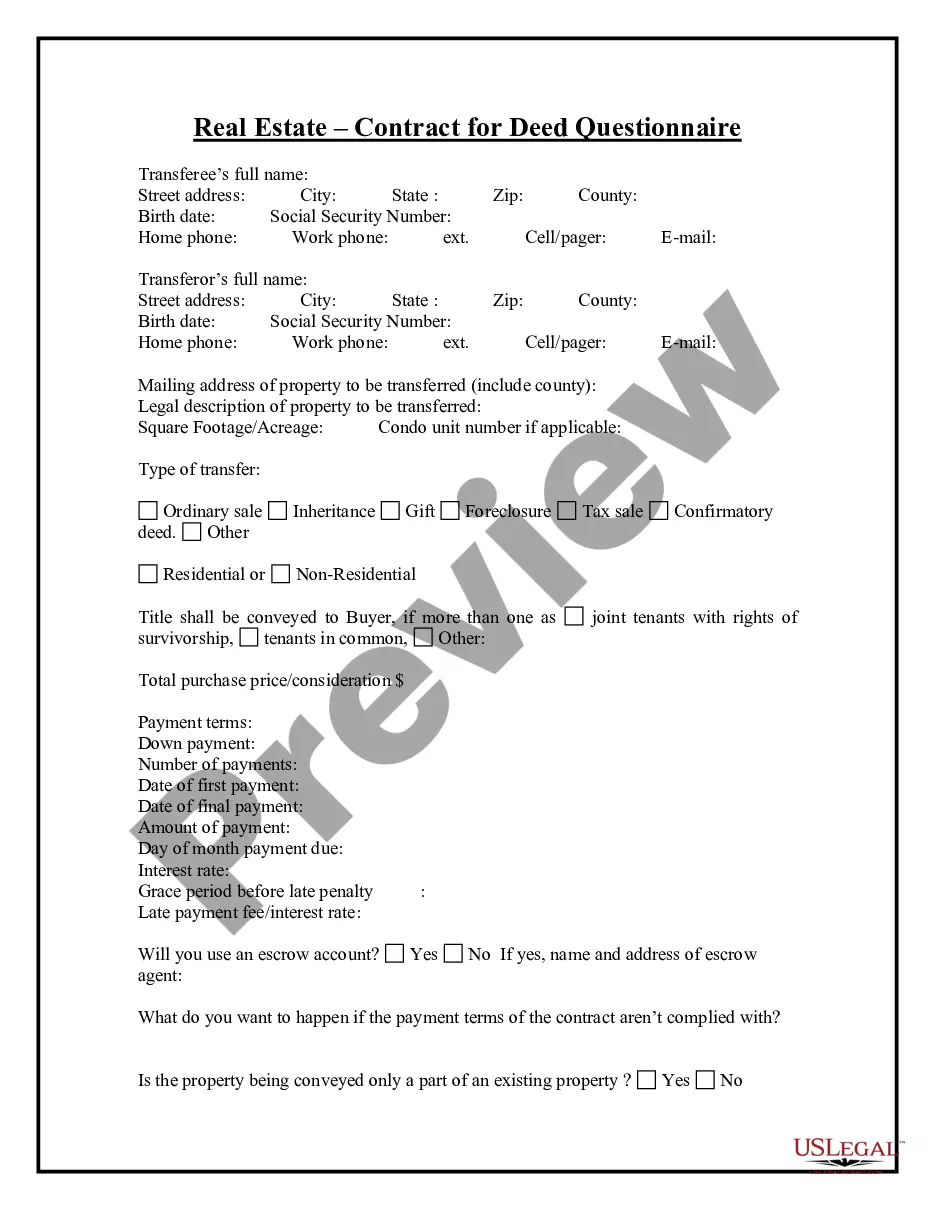
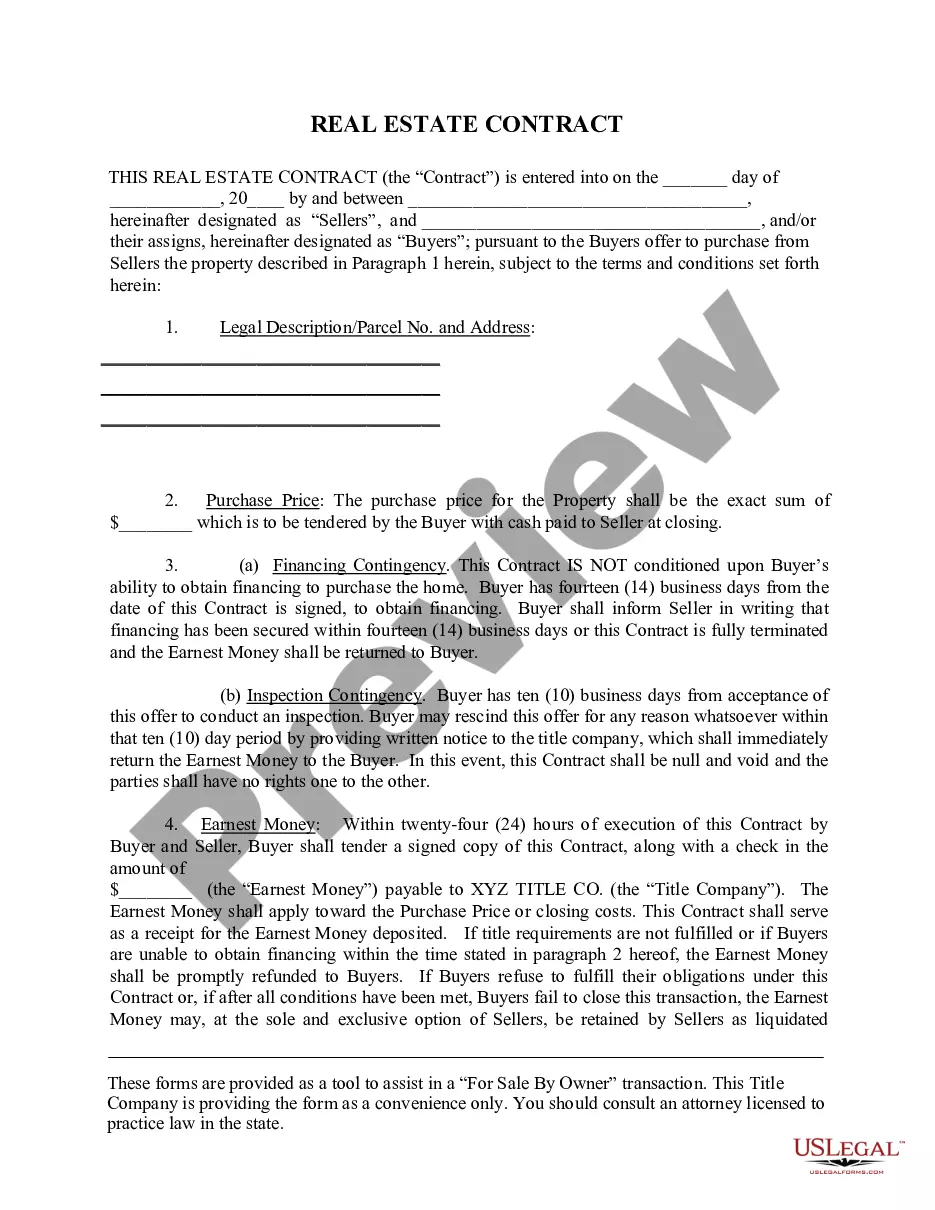
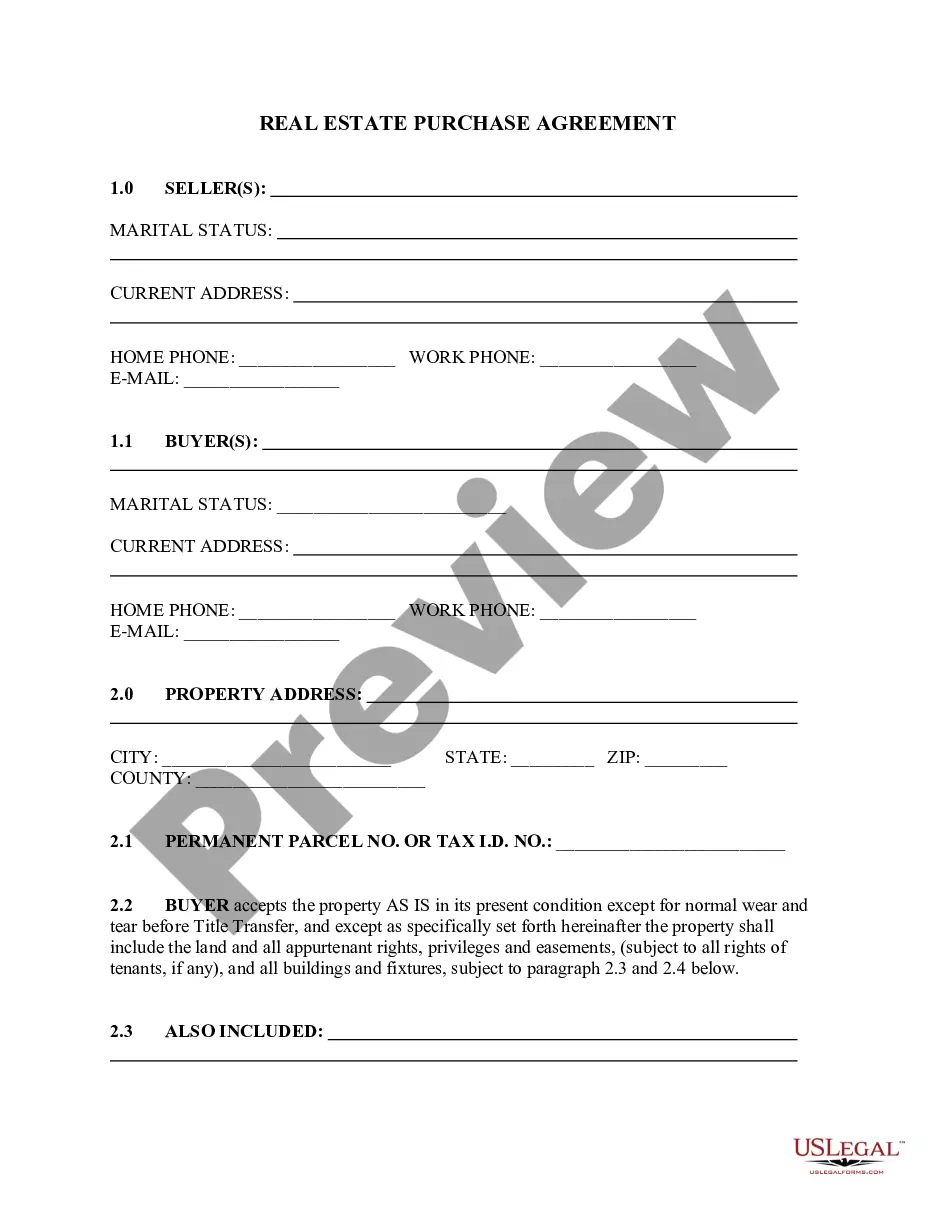
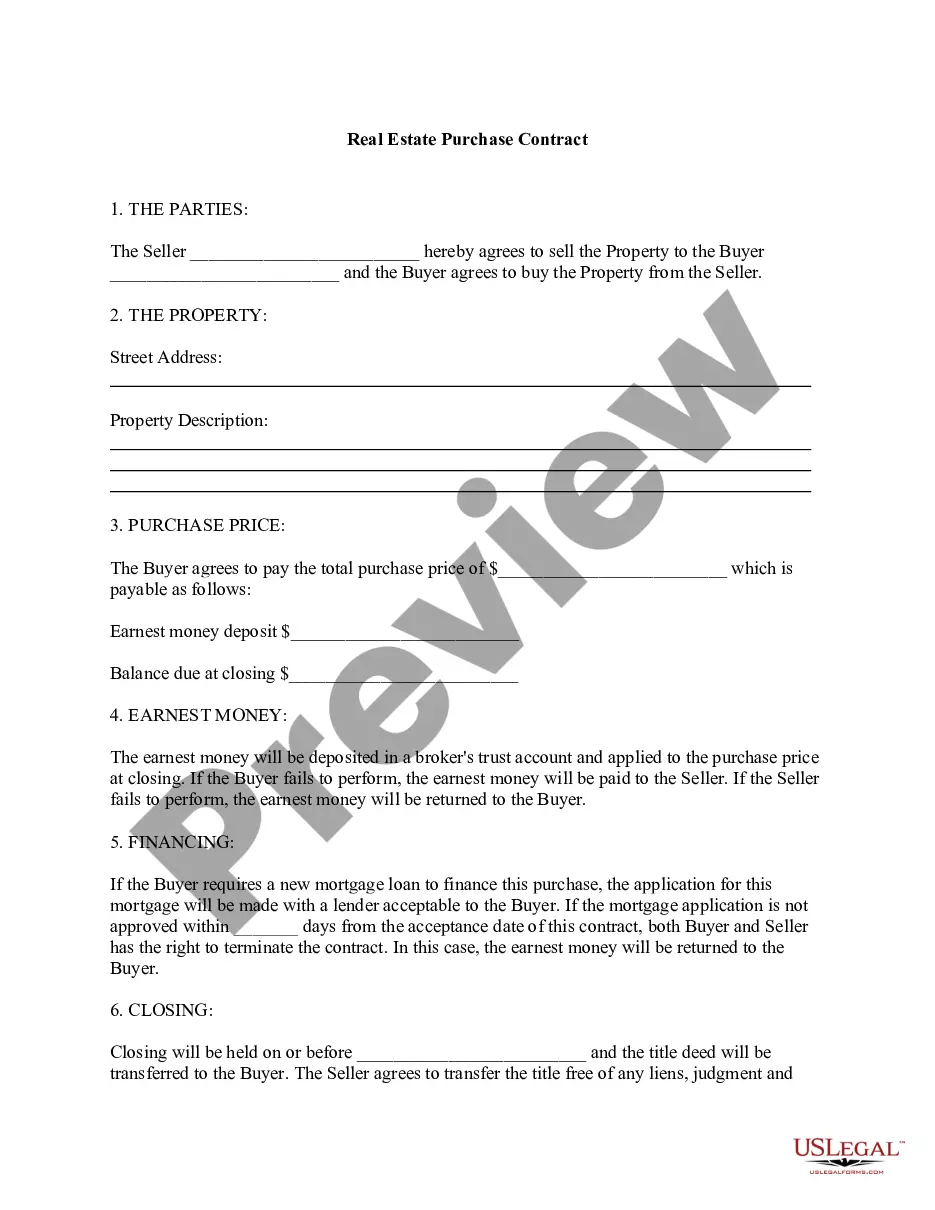
- Agreement or Contract for Deed for Sale and Purchase of Real Estate a/k/a Land or Executory Contract
- Notice of Intent to Enforce Forfeiture Provisions of Contact for Deed
- Final Notice of Forfeiture and Request to Vacate Property under Contract for Deed
- General Notice of Default for Contract for Deed
- Seller's Disclosure of Forfeiture Rights for Contract for Deed
- Seller's Disclosure of Financing Terms for Residential Property in connection with Contract or Agreement for Deed a/k/a Land Contract
- Contract for Deed Seller's Annual Accounting Statement
- Notice of Default for Past Due Payments in connection with Contract for Deed
- Final Notice of Default for Past Due Payments in connection with Contract for Deed
- Assignment of Contract for Deed by Seller
- Notice of Assignment of Contract for Deed
When to use this form package
This form package is useful in several real-world scenarios, including:
- When a buyer and seller agree to finance a property directly without going through a traditional mortgage lender.
- When the seller wants to retain the title of the property until the buyer fulfills the repayment terms.
- If the buyer has difficulty qualifying for a conventional loan and an owner-financing option is being considered.
- When documenting the financing terms and obligations of both parties in a clear, legal format.
Who should use this form package
- Property sellers who wish to offer owner financing to buyers.
- Buyers looking for more flexible financing options outside traditional lending.
- Real estate agents and attorneys assisting clients in owner-financing transactions.
- Investors who engage in real estate transactions and require standardized documentation.
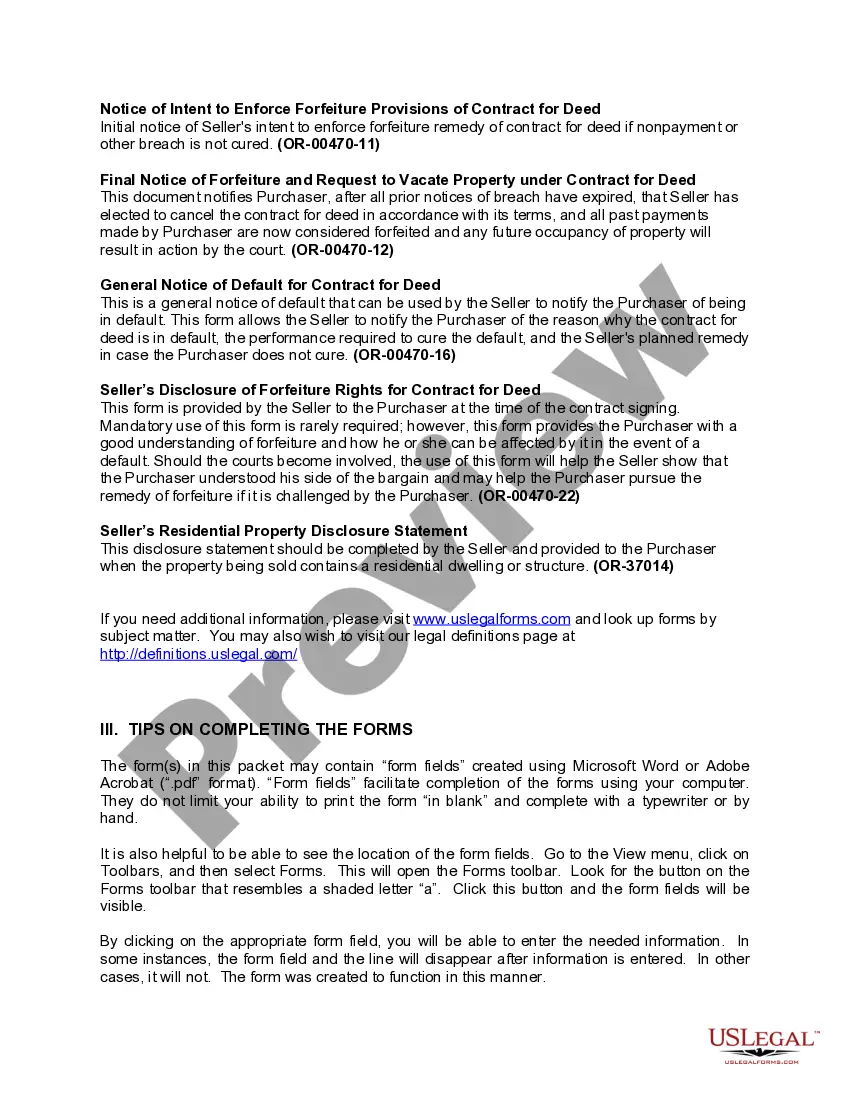
Instructions for completing these forms
- Review all included forms to understand the owner financing process.
- Identify the parties involved in the transaction (buyer and seller).
- Complete the Contract for Deed with specific details about the property and financing terms.
- Fill out all supplementary forms, ensuring accurate information is provided.
- Carefully sign and date each form where required.
Do documents in this package require notarization?
Some forms in this package need notarization to be legally binding. Our online notarization service, powered by Notarize, lets you verify and sign documents remotely through an encrypted video session, available 24/7.
Get your form ready online
Our built-in tools help you complete, sign, share, and store your documents in one place.
Make edits, fill in missing information, and update formatting in US Legal Forms—just like you would in MS Word.
Download a copy, print it, send it by email, or mail it via USPS—whatever works best for your next step.
Sign and collect signatures with our SignNow integration. Send to multiple recipients, set reminders, and more. Go Premium to unlock E-Sign.
If this form requires notarization, complete it online through a secure video call—no need to meet a notary in person or wait for an appointment.
We protect your documents and personal data by following strict security and privacy standards.

Make edits, fill in missing information, and update formatting in US Legal Forms—just like you would in MS Word.

Download a copy, print it, send it by email, or mail it via USPS—whatever works best for your next step.

Sign and collect signatures with our SignNow integration. Send to multiple recipients, set reminders, and more. Go Premium to unlock E-Sign.

If this form requires notarization, complete it online through a secure video call—no need to meet a notary in person or wait for an appointment.

We protect your documents and personal data by following strict security and privacy standards.
Common mistakes to avoid
- Failing to complete forms fully, leading to potential disputes later.
- Not providing clear financing terms that both parties understand.
- Forgetting to keep copies of all signed documents for personal records.
- Not following up on the payment schedule outlined in the forms.
Benefits of completing this package online
- Convenient access to all necessary forms in one package without visiting a legal office.
- Editability of documents allows for personalization according to your specific needs.
- Reliability as all forms are drafted by licensed attorneys familiar with Oregon law.
- Immediate availability ensures you can start your transaction without delay.
Looking for another form?




Form popularity
FAQ
A contract for deed is an agreement for buying property without going to a mortgage lender. The buyer agrees to pay the seller monthly payments, and the deed is turned over to the buyer when all payments have been made.
A disadvantage to the seller is that a contract for deed is frequently characterized by a low down payment and the purchase price is paid in installments instead of one lump sum. If a seller needs funds from the sale to buy another property, this would not be a beneficial method of selling real estate.
The buyer must record the contract for deed with the county recorder where the land is located within four months after the contract is signed. Contracts for deed must provide the legal name of the buyer and the buyer's address.
Contract for Deed Seller Financing. A contract for deed is used by some sellers who finance the sale of their homes. Seller's Ownership Liability. Buyer Default Risk. Seller Performance. Property Liens Could Hinder Purchase.
The interest rate on a contract for deed loan is typically 3% - 6% higher than the rate on regular mortgage. A higher interest rate means a higher monthly mortgage payment plus you are also responsible for property taxes and insurance even though you do not own the property.
Interest rates on land contracts can vary dramatically, and buyers and sellers ultimately call the shots on the loan's rate. That said, interest rates typically stay under 12%, Smith said. Federal loan regulations, as well as state usury laws, restrict sellers from overcharging interest fees.
Generally, contract for deed sellers use IRS Form 6252 to report installment sales in the year in which they take place. You also use Form 6252 during each year you receive income from your contract for deed.
Adding someone to your house deed requires the filing of a legal form known as a quitclaim deed. When executed and notarized, the quitclaim deed legally overrides the current deed to your home. By filing the quitclaim deed, you can add someone to the title of your home, in effect transferring a share of ownership.
Purchase price. Down payment. Interest rate. Number of monthly installments. Responsibilities of the buyer and seller. Legal remedies for the seller if the buyer does not make payments.