Sample Introductory Memo for Job Description Program
About this form
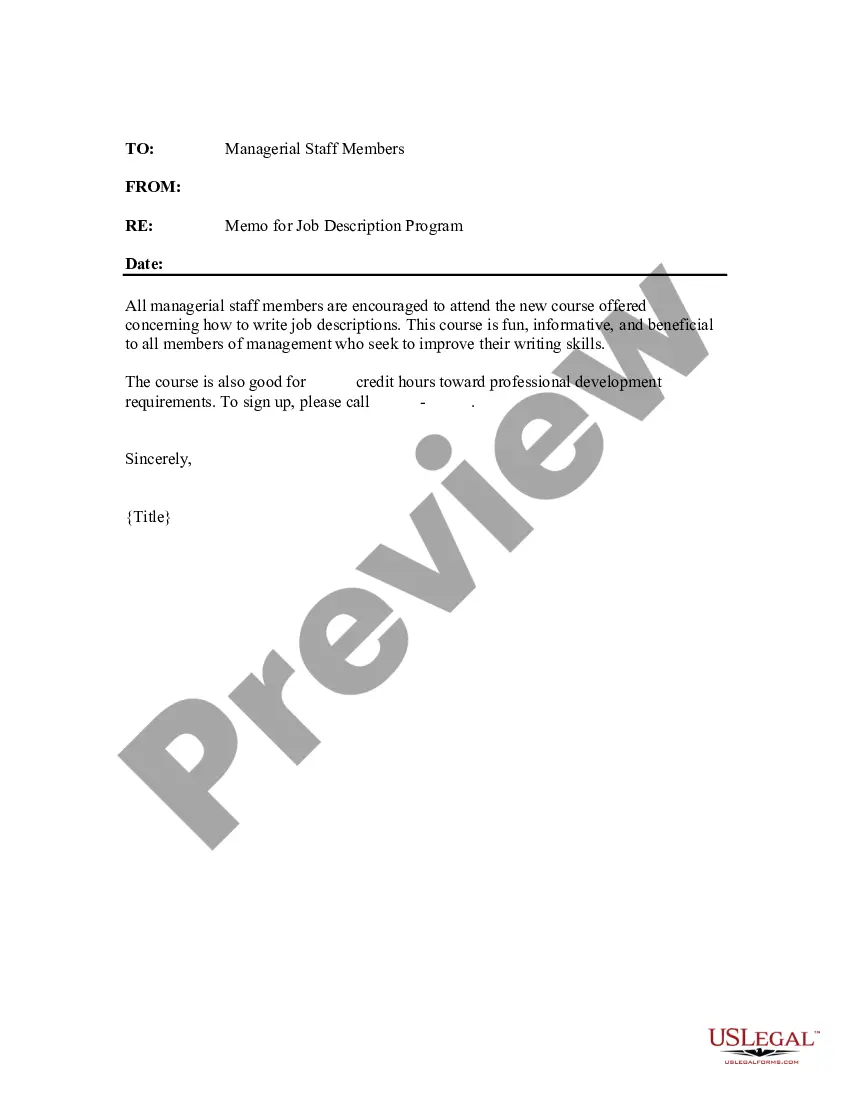
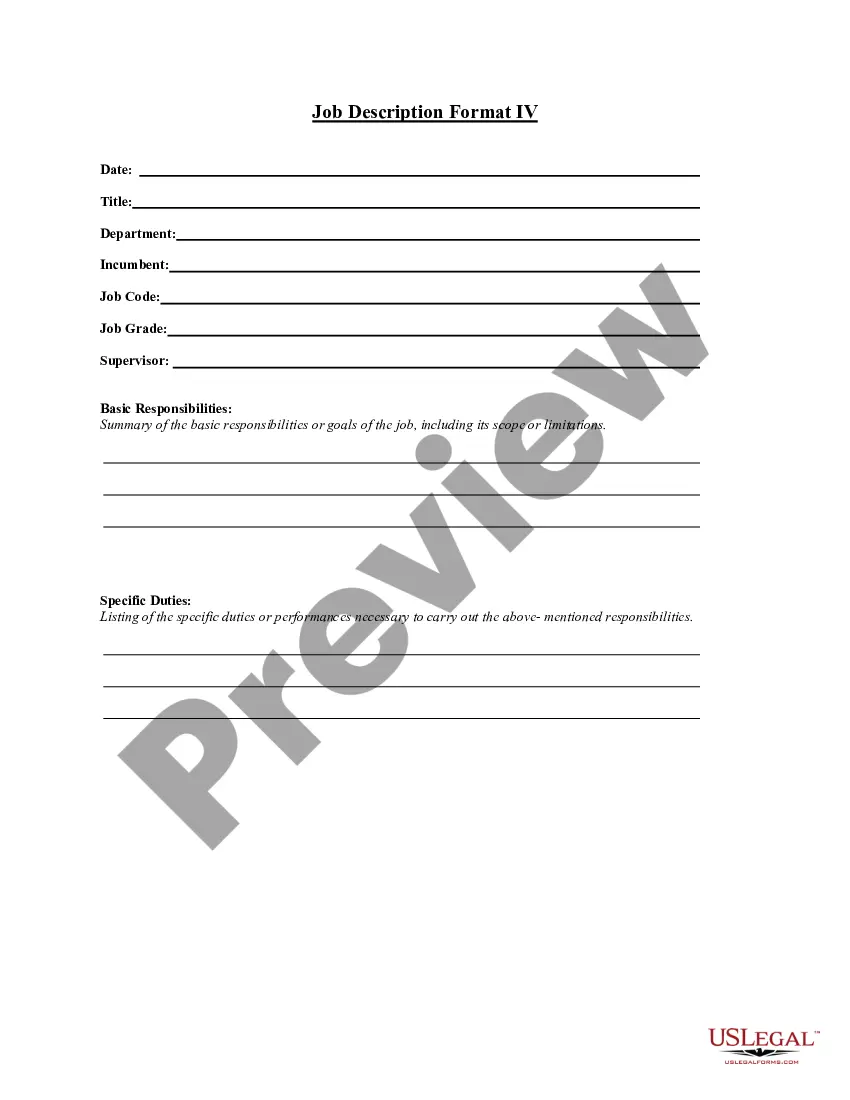
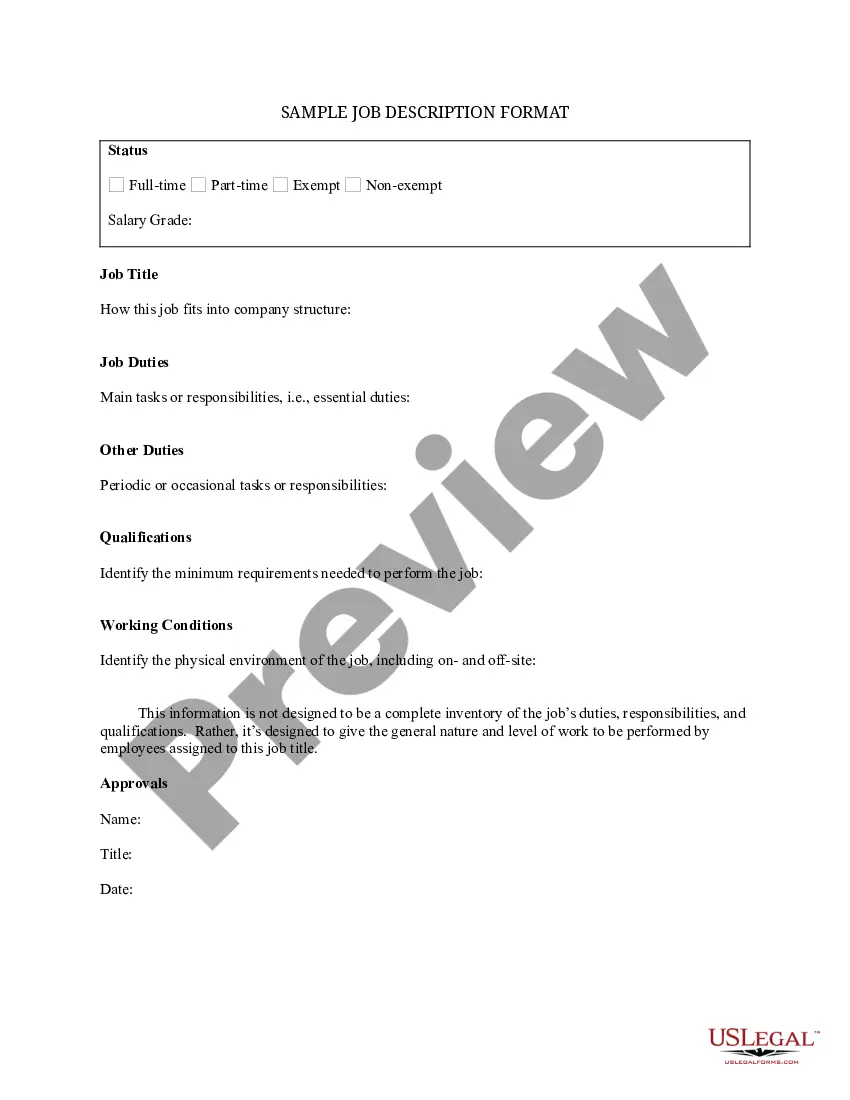
The Sample Introductory Memo for Job Description Program is a document designed to notify managerial staff about a job description writing course offered by the company. This form helps ensure that all relevant parties are informed and understand the opportunity to enhance their skills in job description writing, distinguishing it from regular memos that may not specifically address training or educational programs.
Form components explained
- Title: Clearly states the purpose of the memo.
- Introduction: Provides an overview of the job description writing course.
- Details of the Course: Includes information about the course schedule and content.
- Call to Action: Encourages managers to enroll in the program.
- Contact Information: Lists whom to contact for questions or further details.
Situations where this form applies
This memo should be used when a company is offering a new job description writing course to its managerial staff. It serves to formally communicate the availability of the training and remind managers of the importance of effectively written job descriptions in the organization.
Who this form is for
- Human resource professionals responsible for staff training.
- Managers looking to improve their team's job description writing skills.
- Team leaders who need to communicate training opportunities to their staff.
How to prepare this document
- Begin by filling out the title and date of the memo.
- Write a brief introduction outlining the purpose and importance of the course.
- Include detailed information about the course, such as location, dates, and agenda.
- Add a section prompting managerial staff to enroll, with specific instructions.
- Provide your contact information for additional inquiries regarding the course.
Does this document require notarization?
This form does not typically require notarization to be legally valid. However, some jurisdictions or document types may still require it. US Legal Forms provides secure online notarization powered by Notarize, available 24/7 for added convenience.
Get your form ready online
Our built-in tools help you complete, sign, share, and store your documents in one place.
Make edits, fill in missing information, and update formatting in US Legal Forms—just like you would in MS Word.
Download a copy, print it, send it by email, or mail it via USPS—whatever works best for your next step.
Sign and collect signatures with our SignNow integration. Send to multiple recipients, set reminders, and more. Go Premium to unlock E-Sign.
If this form requires notarization, complete it online through a secure video call—no need to meet a notary in person or wait for an appointment.
We protect your documents and personal data by following strict security and privacy standards.

Make edits, fill in missing information, and update formatting in US Legal Forms—just like you would in MS Word.

Download a copy, print it, send it by email, or mail it via USPS—whatever works best for your next step.

Sign and collect signatures with our SignNow integration. Send to multiple recipients, set reminders, and more. Go Premium to unlock E-Sign.

If this form requires notarization, complete it online through a secure video call—no need to meet a notary in person or wait for an appointment.

We protect your documents and personal data by following strict security and privacy standards.
Typical mistakes to avoid
- Failing to update the memo with the latest course information.
- Using unclear language that may confuse the recipients.
- Neglecting to include contact information for inquiries.
Benefits of completing this form online
- Convenience: Easily accessible and can be downloaded instantly.
- Editability: Can be customized to fit the specific needs of your organization.
- Reliability: Ensures that the memo is professionally drafted and legally sound.
Legal use & context
- This form serves as an official communication method within the company.
- Ensures transparency regarding available training programs for managerial staff.
- Helps maintain compliance with internal training regulations.
What to keep in mind
- The memo informs staff about an important training opportunity.
- It encourages proactive engagement from managerial staff regarding job descriptions.
- Clear instructions and contact details are crucial for effective communication.
Looking for another form?
Form popularity
FAQ
Summarize your professional standing. The first sentence of your self-introduction should include your name and job title or experience. Elaborate on your experiences and achievements. Conclude with a lead-in to the next part of the conversation.
The format of a memo is much simpler. You write Memo or Memorandum at the top, followed by a To line, a From line, a Date line, a Subject line, and then the actual body of the message. Traditionally, you would print out a memo and distribute it to the relevant parties inside your small business.
Start with a header that clearly indicates that the communication is a memorandum, the intended recipients, the sender, the date and the subject. Write an introduction that uses a declarative sentence to announce the main topic of the memo.
Choose Your Audience. To make sure your memo gets read and acted upon, you need to address it appropriately. Clearly State the Purpose. Attach Data and Documents. Use an Appropriate Tone. Proofread Carefully. A Few More Tips. Sample Business Memo.
Attract the Reader's Attention. Begin your introduction with a "hook" that grabs your reader's attention and introduces the general topic. State Your Focused Topic. After your hook, write a sentence or two about the specific focus of your paper. State your Thesis. Finally, include your thesis statement.
Greeting: Hello, my name is (name). Goal: I am looking for (internship/full-time position) at (employer name). Interest/passion: I am interested in (interests related to the company/industry). Strengths: I have many skills to contribute including (strengths) and (skills).
Introduce yourself. Briefly introduce yourself to the recipient. Let them know what your purpose is. Are you looking to apply for a job in the company? Close strong. Include a strong statement in your concluding paragraph. Leave your contact information.
In the first paragraph, you'll want to quickly and clearly state the purpose of your memo. You might begin your sentence with the phrase, "I'm writing to inform you 2026 " or "I'm writing to request". A memo is meant to be short, clear, and to-the-point.
It's important to organize your memos well. Most longer memos consist of an introduction, a discussion, and a conclusion. In the introduction, tell readers what prompted you to write (such as a problem or question about a specific procedure or policy), and provide any necessary background information.