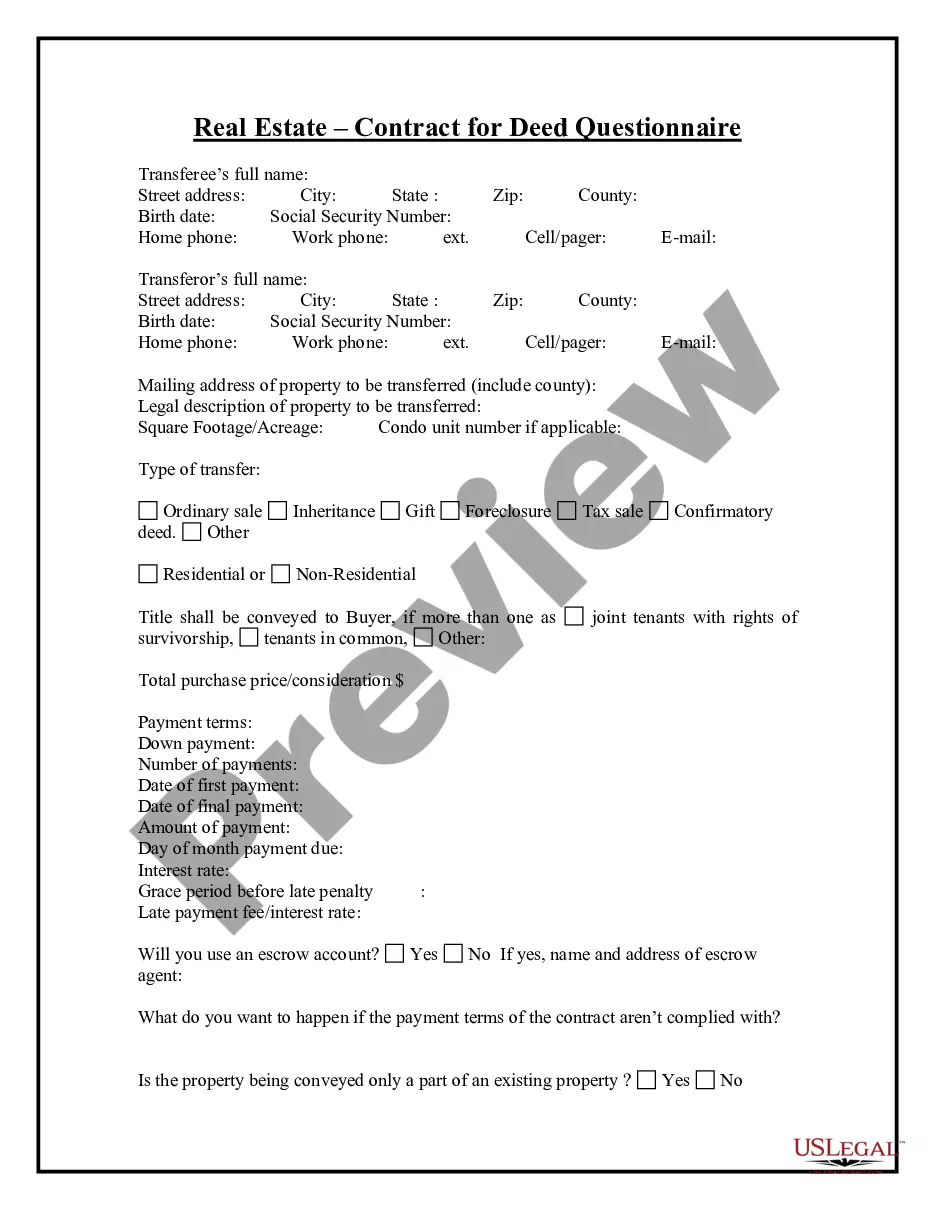
Contract for Deed Questionnaire
About this form
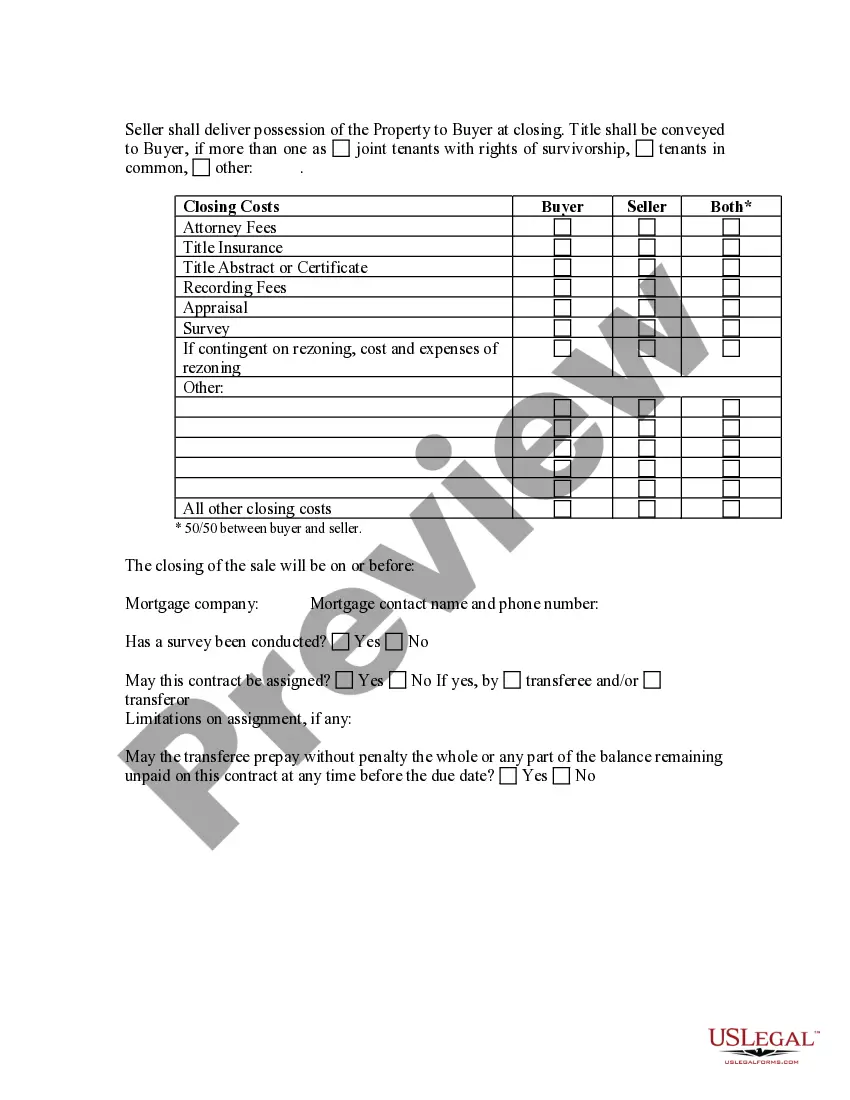
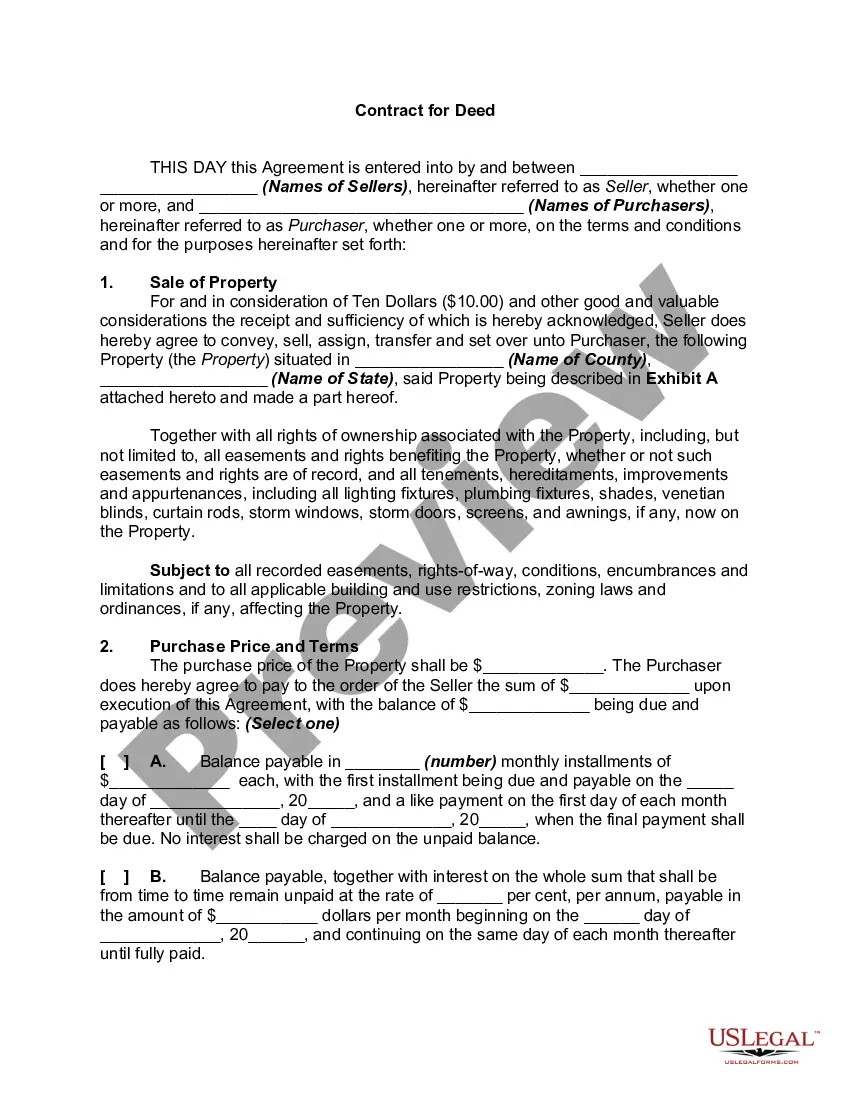
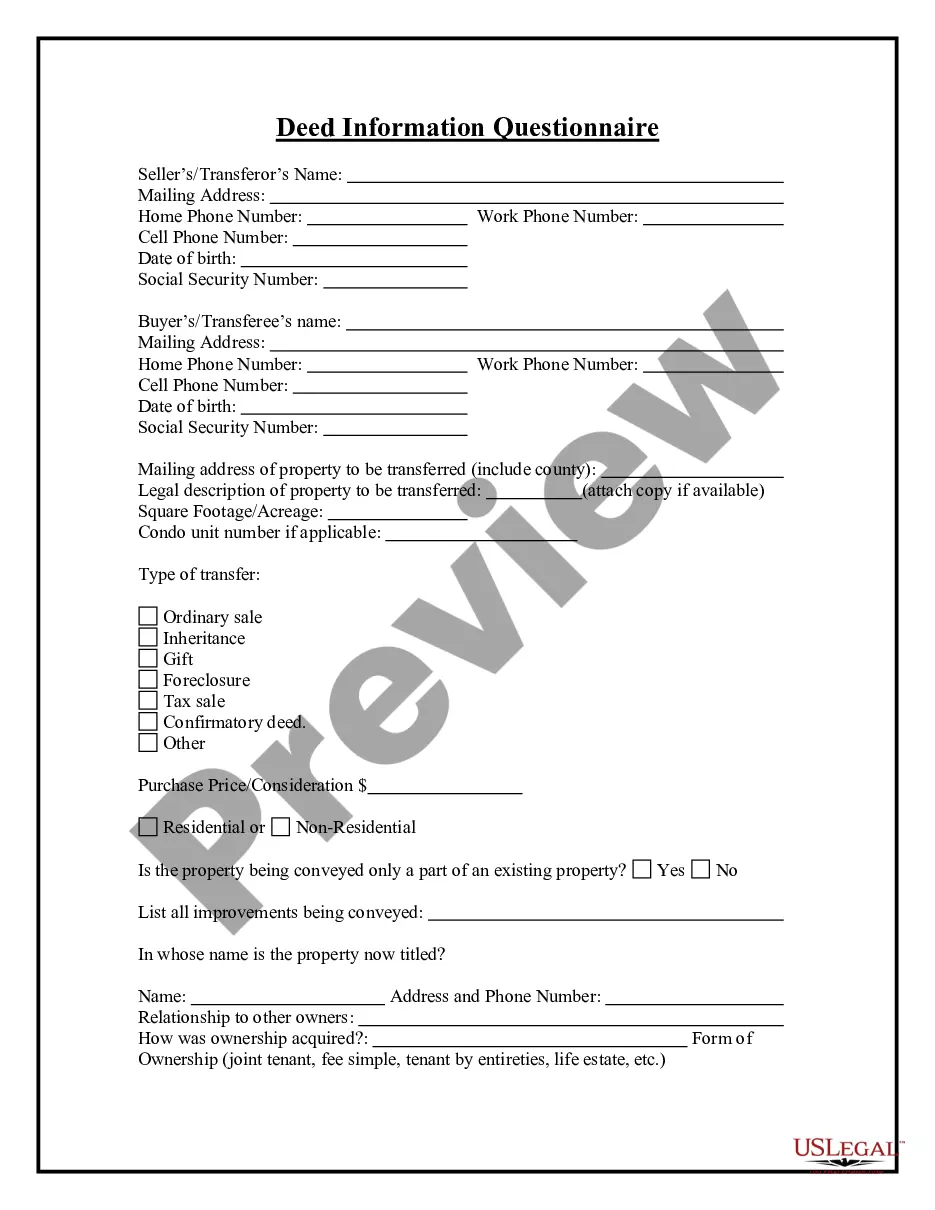
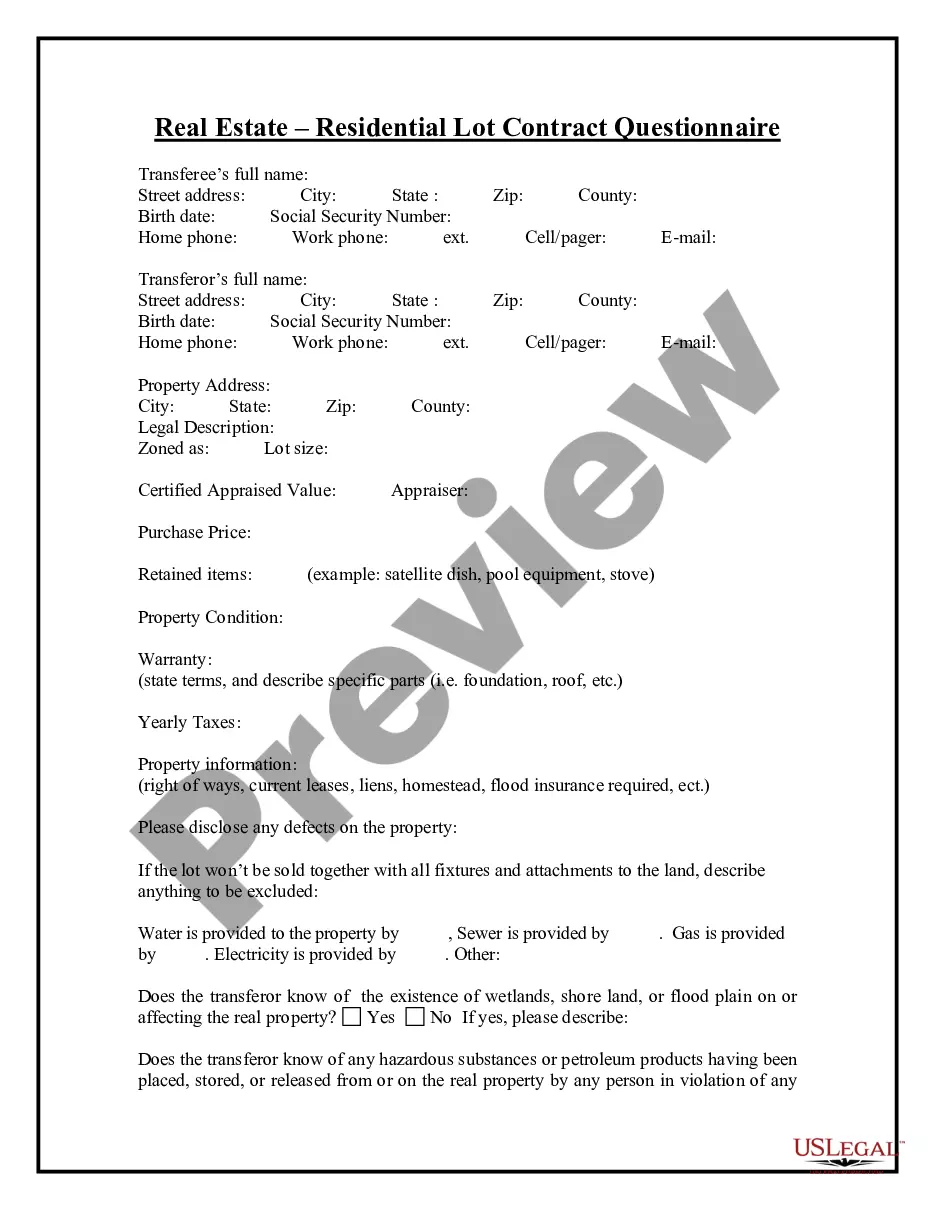
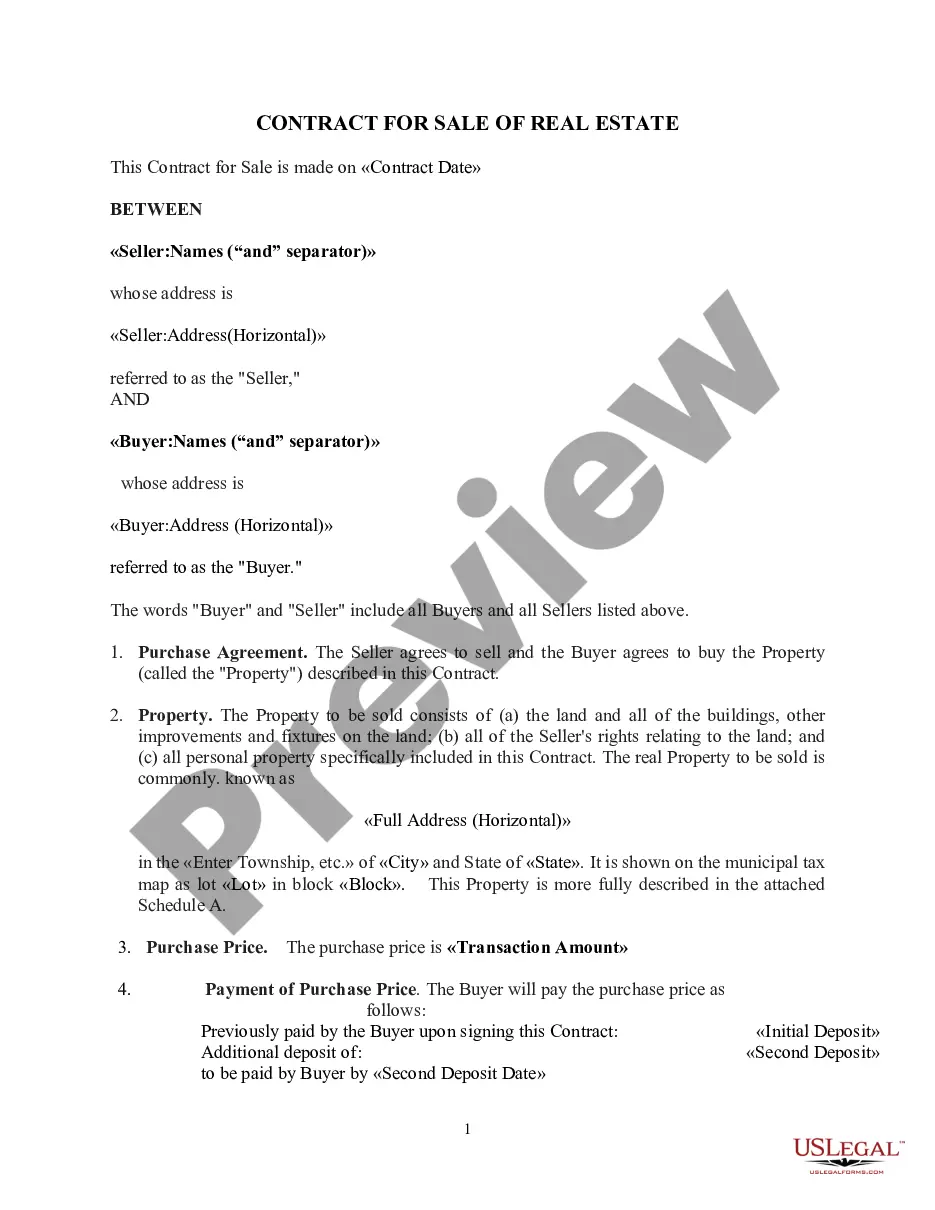
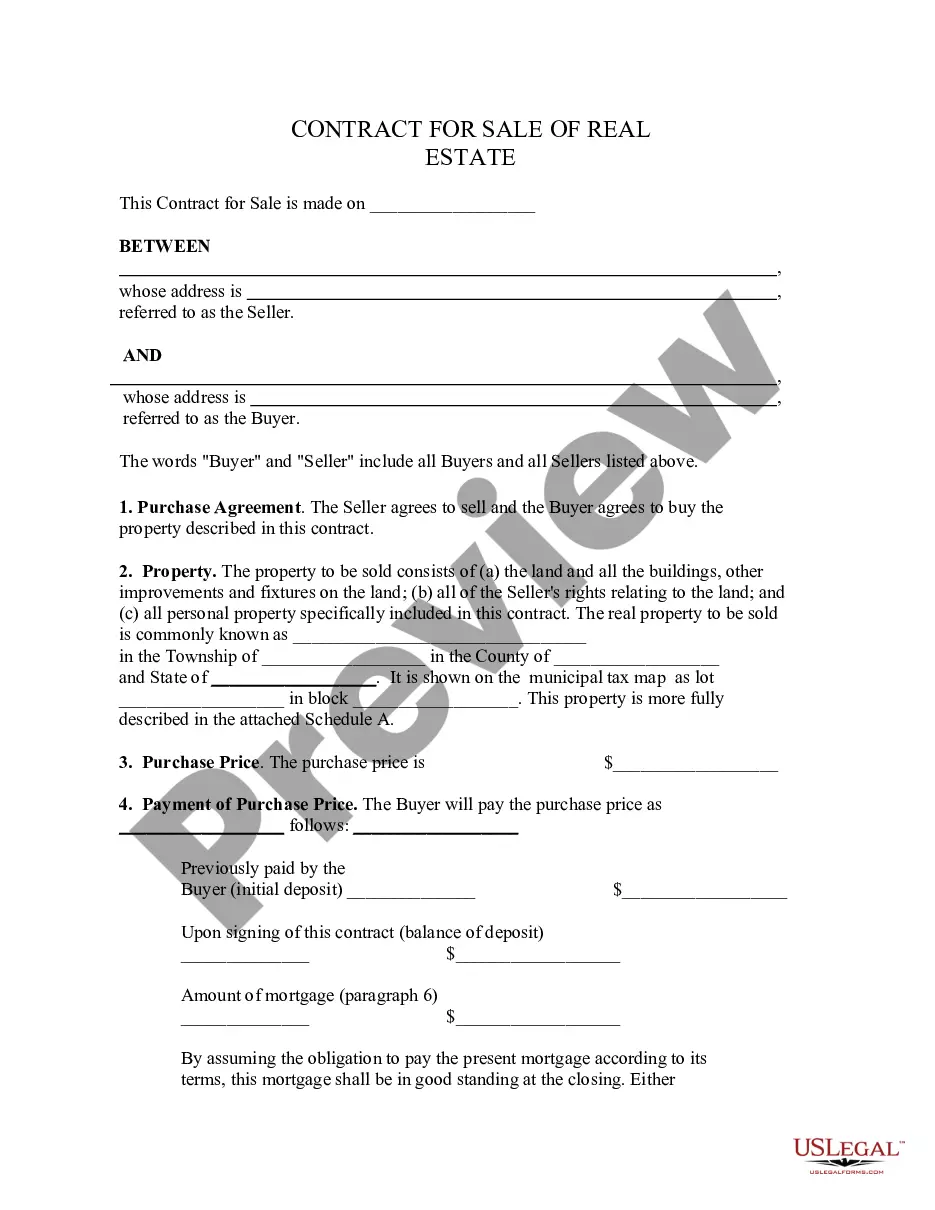
The Contract for Deed Questionnaire is a tool designed to help individuals understand their rights and responsibilities when entering into a contract for deed. This questionnaire aids users in identifying and preparing legal issues that may arise in their specific situation. Unlike other legal forms, it focuses specifically on gathering essential information and addressing pertinent considerations, making it a vital first step in securing legal assistance.
What’s included in this form
- Identification of parties involved in the contract.
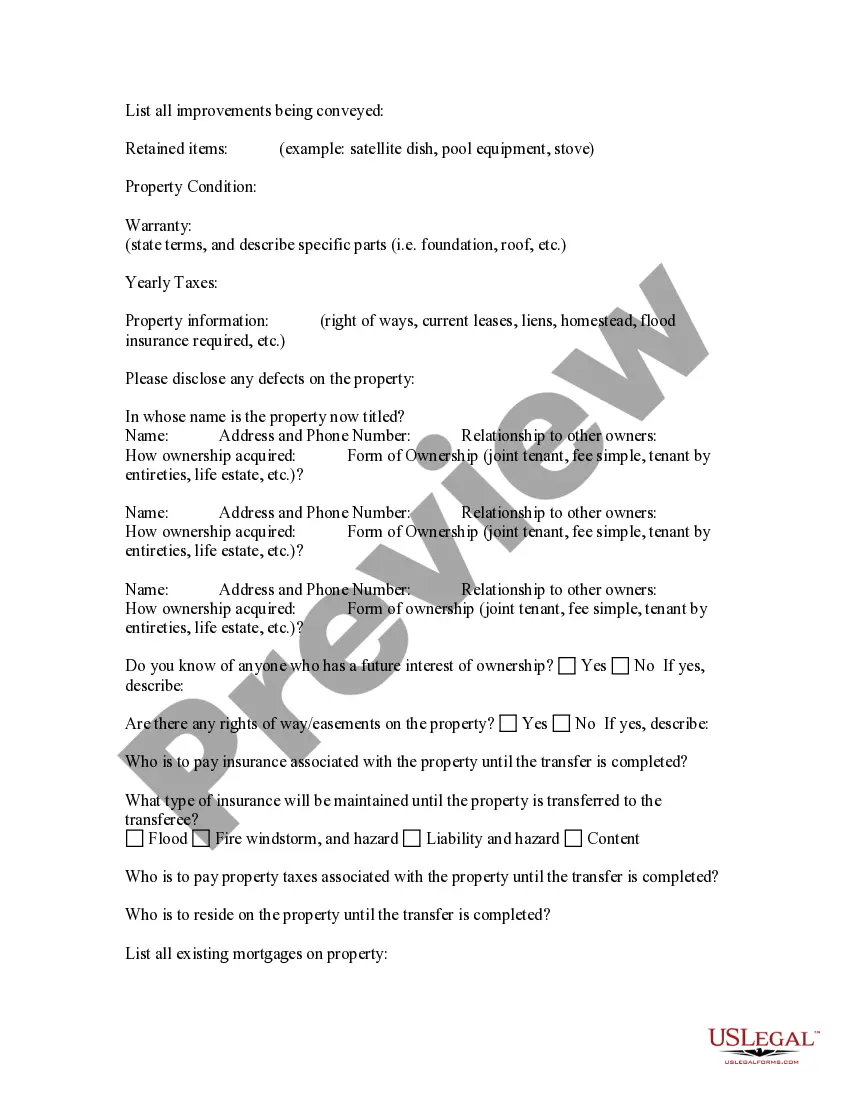
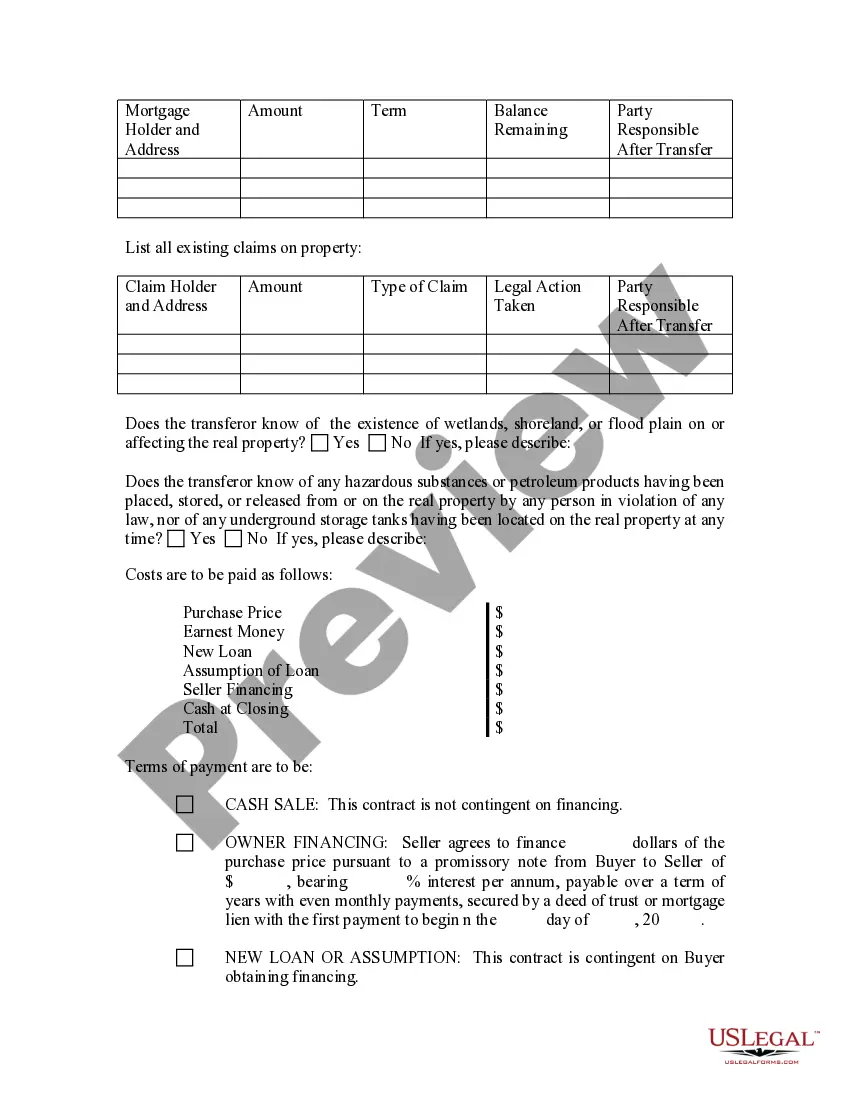
- Details about the property subject to the contract for deed.
- Key financial terms, including payment structures.
- Important dates and timelines associated with the contract.
- Risk assessments and considerations specific to the transaction.
Situations where this form applies
This questionnaire is useful when you are considering entering into a contract for deed arrangement. It is particularly beneficial if you are unsure about the legal implications of such a contract or if you need to prepare for an initial meeting with a legal professional. Using this form can streamline the process of outlining your concerns and expectations.
Who this form is for
This form is intended for:
- Individuals looking to enter into a contract for deed.
- Homebuyers who want to understand their legal obligations.
- Real estate investors needing clarity on contract terms.
- Attorneys gathering information from clients seeking legal advice.
How to prepare this document
- Identify all parties involved in the contract.
- Provide detailed information about the property.
- Outline financial terms, including purchase price and payment schedule.
- Specify key dates, such as contract start and end dates.
- Assess and document potential risks that may affect the agreement.
Does this form need to be notarized?
In most cases, this form does not require notarization. However, some jurisdictions or signing circumstances might. US Legal Forms offers online notarization powered by Notarize, accessible 24/7 for a quick, remote process.
Get your form ready online
Our built-in tools help you complete, sign, share, and store your documents in one place.
Make edits, fill in missing information, and update formatting in US Legal Forms—just like you would in MS Word.
Download a copy, print it, send it by email, or mail it via USPS—whatever works best for your next step.
Sign and collect signatures with our SignNow integration. Send to multiple recipients, set reminders, and more. Go Premium to unlock E-Sign.
If this form requires notarization, complete it online through a secure video call—no need to meet a notary in person or wait for an appointment.
We protect your documents and personal data by following strict security and privacy standards.

Make edits, fill in missing information, and update formatting in US Legal Forms—just like you would in MS Word.

Download a copy, print it, send it by email, or mail it via USPS—whatever works best for your next step.

Sign and collect signatures with our SignNow integration. Send to multiple recipients, set reminders, and more. Go Premium to unlock E-Sign.

If this form requires notarization, complete it online through a secure video call—no need to meet a notary in person or wait for an appointment.

We protect your documents and personal data by following strict security and privacy standards.
Mistakes to watch out for
- Failing to accurately identify all parties involved.
- Not providing complete details about the property.
- Overlooking critical financial terms and payment structures.
- Missing important dates that could affect contract validity.
- Not assessing risks adequately, leading to potential future disputes.
Advantages of online completion
- Convenient access to download and complete at your own pace.
- Editable format allows for easy updates and modifications.
- Reliable templates drafted by licensed attorneys to ensure legal compliance.
Legal use & context
- The questionnaire is used to facilitate a clear understanding of the contract for deed process.
- It aids in the legal evaluation of potential risks and obligations.
- Using this form can help establish a clear foundation for attorney-client relationships.
Main things to remember
- The Contract for Deed Questionnaire is essential for clarity in real estate transactions.
- Accurate completion of the form leads to better legal assistance and case preparation.
- Understanding risks and obligations can prevent future disputes.
Looking for another form?
Form popularity
FAQ
Purchase price. Down payment. Interest rate. Number of monthly installments. Responsibilities of the buyer and seller. Legal remedies for the seller if the buyer does not make payments.
Generally, contract for deed sellers use IRS Form 6252 to report installment sales in the year in which they take place. You also use Form 6252 during each year you receive income from your contract for deed.
Interest rates on land contracts can vary dramatically, and buyers and sellers ultimately call the shots on the loan's rate. That said, interest rates typically stay under 12%, Smith said. Federal loan regulations, as well as state usury laws, restrict sellers from overcharging interest fees.
Contract for Deed Seller Financing. A contract for deed is used by some sellers who finance the sale of their homes. Seller's Ownership Liability. Buyer Default Risk. Seller Performance. Property Liens Could Hinder Purchase.
The buyer must record the contract for deed with the county recorder where the land is located within four months after the contract is signed. Contracts for deed must provide the legal name of the buyer and the buyer's address.
A land contract should spell out the purchase price, down payment, payment schedule, installment amount, interest rate, loan term and balloon payment amount, if applicable. Responsible party for home repairs. The buyer and seller agree upfront on who will make and pay for home repairs.
A contract for deed is an agreement for buying property without going to a mortgage lender. The buyer agrees to pay the seller monthly payments, and the deed is turned over to the buyer when all payments have been made.
A disadvantage to the seller is that a contract for deed is frequently characterized by a low down payment and the purchase price is paid in installments instead of one lump sum. If a seller needs funds from the sale to buy another property, this would not be a beneficial method of selling real estate.
The interest rate on a contract for deed loan is typically 3% - 6% higher than the rate on regular mortgage. A higher interest rate means a higher monthly mortgage payment plus you are also responsible for property taxes and insurance even though you do not own the property.