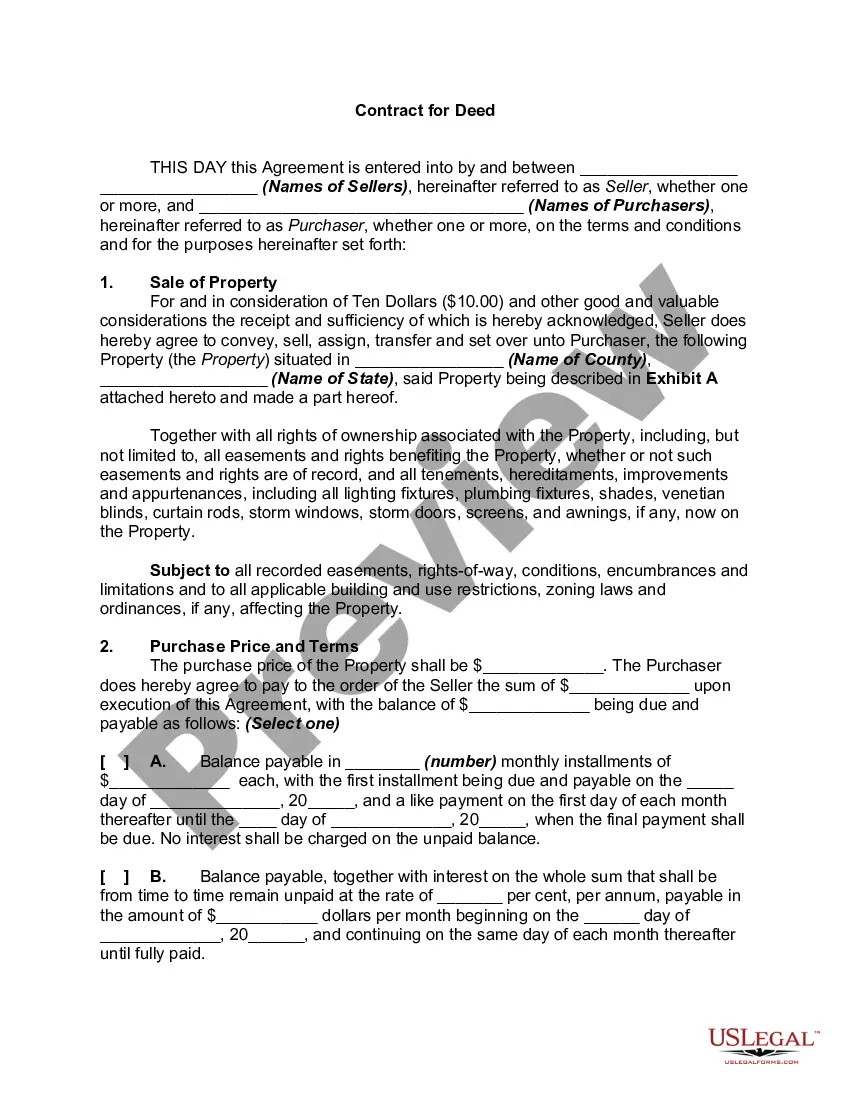
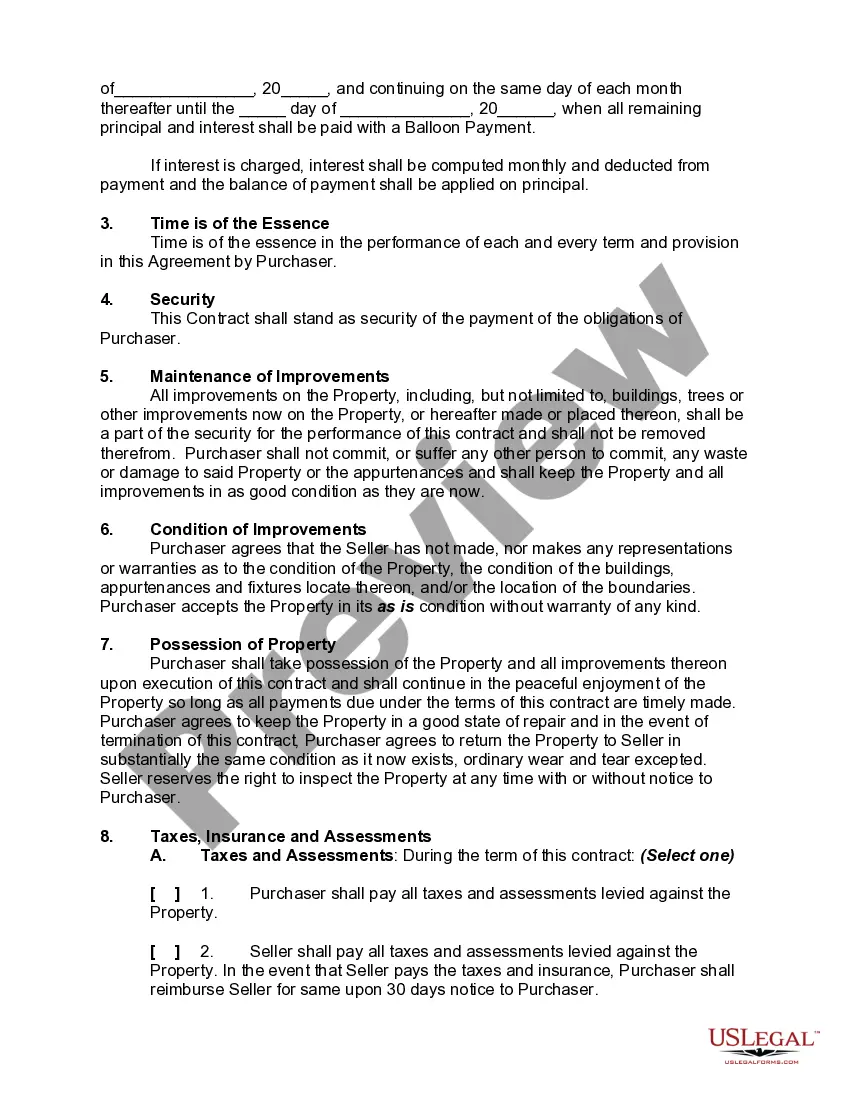
Contract for Deed
What this document covers
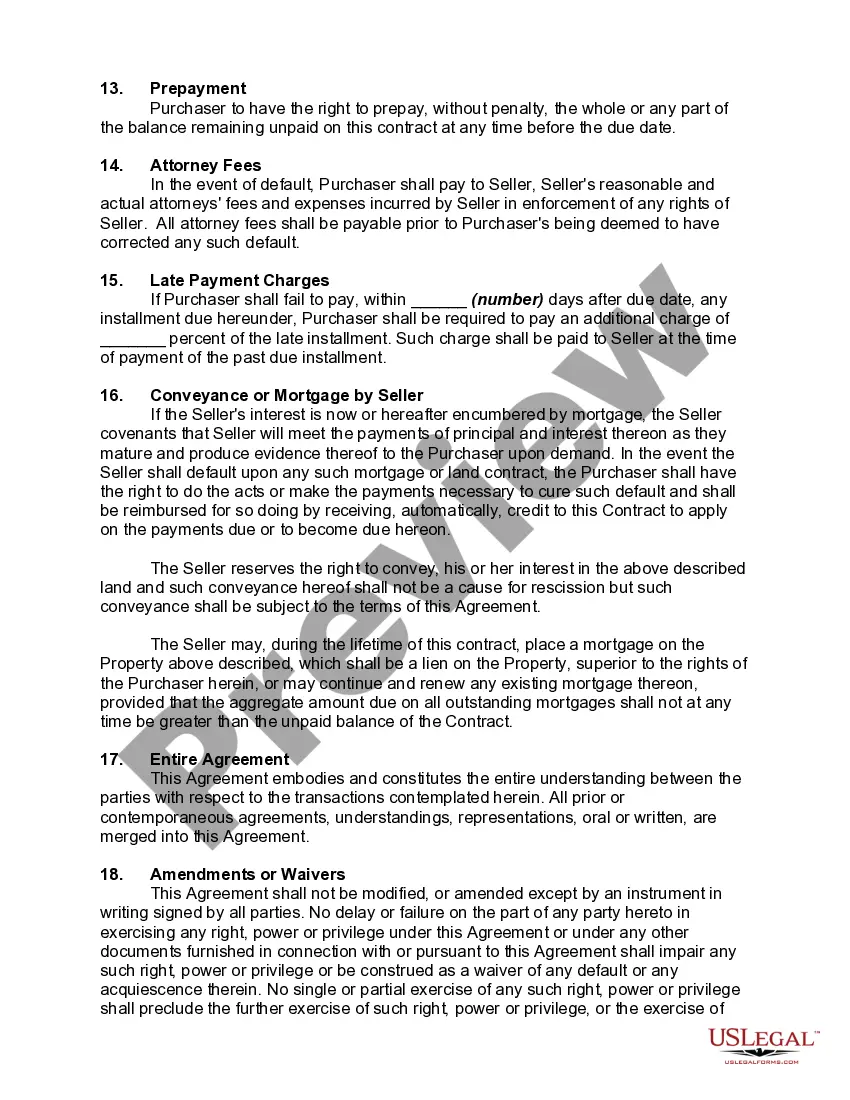
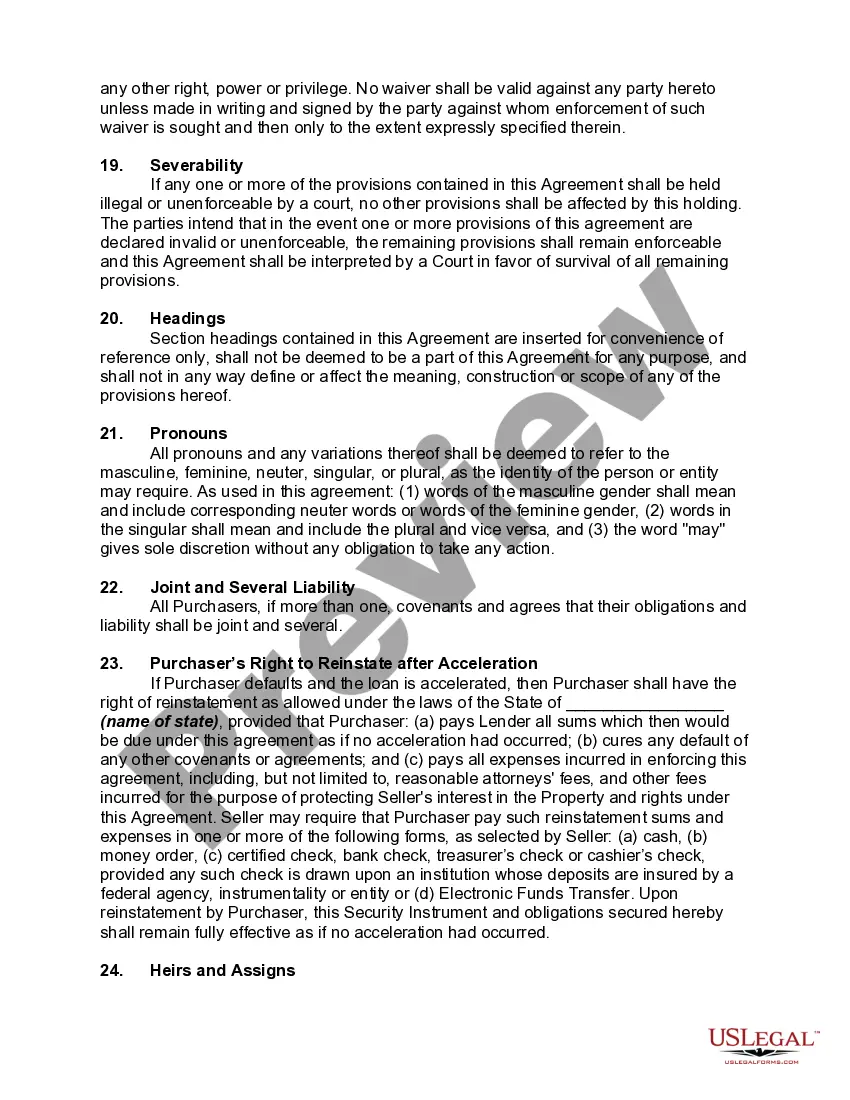
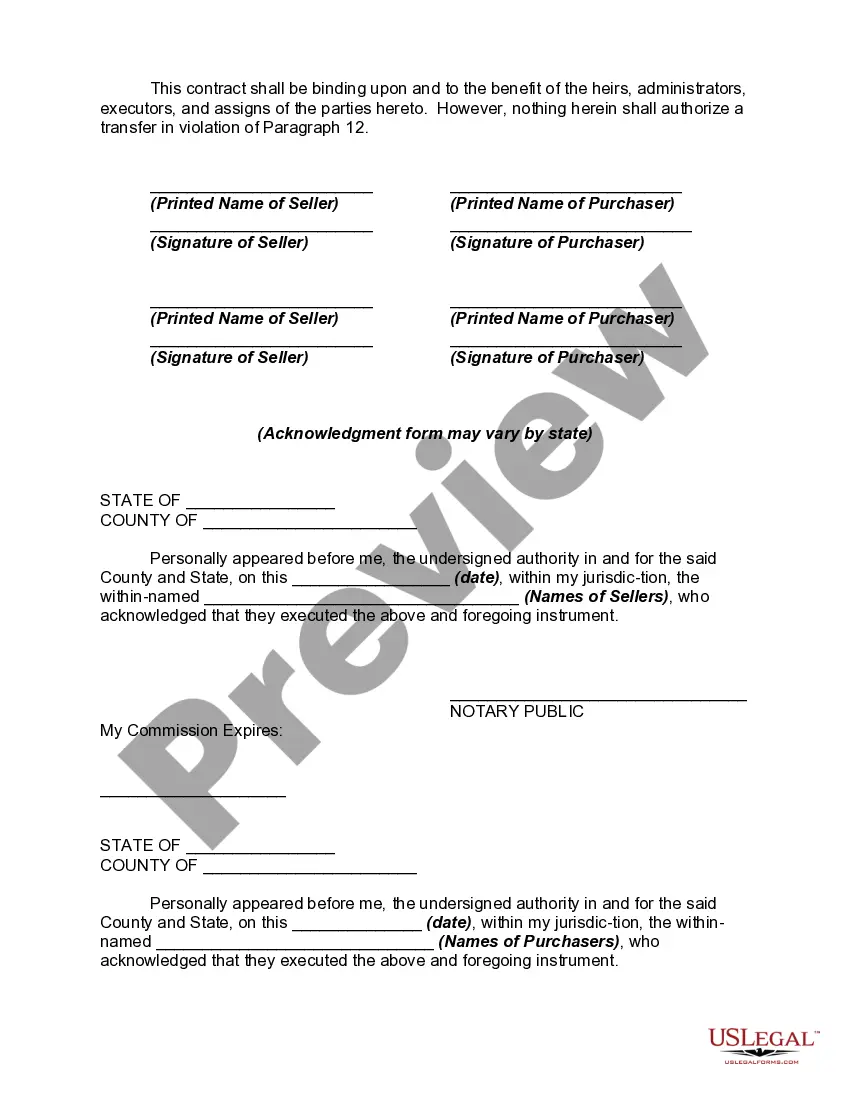
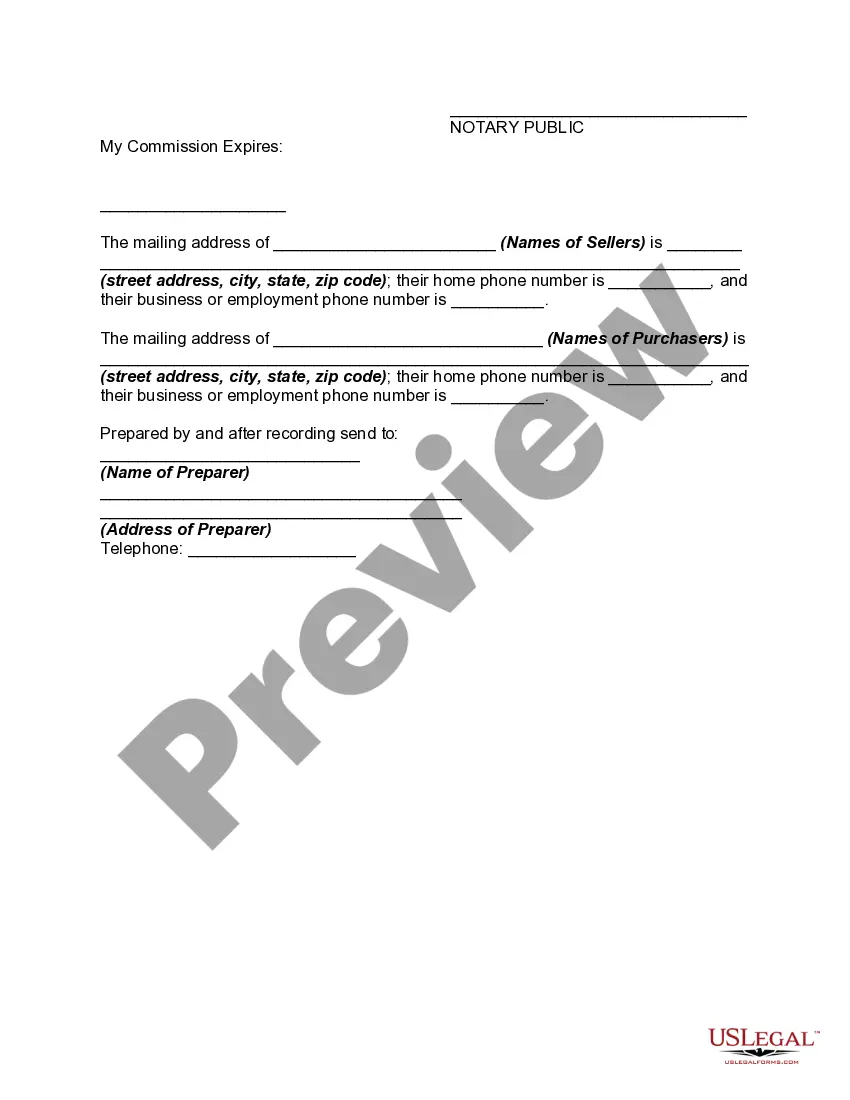
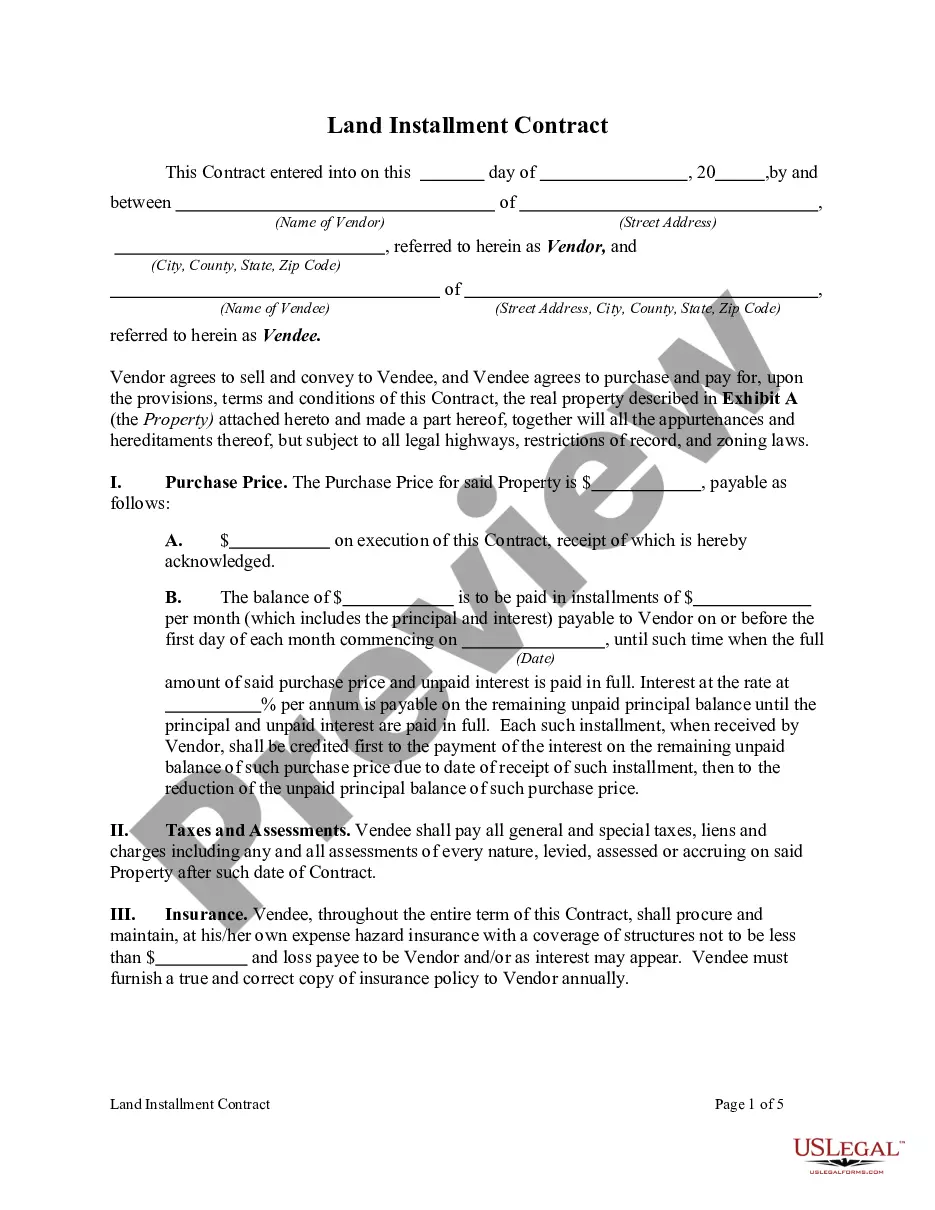
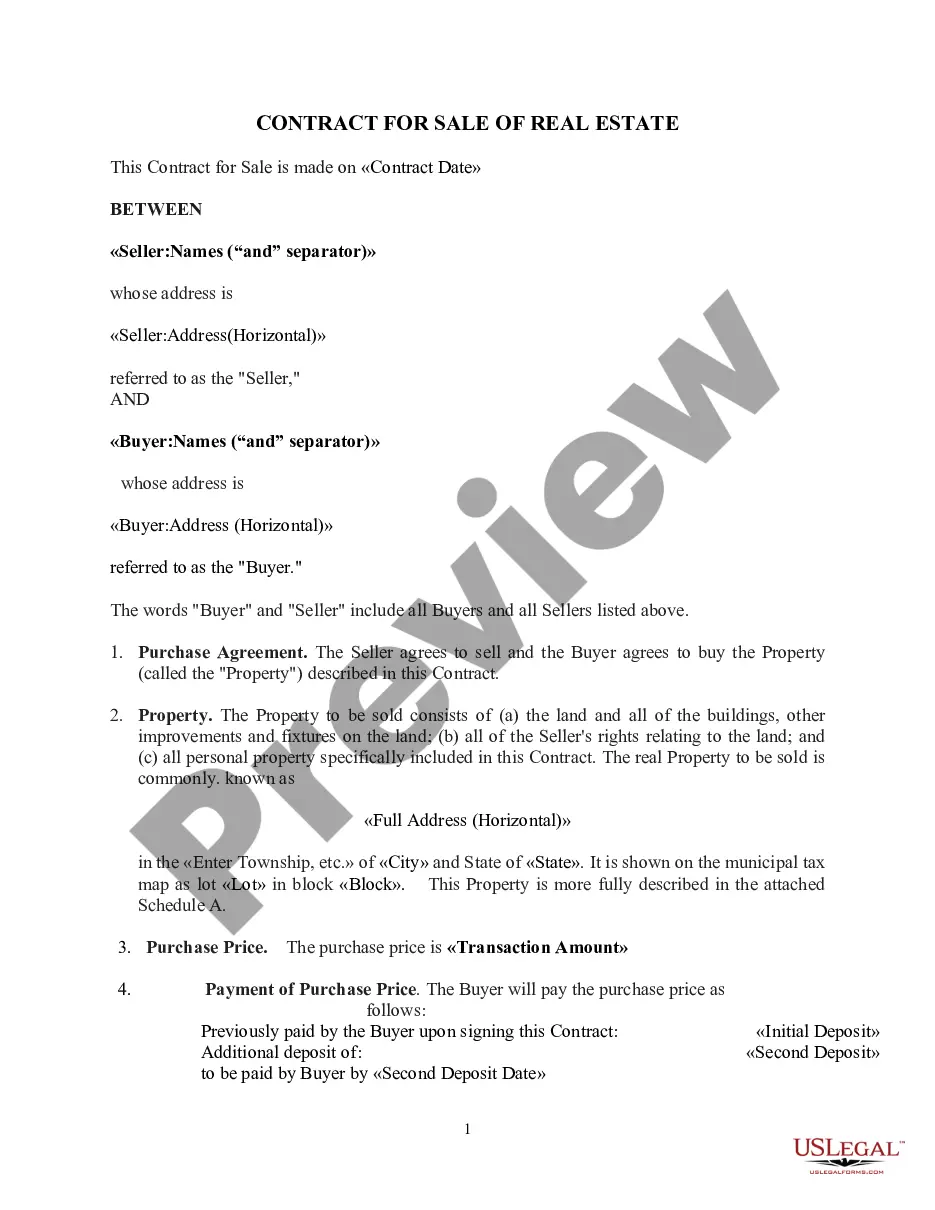
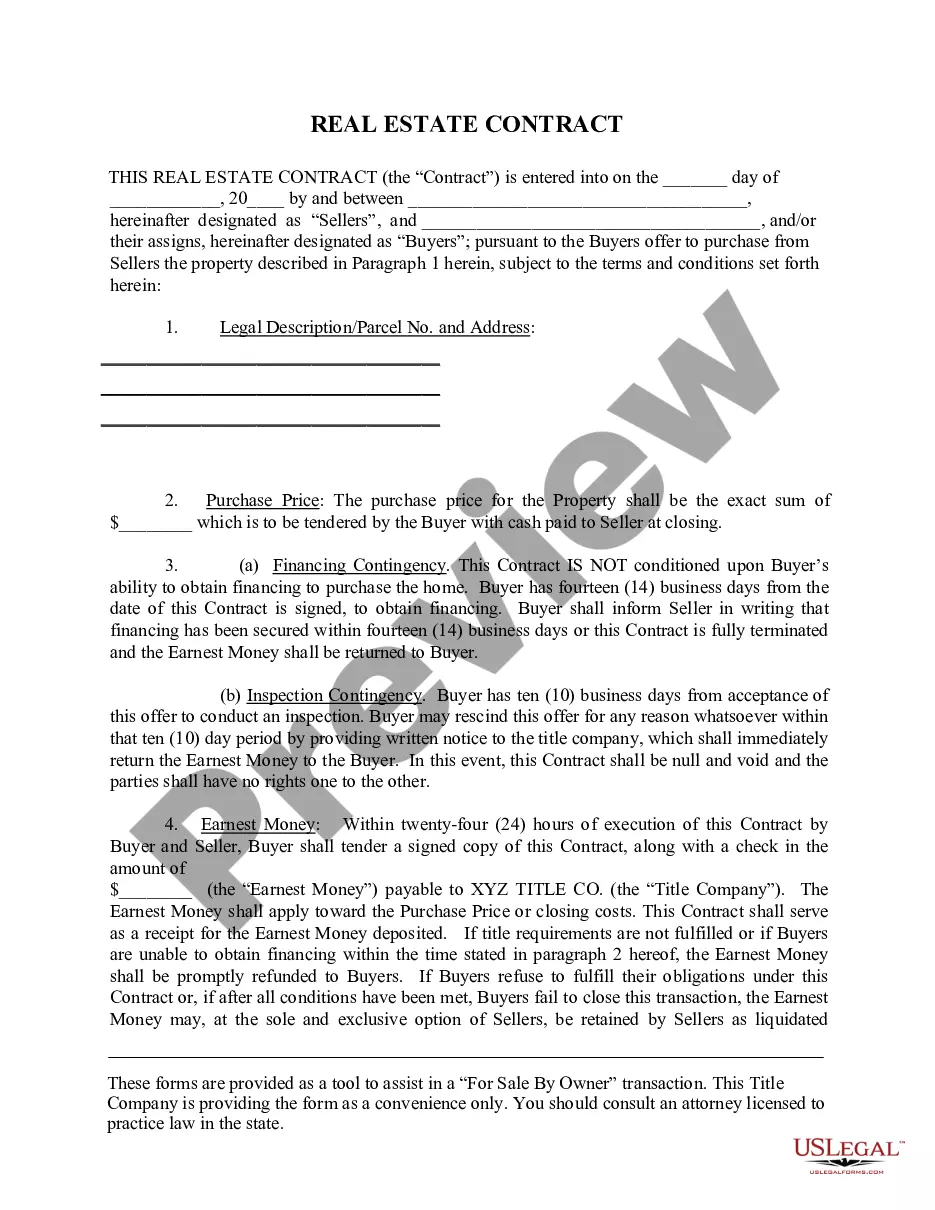
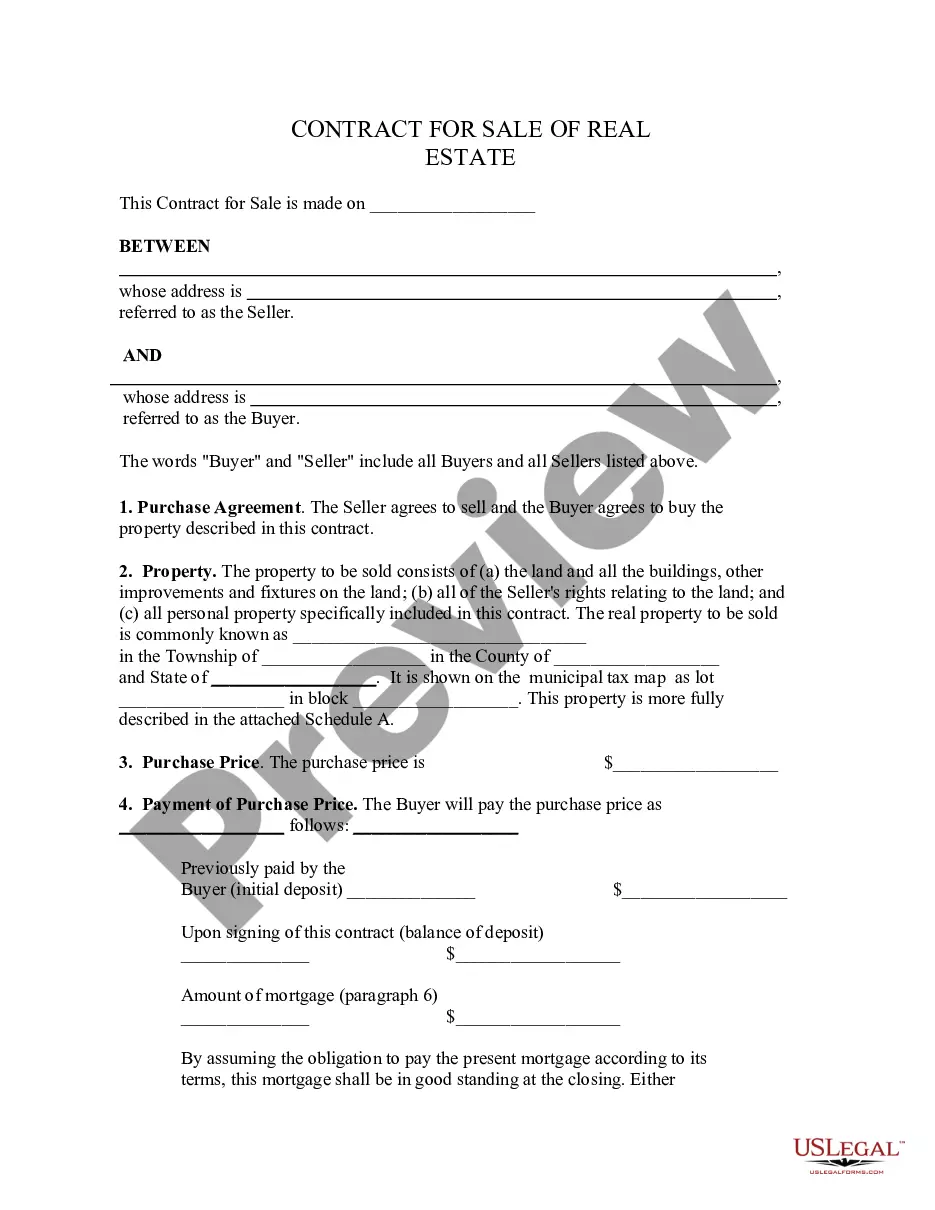
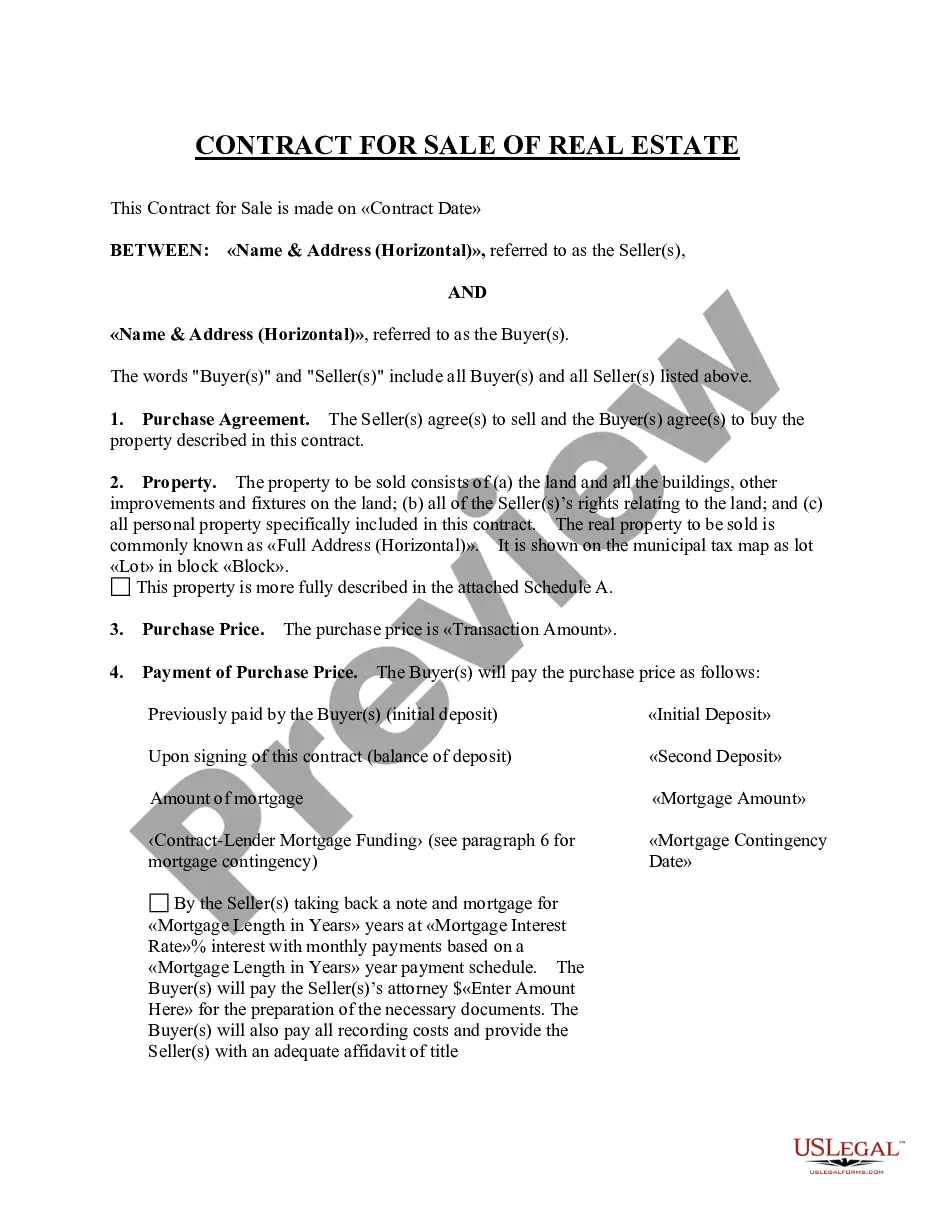
A Contract for Deed is a legal agreement used as owner financing for purchasing real property. Unlike a traditional purchase agreement, the seller retains the title until the buyer pays the full agreed amount. This document outlines the terms for eventual ownership transfer, establishing how and when the buyer will make payments, without granting immediate title rights to the buyer.
What’s included in this form
- Identification of parties involved: names of sellers and buyers
- Description of the property being sold
- Purchase price and payment terms, including options for installments
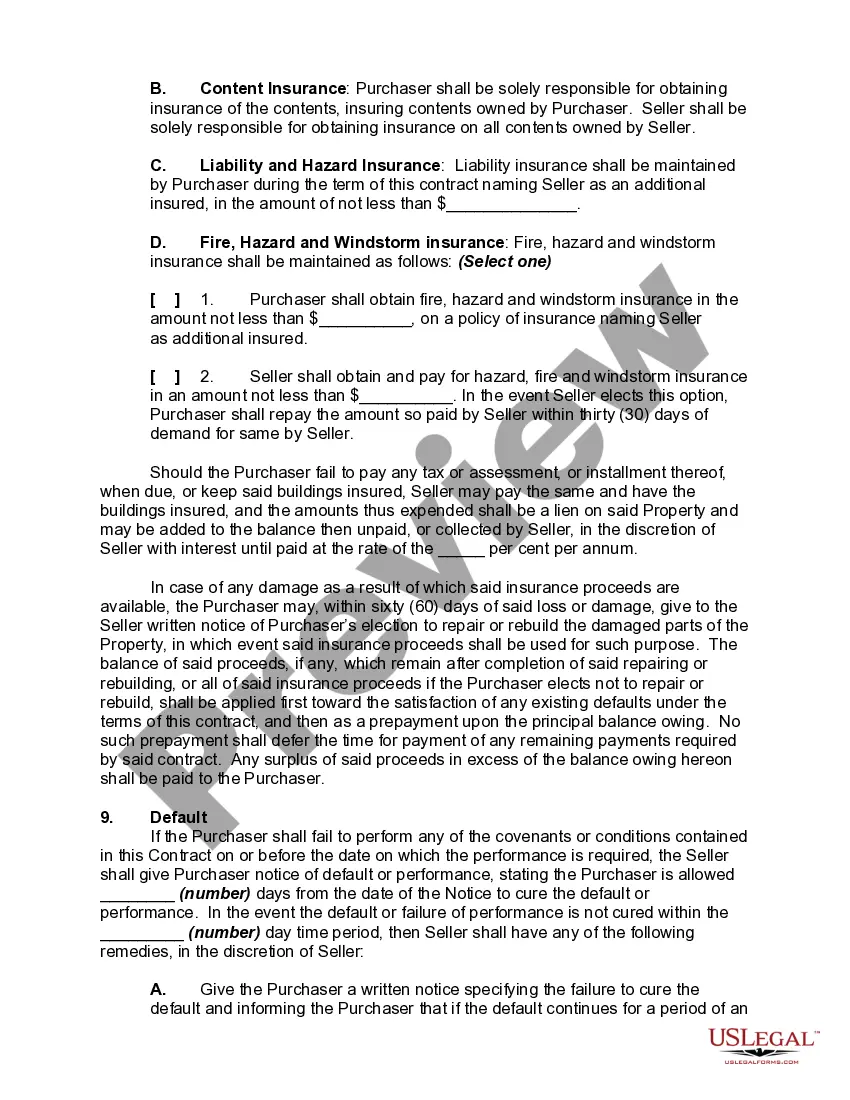
- Conditions related to possession, maintenance, and taxes
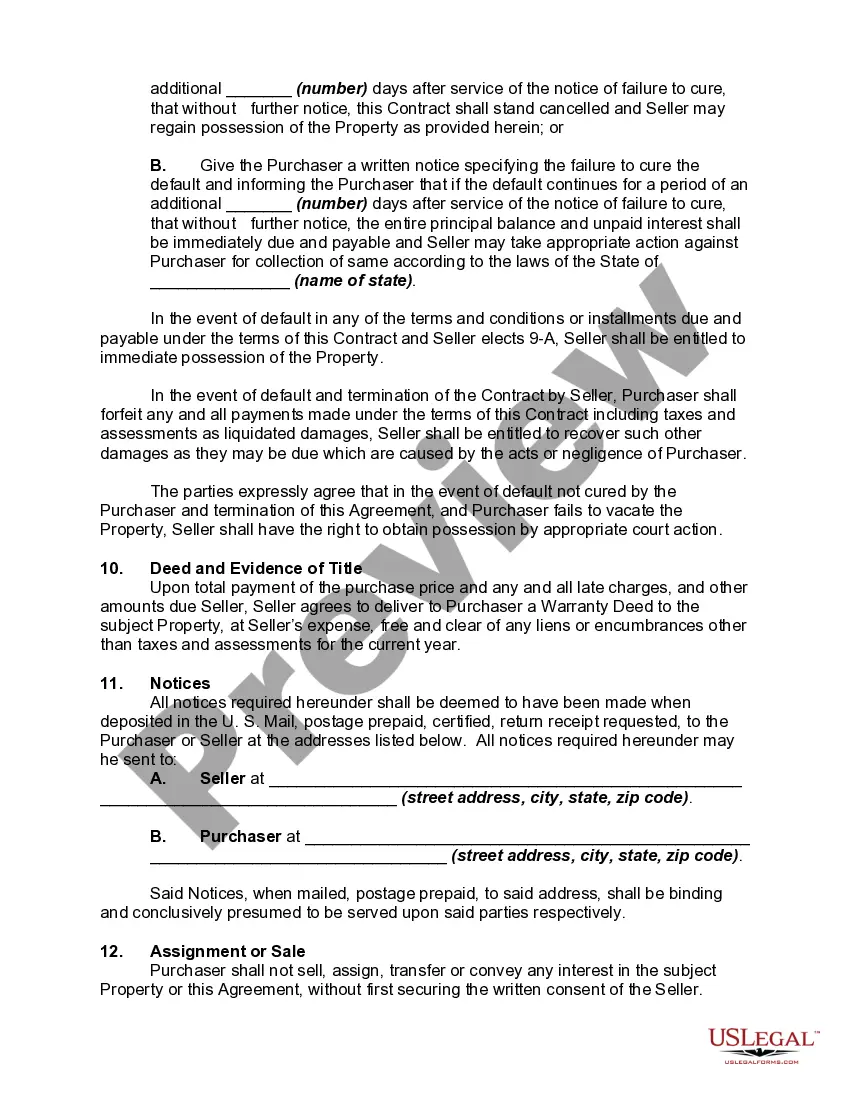
- Default conditions, including remedies available to sellers
- Notices and communication details between parties
When to use this form
This form is commonly used when a buyer wishes to purchase real estate but cannot secure traditional financing. It is suitable for transactions involving owner financing, where the seller allows the buyer to make installment payments while retaining the title until the contract is fulfilled.
Who should use this form
- Individuals purchasing property without access to traditional financing
- Sellers looking to provide financing directly to buyers
- Real estate investors interested in alternative financing options
- Anyone wanting to formalize terms of payment and property transfer
Instructions for completing this form
- Identify and fill out the names of the sellers and buyers in the appropriate sections.
- Describe the property clearly, including its location and any relevant details.
- Enter the total purchase price and select the payment terms (monthly installments, interest rates, etc.).
- Specify any conditions regarding maintenance, insurance, and taxes during the contract period.
- Ensure both parties sign and date the agreement to validate it.
Does this document require notarization?
This form needs to be notarized to ensure legal validity. US Legal Forms provides secure online notarization powered by Notarize, allowing you to complete the process through a verified video call, available anytime.
Get your form ready online
Our built-in tools help you complete, sign, share, and store your documents in one place.
Make edits, fill in missing information, and update formatting in US Legal Forms—just like you would in MS Word.
Download a copy, print it, send it by email, or mail it via USPS—whatever works best for your next step.
Sign and collect signatures with our SignNow integration. Send to multiple recipients, set reminders, and more. Go Premium to unlock E-Sign.
If this form requires notarization, complete it online through a secure video call—no need to meet a notary in person or wait for an appointment.
We protect your documents and personal data by following strict security and privacy standards.

Make edits, fill in missing information, and update formatting in US Legal Forms—just like you would in MS Word.

Download a copy, print it, send it by email, or mail it via USPS—whatever works best for your next step.

Sign and collect signatures with our SignNow integration. Send to multiple recipients, set reminders, and more. Go Premium to unlock E-Sign.

If this form requires notarization, complete it online through a secure video call—no need to meet a notary in person or wait for an appointment.

We protect your documents and personal data by following strict security and privacy standards.
Common mistakes to avoid
- Failing to accurately describe the property, which may lead to disputes.
- Neglecting to specify payment terms clearly, leading to confusion about obligations.
- Not including provisions regarding default and remedies, which can impact enforcement.
- Rushing through the signing process without reviewing all terms and conditions.
Why use this form online
- Convenience of completing the form at your own pace from anywhere with internet access.
- Editability allows you to customize the document to suit your specific agreement.
- Access to templates drafted by legal professionals ensures accuracy and reliability.
- Easy retrieval of forms for future reference or modification.
Main things to remember
- A Contract for Deed serves as a method for owner financing in real estate transactions.
- It is crucial to clearly outline payment terms, conditions for possession, and consequences for default in the agreement.
- Consulting with a legal expert is advisable to ensure compliance with state-specific requirements.
- Using the form online offers convenience, reliability, and professional guidance.
Looking for another form?
Form popularity
FAQ
The interest rate on a contract for deed loan is typically 3% - 6% higher than the rate on regular mortgage. A higher interest rate means a higher monthly mortgage payment plus you are also responsible for property taxes and insurance even though you do not own the property.
A contract for deed is an agreement for buying property without going to a mortgage lender. The buyer agrees to pay the seller monthly payments, and the deed is turned over to the buyer when all payments have been made.
The Difference Between Renting to Own and a Contract for Deed. Renting to own usually means renting now, with an option to buy later. When you make this kind of deal, you are still a tenant, and the seller is still a landlord, until the final purchase. A contract for deed is very different.
Contract for Deed Seller Financing. A contract for deed is used by some sellers who finance the sale of their homes. Seller's Ownership Liability. Buyer Default Risk. Seller Performance. Property Liens Could Hinder Purchase.
A disadvantage to the seller is that a contract for deed is frequently characterized by a low down payment and the purchase price is paid in installments instead of one lump sum. If a seller needs funds from the sale to buy another property, this would not be a beneficial method of selling real estate.
The average length of a Contract for Deed is five years, but it can be for any amount of time that the buyer and seller agree on. Interest rates on a Contract for Deed are not regulated, so they can be as high or as low as the buyer and seller can agree on.
Interest rates on land contracts can vary dramatically, and buyers and sellers ultimately call the shots on the loan's rate. That said, interest rates typically stay under 12%, Smith said. Federal loan regulations, as well as state usury laws, restrict sellers from overcharging interest fees.
Contract for Deed Seller Financing. A contract for deed is used by some sellers who finance the sale of their homes.Seller's Ownership Liability.Buyer Default Risk.Seller Performance.Property Liens Could Hinder Purchase.