Florida Residential Subcontractor Agreement - Single-Family Residence
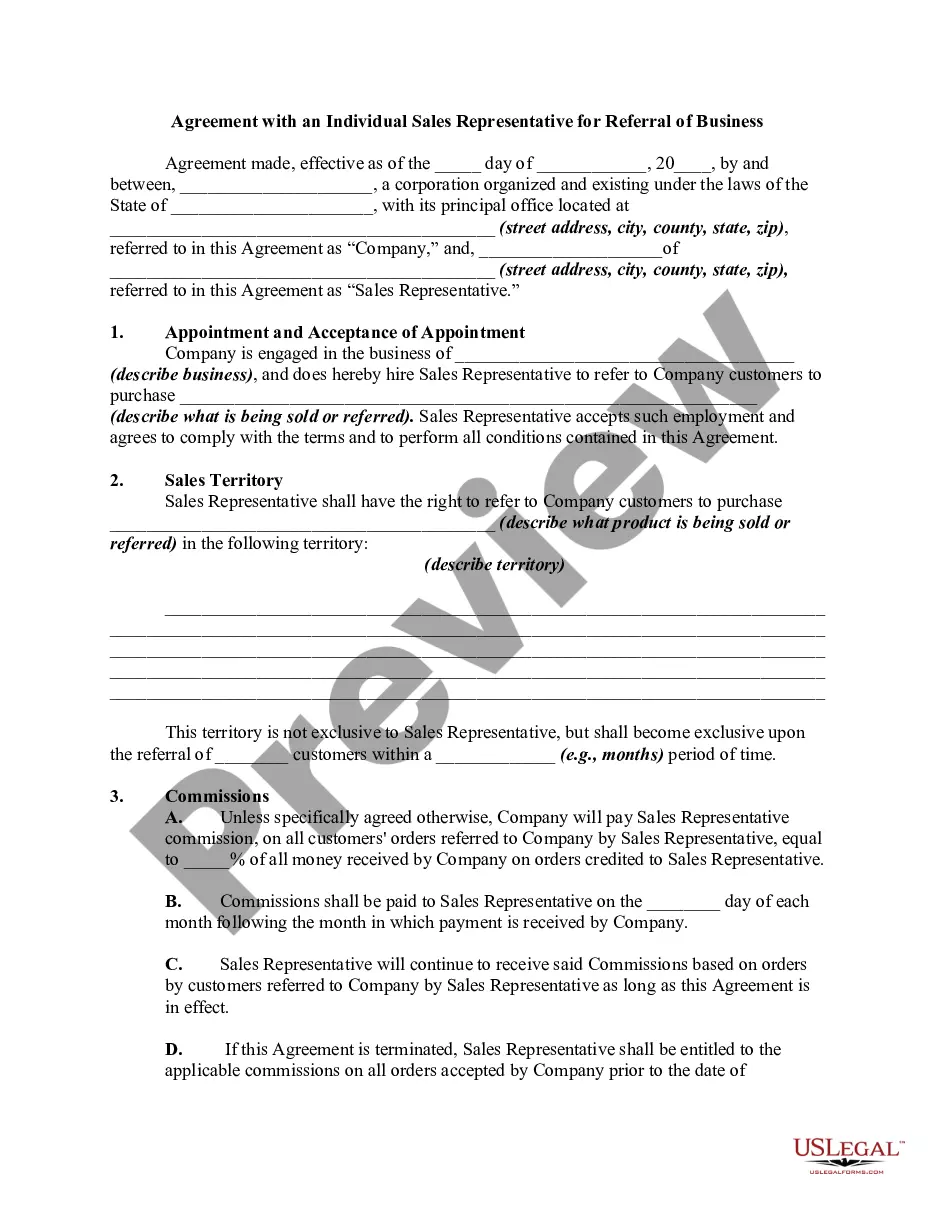
Overview of this form
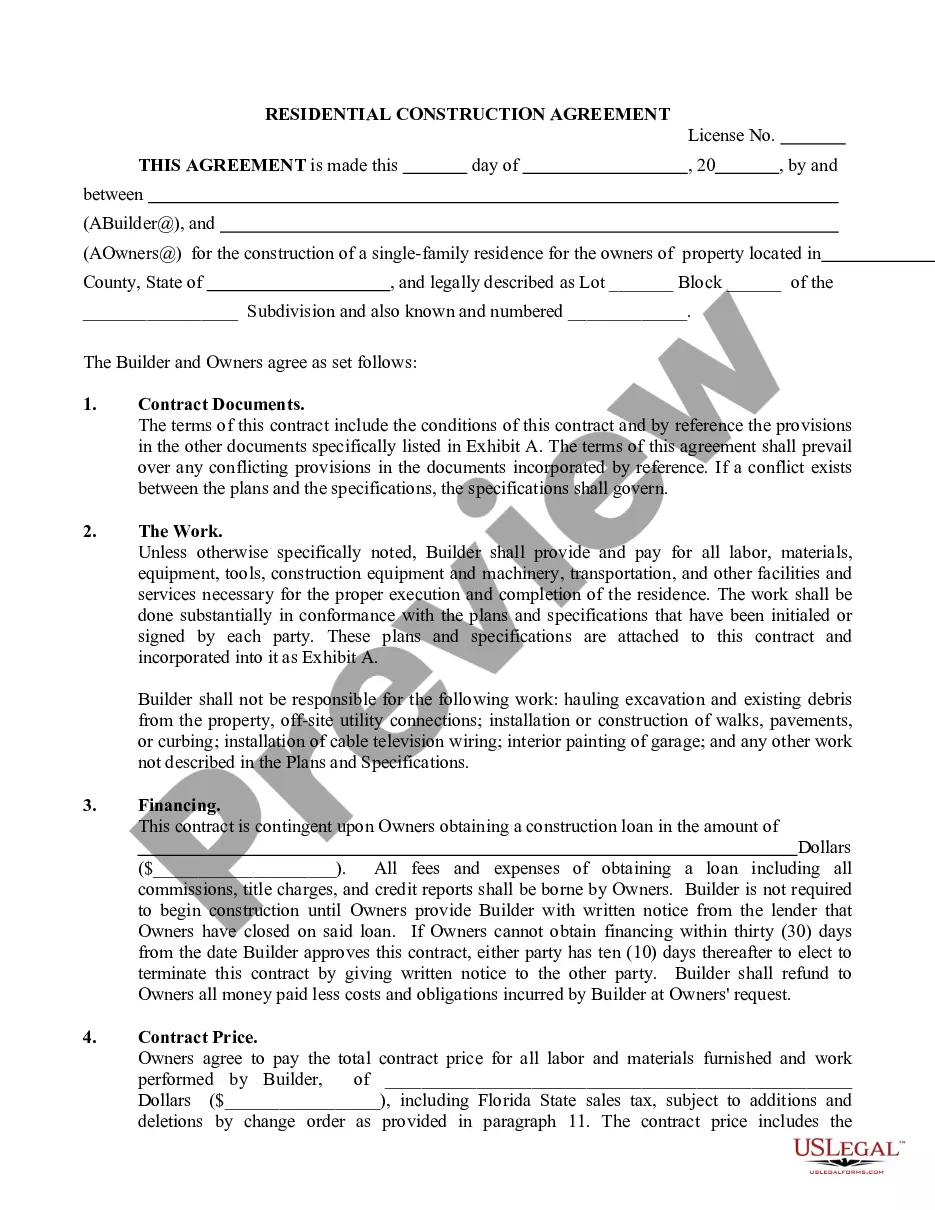
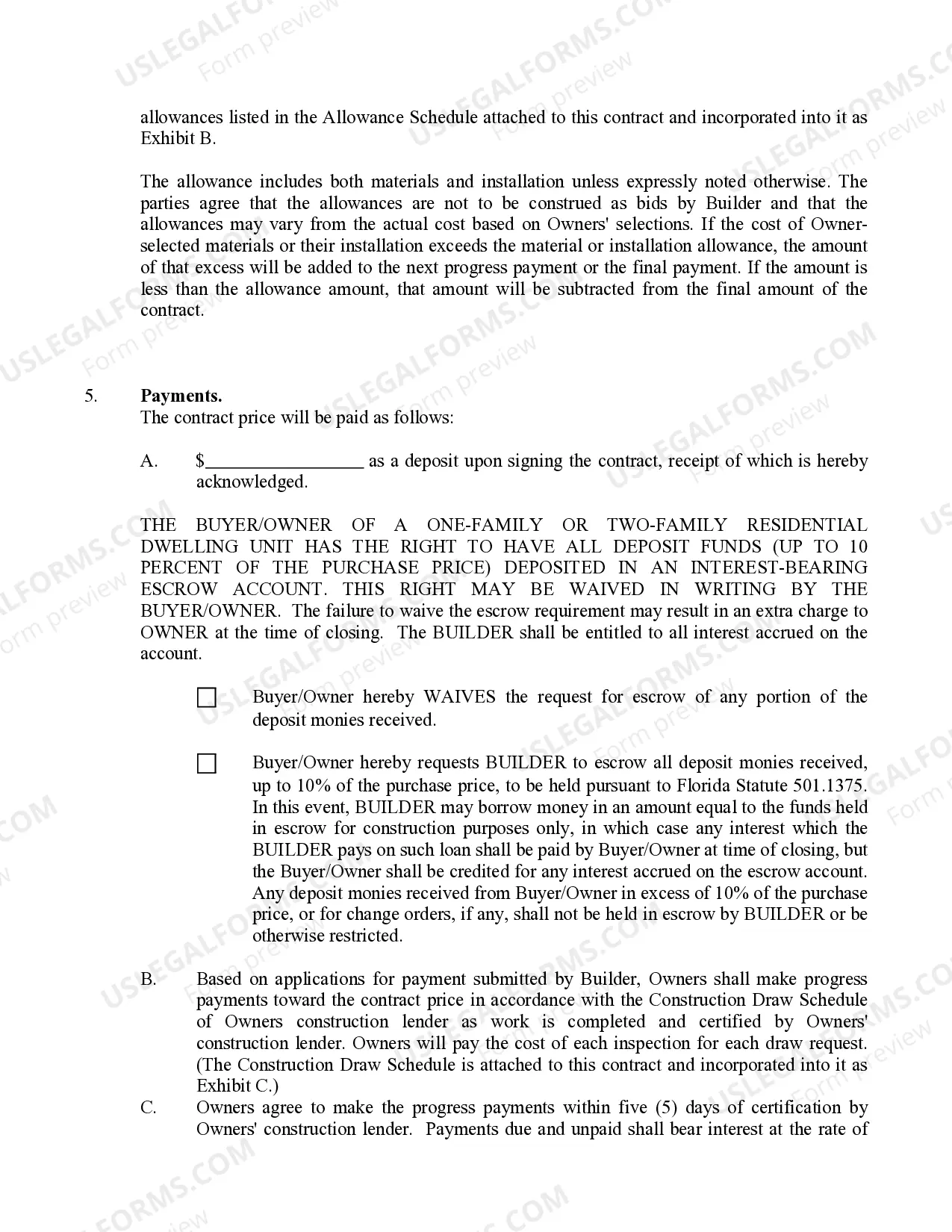
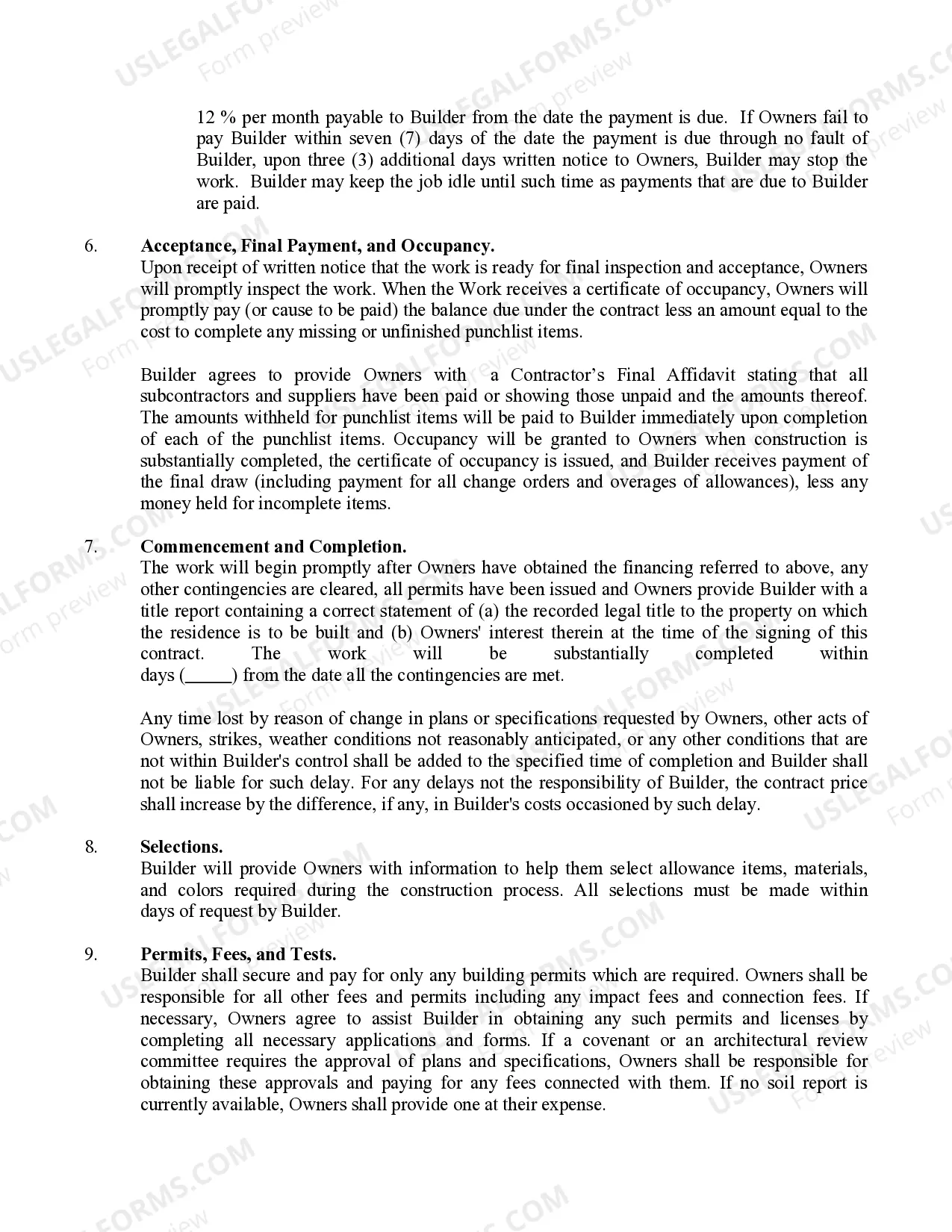
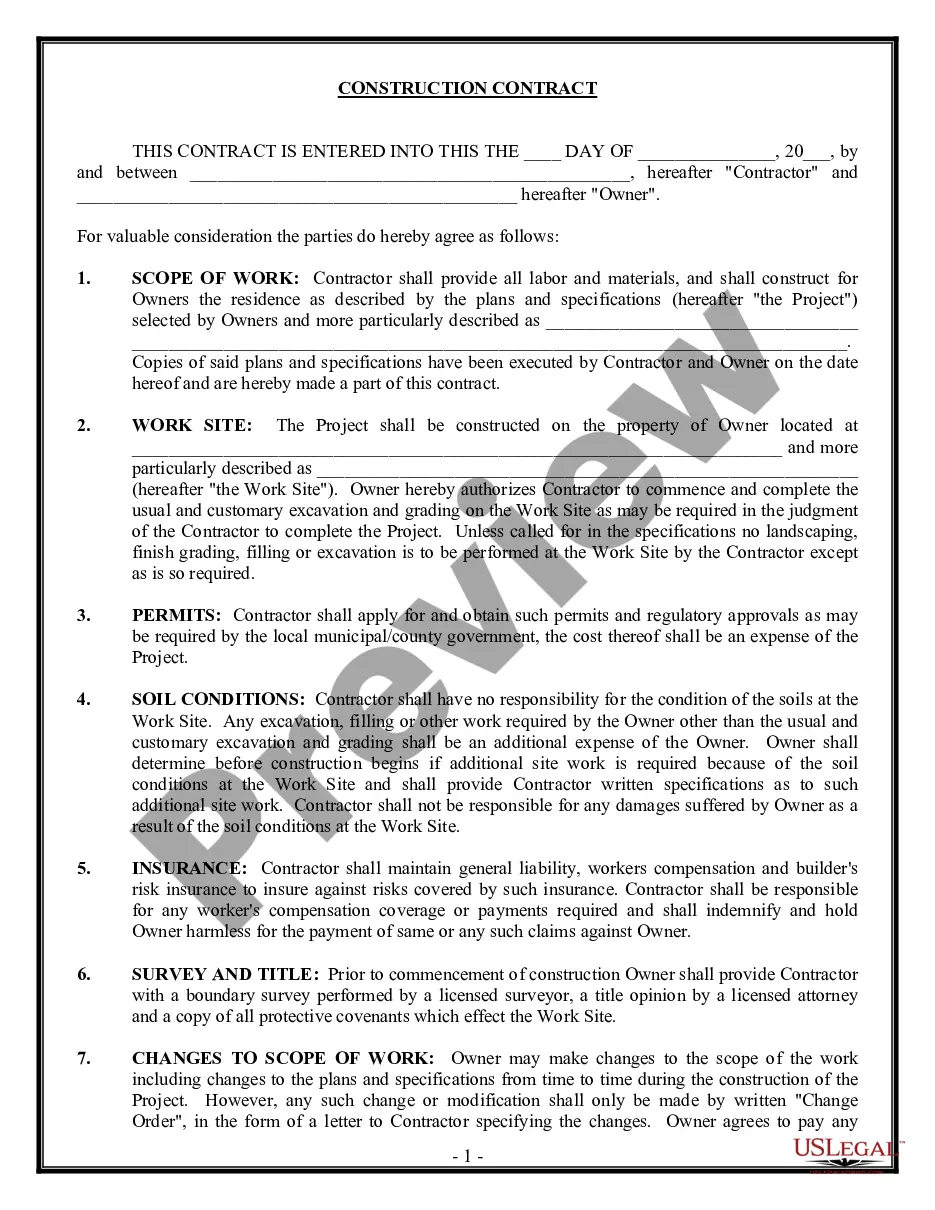
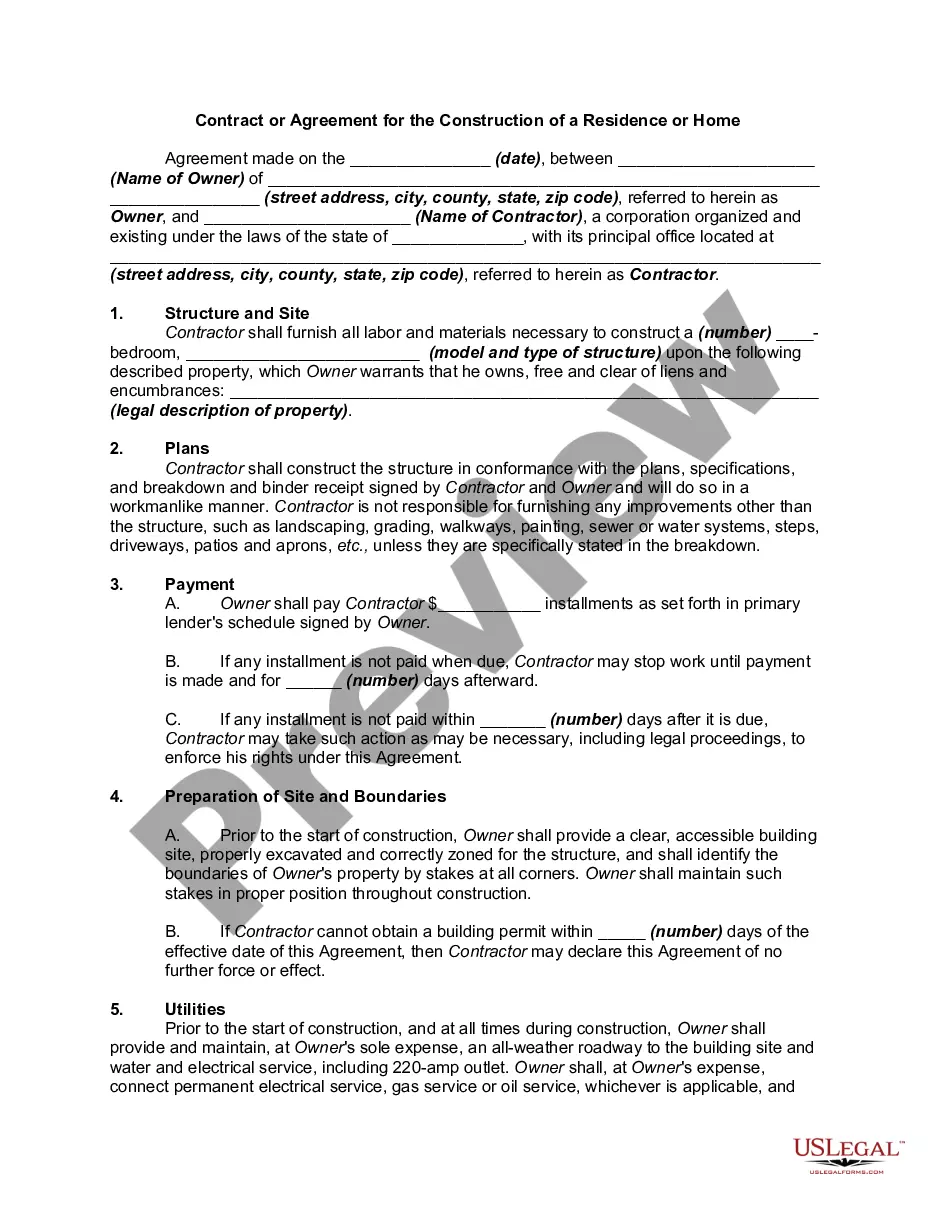
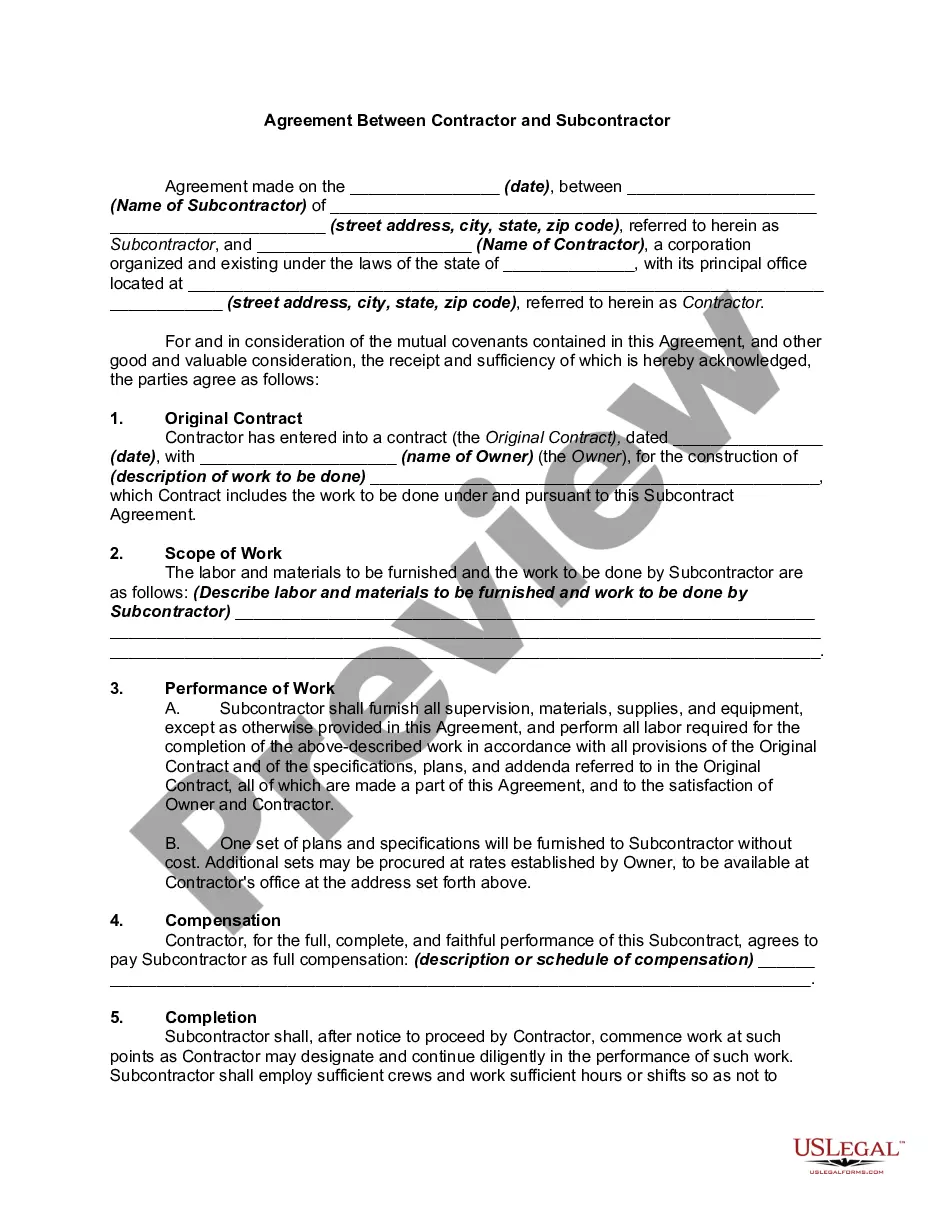
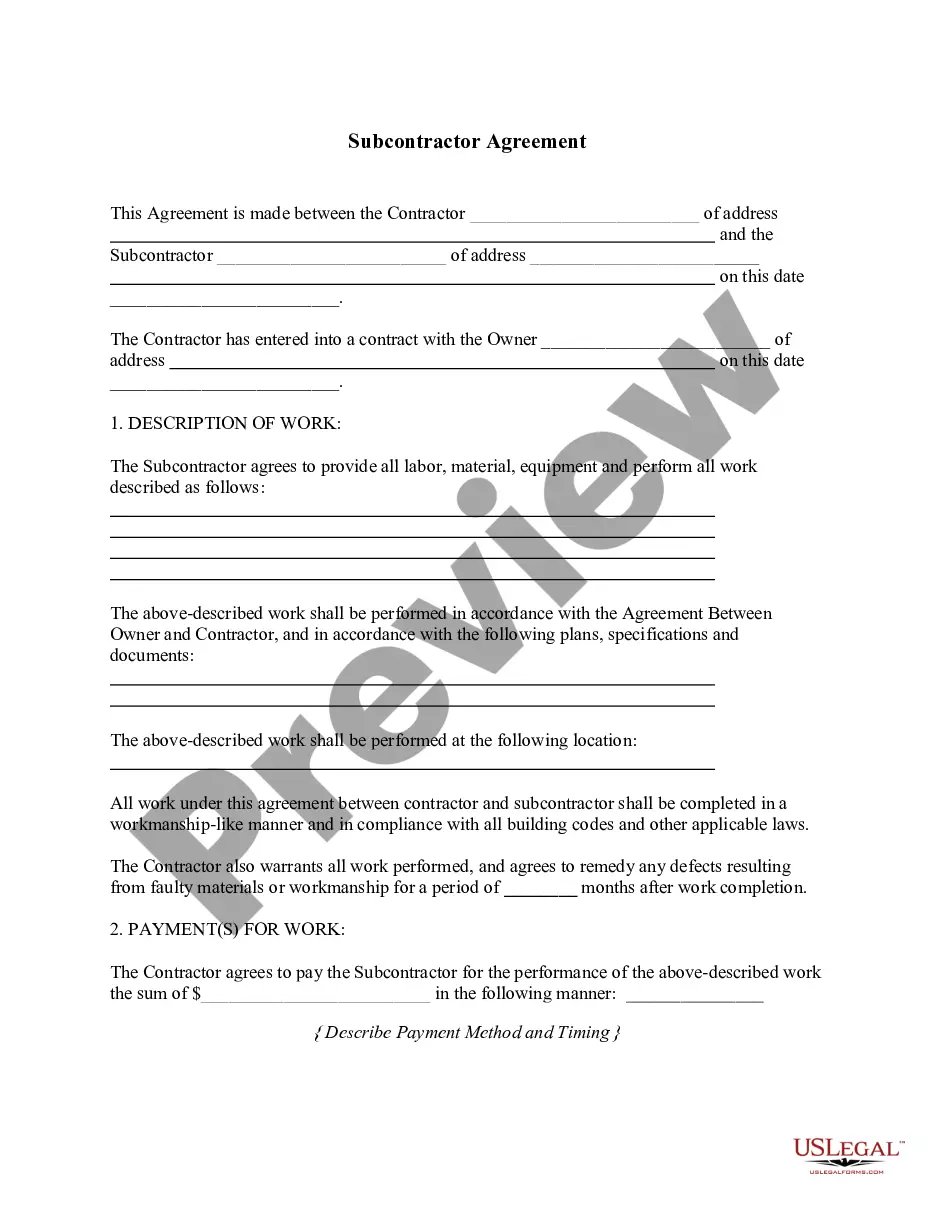
The Residential Subcontractor Agreement for Single-Family Residence is a legal document used by contractors in Florida to hire subcontractors for the construction or renovation of a single-family home. This form outlines the responsibilities of both the contractor and the homeowners, ensuring that each party understands their obligations and rights. Unlike general construction contracts, this agreement specifies the roles of subcontractors and focuses on the construction of a residential property, making it essential for compliance and clarity in construction projects.
What’s included in this form
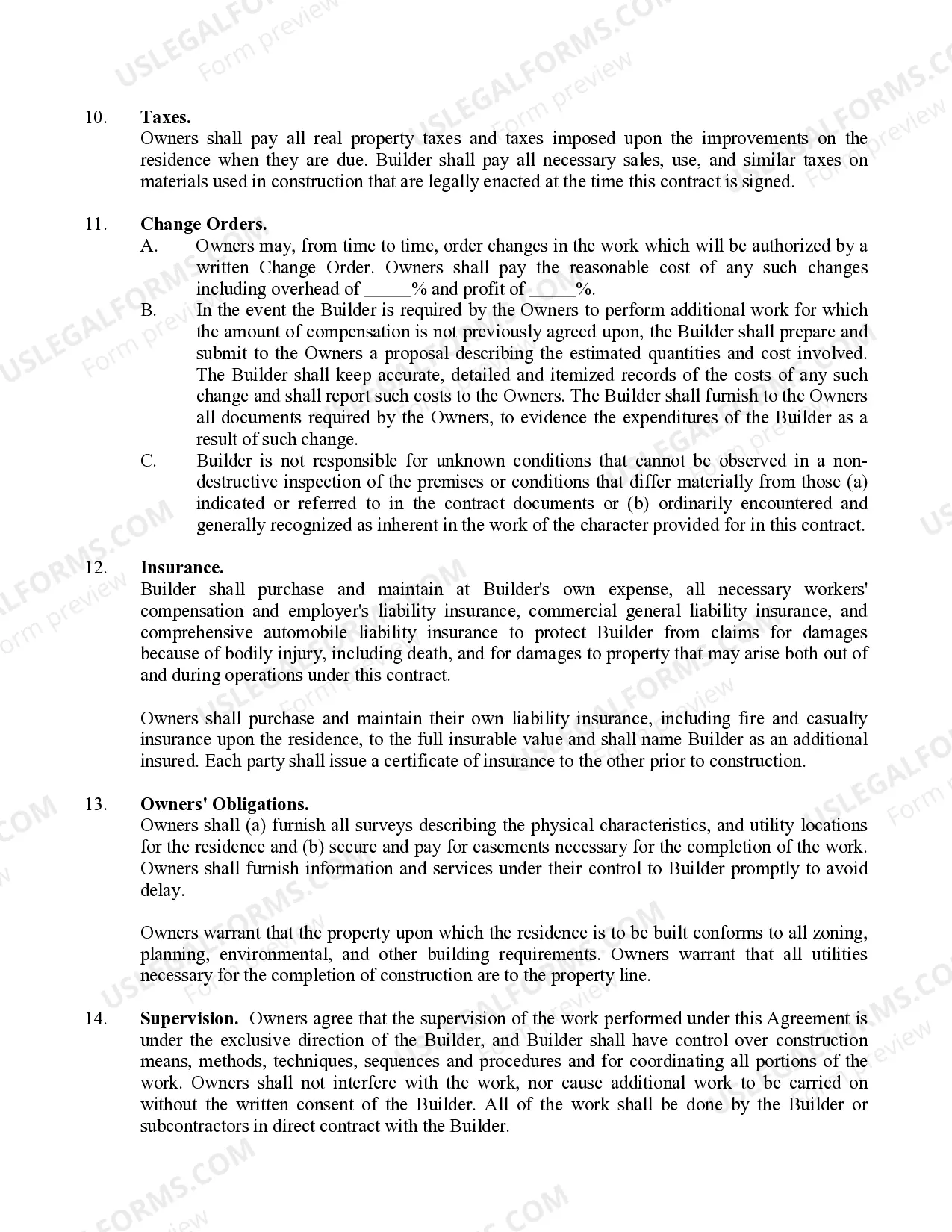
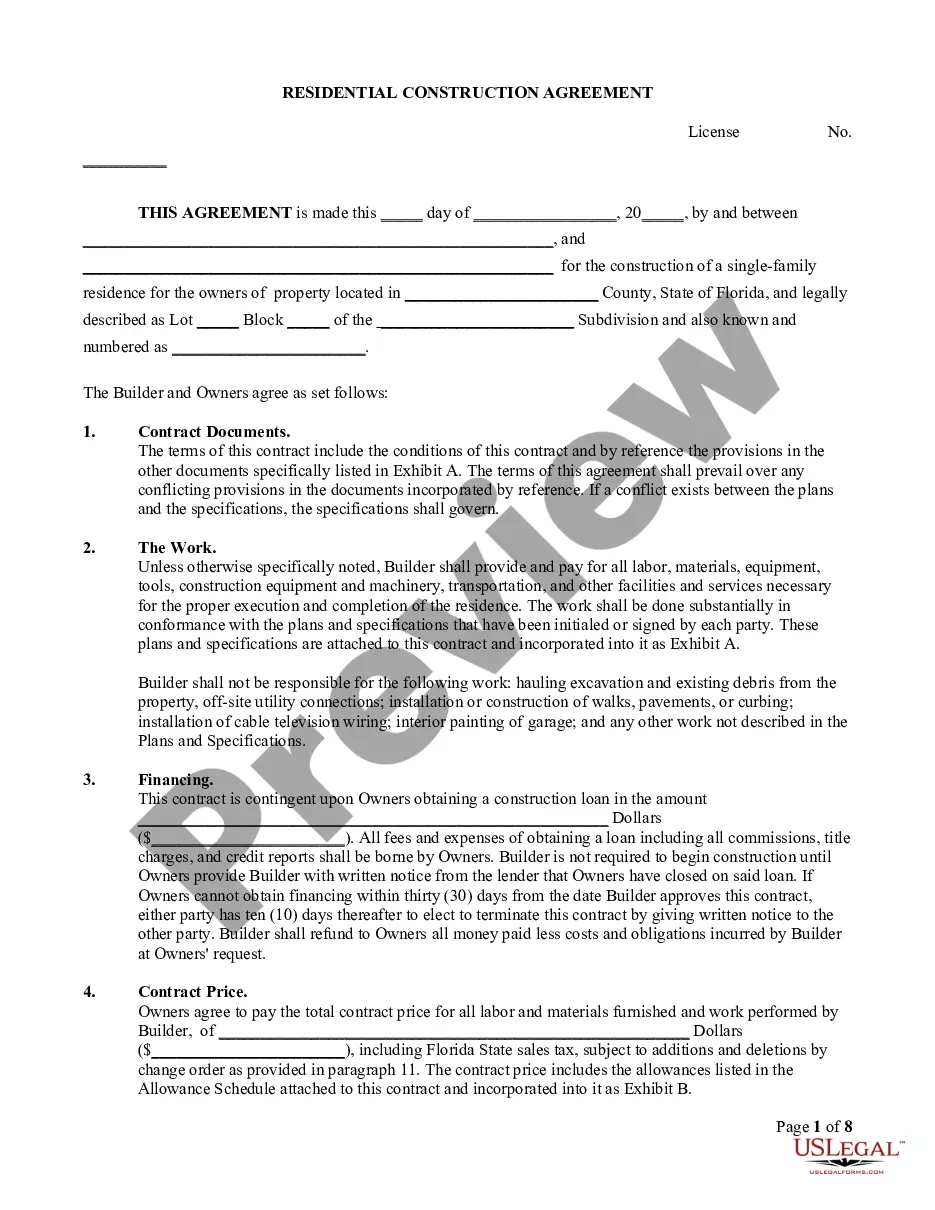
- Contract documents: Defines the terms and includes all referenced provisions.
- The work: Describes the scope of work and materials to be provided by the builder.
- Financing: Outlines the financing requirements and contingencies for starting construction.
- Contract price: Details the total cost and payment structure for the project.
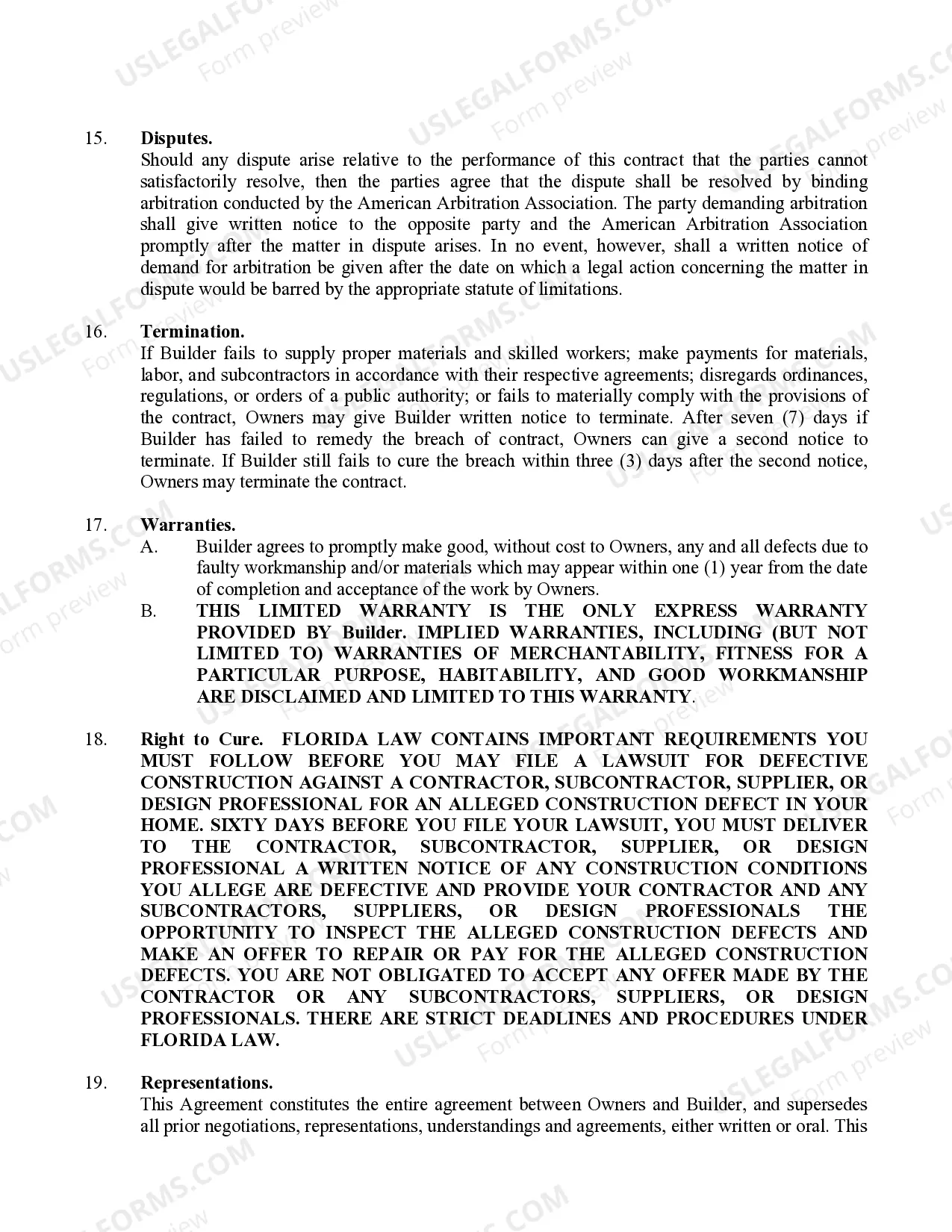
- Change orders: Allows for adjustments in the work scope and associated costs.
- Insurance: Mandates necessary insurance coverage for both the builder and the homeowners.


When this form is needed
This form should be used when a homeowner or primary contractor is engaging a subcontractor for the construction of a single-family residence in Florida. It is particularly relevant when specific trade work, such as plumbing, electrical, or masonry, must be delegated to qualified subcontractors. Utilizing this agreement helps to formalize the responsibilities and expectations, minimizing misunderstandings about the construction process.
Who needs this form
This form is ideal for:
- Homeowners looking to build or renovate their single-family residence.
- General contractors seeking to hire subcontractors for specific trades.
- Real estate developers taking on single-family construction projects.
- Professionals and companies in the construction industry needing clear agreements with subcontractors.
How to prepare this document
- Identify the parties involved: Enter the names of the builder and homeowners.
- Specify the property: Provide the legal description of the property where the construction will take place.
- Outline the scope of work: Clearly define the tasks and responsibilities of the builder and subcontractors.
- Enter the contract price: Indicate the total price for the project, including funding details.
- Review insurance requirements: Make sure both parties understand their obligations regarding insurance coverage.
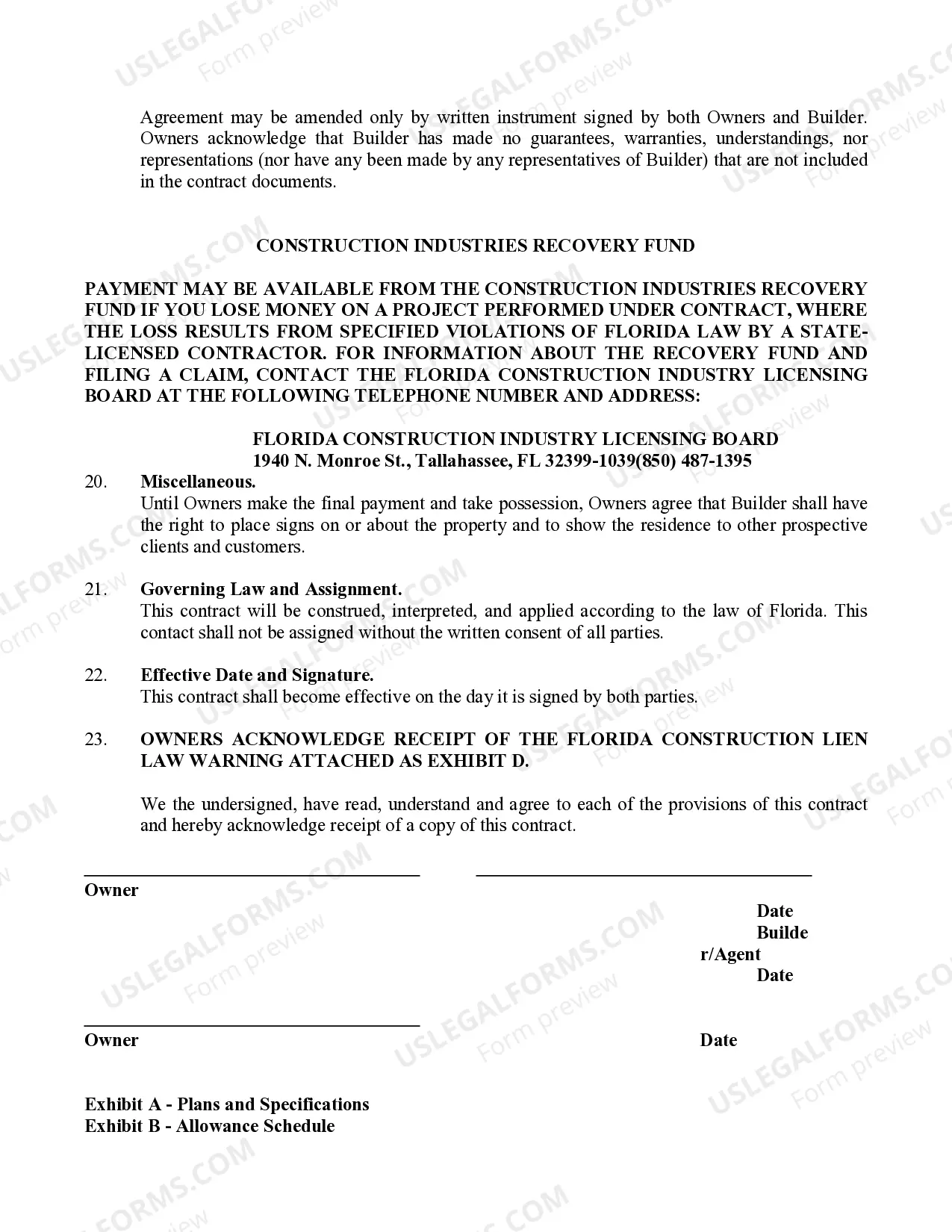
- Sign and date the agreement: Ensure both parties sign and retain copies for their records.
Is notarization required?
This form does not typically require notarization unless specified by local law. It is recommended to check local regulations or consult a legal professional to determine if notarization is necessary for your specific situation.
Get your form ready online
Our built-in tools help you complete, sign, share, and store your documents in one place.
Make edits, fill in missing information, and update formatting in US Legal Forms—just like you would in MS Word.
Download a copy, print it, send it by email, or mail it via USPS—whatever works best for your next step.
Sign and collect signatures with our SignNow integration. Send to multiple recipients, set reminders, and more. Go Premium to unlock E-Sign.
If this form requires notarization, complete it online through a secure video call—no need to meet a notary in person or wait for an appointment.
We protect your documents and personal data by following strict security and privacy standards.

Make edits, fill in missing information, and update formatting in US Legal Forms—just like you would in MS Word.

Download a copy, print it, send it by email, or mail it via USPS—whatever works best for your next step.

Sign and collect signatures with our SignNow integration. Send to multiple recipients, set reminders, and more. Go Premium to unlock E-Sign.

If this form requires notarization, complete it online through a secure video call—no need to meet a notary in person or wait for an appointment.

We protect your documents and personal data by following strict security and privacy standards.
Mistakes to watch out for
- Failing to specify the exact scope of work, leading to disputes over responsibilities.
- Not including all necessary financial terms and payment schedules.
- Neglecting to detail the change order process, resulting in misunderstandings about additional work.
- Forgetting to include insurance requirements, leaving one or both parties exposed to liability.
- Not having both parties sign the agreement, which can lead to unenforceable terms.
Benefits of using this form online
- Convenient access: Download and complete the form from anywhere at any time.
- Editability: Customize the form to meet your specific construction project needs.
- Reliability: Ensure that the form reflects current laws and best practices in construction agreements.
Looking for another form?


Form popularity
FAQ
Yes, obtaining consent is important before subcontracting work. A Florida Residential Subcontractor Agreement - Single-Family Residence often requires the primary contractor's approval to ensure that all parties agree on the subcontractor's qualifications and responsibilities. This step helps maintain project quality and keeps communication clear.
To write a subcontractor agreement, start by outlining the project's scope and the parties' duties in a Florida Residential Subcontractor Agreement - Single-Family Residence. Clearly specify payment terms, deadlines, and conditions for termination. Consider using templates available on platforms like US Legal Forms to streamline the process, ensuring you don’t miss important details.
Yes, a subcontractor agreement is essential for any project involving subcontractors, especially for a Florida Residential Subcontractor Agreement - Single-Family Residence. This agreement clarifies roles, responsibilities, and payment terms, reducing potential disputes. Having a written document establishes clear expectations for both parties, providing legal protection.
To fill out a subcontractor agreement, start by entering the details of the primary contractor and the subcontractor, including contact information and business names. Specify the services the subcontractor will provide under the agreement, along with payment terms, deadlines, and responsibilities. By clearly outlining these elements, you can create a robust Florida Residential Subcontractor Agreement - Single-Family Residence that protects both parties' interests.
Filling out a Florida residential lease agreement is straightforward. Begin by providing your personal information, such as names and addresses of all parties involved. Ensure you outline the terms of the lease, including rental amounts, security deposits, and duration of the lease. Using a comprehensive guide or template can streamline this process, allowing you to create a clear agreement tailored to your needs.
The paperwork needed for a subcontractor typically includes a signed subcontractor agreement, proof of insurance, and any necessary licenses. Additionally, you may require tax forms, such as a W-9, for financial tracking. Using the Florida Residential Subcontractor Agreement - Single-Family Residence provides a solid foundation for all required documentation.
Writing a subcontract agreement requires clear communication and a focus on essential elements. Begin with an outline that includes project details, timelines, payment terms, and safety responsibilities. You can leverage the Florida Residential Subcontractor Agreement - Single-Family Residence template for guidance, ensuring that all necessary legal protections are included.
To obtain a residential contractor license in Florida, you must first meet specific eligibility criteria, such as work experience and educational qualifications. After that, you will need to pass an examination and submit an application with appropriate fees to the Florida Department of Business and Professional Regulation. The process can be simplified by understanding the requirements detailed in the Florida Residential Subcontractor Agreement - Single-Family Residence.
Yes, a subcontractor typically needs a contractor's license in Florida, especially if the work involves certain trades. This requirement helps maintain standards and ensures the subcontractor meets industry regulations. By adhering to the rules outlined in the Florida Residential Subcontractor Agreement - Single-Family Residence, you can navigate this process effectively.
Creating a subcontractor agreement involves a few simple steps. First, you need to determine the project's scope and the deliverables expected from the subcontractor. Then, utilize the Florida Residential Subcontractor Agreement - Single-Family Residence template to fill in necessary details, ensuring compliance with local laws and protections for both parties.