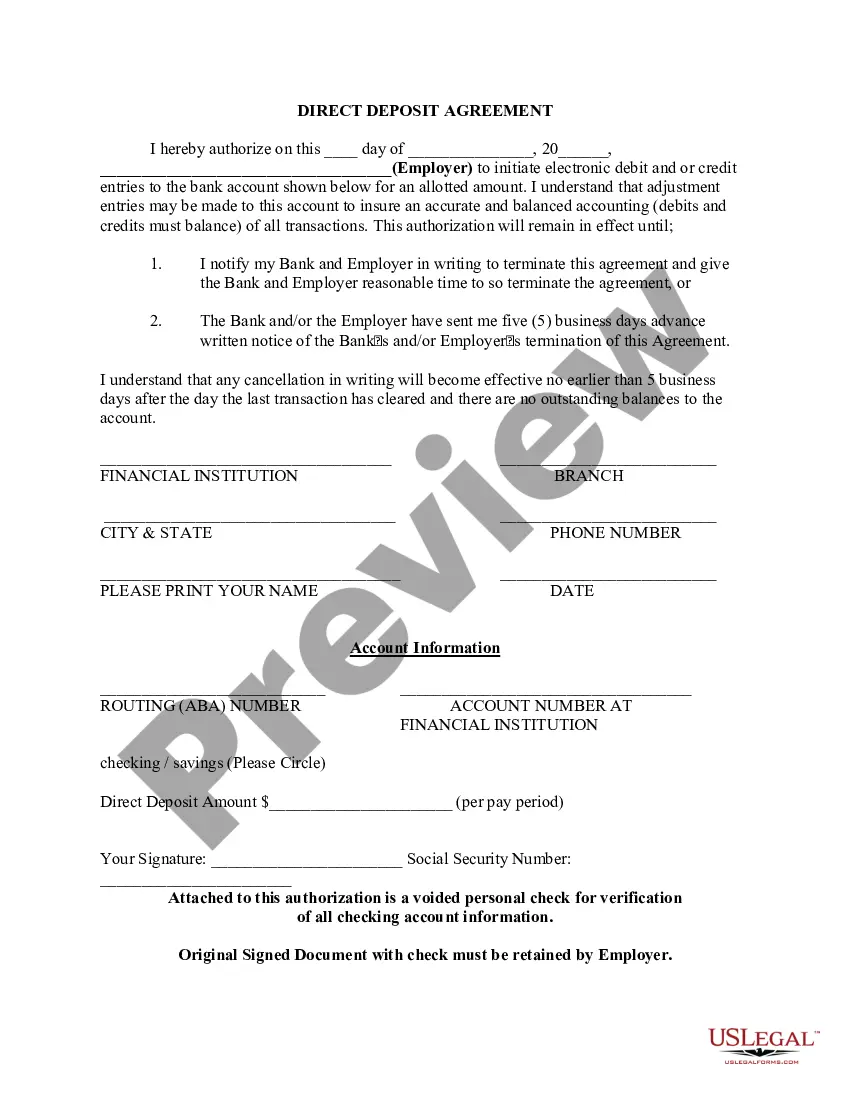
Florida Residential Construction Agreement
What is this form?
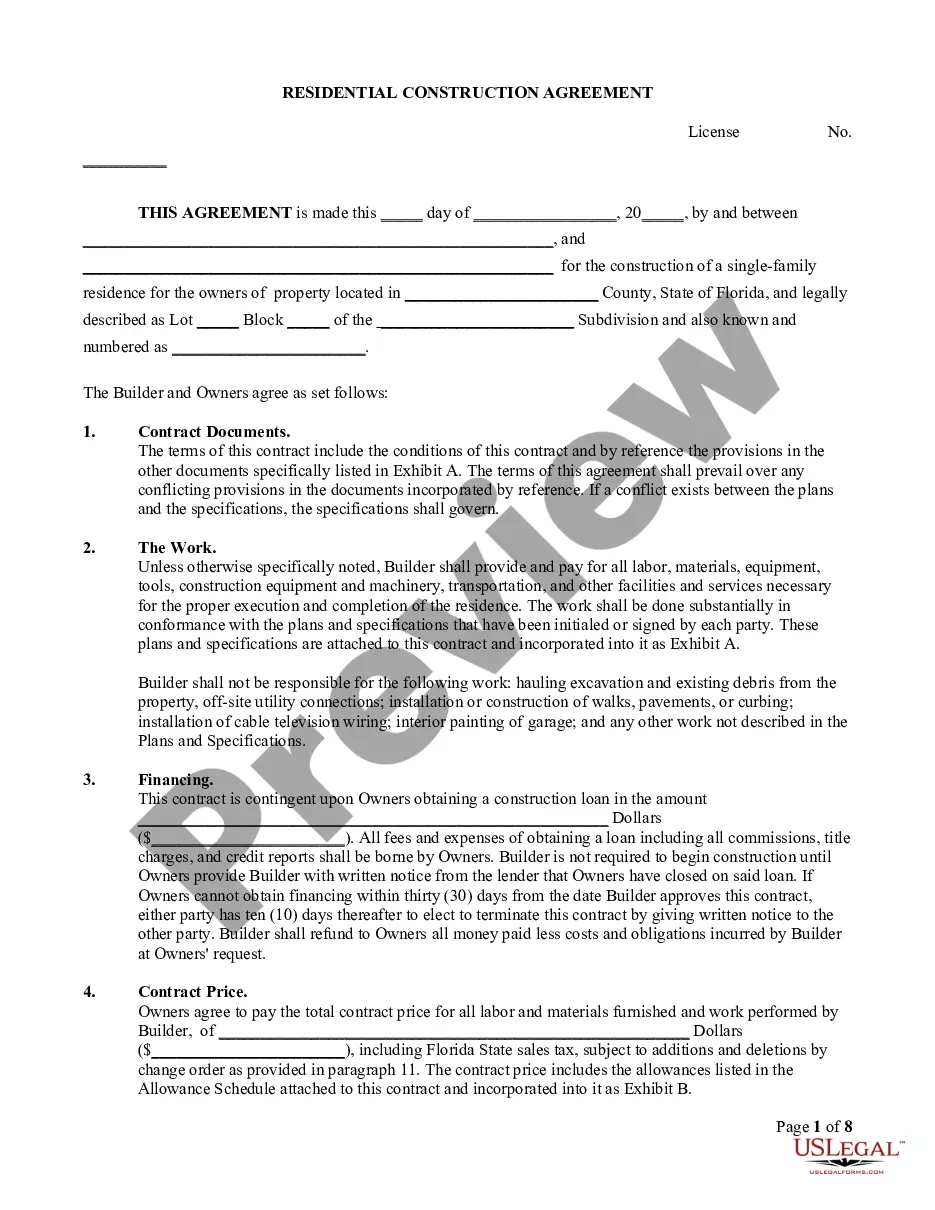
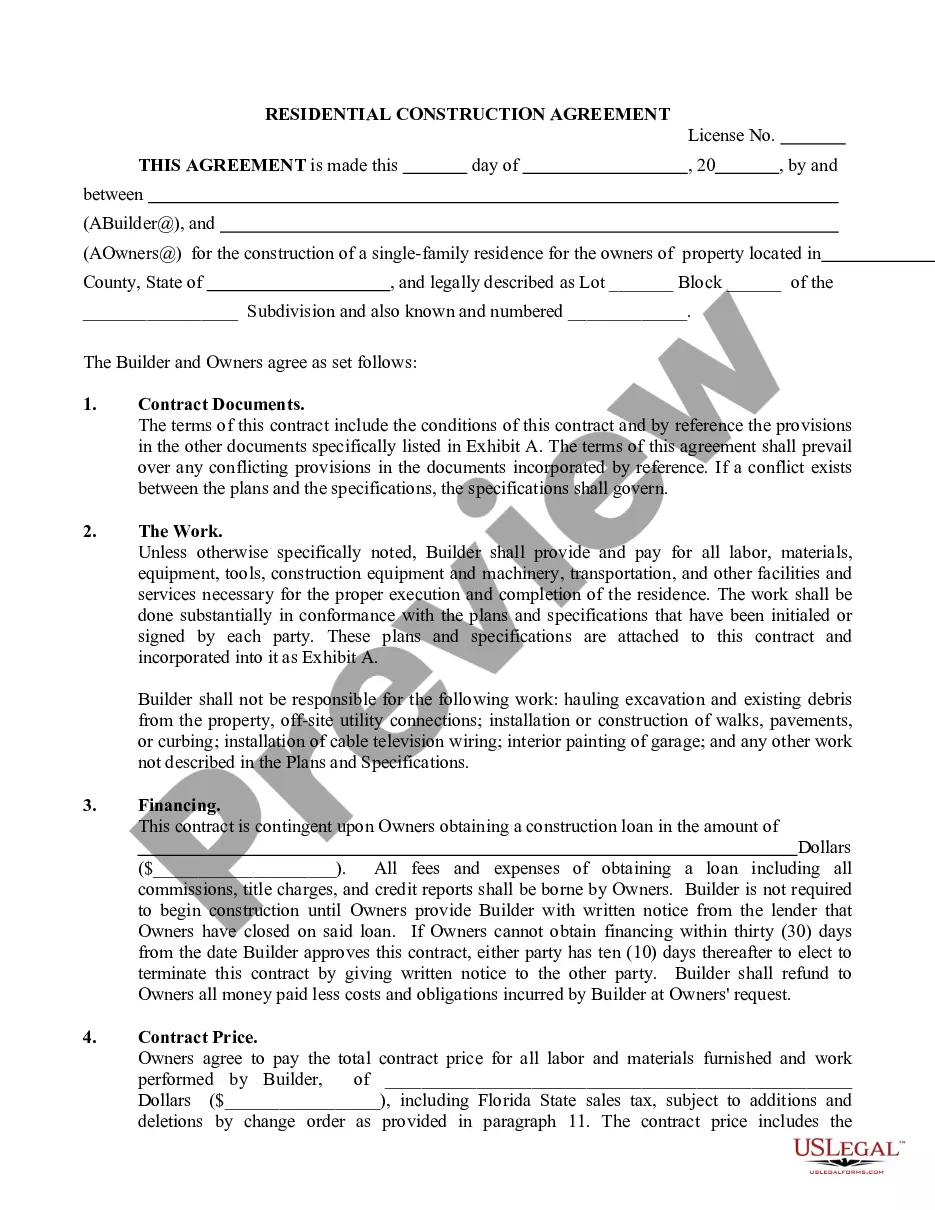
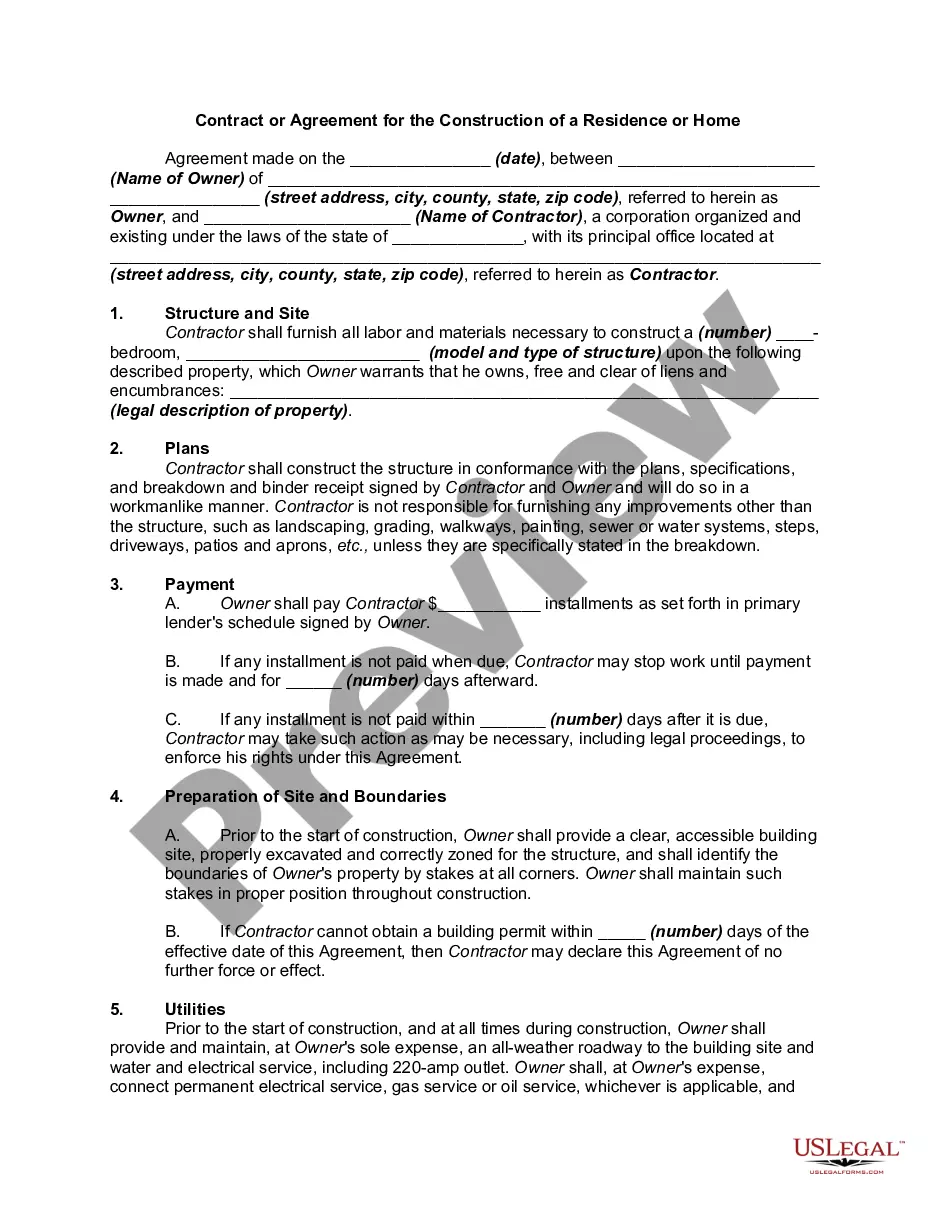
The Residential Construction Agreement is a legally binding contract between a property owner and a contractor for the construction of a single-family home. This form outlines the scope of work, required materials, payment terms, and warranties related to the construction project. Unlike generic agreements, this contract is specifically designed to cater to the nuances of residential construction, ensuring protection for both parties involved.
Form components explained
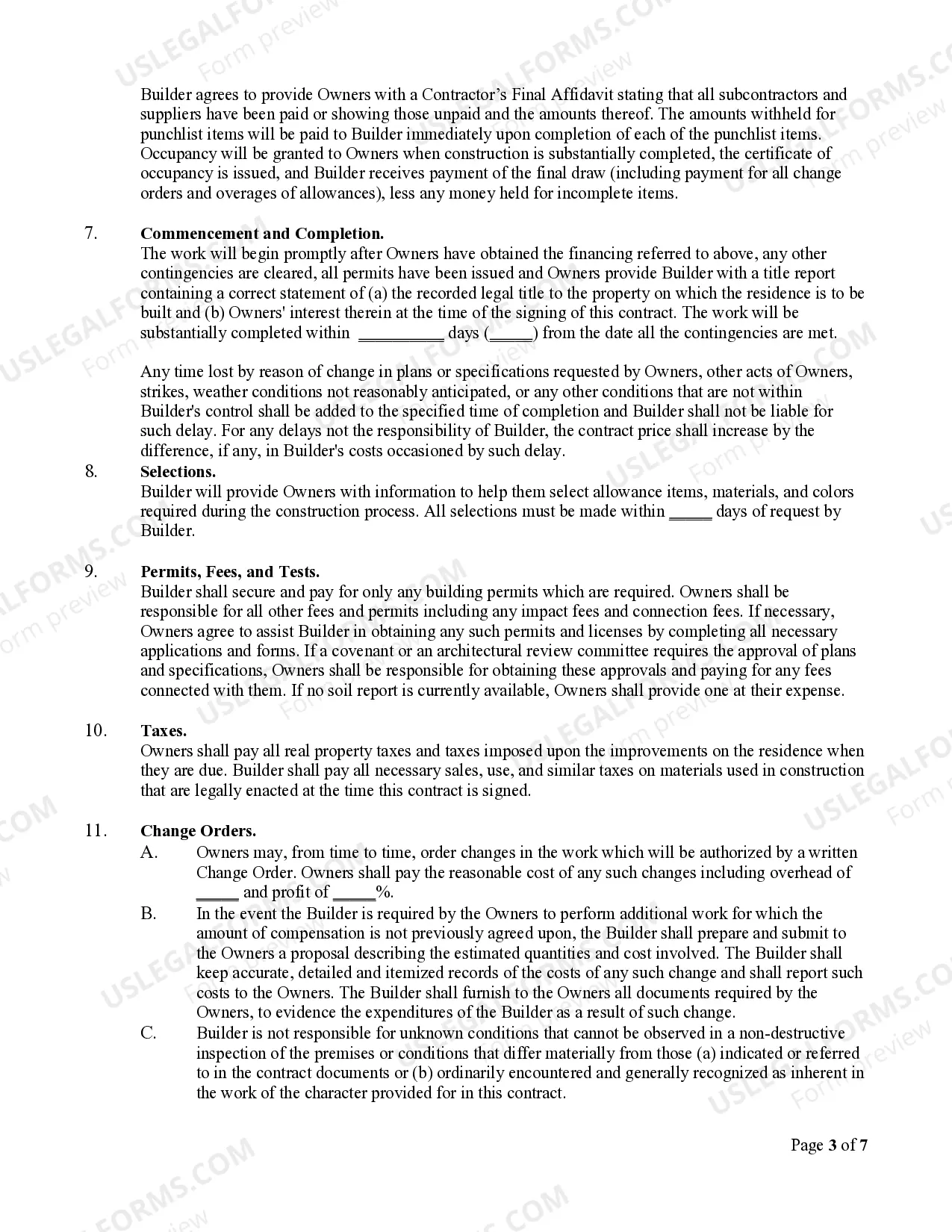
- Contract documents and references to attached plans and specifications.
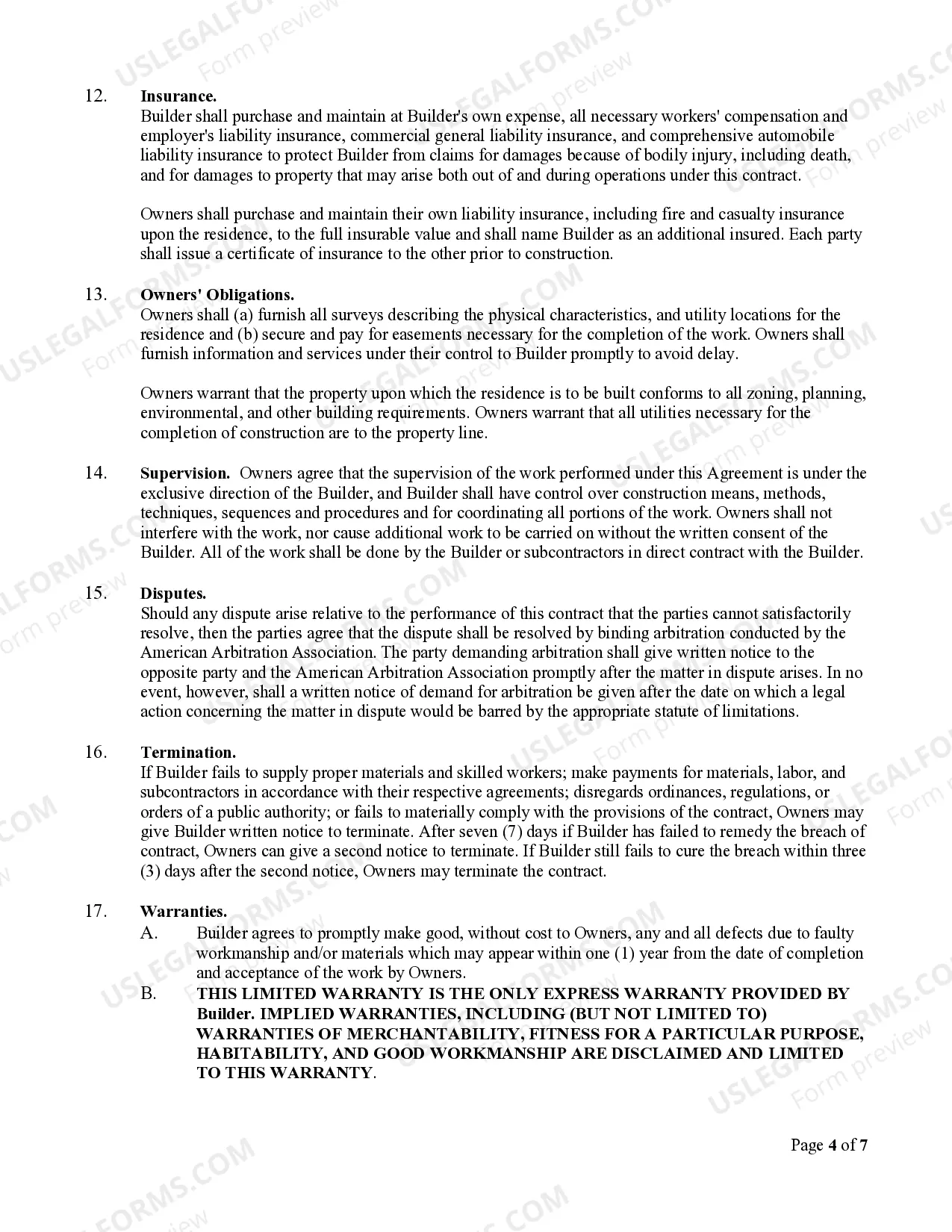
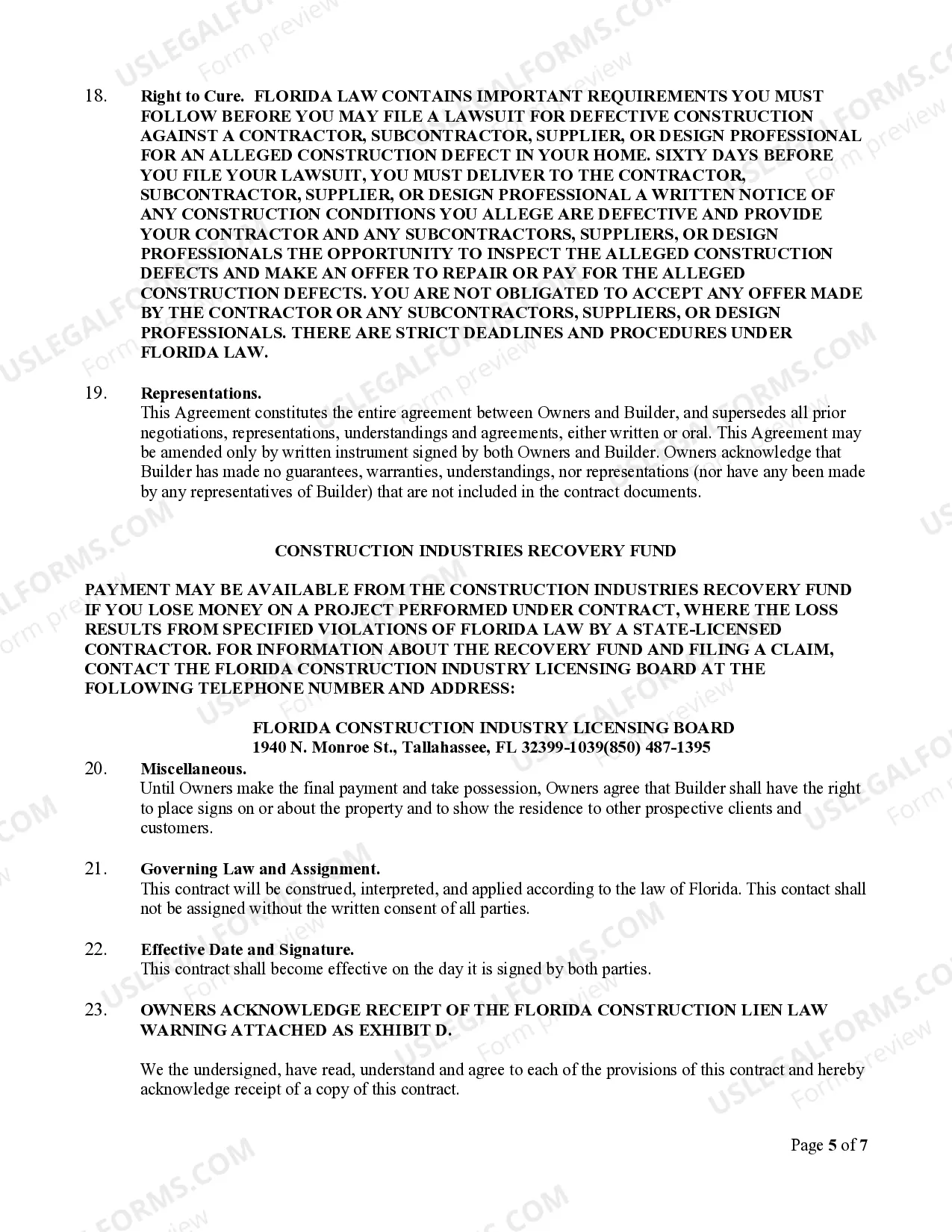
- Detailed terms regarding the work to be performed, including liabilities.
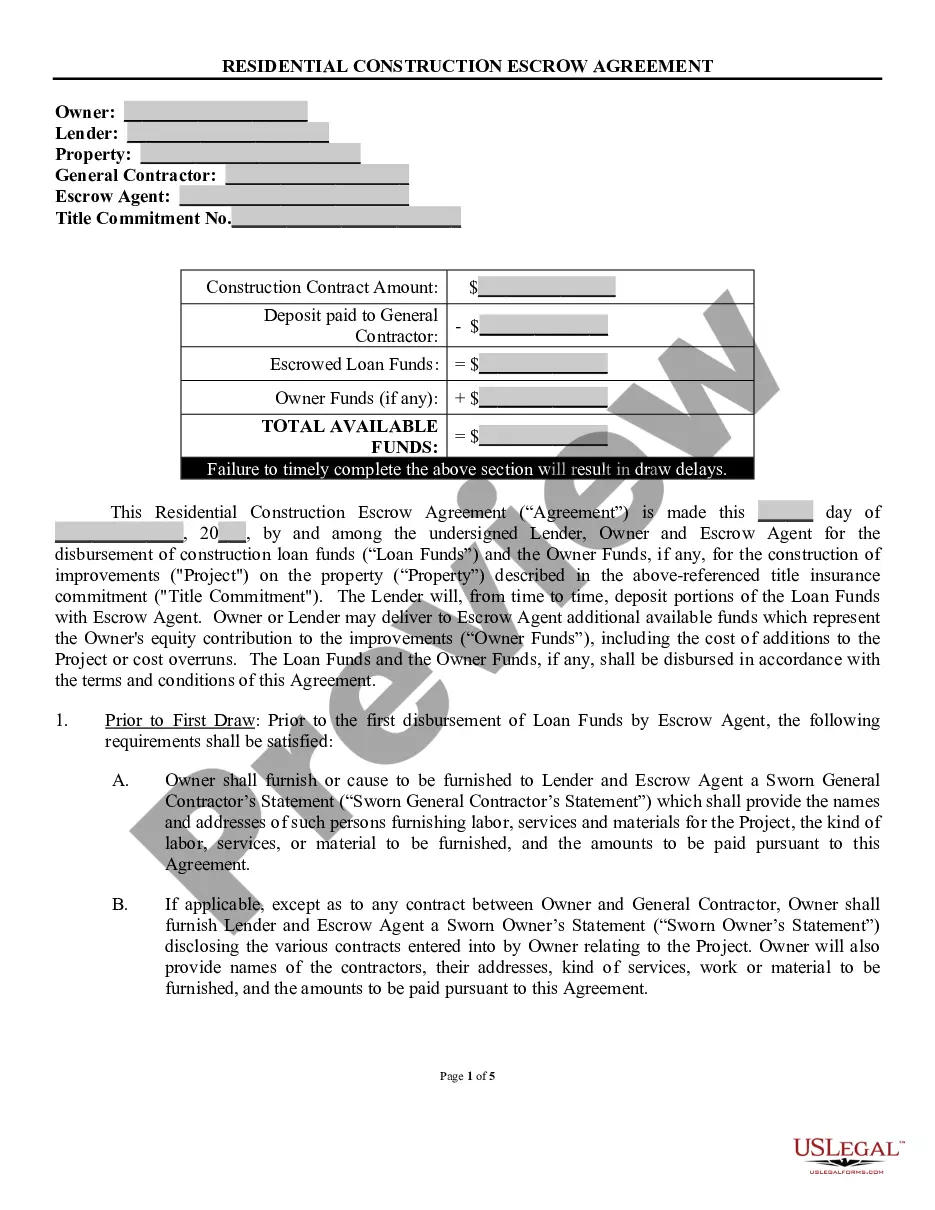
- Financing contingencies pertinent to securing a construction loan.
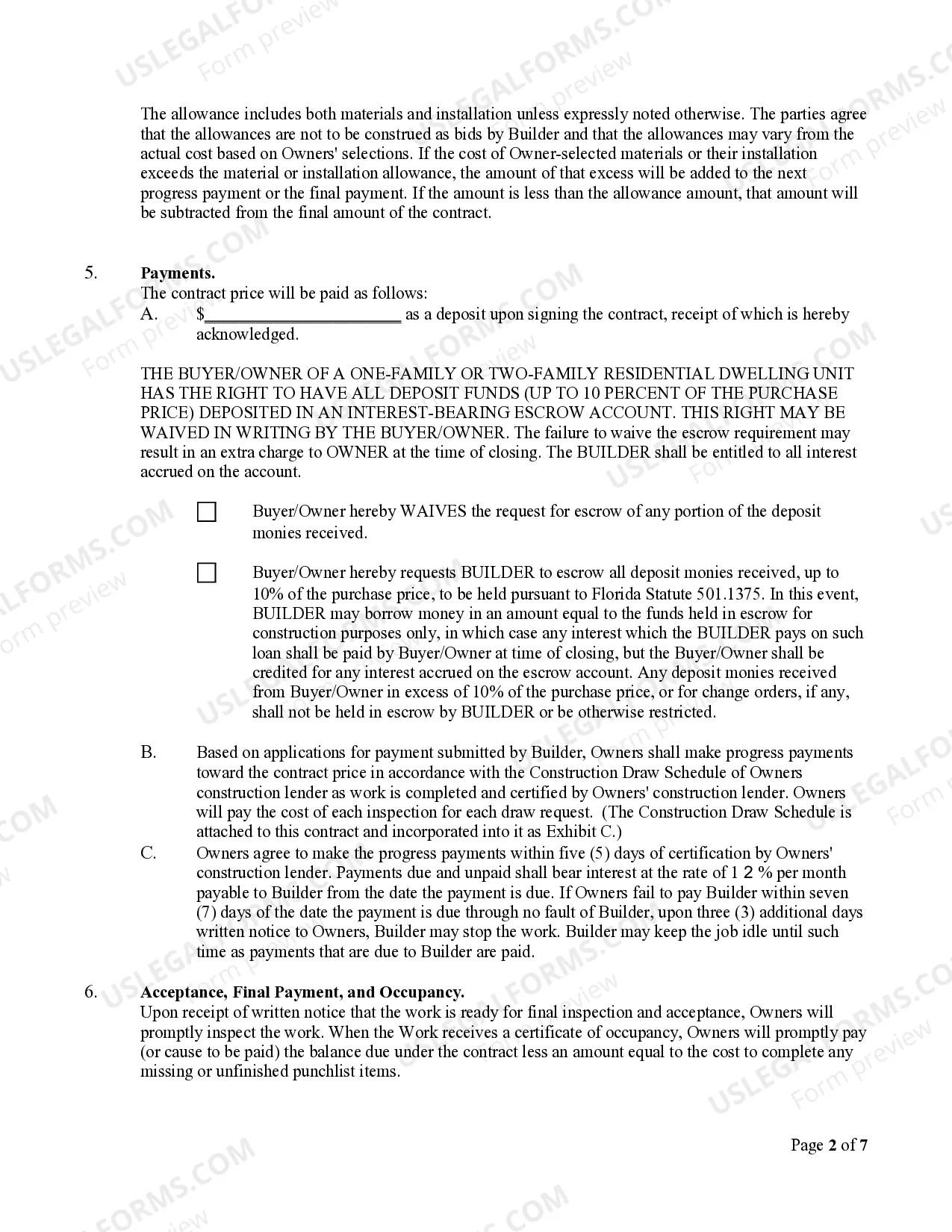
- Payment structure detailing initial deposits and progress payments.
- Warranties provided by the builder to address any workmanship defects.
- Provisions for change orders and additional work agreements.
Common use cases
This form should be used when a property owner is ready to begin construction on a single-family residence and has selected a contractor to execute the project. It is essential before starting any work, especially when financing is needed and clear terms on payment and obligations are required for both parties.
Who needs this form
- Homeowners planning to build a new residential property.
- Contractors seeking formal agreements to safeguard their work and payment.
- Individuals and companies involved in residential construction projects.
Steps to complete this form
- Identify and enter the names of both the property owner and the contractor.
- Clearly describe the property location and legal description where the construction will occur.
- Fill in the details related to construction financing and total contract price.
- Specify payment terms, including any deposits and the schedule for progress payments.
- Ensure all parties sign and date the agreement to finalize the contract.
Does this form need to be notarized?
This form does not typically require notarization unless specified by local law. However, ensuring all parties have signatory authority is crucial for the agreement's enforcement.
Get your form ready online
Our built-in tools help you complete, sign, share, and store your documents in one place.
Make edits, fill in missing information, and update formatting in US Legal Forms—just like you would in MS Word.
Download a copy, print it, send it by email, or mail it via USPS—whatever works best for your next step.
Sign and collect signatures with our SignNow integration. Send to multiple recipients, set reminders, and more. Go Premium to unlock E-Sign.
If this form requires notarization, complete it online through a secure video call—no need to meet a notary in person or wait for an appointment.
We protect your documents and personal data by following strict security and privacy standards.

Make edits, fill in missing information, and update formatting in US Legal Forms—just like you would in MS Word.

Download a copy, print it, send it by email, or mail it via USPS—whatever works best for your next step.

Sign and collect signatures with our SignNow integration. Send to multiple recipients, set reminders, and more. Go Premium to unlock E-Sign.

If this form requires notarization, complete it online through a secure video call—no need to meet a notary in person or wait for an appointment.

We protect your documents and personal data by following strict security and privacy standards.
Mistakes to watch out for
- Failing to clearly define the scope of work, leading to disputes later.
- Not specifying deadlines for financing or construction timelines.
- Omitting necessary attachments, such as plans and budget allowances.
- Ignoring local building codes or permit requirements.
- Neglecting to sign the contract, which can make it unenforceable.
Why complete this form online
- Convenient access to a customizable template designed by legal professionals.
- Editable fields that allow users to tailor the agreement to specific project needs.
- Quick and secure downloading of the form for immediate use.
- Guided structure that ensures all critical elements are included for legal compliance.
Looking for another form?
Form popularity
FAQ
Florida law requires a contractor to apply for a permit within 30 days and start work within 90 days if he collects more than 10 percent of the contract up front. Know what you will be expected to pay, how long the work is expected to take and what will happen should the costs or repair times exceed the estimates.
A contract in Florida does not exist unless there is an offer, acceptance of that offer, consideration, and mutual understanding.
Generally, all construction contracts in Florida must contain are required to disclose the contractor or subcontractor's registration number issued by the Florida DPBR; if required. Furthermore, all construction contracts should also include a construction defect notice and opportunity to cure provisions.
5 Key Elements Every Construction Contract Should Contain 1) The project's scope.2) The cost and payment terms.3) The project's time frame.4) Protection against lien law.5) Dispute resolution clauses.
On Thursday, April 13, 2023, Florida Governor Ron DeSantis signed Senate Bill 360 into law. This legislation alters the time period for bringing forward construction defect lawsuits, as well as modifies the current private right of action against a contractor for violation of the Florida Building Code.
For example, in Florida, the following types of contracts that might involve construction projects must be in writing: Credit agreements (i.e. construction loan financing); Contracts that cannot be performed within one year (such as major construction projects);
4 Types of Construction Contracts Lump-Sum Contracts. Cost-Plus-Fee Contracts. Guaranteed Maximum Price Contracts. Unit-Price Contracts.